
INTERNAL MIGRATION AND URBAN DEVELOPMENT UNLEASHING THE POTENTIAL
INTERNAL MIGRATION AND URBAN DEVELOPMENT: UNLEASHING THE POTENTIAL OF MIGRANTS IN DEVELOPING CITIES Professor Yu Zhu School of Geography / Center for Population and Development Research Fujian Normal University, China 27 Octobre 2015 Palais des Nations Geneva, Switzerland

The importance of internal migration and the contribution of 2015 WMR • Dominance of international migration / neglect of internal migration in academic discussion and policy making in recent decades • Volume of internal migration (800 million) far outweighs that of international migration flows (232 million) • China’s ‘floating population’ (221 million): almost the size of international migrants in the whole world • 2015 World Migration Report: An important contribution by highlighting internal migration in developing countries
Internal migration and urban development: the highlight of 2015 WMR and the case of China (1) • 87% of China’s floating population in cities and towns (2010 census) • in 2000 -2010, 57 -65% of China’s urban population growth could be attributed to rural-urban migration • The growth of Shanghai, China’s largest city (24 million): Inflow of nearly 10 million migrants • The emergence and development of Shenzhen, the first special economic zone and one of the most vibrant cities in China: unimaginable without the inflow of migrants
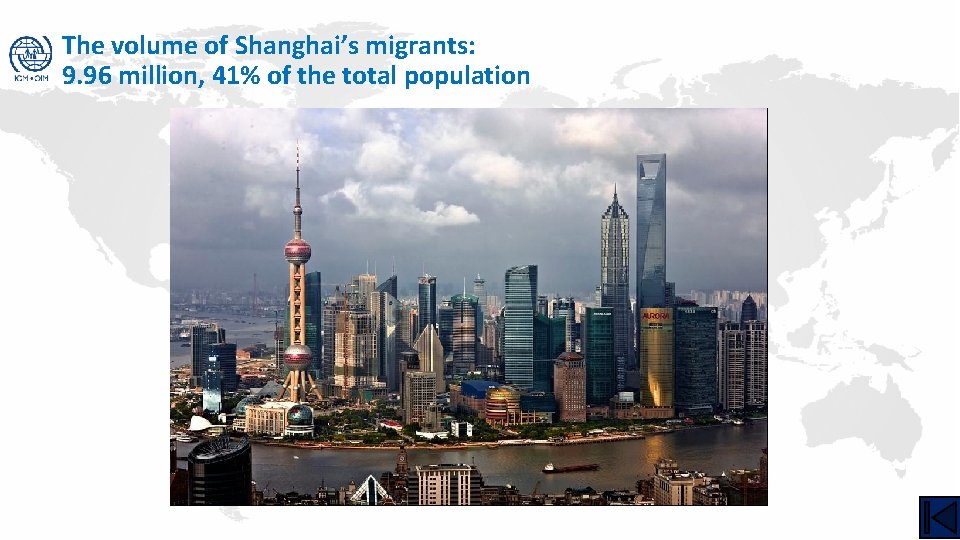
The volume of Shanghai’s migrants: 9. 96 million, 41% of the total population
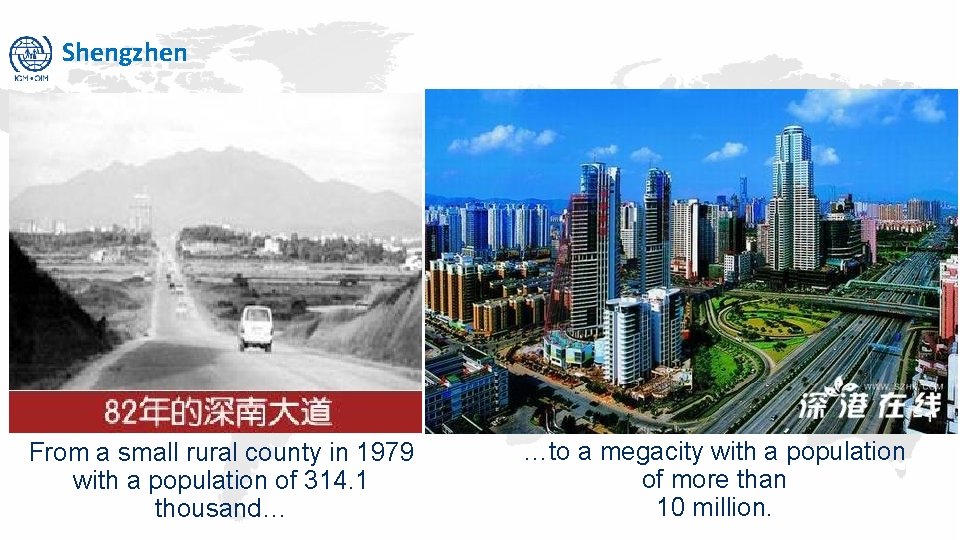
Shengzhen From a small rural county in 1979 with a population of 314. 1 thousand… …to a megacity with a population of more than 10 million.
Internal migration and urban development: The highlight of 2015 WMR and the case of China (2) • Migrants: important driving force for socioeconomic and infrastructure development in urban China • main labour source for labour intensive manufacturing and service industries • increasingly important in IT and cultural development • The case of Beijing • Migrants in China contributed 125 -250 billion US$ p. a. to the growth of cities' GDP (estimate 2006 )
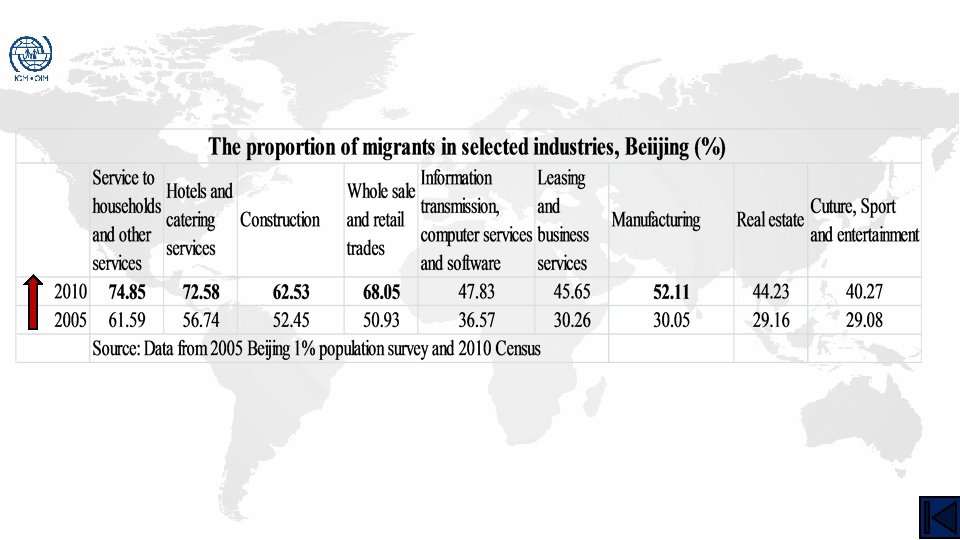

Migrants constitute the backbone of cities and cities will cease to operate without migrants
Internal migration and urban development: The highlight of 2015 WMR and the case of China (3) • Migrants younger age structure in destination cities • 14. 94% of Shanghai's population 60+ (2010 census) • • • increased by 7. 75%, Without migration would have reached 22. 69% Shanghai without migrants: grey, loss of vitality
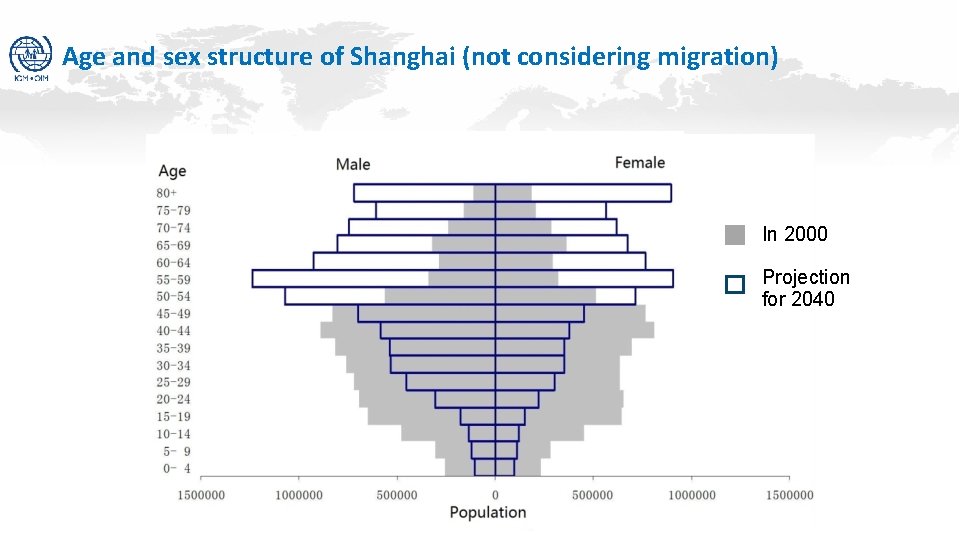
Age and sex structure of Shanghai (not considering migration) In 2000 Projection for 2040
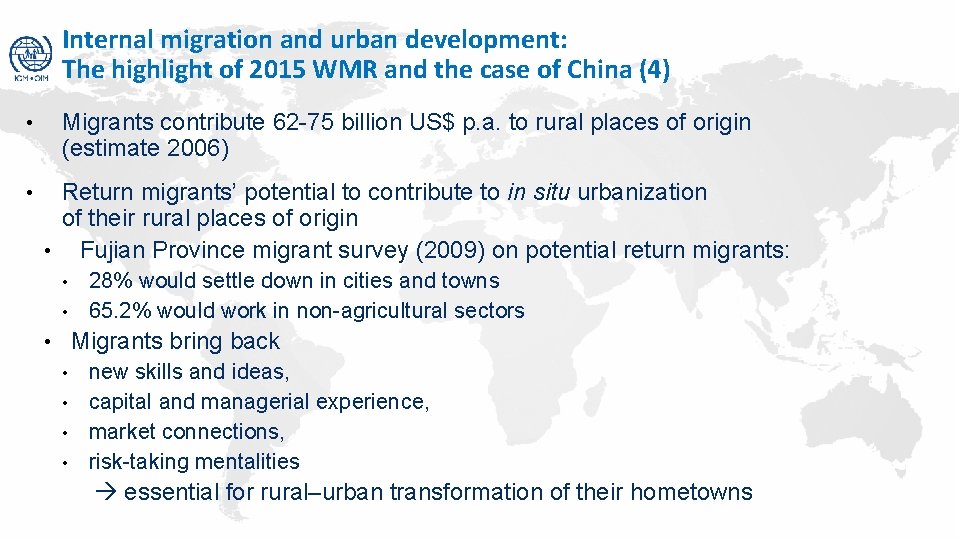
Internal migration and urban development: The highlight of 2015 WMR and the case of China (4) Migrants contribute 62 -75 billion US$ p. a. to rural places of origin (estimate 2006) • • Return migrants’ potential to contribute to in situ urbanization of their rural places of origin • Fujian Province migrant survey (2009) on potential return migrants: 28% would settle down in cities and towns • 65. 2% would work in non-agricultural sectors • Migrants bring back • new skills and ideas, • capital and managerial experience, • market connections, • risk-taking mentalities • essential for rural–urban transformation of their hometowns
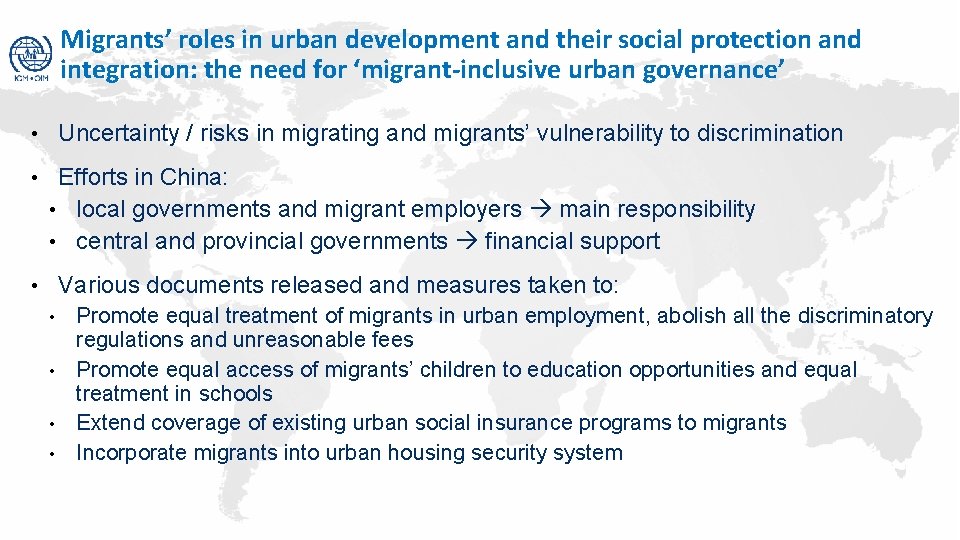
Migrants’ roles in urban development and their social protection and integration: the need for ‘migrant-inclusive urban governance’ Uncertainty / risks in migrating and migrants’ vulnerability to discrimination • • Efforts in China: • local governments and migrant employers main responsibility • central and provincial governments financial support Various documents released and measures taken to: • Promote equal treatment of migrants in urban employment, abolish all the discriminatory regulations and unreasonable fees • Promote equal access of migrants’ children to education opportunities and equal treatment in schools • Extend coverage of existing urban social insurance programs to migrants • Incorporate migrants into urban housing security system •
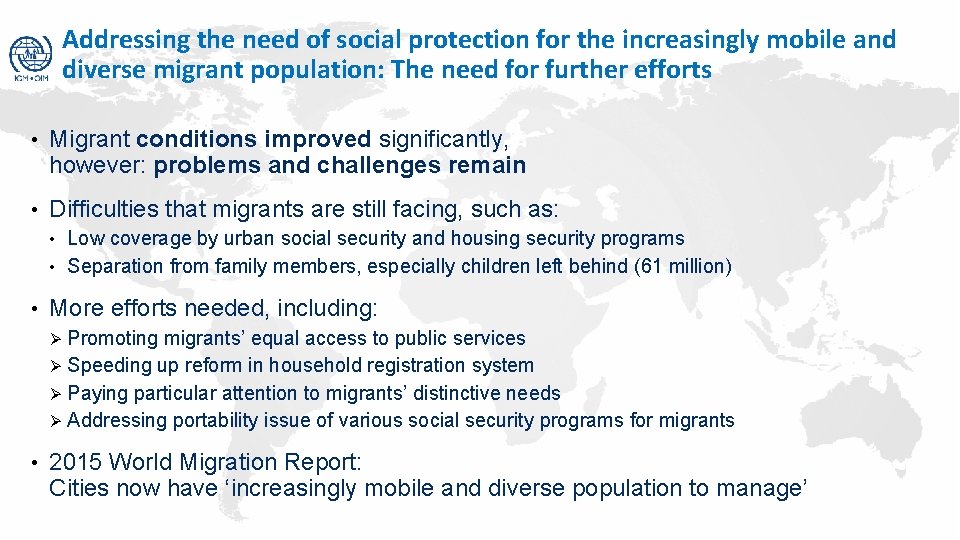
Addressing the need of social protection for the increasingly mobile and diverse migrant population: The need for further efforts • Migrant conditions improved significantly, however: problems and challenges remain • Difficulties that migrants are still facing, such as: Low coverage by urban social security and housing security programs • Separation from family members, especially children left behind (61 million) • • More efforts needed, including: Ø Promoting migrants’ equal access to public services Ø Speeding up reform in household registration system Ø Paying particular attention to migrants’ distinctive needs Ø Addressing portability issue of various social security programs for migrants • 2015 World Migration Report: Cities now have ‘increasingly mobile and diverse population to manage’

THANK YOU FOR YOUR ATTENTION! 谢谢您的关注!
- Slides: 14