
Internal Insect Morphology Circulation System Organization Humans closed

- Slides: 33
Internal Insect Morphology
Circulation System Organization: Humans – closed Our circulatory system consists of a heart and a series of tubes (arteries and veins) intimately associated with every cell Insects – open
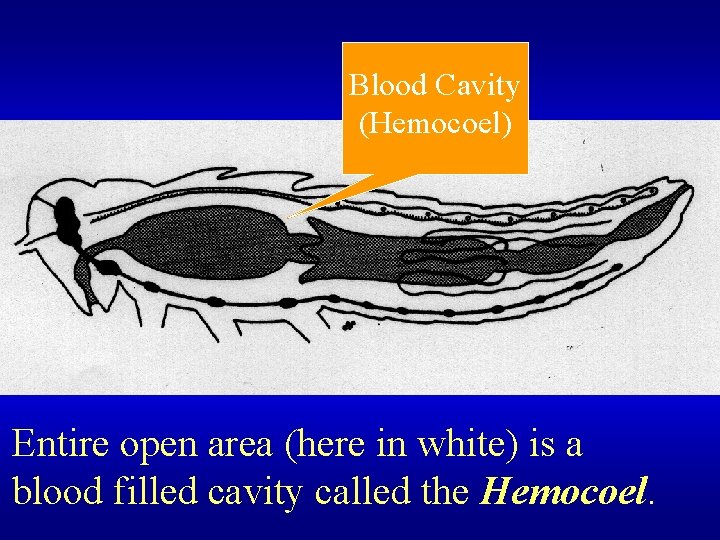
Blood Cavity (Hemocoel) Entire open area (here in white) is a blood filled cavity called the Hemocoel.
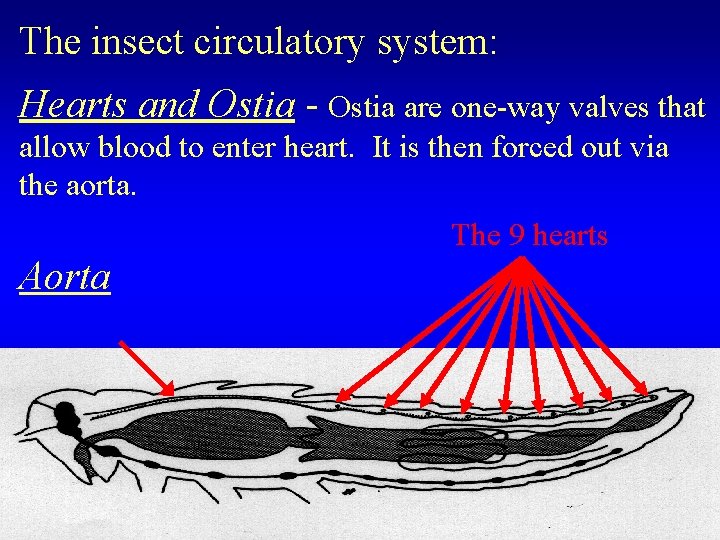
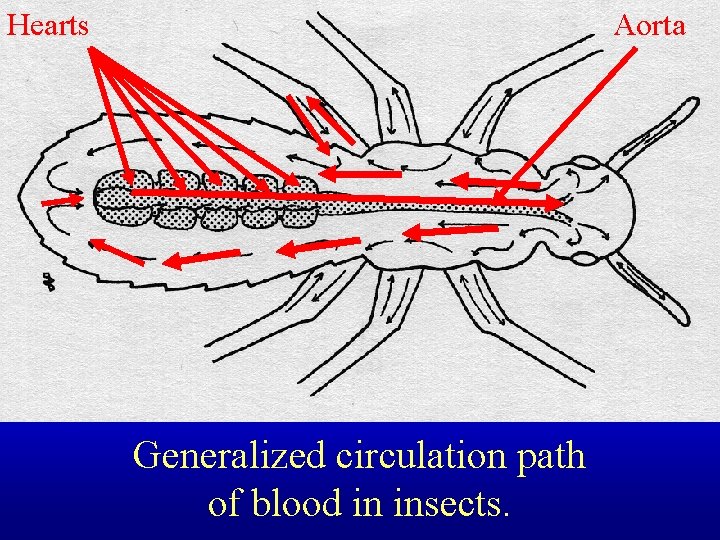
The insect circulatory system: Hearts and Ostia - Ostia are one-way valves that allow blood to enter heart. It is then forced out via the aorta. The 9 hearts Aorta
Hearts Aorta Generalized circulation path of blood in insects.
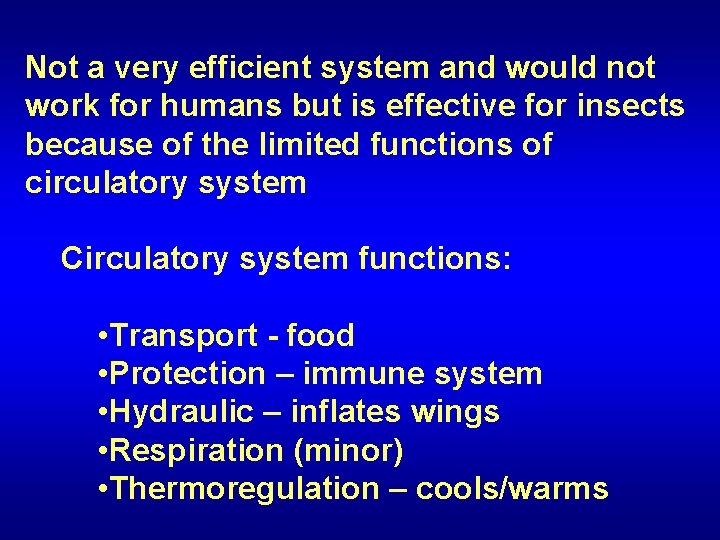
Not a very efficient system and would not work for humans but is effective for insects because of the limited functions of circulatory system Circulatory system functions: • Transport - food • Protection – immune system • Hydraulic – inflates wings • Respiration (minor) • Thermoregulation – cools/warms
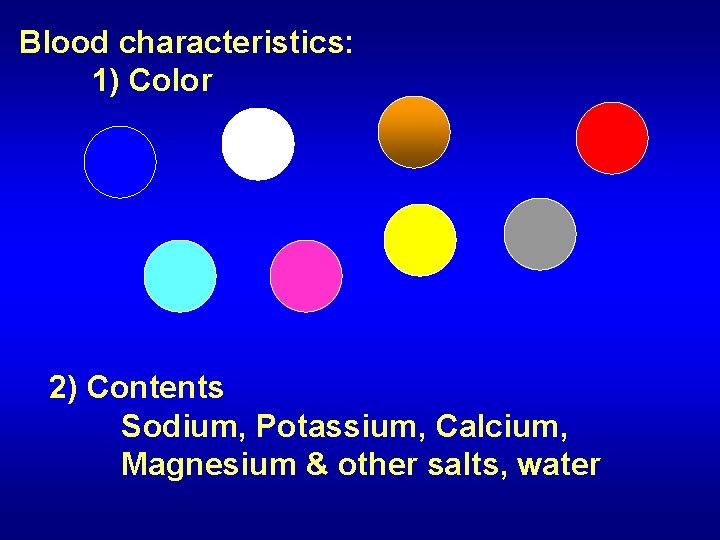
Blood characteristics: 1) Color 2) Contents Sodium, Potassium, Calcium, Magnesium & other salts, water
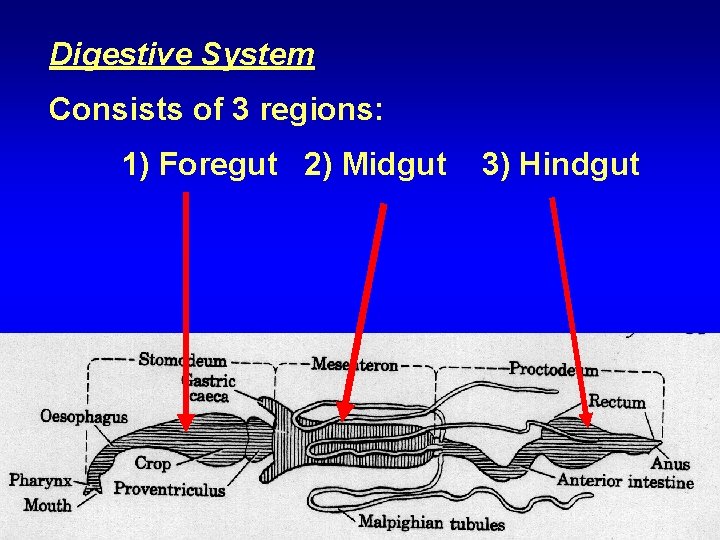
Digestive System Consists of 3 regions: 1) Foregut 2) Midgut 3) Hindgut
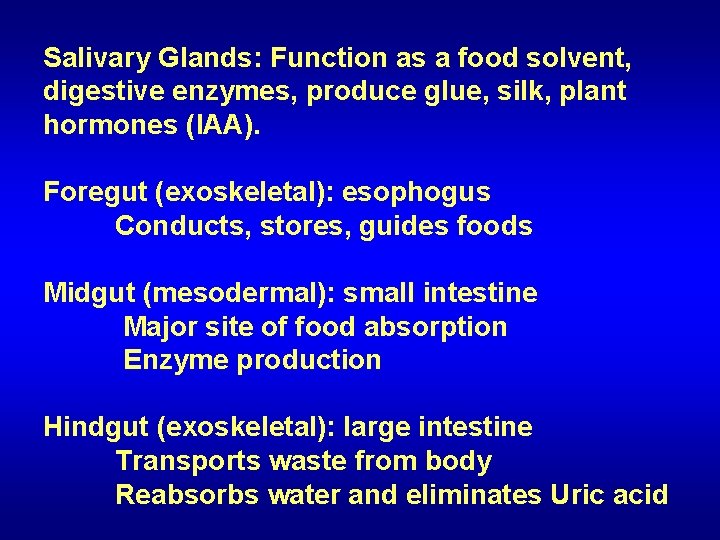
Salivary Glands: Function as a food solvent, digestive enzymes, produce glue, silk, plant hormones (IAA). Foregut (exoskeletal): esophogus Conducts, stores, guides foods Midgut (mesodermal): small intestine Major site of food absorption Enzyme production Hindgut (exoskeletal): large intestine Transports waste from body Reabsorbs water and eliminates Uric acid
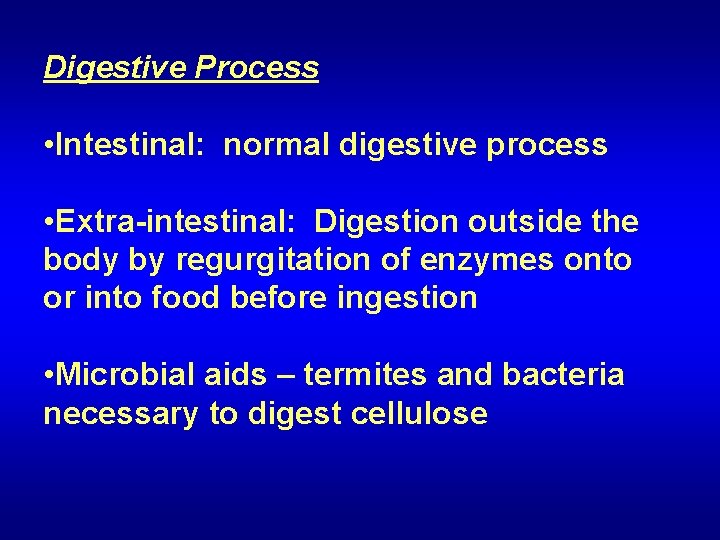
Digestive Process • Intestinal: normal digestive process • Extra-intestinal: Digestion outside the body by regurgitation of enzymes onto or into food before ingestion • Microbial aids – termites and bacteria necessary to digest cellulose
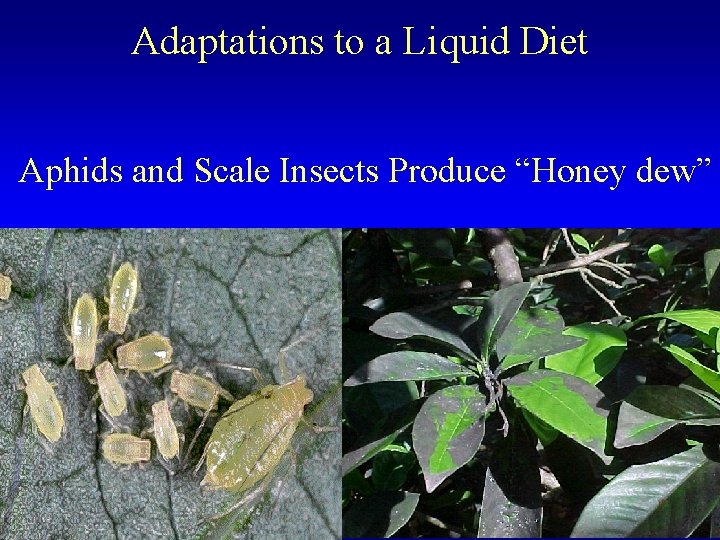
Adaptations to a Liquid Diet Aphids and Scale Insects Produce “Honey dew”
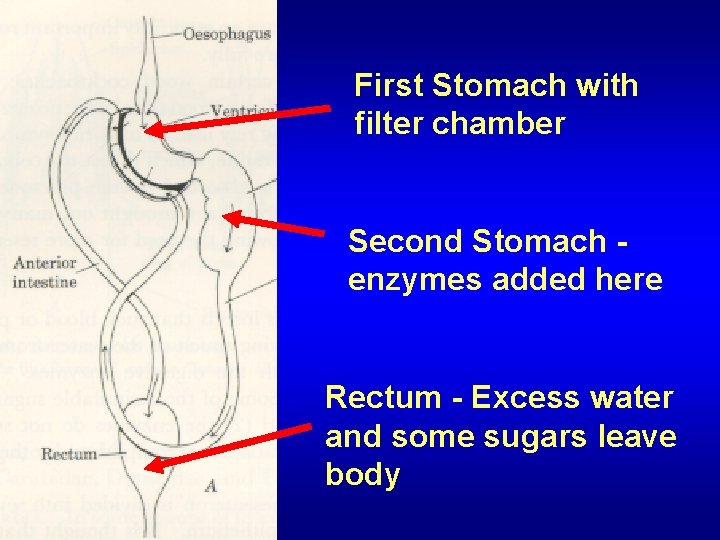
First Stomach with filter chamber Second Stomach enzymes added here Rectum - Excess water and some sugars leave body
Excretory System: Hindgut maintains internal environment suitable for survival of the insect It does this by: 1) Eliminating nitrogenous waste from the blood 2) Regulating salt and water and Uric Acid (H 20) Structures: Malpighian tubules / insect kidneys
Foregut Midgut Hindgut Malpighian tubules
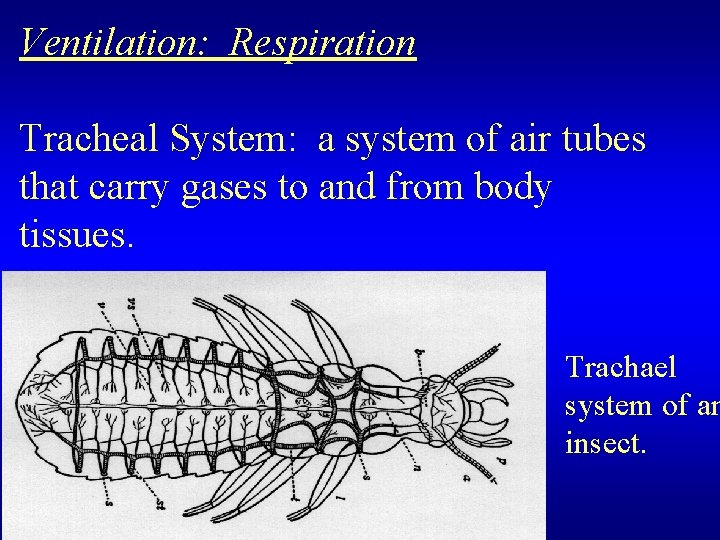
Ventilation: Respiration Tracheal System: a system of air tubes that carry gases to and from body tissues. Trachael system of an insect.
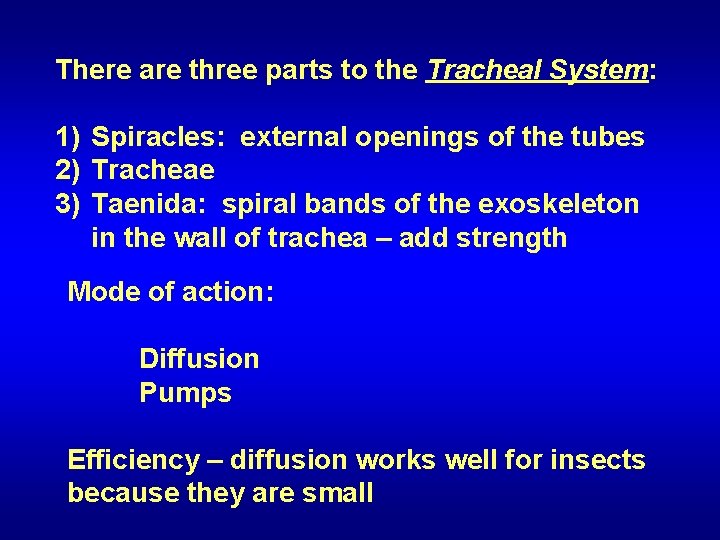
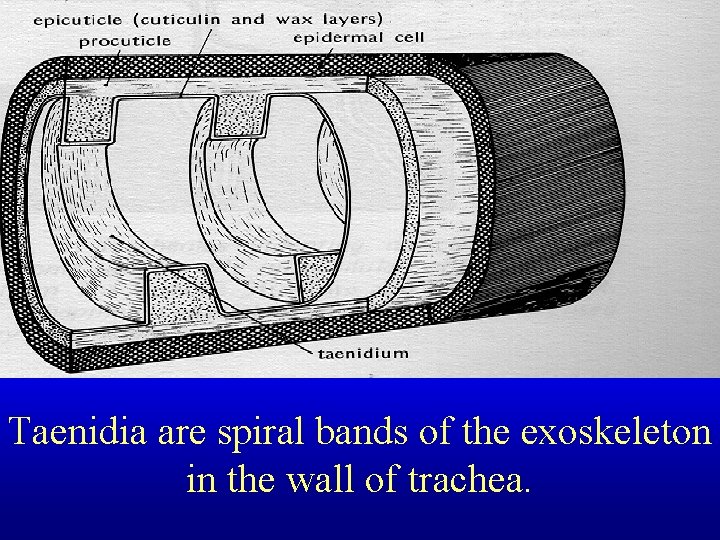
There are three parts to the Tracheal System: 1) Spiracles: external openings of the tubes 2) Tracheae 3) Taenida: spiral bands of the exoskeleton in the wall of trachea – add strength Mode of action: Diffusion Pumps Efficiency – diffusion works well for insects because they are small
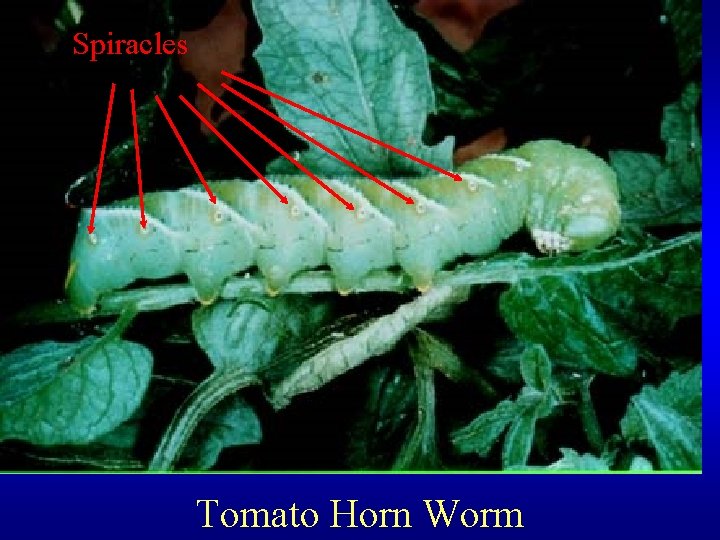
Spiracles Tomato Horn Worm
Taenidia are spiral bands of the exoskeleton in the wall of trachea.
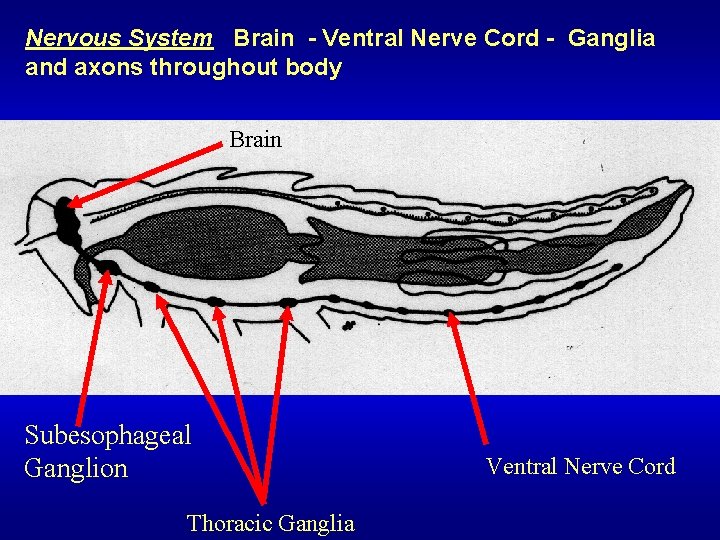
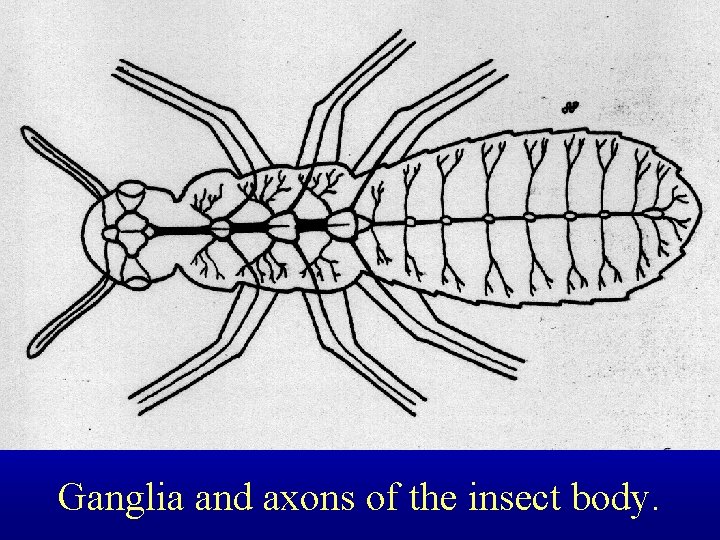
Nervous System Brain - Ventral Nerve Cord - Ganglia and axons throughout body Brain Subesophageal Ganglion Thoracic Ganglia Ventral Nerve Cord
Ganglia and axons of the insect body.
Brain Role: • Receive and integrate sensory data • Little coordination like in humans • Other functions - walking, flying, mating are under control of nearby ganglia
What happens if you cut off the head of an insect?
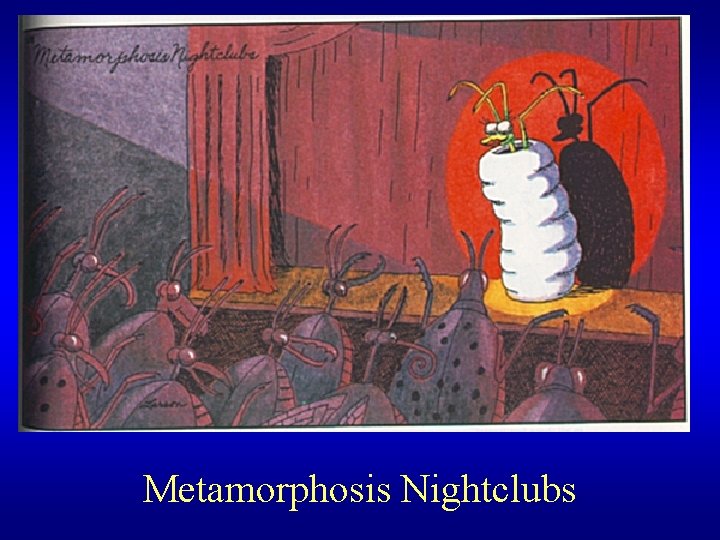
Metamorphosis Nightclubs
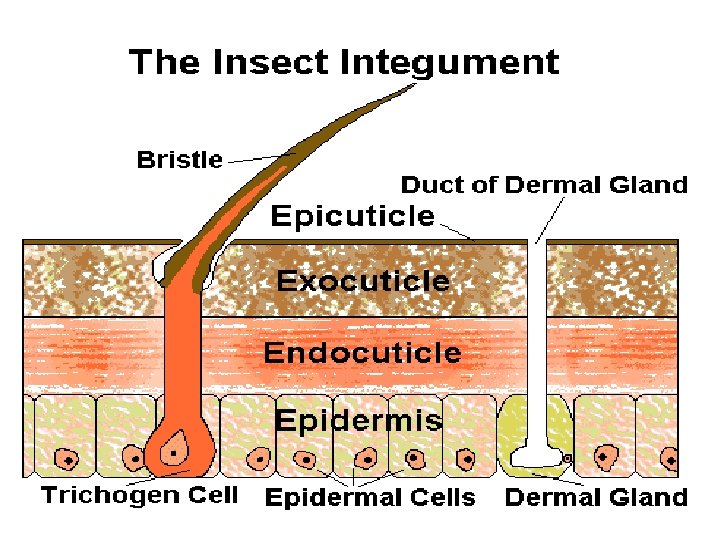
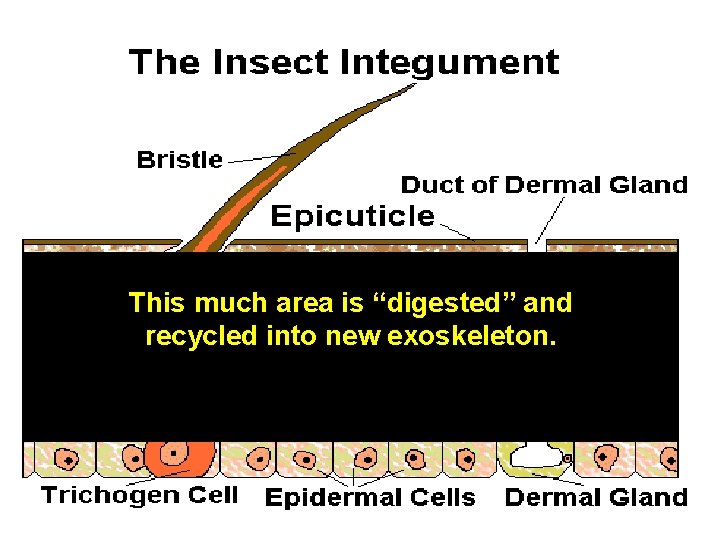
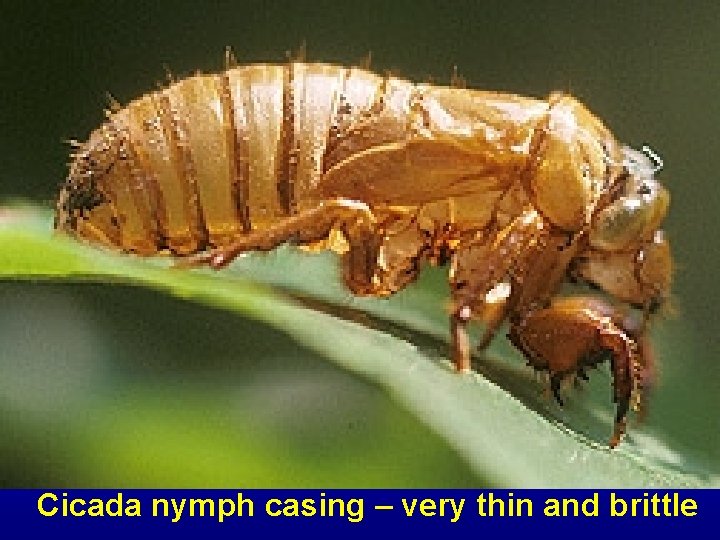
Insect Growth and Development • Exoskeleton limits growth • Shedding exoskeleton (ecdysis) - necessary to grow and/or change shape • Ecdysis involves loss of: Outside body covering, the foregut, the hindgut and tracheal system • Instars - the insect between molts
This much area is “digested” and recycled into new exoskeleton.
Cicada nymph casing – very thin and brittle
Metamorphosis – Change in shape or form Regulated by 3 hormones: • Ecdysone - molting hormone • Juvenile Hormone • Brain Hormone
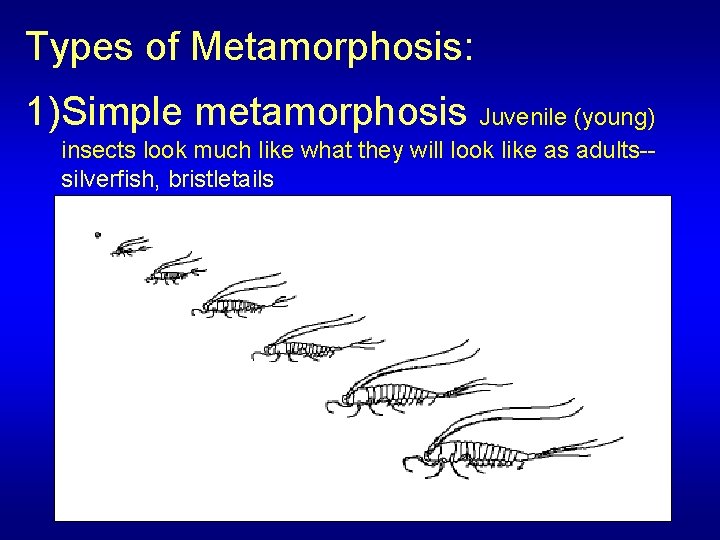
Types of Metamorphosis: 1)Simple metamorphosis Juvenile (young) insects look much like what they will look like as adults-silverfish, bristletails
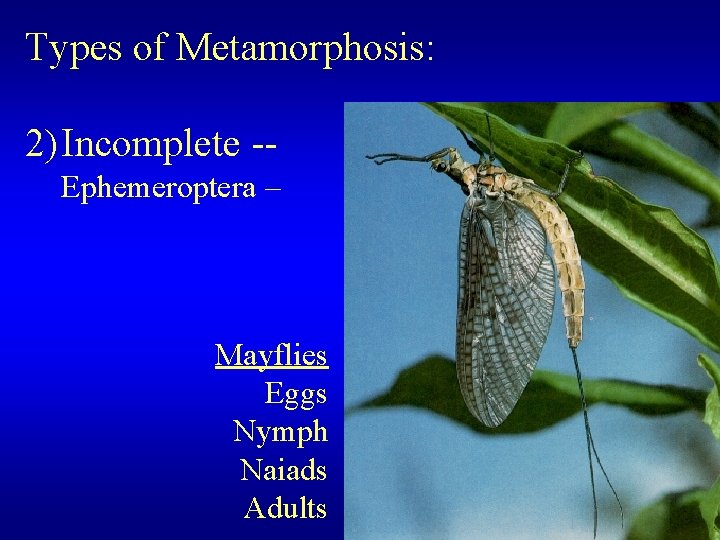
Types of Metamorphosis: 2) Incomplete -Ephemeroptera – Mayflies Eggs Nymph Naiads Adults
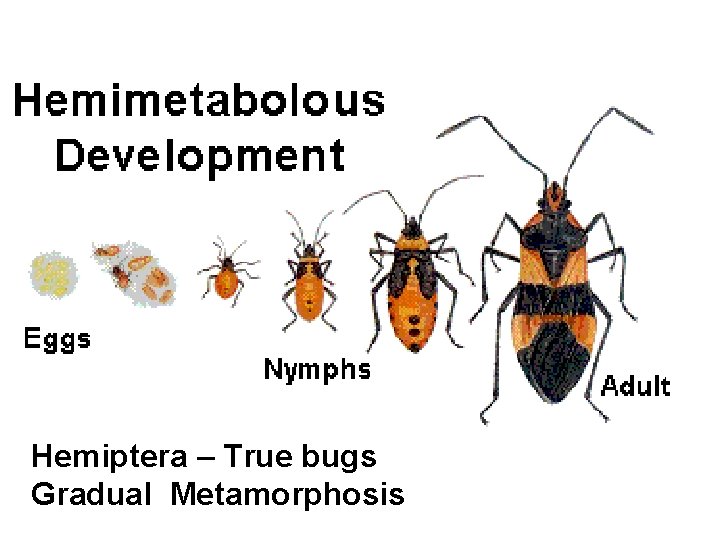
Hemiptera – True bugs Gradual Metamorphosis
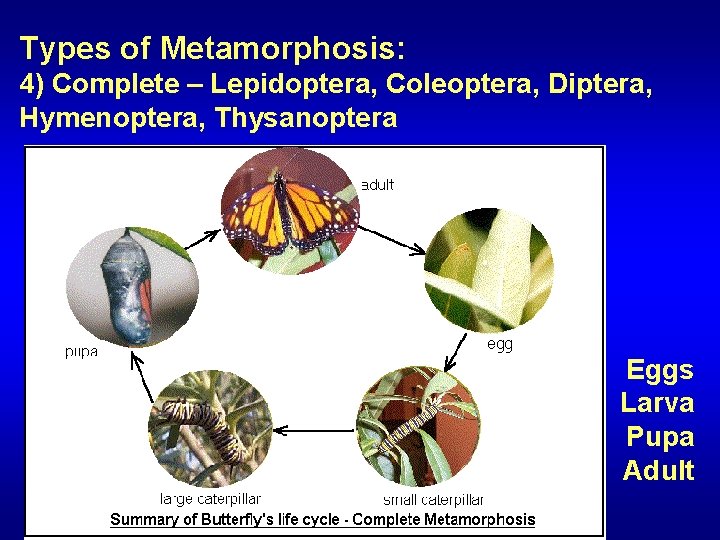
Types of Metamorphosis: 4) Complete – Lepidoptera, Coleoptera, Diptera, Hymenoptera, Thysanoptera Eggs Larva Pupa Adult
End of Basic Entomology Part II