
Internal Forces Shaping the Earth Internal Forces The
- Slides: 15
Internal Forces Shaping the Earth
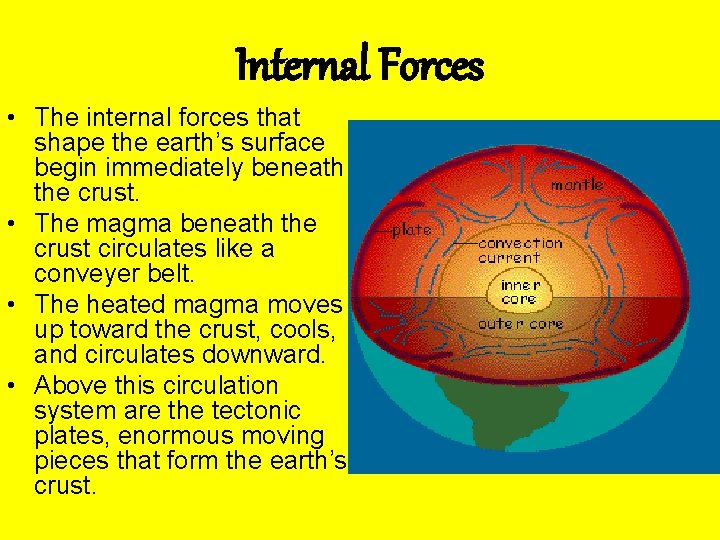
Internal Forces • The internal forces that shape the earth’s surface begin immediately beneath the crust. • The magma beneath the crust circulates like a conveyer belt. • The heated magma moves up toward the crust, cools, and circulates downward. • Above this circulation system are the tectonic plates, enormous moving pieces that form the earth’s crust.
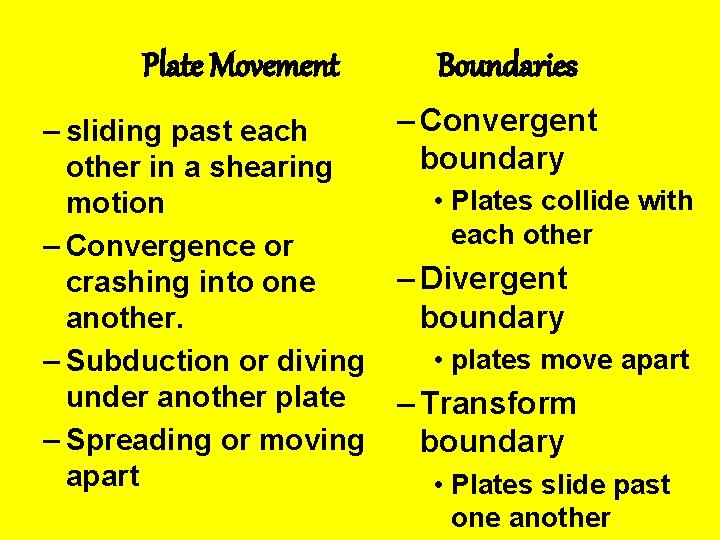
Plate Movement – sliding past each other in a shearing motion – Convergence or crashing into one another. – Subduction or diving under another plate – Spreading or moving apart Boundaries – Convergent boundary • Plates collide with each other – Divergent boundary • plates move apart – Transform boundary • Plates slide past one another
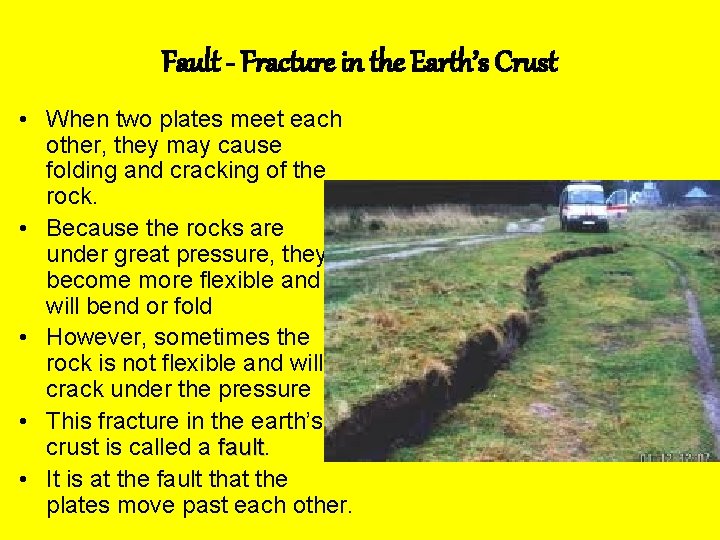
Fault - Fracture in the Earth’s Crust • When two plates meet each other, they may cause folding and cracking of the rock. • Because the rocks are under great pressure, they become more flexible and will bend or fold • However, sometimes the rock is not flexible and will crack under the pressure • This fracture in the earth’s crust is called a fault • It is at the fault that the plates move past each other.
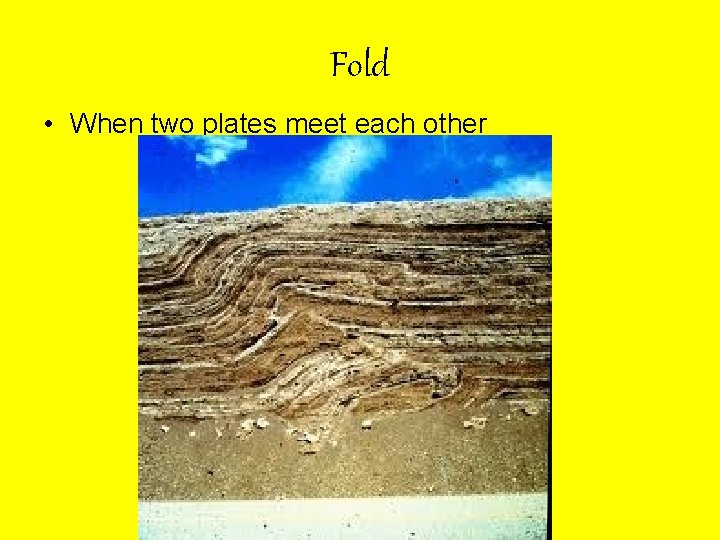
Fold • When two plates meet each other
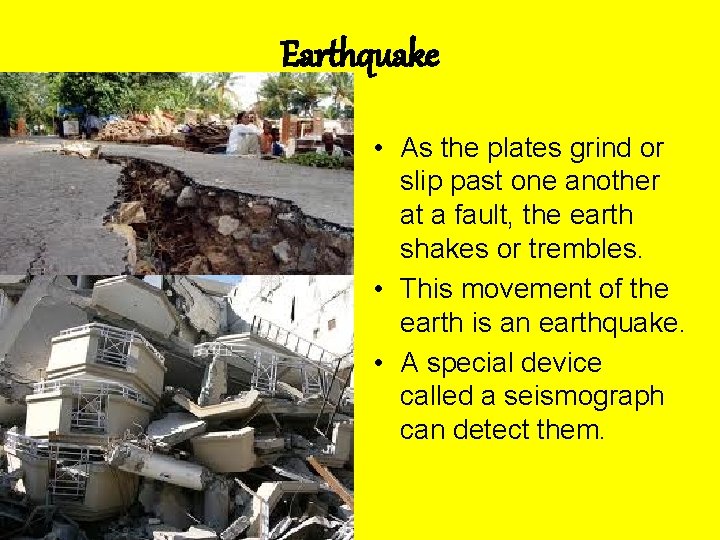
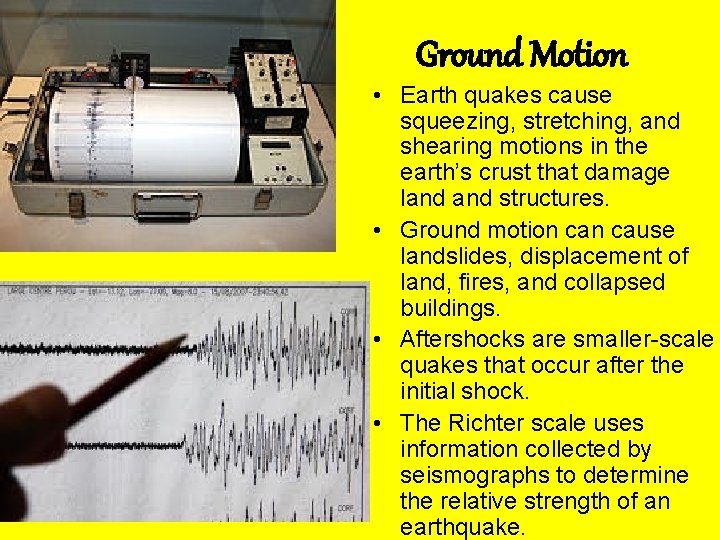
Earthquake • As the plates grind or slip past one another at a fault, the earth shakes or trembles. • This movement of the earth is an earthquake. • A special device called a seismograph can detect them.
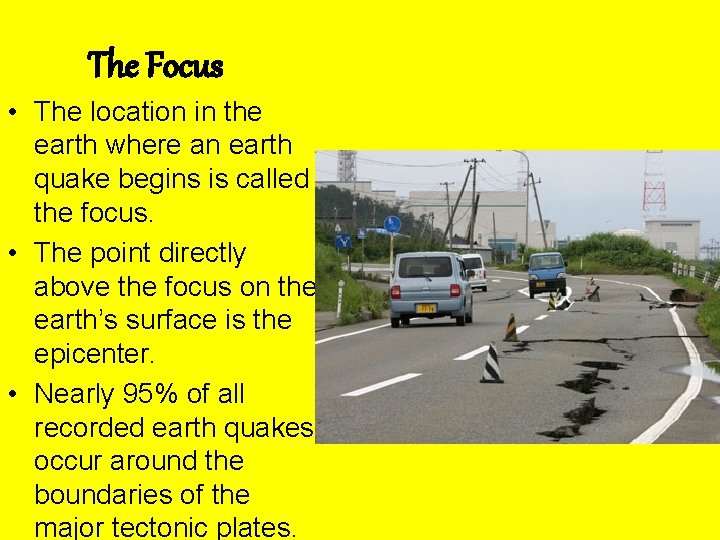
The Focus • The location in the earth where an earth quake begins is called the focus. • The point directly above the focus on the earth’s surface is the epicenter. • Nearly 95% of all recorded earth quakes occur around the boundaries of the major tectonic plates.
Ground Motion • Earth quakes cause squeezing, stretching, and shearing motions in the earth’s crust that damage land structures. • Ground motion cause landslides, displacement of land, fires, and collapsed buildings. • Aftershocks are smaller-scale quakes that occur after the initial shock. • The Richter scale uses information collected by seismographs to determine the relative strength of an earthquake.
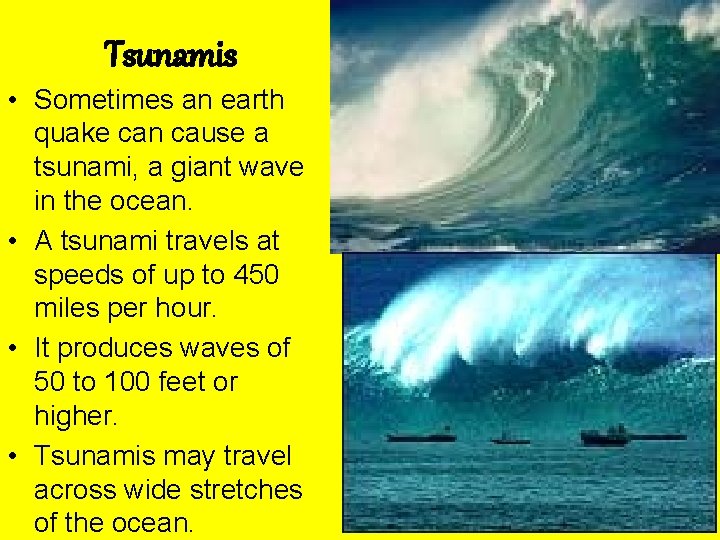
Tsunamis • Sometimes an earth quake can cause a tsunami, a giant wave in the ocean. • A tsunami travels at speeds of up to 450 miles per hour. • It produces waves of 50 to 100 feet or higher. • Tsunamis may travel across wide stretches of the ocean.
• http: //www. history. com/s hows/how-the-earth-wasmade/videos/megatsunamis
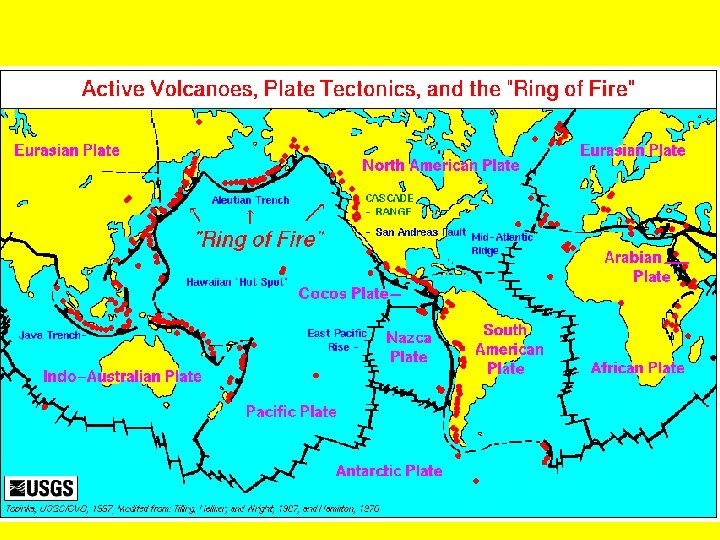
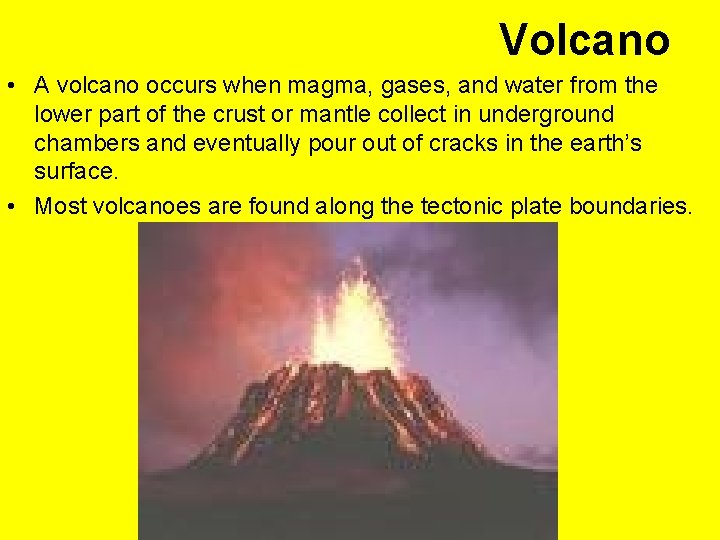
Volcano • A volcano occurs when magma, gases, and water from the lower part of the crust or mantle collect in underground chambers and eventually pour out of cracks in the earth’s surface. • Most volcanoes are found along the tectonic plate boundaries.
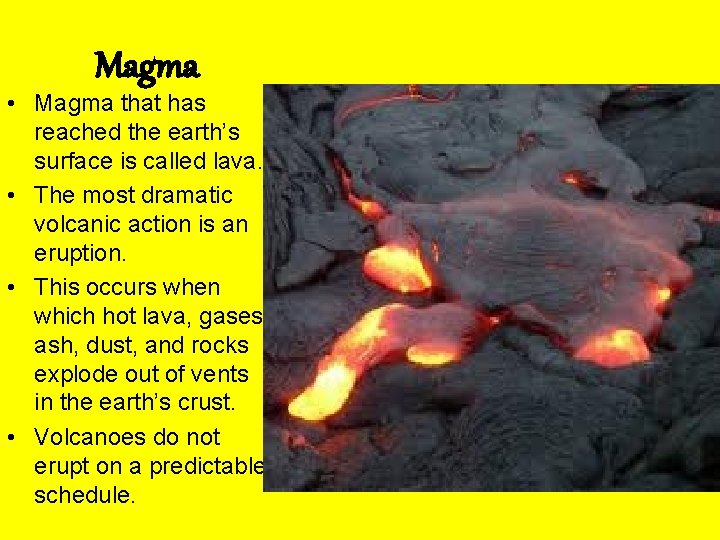
Magma • Magma that has reached the earth’s surface is called lava. • The most dramatic volcanic action is an eruption. • This occurs when which hot lava, gases, ash, dust, and rocks explode out of vents in the earth’s crust. • Volcanoes do not erupt on a predictable schedule.
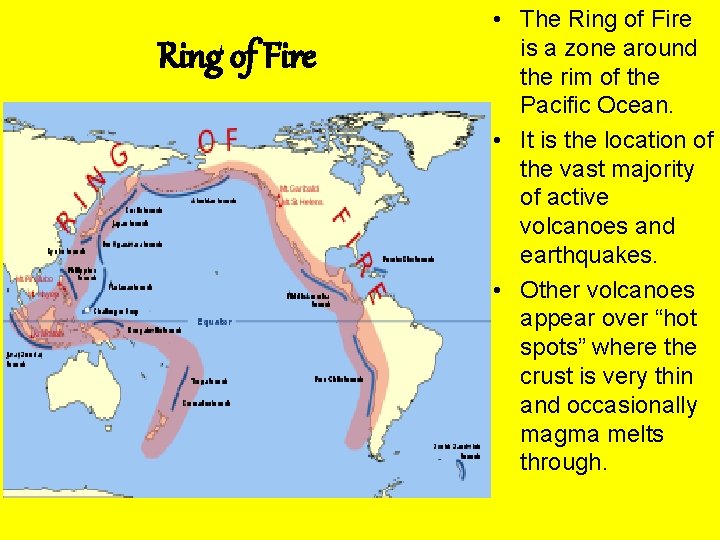
Ring of Fire • The Ring of Fire is a zone around the rim of the Pacific Ocean. • It is the location of the vast majority of active volcanoes and earthquakes. • Other volcanoes appear over “hot spots” where the crust is very thin and occasionally magma melts through.
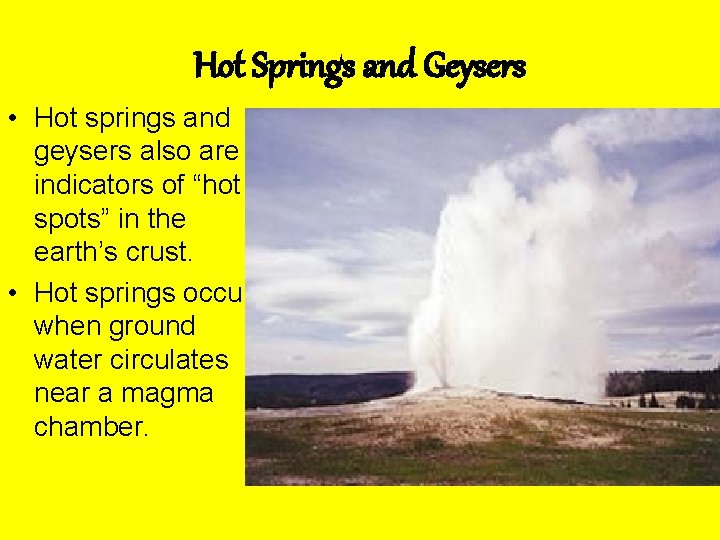
Hot Springs and Geysers • Hot springs and geysers also are indicators of “hot spots” in the earth’s crust. • Hot springs occur when ground water circulates near a magma chamber.