
Internal Environment UNIT 3 OUTCOME 2 What You








- Slides: 18
Internal Environment UNIT 3 OUTCOME 2
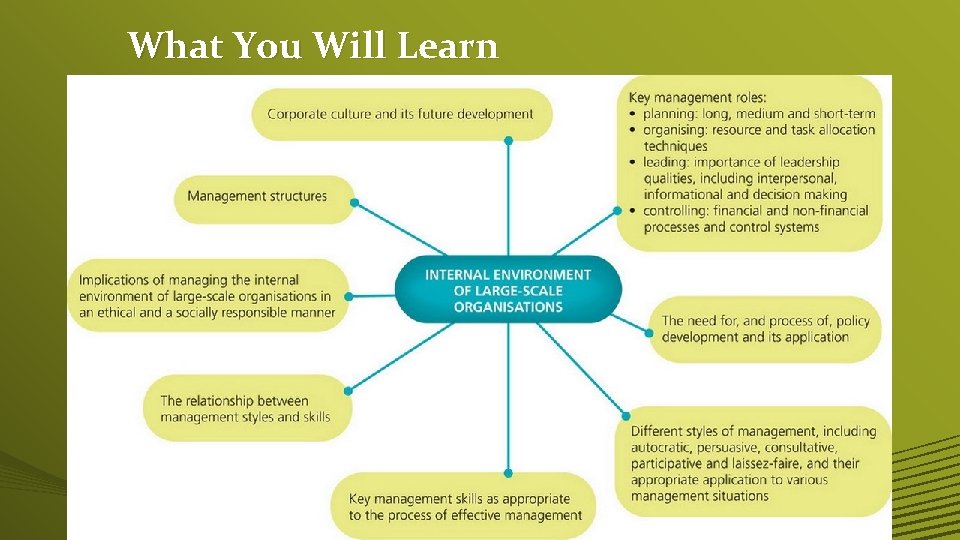
What You Will Learn • Add your first bullet point here • Add your second bullet point here • Add your third bullet point here
2. 1 Different management structures KEY CONCEPT A MANAGEMENT STRUCTURE IS THE WAY IN WHICH AN ORGANISATION ARRANGES ITS MANAGEMENT, EMPLOYEES AND RESOURCES IN ORDER TO ACHIEVE ITS OBJECTIVES
Hierarchical organisational management structure • Management structure -the way in which management, employees and resources have been arranged, so that the organisation can achieve its objectives. • An organisation’s structure is usually represented diagrammatically in an organisational chart. The chart shows the key positions of responsibility and accountability, and lines of communication.
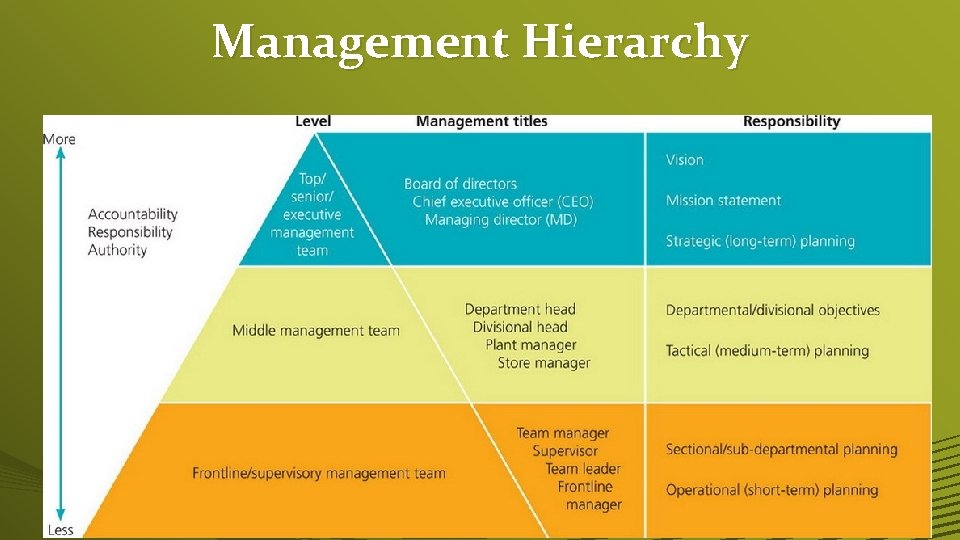
Management Hierarchy • Found in many organisations • Based on a traditional management hierarchy • More authority is given at each higher level of the hierarchy • This means senior managers have greater accountability, responsibility and power compared with those at lower levels. • They can be visualised as a pyramid
Management Hierarchy
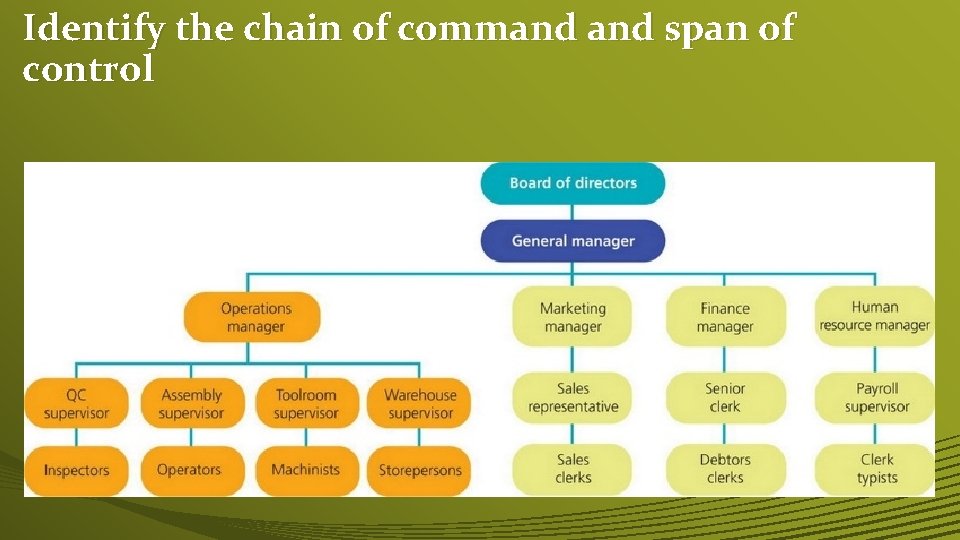
Characteristics of Management hierarchy • rigid lines of communication • numerous levels of management, from managing director to supervisor • clearly distinguishable organisational positions, roles and responsibilities • hierarchical, linear flows of information and direction, with a large amount of information directed downwards • centralised control with all strategic decisions made by senior management • a chain of command showing who is responsible to whom.
chain of command/line authority • System that determines responsibility, supervision and accountability of members of the organisation. • Advantage - only one person ultimately remains in charge. • One disadvantage - information flows only one way, from top to bottom, with little questioning of authority - communication is said to be ‘top down’. • Closely related is the principle of unity of command — each employee should report to a single supervisor.
Span of control • This refers to the grouping of people and resources into divisions in the large-scale organisation (LSO). • The person in charge of each division within an organisation is called the manager. • A manager’s job is to ensure the division runs smoothly. Included in this task is the manager’s duty to look after the people who work in the division. • Span of control indicates the number of people for whom a manager is directly responsible.
Identify the chain of command span of control
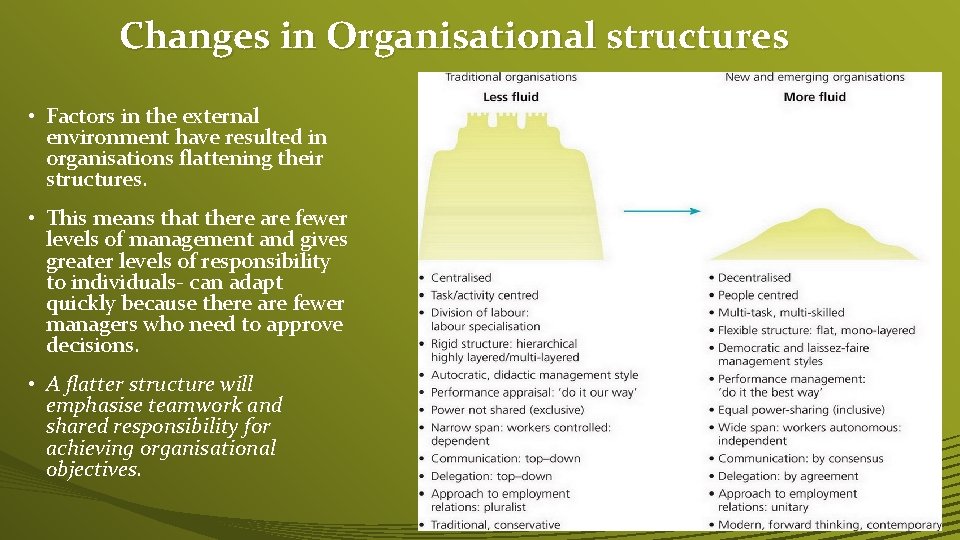
Changes in Organisational structures • Factors in the external environment have resulted in organisations flattening their structures. • This means that there are fewer levels of management and gives greater levels of responsibility to individuals- can adapt quickly because there are fewer managers who need to approve decisions. • A flatter structure will emphasise teamwork and shared responsibility for achieving organisational objectives.
Title and Content Layout with Smart. Art Step 1 Title Step 2 Title Step 3 Title