
Internal Control Risk Assessment Performance Auditing Thoughts from
- Slides: 75
Internal Control, Risk Assessment & Performance Auditing (Thoughts from SAS’s 109 & 115) Presented by: Billy Morehead, Ph. D. , CPA, CGFM, CPM AGA Past National President and Chair, Division of Accountancy, CIS & Finance Delta State University, Cleveland, Mississippi
Definition of Internal Control Internal control is a process – effected by those charged with governance, management, and other personnel – designed to provide reasonable assurance about the achievement of entity’s objectives with regard to: – – – Reliability of financial reporting Effectiveness and efficiency of operations, and Compliance with applicable laws and regulations Source: AICPA SAS 115 2
Definition of Risk Assessment Risk analysis involves a careful, rational process of estimating the significance of a risk, assessing the likelihood of its occurrence, and considering what actions and controls are necessary to manage it. Risk analysis involves estimating the cost to the agency if an unexpected risk actually occurs. 3
Definition of Performance Audit “Performance Audit is a valuable management tool carefully structured around tough, nationally recognized auditing principles that evaluate whether tax dollars are being spent in an effective, efficient and economic manner. ” (Heartland Institute) 4
Those Charged With Governance: is defined as: “the person(s) with responsibility for overseeing the strategic direction of the entity and obligations related to the accountability of the entity. This includes overseeing the financial reporting and disclosure process. ” In most entities, governance is a collective responsibility…. 5
Internal Control Is Affected by those charged with Governance – an Entity’s Board of Directors, Management, & Other Personnel. The Establishment of Internal Control Is MANAGEMENT’S Responsibility. 6
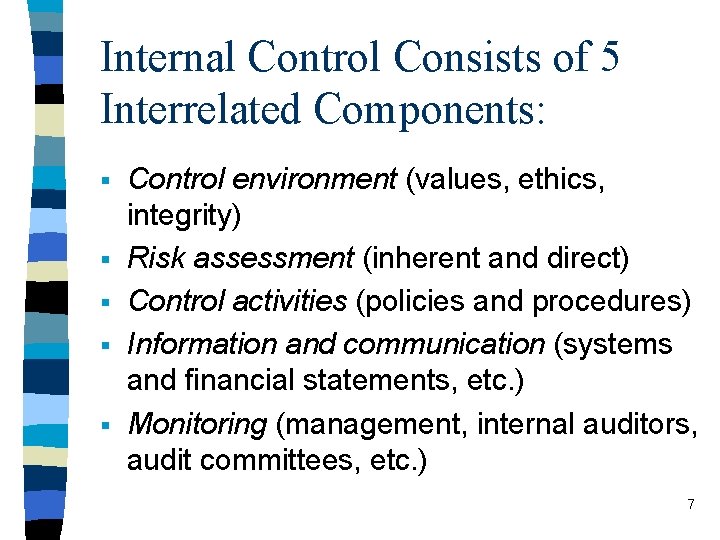
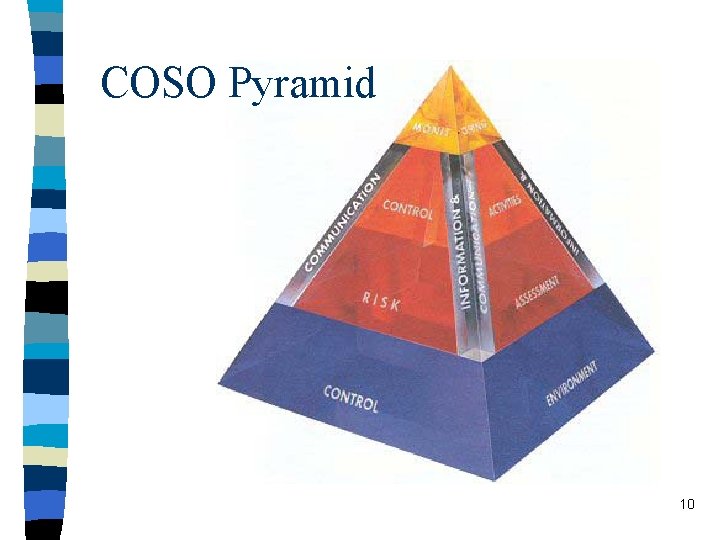
Internal Control Consists of 5 Interrelated Components: § § § Control environment (values, ethics, integrity) Risk assessment (inherent and direct) Control activities (policies and procedures) Information and communication (systems and financial statements, etc. ) Monitoring (management, internal auditors, audit committees, etc. ) 7
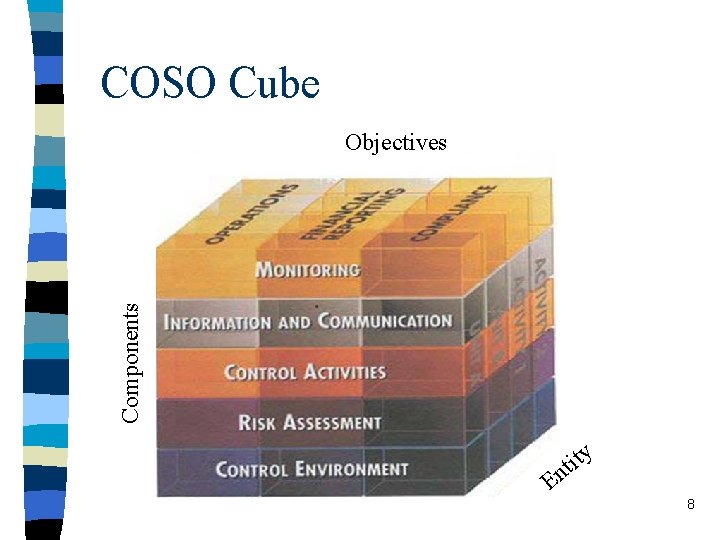
COSO Cube Components Objectives it t En y 8
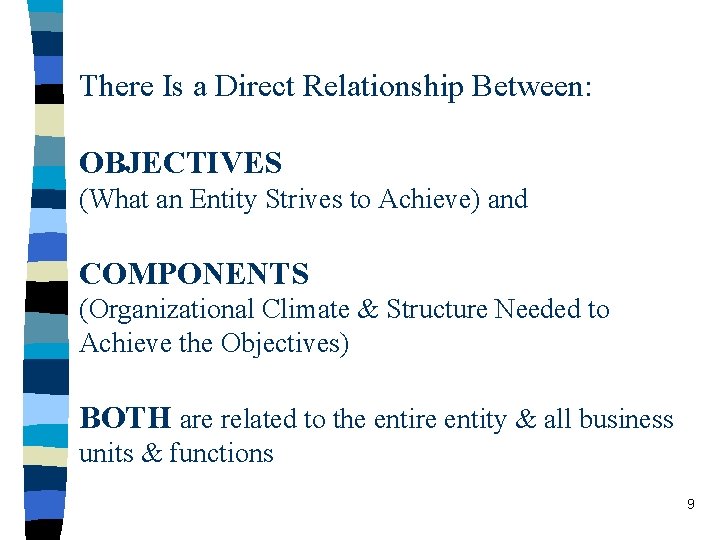
There Is a Direct Relationship Between: OBJECTIVES (What an Entity Strives to Achieve) and COMPONENTS (Organizational Climate & Structure Needed to Achieve the Objectives) BOTH are related to the entire entity & all business units & functions 9
COSO Pyramid 10
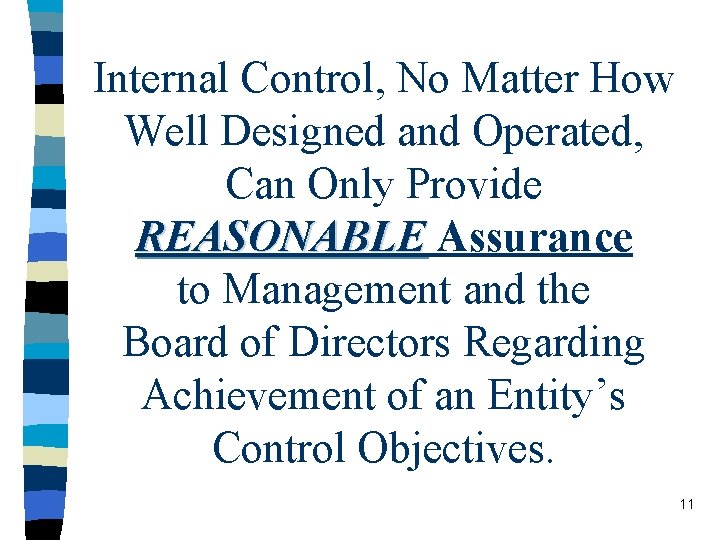
Internal Control, No Matter How Well Designed and Operated, Can Only Provide REASONABLE Assurance to Management and the Board of Directors Regarding Achievement of an Entity’s Control Objectives. 11
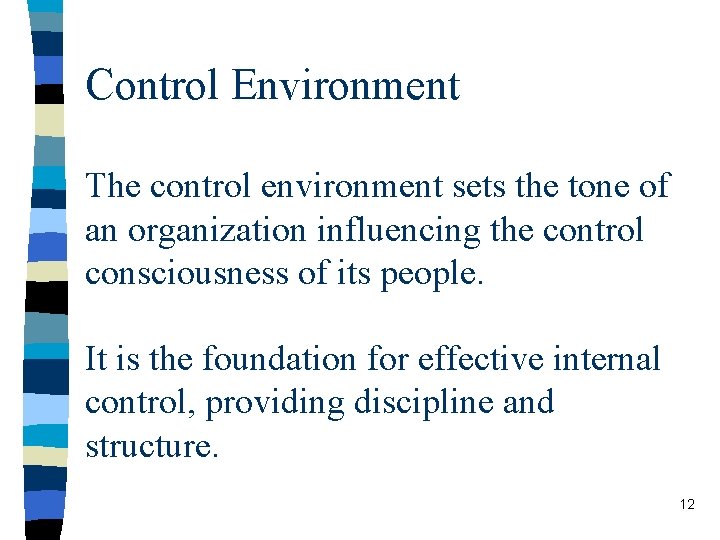
Control Environment The control environment sets the tone of an organization influencing the control consciousness of its people. It is the foundation for effective internal control, providing discipline and structure. 12
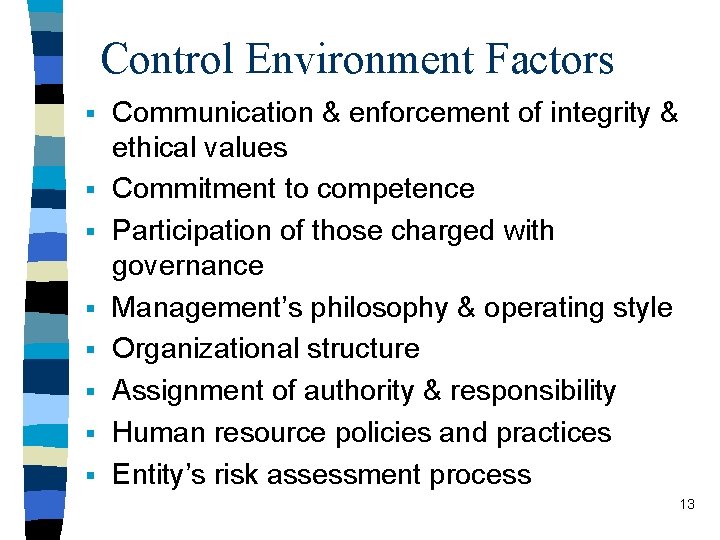
Control Environment Factors § Communication & enforcement of integrity & § § § § ethical values Commitment to competence Participation of those charged with governance Management’s philosophy & operating style Organizational structure Assignment of authority & responsibility Human resource policies and practices Entity’s risk assessment process 13
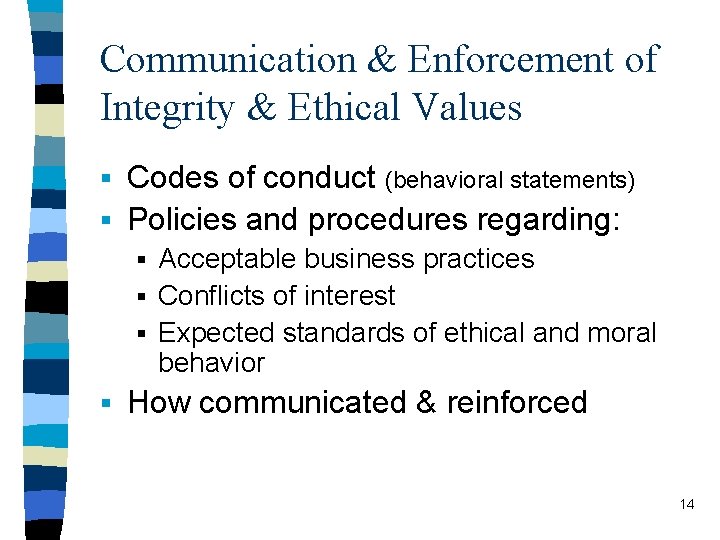
Communication & Enforcement of Integrity & Ethical Values § Codes of conduct (behavioral statements) § Policies and procedures regarding: § Acceptable business practices § Conflicts of interest § Expected standards of ethical and moral behavior § How communicated & reinforced 14
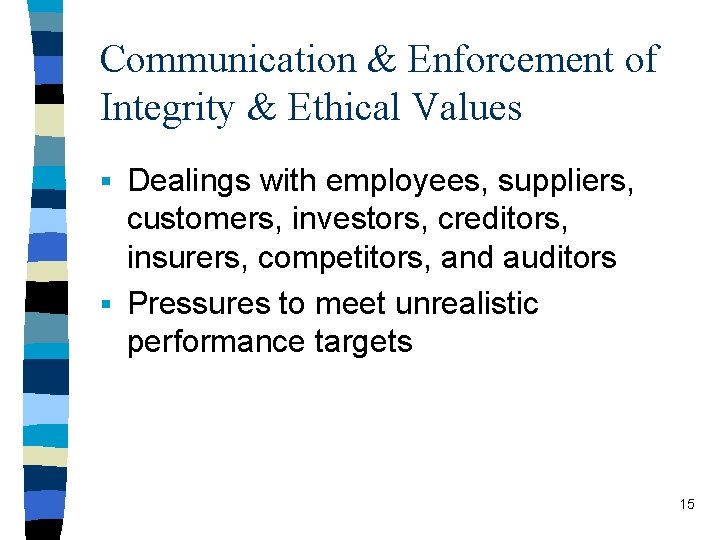
Communication & Enforcement of Integrity & Ethical Values § Dealings with employees, suppliers, customers, investors, creditors, insurers, competitors, and auditors § Pressures to meet unrealistic performance targets 15
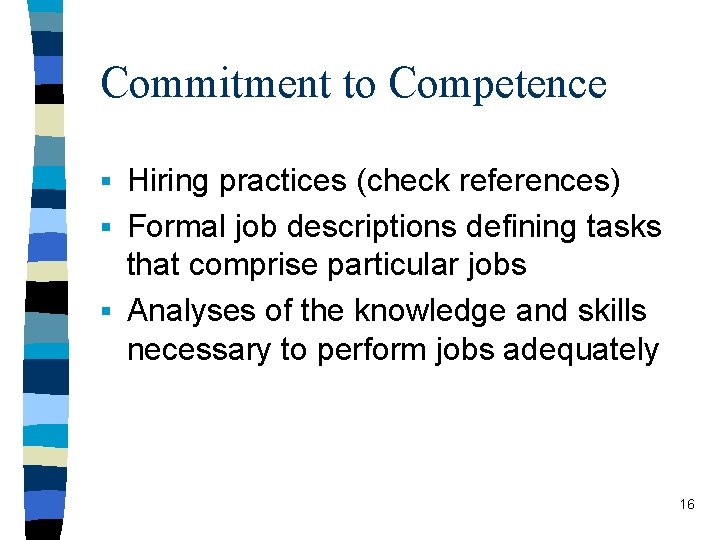
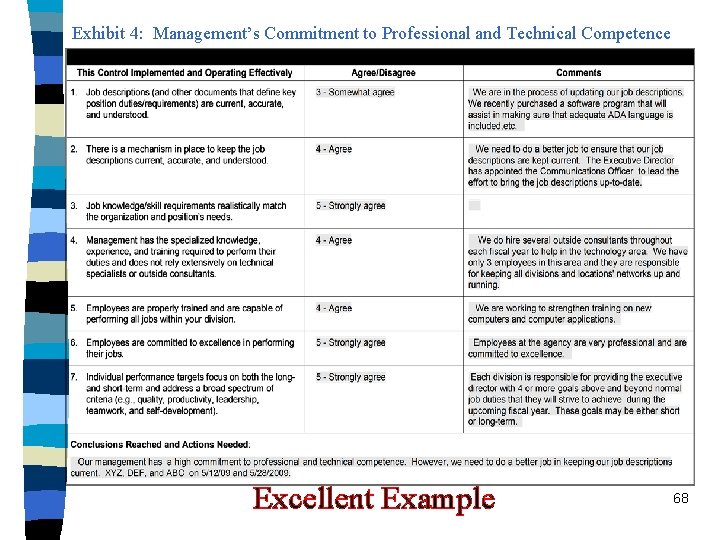
Commitment to Competence § Hiring practices (check references) § Formal job descriptions defining tasks that comprise particular jobs § Analyses of the knowledge and skills necessary to perform jobs adequately 16
Participation of Those Charged with Governance § Independence from management § Experience & stature of its members § Extent of its involvement and scrutiny of activities § Appropriateness of its actions § Information it receives 17
Participation of Those Charged with Governance § Degree to which difficult questions are raised and pursued with management § Interaction with internal and external auditors § Oversight of the design & effective operation of whistle-blower procedures § Oversight of the process for reviewing the effectiveness of the entity’s internal control 18
Management’s Philosophy and Operating Style Management philosophy is the set of shared beliefs and attitudes characterizing how the agency handles everything it does, from developing and implementing strategy to day -to-day activities. This philosophy reflects the agency’s values, influencing its culture and operating style, and affects how well fiscal programs can implement, maintain, and enforce control. 19
Management’s Philosophy and Operating Style Management philosophy appears in policy statements, oral and written communications, and decision-making. Management reinforces the philosophy more with everyday actions than with its words. 20
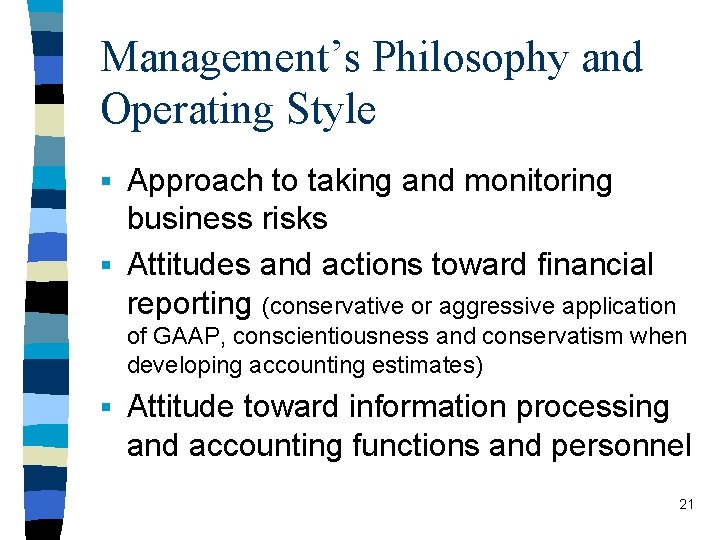
Management’s Philosophy and Operating Style § Approach to taking and monitoring business risks § Attitudes and actions toward financial reporting (conservative or aggressive application of GAAP, conscientiousness and conservatism when developing accounting estimates) § Attitude toward information processing and accounting functions and personnel 21
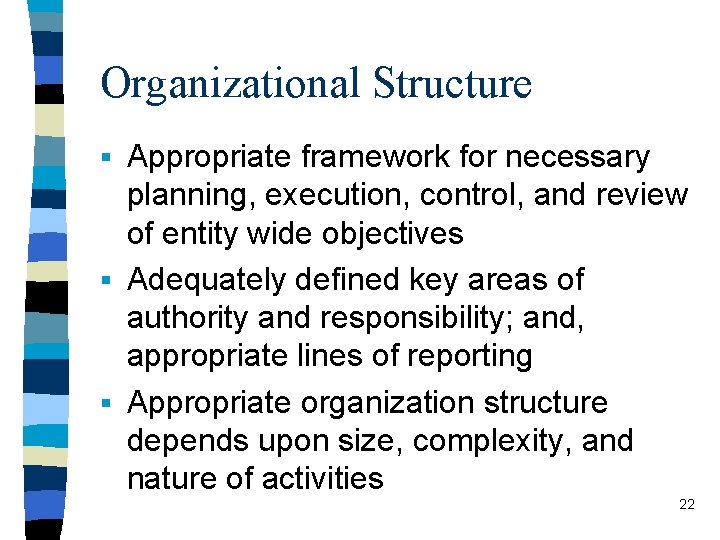
Organizational Structure § Appropriate framework for necessary planning, execution, control, and review of entity wide objectives § Adequately defined key areas of authority and responsibility; and, appropriate lines of reporting § Appropriate organization structure depends upon size, complexity, and nature of activities 22
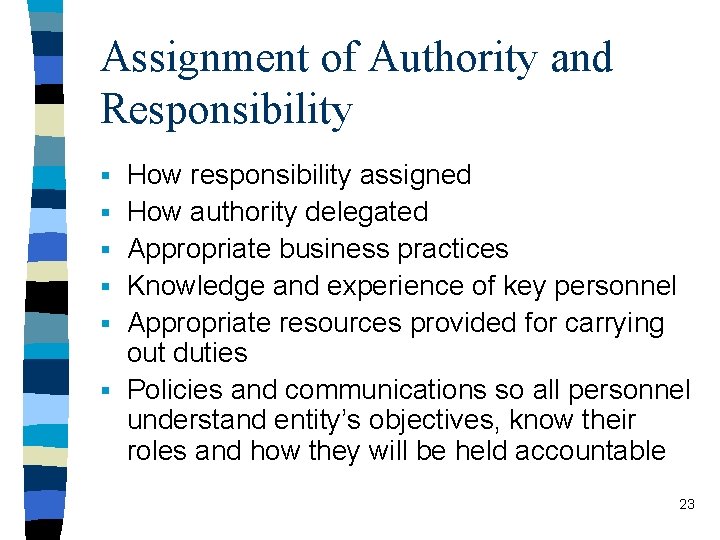
Assignment of Authority and Responsibility § How responsibility assigned § How authority delegated § Appropriate business practices § Knowledge and experience of key personnel § Appropriate resources provided for carrying out duties § Policies and communications so all personnel understand entity’s objectives, know their roles and how they will be held accountable 23
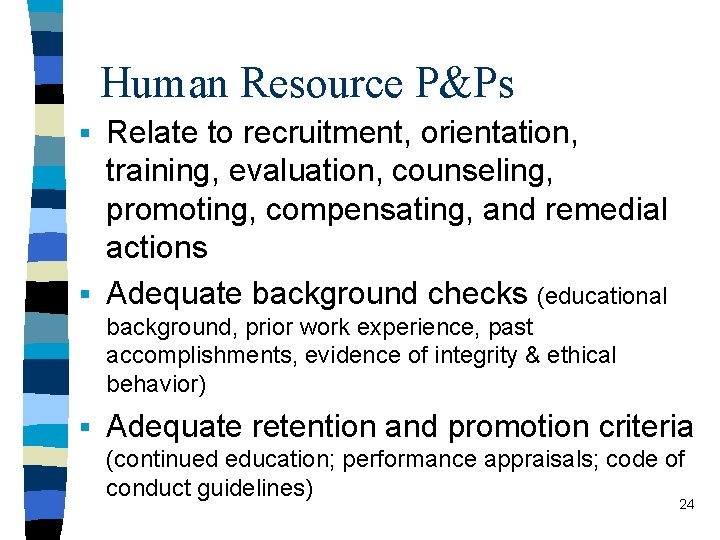
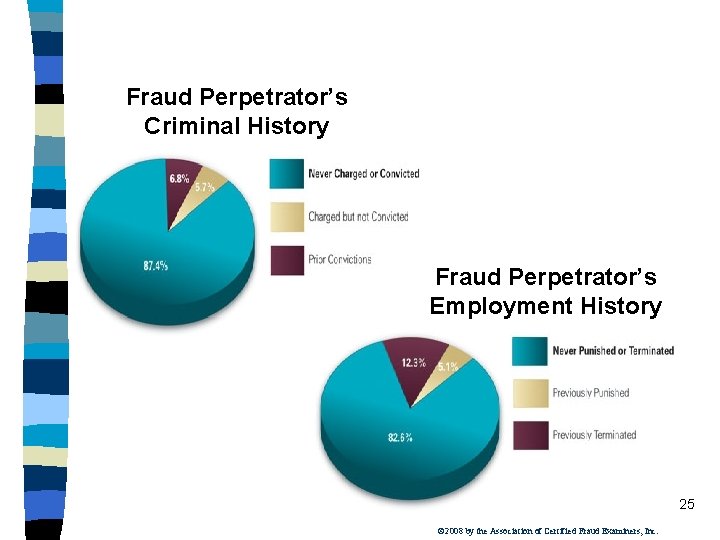
Human Resource P&Ps § Relate to recruitment, orientation, training, evaluation, counseling, promoting, compensating, and remedial actions § Adequate background checks (educational background, prior work experience, past accomplishments, evidence of integrity & ethical behavior) § Adequate retention and promotion criteria (continued education; performance appraisals; code of conduct guidelines) 24
Fraud Perpetrator’s Criminal History Fraud Perpetrator’s Employment History 25 © 2008 by the Association of Certified Fraud Examiners, Inc.
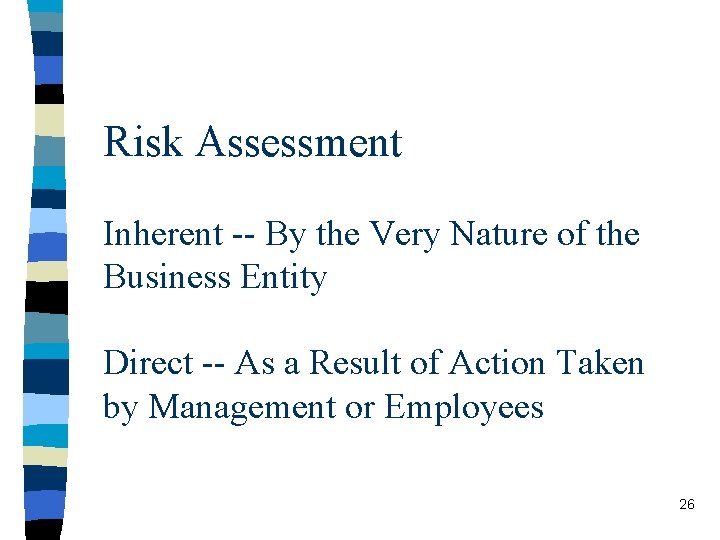
Risk Assessment Inherent -- By the Very Nature of the Business Entity Direct -- As a Result of Action Taken by Management or Employees 26
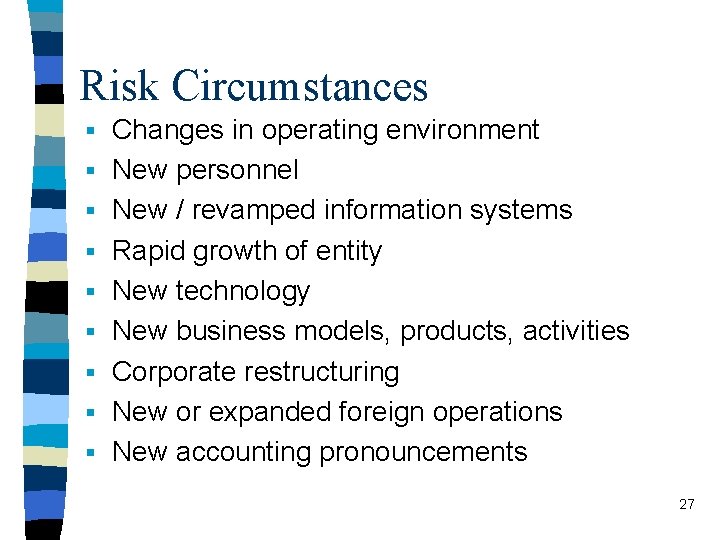
Risk Circumstances § Changes in operating environment § New personnel § New / revamped information systems § Rapid growth of entity § New technology § New business models, products, activities § Corporate restructuring § New or expanded foreign operations § New accounting pronouncements 27
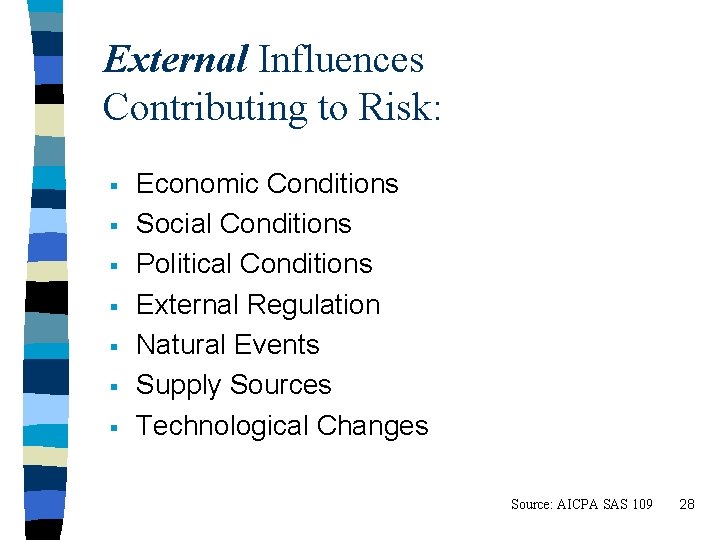
External Influences Contributing to Risk: § § § § Economic Conditions Social Conditions Political Conditions External Regulation Natural Events Supply Sources Technological Changes Source: AICPA SAS 109 28
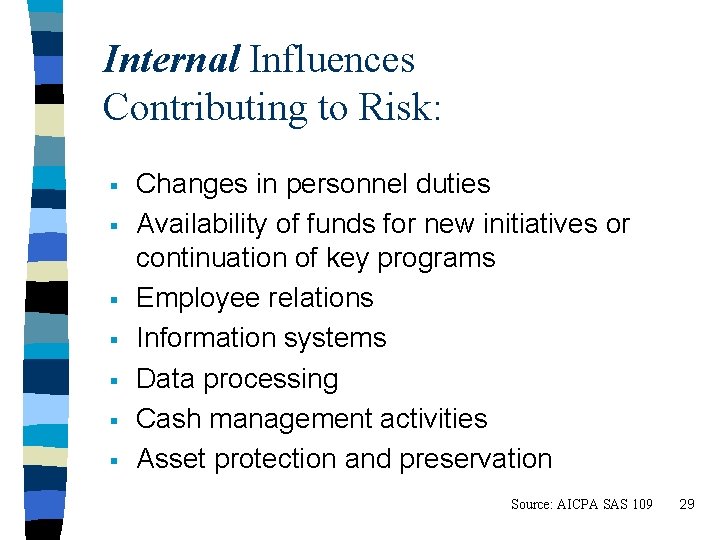
Internal Influences Contributing to Risk: § § § § Changes in personnel duties Availability of funds for new initiatives or continuation of key programs Employee relations Information systems Data processing Cash management activities Asset protection and preservation Source: AICPA SAS 109 29
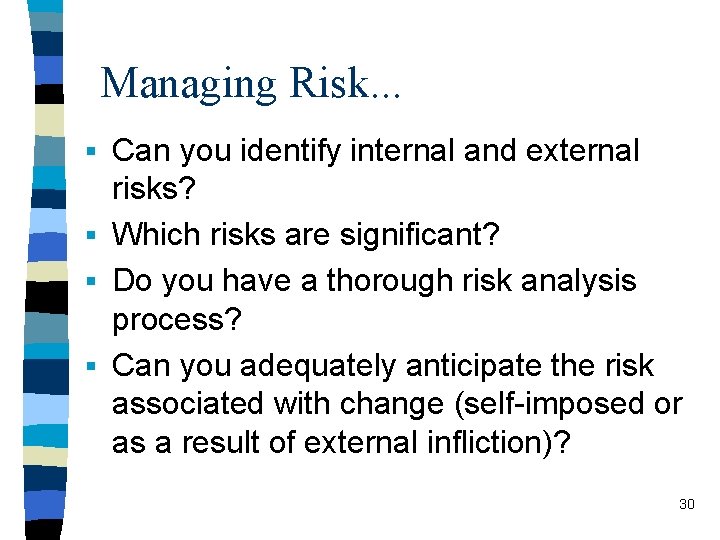
Managing Risk. . . § Can you identify internal and external risks? § Which risks are significant? § Do you have a thorough risk analysis process? § Can you adequately anticipate the risk associated with change (self-imposed or as a result of external infliction)? 30
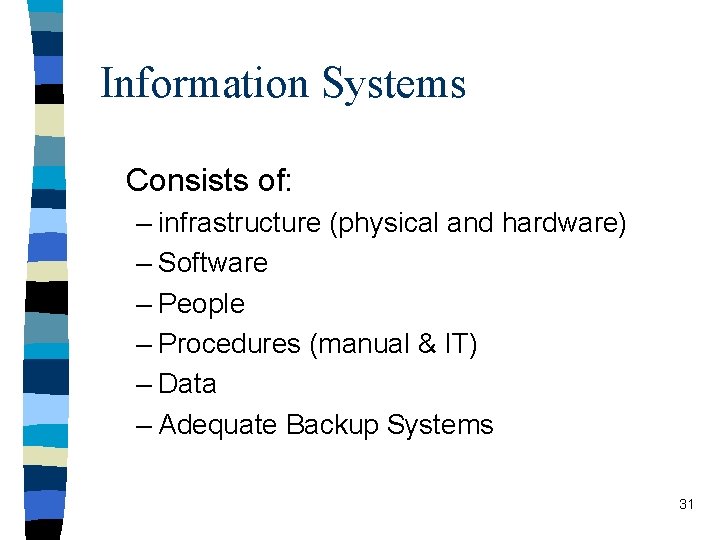
Information Systems Consists of: – infrastructure (physical and hardware) – Software – People – Procedures (manual & IT) – Data – Adequate Backup Systems 31
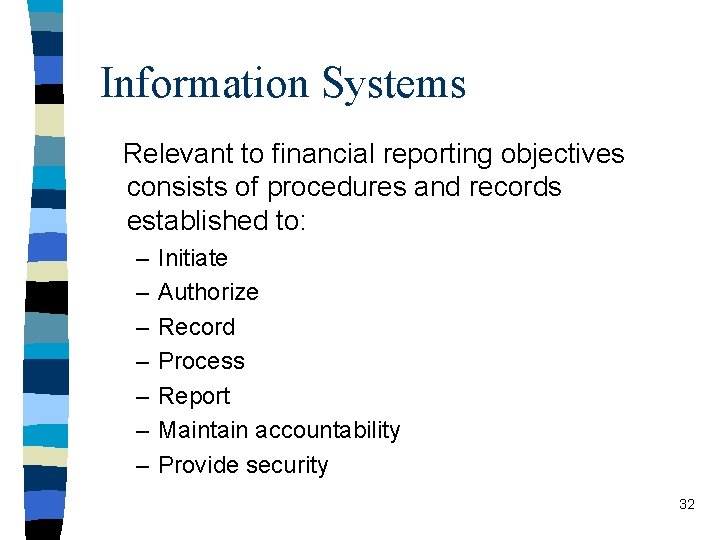
Information Systems Relevant to financial reporting objectives consists of procedures and records established to: – – – – Initiate Authorize Record Process Report Maintain accountability Provide security 32
Information Systems Encompasses methods and records that: – Identify and record all valid transactions – Describe transactions in sufficient detail & on a timely basis – Measure the value of transactions – Determine proper accounting time period – Properly present transactions & related disclosures in the financial statements 33
Control Activities. . . …Are the Policies and Procedures That Help Ensure Management Directives Are Carried Out and Necessary Actions Are Taken to Address Risks that Threaten the Achievement of the Entity’s Objectives. 34
Relevant Control Activities. . . Provide for Performance Reviews Provide for Information Processing (accuracy, completeness, & authorization – application controls & general controls) Provide Physical Controls (physical security of Assets, Documents, & Records; reconciliations & inventory counts) Adequate Segregation of Duties 35
Monitoring Activities. . . § Ongoing -- performance evaluation § Corroboration of information -- bank § § reconciliations, etc. Comparison of physical assets to book assets -- inventories Internal and external audits -effectiveness Codes of ethics certification Training and education 36
Monitoring. . . If No One Ever Looks at or Reviews the Internal Control Environment -What Good Is It Doing? 37
Benefits of Internal Control. . . A Well-designed & Well-functioning Internal Control System Can Help an Entity Achieve Its Performance and Profitability Targets 38
It Can Help Prevent Loss of Resources, Help Ensure Reliable Financial Reporting, and Help Ensure That the Entity Complies With Laws and Regulations 39
In Other Words, Internal Control Systems Can Help an Entity Get to Where It Wants to Go and Avoid Pitfalls and Surprises Along the Way 40
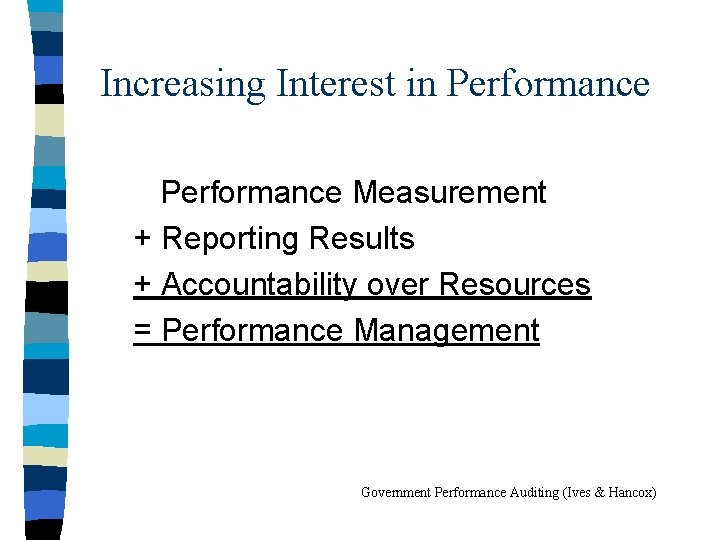
Increasing Interest in Performance Measurement + Reporting Results + Accountability over Resources = Performance Management Government Performance Auditing (Ives & Hancox)
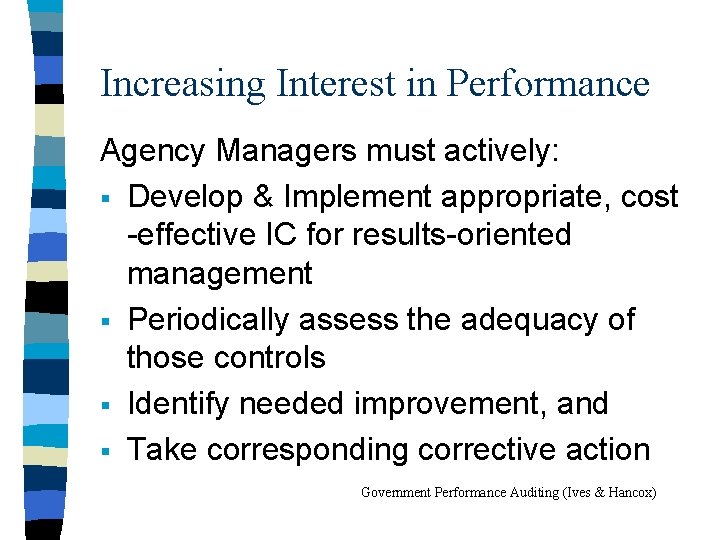
Increasing Interest in Performance Agency Managers must actively: § Develop & Implement appropriate, cost -effective IC for results-oriented management § Periodically assess the adequacy of those controls § Identify needed improvement, and § Take corresponding corrective action Government Performance Auditing (Ives & Hancox)
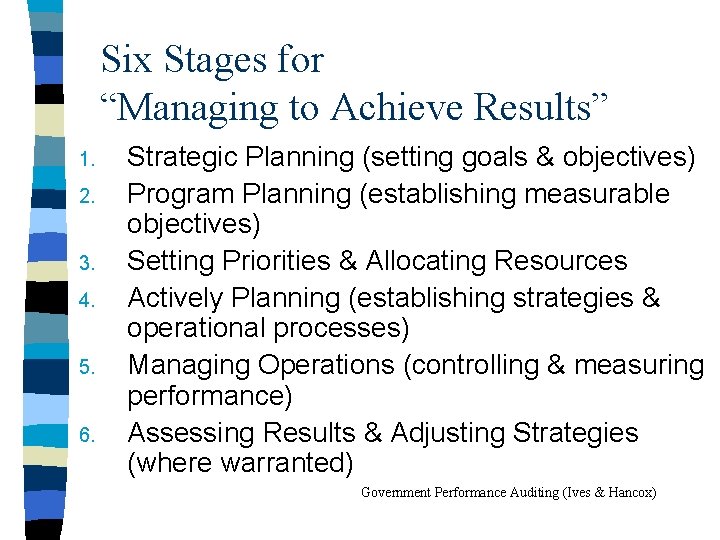
Six Stages for “Managing to Achieve Results” 1. 2. 3. 4. 5. 6. Strategic Planning (setting goals & objectives) Program Planning (establishing measurable objectives) Setting Priorities & Allocating Resources Actively Planning (establishing strategies & operational processes) Managing Operations (controlling & measuring performance) Assessing Results & Adjusting Strategies (where warranted) Government Performance Auditing (Ives & Hancox)
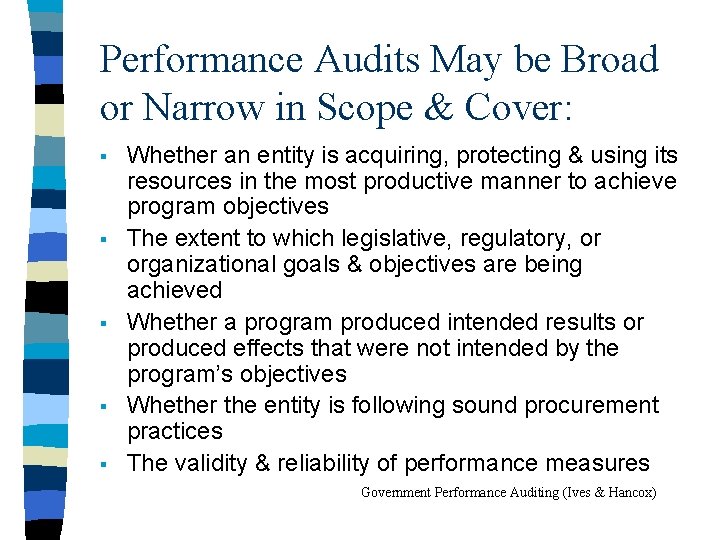
Performance Audits May be Broad or Narrow in Scope & Cover: § § § Whether an entity is acquiring, protecting & using its resources in the most productive manner to achieve program objectives The extent to which legislative, regulatory, or organizational goals & objectives are being achieved Whether a program produced intended results or produced effects that were not intended by the program’s objectives Whether the entity is following sound procurement practices The validity & reliability of performance measures Government Performance Auditing (Ives & Hancox)
When Evaluating Economy & Efficiency of Operations – Ascertain: § § § Whether resources are properly deployed Whethere are idle resources or overstaffed functions Whether resources are acquired at a reasonable price Government Performance Auditing (Ives & Hancox)
Types of Subjects Covered in Performance Audits § § § Progress made in achieving goals of a specific program Assessment of the hiring, training & supervision of staff of a program State oversight & local government compliance with regulation of a program Assessment of a program intended to increase/decrease aspect of a program Assessment of the efficiency & effectiveness of a program Assessment of program service delivery & financial management Government Performance Auditing (Ives & Hancox)
Limitations of Internal Control § Not a cure all § Cannot ensure entity’s success or survival § Cannot ensure entity will achieve operation, financial reporting, and compliance objectives § Effectiveness limited by human judgment and hasty decision making 47
§ System can breakdown due to misunderstandings, mistakes in judgment, or errors committed due to carelessness, distraction, or fatigue § Only as effective as the people who are responsible for its functioning § Collusion can result in control failure § Limited resources (cost/benefit) § excessive control is costly & counterproductive § too little control presents undue risk to entity 48
Everyone in an Organization Has Some Responsibility for Internal Control; However, MANAGEMENT Is Responsible! 49
Deficiency in Internal Control Statement of Auditing Standard (SAS) 115 entitled “Communicating Internal Control Related Matters Identified in an Audit” defines deficiency in internal control, significant deficiency, and material weakness and provides guidance for auditors on evaluating the severity of the deficiencies in internal control. 50
Deficiency in Internal Control Determination as to whether a deficiency is significant or material is based upon whether a reasonable person would derive the same conclusion as the auditor or whether prudent officials having knowledge of the same facts and circumstances would agree with the auditor’s classification of the deficiency. 51
Deficiency in Internal Control A deficiency in internal control exists when the design or operation of a control does not allow management or employees, in the normal course of performing their assigned functions, to prevent or detect and correct misstatements on a timely basis. 52
Deficiency in Internal Control Significant deficiency is defined as a deficiency or combination of deficiencies, in internal control that is less severe than a material weaknesses, yet important enough to merit attention by those charged with governance. 53
Deficiency in Internal Control A material weakness is a deficiency, or combination of deficiencies, in internal control, such that there is a reasonable possibility that a material misstatement of the entity’s financial statements will not be prevented, or detected and corrected on a timely basis. 54
Deficiency in Internal Control One situation when a deficiency in internal control should be regarded as at least a significant deficiency and a strong indicator of a material weakness – ineffective oversight of the entity’s financial reporting and internal control by senior management and those charged with governance. 55
Indicators – Material Weakness § Identification of fraud, whether or not material, on the part of senior management. § Restatement of previously issued financial statements to reflect the correction of a material misstatement due to error or fraud § Identification by the auditor of a material misstatement of the financial statements under audit in circumstances that indicate that the misstatement would not have been detected by the entity’s internal control. § Ineffective oversight of the entity’s financial reporting and internal control by those charged with governance. 56
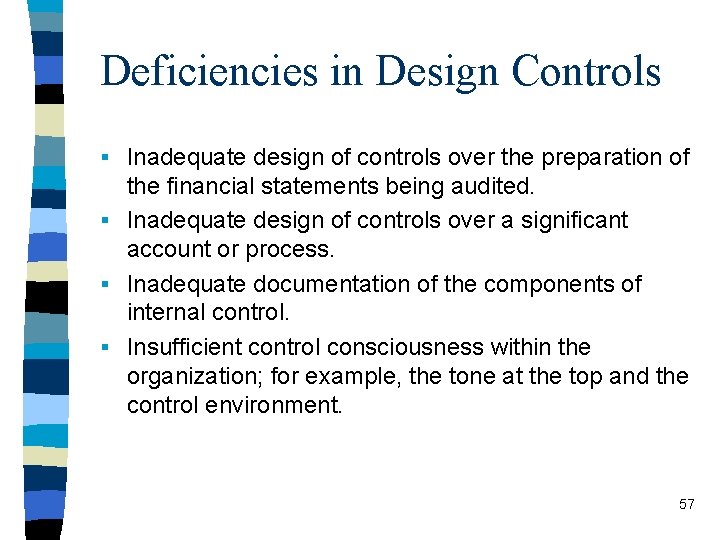
Deficiencies in Design Controls § Inadequate design of controls over the preparation of the financial statements being audited. § Inadequate design of controls over a significant account or process. § Inadequate documentation of the components of internal control. § Insufficient control consciousness within the organization; for example, the tone at the top and the control environment. 57
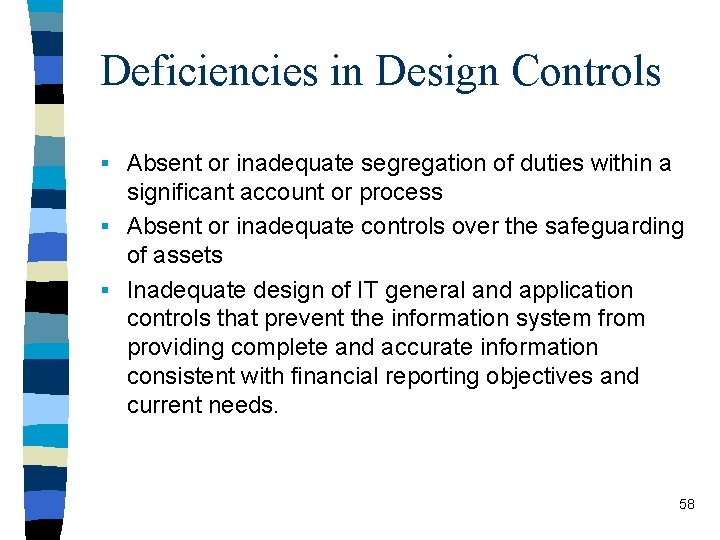
Deficiencies in Design Controls § Absent or inadequate segregation of duties within a significant account or process § Absent or inadequate controls over the safeguarding of assets § Inadequate design of IT general and application controls that prevent the information system from providing complete and accurate information consistent with financial reporting objectives and current needs. 58
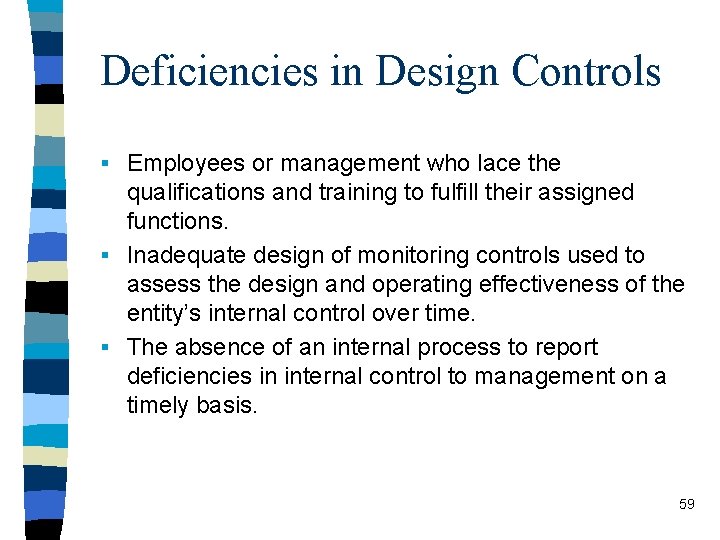
Deficiencies in Design Controls § Employees or management who lace the qualifications and training to fulfill their assigned functions. § Inadequate design of monitoring controls used to assess the design and operating effectiveness of the entity’s internal control over time. § The absence of an internal process to report deficiencies in internal control to management on a timely basis. 59
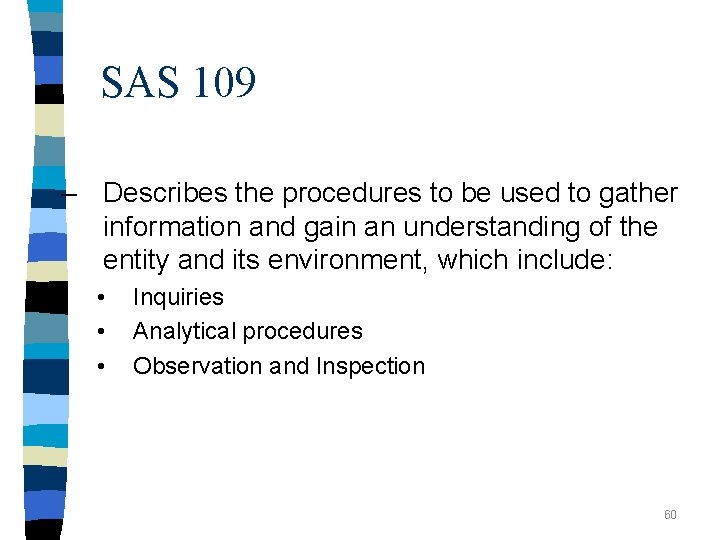
SAS 109 – Describes the procedures to be used to gather information and gain an understanding of the entity and its environment, which include: • • • Inquiries Analytical procedures Observation and Inspection 60
• SAS 109 Requires a brainstorming session, which may be conducted concurrently with the SAS 99 session 61
SAS 109 directly links the understanding of the entity and its internal control with the assessment of risk and the design of further audit procedures – The understanding of the entity and its environment, including its internal control, provides audit evidence necessary to support the auditor’s assessment of risk 62
Under the previous standard, the primary purpose of gaining an understanding of internal control was just to plan the audit. 63
§ SAS 109 requires auditors to evaluate the design of controls and determine whether they have been implemented. Evaluating the design of a control involves considering whether the control, individually or in combination with other controls, is capable of effectively preventing or detecting and correcting material misstatements. § Thus, the understanding of internal control provides audit evidence that ultimately supports the auditor’s opinion on the financial statements. § It is anticipated that this phase of the audit will require more work than simply gaining understanding of internal control 64
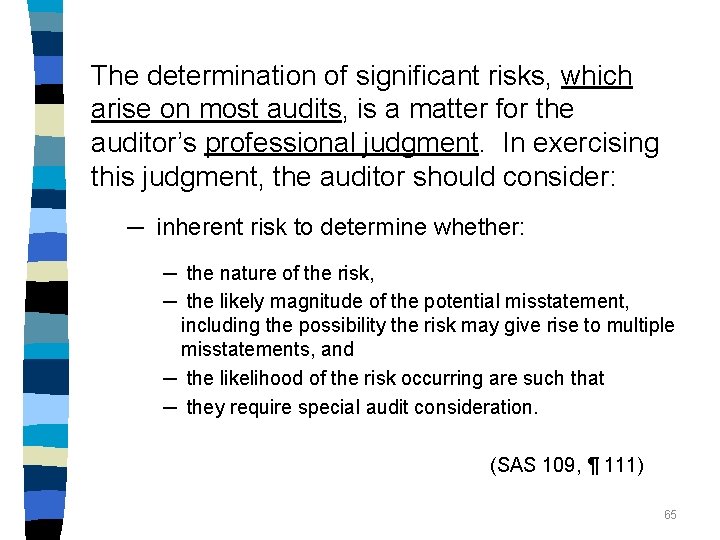
The determination of significant risks, which arise on most audits, is a matter for the auditor’s professional judgment. In exercising this judgment, the auditor should consider: ─ inherent risk to determine whether: ─ the nature of the risk, ─ the likely magnitude of the potential misstatement, including the possibility the risk may give rise to multiple misstatements, and ─ the likelihood of the risk occurring are such that ─ they require special audit consideration. (SAS 109, ¶ 111) 65
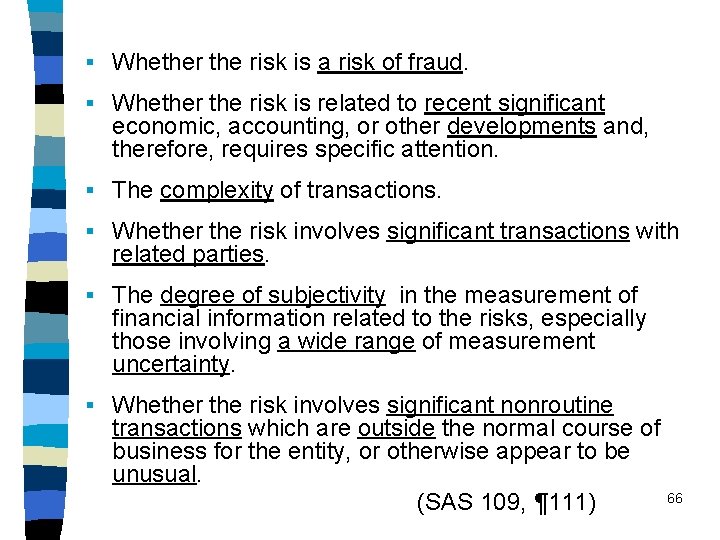
§ Whether the risk is a risk of fraud. § Whether the risk is related to recent significant economic, accounting, or other developments and, therefore, requires specific attention. § The complexity of transactions. § Whether the risk involves significant transactions with related parties. § The degree of subjectivity in the measurement of financial information related to the risks, especially those involving a wide range of measurement uncertainty. § Whether the risk involves significant nonroutine transactions which are outside the normal course of business for the entity, or otherwise appear to be unusual. 66 (SAS 109, ¶ 111)
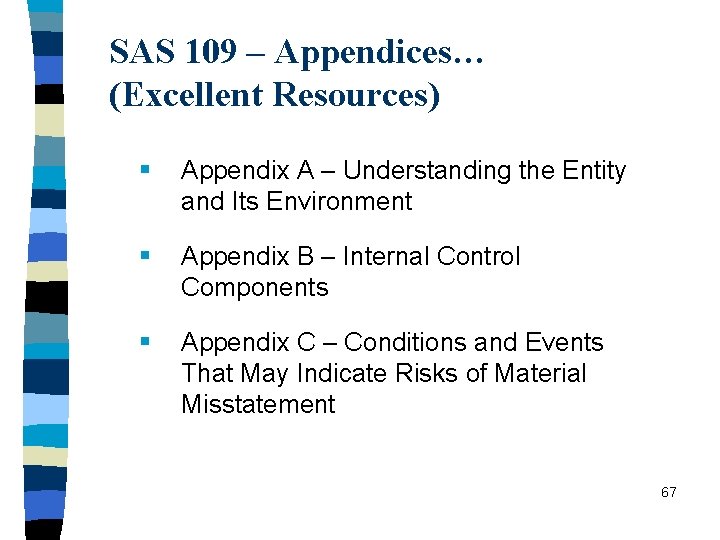
SAS 109 – Appendices… (Excellent Resources) § Appendix A – Understanding the Entity and Its Environment § Appendix B – Internal Control Components § Appendix C – Conditions and Events That May Indicate Risks of Material Misstatement 67
Exhibit 4: Management’s Commitment to Professional and Technical Competence Excellent Example 68
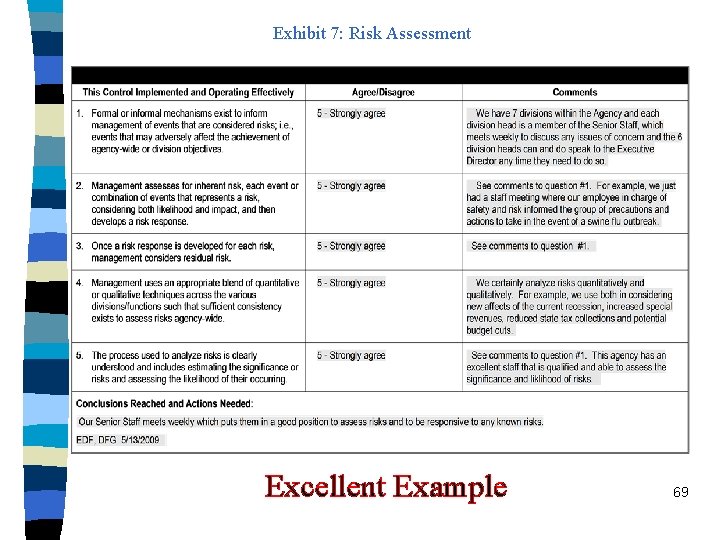
Exhibit 7: Risk Assessment Excellent Example 69
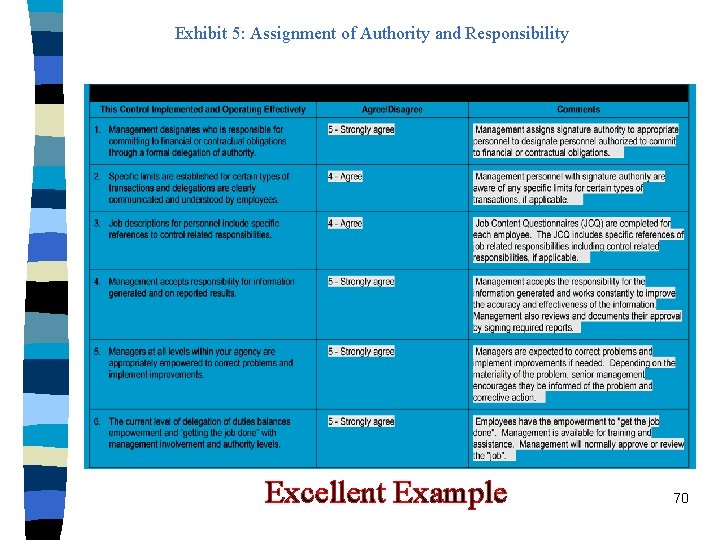
Exhibit 5: Assignment of Authority and Responsibility Excellent Example 70
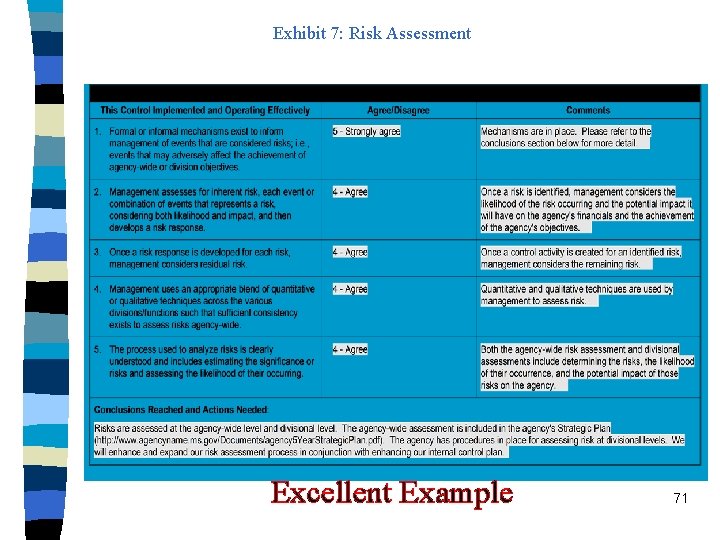
Exhibit 7: Risk Assessment Excellent Example 71
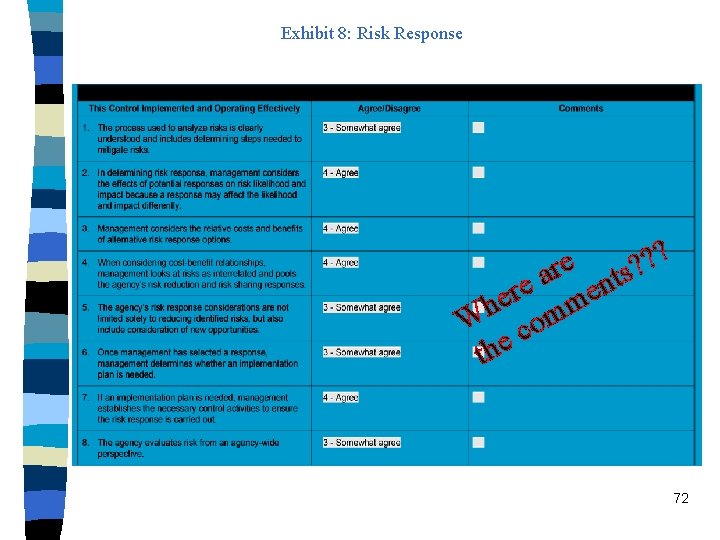
Exhibit 8: Risk Response ? ? e ? r s a t n e r e e m h m W co the 72
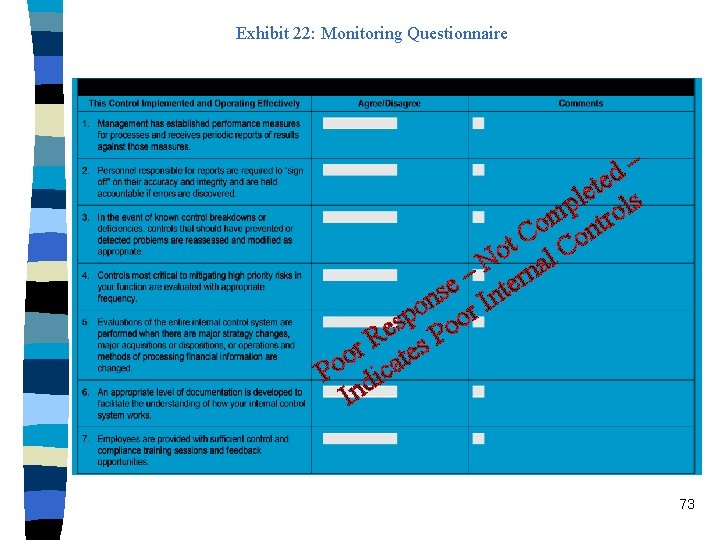
Exhibit 22: Monitoring Questionnaire – d e t e l ls p m ntro o C Co t o al N – ern e s Int n o or p s e Po R r tes o Po dica In 73
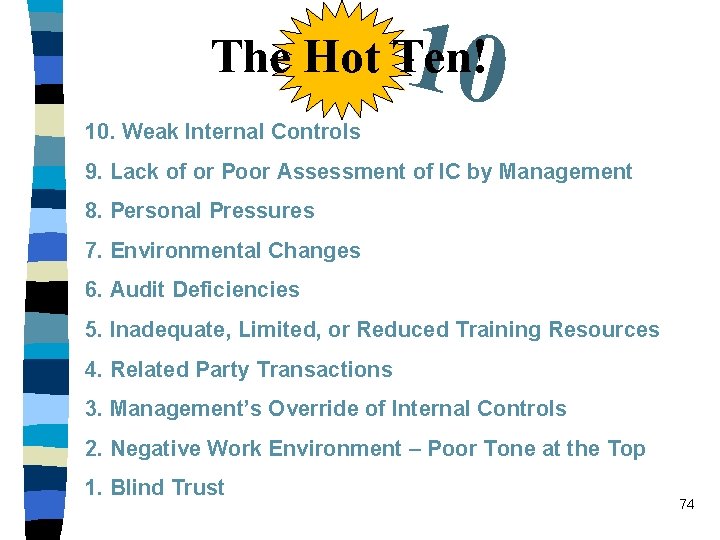
10 The Hot Ten! 10. Weak Internal Controls 9. Lack of or Poor Assessment of IC by Management 8. Personal Pressures 7. Environmental Changes 6. Audit Deficiencies 5. Inadequate, Limited, or Reduced Training Resources 4. Related Party Transactions 3. Management’s Override of Internal Controls 2. Negative Work Environment – Poor Tone at the Top 1. Blind Trust 74
Questions? Contact Information William A. (Billy) Morehead, Ph. D. , CGFM, CPA, CPM Delta State University DSU Box 3222 1003 West Sunflower Road Cleveland, MS 38733 Phone: 662 -846 -4180 Fax: 662 -846 -4429 Email: wmorehed@deltastate. edu