
Internal Causes of Change A 2 Business Studies
Internal Causes of Change A 2 Business Studies
Aims and Objectives Aim: • Understand methods of change Objectives: • Define retrenchment, MB-O and PEO • Explain the process of each of the above • Analyse the process of each of the above
External Growth Merger Investigation http: //news. bbc. co. uk/1/hi/business/861 0124. stm http: //www. bbc. co. uk/news/business 11866666

Should the merger of British Airways and Iberia Airlines go ahead or not?

Retrenchment • The reduction of business costs in order to become more financially stable, increase profits and to move out of loss-making areas of operation. • In groups discuss the benefits and drawbacks of retrenchment.
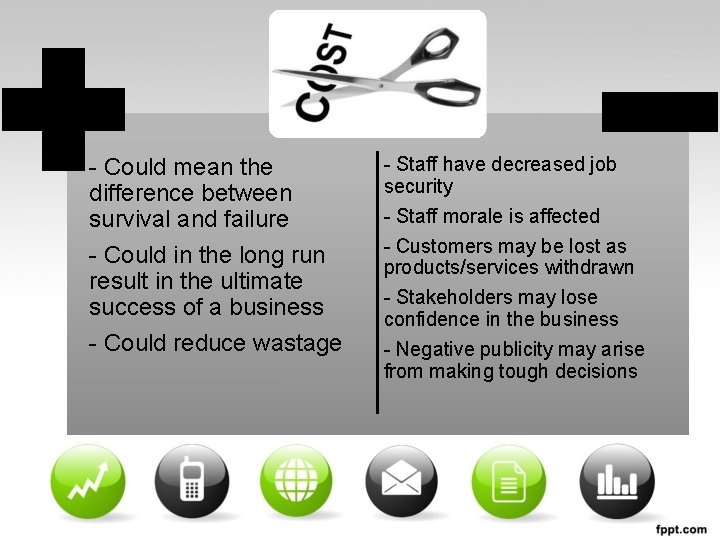
- Could mean the difference between survival and failure - Could in the long run result in the ultimate success of a business - Could reduce wastage - Staff have decreased job security - Staff morale is affected - Customers may be lost as products/services withdrawn - Stakeholders may lose confidence in the business - Negative publicity may arise from making tough decisions
Easing Retrenchment • To limit the negative effects of retrenchment: 1 2 3 4 5 • Consult with staff and TU on job losses • Give clear reasons for retrenchment • State when retrenchment will take place • Provide and explain assistance given to employees • Reassure staff to be retained about job security, salaries etc.

CHANGES IN OWNERS/LEADERS
Management Buy Outs (MB-O) • Form of ownership where a company’s existing managers acquire a significant part or all of a business. ?
Management Buy Outs (MB-O) • Discuss the advantages and disadvantages of MB-Os. ?
- Managers incentivised to work hard, no divorce between management and control. - Style of leadership may become more bureaucratic and decision making quicker - Sale of a division will raise capital for parent company - Many MB-Os are financed by debt, which makes the new company subject to economic conditions. - If bought from a parent company will now lose the support and backing of the parent company.

Flotation on Stock Exchange • http: //www. bbc. co. uk/news/technology-16845036 • Conversion to a PLC • Only feasible if can justify growth plan and need for capital • AIM – alternative investment markets smaller companies • Stock Exchange – larger businesses with history of trading • Discuss the benefits and drawbacks of flotation.
- Rewards success of entrepreneurs - Allows access to capital for expansion - Gives higher market value. - Status of business improved. - Cost of flotation may too high. Publications etc. - Divorce of ownership and control could occur - Greater transparency and disclosure of company details. - Risk of takeover if 50% or more shares bought.
Private Equity Ownership • When wealthy investors buy out a business which is usually under-performing. • Become privately owned and no longer listed on stock exchange. • Substantial tax benefits – accounts no longer have to be published. • Unions argue that these investors are only interested in short term profits and not jobs. • Owners argue no division of ownership and control and may lead to LR growth.
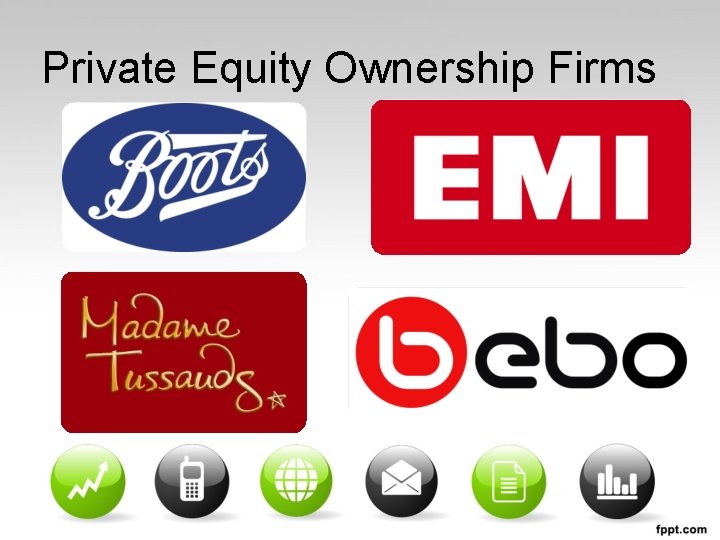
Private Equity Ownership Firms
Plenary • Define MB-O • Define Flotation • Define Private equity ownership • Provide examples of each of the above
- Slides: 16