
Internal Anatomy of Teeth Dr Mohammad Hammad Endodontics

- Slides: 19
Internal Anatomy of Teeth Dr. Mohammad Hammad
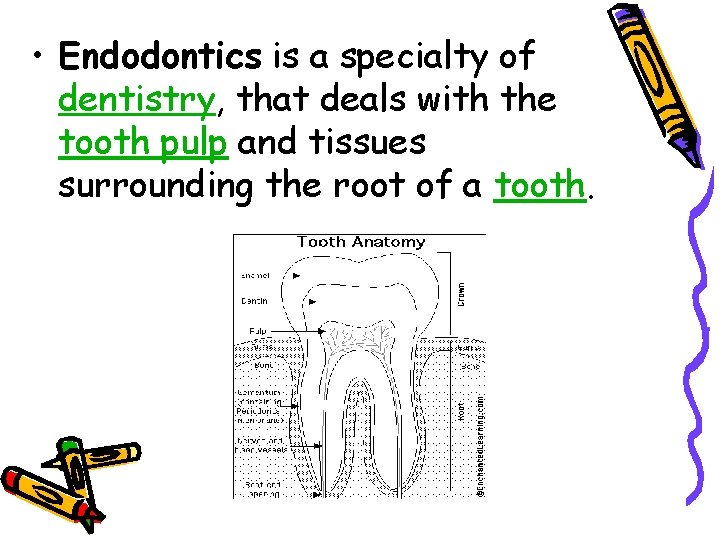
• Endodontics is a specialty of dentistry, that deals with the tooth pulp and tissues surrounding the root of a tooth.
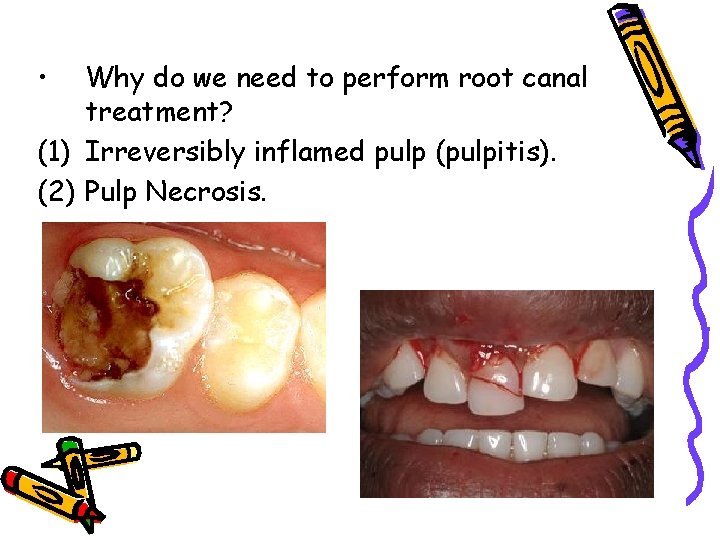
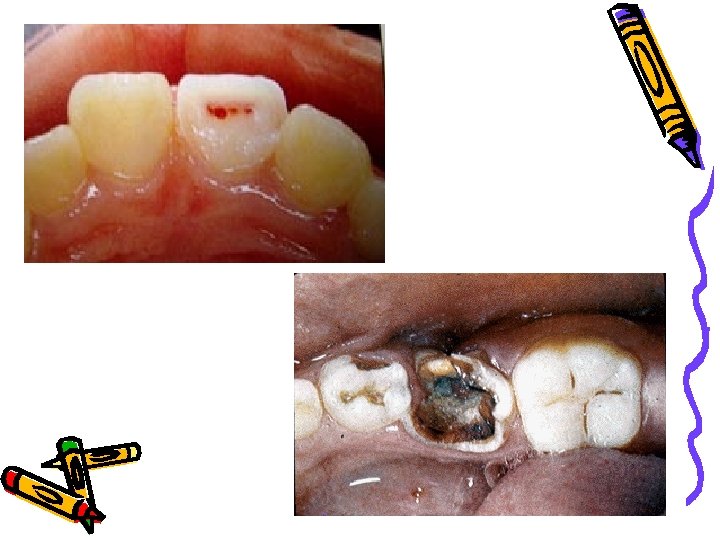
• Why do we need to perform root canal treatment? (1) Irreversibly inflamed pulp (pulpitis). (2) Pulp Necrosis.
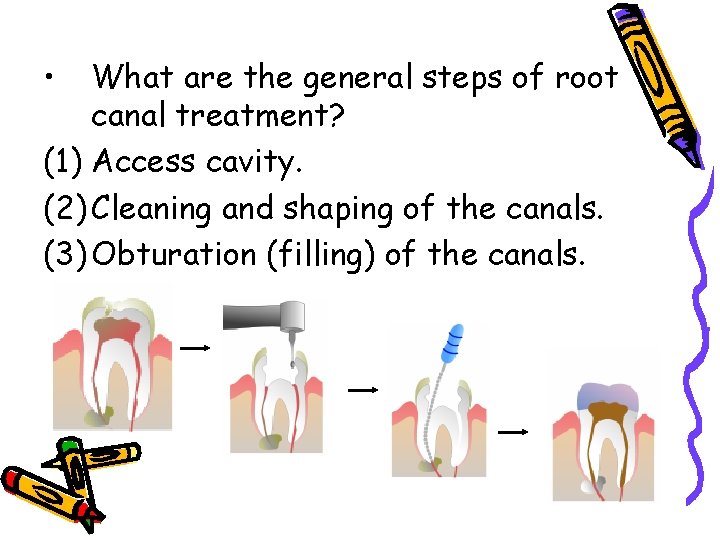
• What are the general steps of root canal treatment? (1) Access cavity. (2) Cleaning and shaping of the canals. (3) Obturation (filling) of the canals.
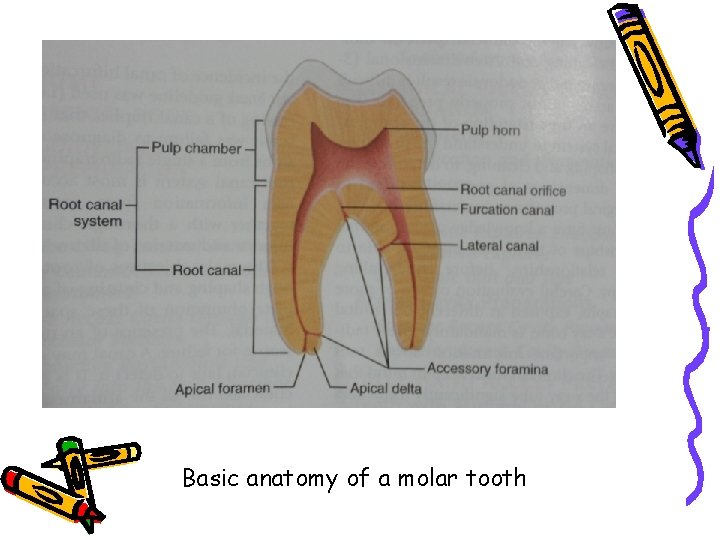
• Root canal system: chamber and canals. • Root canals begins at the orifice and ends at the apical foramen. • Most root canals are curved. • Accessory canals: small canals extending from pulp to peridontium (horizontal, vertical, lateral or furcational).
Basic anatomy of a molar tooth
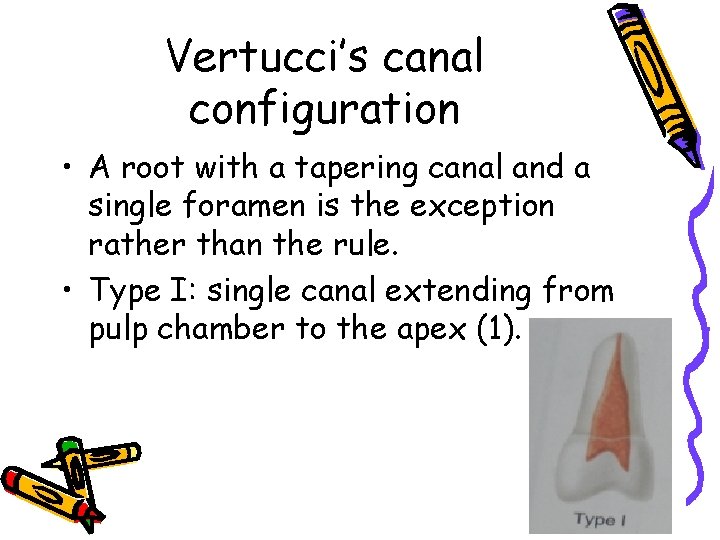
Vertucci’s canal configuration • A root with a tapering canal and a single foramen is the exception rather than the rule. • Type I: single canal extending from pulp chamber to the apex (1).
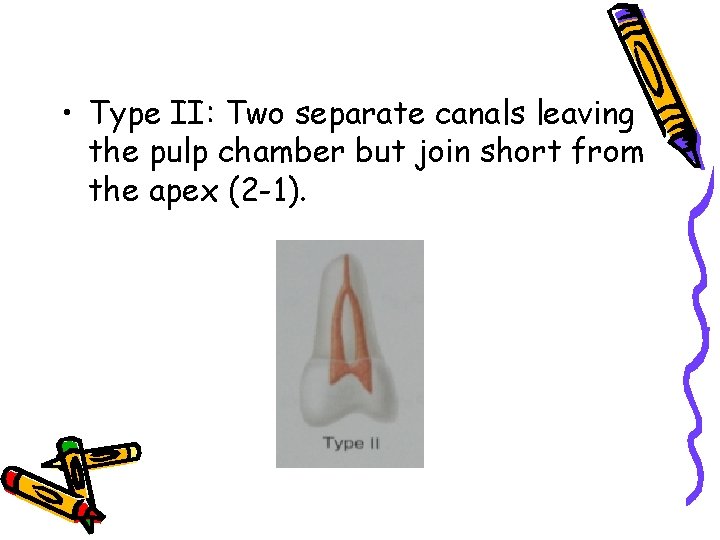
• Type II: Two separate canals leaving the pulp chamber but join short from the apex (2 -1).
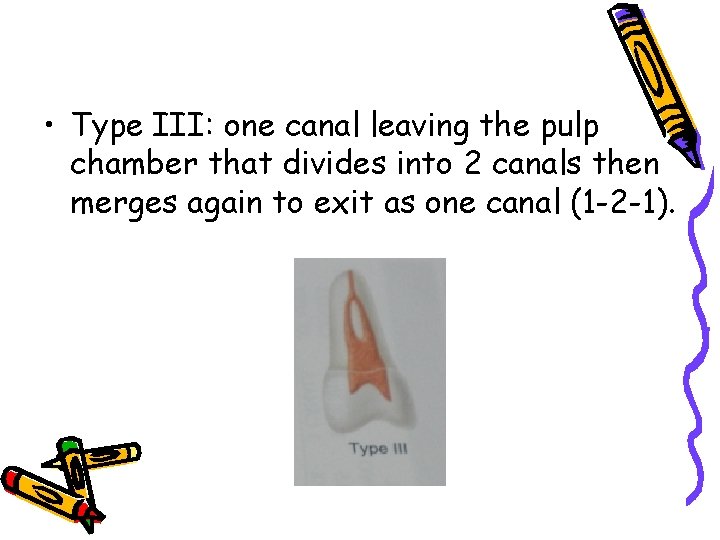
• Type III: one canal leaving the pulp chamber that divides into 2 canals then merges again to exit as one canal (1 -2 -1).
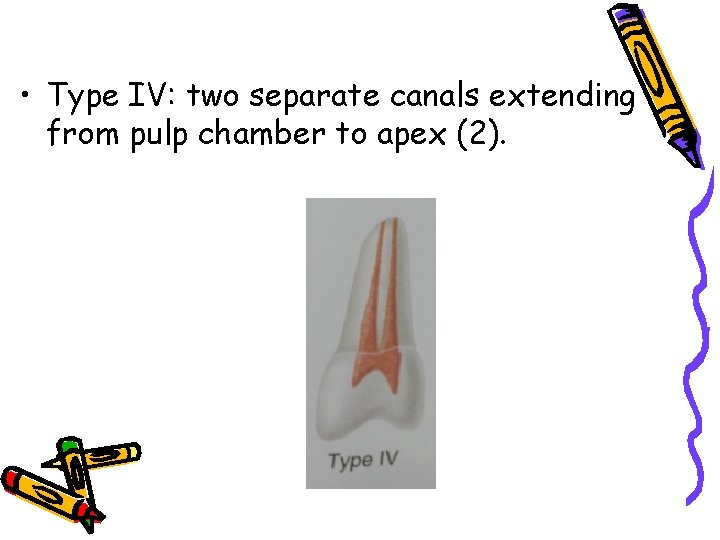
• Type IV: two separate canals extending from pulp chamber to apex (2).
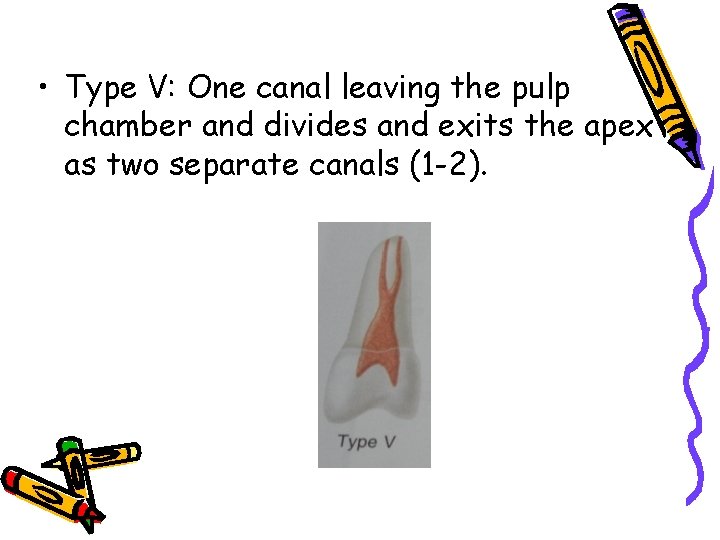
• Type V: One canal leaving the pulp chamber and divides and exits the apex as two separate canals (1 -2).
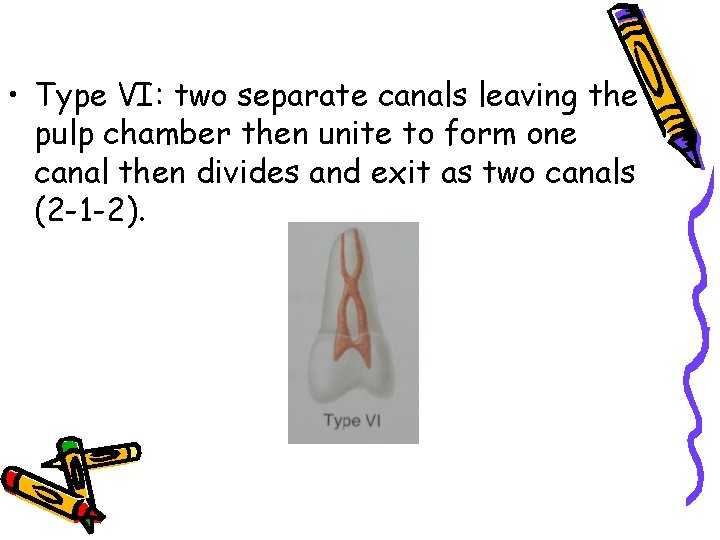
• Type VI: two separate canals leaving the pulp chamber then unite to form one canal then divides and exit as two canals (2 -1 -2).
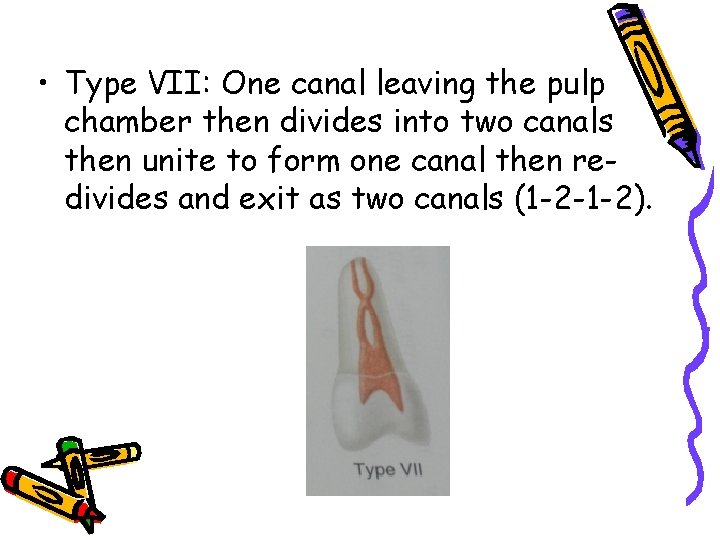
• Type VII: One canal leaving the pulp chamber then divides into two canals then unite to form one canal then redivides and exit as two canals (1 -2 -1 -2).
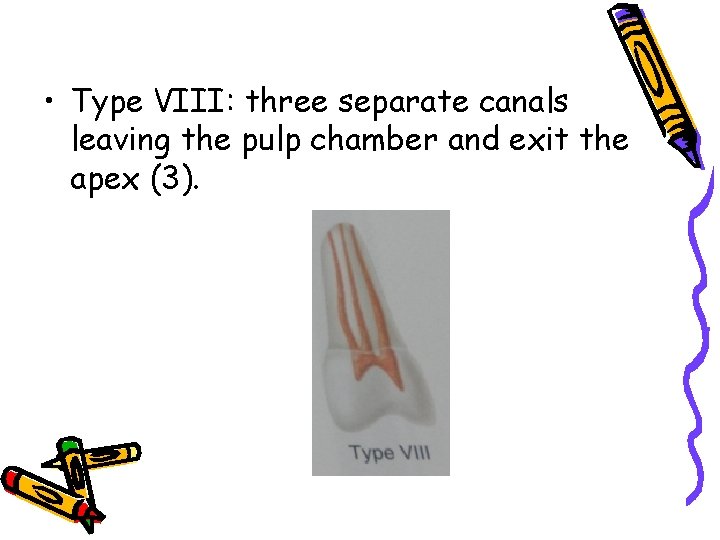
• Type VIII: three separate canals leaving the pulp chamber and exit the apex (3).
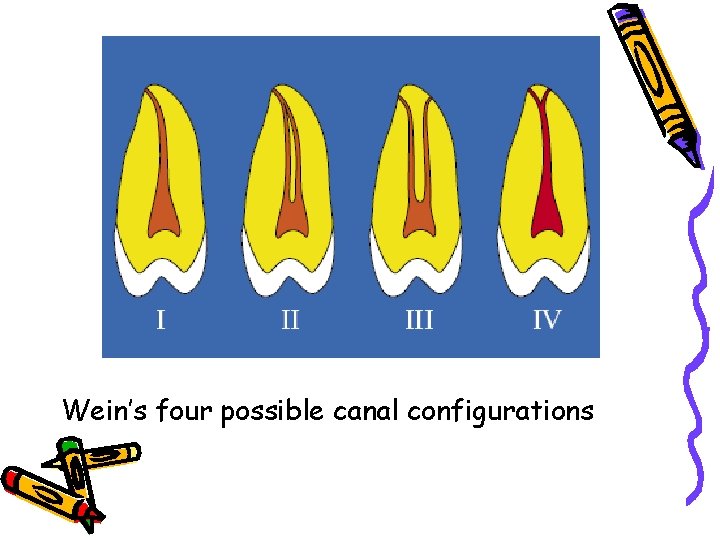
Wein’s four possible canal configurations
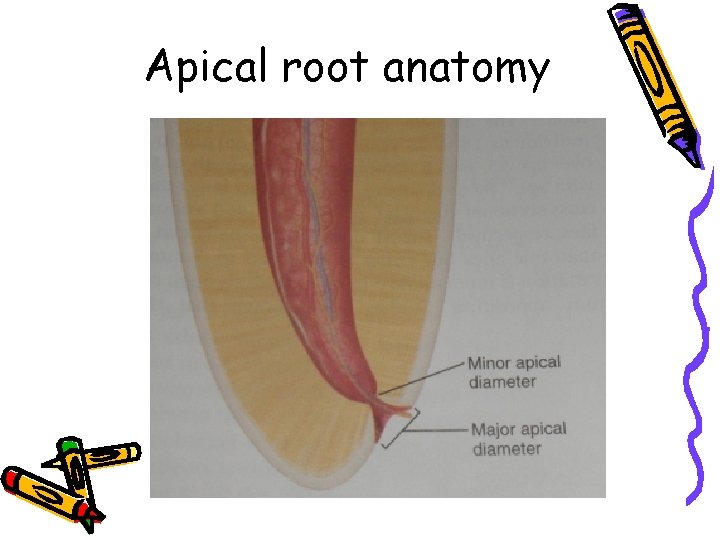
Apical root anatomy
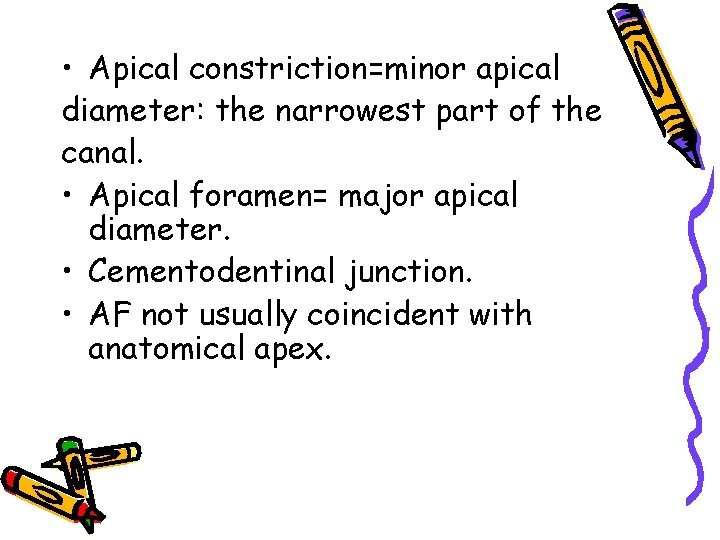
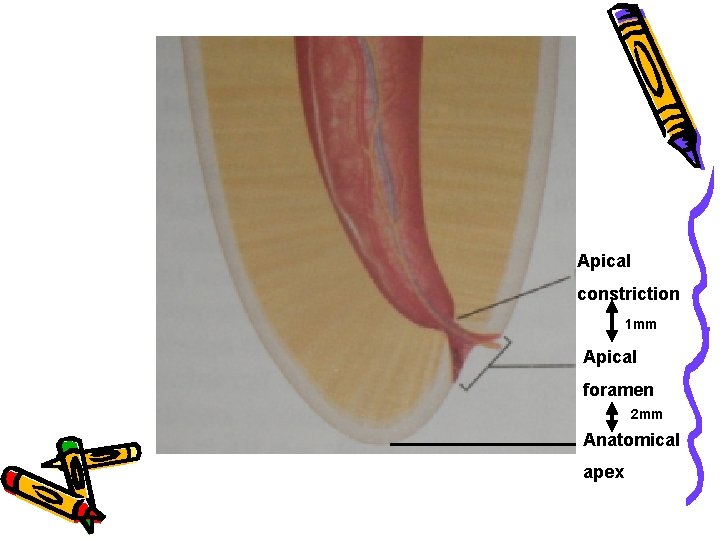
• Apical constriction=minor apical diameter: the narrowest part of the canal. • Apical foramen= major apical diameter. • Cementodentinal junction. • AF not usually coincident with anatomical apex.
Apical constriction 1 mm Apical foramen 2 mm Anatomical apex