
Intermolecular Forces Gecko Feet Gecko Feet Gecko Feet

- Slides: 17
Intermolecular Forces
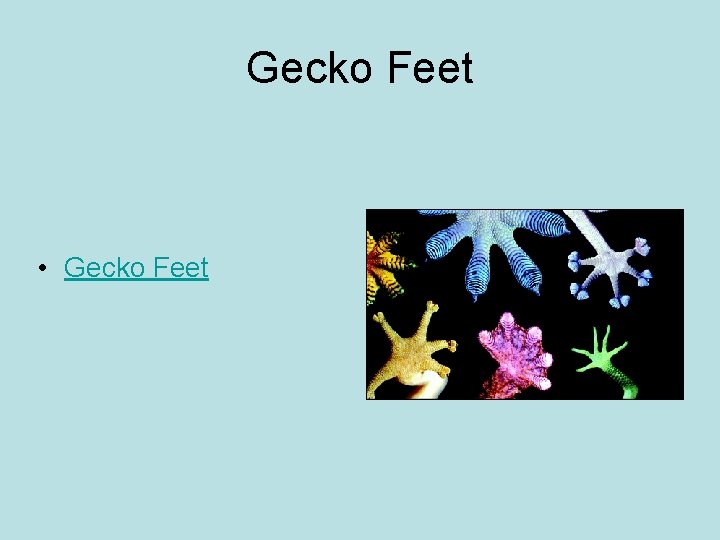
Gecko Feet • Gecko Feet
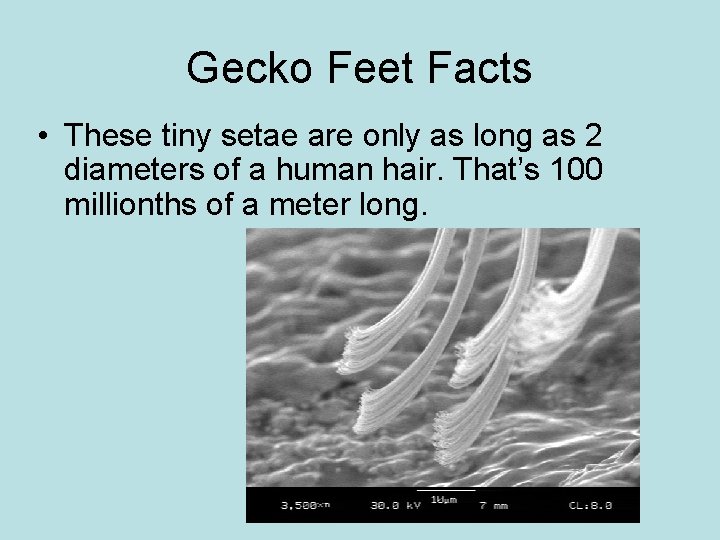
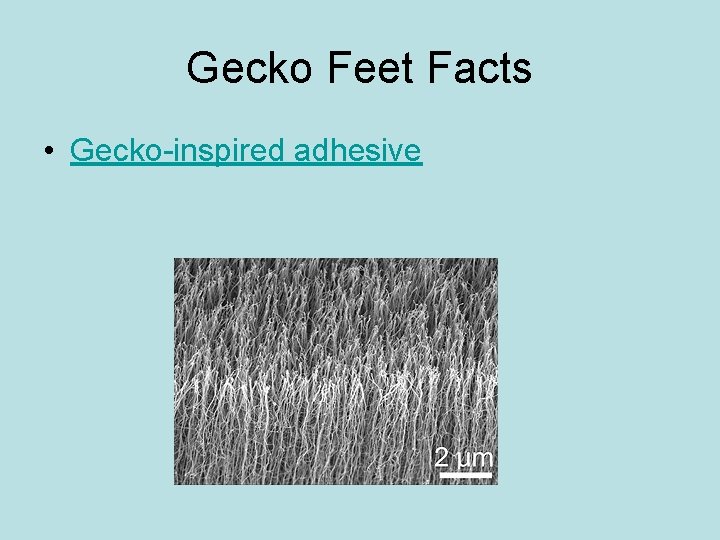
Gecko Feet Facts • These tiny setae are only as long as 2 diameters of a human hair. That’s 100 millionths of a meter long.
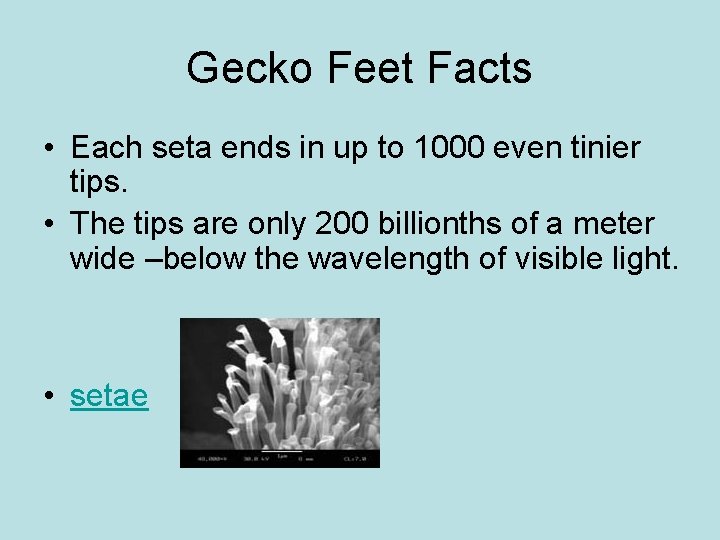
Gecko Feet Facts • Each seta ends in up to 1000 even tinier tips. • The tips are only 200 billionths of a meter wide –below the wavelength of visible light. • setae
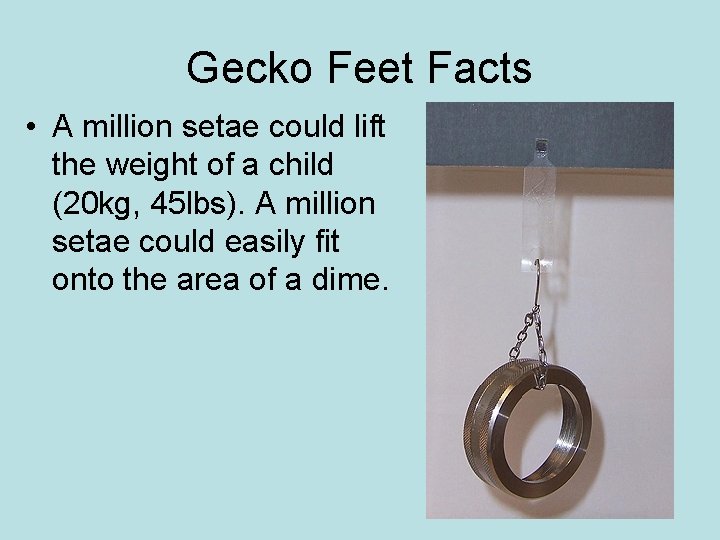
Gecko Feet Facts • A million setae could lift the weight of a child (20 kg, 45 lbs). A million setae could easily fit onto the area of a dime.
Gecko Feet Facts • Gecko-inspired adhesive
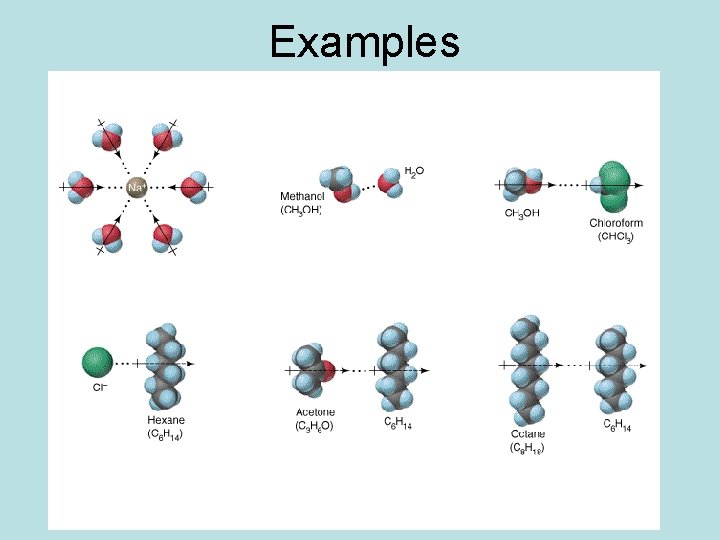
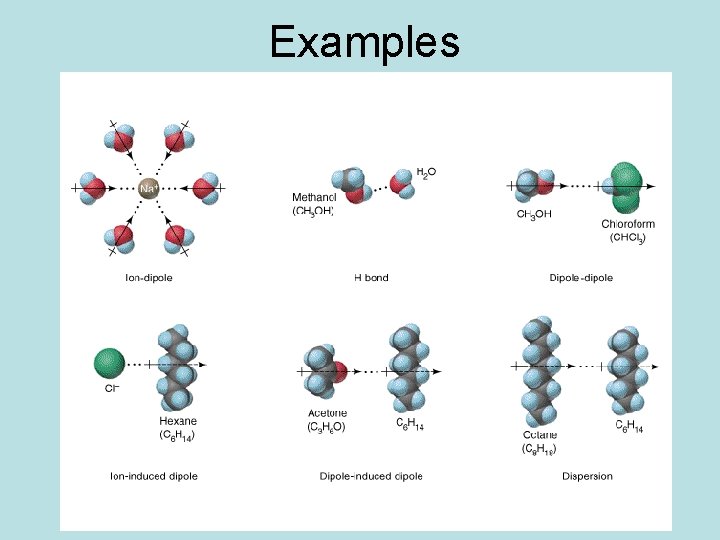
Intermolecular Forces • Van der Waal’s forces – Dipole/dipole – Ion/dipole – Dispersion (London forces) • Hydrogen bonds • These are all weaker than ionic or covalent bonds (intramolecular forces. )
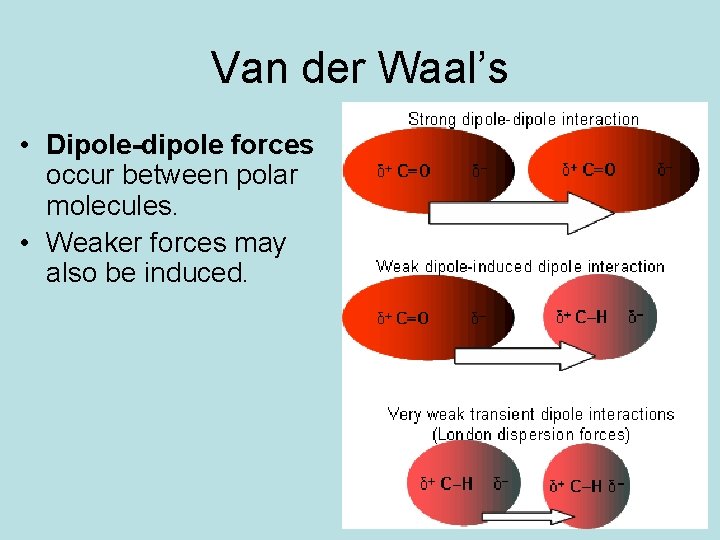
Van der Waal’s • Dipole-dipole forces occur between polar molecules. • Weaker forces may also be induced.
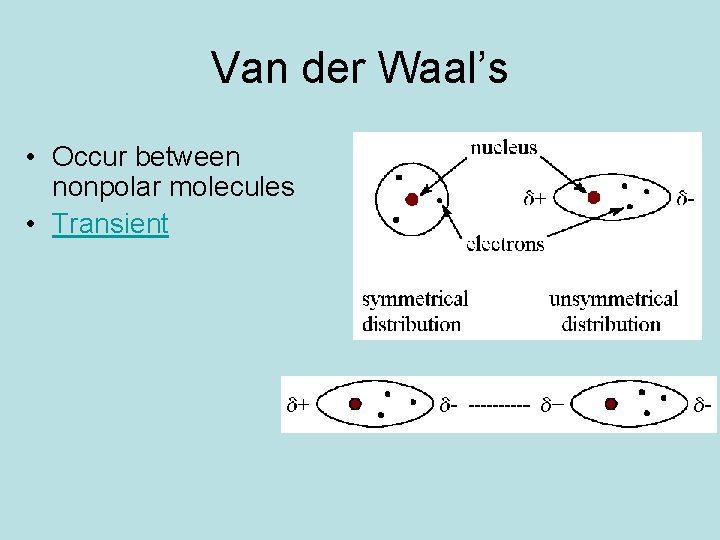
Van der Waal’s • Occur between nonpolar molecules • Transient
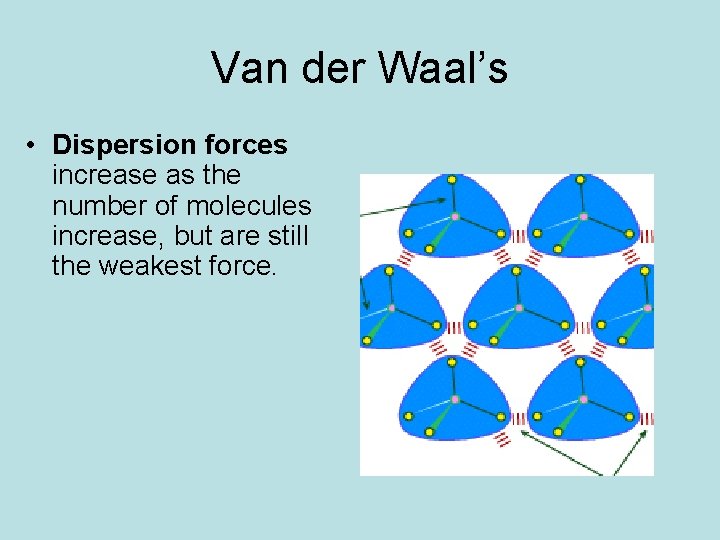
Van der Waal’s • Dispersion forces increase as the number of molecules increase, but are still the weakest force.
What does it matter? • Cl 2 and Br 2 have approximately the same shape and neither is polar. – Upon cooling, both Cl 2 and Br 2 form solids. Why? – At 25 o. C, chlorine (Cl 2) is a gas whereas bromine (Br 2) is a liquid. Why?
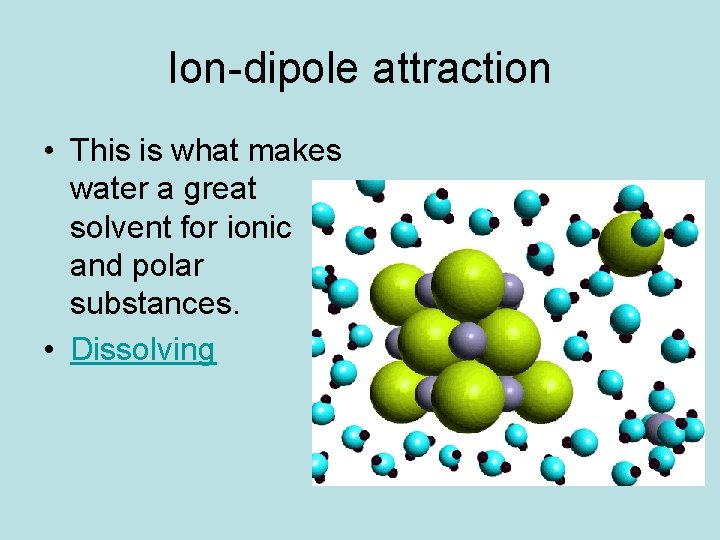
Ion-dipole attraction • This is what makes water a great solvent for ionic and polar substances. • Dissolving
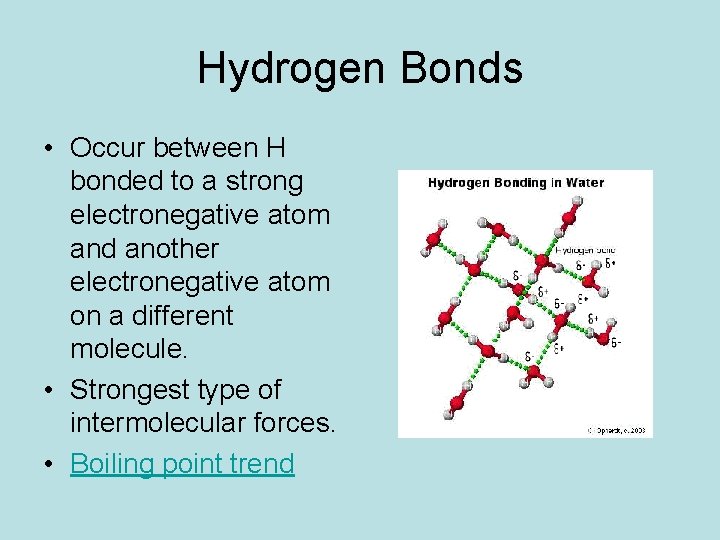
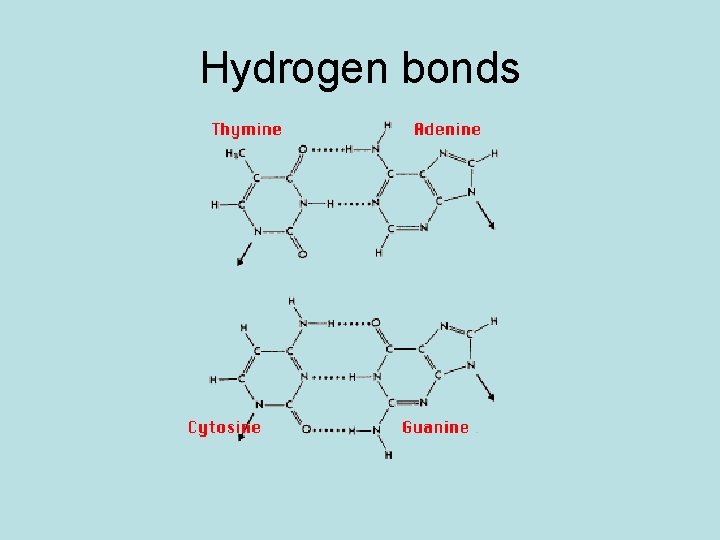
Hydrogen Bonds • Occur between H bonded to a strong electronegative atom and another electronegative atom on a different molecule. • Strongest type of intermolecular forces. • Boiling point trend
Hydrogen bonds
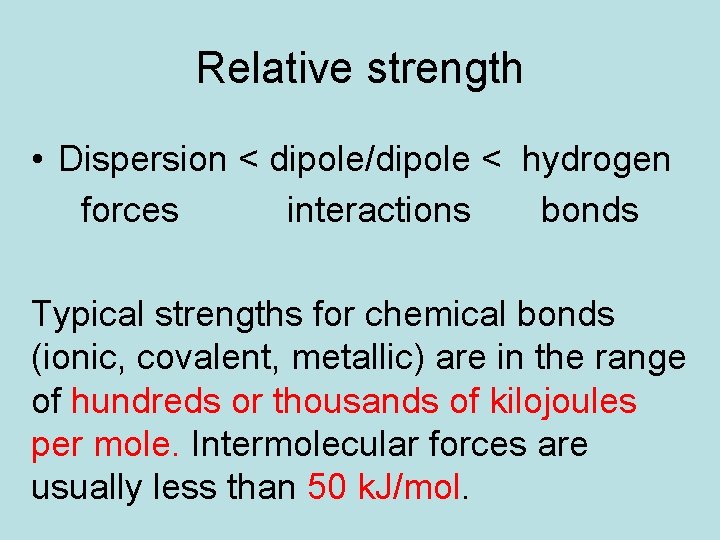
Relative strength • Dispersion < dipole/dipole < hydrogen forces interactions bonds Typical strengths for chemical bonds (ionic, covalent, metallic) are in the range of hundreds or thousands of kilojoules per mole. Intermolecular forces are usually less than 50 k. J/mol.
Examples
Examples