
Intermittent Auscultation Supporting Physiologic Labor Becky Gams MS

Intermittent Auscultation: Supporting Physiologic Labor Becky Gams, MS, APRN, CNP Nanette Vogel, MS, RN, C-OB, EFM
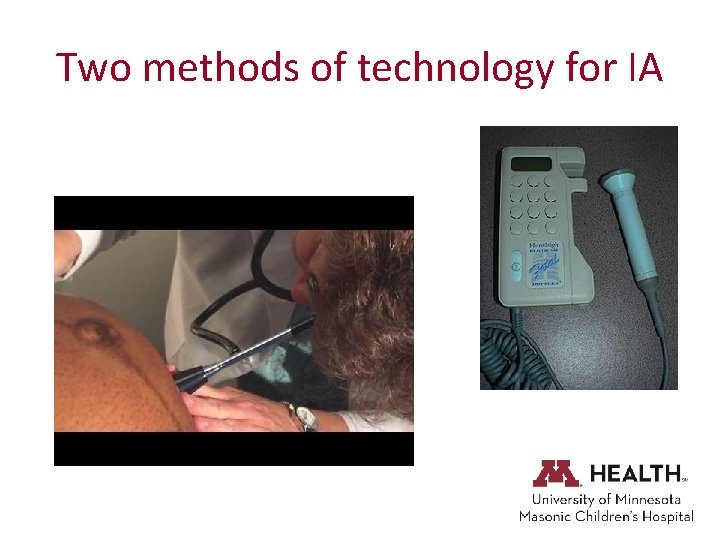
Two methods of technology for IA
Objectives • Select the least invasive and most appropriate method of monitoring for the fetal heart rate and uterine activity. • Demonstrate the correct method and timing for determining the fetal heart rate and uterine activity according to standards and guidelines. • Describe 3 benefits to utilizing intermittent auscultation
Introduction “In general, the least invasive method of monitoring is preferred in order to promote physiologic labor and birth” AWHONN, 2015
Why do we care? • U. S. using more continuous fetal monitoring than other developed countries with no improvement in birth outcomes • Cochrane Database Meta-analysis – Compared IA to CEFM – N=37, 000 births – More Cesarean births and operative births with CEFM – No difference in perinatal mortality or rates of cerebral palsy ACNM (2015)
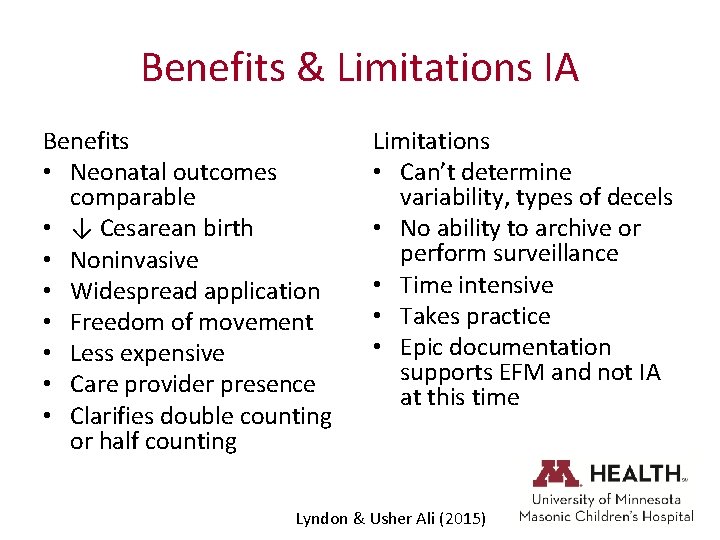
Benefits & Limitations IA Benefits • Neonatal outcomes comparable • ↓ Cesarean birth • Noninvasive • Widespread application • Freedom of movement • Less expensive • Care provider presence • Clarifies double counting or half counting Limitations • Can’t determine variability, types of decels • No ability to archive or perform surveillance • Time intensive • Takes practice • Epic documentation supports EFM and not IA at this time Lyndon & Usher Ali (2015)
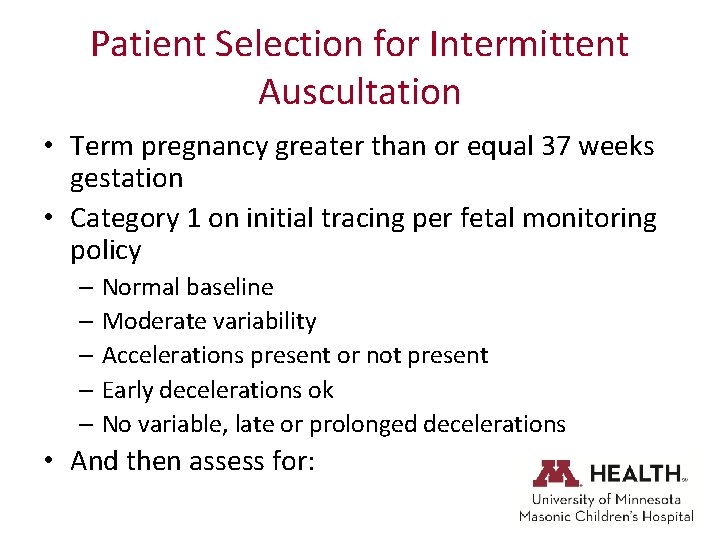
Patient Selection for Intermittent Auscultation • Term pregnancy greater than or equal 37 weeks gestation • Category 1 on initial tracing per fetal monitoring policy – Normal baseline – Moderate variability – Accelerations present or not present – Early decelerations ok – No variable, late or prolonged decelerations • And then assess for:
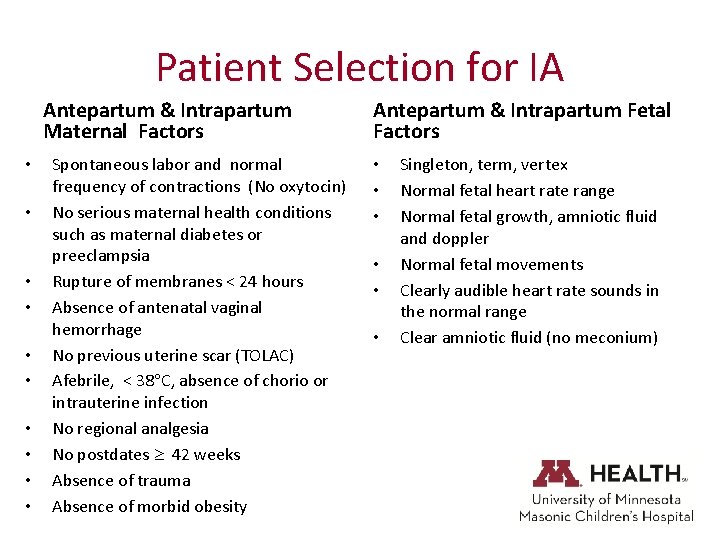
Patient Selection for IA Antepartum & Intrapartum Maternal Factors • • • Spontaneous labor and normal frequency of contractions (No oxytocin) No serious maternal health conditions such as maternal diabetes or preeclampsia Rupture of membranes < 24 hours Absence of antenatal vaginal hemorrhage No previous uterine scar (TOLAC) Afebrile, < 38 C, absence of chorio or intrauterine infection No regional analgesia No postdates 42 weeks Absence of trauma Absence of morbid obesity Antepartum & Intrapartum Fetal Factors • • • Singleton, term, vertex Normal fetal heart rate range Normal fetal growth, amniotic fluid and doppler Normal fetal movements Clearly audible heart rate sounds in the normal range Clear amniotic fluid (no meconium)
Quiz Time: Timing of IA in relation to UA • How long do you auscultate? • How frequently should you auscultate? • When do you auscultate in relation to contractions (before, during, after)? • How many contractions do you have to listen through, if any? Fairview, 2014
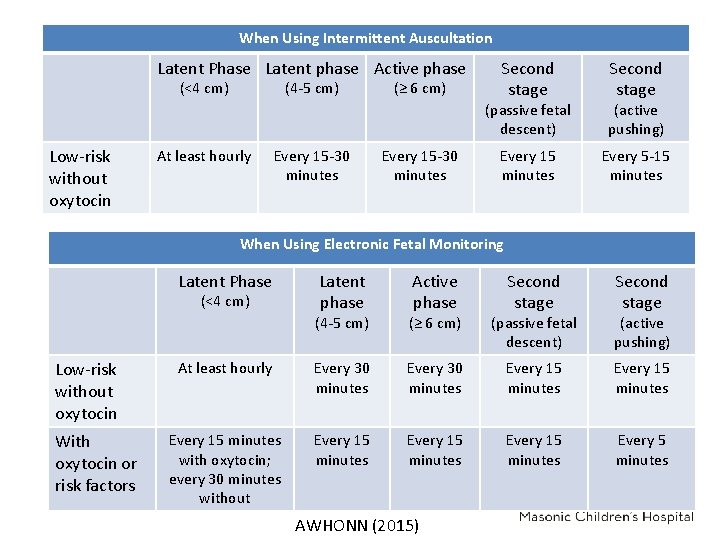
When Using Intermittent Auscultation Latent Phase Latent phase Active phase (<4 cm) Low-risk without oxytocin (4 -5 cm) At least hourly Every 15 -30 minutes (≥ 6 cm) Every 15 -30 minutes Second stage (passive fetal descent) (active pushing) Every 15 minutes Every 5 -15 minutes When Using Electronic Fetal Monitoring Latent Phase (<4 cm) Low-risk without oxytocin With oxytocin or risk factors Latent phase Active phase Second stage (4 -5 cm) (≥ 6 cm) (passive fetal descent) (active pushing) At least hourly Every 30 minutes Every 15 minutes with oxytocin; every 30 minutes without Every 15 minutes Every 5 minutes AWHONN (2015)

Auscultation Procedure • • Explain procedure Perform Leopold’s maneuvers Assess uterine contractions Position device on fetal back Palpate maternal pulse Listen during contraction and for at least 60 seconds after (Fairview, 2014) Listen through 2 contractions and 2 resting periods (Fairview, 2014) Promote maternal comfort and fetal oxygenation If no digital readout • Count 30 -60 seconds – If clarification needed, recount for multiple, consecutive brief periods of 6 -10 seconds Fairveiw, 2014; Lyndon & Usher Ali, 2015; Miller et al. , 2015
Fetal Monitoring Decision Tree Lyndon & Usher Ali (2015, p. 95)
When do we convert to EFM? Lyndon & Usher Ali (2015, p. 95)
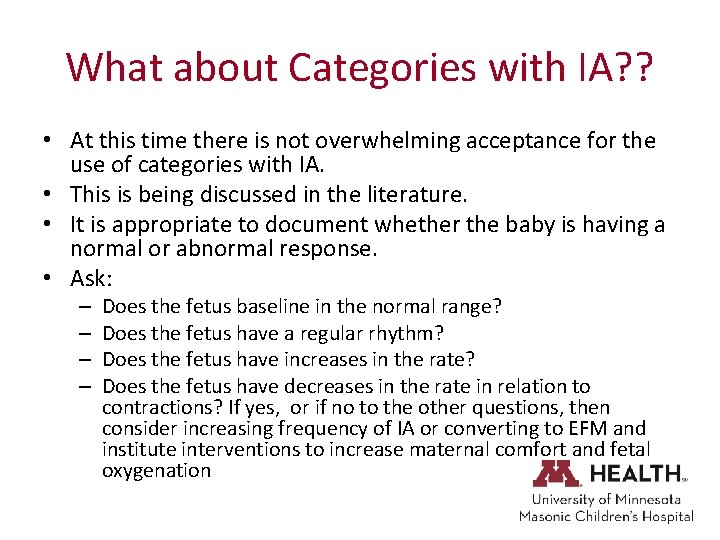
What about Categories with IA? ? • At this time there is not overwhelming acceptance for the use of categories with IA. • This is being discussed in the literature. • It is appropriate to document whether the baby is having a normal or abnormal response. • Ask: – – Does the fetus baseline in the normal range? Does the fetus have a regular rhythm? Does the fetus have increases in the rate? Does the fetus have decreases in the rate in relation to contractions? If yes, or if no to the other questions, then consider increasing frequency of IA or converting to EFM and institute interventions to increase maternal comfort and fetal oxygenation
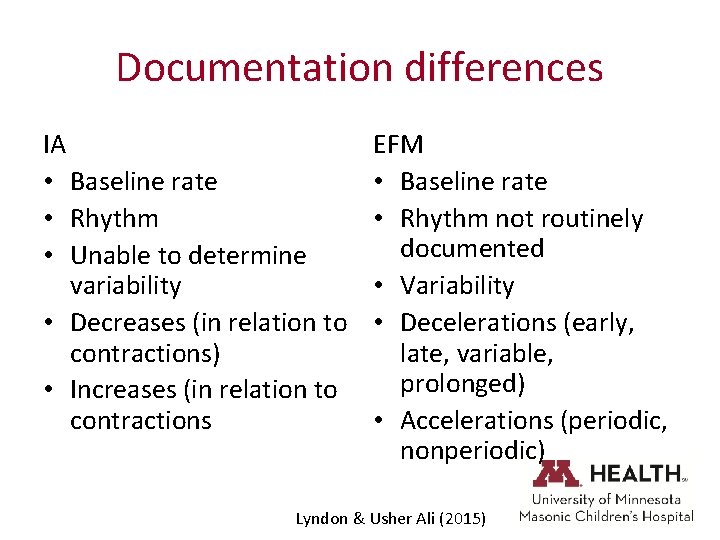
Documentation differences IA • Baseline rate • Rhythm • Unable to determine variability • Decreases (in relation to contractions) • Increases (in relation to contractions EFM • Baseline rate • Rhythm not routinely documented • Variability • Decelerations (early, late, variable, prolonged) • Accelerations (periodic, nonperiodic) Lyndon & Usher Ali (2015)
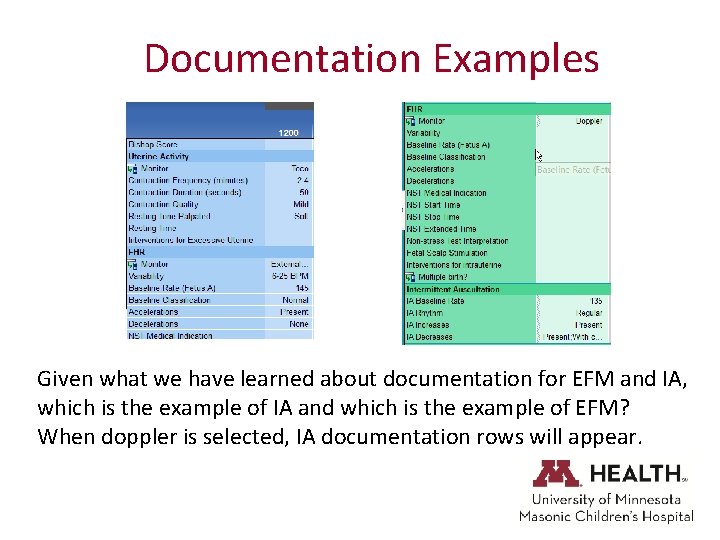
Documentation Examples Given what we have learned about documentation for EFM and IA, which is the example of IA and which is the example of EFM? When doppler is selected, IA documentation rows will appear.
#intermittentauscultationgoals • Educate perinatal professionals on evidence-based approaches to FHR including intermittent auscultation • Establish a unit culture that supports the evidencebased use of IA as the preferred method of FHR monitoring for women who are not at risk • Identify inclusion and exclusion criteria for IA and criteria for changing modality if necessary • Provide equipment and qualified professionals to perform IA • Ensure sufficient staffing • Promote shared decision making on modality ACNM (2016)
Conclusion “Intermittent auscultation is a skill that is not simple; it is a rightfully complex and timeconsuming and must be performed with care and precision, no different from the appropriate use of EFM. ” Miller, 2015
• • • References AAP, ACOG (2012). Guidelines for perinatal care (7 th ed. ). ACNM (2016). Health Birth Initiative. Reducing primary cesareans. Bundle Name: Intermittent auscultation. Retrieved from http: //birthtools. org/birthtools/files/Birth. Tool. Files/FILENAME/0000089/Bun dle-Intermittent-Ausculation-v 2. pdf ACNM (2015). ACNM clinical bulletin #60: Intermittent auscultation for intrapartum fetal heart rate surveillance. Journal of Midwifery & Women’s Health, 60(5). doi: 10. 1111/jmwh. 12372 AWHONN (2015). AWHONN position statement: Fetal heart monitoring. JOGNN, 44, 683 -686. doi: 10. 1111/1552 -6909. 12743 Fairview (2014). Fetal monitoring policy. Retrieved from http: //intranet. fairview. org/Policies/Category/Patient. Care. Clinical. Guidelines/Clinic al. Guidelines/Perinatal/S_069242 Lyndon, A. & Usher Ali L. (2015) Fetal heart monitoring: Principles and practices (5 th ed. ). Kendall Hunt, Washington, DC. Miller, L. (2015). Listen carefully: Implementing intermittent auscultation into routine practice. The Journal of Perinatal & Neonatal Nursing. Doi: 10. 1097/JPN. 0000000117 Miller, L. , Miller, D. , & Tucker, S. (2013). Mosby’s pocket guide to fetal monitoring: A multidisciplinary approach (7 th ed. ). Elsevier: St. Louis, MO. Lewis, D. , & Downe, S. (2015). FIGO consensus on intrapartum monitoring: intermittent auscultation. Intern Jnl of Gyn and Obstetrics. Doi: 10. 1016/j. jigo. 2015. 06. 019 ACOG Practice Bulletin (reaffirmed 2015). Intrapartum fetal heart rate monitoring: nomenclature, interpretation, and general management principles. No. 106.

Now lets practice!
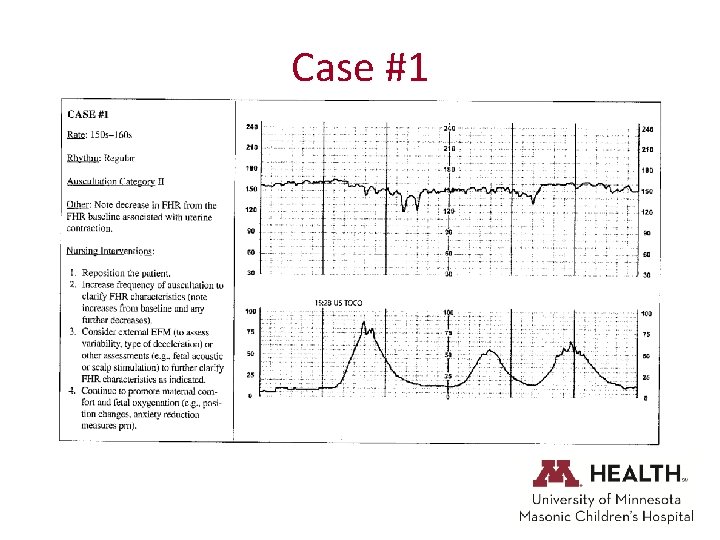
Case #1
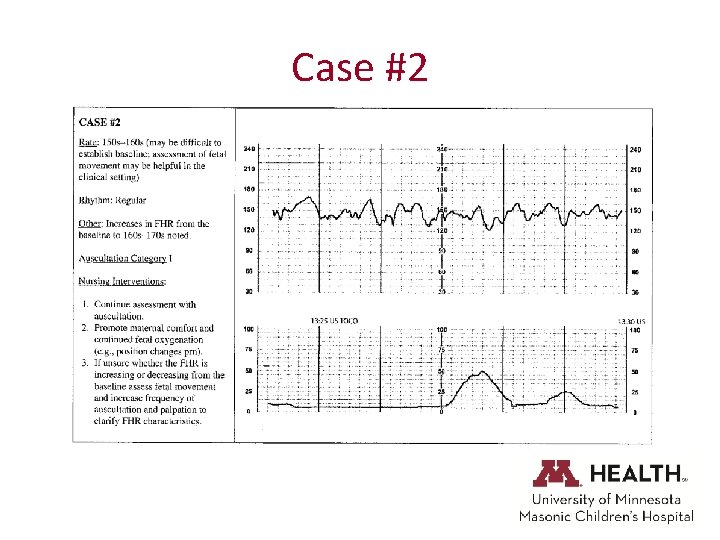
Case #2
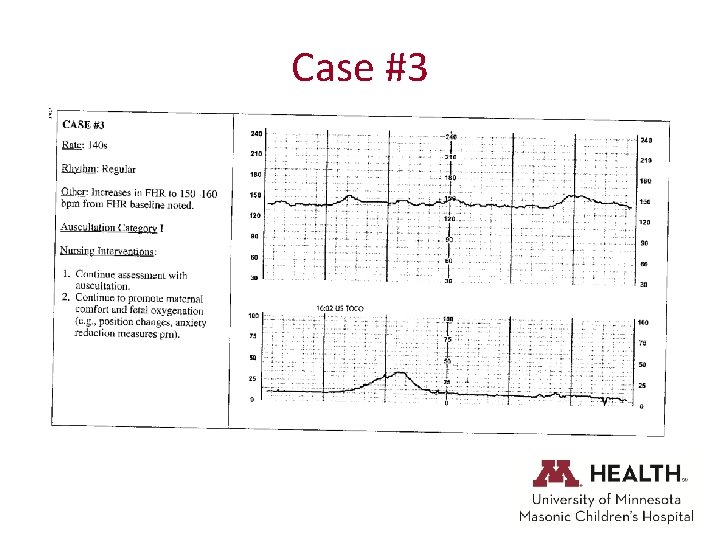
Case #3
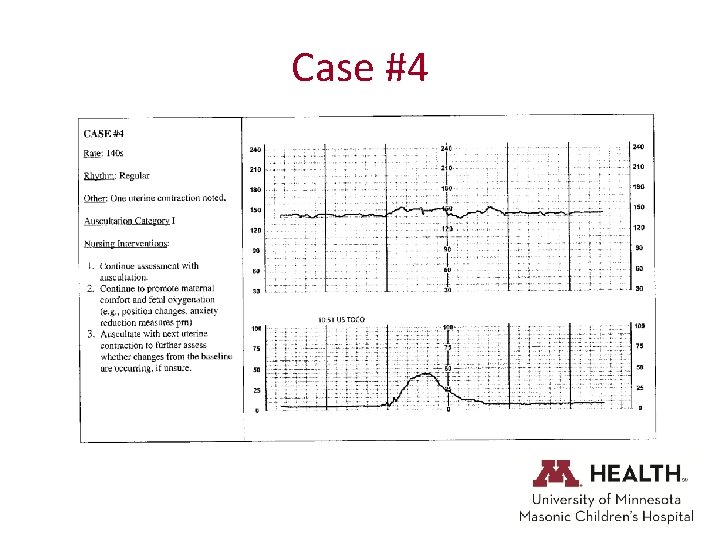
Case #4
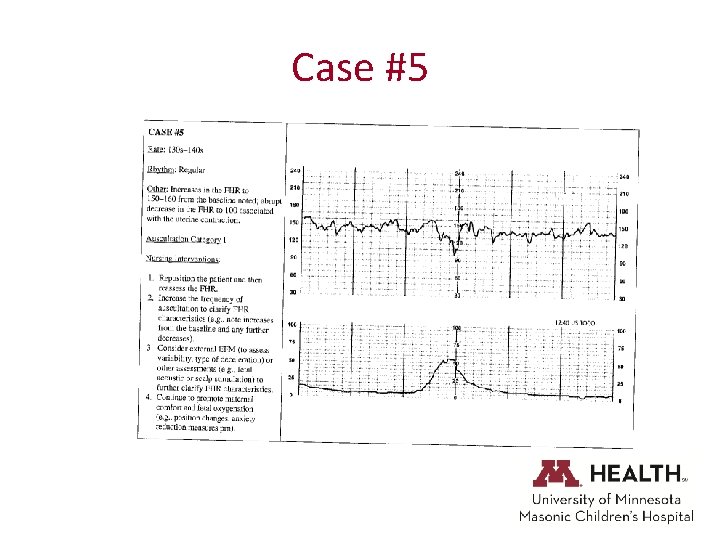
Case #5
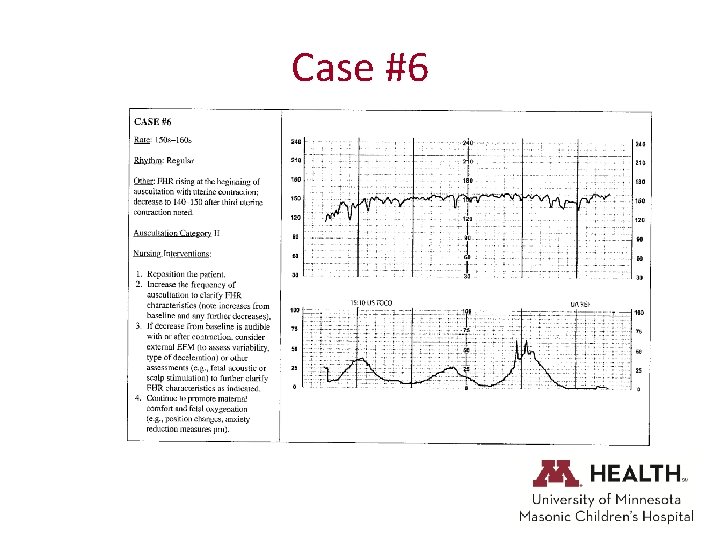
Case #6
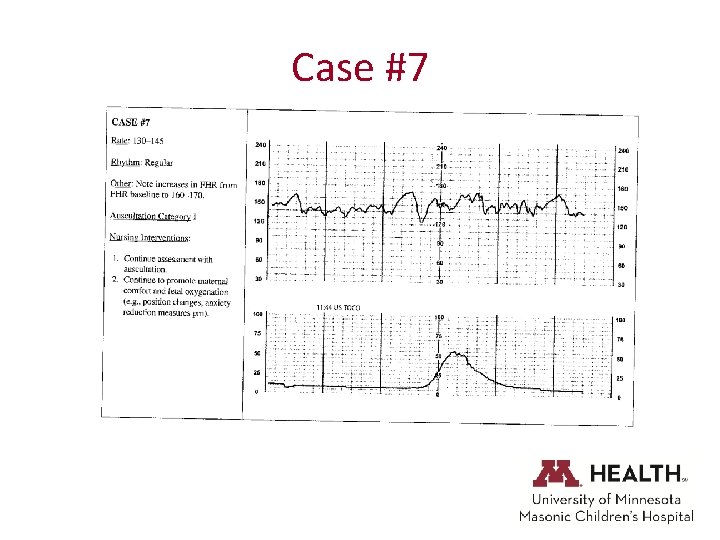
Case #7
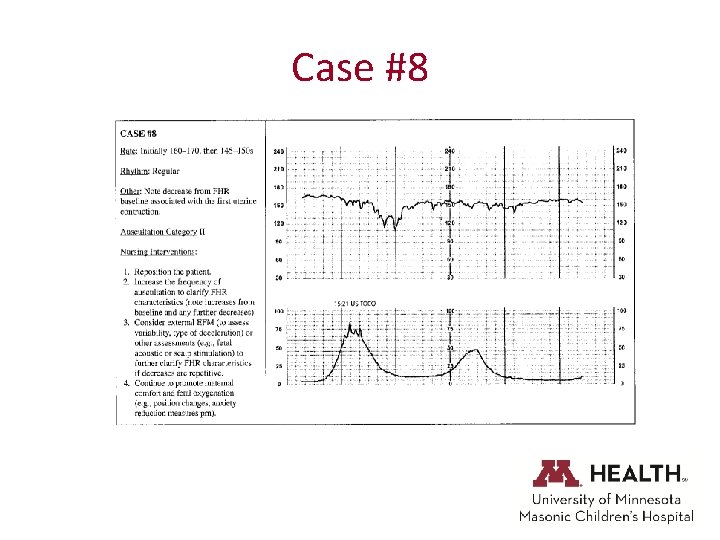
Case #8
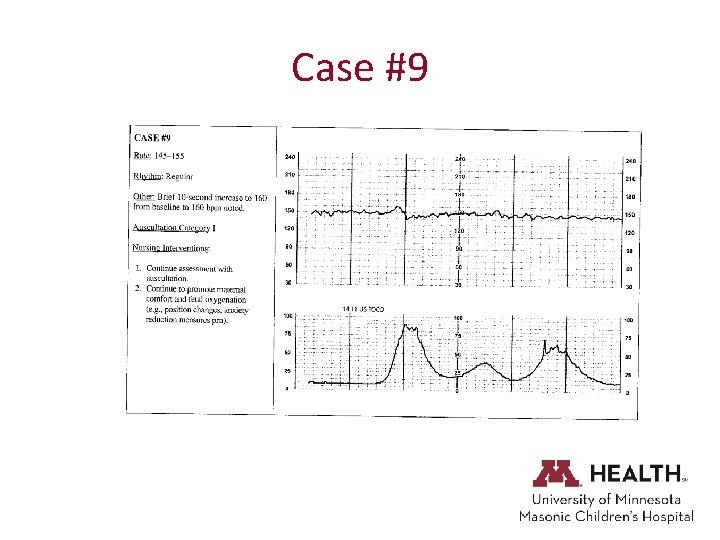
Case #9
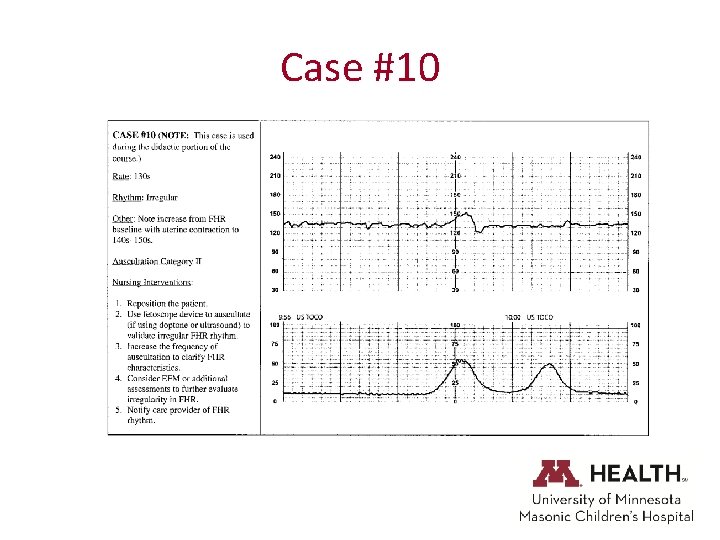
Case #10
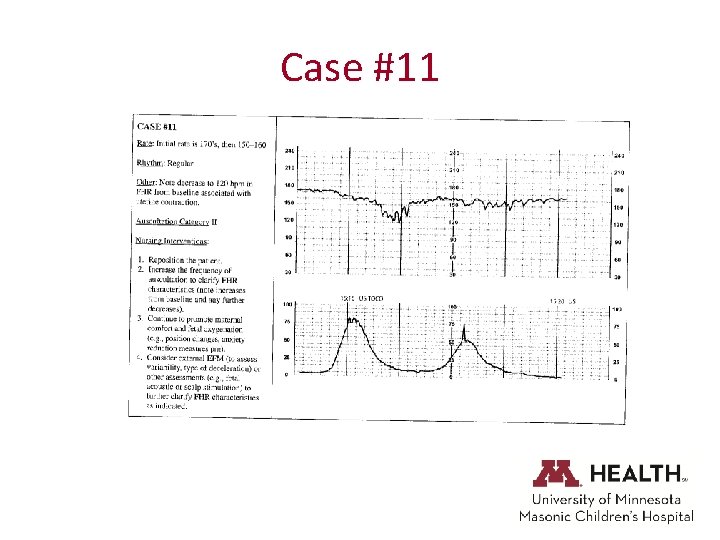
Case #11
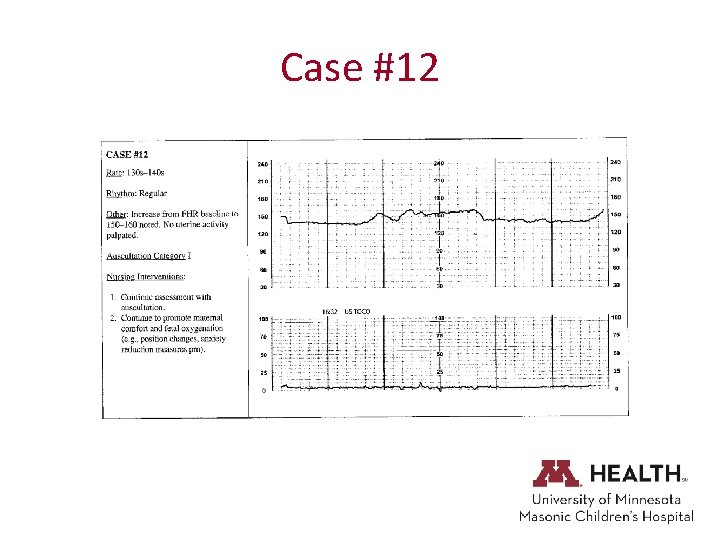
Case #12
- Slides: 32