
Intermediate Software Craftsmanship Steve Smith ardalis Brendan Enrick
Intermediate Software Craftsmanship Steve Smith | @ardalis Brendan Enrick | @brendoneus
Key Patterns • • Strategy Pattern Factory Method Pattern Command Pattern Rules Engine Pattern
Strategy : Intent • Encapsulate a family of related algorithms • Let the algorithm vary and evolve independently from the class(es) using it • Allows classes to maintain a single purpose – Single Responsibility Principle (SRP) – Open/Closed Principle (OCP)
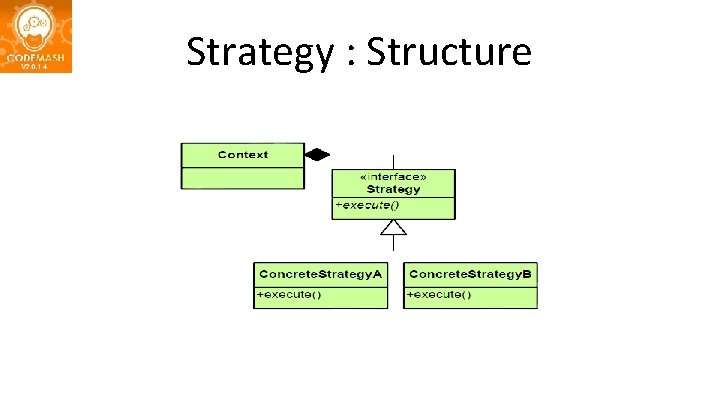
Strategy : Structure
Strategy : Common Usage • Dependency Inversion and Injection • Decouple class dependencies and responsibilities • Create interfaces for each responsibility • Inject interfaces via constructor (or parameters)
Avoid Hidden Dependencies • Follow Explicit Dependencies Principle • Classes should declare their dependencies via their constructor • Avoid non-stateless static calls • Avoid directly instantiating classes with side effects
Factory : Intent • Separate object creation from the decision of which object to create • Defer creation of objects • Add new classes and functionality without breaking client code
Command: Intent • Represent an action as an object • Decouple performing the action from the client that is issuing the command • Common uses: – – Delayed execution Logging activity Scaling processes State machine implementation
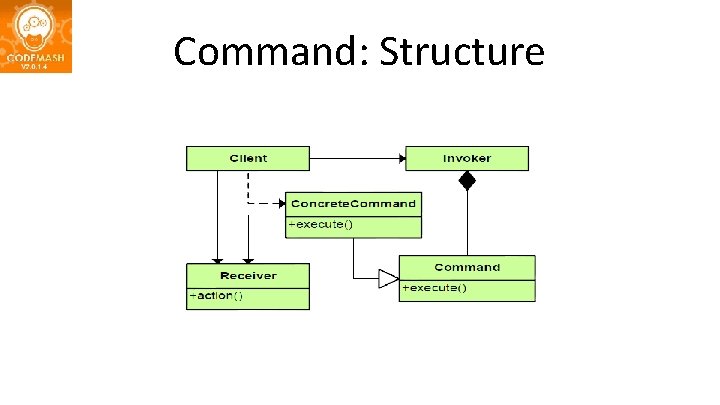
Command: Structure
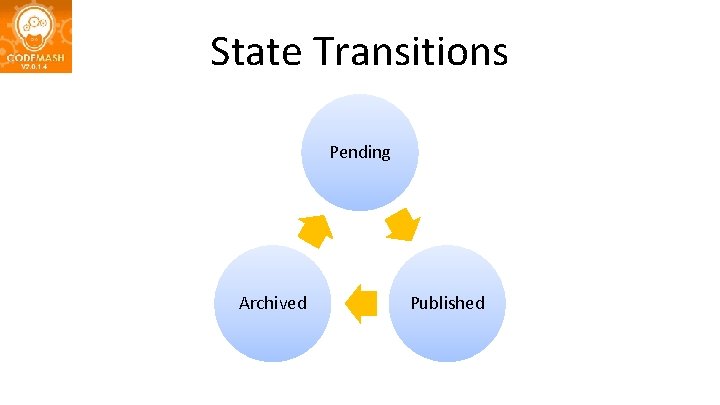
State Transitions Pending Archived Published
Rules Engine • Useful when set of special cases is constantly changing/growing • Examples: – Game rules – Pricing rules – Advertisement target/selection rules
Rules Engine Components • Rule Interface (special case of Command pattern) – Evaluate the rule – (optional) Is. Match • Rule engine – Maintains collection of rules – (Matches and) Evaluates rules in correct order

DISCUSS
- Slides: 13