
Intermediate Microeconomics Part I CONSUMER THEORY II Laura


- Slides: 41
Intermediate Microeconomics Part I CONSUMER THEORY (II) Laura Sochat
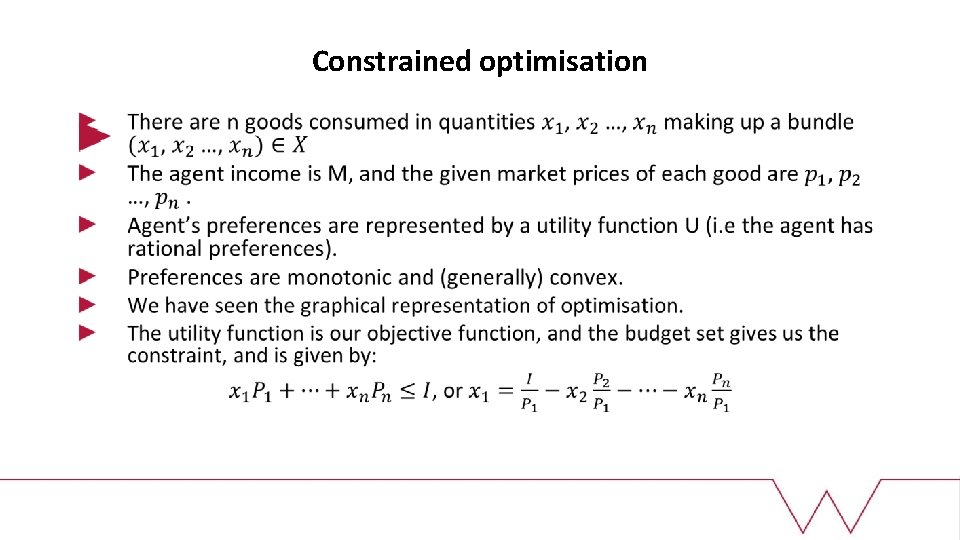
Constrained optimisation
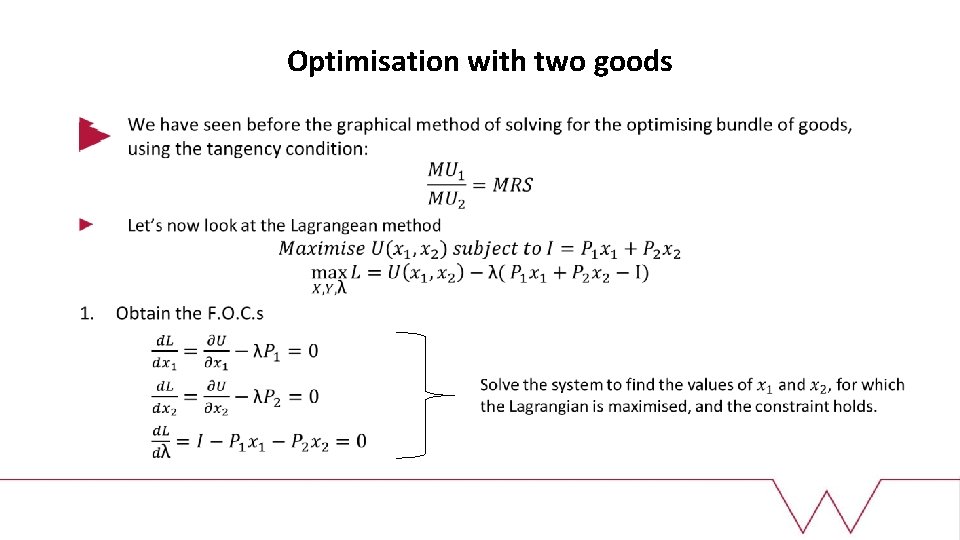
Optimisation with two goods
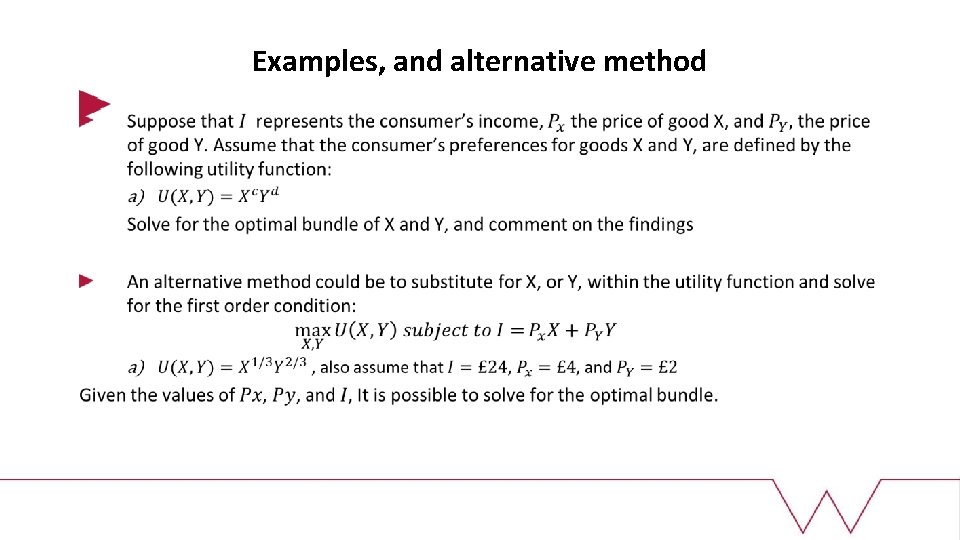
Examples, and alternative method
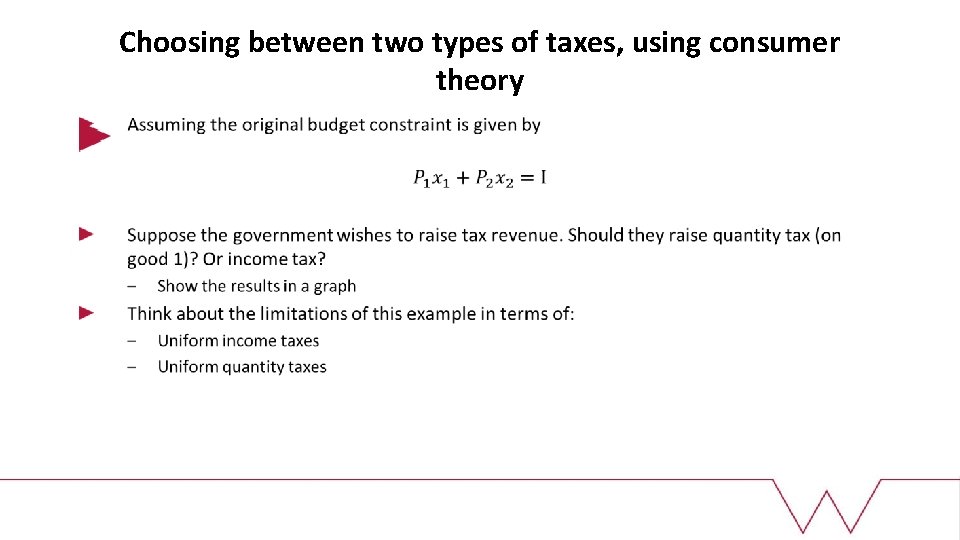
Choosing between two types of taxes, using consumer theory
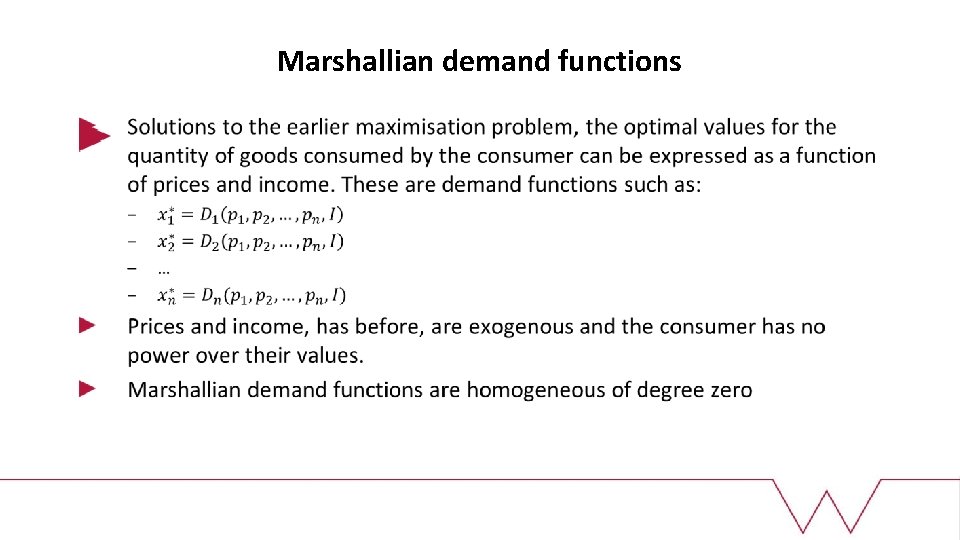
Marshallian demand functions
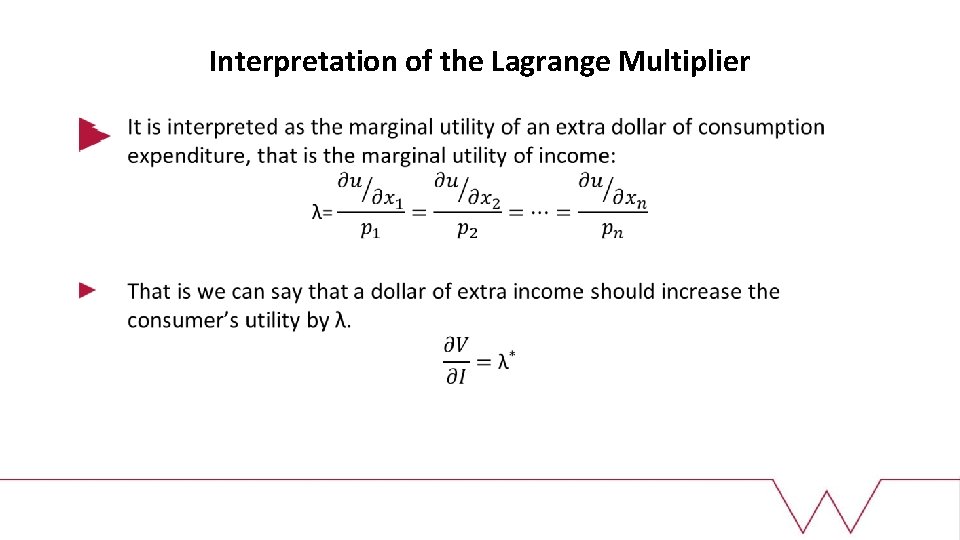
Interpretation of the Lagrange Multiplier
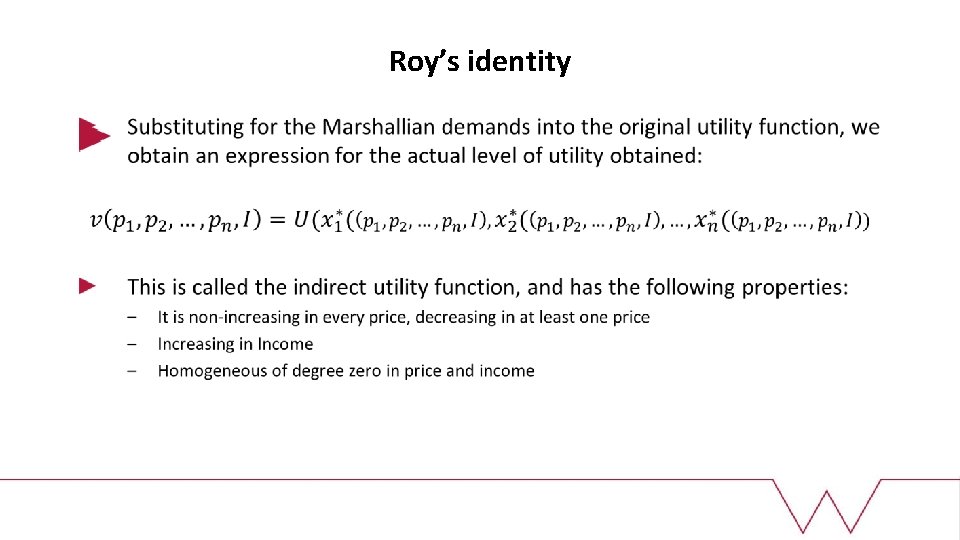
Roy’s identity
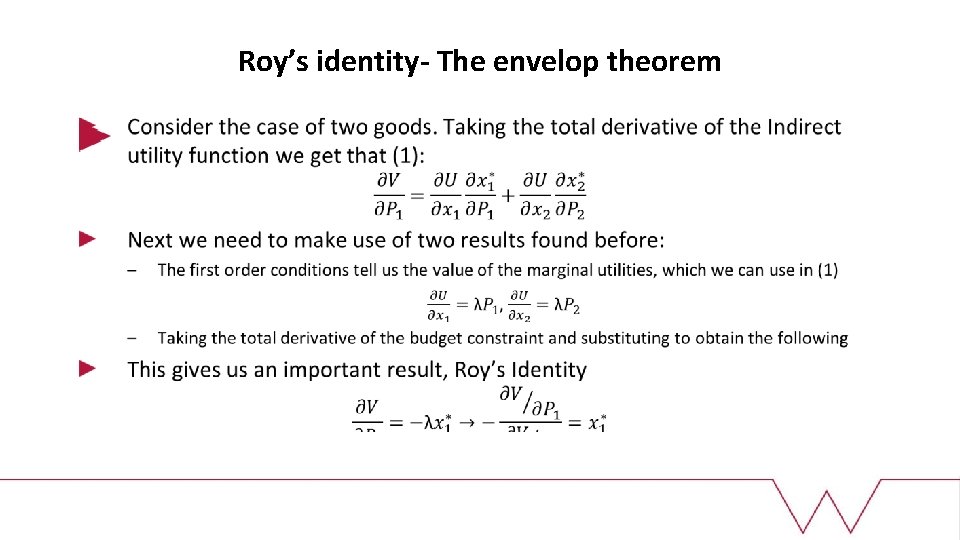
Roy’s identity- The envelop theorem
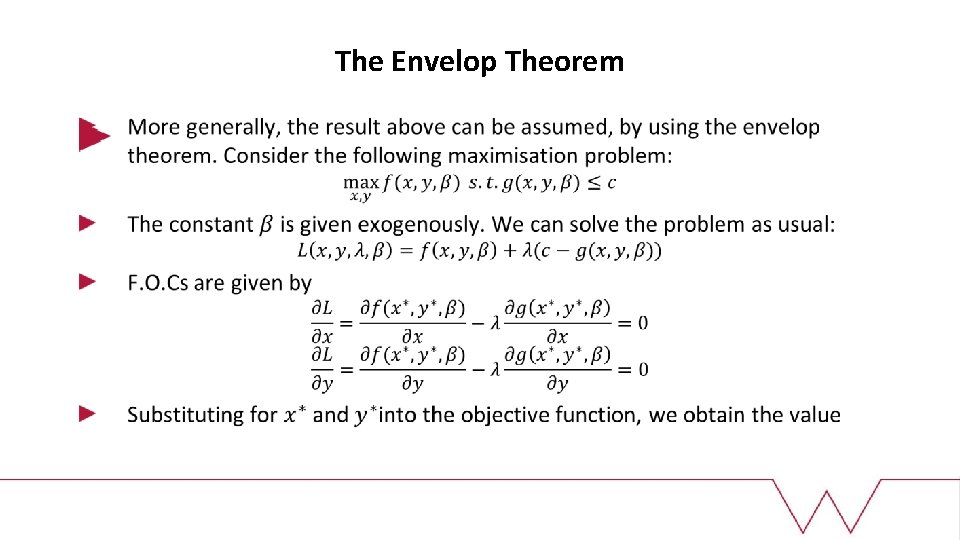
The Envelop Theorem
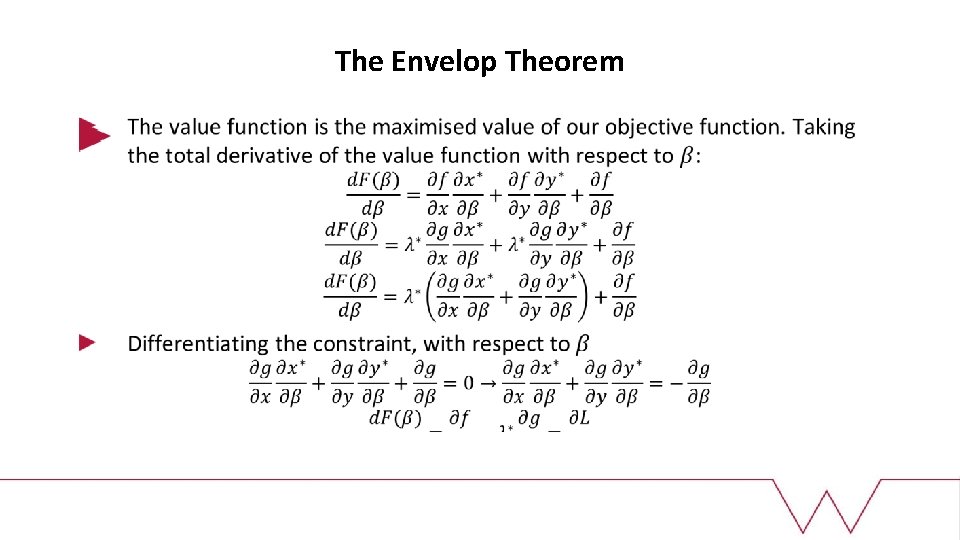
The Envelop Theorem
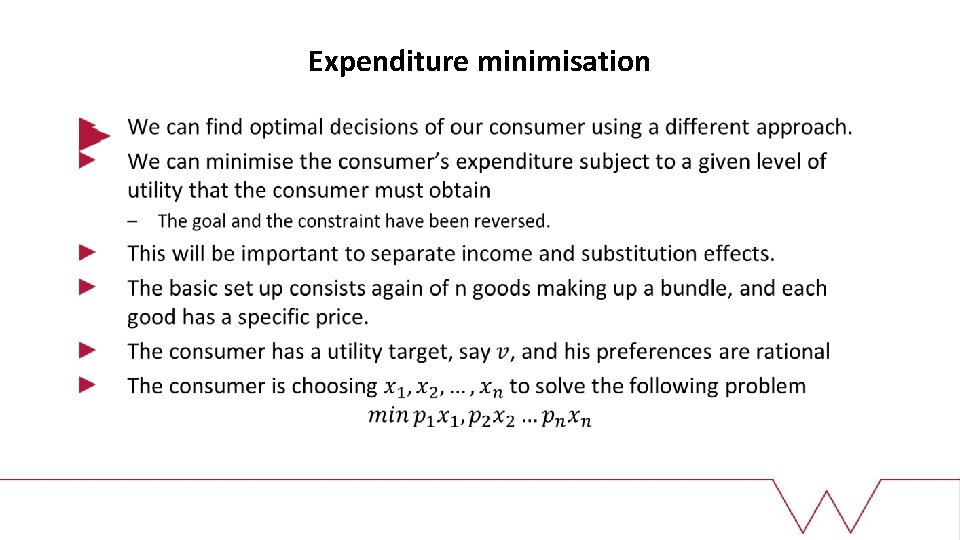
Expenditure minimisation
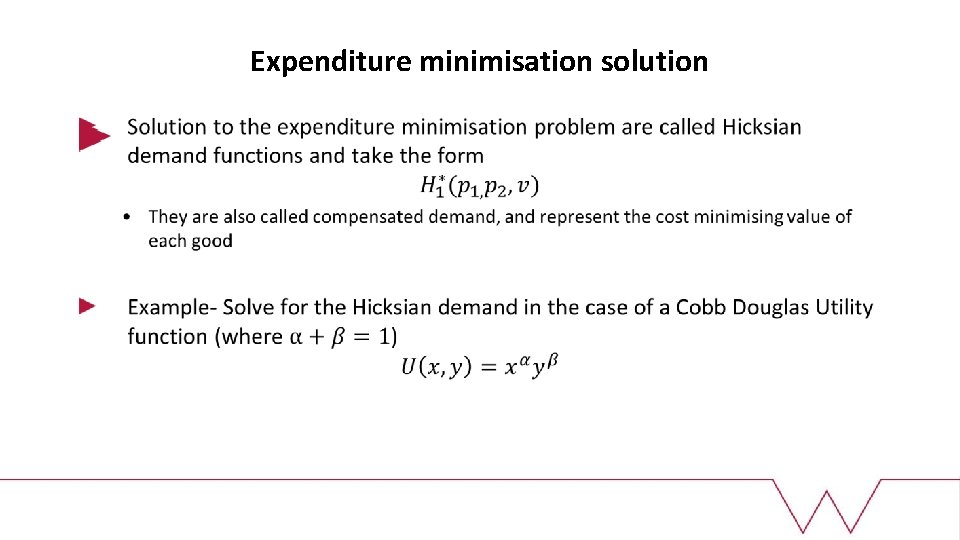
Expenditure minimisation solution
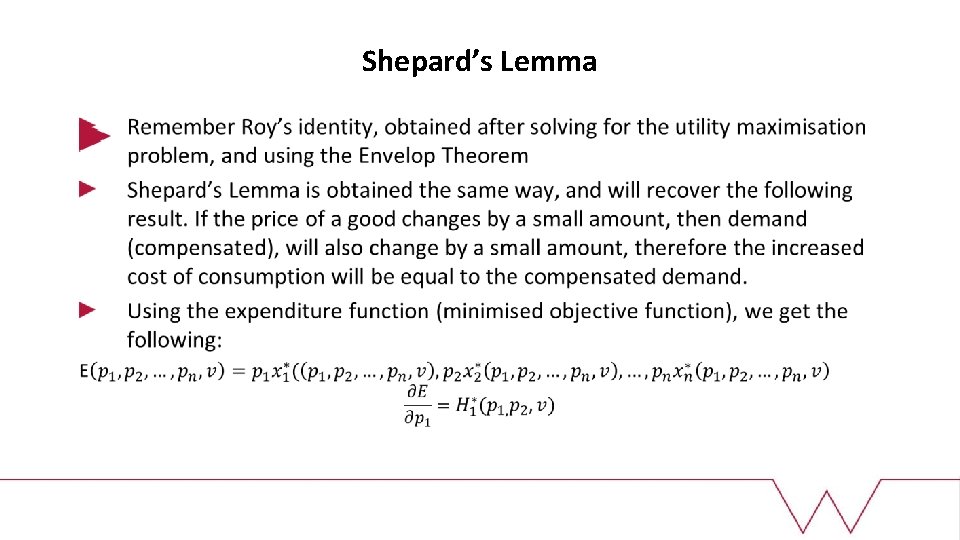
Shepard’s Lemma
Connecting the two results- Two sides of the same coin
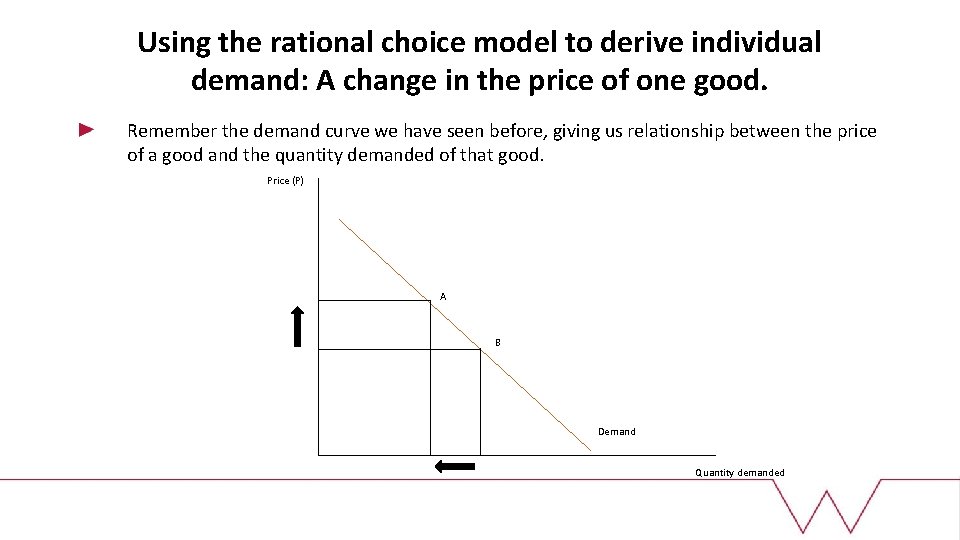
Using the rational choice model to derive individual demand: A change in the price of one good. Remember the demand curve we have seen before, giving us relationship between the price of a good and the quantity demanded of that good. Price (P) A B Demand Quantity demanded
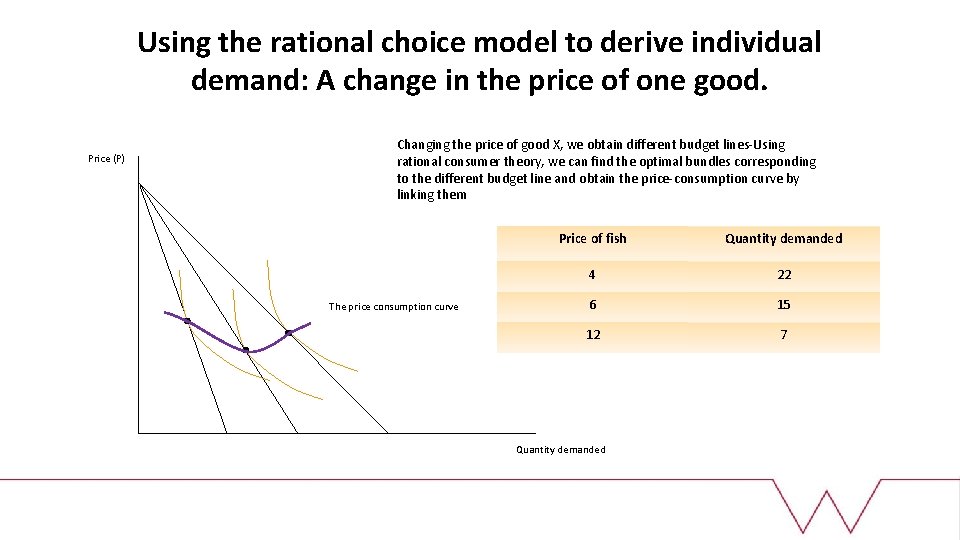
Using the rational choice model to derive individual demand: A change in the price of one good. Price (P) Changing the price of good X, we obtain different budget lines-Using rational consumer theory, we can find the optimal bundles corresponding to the different budget line and obtain the price-consumption curve by linking them The price consumption curve Price of fish Quantity demanded 4 22 6 15 12 7 Quantity demanded
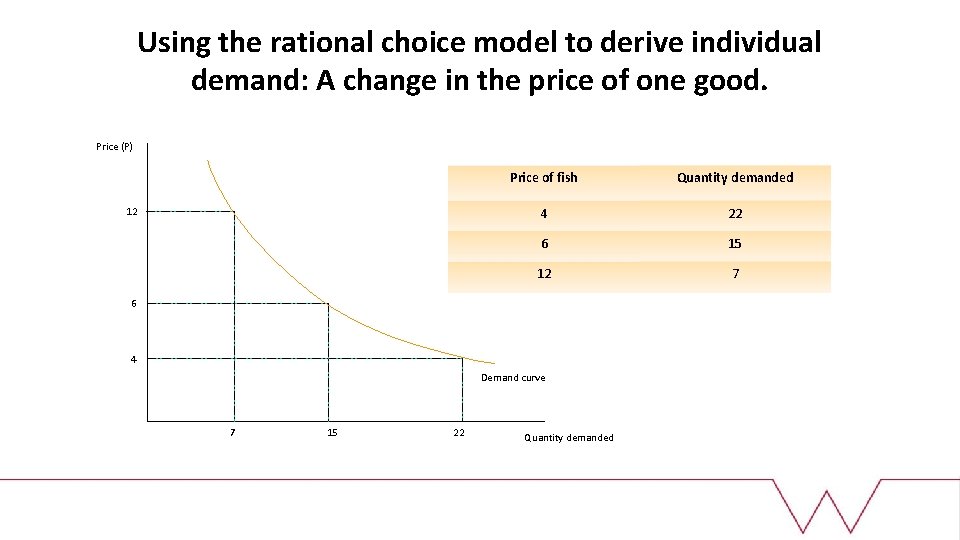
Using the rational choice model to derive individual demand: A change in the price of one good. Price (P) 12 Price of fish Quantity demanded 4 22 6 15 12 7 6 4 Demand curve 7 15 22 Quantity demanded
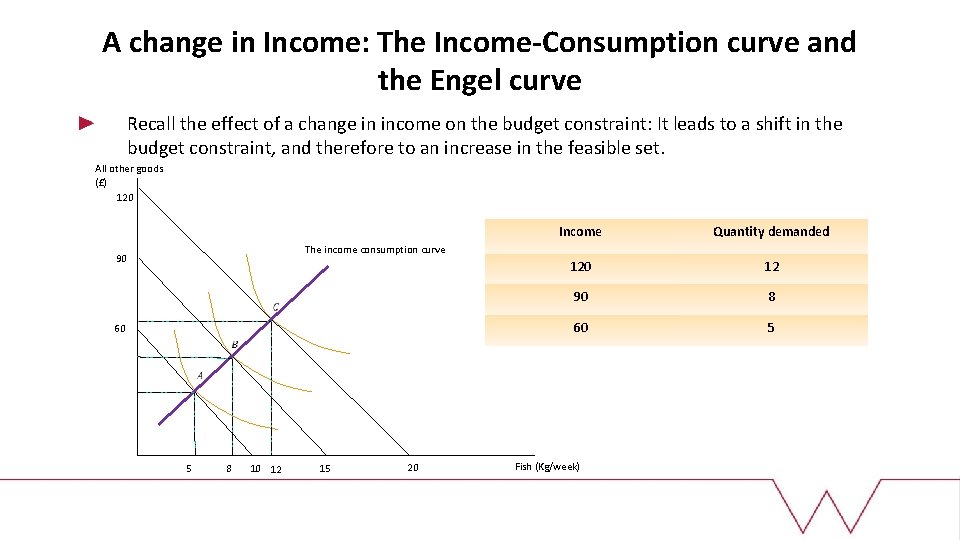
A change in Income: The Income-Consumption curve and the Engel curve Recall the effect of a change in income on the budget constraint: It leads to a shift in the budget constraint, and therefore to an increase in the feasible set. All other goods (£) 120 Income Quantity demanded 120 12 90 8 60 5 The income consumption curve 90 60 5 8 10 12 15 20 Fish (Kg/week)
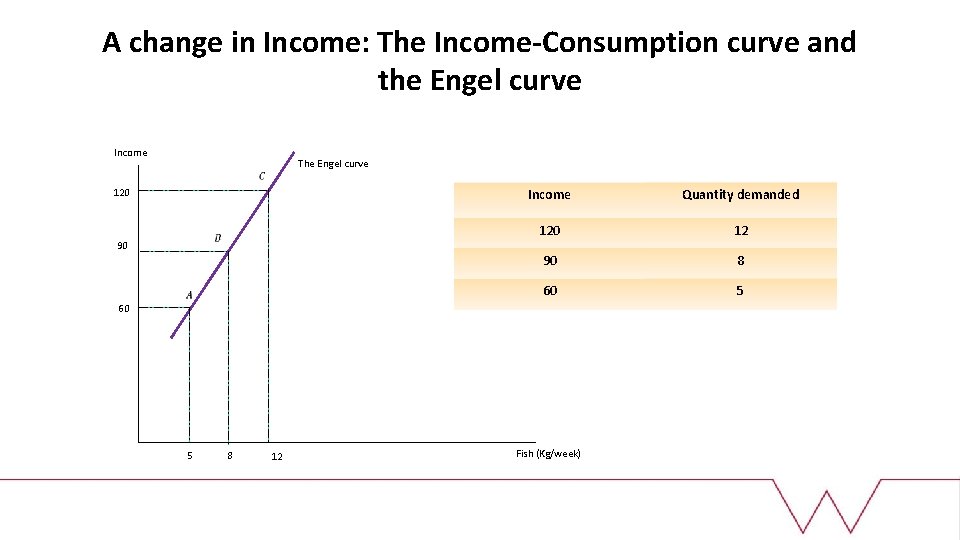
A change in Income: The Income-Consumption curve and the Engel curve Income The Engel curve 120 90 Income Quantity demanded 120 12 90 8 60 5 8 12 Fish (Kg/week)
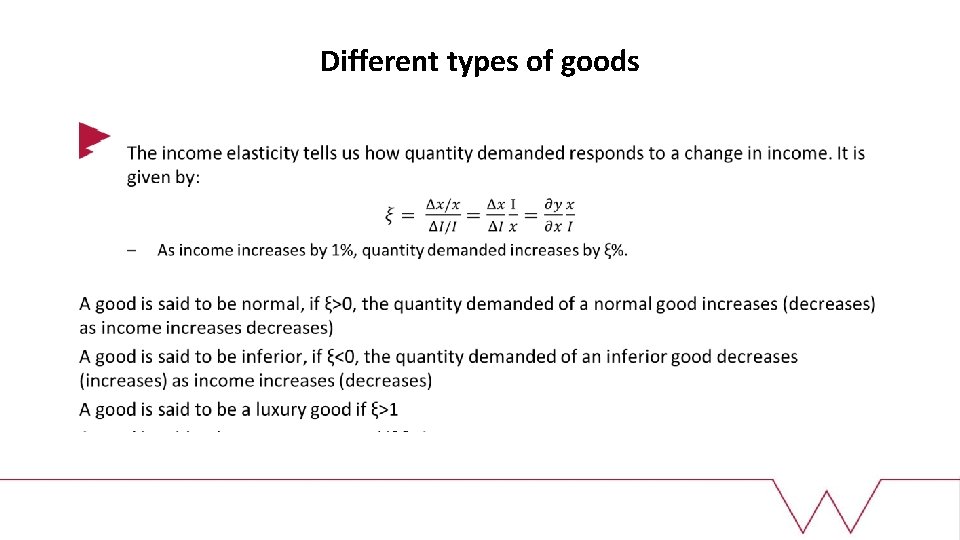
Different types of goods
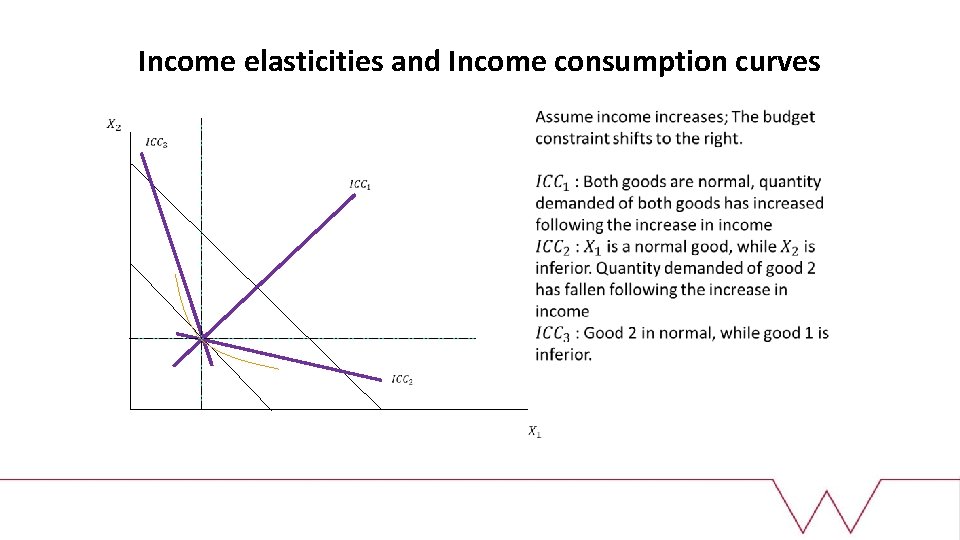
Income elasticities and Income consumption curves
Difference preferences: What would the Engel curves look like? Perfect substitutes Perfect complements Homothetic preferences Quasilinear preferences
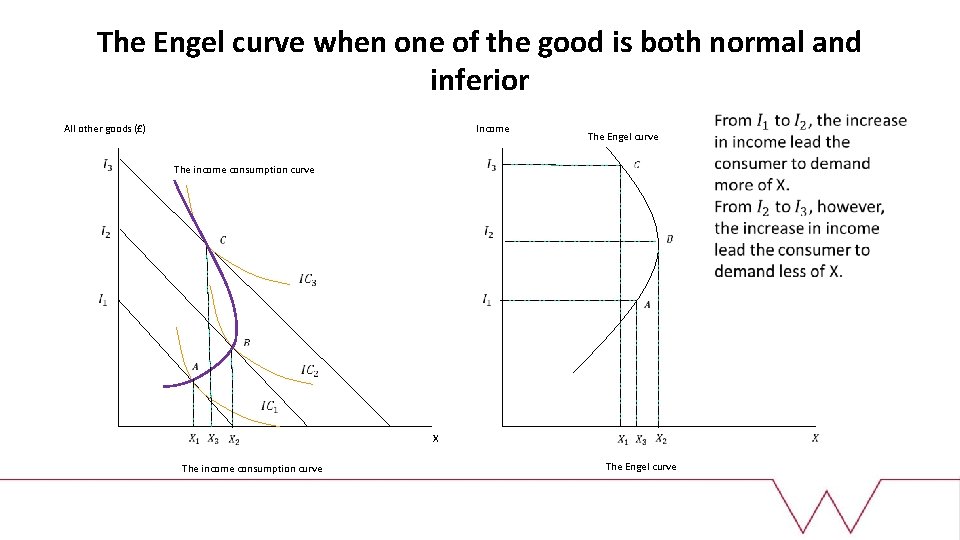
The Engel curve when one of the good is both normal and inferior Income All other goods (£) The Engel curve The income consumption curve X The income consumption curve The Engel curve
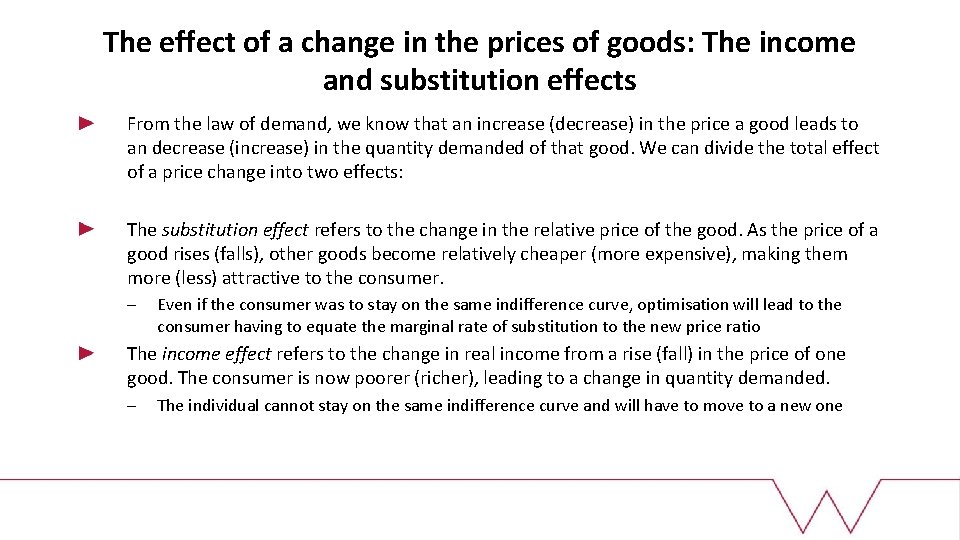
The effect of a change in the prices of goods: The income and substitution effects From the law of demand, we know that an increase (decrease) in the price a good leads to an decrease (increase) in the quantity demanded of that good. We can divide the total effect of a price change into two effects: The substitution effect refers to the change in the relative price of the good. As the price of a good rises (falls), other goods become relatively cheaper (more expensive), making them more (less) attractive to the consumer. – Even if the consumer was to stay on the same indifference curve, optimisation will lead to the consumer having to equate the marginal rate of substitution to the new price ratio The income effect refers to the change in real income from a rise (fall) in the price of one good. The consumer is now poorer (richer), leading to a change in quantity demanded. – The individual cannot stay on the same indifference curve and will have to move to a new one
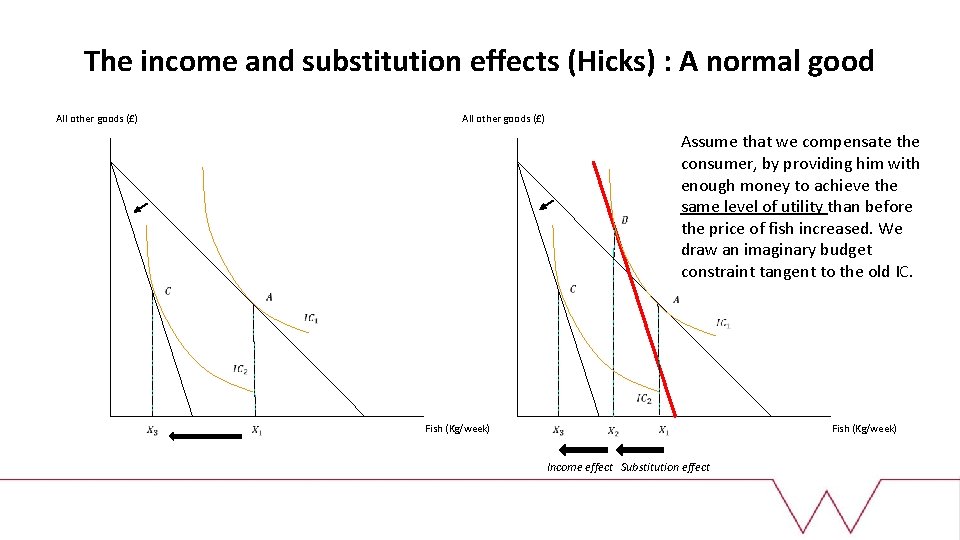
The income and substitution effects (Hicks) : A normal good All other goods (£) Assume that we compensate the consumer, by providing him with enough money to achieve the same level of utility than before the price of fish increased. We draw an imaginary budget constraint tangent to the old IC. Fish (Kg/week) Income effect Substitution effect
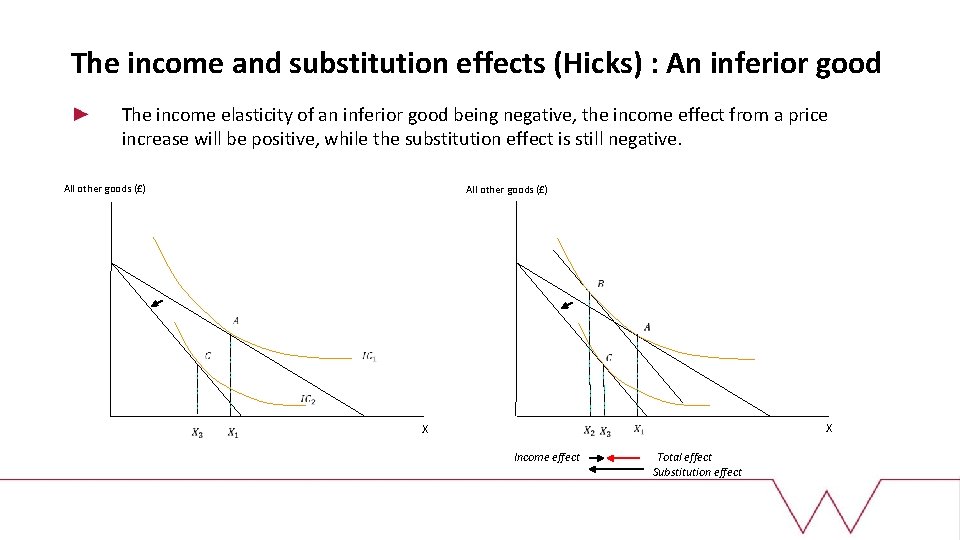
The income and substitution effects (Hicks) : An inferior good The income elasticity of an inferior good being negative, the income effect from a price increase will be positive, while the substitution effect is still negative. All other goods (£) X X Income effect Total effect Substitution effect
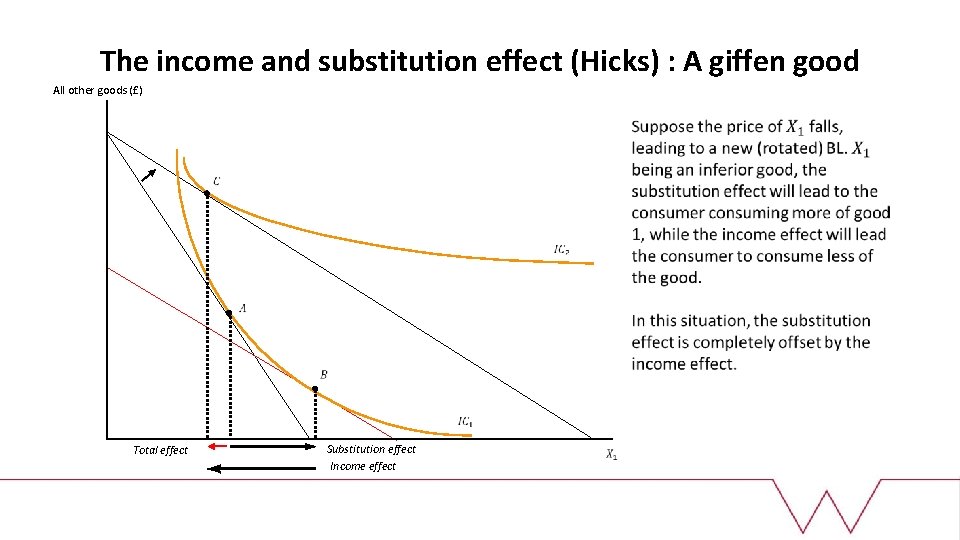
The income and substitution effect (Hicks) : A giffen good All other goods (£) Total effect Substitution effect Income effect
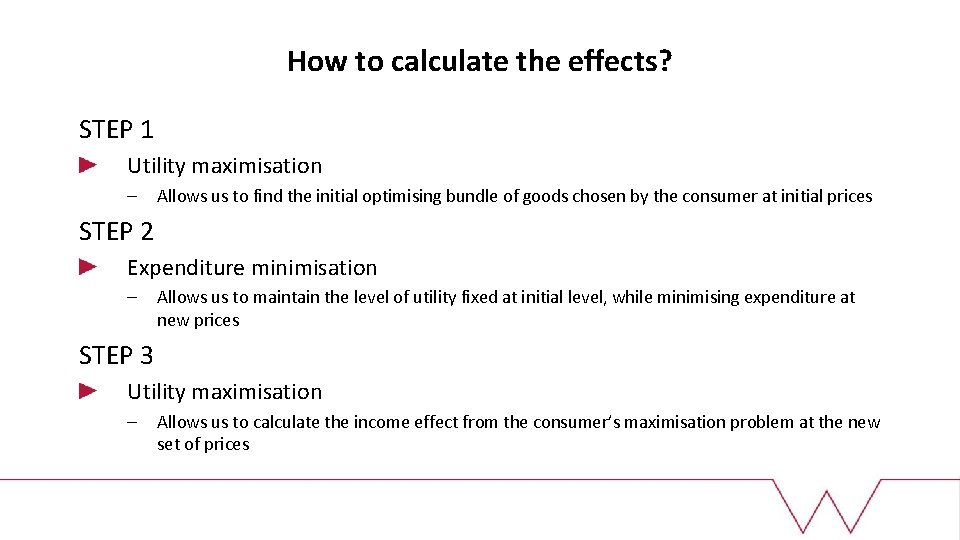
How to calculate the effects? STEP 1 Utility maximisation – Allows us to find the initial optimising bundle of goods chosen by the consumer at initial prices STEP 2 Expenditure minimisation – Allows us to maintain the level of utility fixed at initial level, while minimising expenditure at new prices STEP 3 Utility maximisation – Allows us to calculate the income effect from the consumer’s maximisation problem at the new set of prices
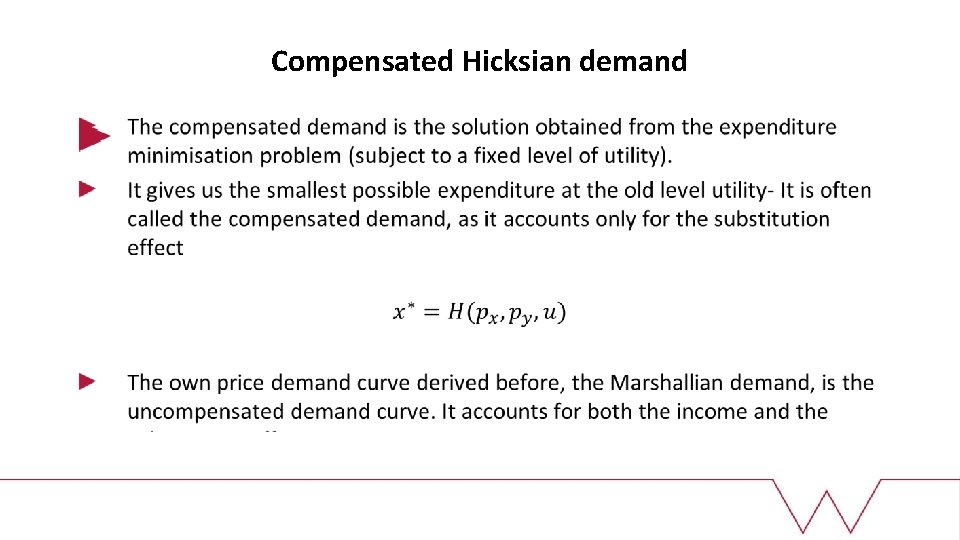
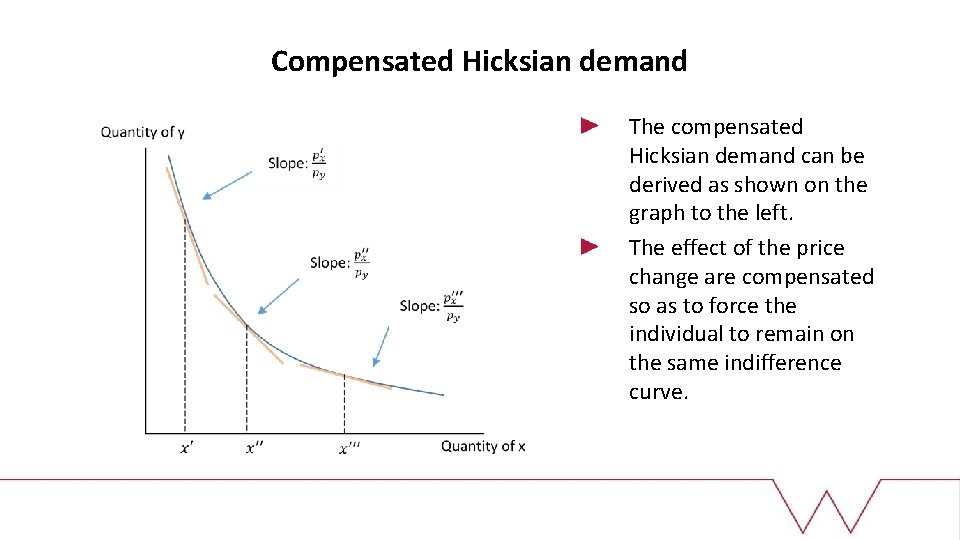
Compensated Hicksian demand
Compensated Hicksian demand The compensated Hicksian demand can be derived as shown on the graph to the left. The effect of the price change are compensated so as to force the individual to remain on the same indifference curve.
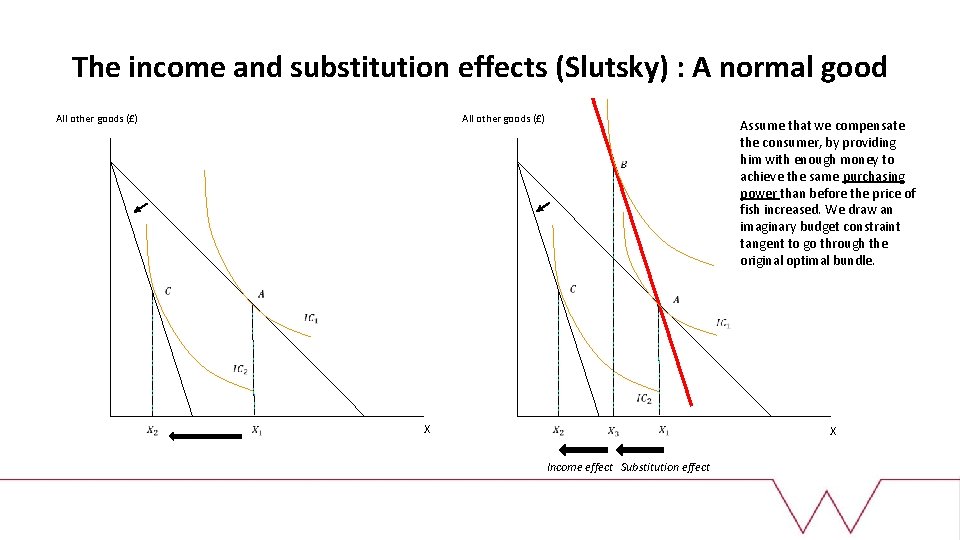
The income and substitution effects (Slutsky) : A normal good All other goods (£) Assume that we compensate the consumer, by providing him with enough money to achieve the same purchasing power than before the price of fish increased. We draw an imaginary budget constraint tangent to go through the original optimal bundle. X X Income effect Substitution effect
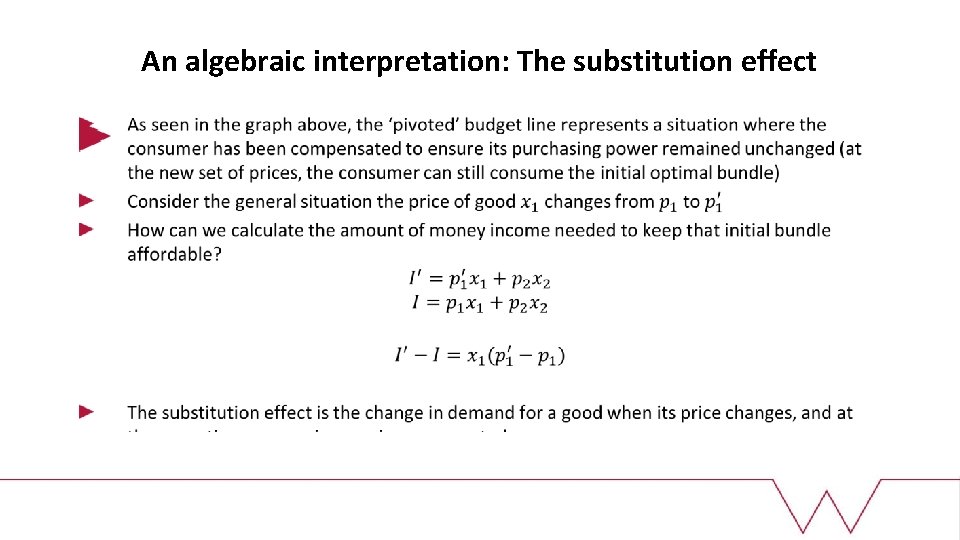
An algebraic interpretation: The substitution effect
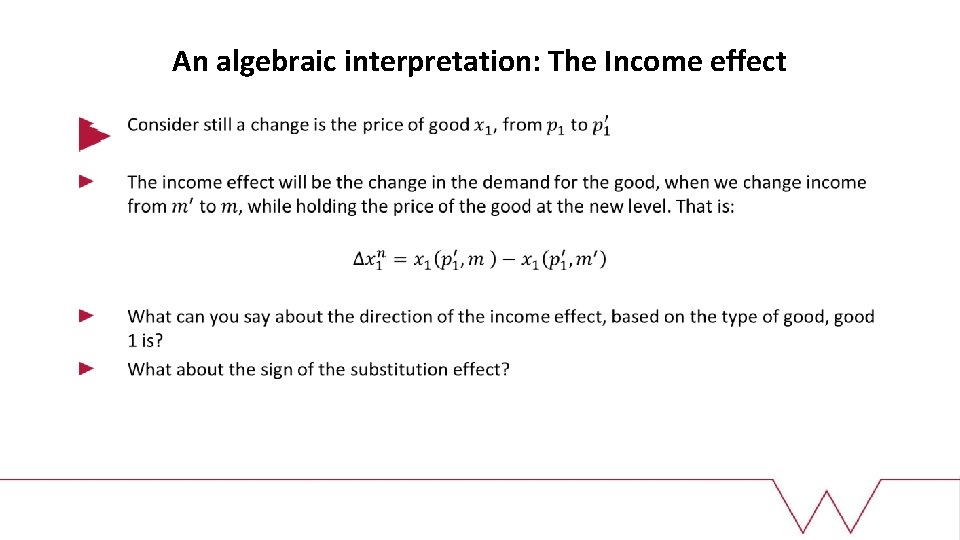
An algebraic interpretation: The Income effect
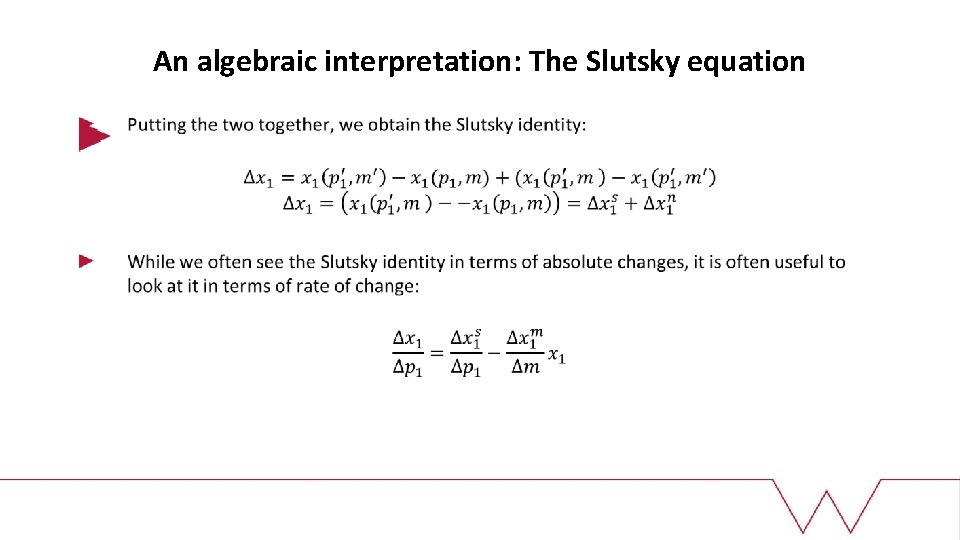
An algebraic interpretation: The Slutsky equation
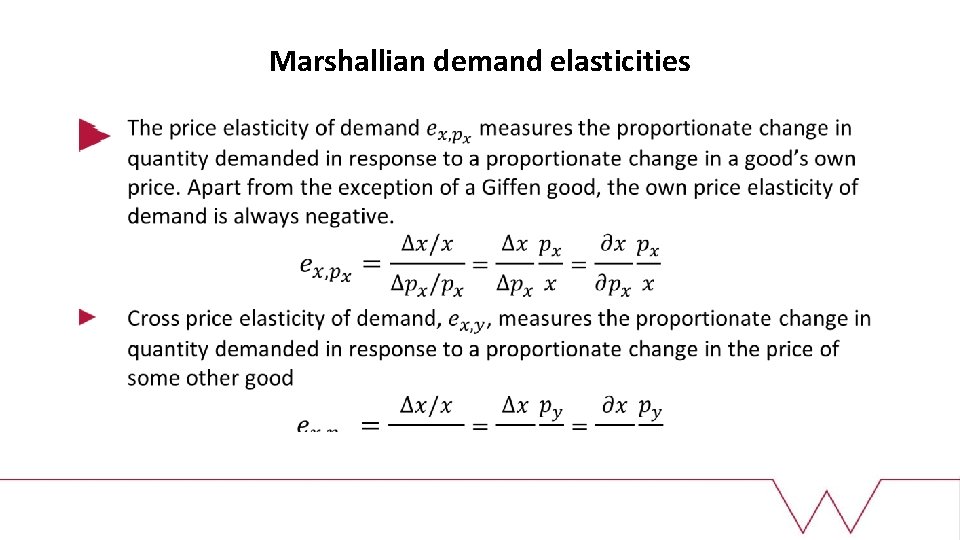
Marshallian demand elasticities
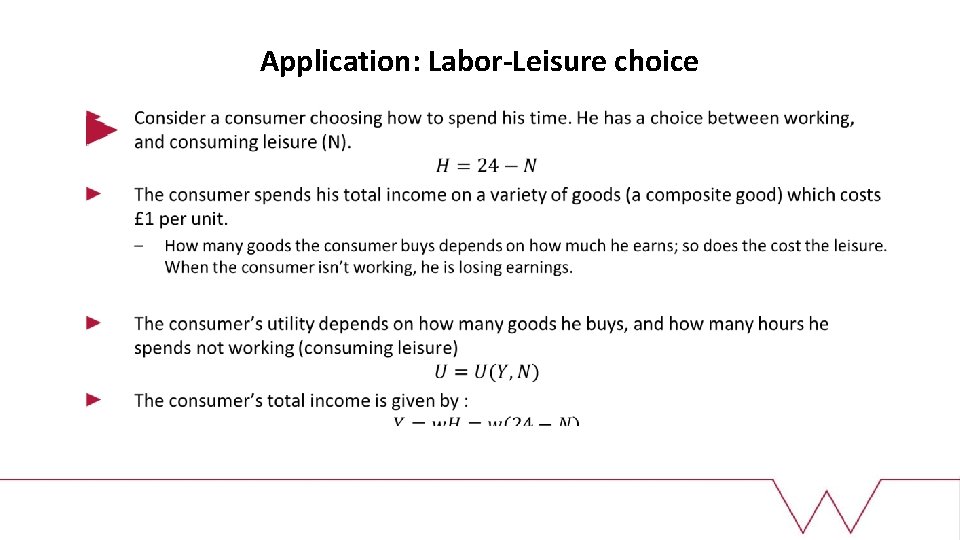
Application: Labor-Leisure choice
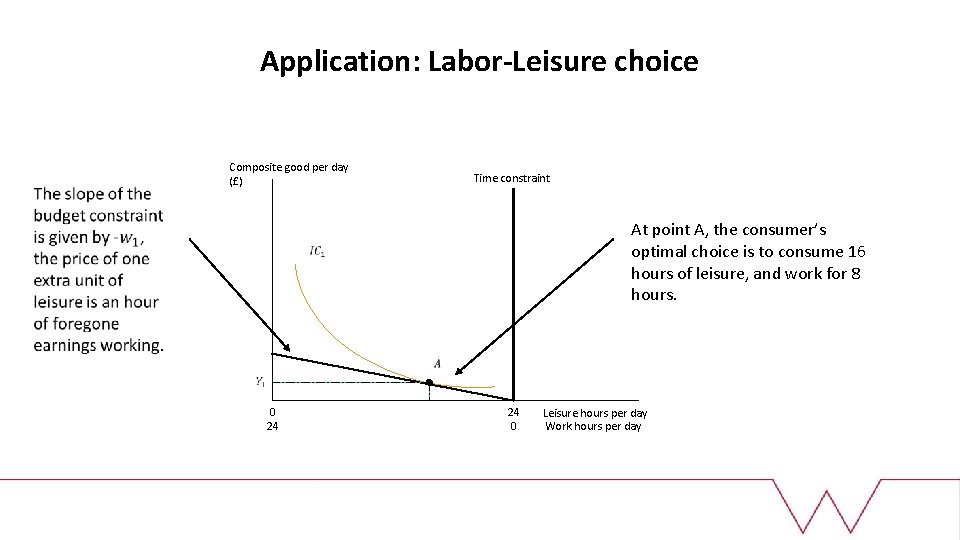
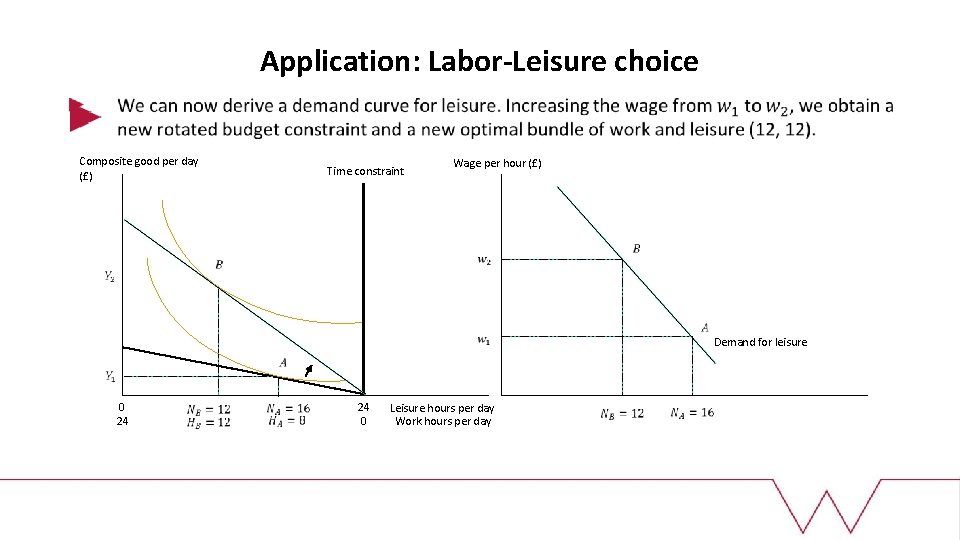
Application: Labor-Leisure choice Composite good per day (£) Time constraint At point A, the consumer’s optimal choice is to consume 16 hours of leisure, and work for 8 hours. 0 24 24 0 Leisure hours per day Work hours per day
Application: Labor-Leisure choice Composite good per day (£) Time constraint Wage per hour (£) Demand for leisure 0 24 24 0 Leisure hours per day Work hours per day
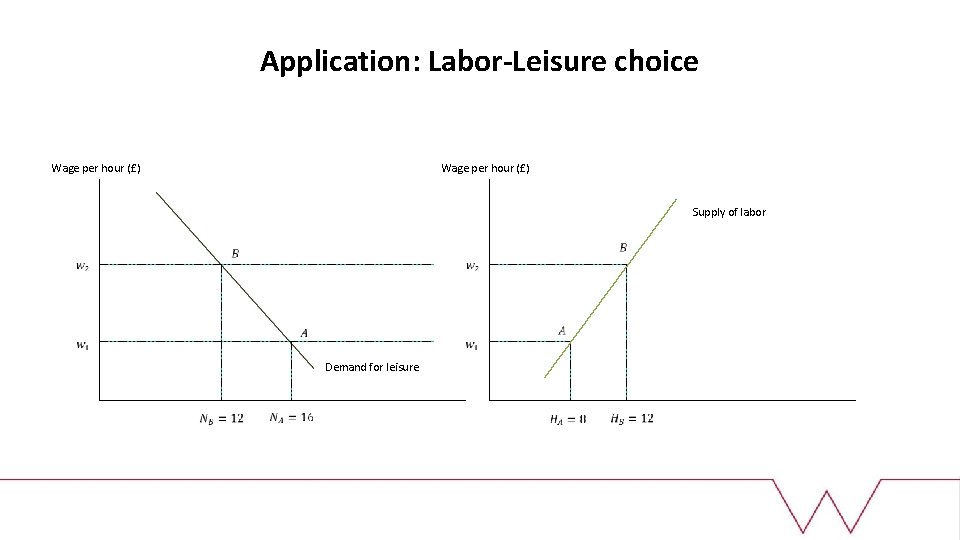
Application: Labor-Leisure choice Wage per hour (£) Supply of labor Demand for leisure
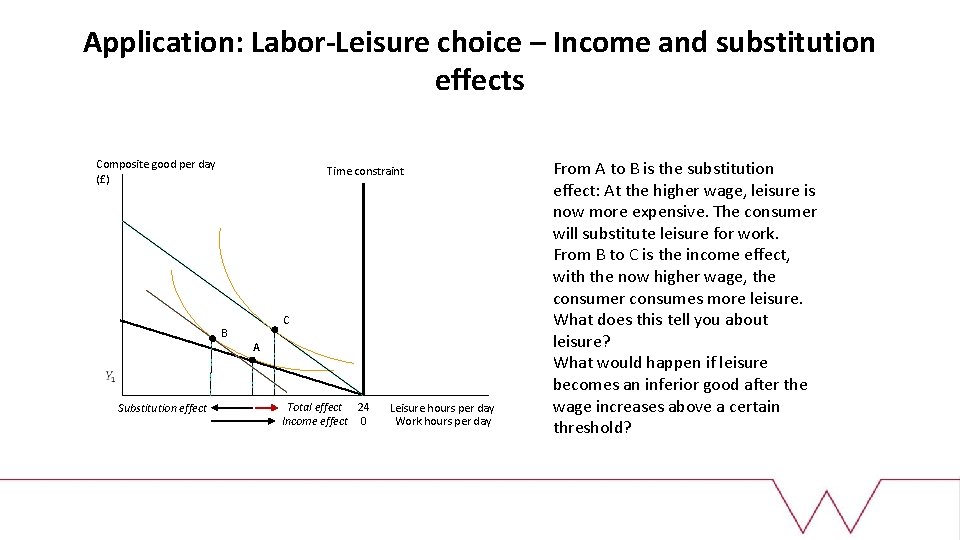
Application: Labor-Leisure choice – Income and substitution effects Composite good per day (£) Time constraint B Substitution effect C A Total effect 24 Income effect 0 Leisure hours per day Work hours per day From A to B is the substitution effect: At the higher wage, leisure is now more expensive. The consumer will substitute leisure for work. From B to C is the income effect, with the now higher wage, the consumer consumes more leisure. What does this tell you about leisure? What would happen if leisure becomes an inferior good after the wage increases above a certain threshold?