
Intermediate Macroeconomics Chapter 1 An Overview of Macroeconomics
- Slides: 16
Intermediate Macroeconomics Chapter 1 An Overview of Macroeconomics
An Overview of Macroeconomics 1. What is Macroeconomics 2. Macroeconomic Goals 3. Economic Theory in Practice Intermediate Macroeconomics
1. What Is Macroeconomics? • Microeconomics - study of behavior of individual economic agents. • Macroeconomics - study of aggregate measures of the economy Intermediate Macroeconomics
2. Macroeconomic Goals • • Low Unemployment Price Stability Economic Growth Complementary and Conflicting Goals Intermediate Macroeconomics
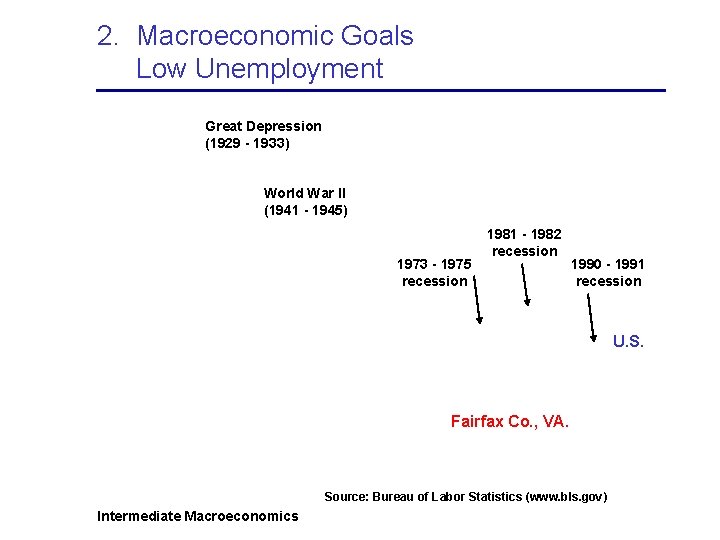
2. Macroeconomic Goals Low Unemployment Great Depression (1929 - 1933) World War II (1941 - 1945) 1973 - 1975 recession 1981 - 1982 recession 1990 - 1991 recession U. S. Fairfax Co. , VA. Source: Bureau of Labor Statistics (www. bls. gov) Intermediate Macroeconomics
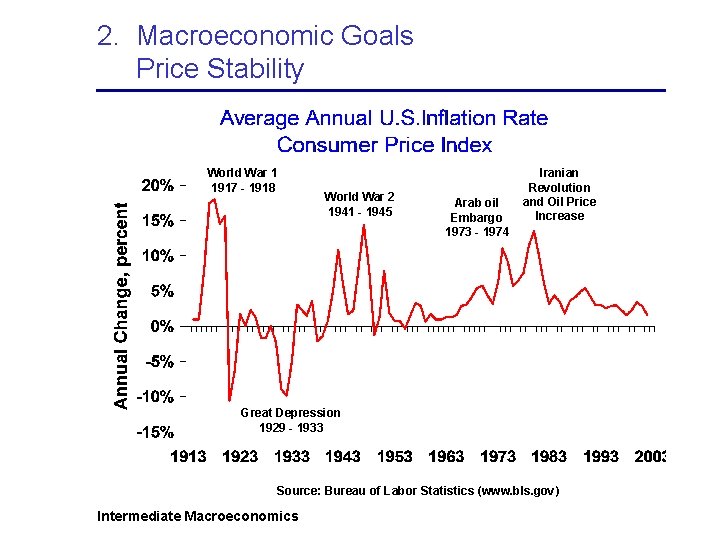
2. Macroeconomic Goals Price Stability World War 1 1917 - 1918 World War 2 1941 - 1945 Arab oil Embargo 1973 - 1974 Iranian Revolution and Oil Price Increase Great Depression 1929 - 1933 Source: Bureau of Labor Statistics (www. bls. gov) Intermediate Macroeconomics
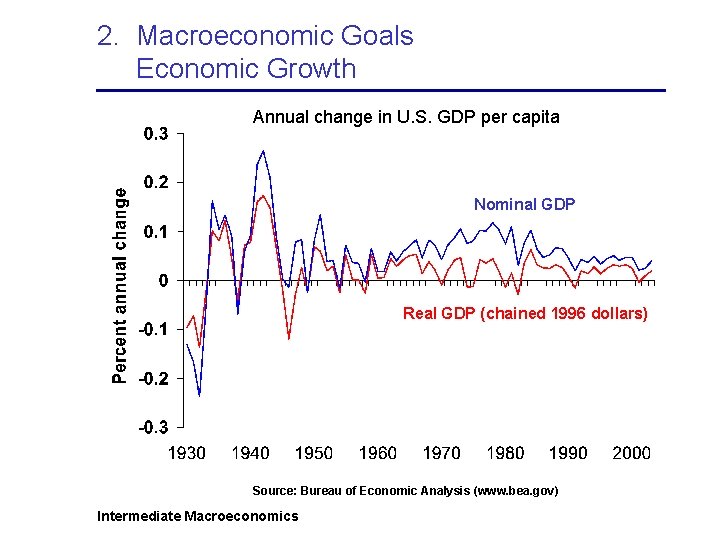
2. Macroeconomic Goals Economic Growth Annual change in U. S. GDP per capita Nominal GDP Real GDP (chained 1996 dollars) Source: Bureau of Economic Analysis (www. bea. gov) Intermediate Macroeconomics
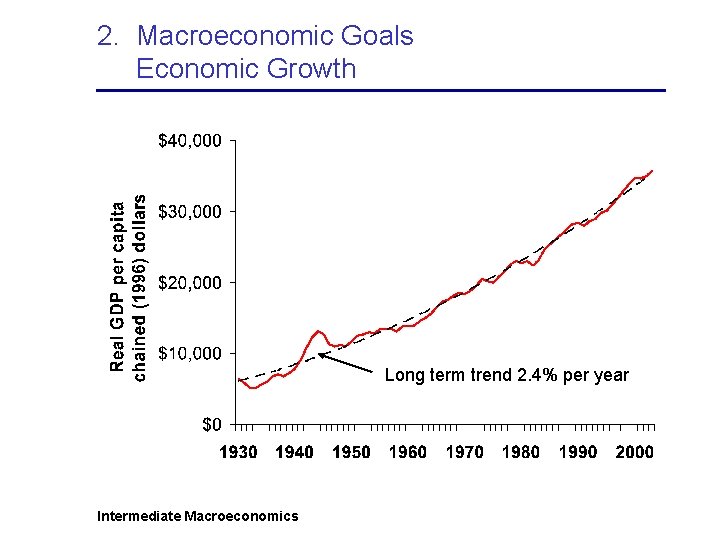
2. Macroeconomic Goals Economic Growth Long term trend 2. 4% per year Intermediate Macroeconomics
2. Macroeconomic Goals Complementary and Conflicting Goals • Complementary Goals – Low unemployment and high economic growth • Conflicting Goals – Low unemployment and low inflation Intermediate Macroeconomics
3. Economic Theory in Practice • Economic Theory and Models • Empirical Applications Intermediate Macroeconomics
3. Economic Theory in Practice Economic theory and models What makes a good model? • Accurately explains history • Makes reasonable predictions about the future Intermediate Macroeconomics
3. Economic Theory in Practice Economic theory and models Keep models simple • Occam’s Razor - eliminate complicating details that don’t significantly contribute to the model • Ceteris Paribus - other things being equal Intermediate Macroeconomics
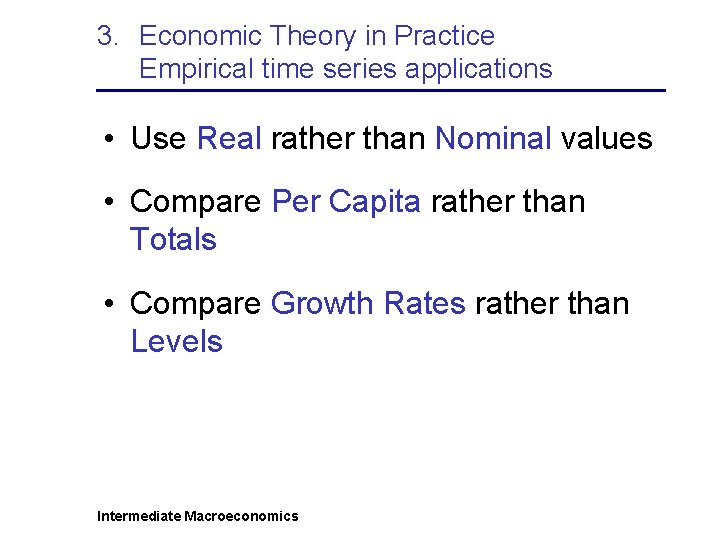
3. Economic Theory in Practice Empirical time series applications • Use Real rather than Nominal values • Compare Per Capita rather than Totals • Compare Growth Rates rather than Levels Intermediate Macroeconomics
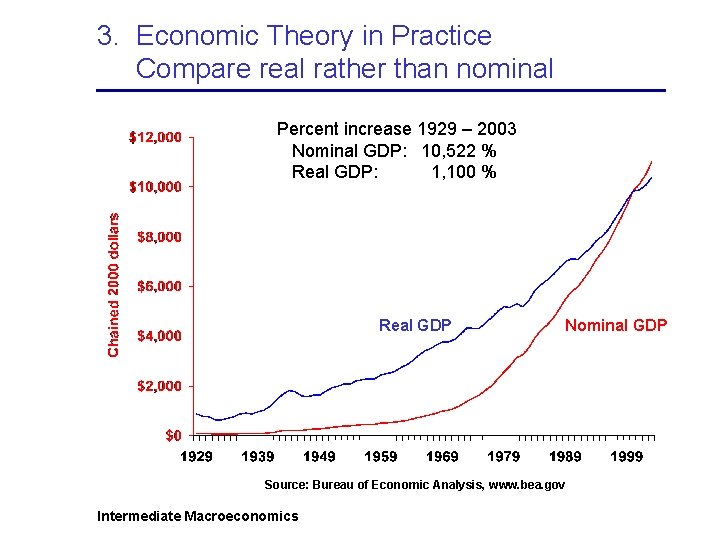
3. Economic Theory in Practice Compare real rather than nominal Percent increase 1929 – 2003 Nominal GDP: 10, 522 % Real GDP: 1, 100 % Real GDP Nominal GDP Source: Bureau of Economic Analysis, www. bea. gov Intermediate Macroeconomics
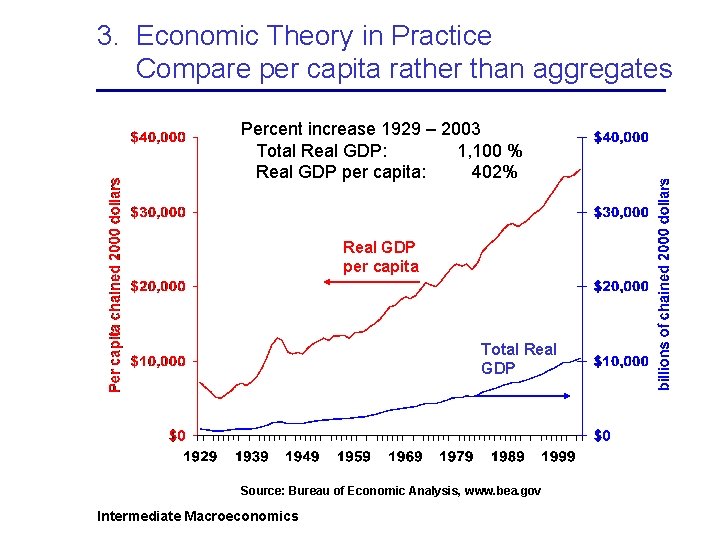
3. Economic Theory in Practice Compare per capita rather than aggregates Percent increase 1929 – 2003 Total Real GDP: 1, 100 % Real GDP per capita: 402% Real GDP per capita Total Real GDP Source: Bureau of Economic Analysis, www. bea. gov Intermediate Macroeconomics
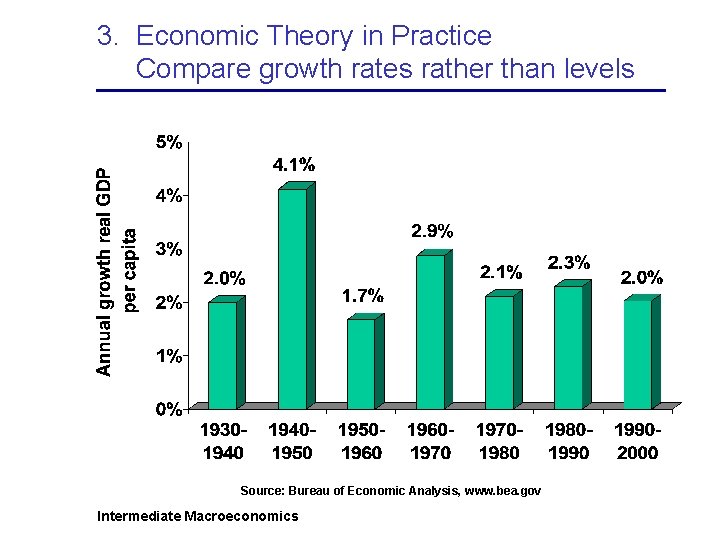
3. Economic Theory in Practice Compare growth rates rather than levels Source: Bureau of Economic Analysis, www. bea. gov Intermediate Macroeconomics