
Interior Zones and Floor Plans you will need

- Slides: 25
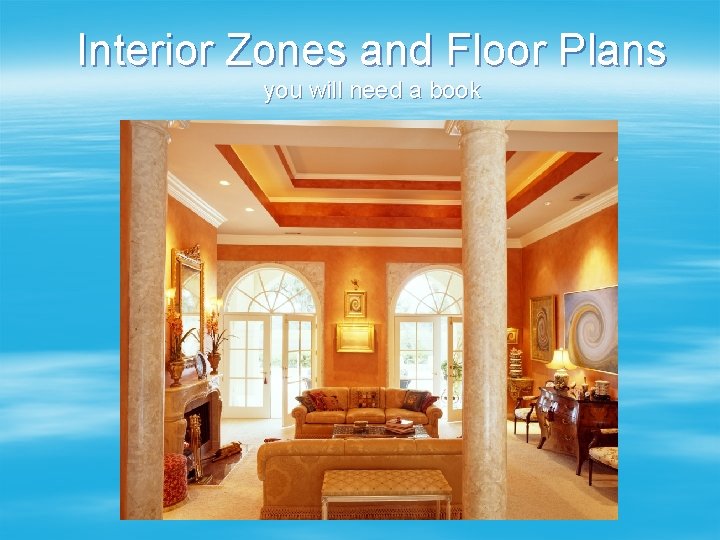
Interior Zones and Floor Plans you will need a book
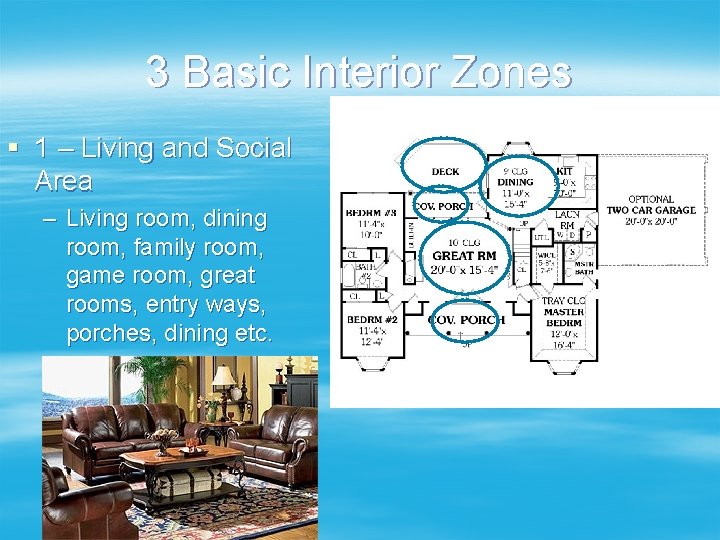
3 Basic Interior Zones § 1 – Living and Social Area – Living room, dining room, family room, game room, great rooms, entry ways, porches, dining etc.
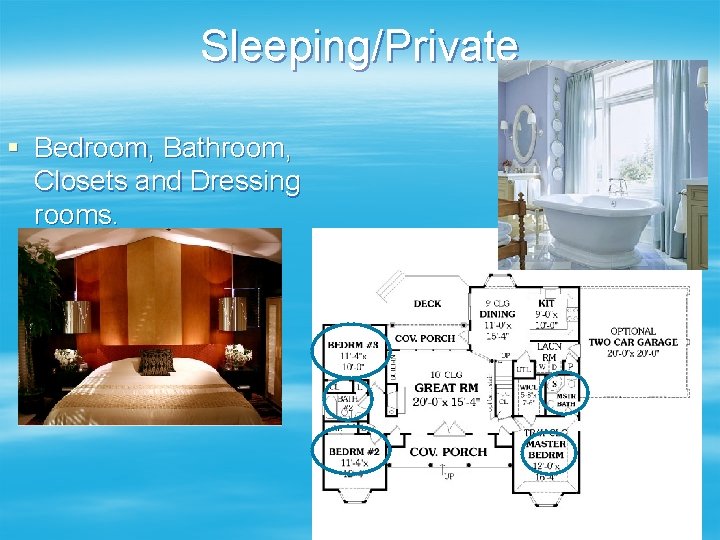
Sleeping/Private § Bedroom, Bathroom, Closets and Dressing rooms.
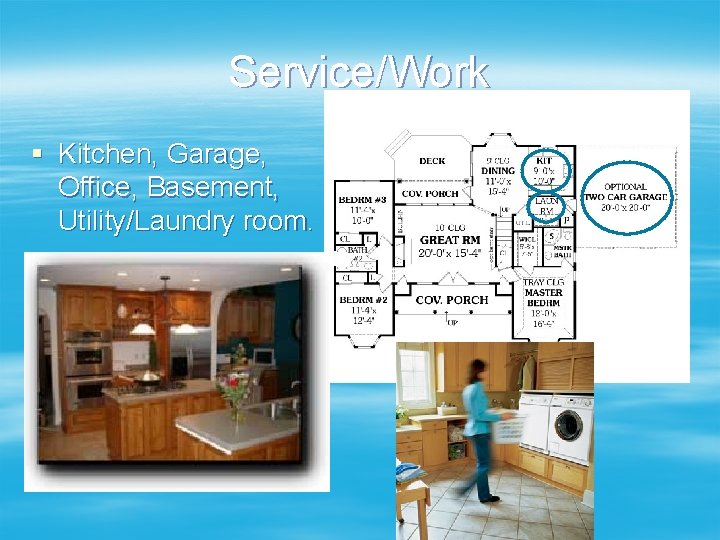
Service/Work § Kitchen, Garage, Office, Basement, Utility/Laundry room.
Color your floor plan On your note taking guide: § § § Color all of the living/social areas in yellow Color all of the sleeping/private areas in red Color all of the work/service areas in blue
Traffic or Circulation Path § The route that people follow as they move from one place to another. § 3 -4 Feet should be allowed for circulation paths. § Types – Family, Work & Service, Guest
Good Family Circulation § § Bathrooms should be close to bedrooms. Indoor living next to outdoor living area’s Other related rooms close to each other. High use routes should be short and simple. § Closed floor plans separate rooms § Open floor plans have less walls, save on cost of building materials, and home feels more spacious
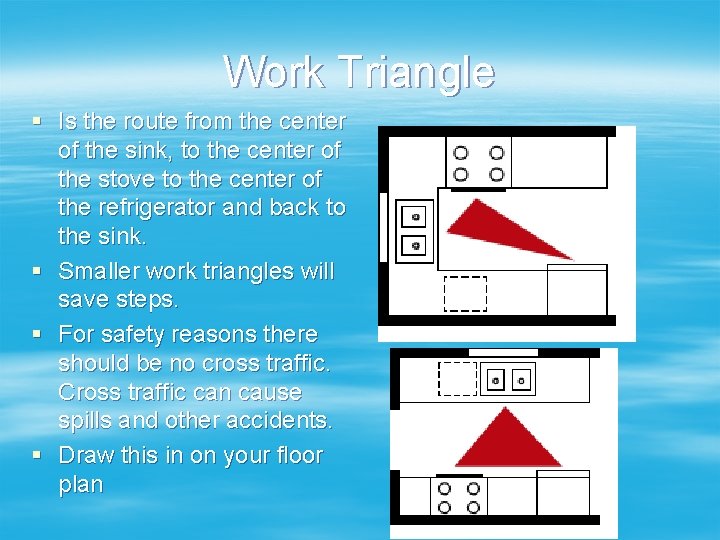
Work Triangle § Is the route from the center of the sink, to the center of the stove to the center of the refrigerator and back to the sink. § Smaller work triangles will save steps. § For safety reasons there should be no cross traffic. Cross traffic can cause spills and other accidents. § Draw this in on your floor plan
Other Aspects of Good Work Circulation § Easy access to the basement, garage and storage areas. § Clothes care center in a convenient location. Ask yourself these Questions Can the cook prepare a meal without worrying about constantly walking into someone going by? If people can eat in their rooms or living areas, can they get there without leaving a trail through the entire house? If you spend a lot of time grilling outside on the patio, is it convenient to the inside food prep area? Do you have to walk through to the other end of the house to reach the outdoor grill? Can you bring the groceries right in from the outside without having to go through the living room?
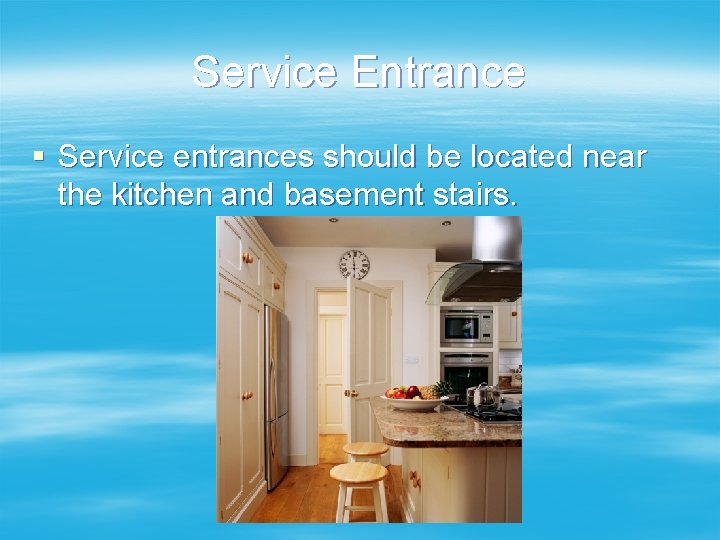
Service Entrance § Service entrances should be located near the kitchen and basement stairs.
Guest Circulation § Entry, living, dining, powder room or ½ bath not in private area’s of the home, porches, patios, entertainment rooms. § Ask Yourself § How to guests travel to the living room when you are entertaining? § Do they have to go through private areas of your home? § How do they get to the powder room? § Is the kitchen handy for serving food and drinks to your guests when you are entertaining? http: //www. home-decorating-room-by-room. com/trafficpatterns. html
Important Room Relationships § § § § Bathroom & Bedroom Kitchen & Dining Mudroom & Garage & Kitchen and outdoor living space Living and dining areas Can you think of others?
Birds eye-view § A view drawn as seen from the perspective of a bird flying and looking down.
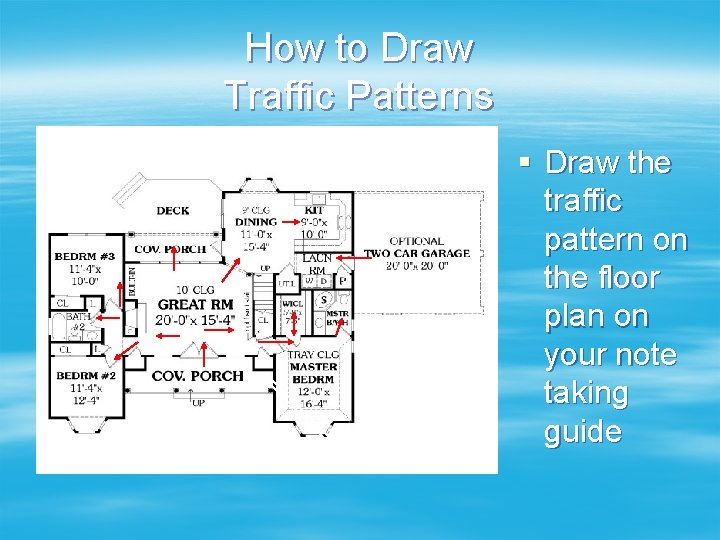
How to Draw Traffic Patterns § Draw the traffic pattern on the floor plan on your note taking guide
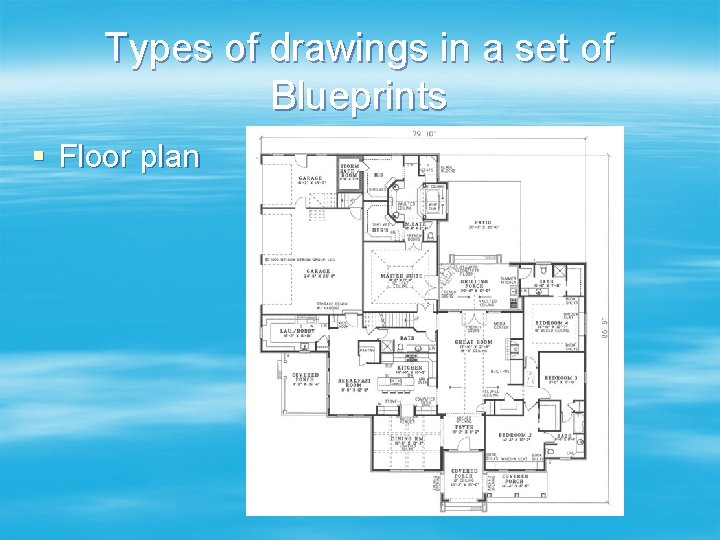
Types of drawings in a set of Blueprints § Floor plan
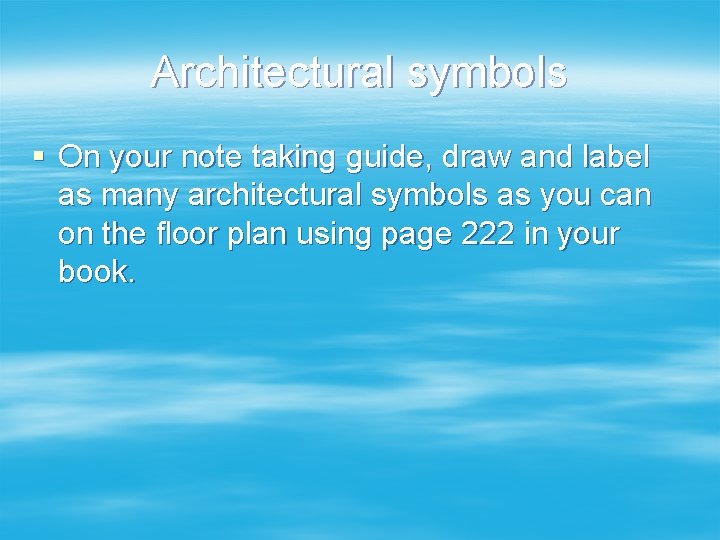
Architectural symbols § On your note taking guide, draw and label as many architectural symbols as you can on the floor plan using page 222 in your book.
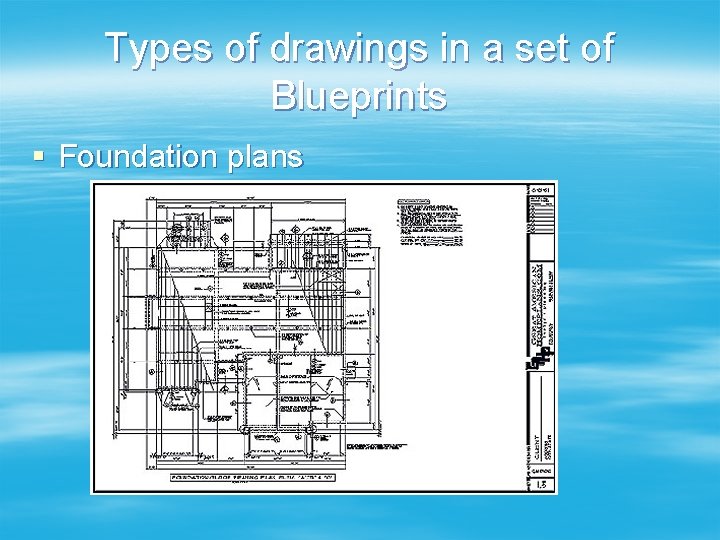
Types of drawings in a set of Blueprints § Foundation plans
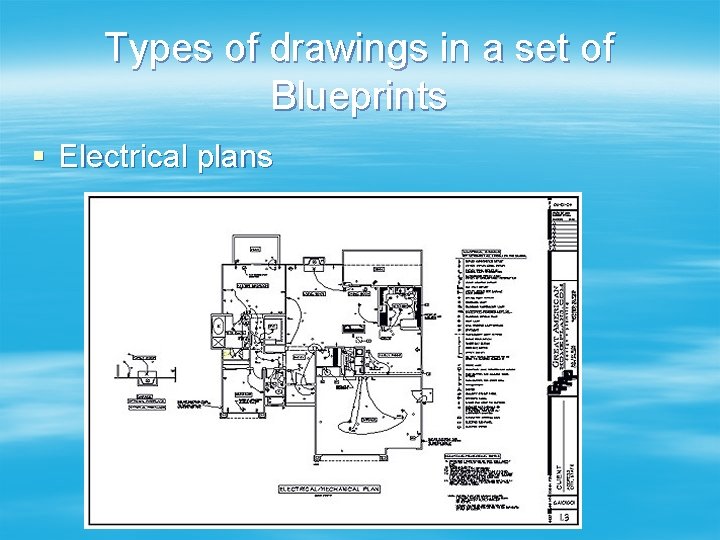
Types of drawings in a set of Blueprints § Electrical plans
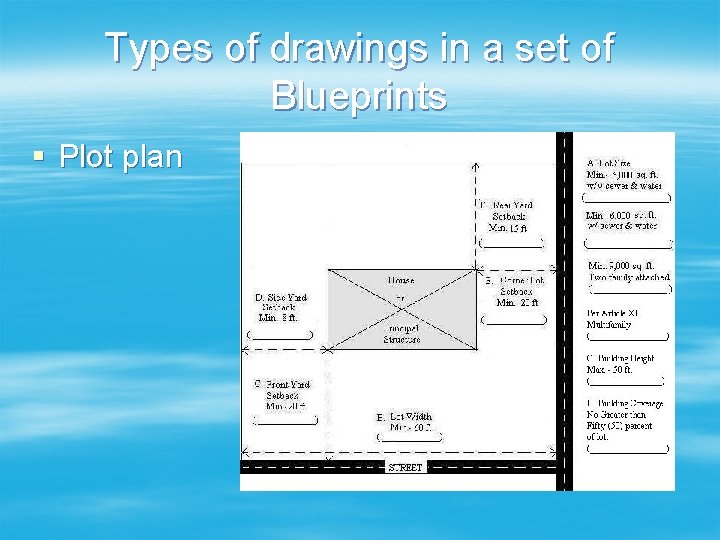
Types of drawings in a set of Blueprints § Plot plan
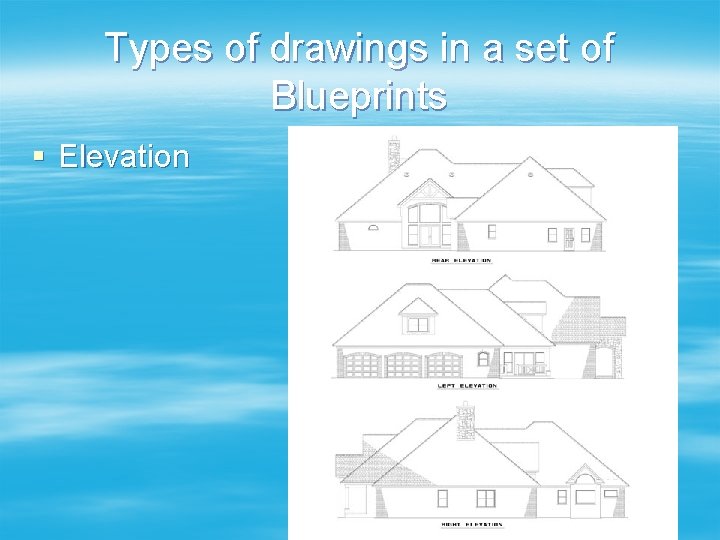
Types of drawings in a set of Blueprints § Elevation
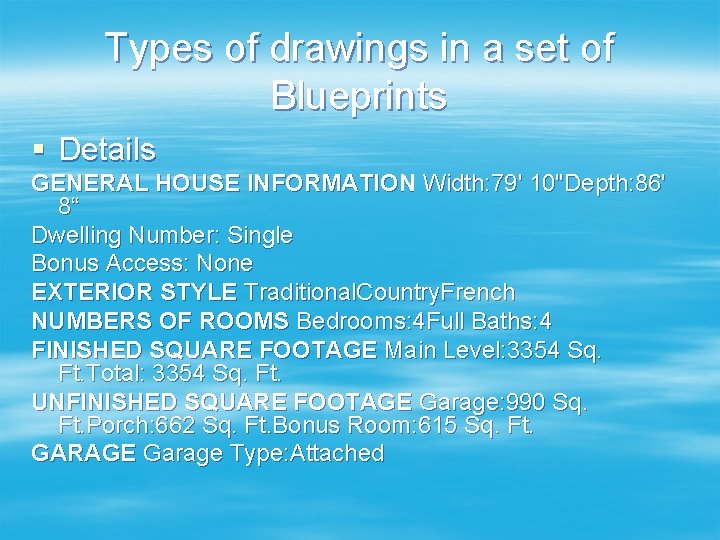
Types of drawings in a set of Blueprints § Details GENERAL HOUSE INFORMATION Width: 79' 10"Depth: 86' 8“ Dwelling Number: Single Bonus Access: None EXTERIOR STYLE Traditional. Country. French NUMBERS OF ROOMS Bedrooms: 4 Full Baths: 4 FINISHED SQUARE FOOTAGE Main Level: 3354 Sq. Ft. Total: 3354 Sq. Ft. UNFINISHED SQUARE FOOTAGE Garage: 990 Sq. Ft. Porch: 662 Sq. Ft. Bonus Room: 615 Sq. Ft. GARAGE Garage Type: Attached
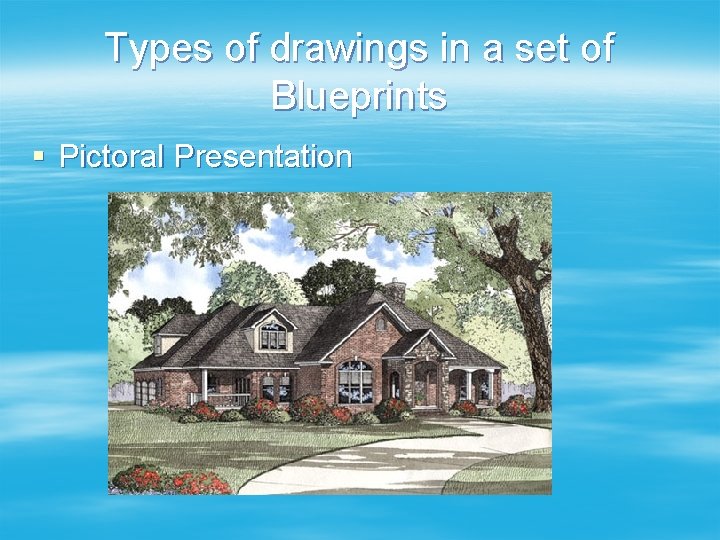
Types of drawings in a set of Blueprints § Pictoral Presentation
Scale § Drawing to scale means that each square on a graph paper represents a given number of feet, inches, or centimeters. § Most residential plans are drawn in ¼” =1 ft § To create a scale drawing you must measure the room and furnishings.
Assignment § After completing the book assignment and scenario’s you will create 2 scale drawings on graph paper. § Design a house. – use one of the scenario's on your note taking guide to help you decide what your house will need. § Your first floor plan will use ¼ in scale. § Your second floor plan will be identical to the first but drawn to ½ in scale
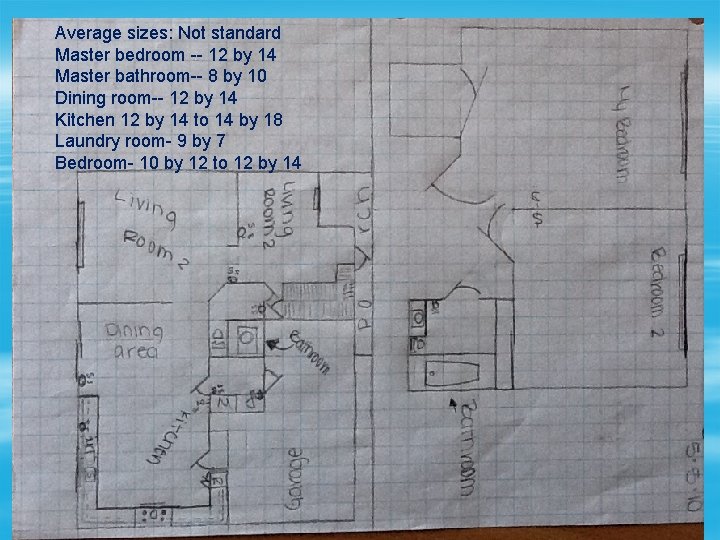
Average sizes: Not standard Master bedroom -- 12 by 14 Master bathroom-- 8 by 10 Dining room-- 12 by 14 Kitchen 12 by 14 to 14 by 18 Laundry room- 9 by 7 Bedroom- 10 by 12 to 12 by 14