
Intergenerational Trauma and the Brain KERRIE MOORE MSW
Inter-generational Trauma and the Brain KERRIE MOORE MSW RSW INTERGENERATIONAL TRAUMA /GRIEF SPECIALIST 403 -202 -6633 KERRIE. MOORE@SHAW. CA CONSULTANT PALIX FOUNDATION
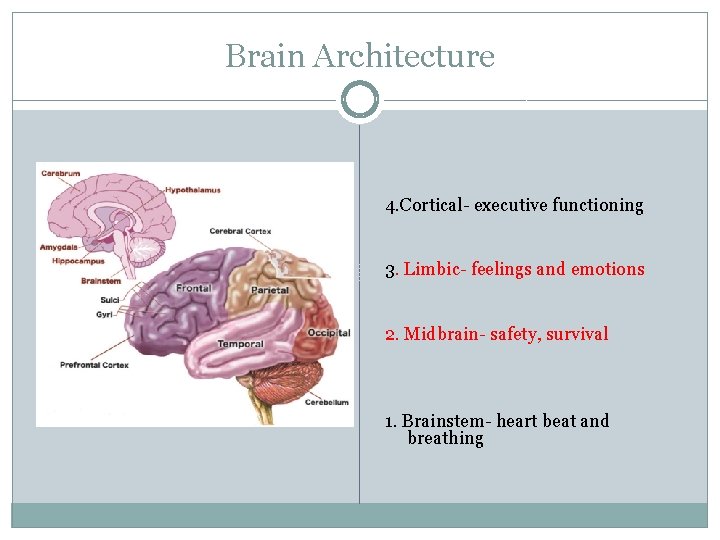
Brain Architecture 4. Cortical- executive functioning 3. Limbic- feelings and emotions 2. Midbrain- safety, survival 1. Brainstem- heart beat and breathing
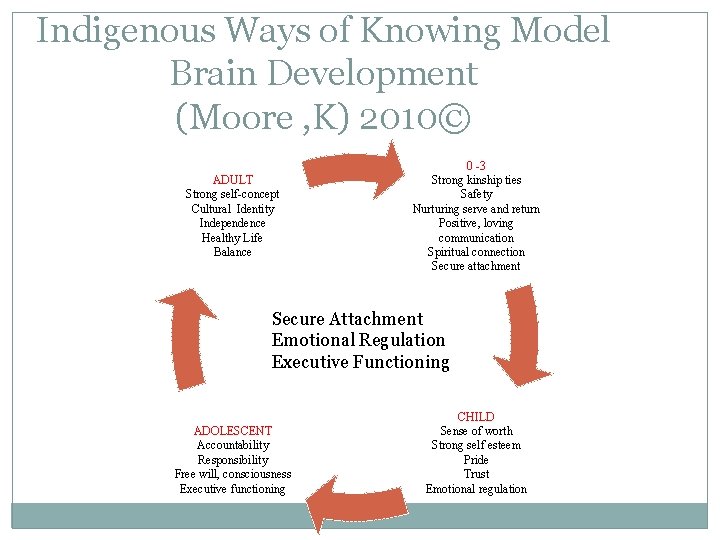
Indigenous Ways of Knowing Model Brain Development (Moore , K) 2010© ADULT Strong self-concept Cultural Identity Independence Healthy Life Balance 0 -3 Strong kinship ties Safety Nurturing serve and return Positive, loving communication Spiritual connection Secure attachment Secure Attachment Emotional Regulation Executive Functioning ADOLESCENT Accountability Responsibility Free will, consciousness Executive functioning CHILD Sense of worth Strong self esteem Pride Trust Emotional regulation
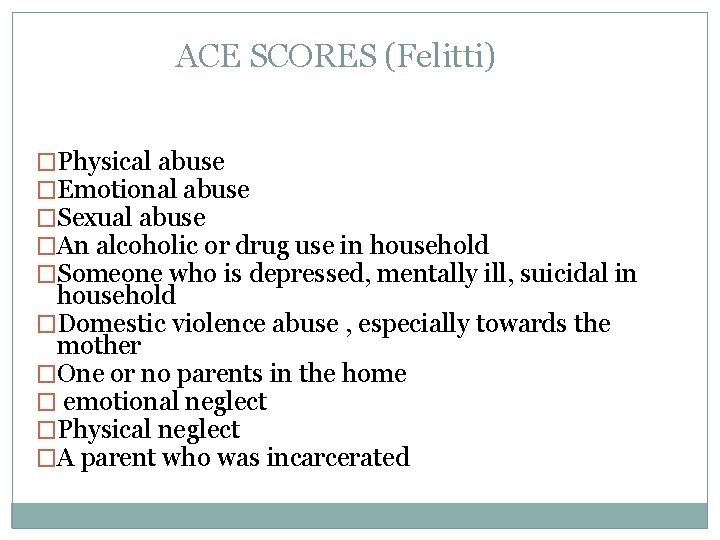
ACE SCORES (Felitti) �Physical abuse �Emotional abuse �Sexual abuse �An alcoholic or drug use in household �Someone who is depressed, mentally ill, suicidal in household �Domestic violence abuse , especially towards the mother �One or no parents in the home � emotional neglect �Physical neglect �A parent who was incarcerated
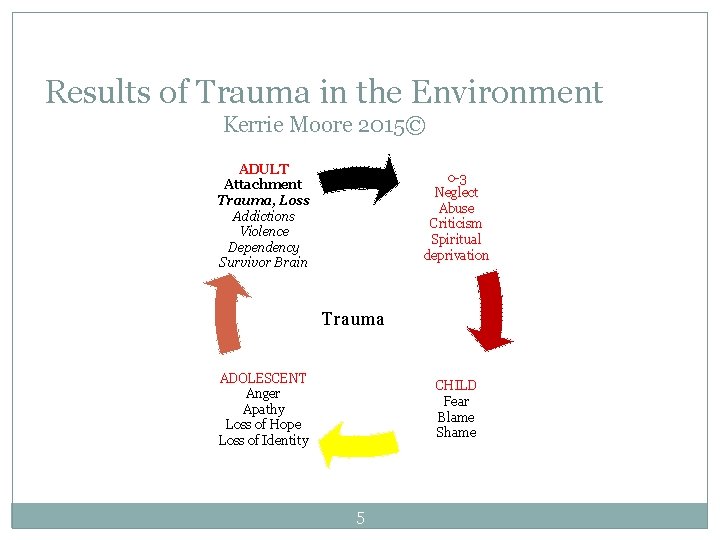
Results of Trauma in the Environment Kerrie Moore 2015© ADULT Attachment Trauma, Loss Addictions Violence Dependency Survivor Brain 0 -3 Neglect Abuse Criticism Spiritual deprivation Trauma ADOLESCENT Anger Apathy Loss of Hope Loss of Identity CHILD Fear Blame Shame 5
Trauma is the effect of toxic stress �Normalization of grief �Relationship issues( attachment) �Emotional disregulation (We stop growing emotionally at the age of our first trauma) �We remain in fight/flea /freeze cannot move into higher cognitive functions �Stuck in the midbrain and limbic system �Trauma makes us go back to sensory functions(feeling) �We can’t think
Inter-generational Trauma �There is now considerable evidence that the effects of trauma experiences are often transmitted across generations, affecting the children and grandchildren of those that were initially victimized (Bombay, 2013) �Epigenetics �Inter-generational trauma is influenced by our environments. What we see is what we do. When we go back to our traditional model of kinship structures we begin to heal. �Helping the Family not just the individual
Adults with Unresolved Trauma �Apathy-Learned Helplessness �Addictions �Neglect/Abuse( lack of nurturing teachings) �Mental Health Issues/FASD/Misdiagnosis �Behaviors of Blame, Anger, Shame( gossip, jealousy) �Mistrust(relationship issues) �Emotional disregulation �Anger, Anxiety, Depression �Suicide
Results of Inter –generational Trauma �Loss of cultural identity, language and traditional ways of healing and finding hope creates deep grief. Ceremonies banned from 1885 to 1951. �Sexual abuse, physical beatings, emotional, mental and spiritual abuse were common practices in many Residential Schools. This creates Trauma. ( RCAP, 1993) �Abuse and separation created loss of identity, spiritual disconnection, loss of family bonding skills, feelings of helplessness, resulting in insecure attachment, grief and trauma.
The Effects of Inter-generational Trauma “shattered self, shattered world view” Indigenous people have multiple issues spanning multiple generations. �Grief and Loss �Trauma, PTSD, Developmental Trauma Disorder �Attachment Disorder, Abandonment Issues �Maladaptive behaviors, disorders, emotional disregulation, spiritual deprivation, loss of hope, apathy, loss of kinship structures, loss of identity �And many coping abilities which create other secondary issues.
Grief and Loss J. Bowlby, C. Parkes , 1970 Shock- can’t think, emotionally shut down 2. Yearning/ attachment- loneliness, attachment, trying to fill the void 3. Despair/ Stress- hopelessness, consumed by anger, depression, irritability 4. Recovery- rebuild trust in the world 1.
Lack of Attachment �Attachment is about stress and stress interventions �Mentalization process is affected �Less capacity to think �Parent reactions impact similar patterns in child �Addictive adults are less responsive to children on a neural level �Creates stress in child , ongoing can lead to toxic stress, fear, poor self control, decision making, depression, greater emotional lability
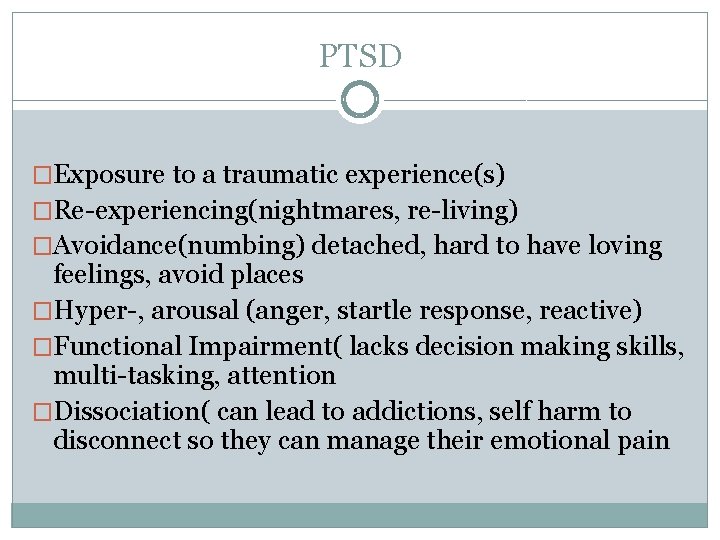
PTSD �Exposure to a traumatic experience(s) �Re-experiencing(nightmares, re-living) �Avoidance(numbing) detached, hard to have loving feelings, avoid places �Hyper-, arousal (anger, startle response, reactive) �Functional Impairment( lacks decision making skills, multi-tasking, attention �Dissociation( can lead to addictions, self harm to disconnect so they can manage their emotional pain
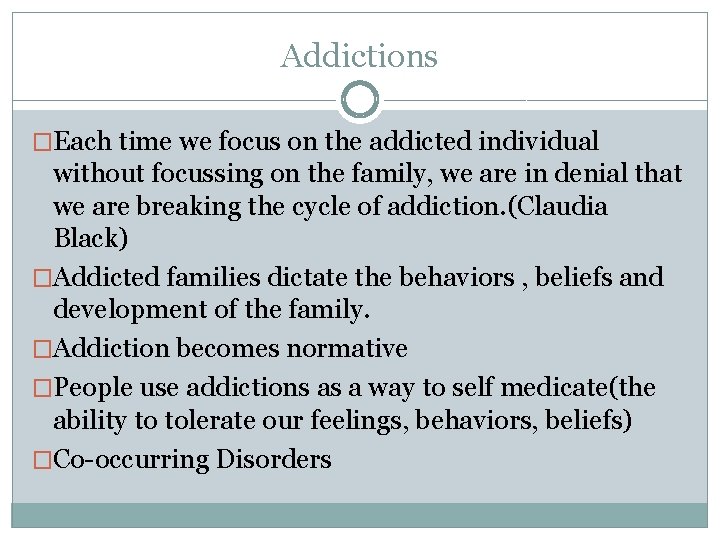
Addictions �Each time we focus on the addicted individual without focussing on the family, we are in denial that we are breaking the cycle of addiction. (Claudia Black) �Addicted families dictate the behaviors , beliefs and development of the family. �Addiction becomes normative �People use addictions as a way to self medicate(the ability to tolerate our feelings, behaviors, beliefs) �Co-occurring Disorders
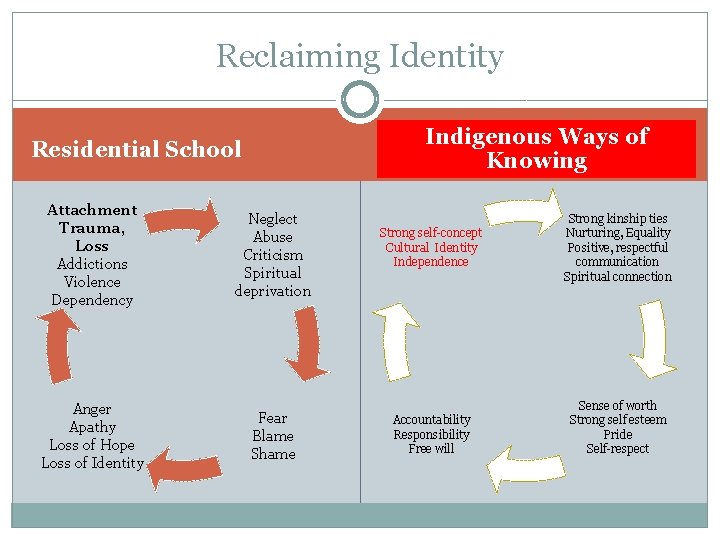
Reclaiming Identity Indigenous Ways of Knowing Residential School Attachment Trauma, Loss Addictions Violence Dependency Neglect Abuse Criticism Spiritual deprivation Anger Apathy Loss of Hope Loss of Identity Fear Blame Shame Strong self-concept Cultural Identity Independence Accountability Responsibility Free will Strong kinship ties Nurturing, Equality Positive, respectful communication Spiritual connection Sense of worth Strong self esteem Pride Self-respect
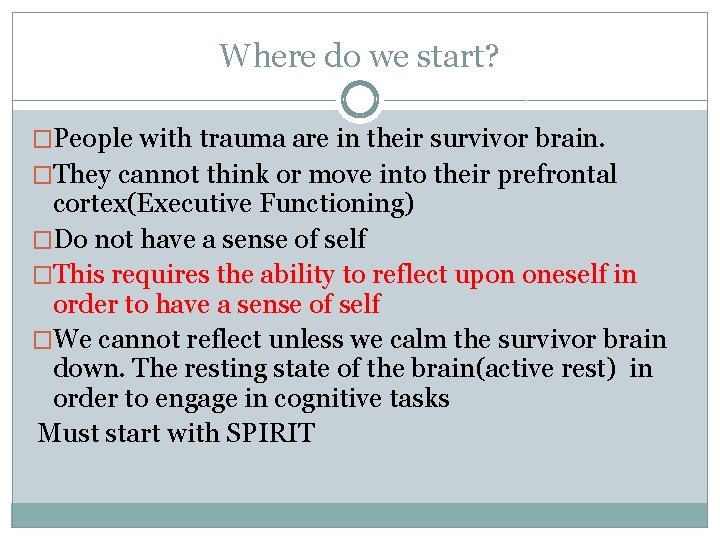
Where do we start? �People with trauma are in their survivor brain. �They cannot think or move into their prefrontal cortex(Executive Functioning) �Do not have a sense of self �This requires the ability to reflect upon oneself in order to have a sense of self �We cannot reflect unless we calm the survivor brain down. The resting state of the brain(active rest) in order to engage in cognitive tasks Must start with SPIRIT
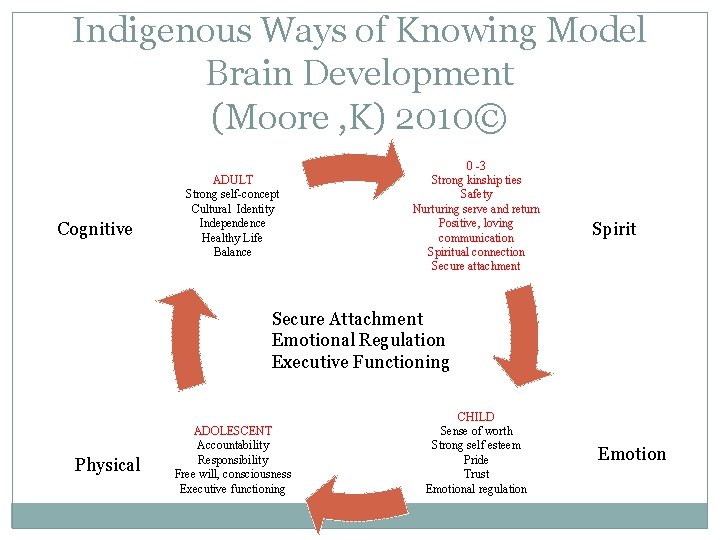
Indigenous Ways of Knowing Model Brain Development (Moore , K) 2010© Cognitive ADULT Strong self-concept Cultural Identity Independence Healthy Life Balance 0 -3 Strong kinship ties Safety Nurturing serve and return Positive, loving communication Spiritual connection Secure attachment Spirit Secure Attachment Emotional Regulation Executive Functioning Physical ADOLESCENT Accountability Responsibility Free will, consciousness Executive functioning CHILD Sense of worth Strong self esteem Pride Trust Emotional regulation Emotion
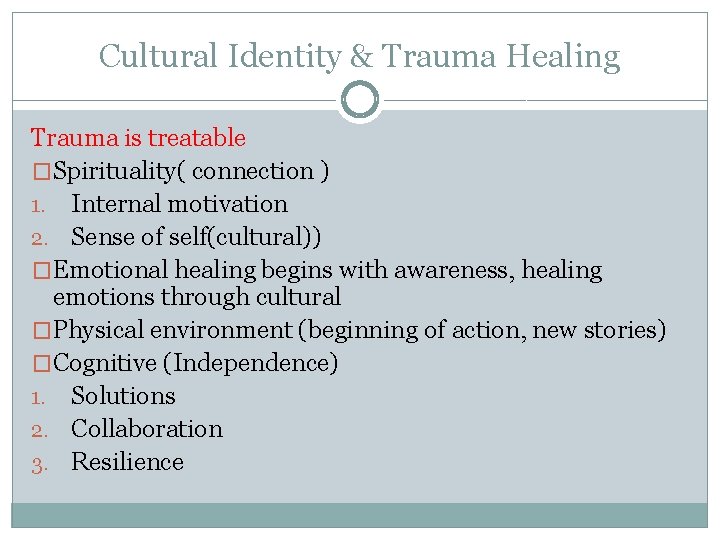
Cultural Identity & Trauma Healing Trauma is treatable �Spirituality( connection ) 1. Internal motivation 2. Sense of self(cultural)) �Emotional healing begins with awareness, healing emotions through cultural �Physical environment (beginning of action, new stories) �Cognitive (Independence) 1. Solutions 2. Collaboration 3. Resilience
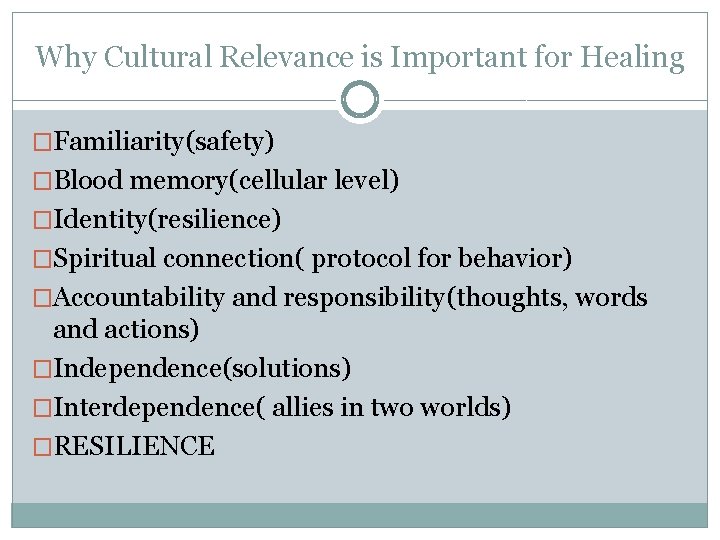
Why Cultural Relevance is Important for Healing �Familiarity(safety) �Blood memory(cellular level) �Identity(resilience) �Spiritual connection( protocol for behavior) �Accountability and responsibility(thoughts, words and actions) �Independence(solutions) �Interdependence( allies in two worlds) �RESILIENCE
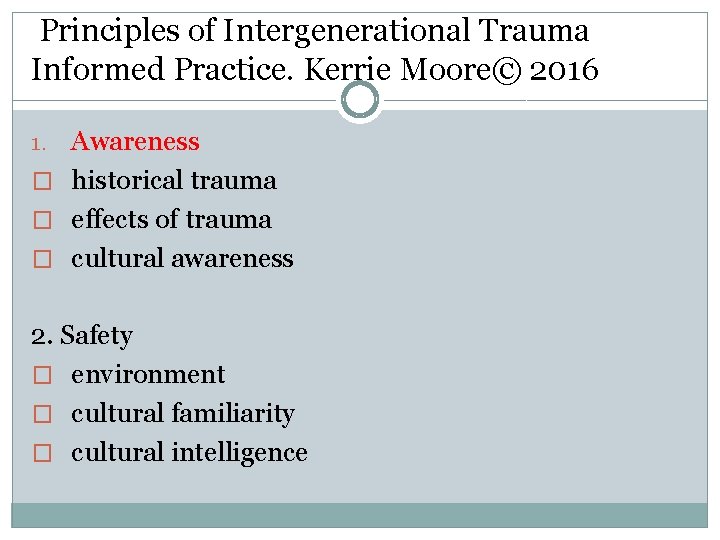
Principles of Intergenerational Trauma Informed Practice. Kerrie Moore© 2016 Awareness � historical trauma � effects of trauma � cultural awareness 1. 2. Safety � environment � cultural familiarity � cultural intelligence
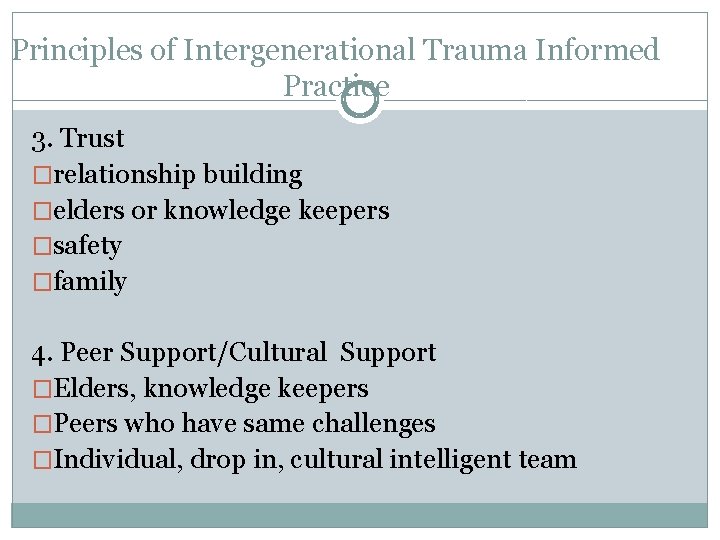
Principles of Intergenerational Trauma Informed Practice 3. Trust �relationship building �elders or knowledge keepers �safety �family 4. Peer Support/Cultural Support �Elders, knowledge keepers �Peers who have same challenges �Individual, drop in, cultural intelligent team

Principles of Intergenerational Trauma Informed Practice 5. Empowerment/Motivation �person –centered �strengths based �individualized �resources and supports �cultural healing/ parallels �Cultural identity
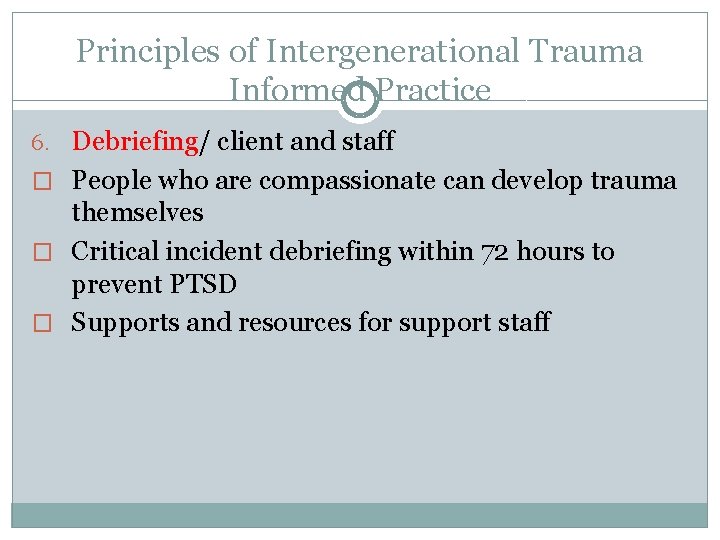
Principles of Intergenerational Trauma Informed Practice 6. Debriefing/ client and staff � People who are compassionate can develop trauma themselves � Critical incident debriefing within 72 hours to prevent PTSD � Supports and resources for support staff
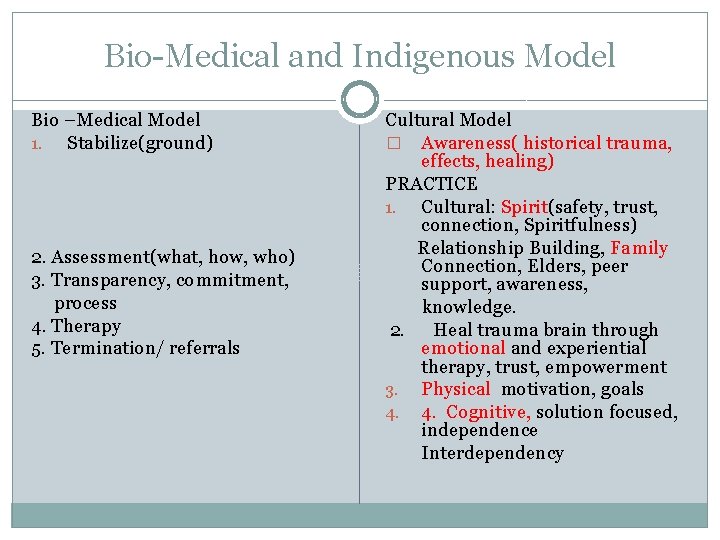
Bio-Medical and Indigenous Model Bio –Medical Model 1. Stabilize(ground) 2. Assessment(what, how, who) 3. Transparency, commitment, process 4. Therapy 5. Termination/ referrals Cultural Model � Awareness( historical trauma, effects, healing) PRACTICE 1. Cultural: Spirit(safety, trust, connection, Spiritfulness) Relationship Building, Family Connection, Elders, peer support, awareness, knowledge. 2. Heal trauma brain through emotional and experiential therapy, trust, empowerment 3. Physical motivation, goals 4. 4. Cognitive, solution focused, independence Interdependency
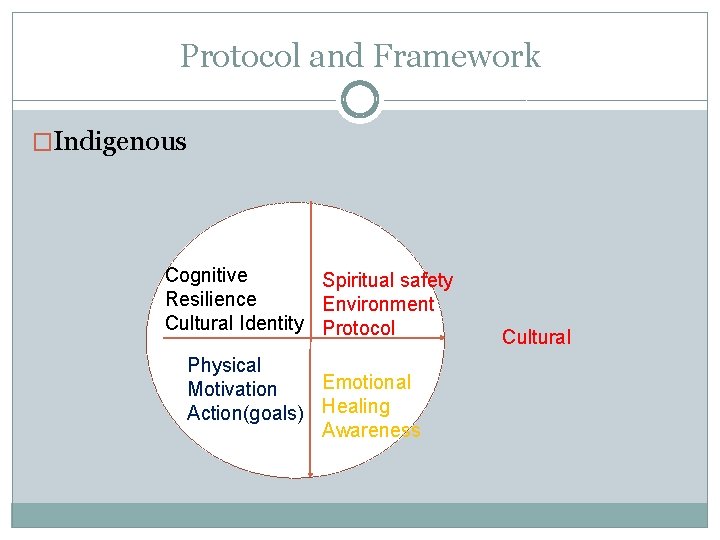
Protocol and Framework �Indigenous Safety Cognitive Spiritual safety Resilience Environment Cultural Identity Protocol Physical Emotional Motivation Action(goals) Healing Awareness Cultural
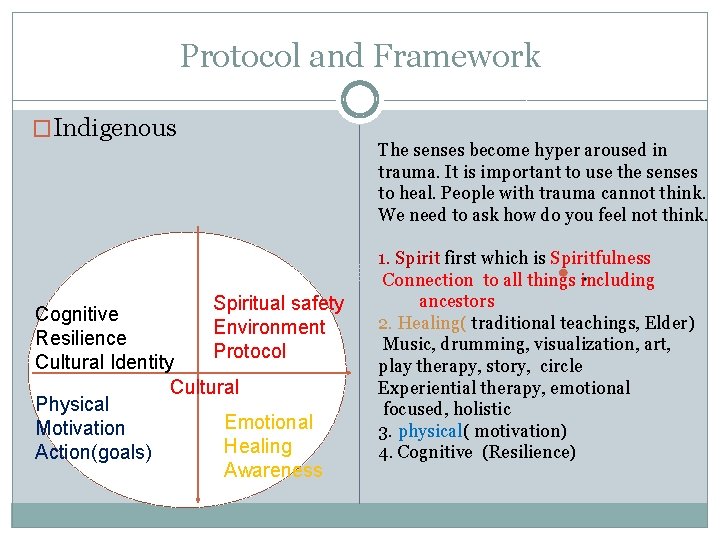
Protocol and Framework �Indigenous Safety Spiritual safety Cognitive Environment Resilience Protocol Cultural Identity Cultural Physical Emotional Motivation Healing Action(goals) Awareness The senses become hyper aroused in trauma. It is important to use the senses to heal. People with trauma cannot think. We need to ask how do you feel not think. 1. Spirit first which is Spiritfulness Connection to all things including ancestors 2. Healing( traditional teachings, Elder) Music, drumming, visualization, art, play therapy, story, circle Experiential therapy, emotional focused, holistic 3. physical( motivation) 4. Cognitive (Resilience)
Cultural Evidenced Based Research �Smudge creates connection �Ceremony calms the brain down �Vibration �Emotional focused 1. Drumming Relieves stress and depression Affects alpha and theta waves Creates a deep state of relaxation Creates a sense of connectedness with self and others Dr. Newberg, Michael Drake , Evolutionary Psychology 2012
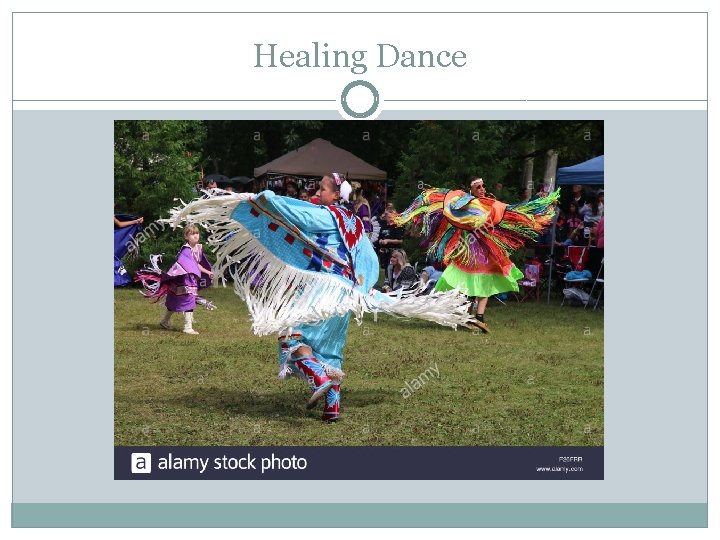
Healing Dance
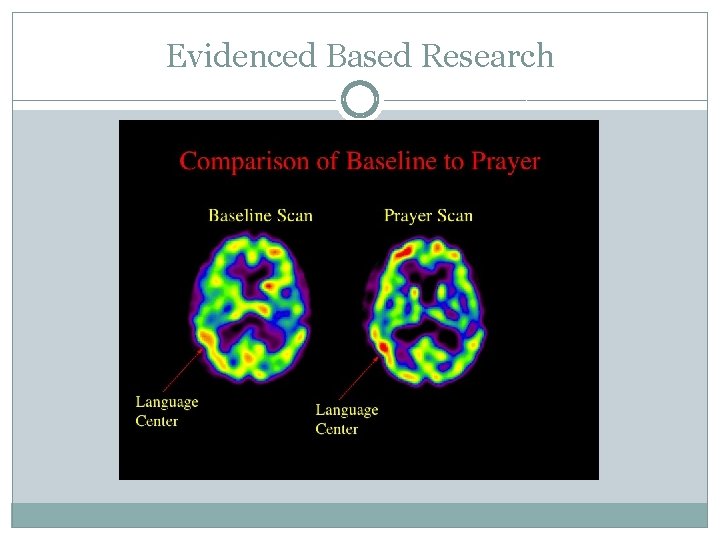
Evidenced Based Research
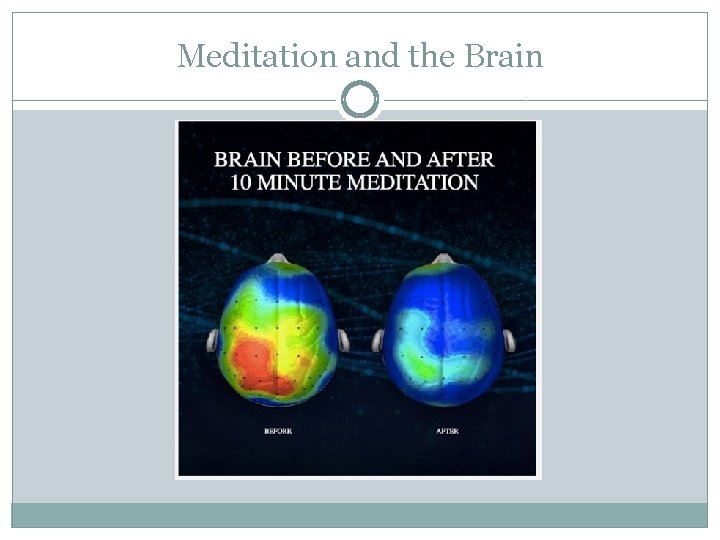
Meditation and the Brain
What can we add to Culture ? � Ages 0 to 3 Strong kinship ties Safety Nurturing serve and return Positive, loving communication Spiritual connection Secure attachment “Awareness First” Target Family 1. Parenting 2. Couples 3. Children 4. Family Mentor, coach, practice Culture and Contemporary Practices �Strengthen the ability to cope with adversity
Cultural Interventions �Must work with families not just individuals �Cultural – Elders, liaisons, ceremony �Addiction treatment/ programs �Maternal programs �Parenting program, family support/ in-home support �Emotional focused therapy, experiential therapy �Cognitive therapy �Referrals, resources �Follow- up
Self Care 33 �Watch for the signs of trauma �Talk to someone that can help �Make sure you take care of yourself �Get rest and proper exercise �Value yourself first �Make sure you stick to your boundaries
Signs of Burnout � Change of sleep habits/nightmares � Body aches and pains � Change in appetite, cravings � Withdrawal � Aggression/anger � Stop caring about how you look � Coping in inappropriate ways � Stop caring about showing up for class � Blaming others for the way you feel � Dreading Monday morning � Apathy/cynicism � Hopelessness � Feelings of powerlessness, failure, inadequacy � Lack of engagement with friends
PTSD 1. 2. 3. 4. 5. Have you had nightmares about the event or situation or thoughts when you did not want to? Tried hard not to think about it or went out of your way to avoid situations that reminded you of the event or situation? Constantly on guard, watchful, easily startled? Feel numb or detached from others or in your surroundings? Have concentration issues and don’t know if thoughts are real or imagined?
- Slides: 35