
Intergenerational Teams Generations Today Silent Born 1928 1945
Inter-generational Teams
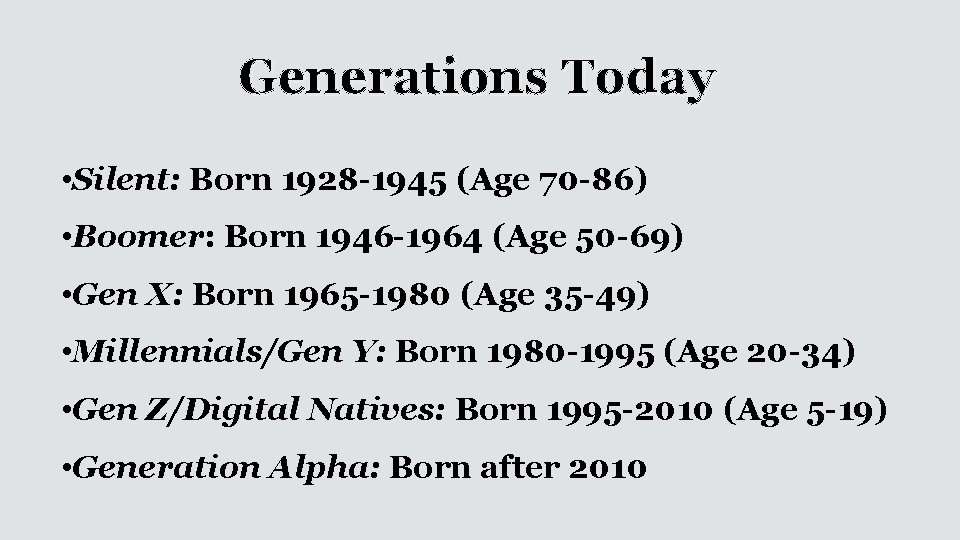
Generations Today • Silent: Born 1928 -1945 (Age 70 -86) • Boomer: Born 1946 -1964 (Age 50 -69) • Gen X: Born 1965 -1980 (Age 35 -49) • Millennials/Gen Y: Born 1980 -1995 (Age 20 -34) • Gen Z/Digital Natives: Born 1995 -2010 (Age 5 -19) • Generation Alpha: Born after 2010
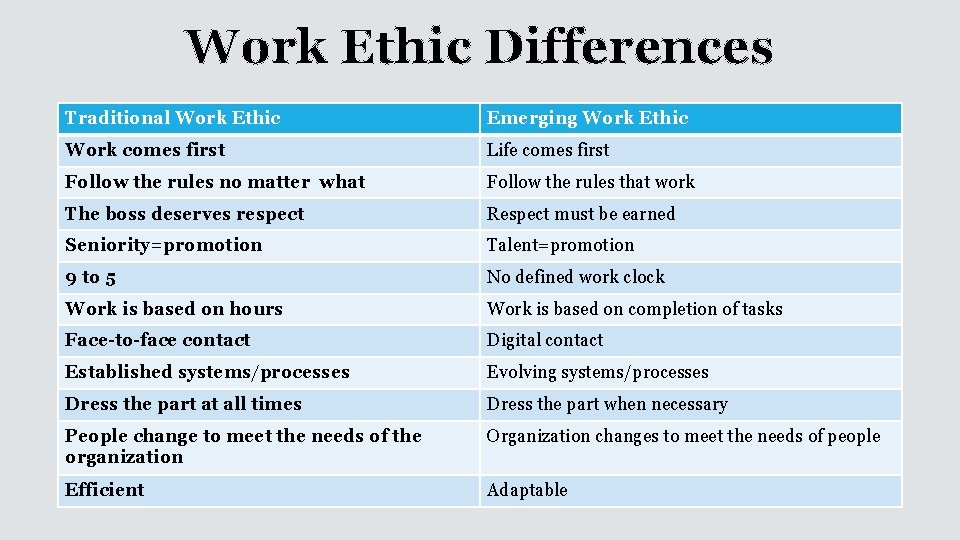
Work Ethic Differences Traditional Work Ethic Emerging Work Ethic Work comes first Life comes first Follow the rules no matter what Follow the rules that work The boss deserves respect Respect must be earned Seniority=promotion Talent=promotion 9 to 5 No defined work clock Work is based on hours Work is based on completion of tasks Face-to-face contact Digital contact Established systems/processes Evolving systems/processes Dress the part at all times Dress the part when necessary People change to meet the needs of the organization Organization changes to meet the needs of people Efficient Adaptable
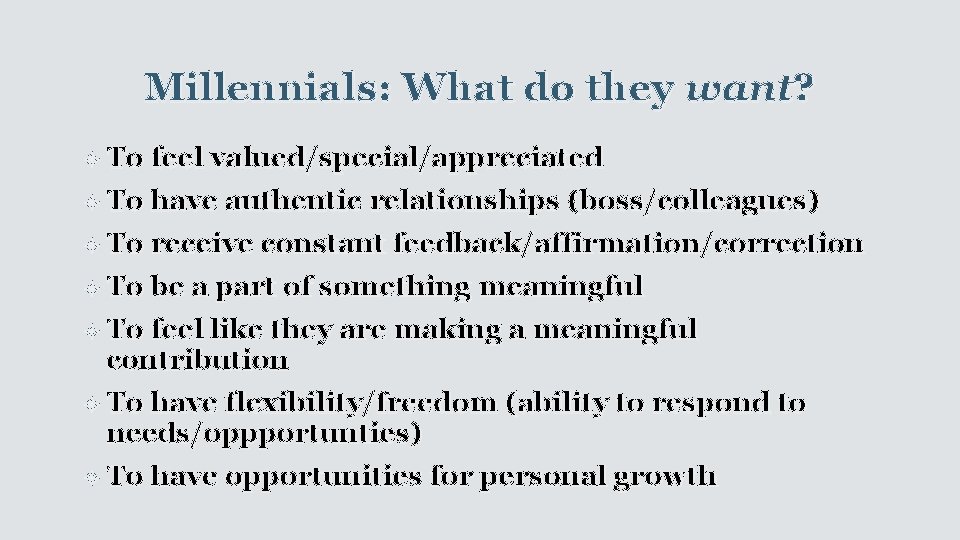
Millennials: What do they want? To feel valued/special/appreciated To have authentic relationships (boss/colleagues) To receive constant feedback/affirmation/correction To be a part of something meaningful To feel like they are making a meaningful contribution To have flexibility/freedom (ability to respond to needs/oppportunties) To have opportunities for personal growth
Millennials: What do they need? Trusted mentors/coaches (good/bad cop) Affirmation of talents and contributions, constant feedback Immediate constructive input on areas needing improvement Sincere explanation of “why” for processes and systems that seem confusing Role models of effective professional practices Advocates of their needs and perspectives to leaders Patient equipping and empowerment (sometimes in very basic skills)
Effective Intergenerational Leaders: Possess emotional intelligence!!! Ask good questions/listen!!! Understand differences in perspectives/values Educate team on those differences and their potential, foster team building Create systems that help empower every group (scheduling; roles/tasks) Maximize the strengths of an intergenerational team

Effective Intergenerational Teams: Identify specific areas of team structure, culture, and/or policies in your area that are effectively facilitating healthy intergenerational team dynamics. What does this look like?
Effective Intergenerational Teams: Identify specific areas of team structure, culture and/or policies in your area that could be improved for better intergenerational effectiveness. What specific changes could better engage all members of your team?
- Slides: 8