
Interference and Holograms Introduction to 3 D Images
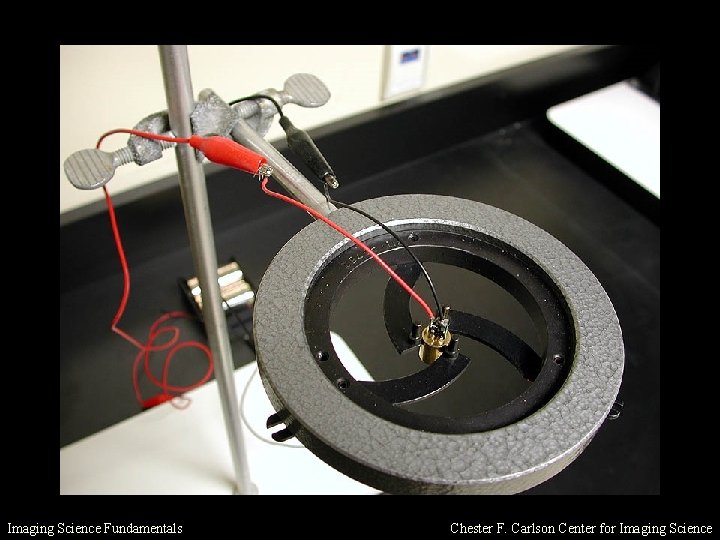
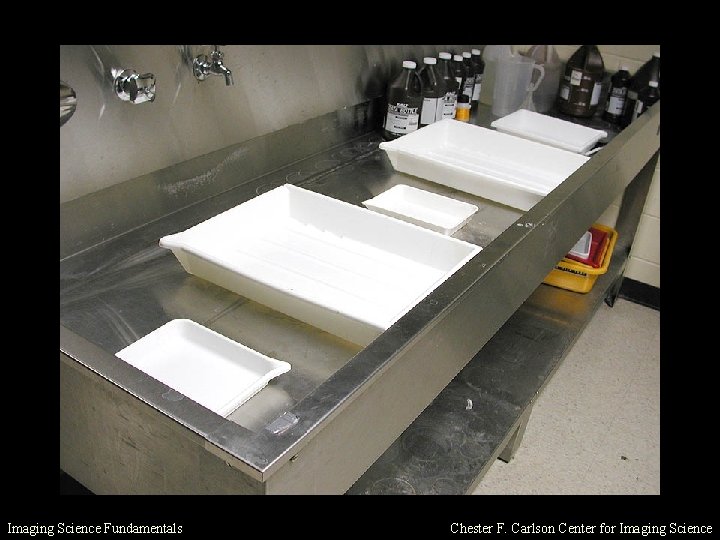
- Slides: 27
Interference and Holograms Introduction to 3 D Images Imaging Science Fundamentals Chester F. Carlson Center for Imaging Science
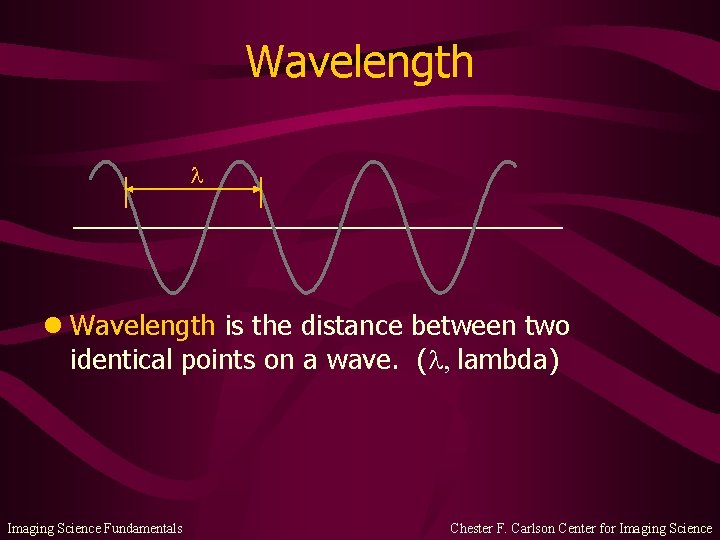
Wavelength l Wavelength is the distance between two identical points on a wave. ( , lambda) Imaging Science Fundamentals Chester F. Carlson Center for Imaging Science
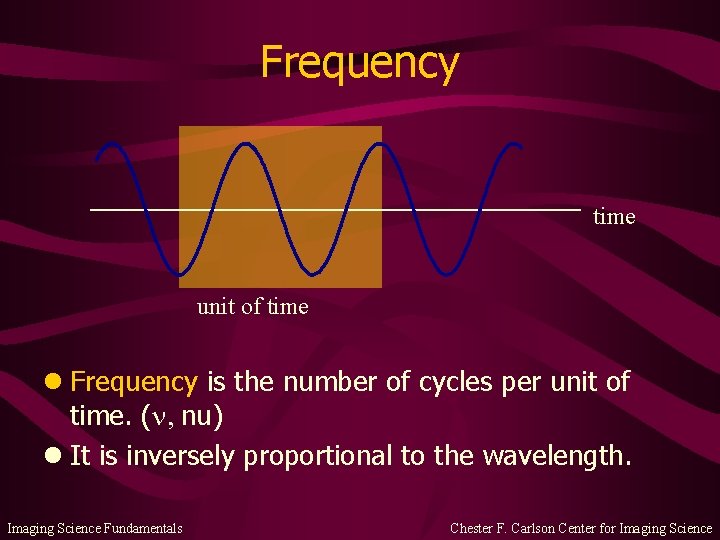
Frequency time unit of time l Frequency is the number of cycles per unit of time. ( , nu) l It is inversely proportional to the wavelength. Imaging Science Fundamentals Chester F. Carlson Center for Imaging Science
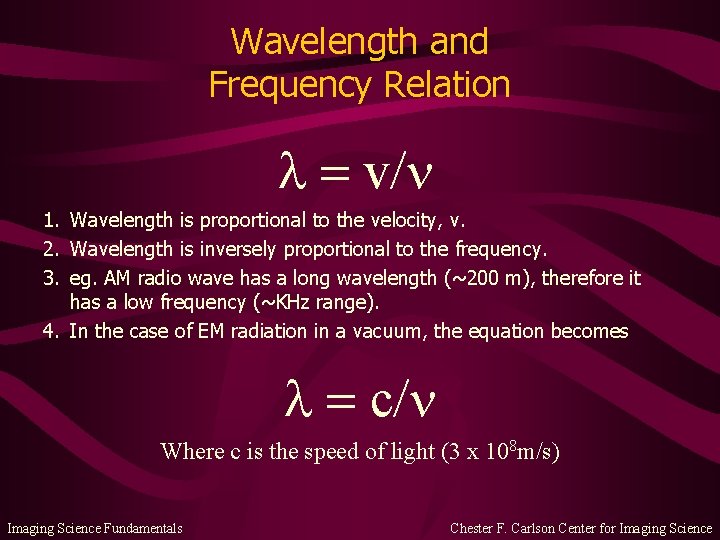
Wavelength and Frequency Relation v 1. Wavelength is proportional to the velocity, v. 2. Wavelength is inversely proportional to the frequency. 3. eg. AM radio wave has a long wavelength (~200 m), therefore it has a low frequency (~KHz range). 4. In the case of EM radiation in a vacuum, the equation becomes c Where c is the speed of light (3 x 10⁸ m/s) Imaging Science Fundamentals Chester F. Carlson Center for Imaging Science
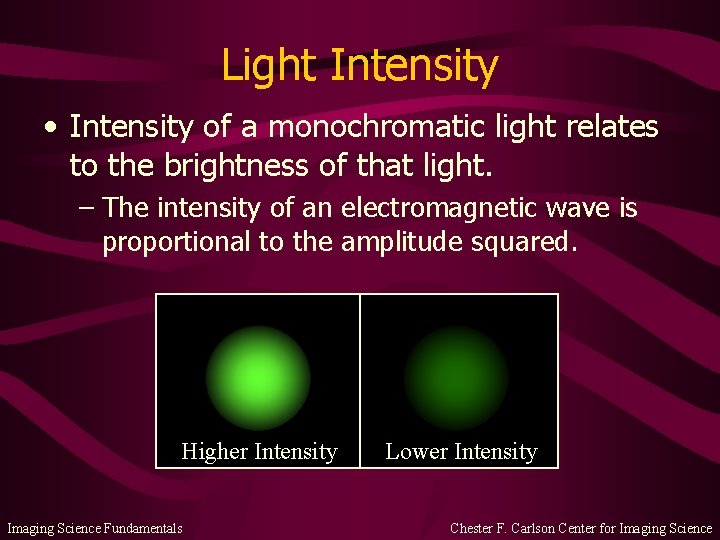
Light Intensity • Intensity of a monochromatic light relates to the brightness of that light. – The intensity of an electromagnetic wave is proportional to the amplitude squared. Higher Intensity Imaging Science Fundamentals Lower Intensity Chester F. Carlson Center for Imaging Science
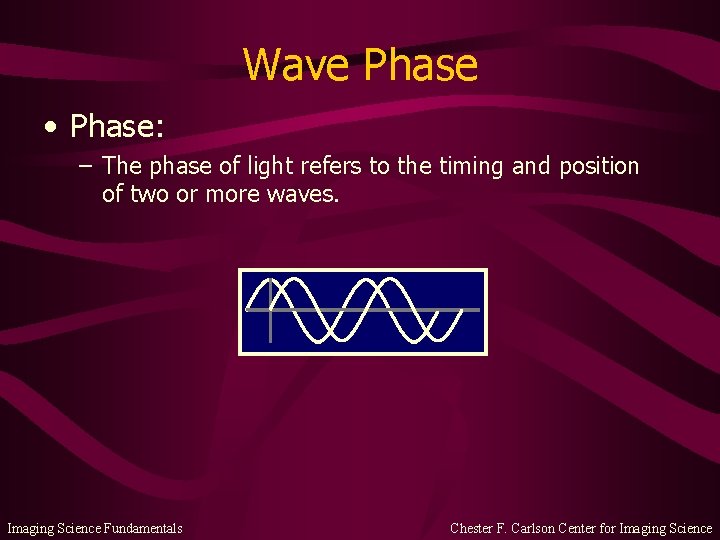
Wave Phase • Phase: – The phase of light refers to the timing and position of two or more waves. Imaging Science Fundamentals Chester F. Carlson Center for Imaging Science
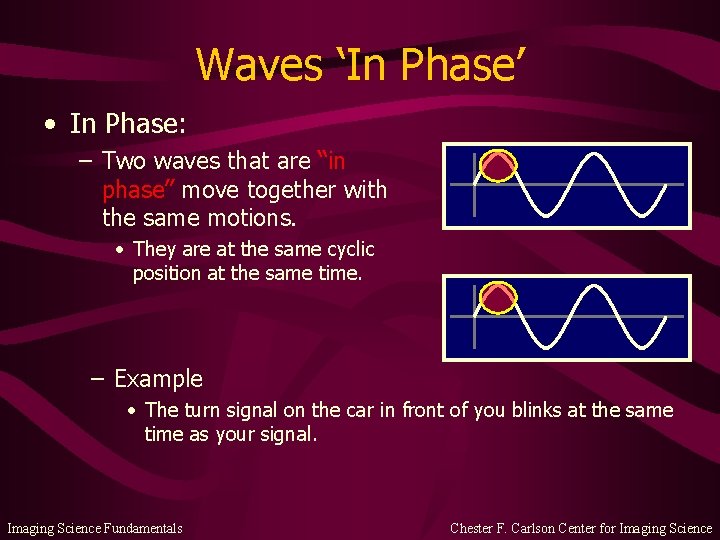
Waves ‘In Phase’ • In Phase: – Two waves that are “in phase” move together with the same motions. • They are at the same cyclic position at the same time. – Example • The turn signal on the car in front of you blinks at the same time as your signal. Imaging Science Fundamentals Chester F. Carlson Center for Imaging Science
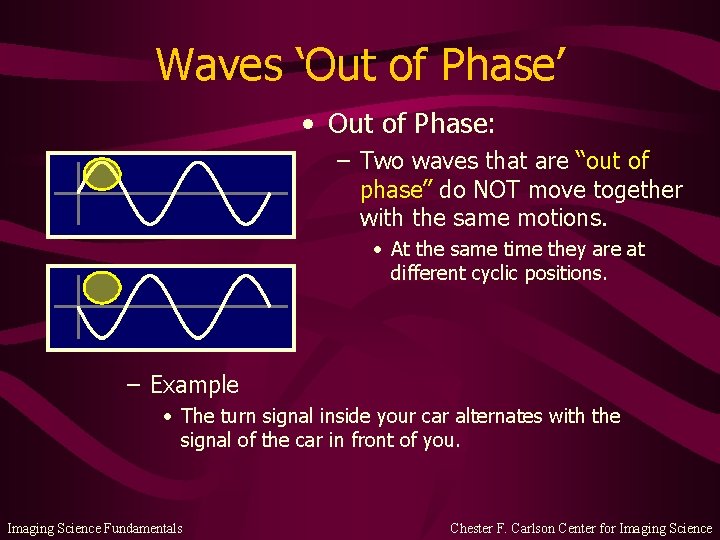
Waves ‘Out of Phase’ • Out of Phase: – Two waves that are “out of phase” do NOT move together with the same motions. • At the same time they are at different cyclic positions. – Example • The turn signal inside your car alternates with the signal of the car in front of you. Imaging Science Fundamentals Chester F. Carlson Center for Imaging Science
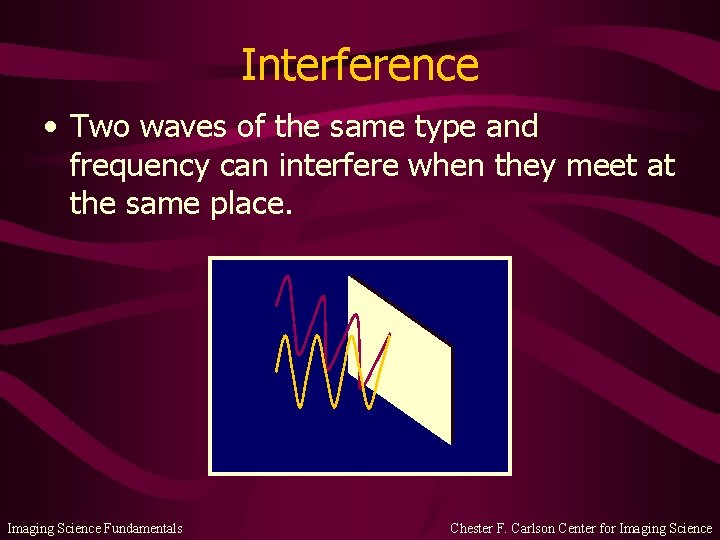
Interference • Two waves of the same type and frequency can interfere when they meet at the same place. Imaging Science Fundamentals Chester F. Carlson Center for Imaging Science
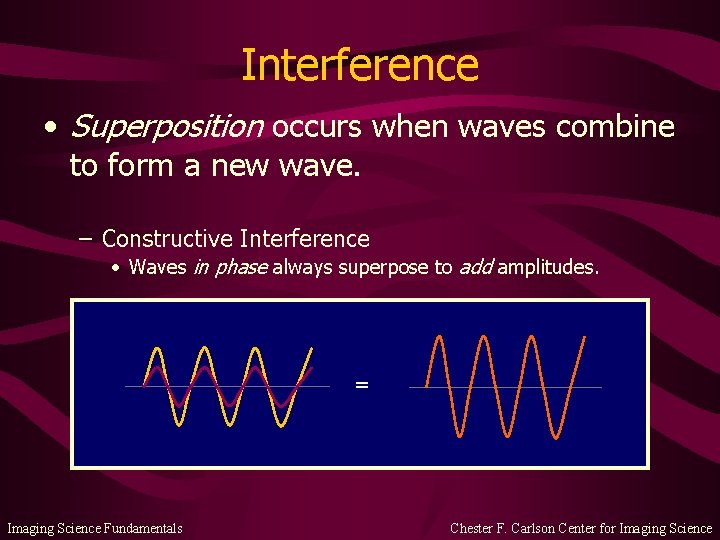
Interference • Superposition occurs when waves combine to form a new wave. – Constructive Interference • Waves in phase always superpose to add amplitudes. = Imaging Science Fundamentals Chester F. Carlson Center for Imaging Science
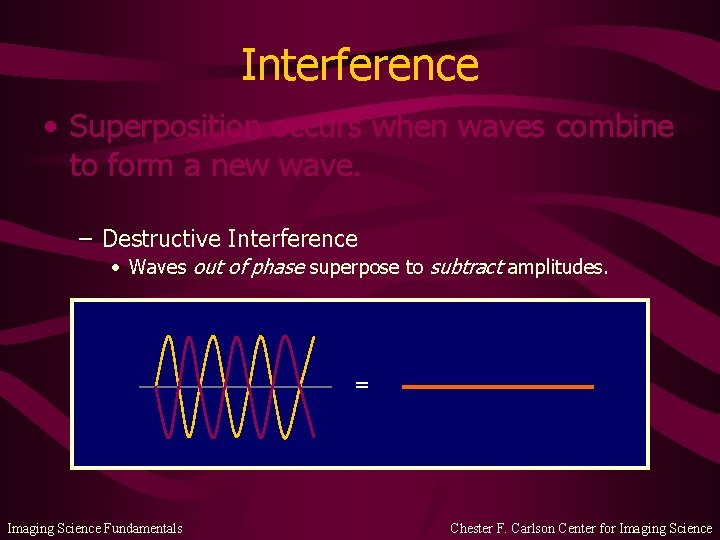
Interference • Superposition occurs when waves combine to form a new wave. – Destructive Interference • Waves out of phase superpose to subtract amplitudes. = Imaging Science Fundamentals Chester F. Carlson Center for Imaging Science
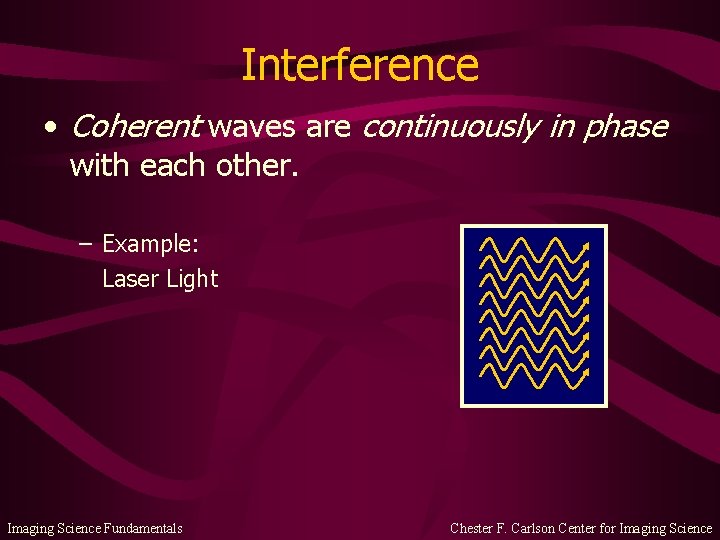
Interference • Coherent waves are continuously in phase with each other. – Example: Laser Light Imaging Science Fundamentals Chester F. Carlson Center for Imaging Science
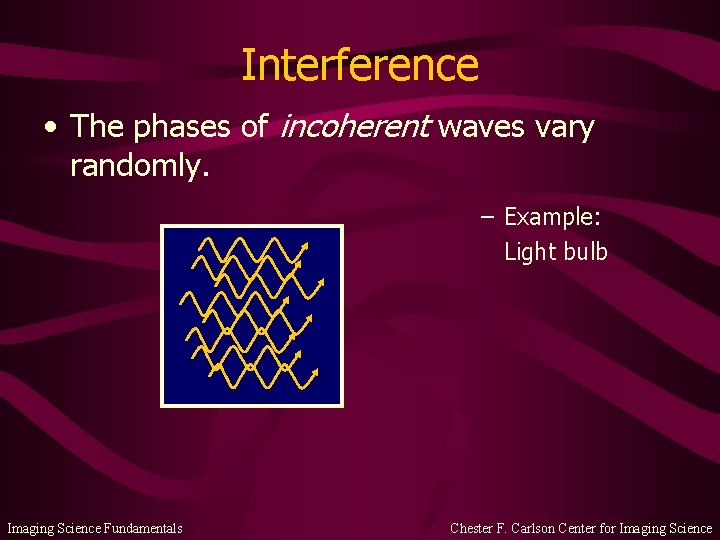
Interference • The phases of incoherent waves vary randomly. – Example: Light bulb Imaging Science Fundamentals Chester F. Carlson Center for Imaging Science
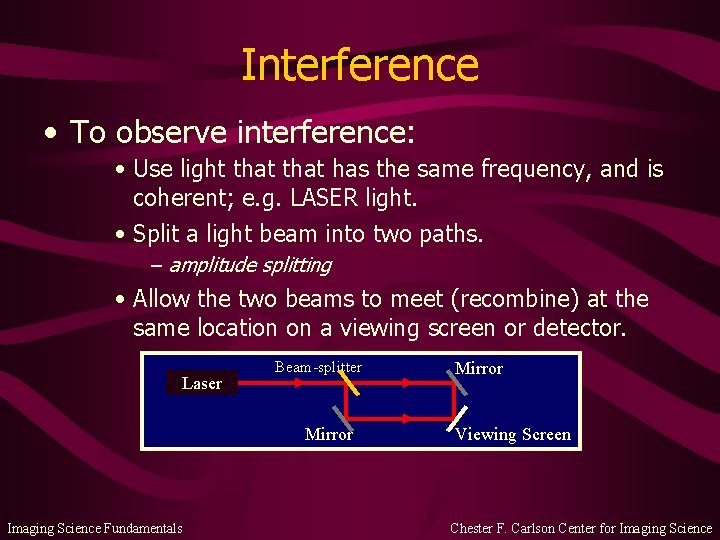
Interference • To observe interference: • Use light that has the same frequency, and is coherent; e. g. LASER light. • Split a light beam into two paths. – amplitude splitting • Allow the two beams to meet (recombine) at the same location on a viewing screen or detector. Laser Beam-splitter Mirror Imaging Science Fundamentals Mirror Viewing Screen Chester F. Carlson Center for Imaging Science
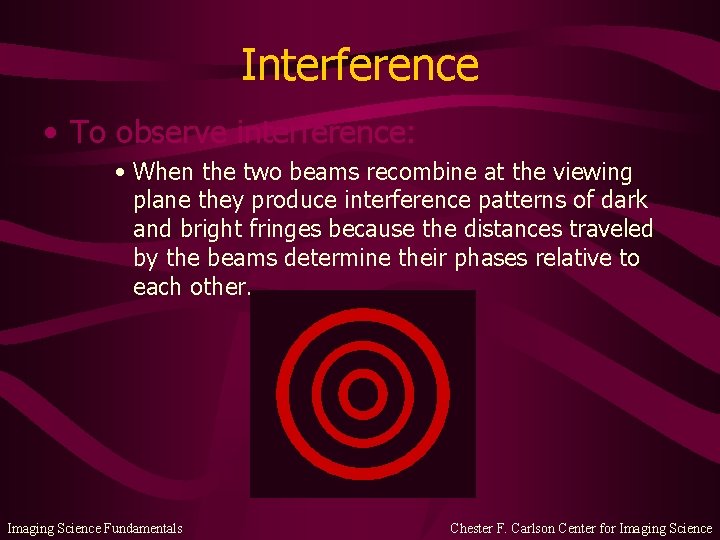
Interference • To observe interference: • When the two beams recombine at the viewing plane they produce interference patterns of dark and bright fringes because the distances traveled by the beams determine their phases relative to each other. Imaging Science Fundamentals Chester F. Carlson Center for Imaging Science
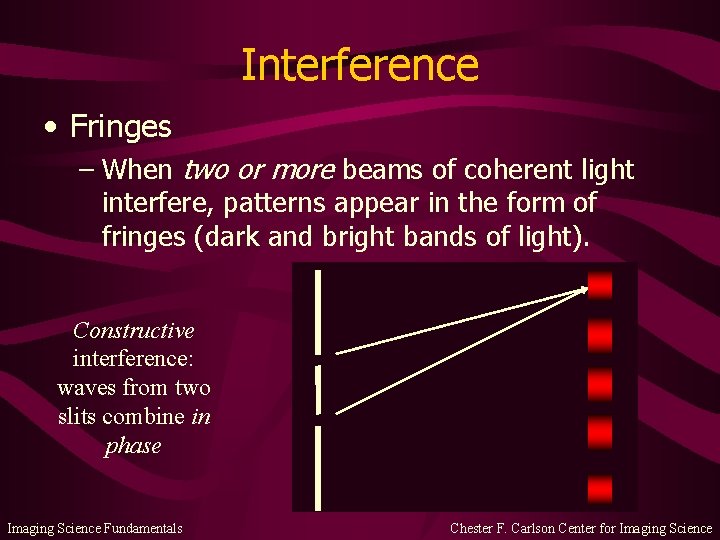
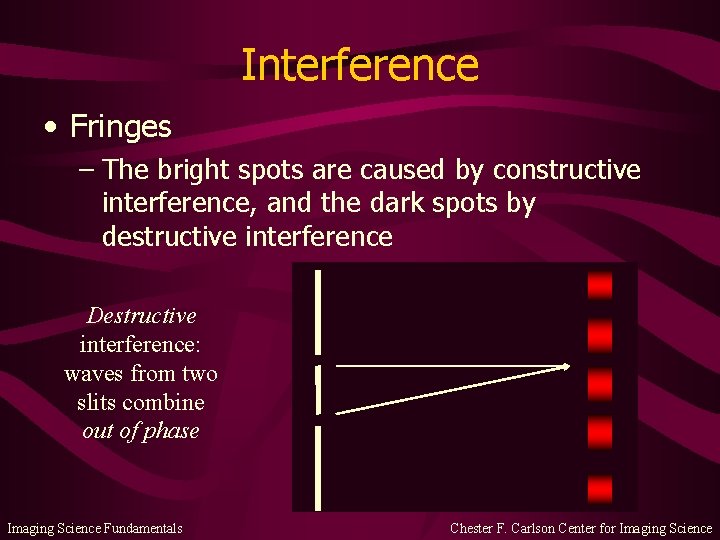
Interference • Fringes – When two or more beams of coherent light interfere, patterns appear in the form of fringes (dark and bright bands of light). Constructive interference: waves from two slits combine in phase Imaging Science Fundamentals Chester F. Carlson Center for Imaging Science
Interference • Fringes – The bright spots are caused by constructive interference, and the dark spots by destructive interference Destructive interference: waves from two slits combine out of phase Imaging Science Fundamentals Chester F. Carlson Center for Imaging Science
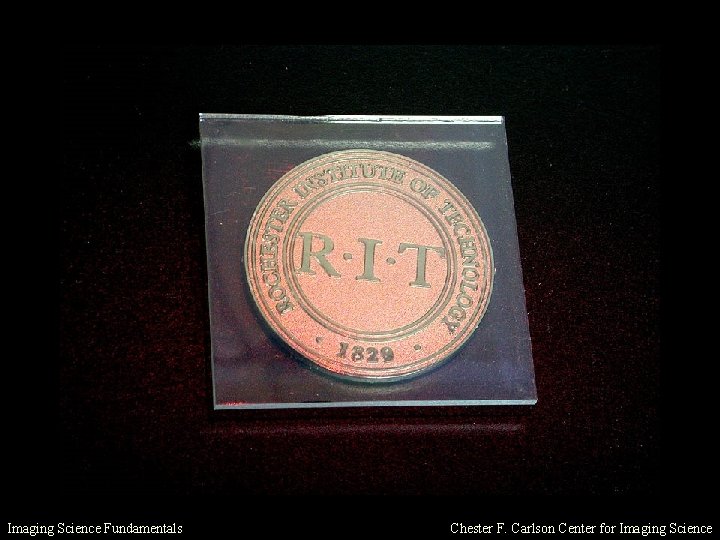
HOLOGRAMS • 3 -dimensional images – – Image changes as a function of viewing geometry Light entering the eye from the hologram is the same as if reflected by original object • Several different ways to create and observe holograms – All are created by illuminating object with a laser • Our holograms are white light reflection holograms – Easily viewed without laser Imaging Science Fundamentals Chester F. Carlson Center for Imaging Science
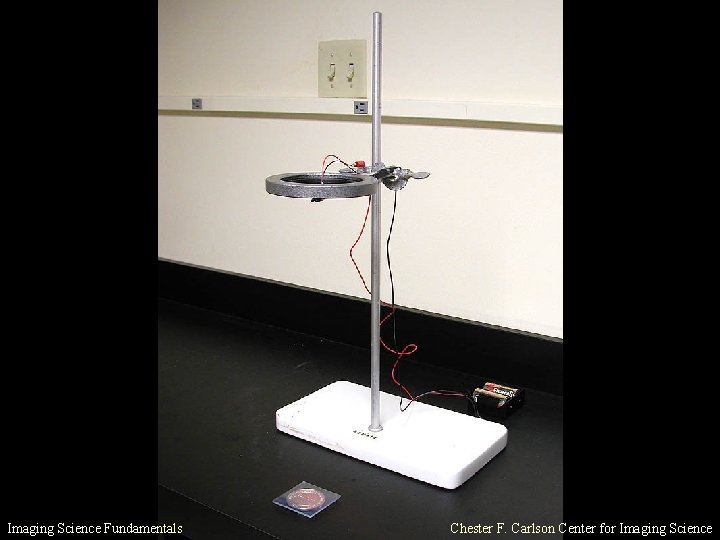
Imaging Science Fundamentals Chester F. Carlson Center for Imaging Science
Imaging Science Fundamentals Chester F. Carlson Center for Imaging Science
Imaging Science Fundamentals Chester F. Carlson Center for Imaging Science
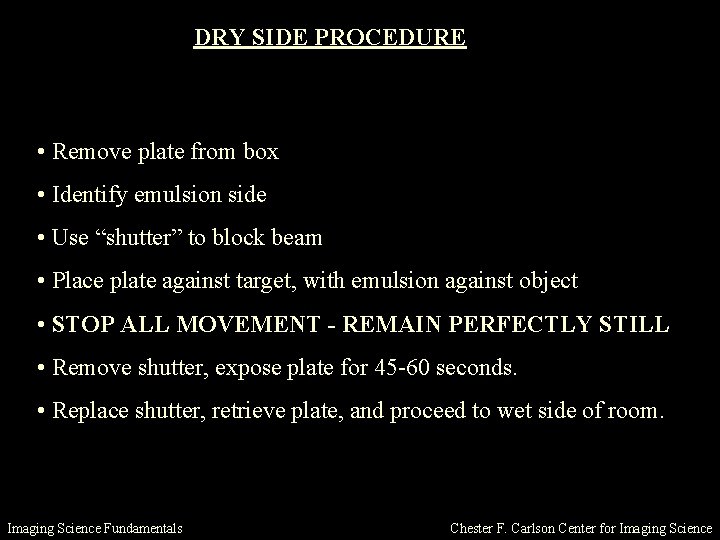
DRY SIDE PROCEDURE • Remove plate from box • Identify emulsion side • Use “shutter” to block beam • Place plate against target, with emulsion against object • STOP ALL MOVEMENT - REMAIN PERFECTLY STILL • Remove shutter, expose plate for 45 -60 seconds. • Replace shutter, retrieve plate, and proceed to wet side of room. Imaging Science Fundamentals Chester F. Carlson Center for Imaging Science
Imaging Science Fundamentals Chester F. Carlson Center for Imaging Science
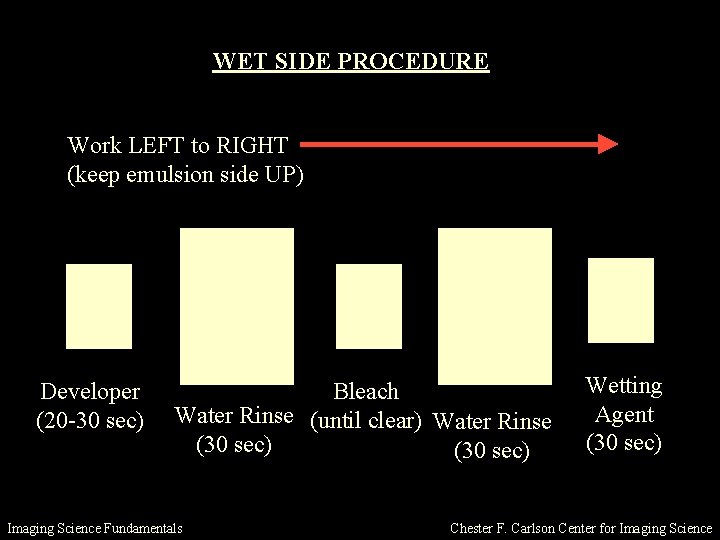
WET SIDE PROCEDURE Work LEFT to RIGHT (keep emulsion side UP) Developer (20 -30 sec) Bleach Water Rinse (until clear) Water Rinse (30 sec) Imaging Science Fundamentals Wetting Agent (30 sec) Chester F. Carlson Center for Imaging Science
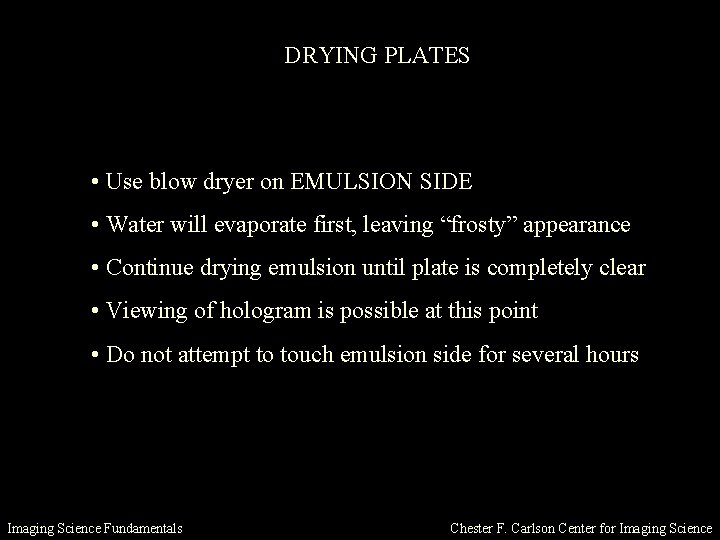
DRYING PLATES • Use blow dryer on EMULSION SIDE • Water will evaporate first, leaving “frosty” appearance • Continue drying emulsion until plate is completely clear • Viewing of hologram is possible at this point • Do not attempt to touch emulsion side for several hours Imaging Science Fundamentals Chester F. Carlson Center for Imaging Science
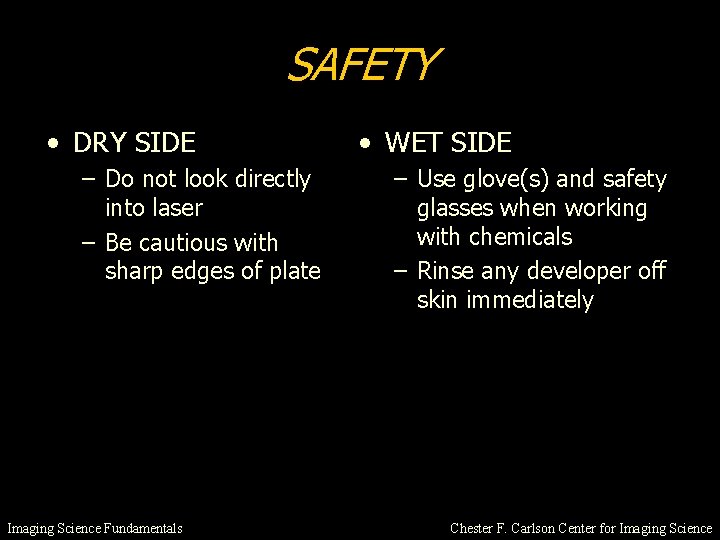
SAFETY • DRY SIDE – Do not look directly into laser – Be cautious with sharp edges of plate Imaging Science Fundamentals • WET SIDE – Use glove(s) and safety glasses when working with chemicals – Rinse any developer off skin immediately Chester F. Carlson Center for Imaging Science
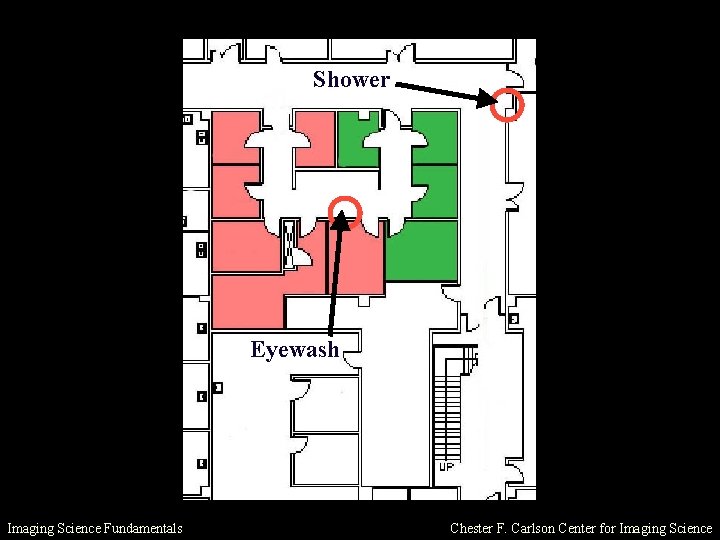
Shower Eyewash Imaging Science Fundamentals Chester F. Carlson Center for Imaging Science