
INTERFERENCE 27 1 The Principle of Linear Superposition



- Slides: 19
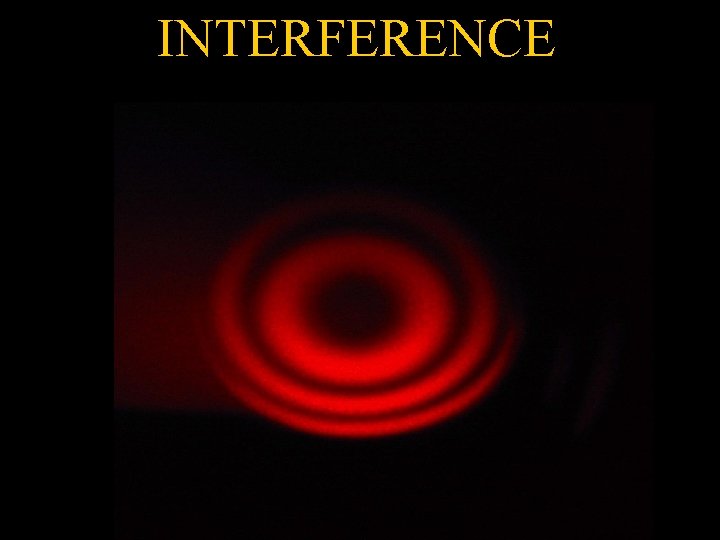
INTERFERENCE
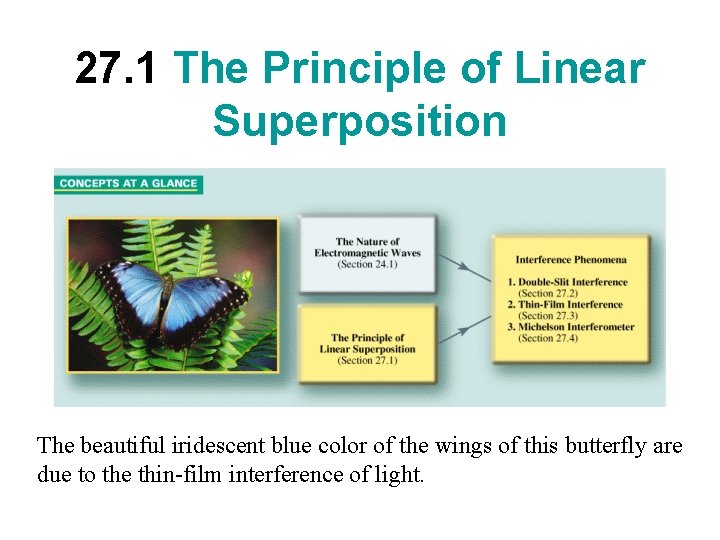
27. 1 The Principle of Linear Superposition The beautiful iridescent blue color of the wings of this butterfly are due to the thin-film interference of light.
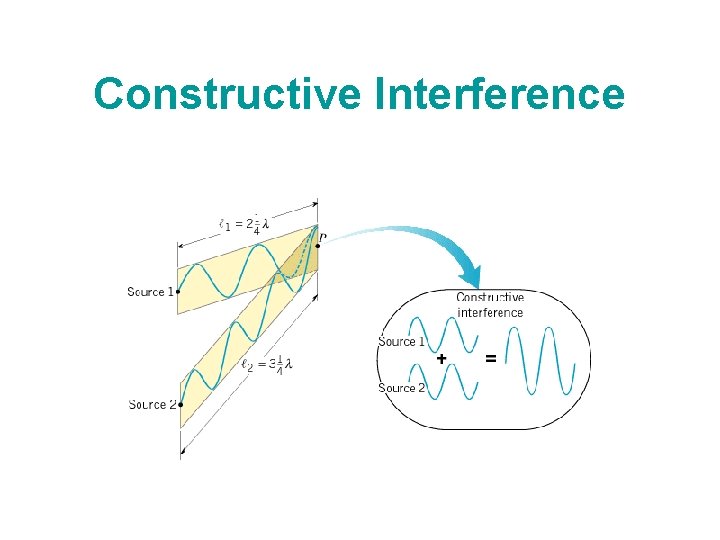
Constructive Interference
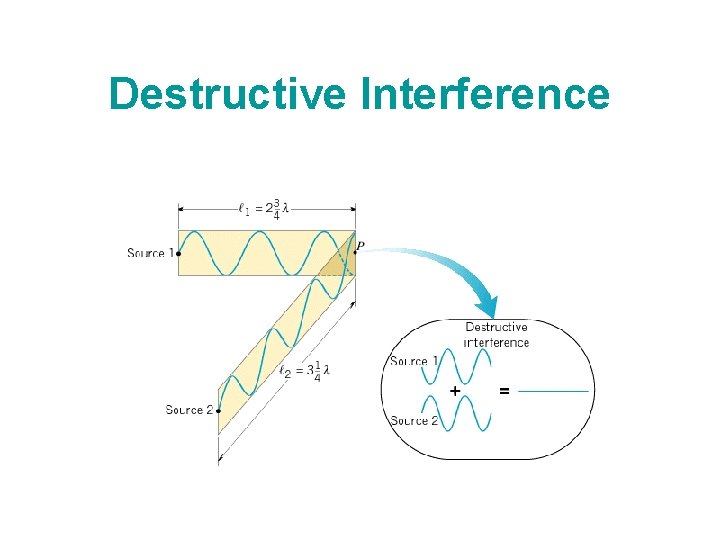
Destructive Interference
Coherent Sources Two sources are coherent if the waves they emit maintain a constant phase relation. Effectively, this means that the waves do not shift relative to one another as time passes. Lasers are coherent sources of light, while incandescent light bulbs and fluorescent lamps are incoherent sources.
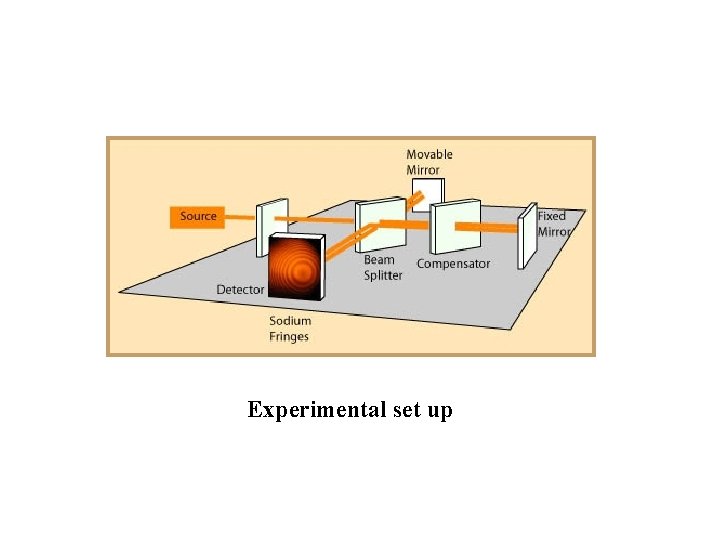
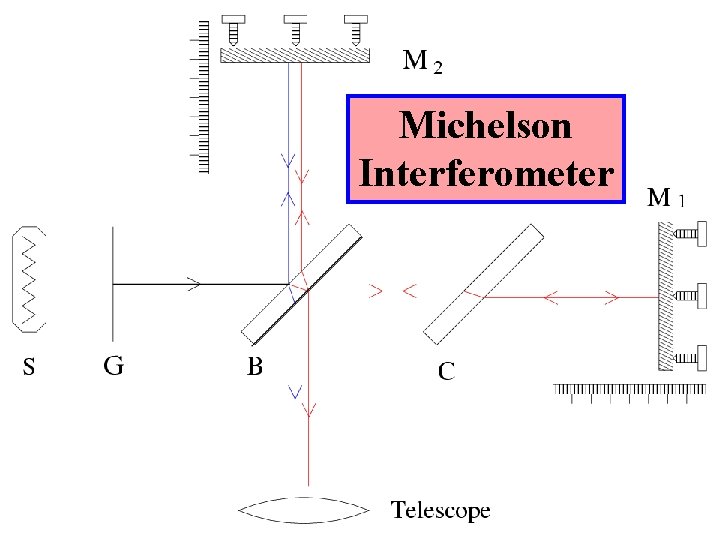
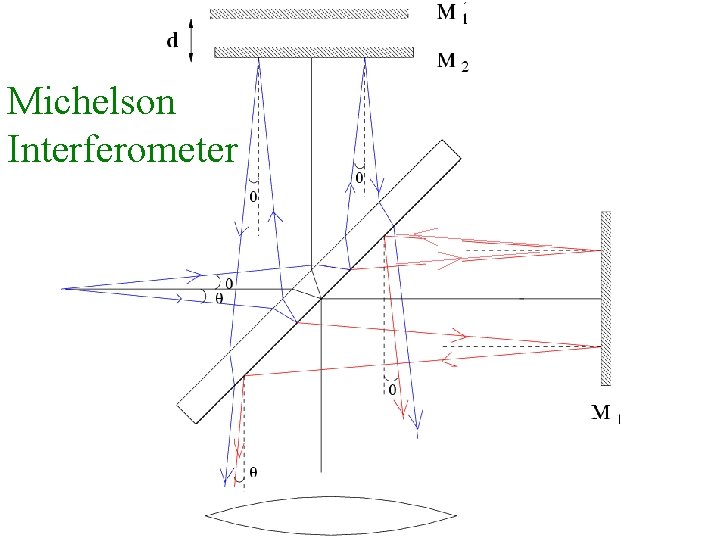
Michelson Interferometer This instrument can produce both types of interference fringes i. e. , circular fringes of equal inclination at infinity and localized fringes of equal thickness 6
INTERFEROMETER
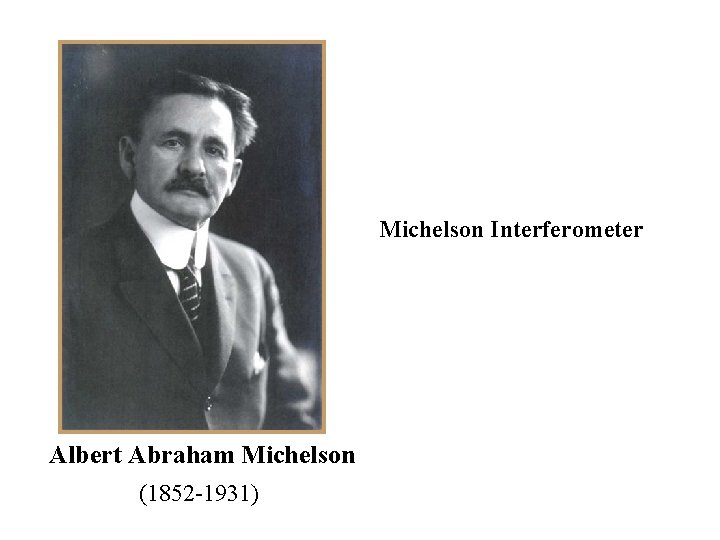
Michelson Interferometer Albert Abraham Michelson (1852 -1931)
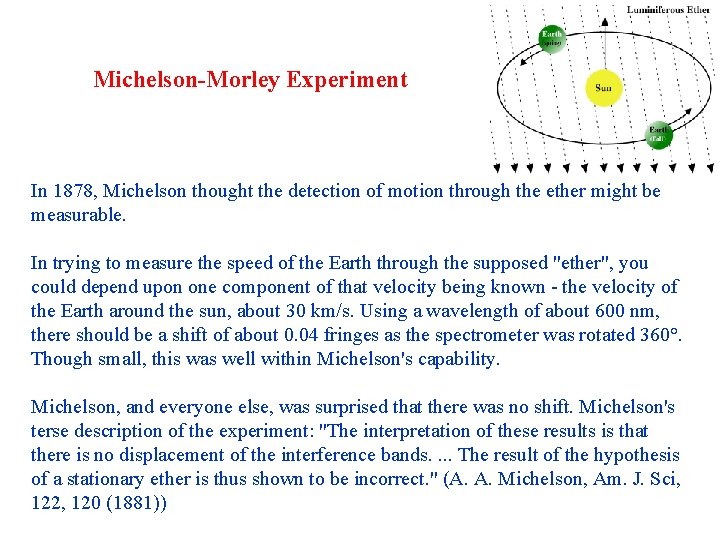
Michelson-Morley Experiment In 1878, Michelson thought the detection of motion through the ether might be measurable. In trying to measure the speed of the Earth through the supposed "ether", you could depend upon one component of that velocity being known - the velocity of the Earth around the sun, about 30 km/s. Using a wavelength of about 600 nm, there should be a shift of about 0. 04 fringes as the spectrometer was rotated 360°. Though small, this was well within Michelson's capability. Michelson, and everyone else, was surprised that there was no shift. Michelson's terse description of the experiment: "The interpretation of these results is that there is no displacement of the interference bands. . The result of the hypothesis of a stationary ether is thus shown to be incorrect. " (A. A. Michelson, Am. J. Sci, 122, 120 (1881))
Experimental set up
Michelson Interferometer
Michelson Interferometer
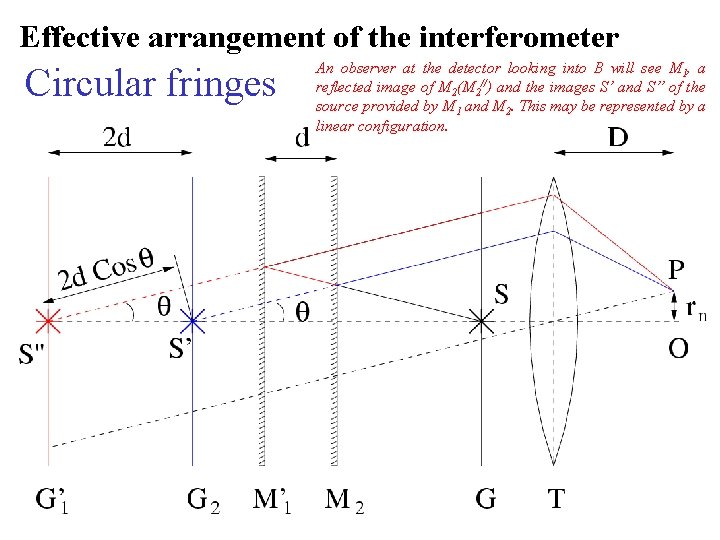
Effective arrangement of the interferometer Circular fringes An observer at the detector looking into B will see M 1, a reflected image of M 2(M 2//) and the images S’ and S” of the source provided by M 1 and M 2. This may be represented by a linear configuration.
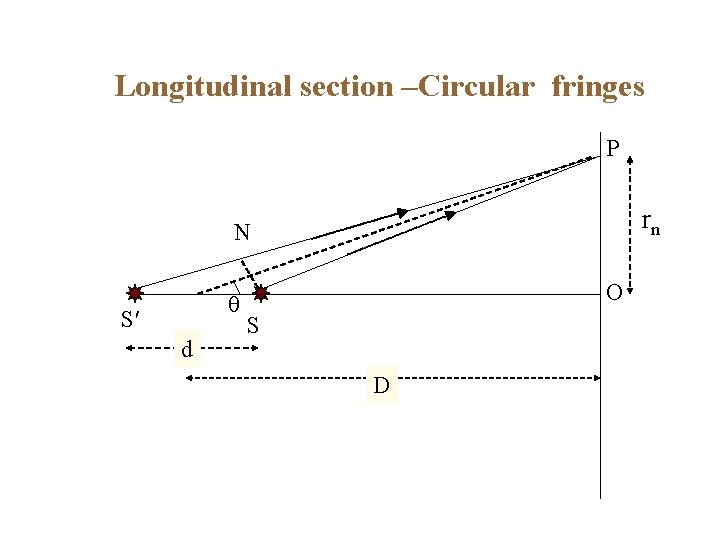
Longitudinal section –Circular fringes P rn N q S d O S D
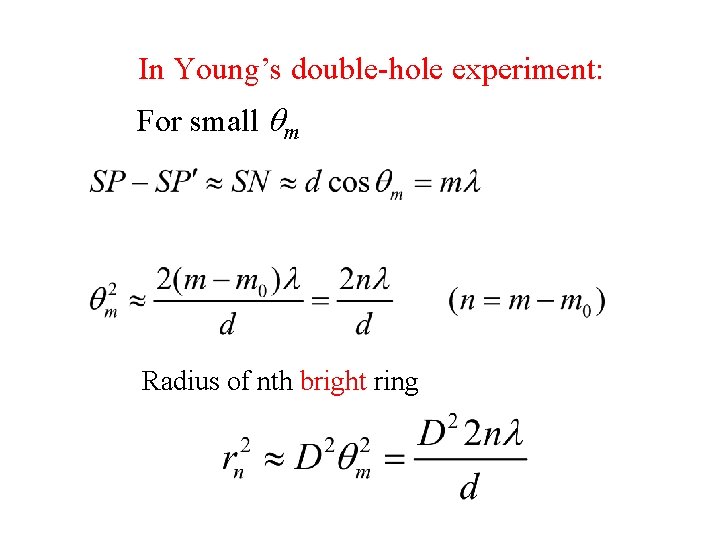
In Young’s double-hole experiment: For small qm Radius of nth bright ring
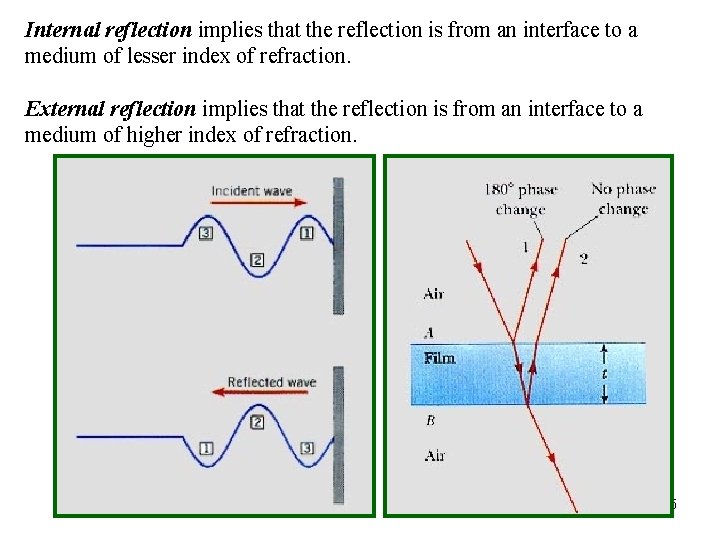
Internal reflection implies that the reflection is from an interface to a medium of lesser index of refraction. External reflection implies that the reflection is from an interface to a medium of higher index of refraction. 16
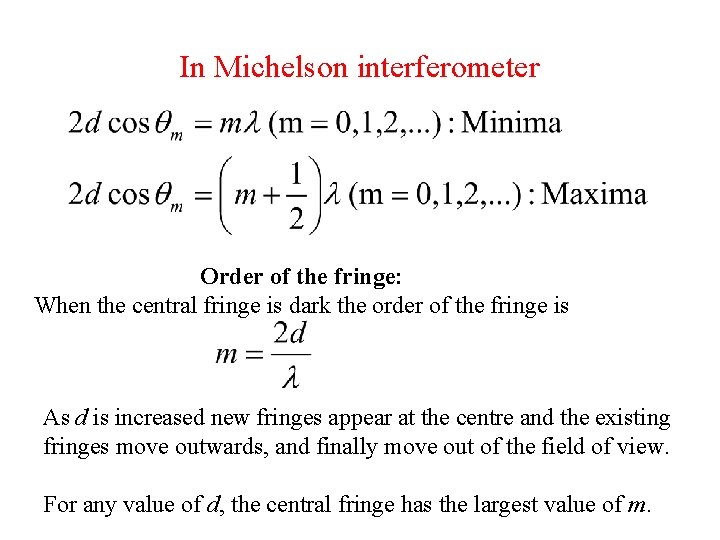
In Michelson interferometer Order of the fringe: When the central fringe is dark the order of the fringe is As d is increased new fringes appear at the centre and the existing fringes move outwards, and finally move out of the field of view. For any value of d, the central fringe has the largest value of m.
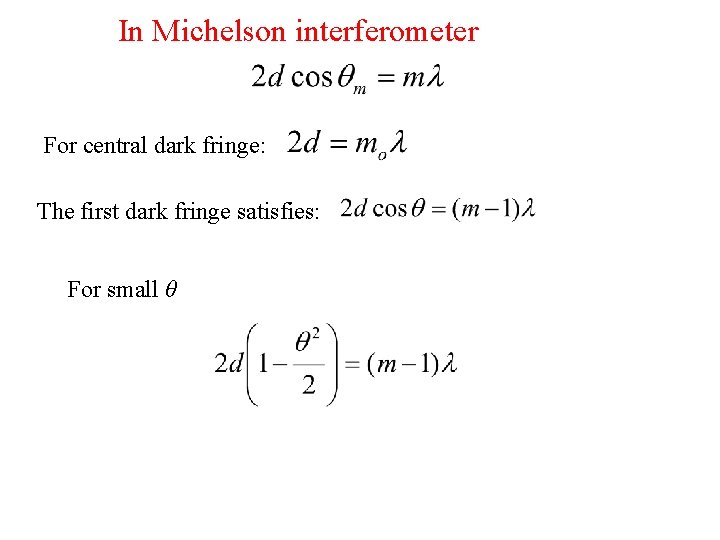
In Michelson interferometer For central dark fringe: The first dark fringe satisfies: For small θ
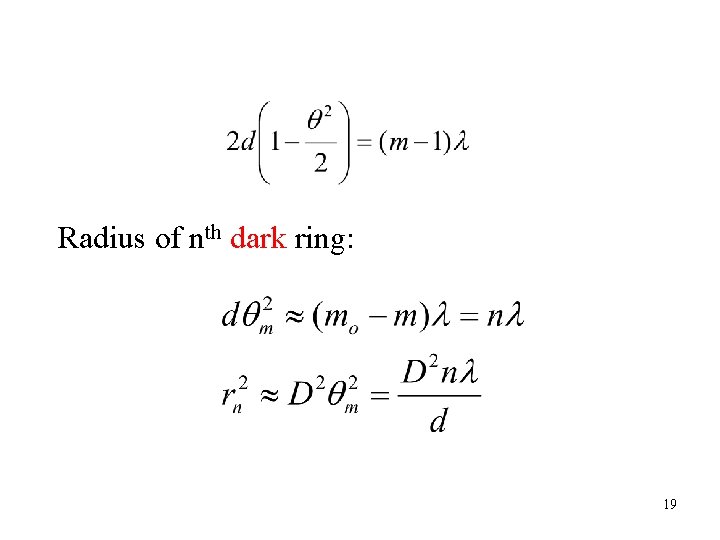
Radius of nth dark ring: 19