
INTEREST GROUPS Topic 10 7 in textbook WHAT
INTEREST GROUPS Topic: 10. 7 in textbook
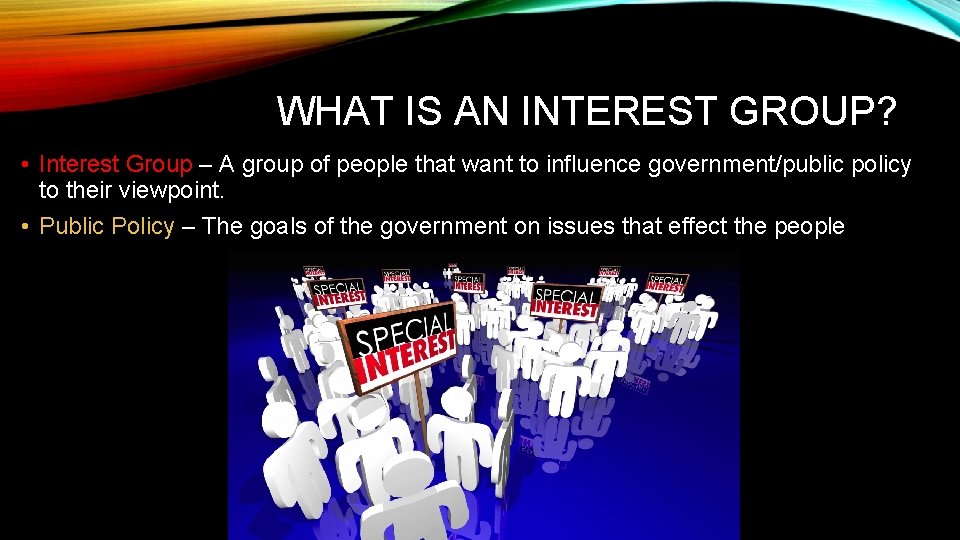
WHAT IS AN INTEREST GROUP? • Interest Group – A group of people that want to influence government/public policy to their viewpoint. • Public Policy – The goals of the government on issues that effect the people
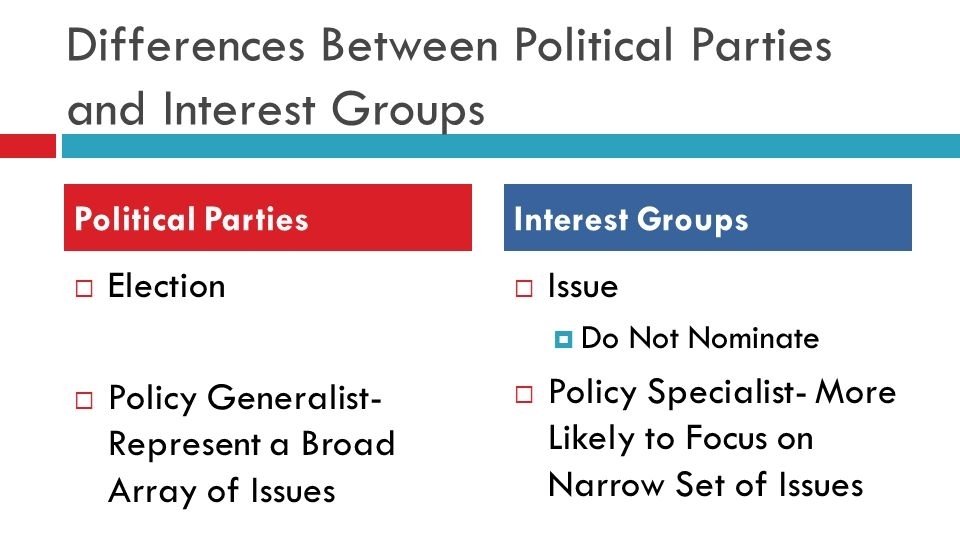
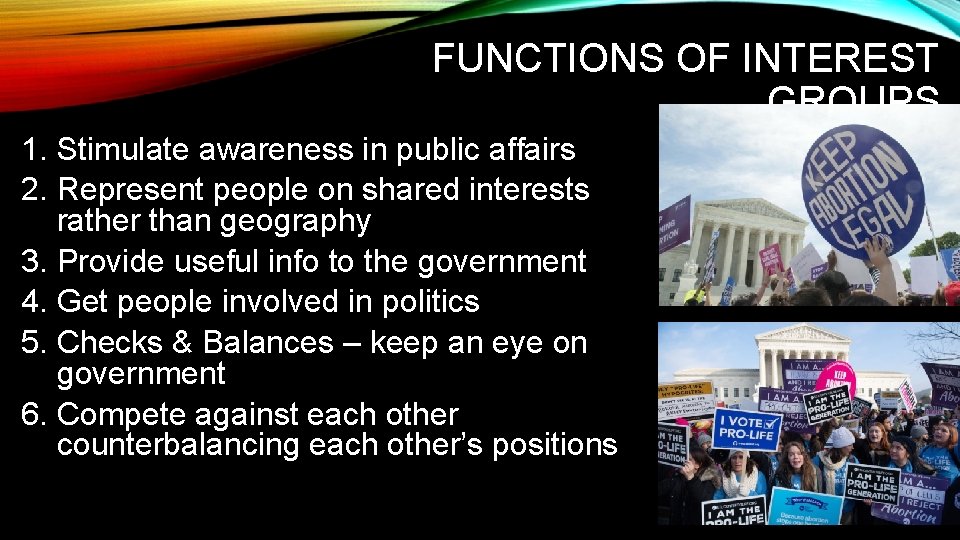
FUNCTIONS OF INTEREST GROUPS 1. Stimulate awareness in public affairs 2. Represent people on shared interests rather than geography 3. Provide useful info to the government 4. Get people involved in politics 5. Checks & Balances – keep an eye on government 6. Compete against each other counterbalancing each other’s positions
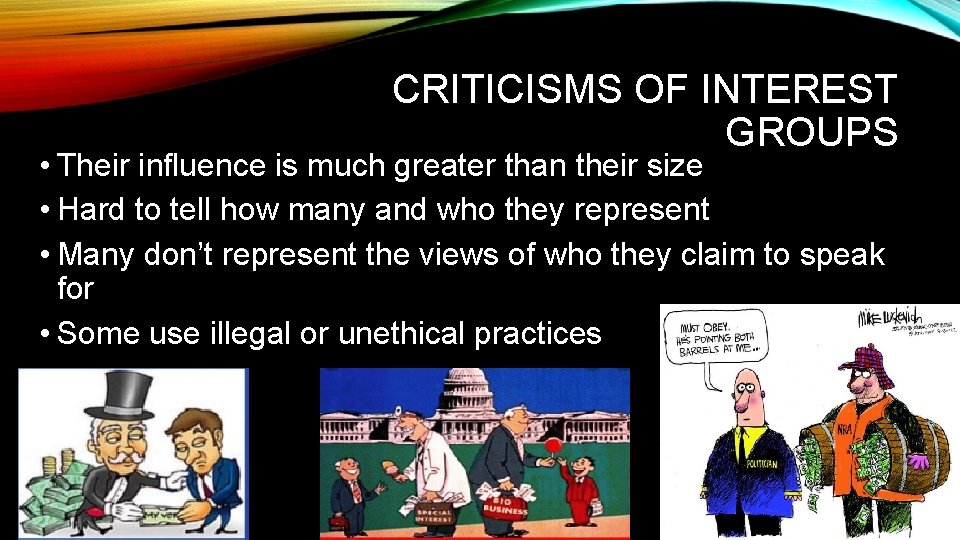
CRITICISMS OF INTEREST GROUPS • Their influence is much greater than their size • Hard to tell how many and who they represent • Many don’t represent the views of who they claim to speak for • Some use illegal or unethical practices
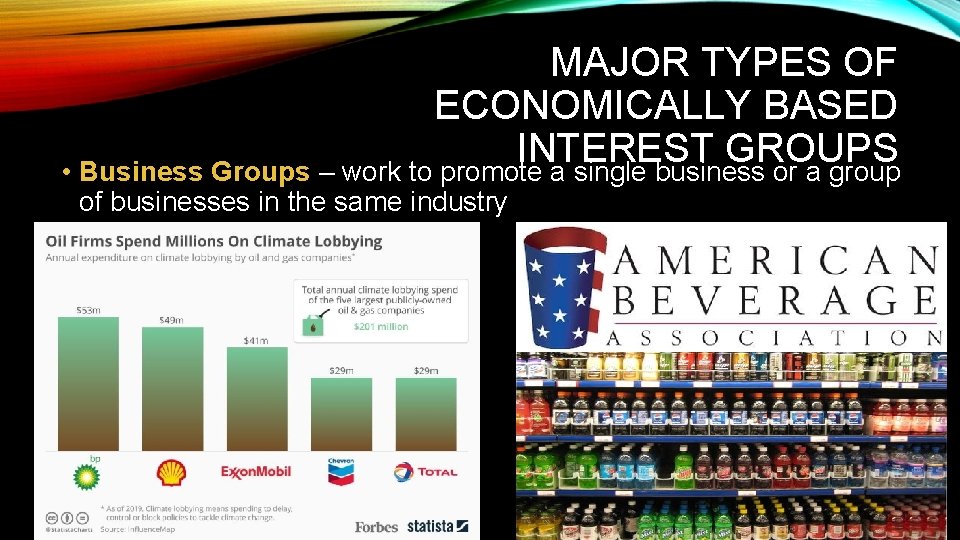
MAJOR TYPES OF ECONOMICALLY BASED INTEREST GROUPS • Business Groups – work to promote a single business or a group of businesses in the same industry
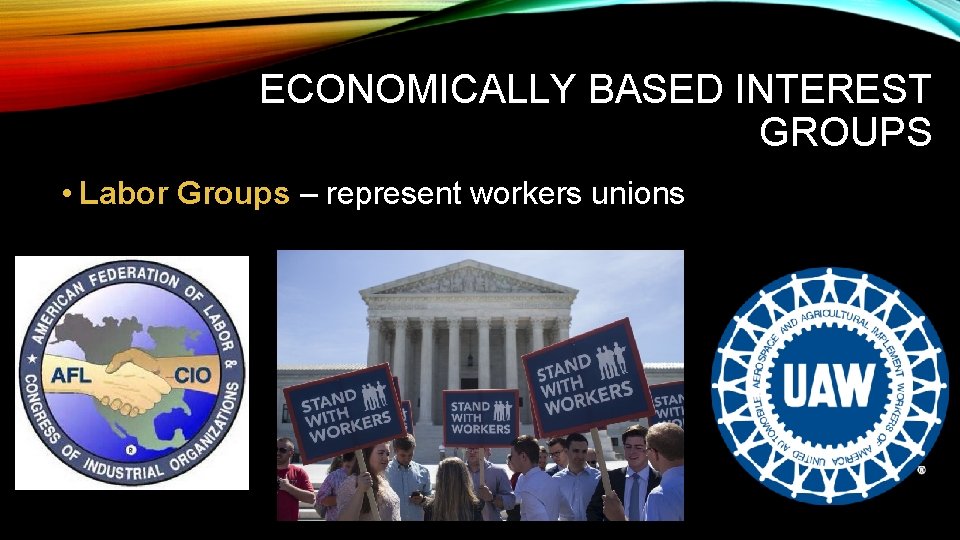
ECONOMICALLY BASED INTEREST GROUPS • Labor Groups – represent workers unions

ECONOMICALLY BASED INTEREST GROUPS • Agricultural Groups – promote pro farming policies

ECONOMICALLY BASED INTEREST GROUPS • Professional Associations – represent certain professions/jobs
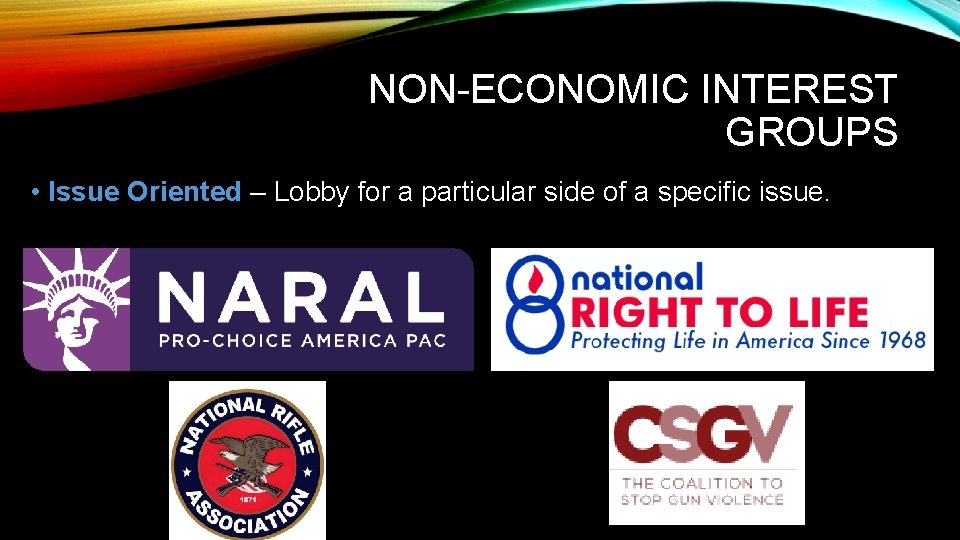
NON-ECONOMIC INTEREST GROUPS • Issue Oriented – Lobby for a particular side of a specific issue.
NON-ECONOMIC INTEREST GROUPS • Specific Groups – Focus on the welfare of certain segments of society.
NON-ECONOMIC INTEREST GROUPS • Religious Organizations - lobby for legislative change that is reflective of specific religious values.
WHY HAVE INTEREST GROUPS GROWN SINCE 1960 1. Americans looking for different ways to influence public policy outside of the political parties. 2. New Issues Arise after WW II – Many Americans felt traditional methods would not address these issues (civil rights, the environment, women’s rights). 3. Interest Groups were Effective – Good leadership and organization made them actually change governmental policy. • Opposing groups starting forming their own interest groups in reponse.
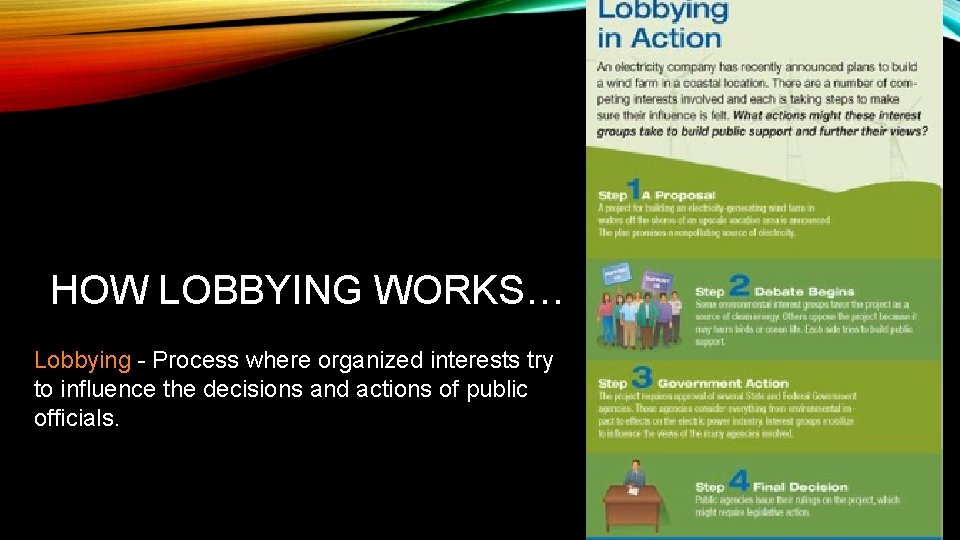
HOW LOBBYING WORKS… Lobbying - Process where organized interests try to influence the decisions and actions of public officials.
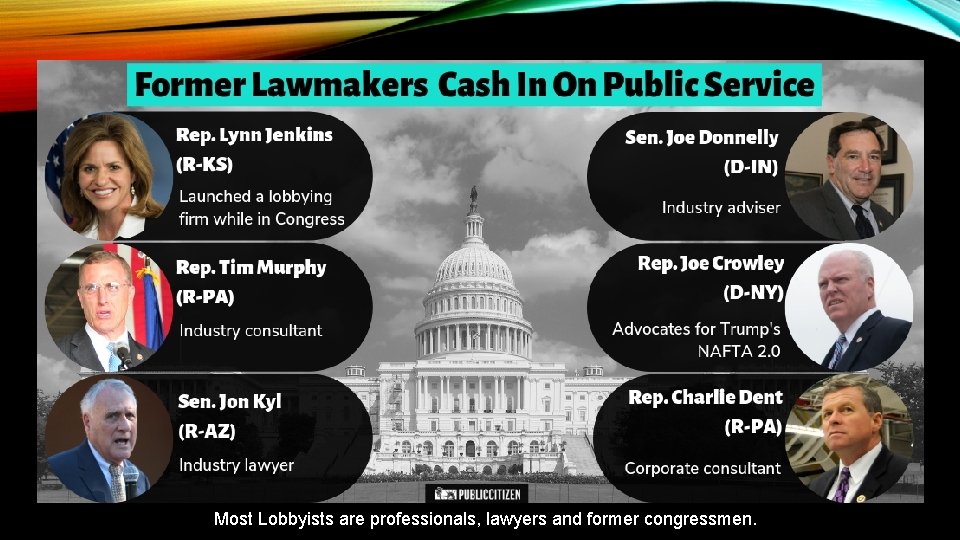
Most Lobbyists are professionals, lawyers and former congressmen.
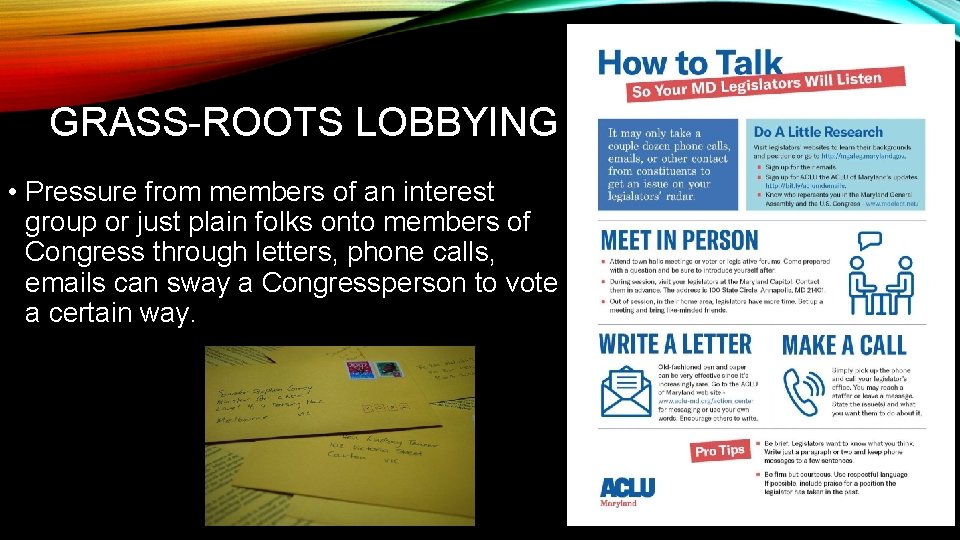
GRASS-ROOTS LOBBYING • Pressure from members of an interest group or just plain folks onto members of Congress through letters, phone calls, emails can sway a Congressperson to vote a certain way.
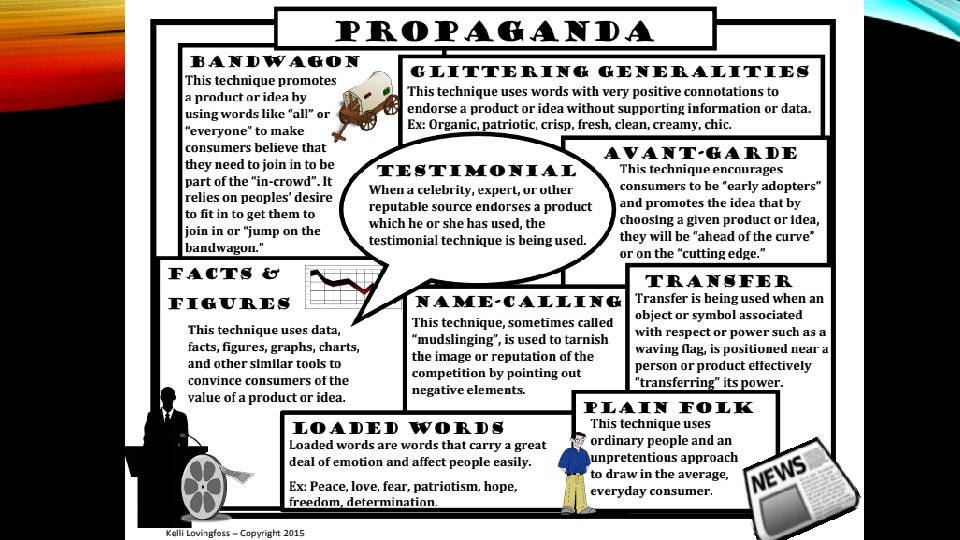
PROPAGANDA • Propaganda – a technique of persuasion aimed at changing people’s behaviors. • It does not use objective logic – It STARTS with a CONCLUSION and then provides EVIDENCE that ONLY SUPPORTS that CONCLUSION. • • Review the various forms of propaganda using one or more of the following sites: Propaganda for elections sheet Propagandacritic. com site Propaganda examples • See our Propaganda Examples Internet Lab from class for techniques and examples.
- Slides: 18