
Interest Grabber Section 19 1 Under the Microscope
Interest Grabber Section 19 -1 Under the Microscope Microorganisms are living things that can only be seen through a microscope. Imagine that you have just discovered a new microorganism. The first thing that you want to do is to tell the scientific community all about your new discovery. Go to Section:
Interest Grabber continued Section 19 -1 1. Describe your microorganism in detail. 2. Describe its habitat. 3. Classify your microorganism by giving it a genus and species based on its characteristics. Go to Section:
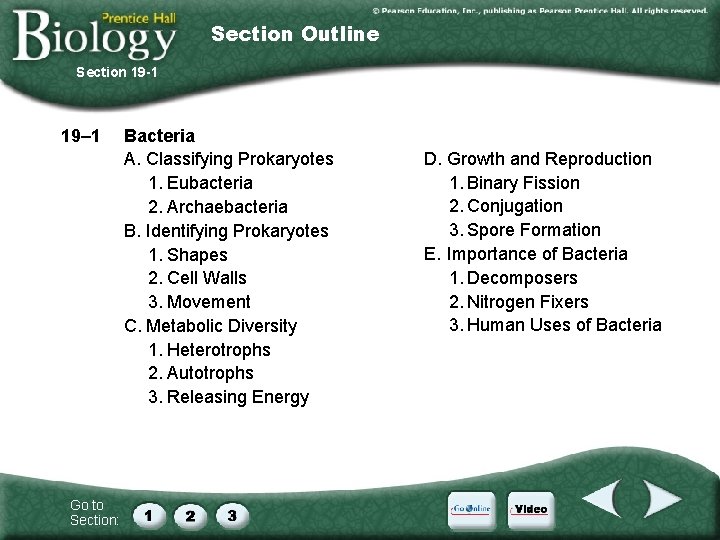
Section Outline Section 19 -1 19– 1 Go to Section: Bacteria A. Classifying Prokaryotes 1. Eubacteria 2. Archaebacteria B. Identifying Prokaryotes 1. Shapes 2. Cell Walls 3. Movement C. Metabolic Diversity 1. Heterotrophs 2. Autotrophs 3. Releasing Energy D. Growth and Reproduction 1. Binary Fission 2. Conjugation 3. Spore Formation E. Importance of Bacteria 1. Decomposers 2. Nitrogen Fixers 3. Human Uses of Bacteria
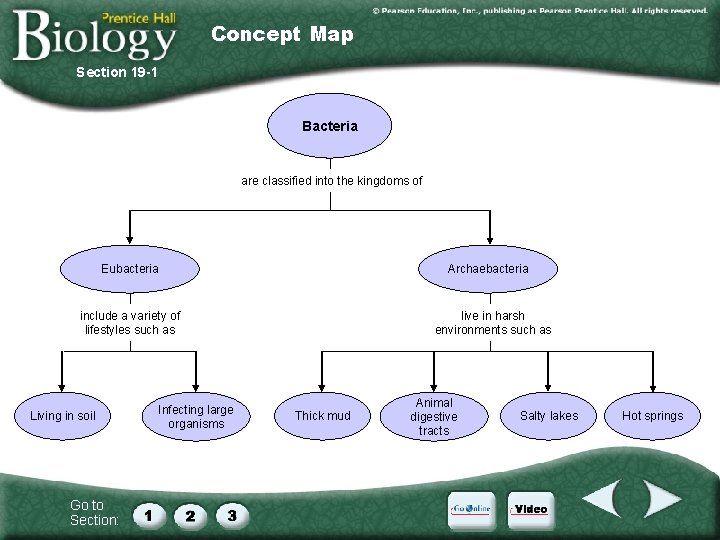
Concept Map Section 19 -1 Bacteria are classified into the kingdoms of Eubacteria Archaebacteria include a variety of lifestyles such as Living in soil Go to Section: Infecting large organisms live in harsh environments such as Thick mud Animal digestive tracts Salty lakes Hot springs
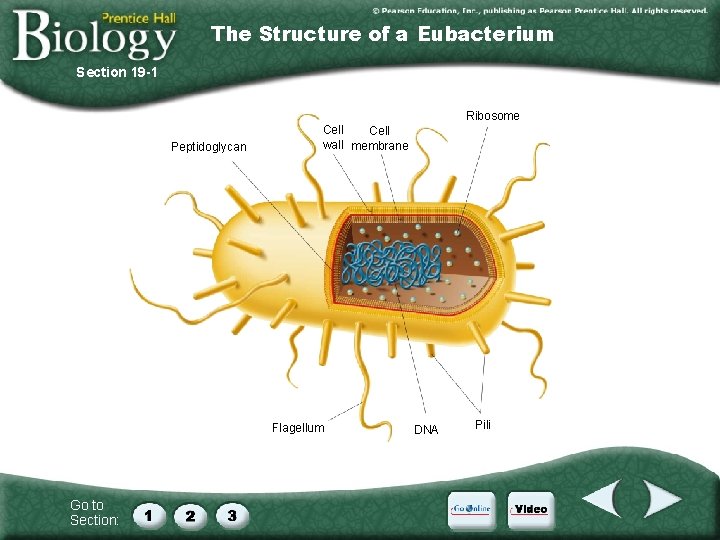
The Structure of a Eubacterium Section 19 -1 Ribosome Peptidoglycan Cell wall membrane Flagellum Go to Section: DNA Pili
Interest Grabber Section 19 -2 What Viruses Mean to You If you have ever had a cold, you are probably familiar with the word virus. It is a word that makes most people frown. 1. What do you think of when you hear the word virus? Make a list of all the words you can think of that relate to viruses. 2. What are two things that you would like to find out about viruses? Go to Section:
Section Outline Section 19 -2 19– 2 Go to Section: Viruses A. What Is a Virus? B. Viral Infection 1. Lytic Infection 2. Lysogenic Infection C. Retroviruses D. Viruses and Living Cells
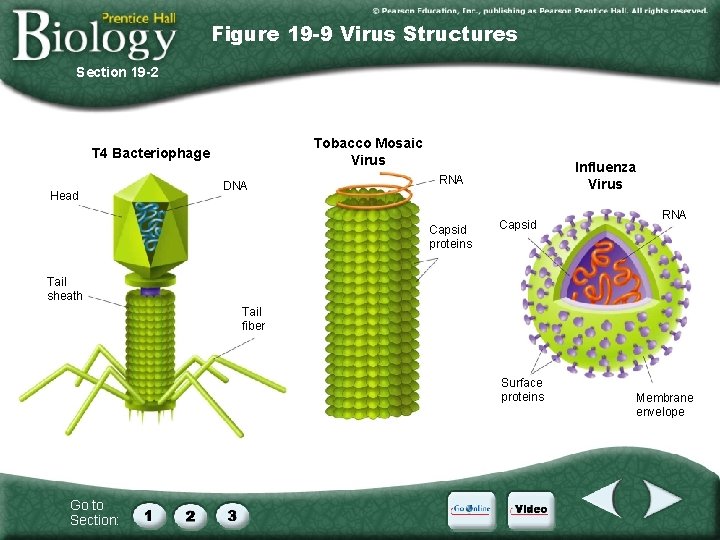
Figure 19 -9 Virus Structures Section 19 -2 Tobacco Mosaic Virus T 4 Bacteriophage Head DNA Influenza Virus RNA Capsid proteins Capsid RNA Tail sheath Tail fiber Surface proteins Go to Section: Membrane envelope
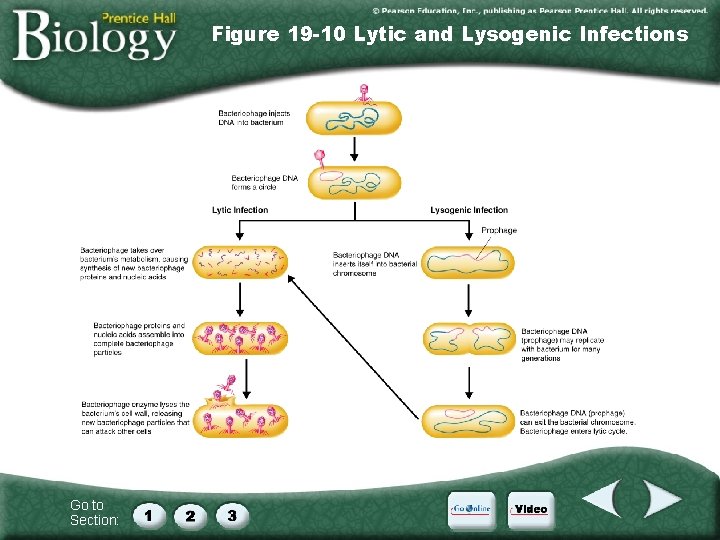
Figure 19 -10 Lytic and Lysogenic Infections Go to Section:
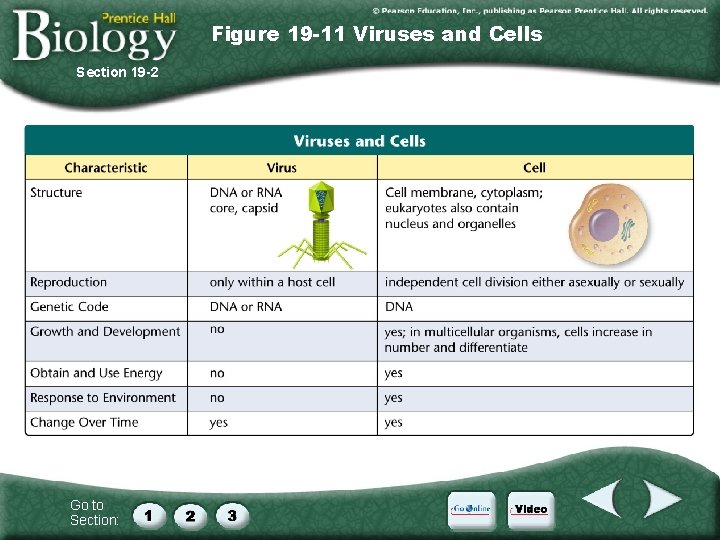
Figure 19 -11 Viruses and Cells Section 19 -2 Go to Section:
Interest Grabber Section 19 -3 Bacteria vs. Humans Bacteria are all around you—in the air you breathe, under your feet, on your skin, and even in your body! They may be tiny, but they can still have an impact on your life. Use what you already know about bacteria to answer these questions. Go to Section:
Interest Grabber continued Section 19 -3 1. In what ways are bacteria similar to humans? 2. In what ways are bacteria different from humans? 3. How can bacteria be harmful? Go to Section:
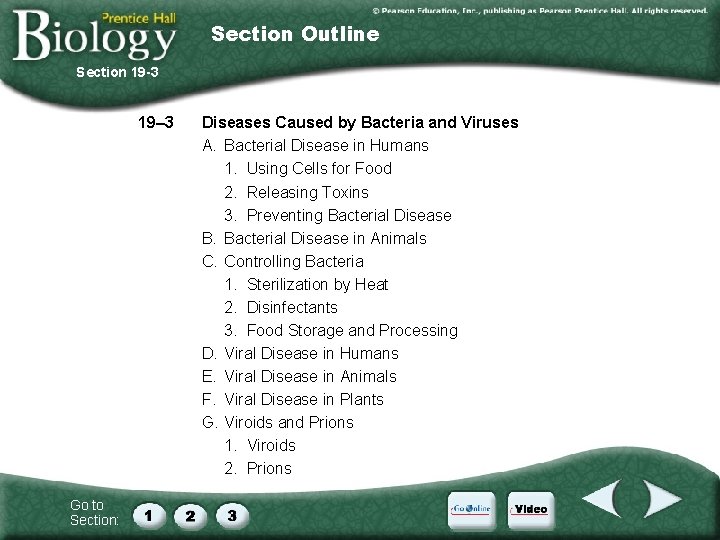
Section Outline Section 19 -3 19– 3 Go to Section: Diseases Caused by Bacteria and Viruses A. Bacterial Disease in Humans 1. Using Cells for Food 2. Releasing Toxins 3. Preventing Bacterial Disease B. Bacterial Disease in Animals C. Controlling Bacteria 1. Sterilization by Heat 2. Disinfectants 3. Food Storage and Processing D. Viral Disease in Humans E. Viral Disease in Animals F. Viral Disease in Plants G. Viroids and Prions 1. Viroids 2. Prions
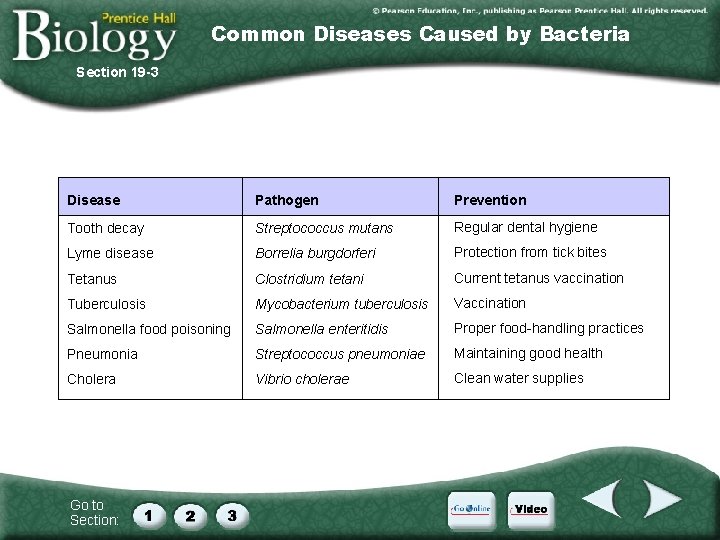
Common Diseases Caused by Bacteria Section 19 -3 Disease Pathogen Prevention Tooth decay Streptococcus mutans Regular dental hygiene Lyme disease Borrelia burgdorferi Protection from tick bites Tetanus Clostridium tetani Current tetanus vaccination Tuberculosis Mycobacterium tuberculosis Vaccination Salmonella food poisoning Salmonella enteritidis Proper food-handling practices Pneumonia Streptococcus pneumoniae Maintaining good health Cholera Vibrio cholerae Clean water supplies Go to Section:
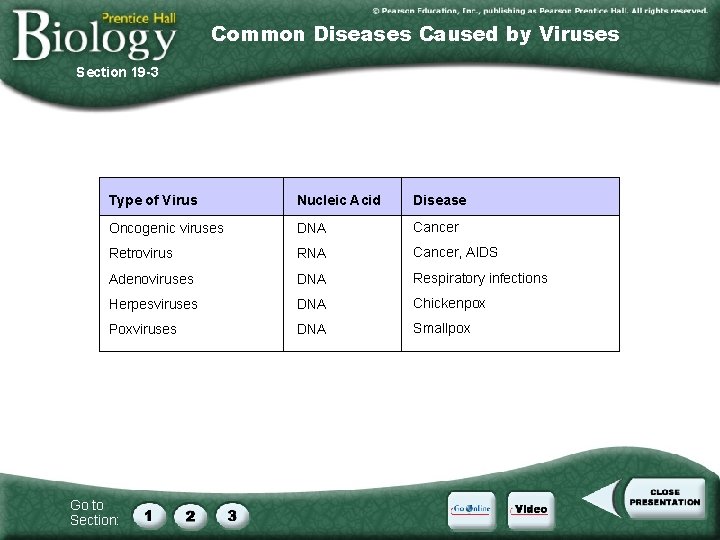
Common Diseases Caused by Viruses Section 19 -3 Type of Virus Nucleic Acid Disease Oncogenic viruses DNA Cancer Retrovirus RNA Cancer, AIDS Adenoviruses DNA Respiratory infections Herpesviruses DNA Chickenpox Poxviruses DNA Smallpox Go to Section:
Video Lytic and Lysogenic Cycles Click the image to play the video segment.
Go Online The latest discoveries in microorganisms and viruses Links from the authors on smallpox vaccinations Career links on epidemiologists Interactive test Articles on bacteria and viruses For links on bacteria, go to www. Sci. Links. org and enter the Web Code as follows: cbn-6191. For links on the lytic cycle, go to www. Sci. Links. org and enter Web Code as follows: cbn-6192.
Interest Grabber Answers 1. Describe your microorganism in detail. Students should describe the appearance of their imaginary organism. A possible answer might include its color and shape. 2. Describe its habitat. Students should describe whether it lives in water, soil, or another organism; if it is a plant or animal; and how it gets its energy. 3. Classify your microorganism by giving it a genus and species based on its characteristics. Students should specify a name for their organism.
Interest Grabber Answers 1. What do you think of when you hear the word virus? Make a list of all the words you can think of that relate to viruses. Possible answers: disease, sickness, AIDS virus, infection, microscopic, vaccines, flu, cold 2. What are two things that you would like to find out about viruses? Possible answers: How are viruses related to bacteria? How do viruses cause disease? How do viruses reproduce? How do viruses spread from person to person?
Interest Grabber Answers 1. In what ways are bacteria similar to humans? Like humans, bacteria are alive, and some can move. Both obtain energy, exchange gases, grow, and reproduce. 2. In what ways are bacteria different from humans? Unlike humans, bacteria are extremely small; some can live in harsher environments and without oxygen; some bacteria use sunlight to produce their own food. 3. How can bacteria be harmful? Bacteria cause diseases, release poisonous chemicals, and compete with humans for food.

This slide is intentionally blank.
- Slides: 21