
Interest Grabber Section 12 3 l DNA contains
Interest Grabber Section 12 -3 l DNA contains the information that a cell needs to carry out all of its functions. In a way, DNA is like the cell’s encyclopedia. Suppose that you go to the library to do research for a science project. You find the information in an encyclopedia. You go to the desk to sign out the book, but the librarian informs you that this book is for reference only and may not be taken out. 1. Why do you think the library holds some books for reference only? 2. If you can’t borrow a book, how can you take home the information in it? 3. All of the parts of a cell are controlled by the information in DNA, yet DNA does not leave the nucleus. How do you think the information in DNA
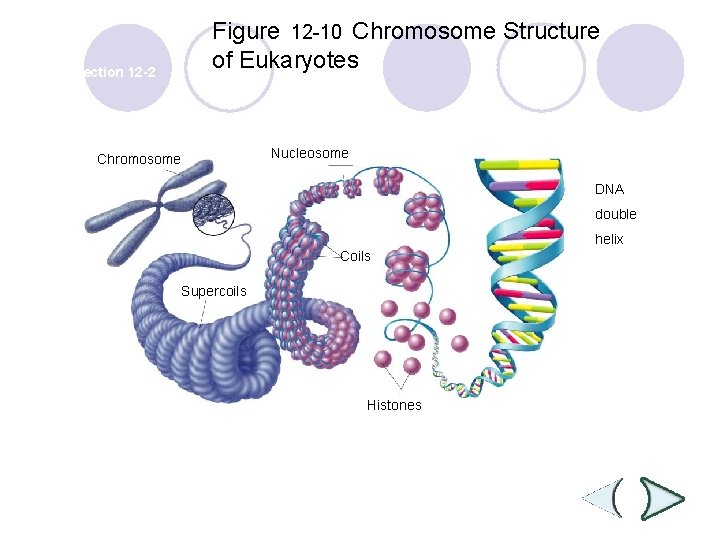
Figure 12 -10 Chromosome Structure of Eukaryotes Section 12 -2 Chromosome Nucleosome DNA double helix Coils Supercoils Histones
1) DNA Replication l Before cellular division the cell must double its DNA l Prokaryotes – DNA replication begins at a single point in the chromosome and proceeds in two directions until replicated. l Eukaryotes – DNA has two complementary strands wound up in the shape of double helix. The DNA polymerase unwinds the DNA and a new strand is copied. The new strand is a complementary copy of the original. l Complementary means that if the original DNA base is adenine the complementary base is thymine.
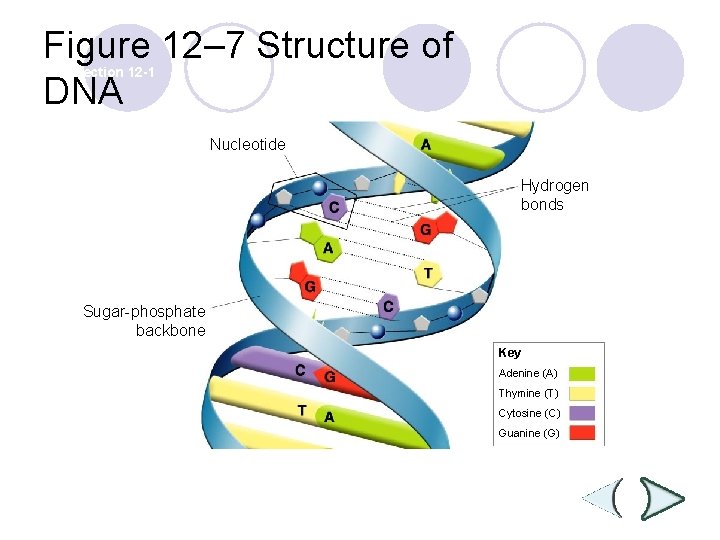
Figure 12– 7 Structure of DNA Section 12 -1 Nucleotide Hydrogen bonds Sugar-phosphate backbone Key Adenine (A) Thymine (T) Cytosine (C) Guanine (G)
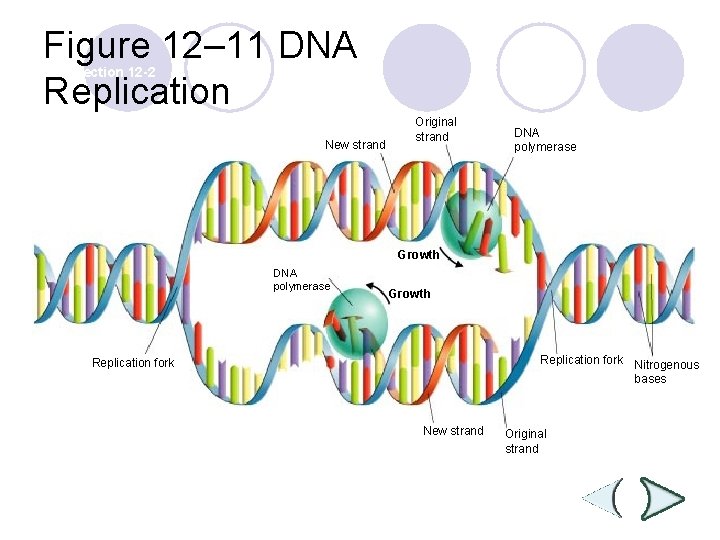
Figure 12– 11 DNA Replication Section 12 -2 New strand Original strand DNA polymerase Growth Replication fork Nitrogenous bases Replication fork New strand Original strand
How do DNA genes work? l DNA is a specific set of instructions for what? l DNA (genes) code for the production of protein How does DNA get out of the nucleus? l The first step in decoding genes is to copy a sequence of DNA onto RNA. l
What is RNA? l RNA - Ribonucleic acid is usually single stranded and contains Uracil instead of thymine and it has ribose as it’s sugar. l There are three types of RNA
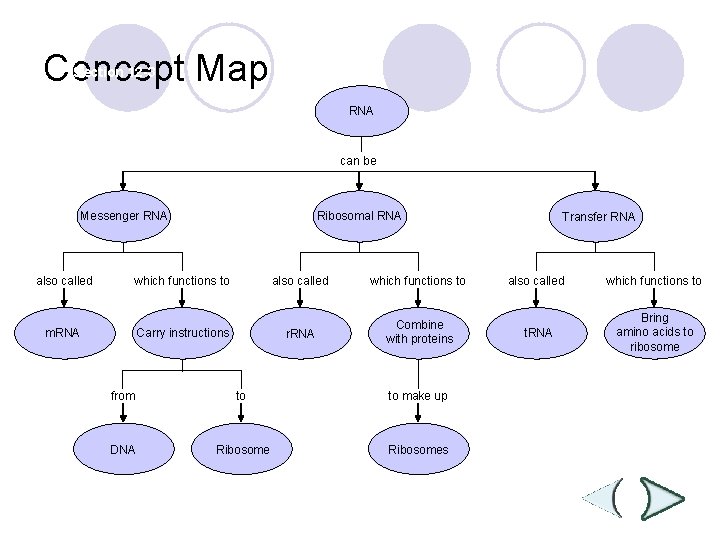
Concept Map Section 12 -3 RNA can be Messenger RNA also called Ribosomal RNA which functions to m. RNA Carry instructions also called which functions to r. RNA Combine with proteins from to to make up DNA Ribosomes Transfer RNA also called which functions to t. RNA Bring amino acids to ribosome
STEP ONE DNA to m. RNA l DNA needs to be transcribed into m (messenger) RNA How is this done? l RNA polymerase (enzyme) unzips the DNA molecule and RNA uses one strand of DNA to make an exact copy. A pairs with U and C pairs with G. Nucleotides (Phosphate+ base+ sugar) of m. RNA are assembled into a strand of RNA. The m. RNA leave the nucleus. l

CODONS l RNA will bind only to specific sites along the DNA called promoters – they have specific base sequences that appear in triplets.
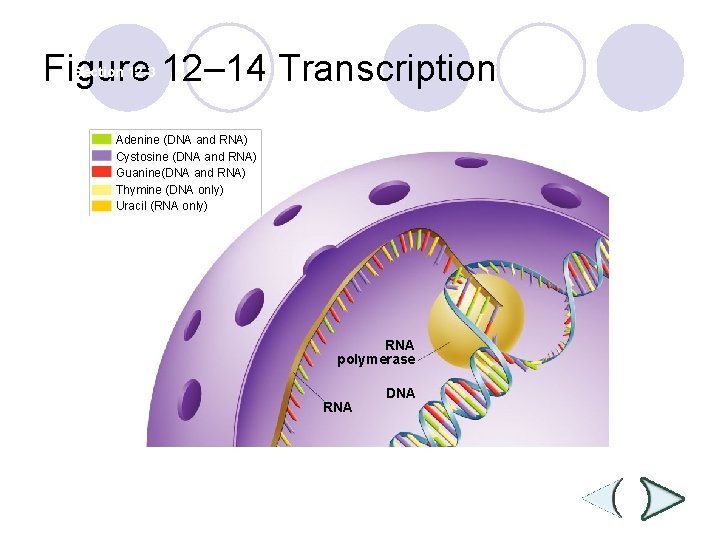
Figure 12– 14 Transcription Section 12 -3 Adenine (DNA and RNA) Cystosine (DNA and RNA) Guanine(DNA and RNA) Thymine (DNA only) Uracil (RNA only) RNA polymerase RNA DNA
Questions l How is DNA replicated? l DNA is replicated with DNA polymerase in the nucleus l What enzyme unzips DNA for RNA transcription? l RNA polymerase unzips DNA for
Step Two - Translation m. RNA has made a copy of DNA – a set of instructions to make protein. l m. RNA leaves the nucleus and looks for a ribosome to attach to so translation of the m. RNA can begin. l Each codon (three letter code of RNA) is read by the ribosome. The ribosome uses the codon as a set of instructions to make a protein. Each three unit codon is matched to its anitcodon – also called t. RNA: l AUG is matched with UAC l And the anti codon is attached to a specific amino acid l
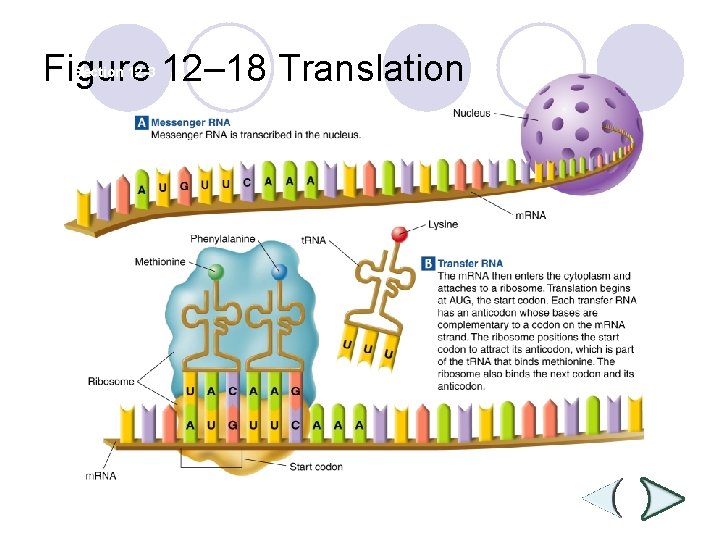
Figure 12– 18 Translation Section 12 -3
Translation Continued l The ribosome also bonds each amino acid to the next amino acid. This is how polypeptide chains of amino acids are formed. l The ribosome also breaks the bonds between the amino acid and its anticodon. l The polypeptide chin continues to grow until the ribosome reaches a stop codon.
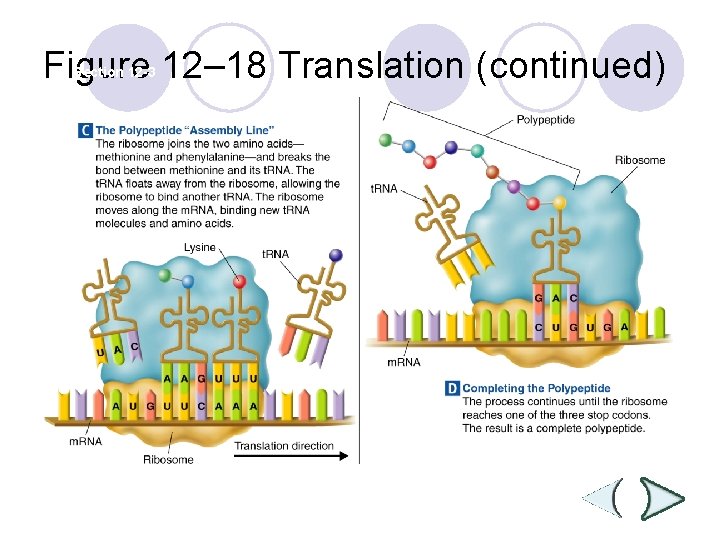
Figure 12– 18 Translation (continued) Section 12 -3
l http: //www. pbs. org/wgbh/aso/tryit/dna/#
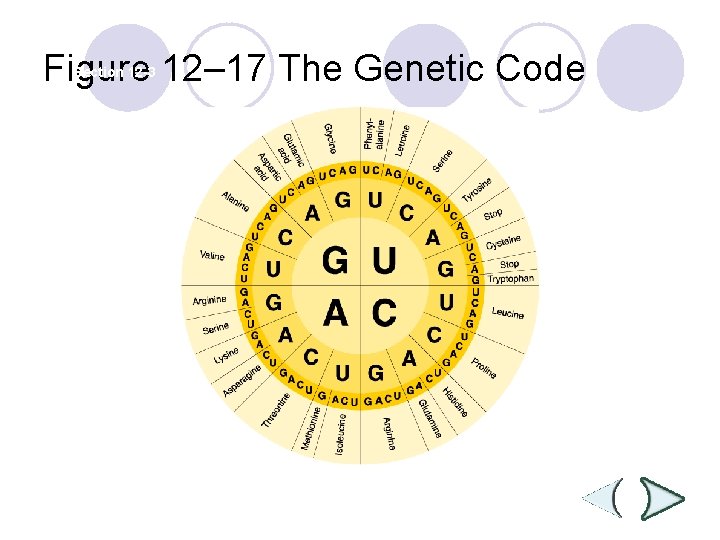
Figure 12– 17 The Genetic Code Section 12 -3
Interest Grabber Section 12 -4 l Determining l DNA the Sequence of a Gene contains the code of instructions for cells. Sometimes, an error occurs when the code is copied. Such errors are called mutations.
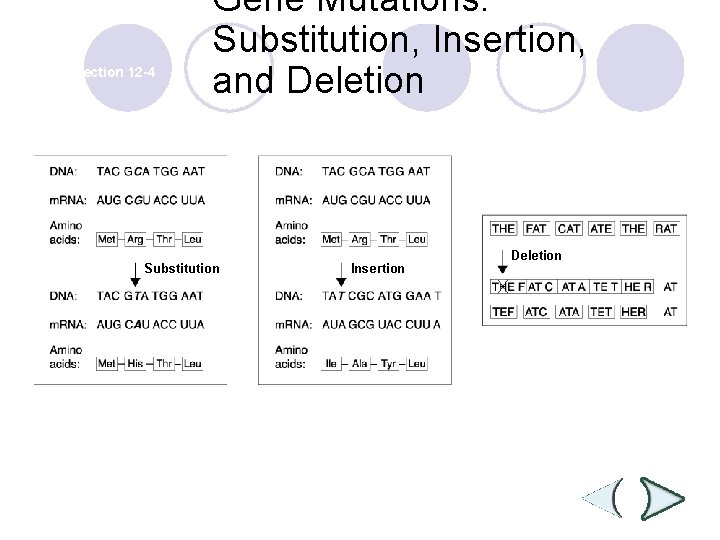
Section 12 -4 Gene Mutations: Substitution, Insertion, and Deletion Substitution Insertion Deletion
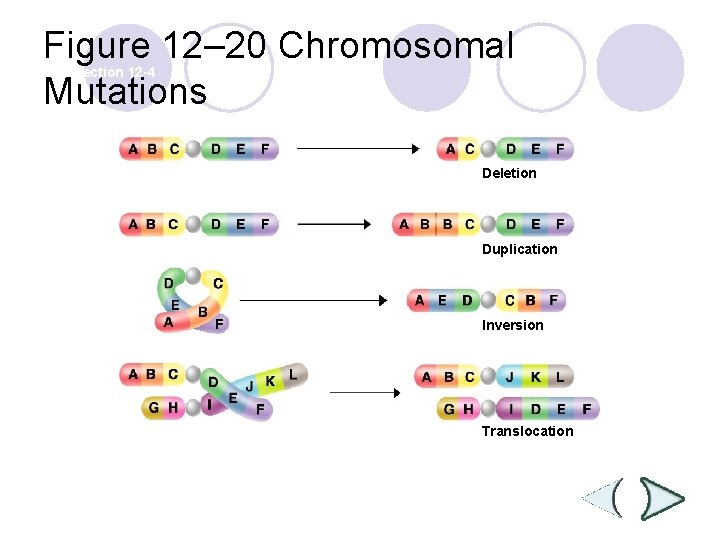
Figure 12– 20 Chromosomal Mutations Section 12 -4 Deletion Duplication Inversion Translocation
Interest Grabber Section 12 -5 l Regulation l of Protein Synthesis Every cell in your body, with the exception of gametes, or sex cells, contains a complete copy of your DNA. Why, then, are some cells nerve cells with dendrites and axons, while others are red blood cells that have lost their nuclei and are packed with hemoglobin? Why are cells so different in structure and function? If the characteristics of a cell depend upon the proteins that are synthesized, what does this tell you about protein synthesis? Work with a partner to discuss and answer the questions that follow.
Interest Grabber continued Section 12 -5 1. Do you think that cells produce all the proteins for which the DNA (genes) code? Why or why not? How do the proteins made affect the type and function of cells? 2. Consider what you now know about genes and protein synthesis. What might be some ways that a cell has control over the proteins it produces? 3. What type(s) of organic compounds are most likely the ones that help to regulate protein synthesis? Justify your answer.
- Slides: 23