
INTERDISCIPLINARY LEARNING IN ACTION Green Ambassadors Institute Los
INTERDISCIPLINARY LEARNING IN ACTION Green Ambassadors Institute Los Angeles, CA February 7 & 10 2014
WHO ARE WE? Amy Frame Director of Curriculum & Instruction Sammy Lyon Service Learning Coordinator
ICEBREAKER
WHO ARE YOU?
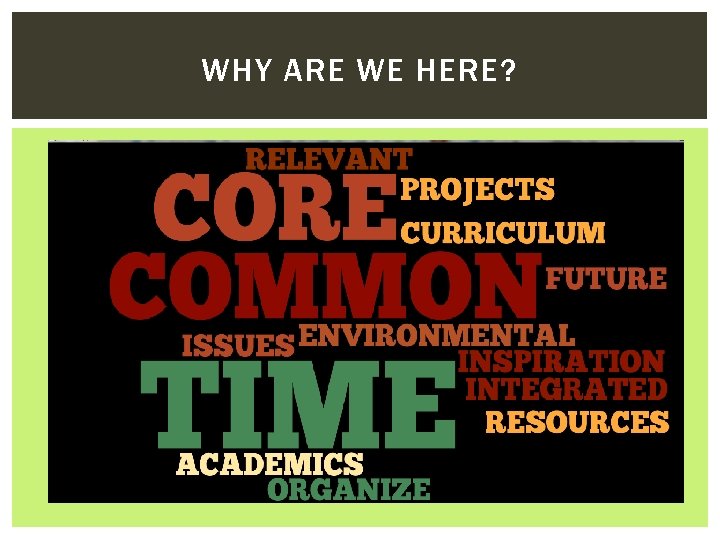
WHY ARE WE HERE?
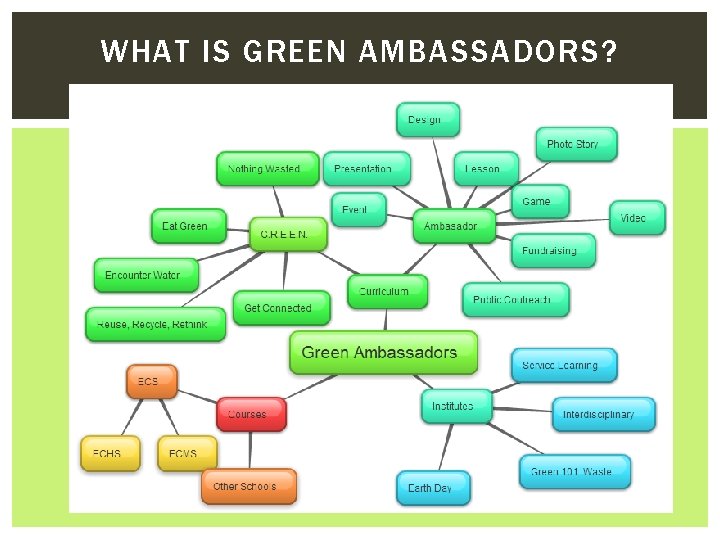
WHAT IS GREEN AMBASSADORS?
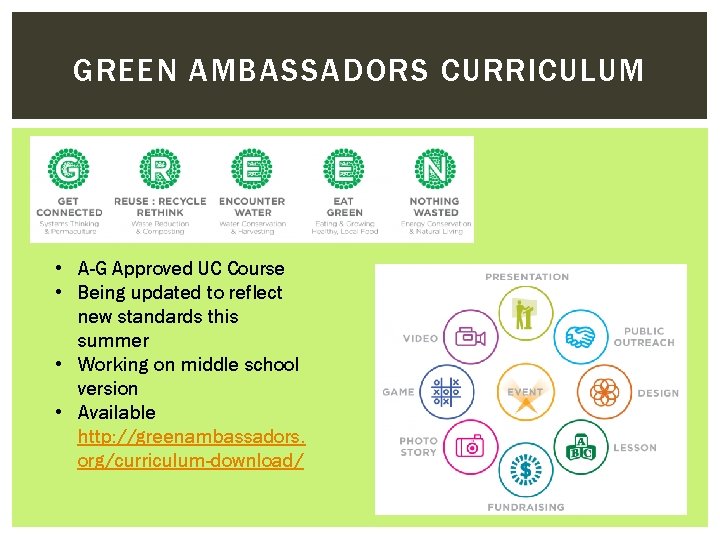
GREEN AMBASSADORS CURRICULUM • A-G Approved UC Course • Being updated to reflect new standards this summer • Working on middle school version • Available http: //greenambassadors. org/curriculum-download/
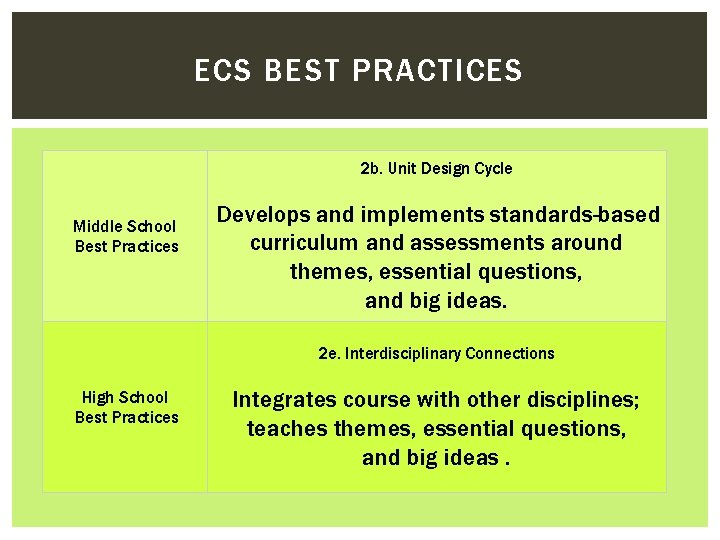
ECS BEST PRACTICES 2 b. Unit Design Cycle Middle School Best Practices Develops and implements standards-based curriculum and assessments around themes, essential questions, and big ideas. 2 e. Interdisciplinary Connections High School Best Practices Integrates course with other disciplines; teaches themes, essential questions, and big ideas.
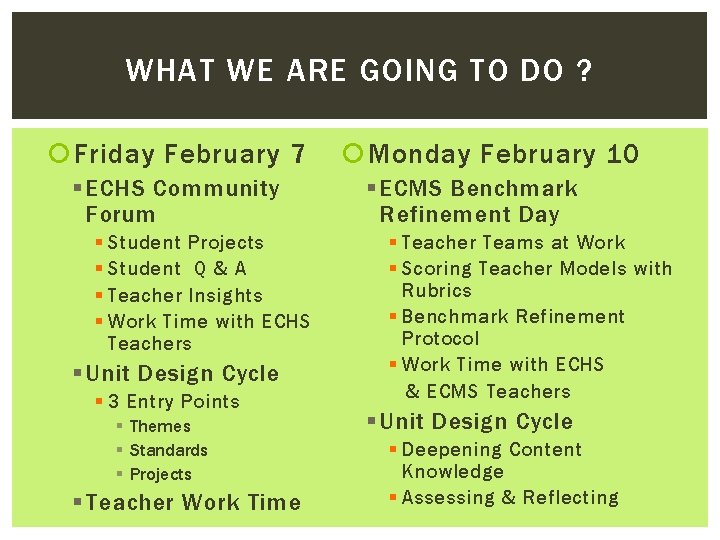
WHAT WE ARE GOING TO DO ? Friday February 7 § ECHS Community Forum § Student Projects § Student Q & A § Teacher Insights § Work Time with ECHS Teachers § Unit Design Cycle § 3 Entry Points § Themes § Standards § Projects § Teacher Work Time Monday February 10 § ECMS Benchmark Refinement Day § Teacher Teams at Work § Scoring Teacher Models with Rubrics § Benchmark Refinement Protocol § Work Time with ECHS & ECMS Teachers § Unit Design Cycle § Deepening Content Knowledge § Assessing & Reflecting
WHAT IS INTERDISCIPLINARY INSTRUCTION?
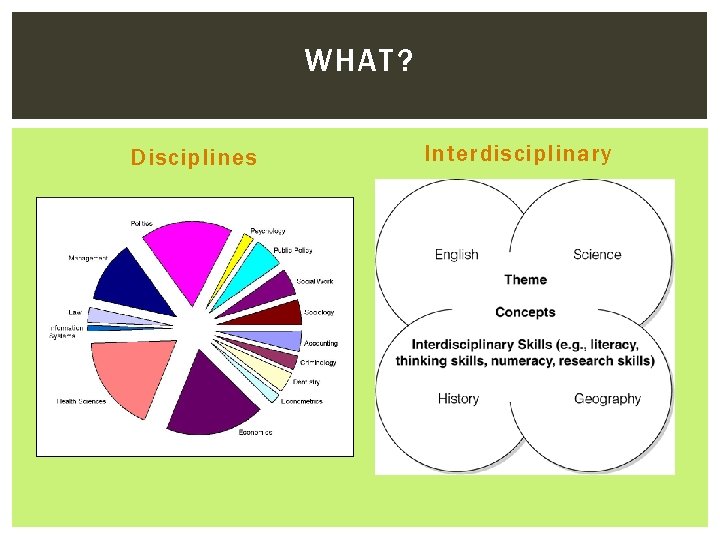
WHAT? Disciplines Interdisciplinary
WHY USE INTERDISCIPLINARY INSTRUCTION?
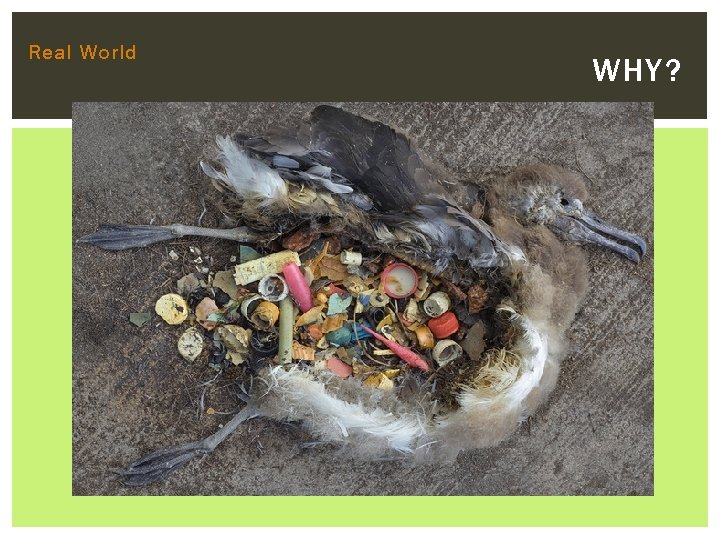
Real World WHY?
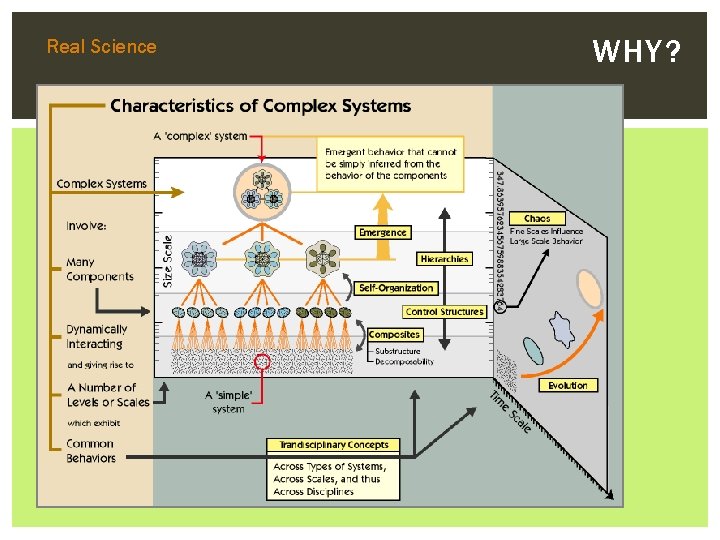
Real Science WHY?
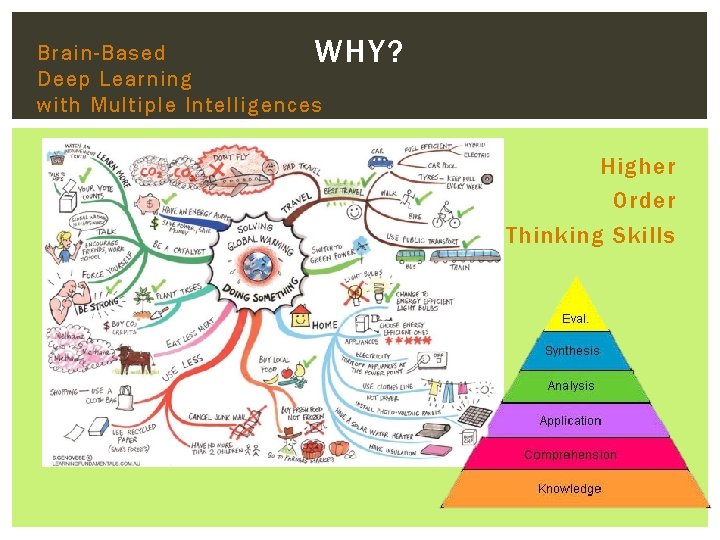
Brain-Based WHY? Deep Learning with Multiple Intelligences Higher Order Thinking Skills
WHY? WASC Criterion B 1: Standards. Based Student Learning: Curriculum “To what extent is there integration among disciplines? ” National Green Schools Competition Element 3 A (20%) “Interdisciplinary learning about the key relationships between dynamic environmental, energy, and human systems. ”
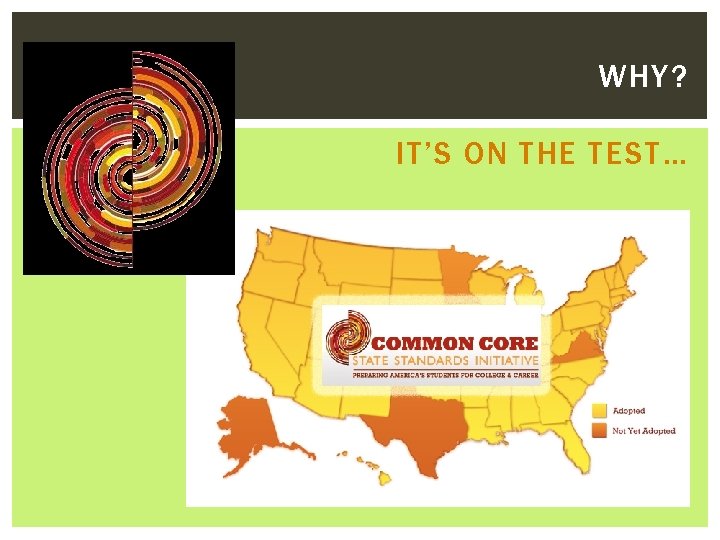
WHY? IT’S ON THE TEST…
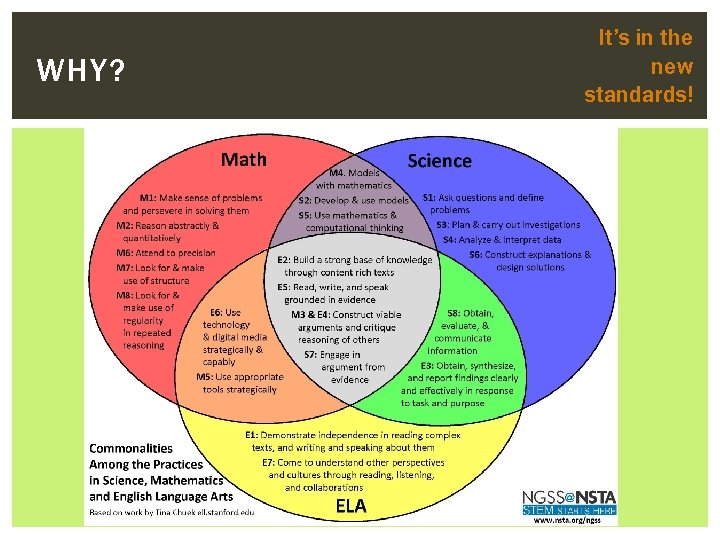
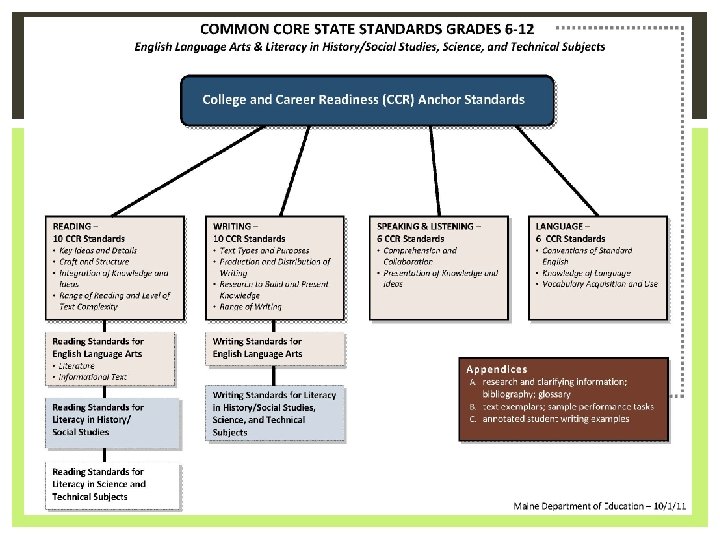
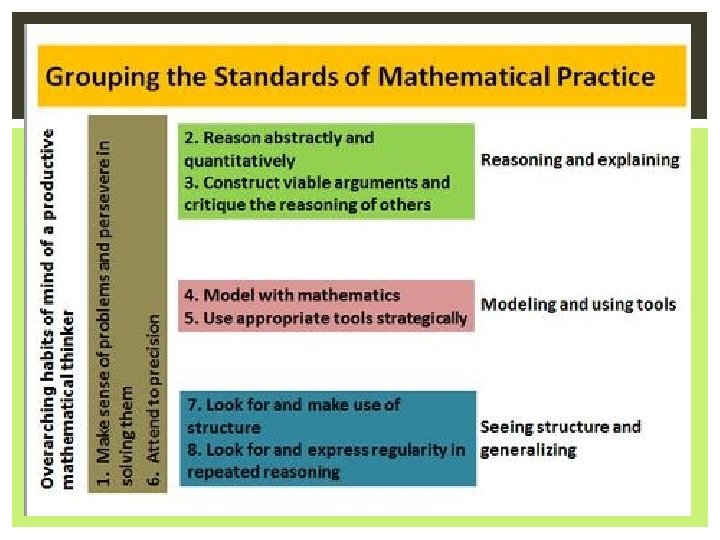
WHY? It’s in the new standards!
WHY DO YOU THINK WE SHOULD DO INTERDISCIPLINARY INSTRUCTION? Quick Question
HOW DO WE PLAN INTERDISCIPLINARY INSTRUCTION?
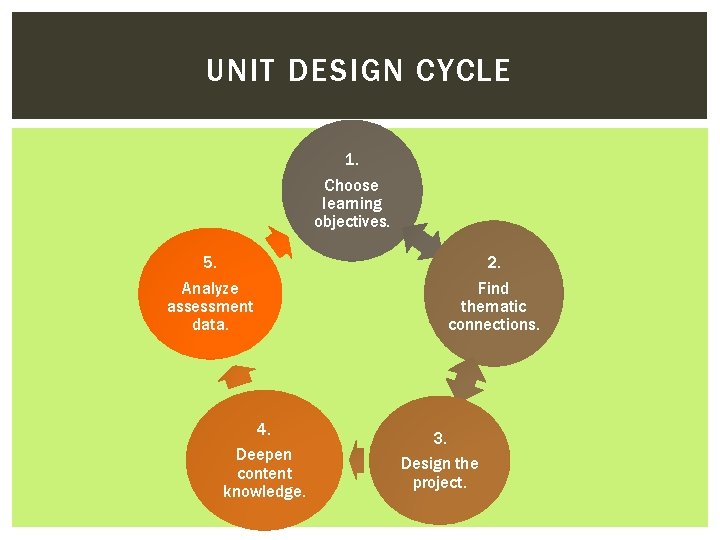
UNIT DESIGN CYCLE 1. Choose learning objectives. 5. Analyze assessment data. 4. Deepen content knowledge. 2. Find thematic connections. 3. Design the project.
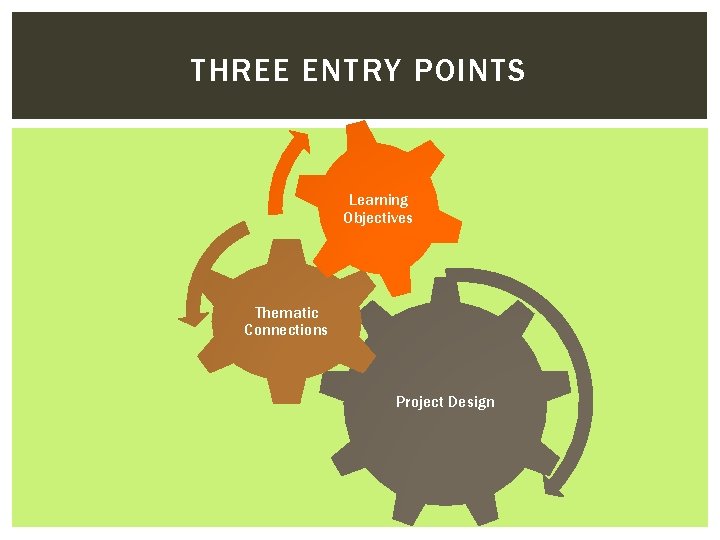
THREE ENTRY POINTS Learning Objectives Thematic Connections Project Design
2. Find thematic connections. UNIT DESIGN CYCLE
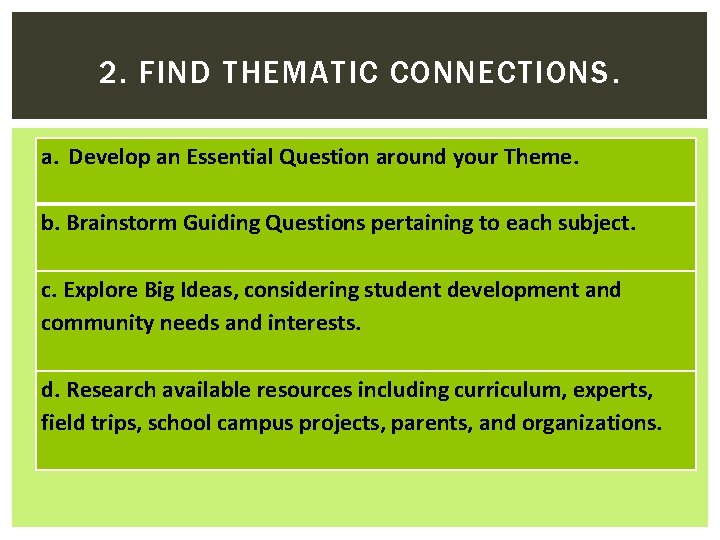
2. FIND THEMATIC CONNECTIONS. a. Develop an Essential Question around your Theme. b. Brainstorm Guiding Questions pertaining to each subject. c. Explore Big Ideas, considering student development and community needs and interests. d. Research available resources including curriculum, experts, field trips, school campus projects, parents, and organizations.
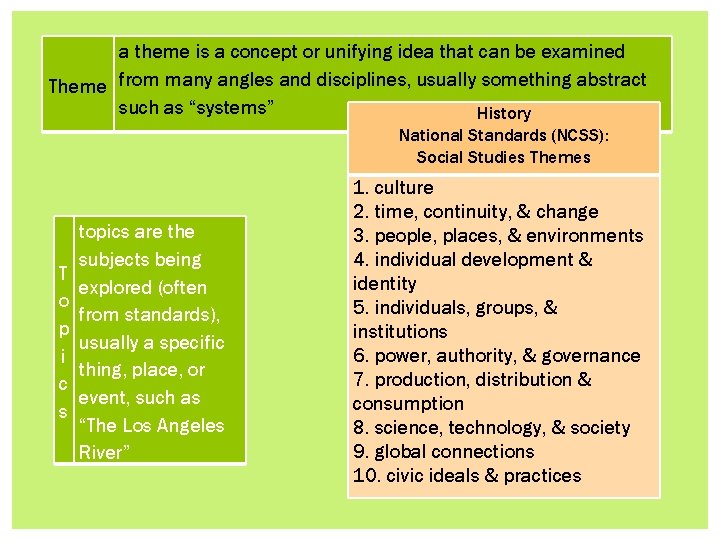
a theme is a concept or unifying idea that can be examined Theme from many angles and disciplines, usually something abstract such as “systems” History National Standards (NCSS): Social Studies Themes T o p i c s topics are the subjects being explored (often from standards), usually a specific thing, place, or event, such as “The Los Angeles River” 1. culture 2. time, continuity, & change 3. people, places, & environments 4. individual development & identity 5. individuals, groups, & institutions 6. power, authority, & governance 7. production, distribution & consumption 8. science, technology, & society 9. global connections 10. civic ideals & practices
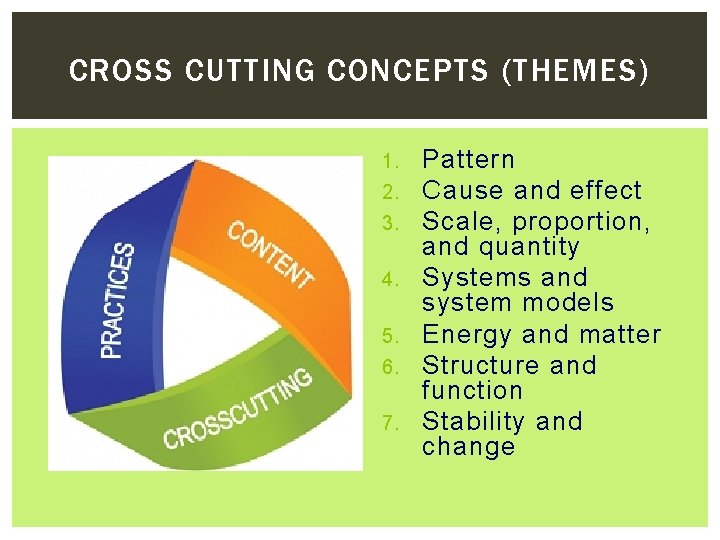
CROSS CUTTING CONCEPTS (THEMES) 1. 2. 3. 4. 5. 6. 7. Pattern Cause and effect Scale, proportion, and quantity Systems and system models Energy and matter Structure and function Stability and change
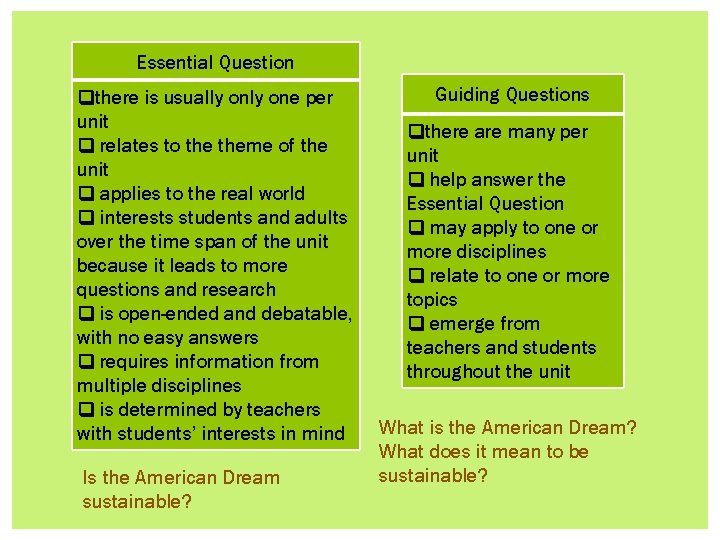
Essential Question there is usually one per unit relates to theme of the unit applies to the real world interests students and adults over the time span of the unit because it leads to more questions and research is open-ended and debatable, with no easy answers requires information from multiple disciplines is determined by teachers with students’ interests in mind Is the American Dream sustainable? Guiding Questions there are many per unit help answer the Essential Question may apply to one or more disciplines relate to one or more topics emerge from teachers and students throughout the unit What is the American Dream? What does it mean to be sustainable?
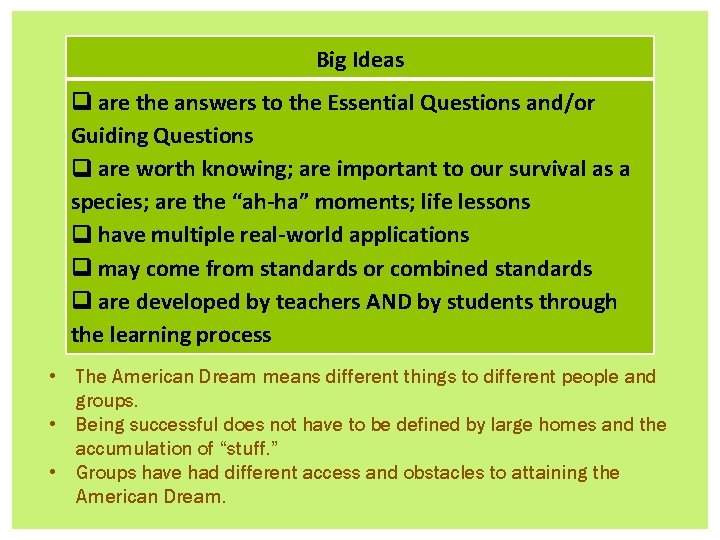
Big Ideas are the answers to the Essential Questions and/or Guiding Questions are worth knowing; are important to our survival as a species; are the “ah-ha” moments; life lessons have multiple real-world applications may come from standards or combined standards are developed by teachers AND by students through the learning process • The American Dream means different things to different people and groups. • Being successful does not have to be defined by large homes and the accumulation of “stuff. ” • Groups have had different access and obstacles to attaining the American Dream.
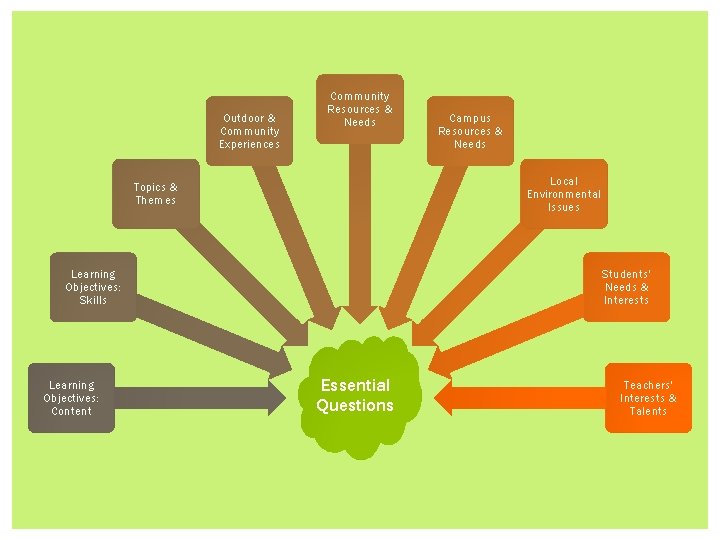
Outdoor & Community Experiences Community Resources & Needs Local Environmental Issues Topics & Themes Learning Objectives: Skills Learning Objectives: Content Campus Resources & Needs Students' Needs & Interests Essential Questions Teachers' Interests & Talents
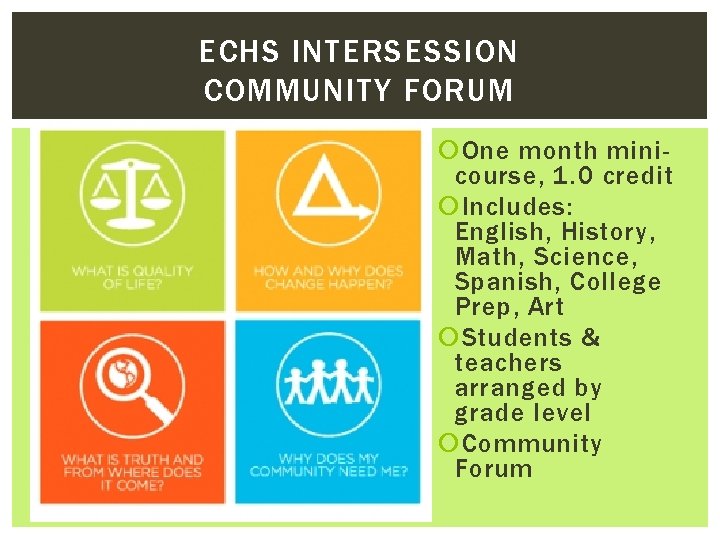
ECHS INTERSESSION COMMUNITY FORUM One month minicourse, 1. 0 credit Includes: English, History, Math, Science, Spanish, College Prep, Art Students & teachers arranged by grade level Community Forum
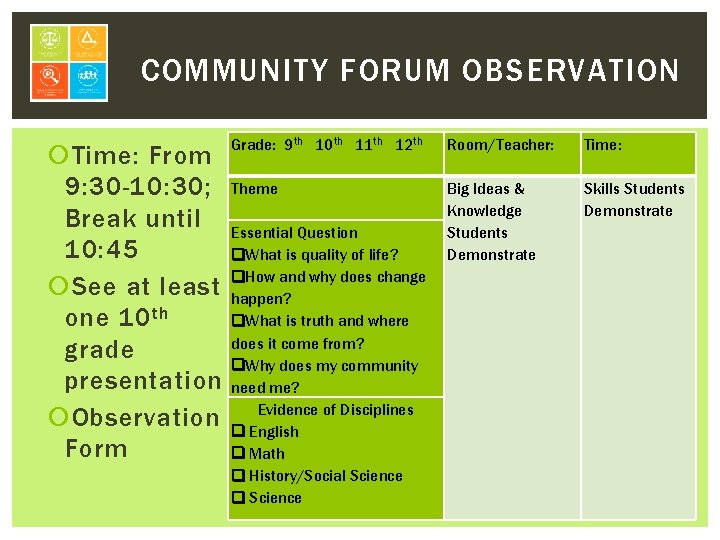
COMMUNITY FORUM OBSERVATION Time: From 9: 30 -10: 30; Break until 10: 45 See at least one 10 th grade presentation Observation Form Grade: 9 th 10 th 11 th 12 th Theme Essential Question What is quality of life? How and why does change happen? What is truth and where does it come from? Why does my community need me? Evidence of Disciplines English Math History/Social Science Room/Teacher: Big Ideas & Knowledge Students Demonstrate Time: Skills Students Demonstrate

BREAK 10: 30 -10: 45
COMMUNITY FORUM DEBRIEF Did you see anything that inspired you? Did you see anyone else who was inspired? What does inspired learning look like? Where did see evidence of each? § Essential Questions § Guiding Questions § Themes § Big Ideas § Content Knowledge in Disciplines § Skills § Standards Entry Point 2 Learning Objectives (Standards)
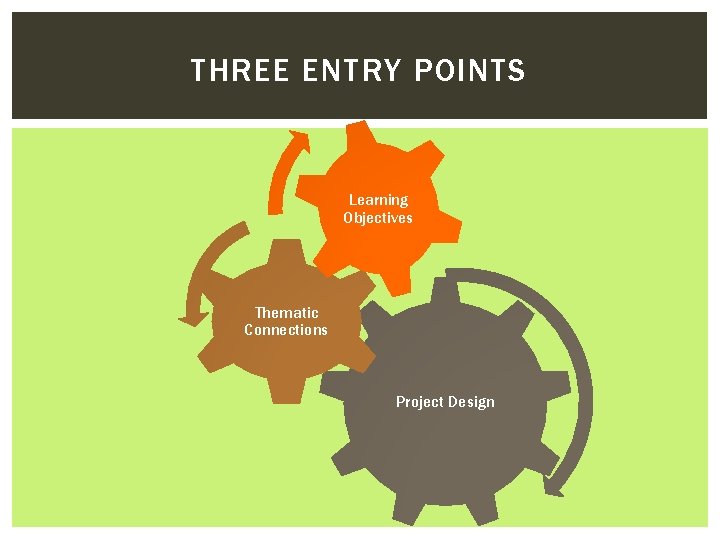
THREE ENTRY POINTS Learning Objectives Thematic Connections Project Design
1. Choose learning objectives. UNIT DESIGN CYCLE
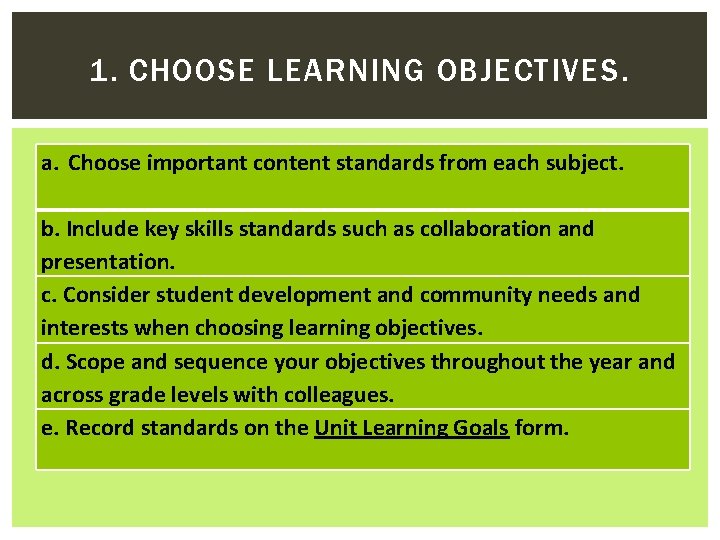
1. CHOOSE LEARNING OBJECTIVES. a. Choose important content standards from each subject. b. Include key skills standards such as collaboration and presentation. c. Consider student development and community needs and interests when choosing learning objectives. d. Scope and sequence your objectives throughout the year and across grade levels with colleagues. e. Record standards on the Unit Learning Goals form.
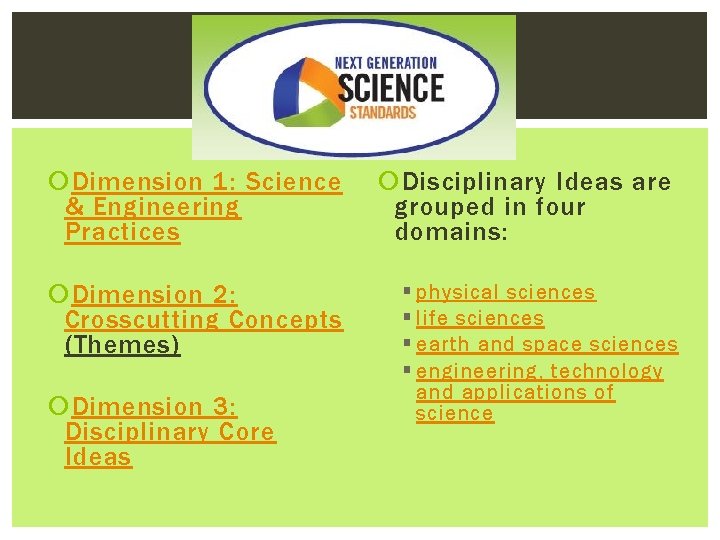
Dimension 1: Science & Engineering Practices Disciplinary Ideas are grouped in four domains: Dimension 2: Crosscutting Concepts (Themes) § physical sciences § life sciences § earth and space sciences § engineering, technology and applications of science Dimension 3: Disciplinary Core Ideas
CALIFORNIA’S ENVIRONMENTAL PRINCIPLES & CONCEPTS Principle I: People Depend on Natural Systems Principle II: People Influence Natural Systems Principle III: Natural Systems Change in Ways that People Benefit from and can Influence Principle IV: There are no Permanent or Impermeable Boundaries that Prevent Matter from Flowing between Systems Principle V: Decisions Affecting Resources and Natural Systems are Complex and Involve Many Factors
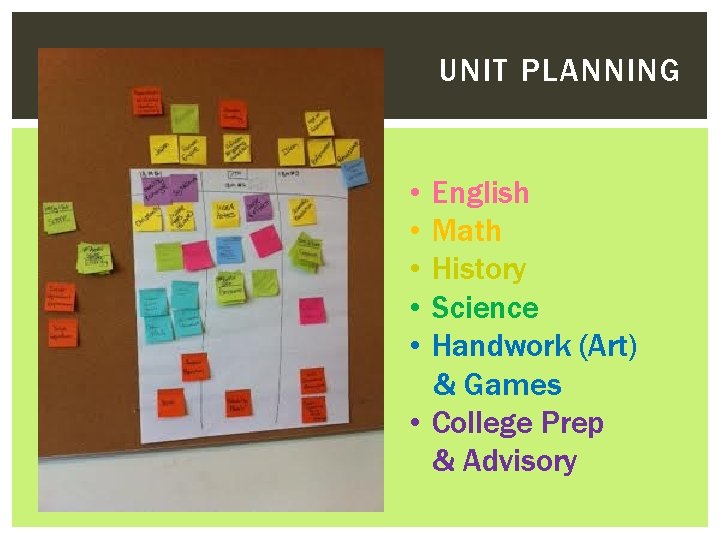
UNIT PLANNING • • • English Math History Science Handwork (Art) & Games • College Prep & Advisory

HOW ARE THE NEW STANDARDS AN OPPORTUNITY FOR YOU? Quick Question
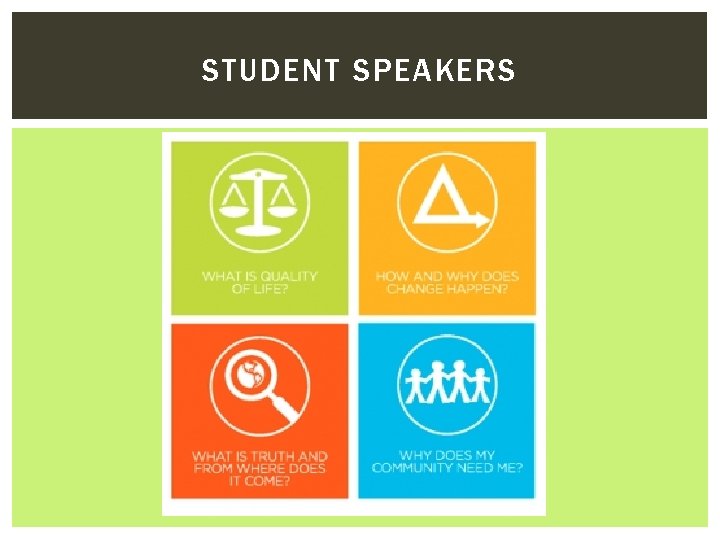
STUDENT SPEAKERS

LUNCH BREAK 12: 00 -12: 45
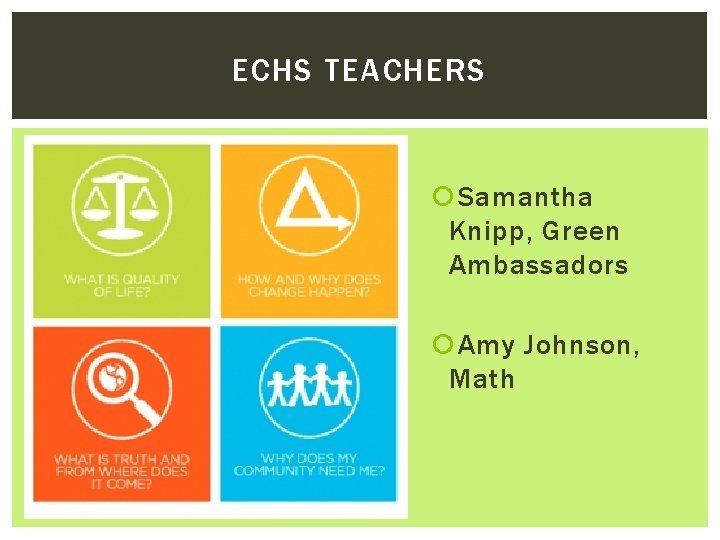
ECHS TEACHERS Samantha Knipp, Green Ambassadors Amy Johnson, Math
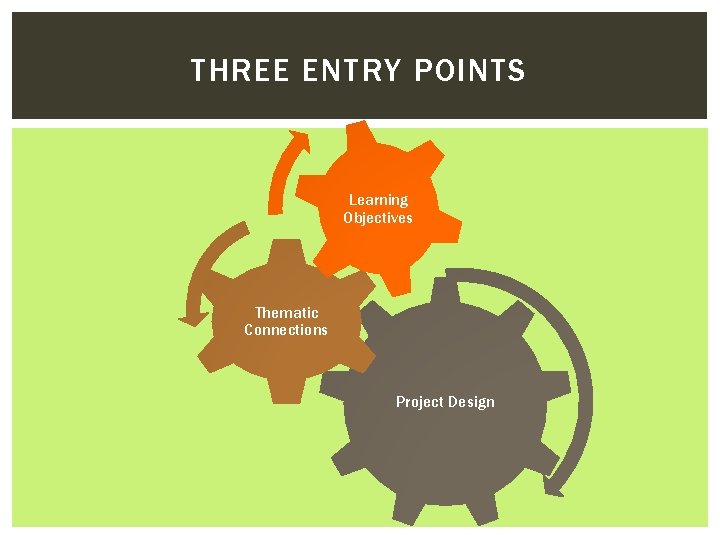
THREE ENTRY POINTS Learning Objectives Thematic Connections Project Design
3. Design the project. UNIT DESIGN CYCLE
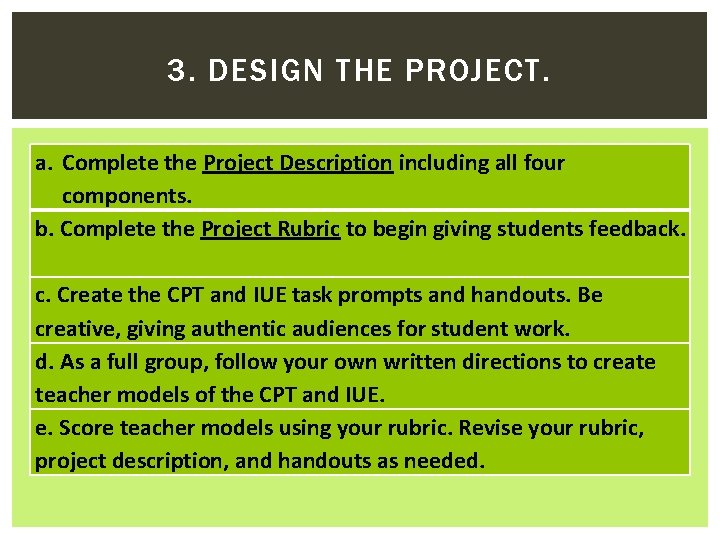
3. DESIGN THE PROJECT. a. Complete the Project Description including all four components. b. Complete the Project Rubric to begin giving students feedback. c. Create the CPT and IUE task prompts and handouts. Be creative, giving authentic audiences for student work. d. As a full group, follow your own written directions to create teacher models of the CPT and IUE. e. Score teacher models using your rubric. Revise your rubric, project description, and handouts as needed.
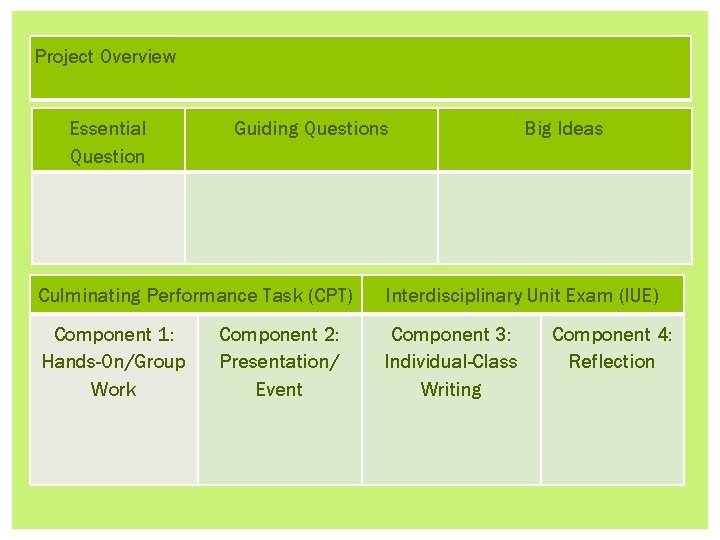
Project Overview Essential Question Guiding Questions Big Ideas Culminating Performance Task (CPT) Interdisciplinary Unit Exam (IUE) Component 1: Hands-On/Group Work Component 3: Individual-Class Writing Component 2: Presentation/ Event Component 4: Reflection
TEAM WORK TIME
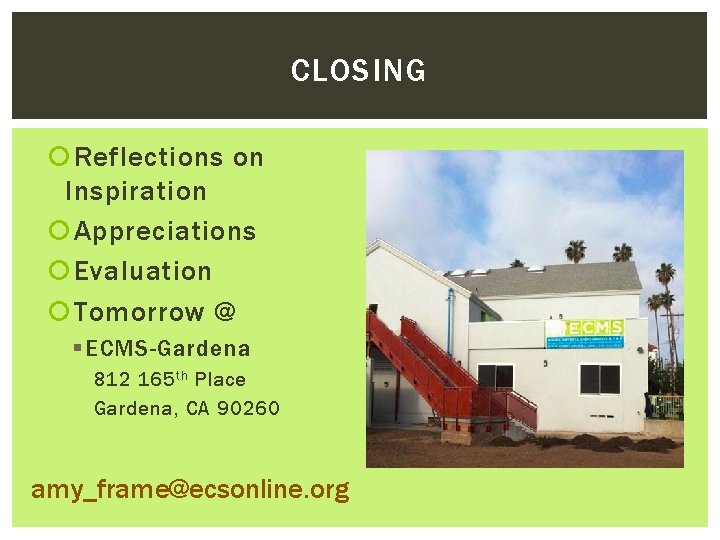
CLOSING Reflections on Inspiration Appreciations Evaluation Tomorrow @ § ECMS-Gardena 812 165 th Place Gardena, CA 90260 amy_frame@ecsonline. org
- Slides: 52