
Interdisciplinary collaboration on OMIF Gerardo Dominguez Mark Thiemens
Interdisciplinary collaboration on O-MIF Gerardo Dominguez Mark Thiemens University of California, San Diego Department of Chemistry and Biochemistry
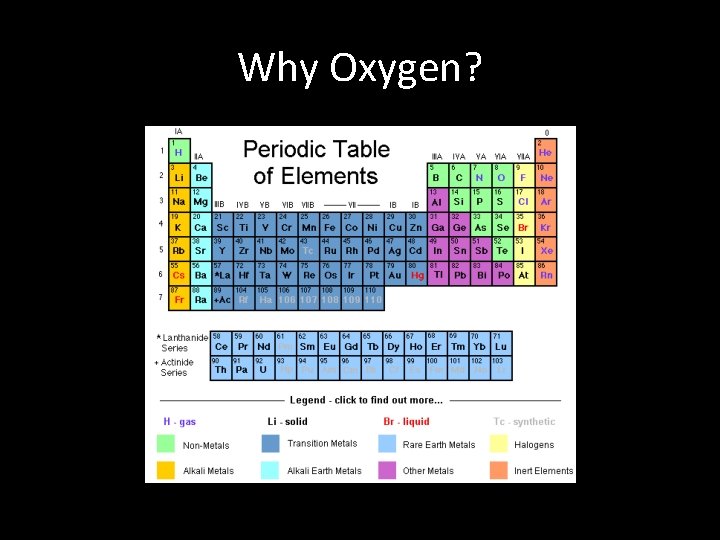
Why Oxygen?
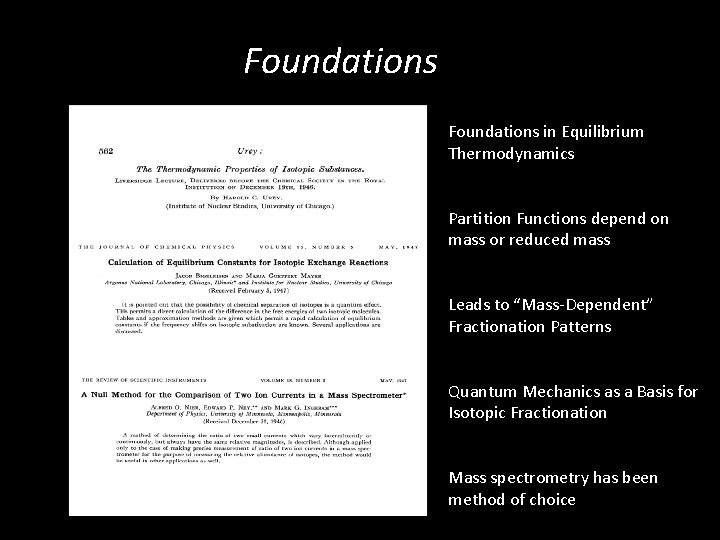
Foundations in Equilibrium Thermodynamics Partition Functions depend on mass or reduced mass Leads to “Mass-Dependent” Fractionation Patterns Quantum Mechanics as a Basis for Isotopic Fractionation Mass spectrometry has been method of choice
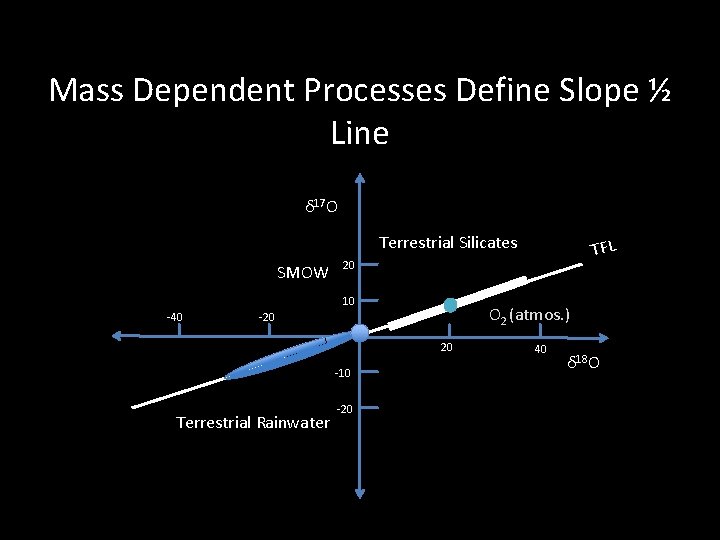
Mass Dependent Processes Define Slope ½ Line δ 17 O Terrestrial Silicates SMOW 20 10 -40 O 2 (atmos. ) -20 20 -10 Terrestrial Rainwater TFL -20 40 δ 18 O
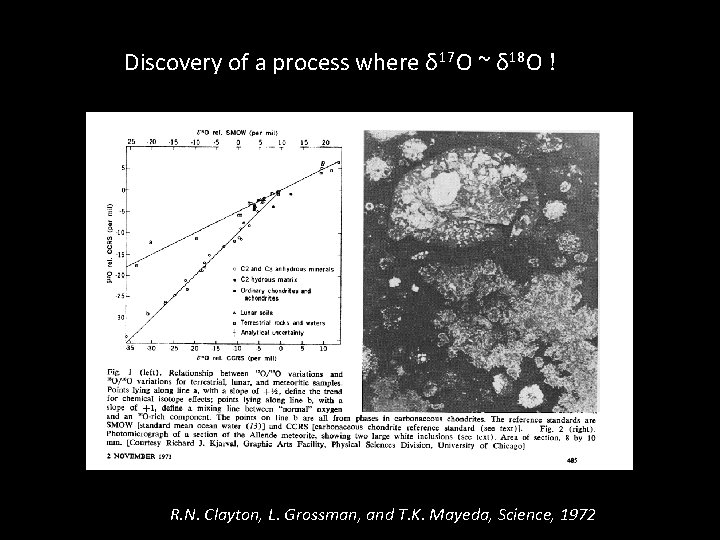
Clayton Discovery of a process where δ 17 O ~ δ 18 O ! R. N. Clayton, L. Grossman, and T. K. Mayeda, Science, 1972
Motivation for O 3 experiments (<1983): Big assumption in the field was that only nuclear processes (spallation, radioactive decay, injection of SN material) could lead to deviations from massdependent fractionation Chemically, however, identical particles (16 O 16 O) are indistinguishable leads to differentiation in the number of quantum states for symmetric and asymmetric O 3 molecules
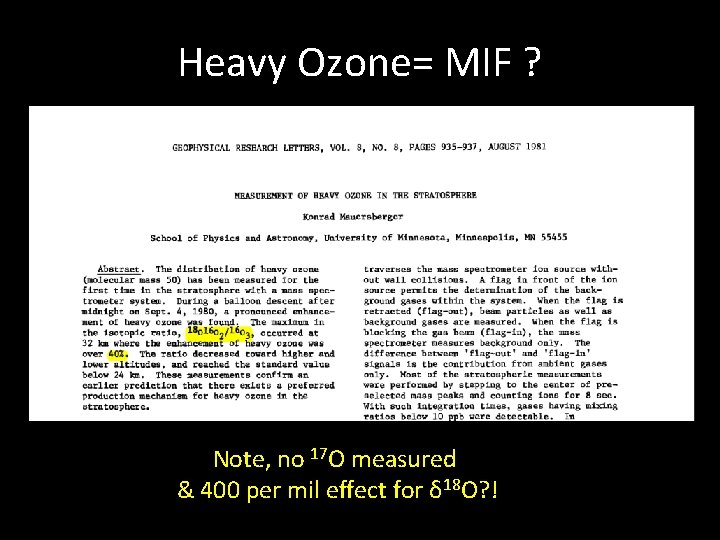
Heavy Ozone= MIF ? Note, no 17 O measured & 400 per mil effect for δ 18 O? !
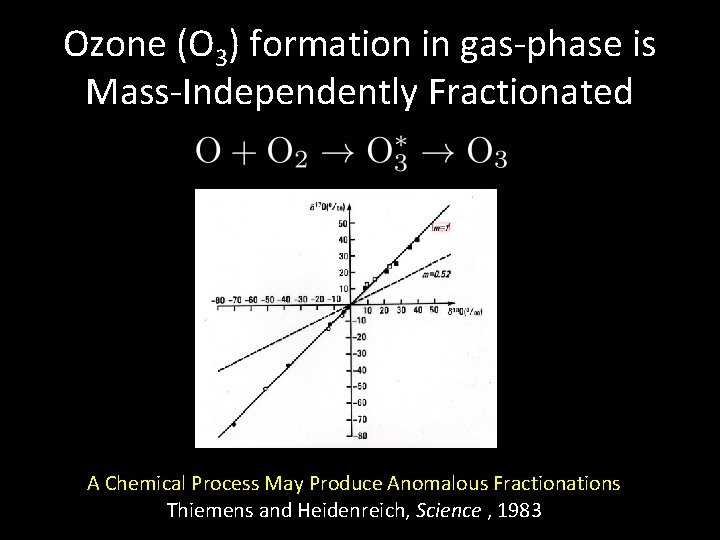
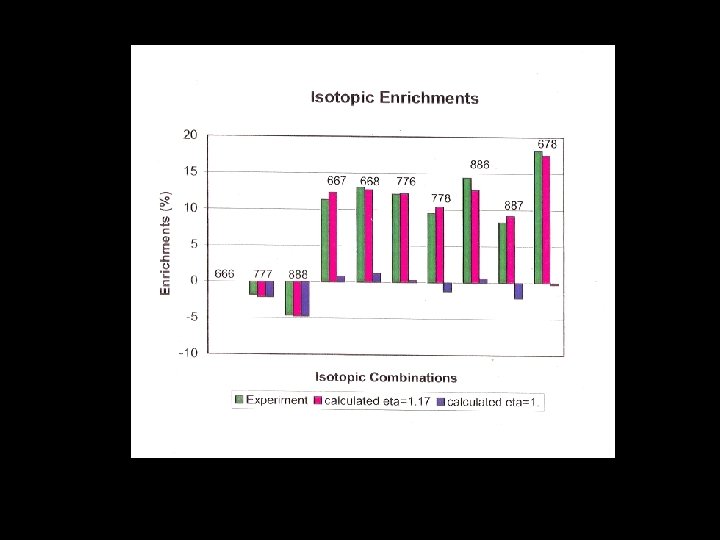
Ozone (O 3) formation in gas-phase is Mass-Independently Fractionated A Chemical Process May Produce Anomalous Fractionations Thiemens and Heidenreich, Science , 1983
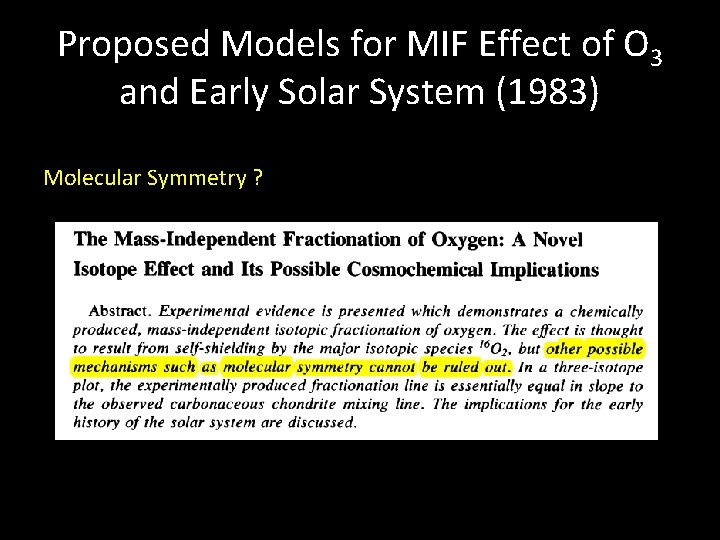
Proposed Models for MIF Effect of O 3 and Early Solar System (1983) Molecular Symmetry ?
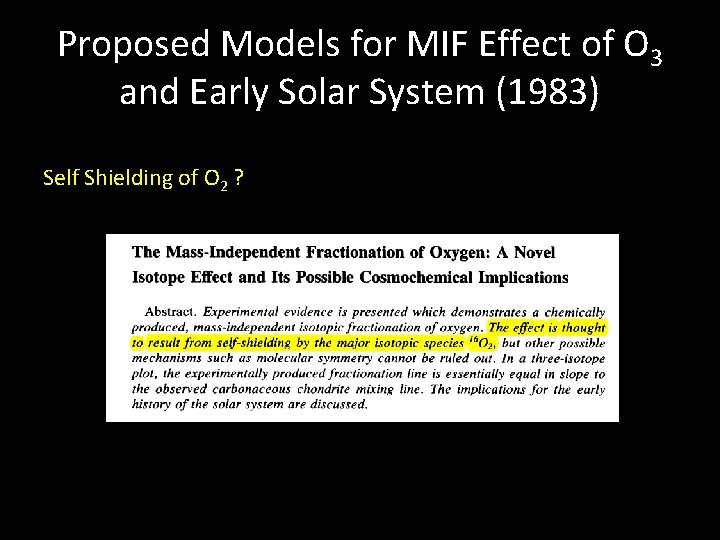
Proposed Models for MIF Effect of O 3 and Early Solar System (1983) Self Shielding of O 2 ?
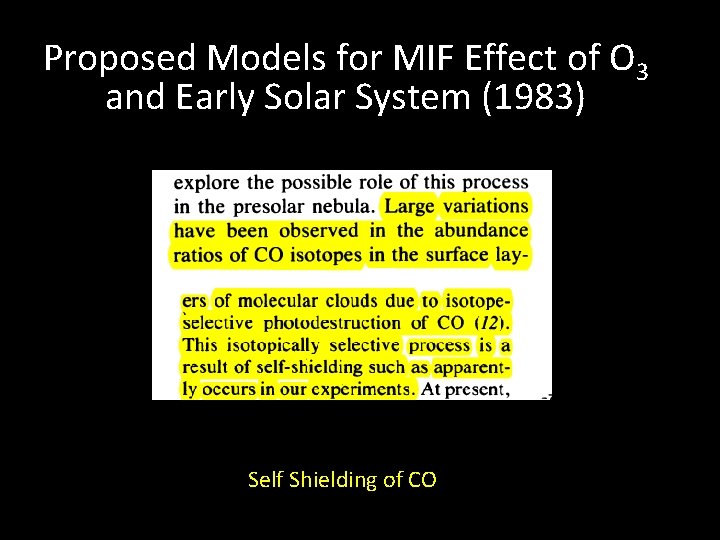
Proposed Models for MIF Effect of O 3 and Early Solar System (1983) Self Shielding of CO
First explanation summary Isotopic self shielding of O 2 to explain lab experiments Suggestion that effect may be relevant for solar system (CO self-shielding) O 2 as a producer of MIF in solar nebula kinetically ruled out by Navon and Wasserburg (1985)
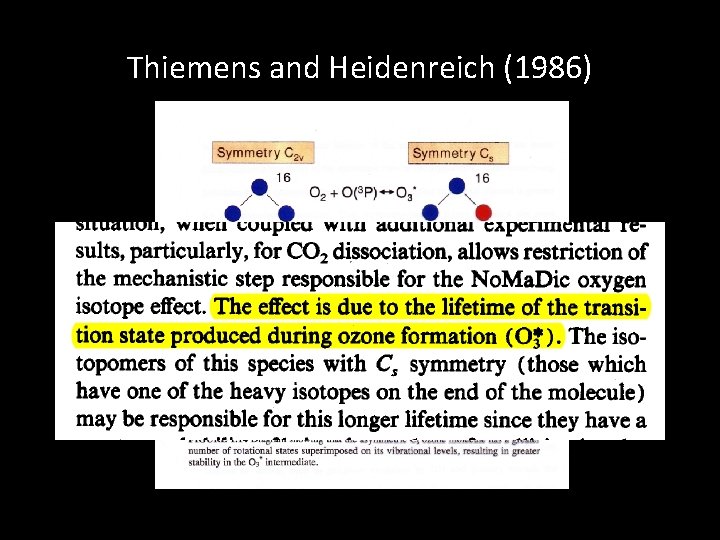
Thiemens and Heidenreich (1986)
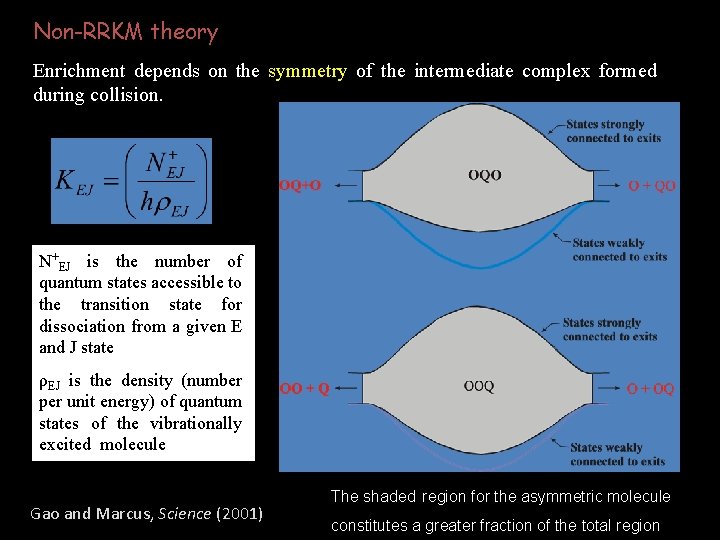
Non-RRKM theory Enrichment depends on the symmetry of the intermediate complex formed during collision. N+EJ is the number of quantum states accessible to the transition state for dissociation from a given E and J state ρEJ is the density (number per unit energy) of quantum states of the vibrationally excited molecule Gao and Marcus, Science (2001) The shaded region for the asymmetric molecule constitutes a greater fraction of the total region
Geochemical Applications
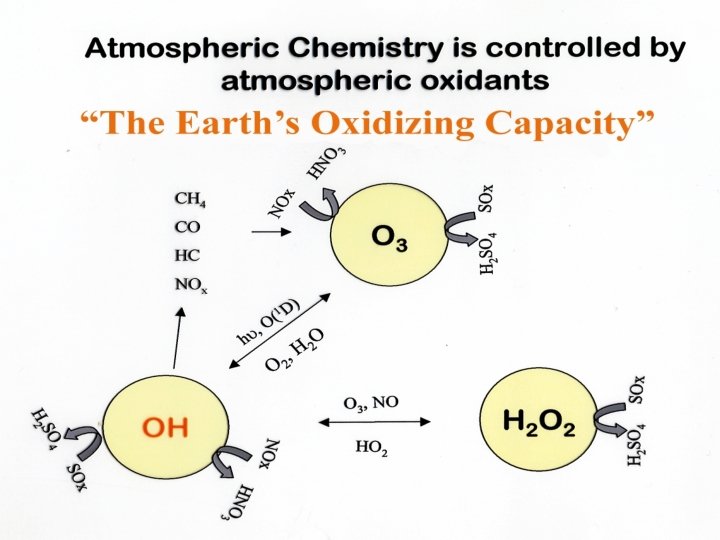
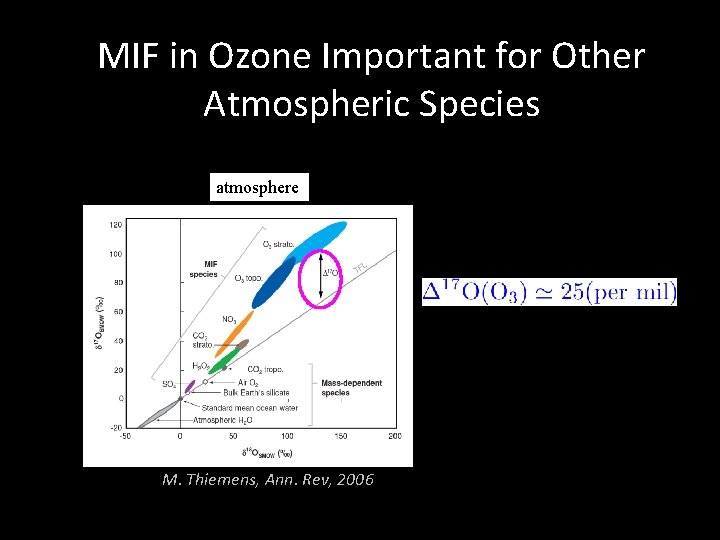
MIF in Ozone Important for Other Atmospheric Species atmosphere M. Thiemens, Ann. Rev, 2006
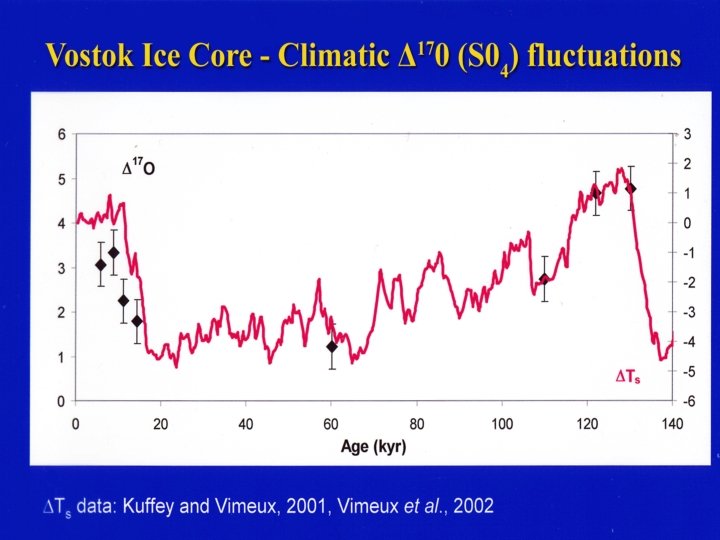
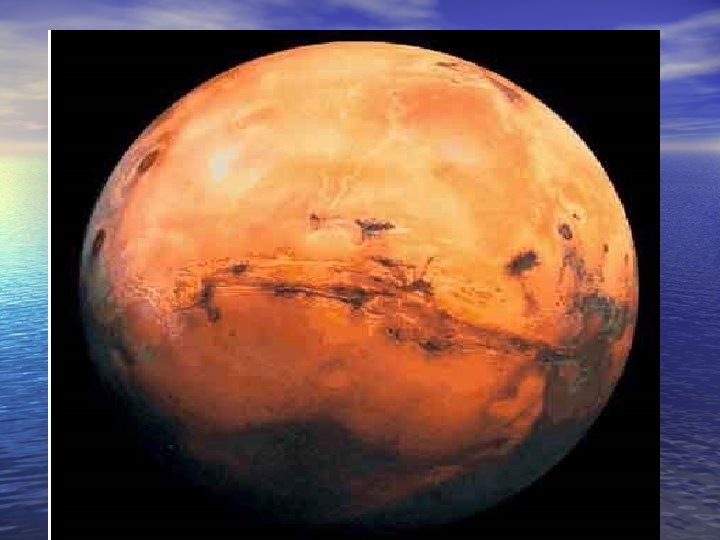
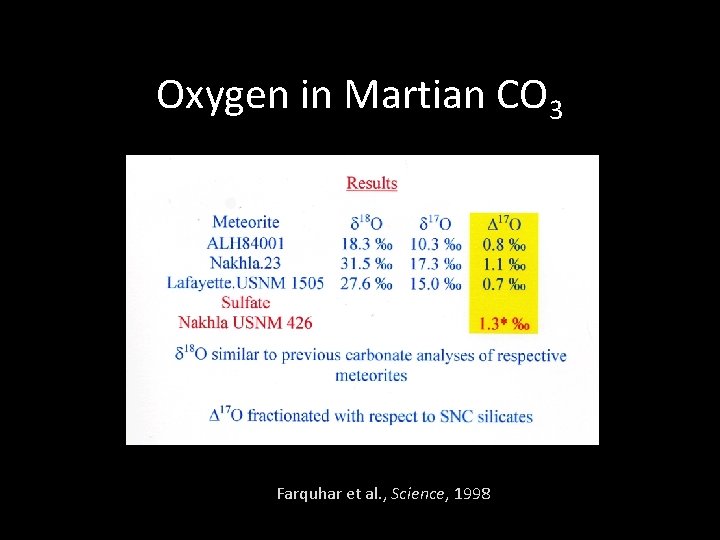
Oxygen in Martian CO 3 Farquhar et al. , Science, 1998
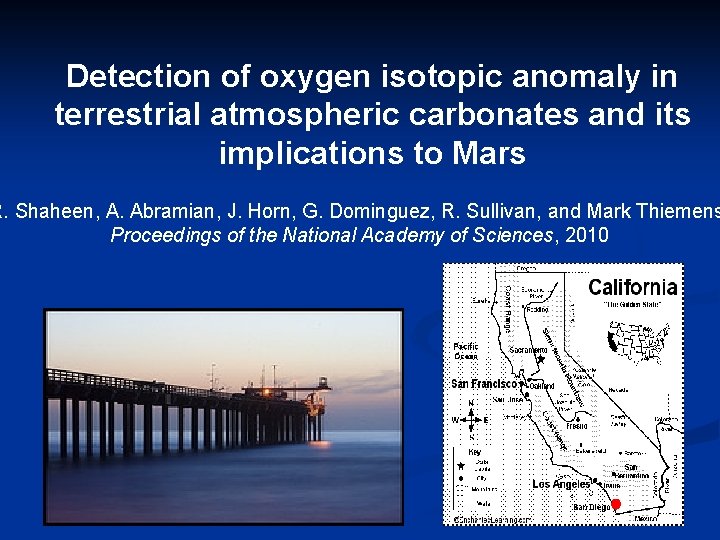
Detection of oxygen isotopic anomaly in terrestrial atmospheric carbonates and its implications to Mars R. Shaheen, A. Abramian, J. Horn, G. Dominguez, R. Sullivan, and Mark Thiemens Proceedings of the National Academy of Sciences, 2010
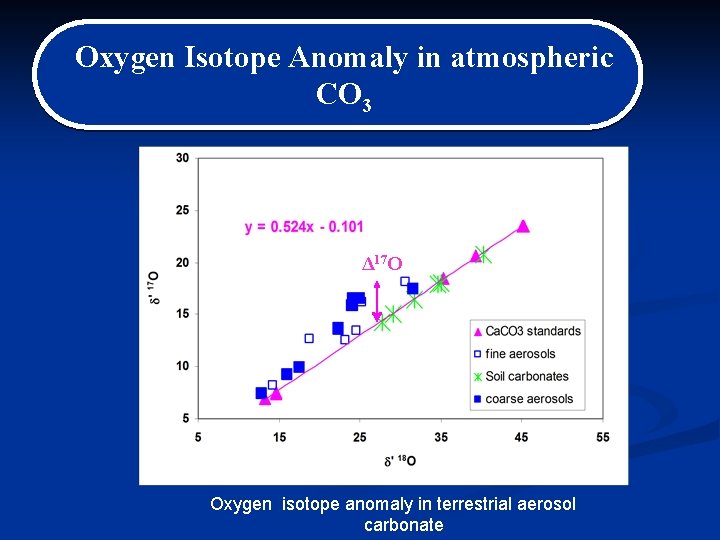
Oxygen Isotope Anomaly in atmospheric CO 3 17 O ΔD 17 O Oxygen isotope anomaly in terrestrial aerosol carbonate
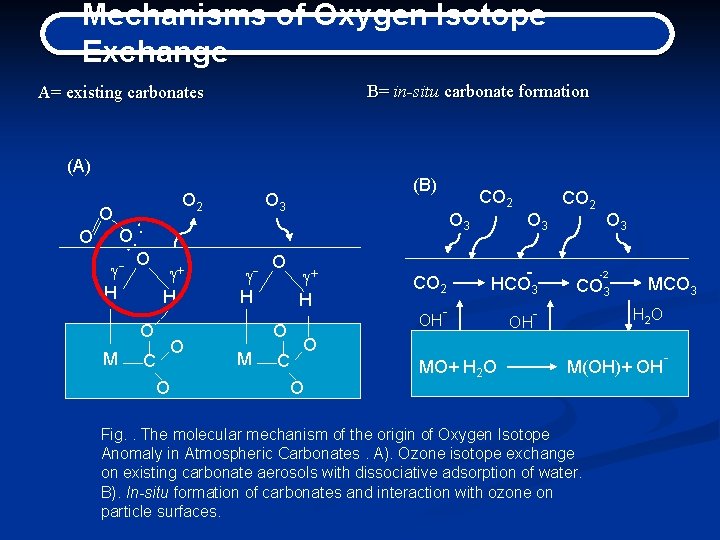
Mechanisms of Oxygen Isotope Exchange B= in-situ carbonate formation A= existing carbonates (A) O O O 2 O 3 O: : g. H O g+ H O M (B) C O O g. H O g+ H OH O M CO 2 C CO 2 O 3 HCO 3 - OH CO 2 O 3 -2 CO 3 - MCO 3 H 2 O O O MO+ H 2 O M(OH)+ OH Fig. . The molecular mechanism of the origin of Oxygen Isotope Anomaly in Atmospheric Carbonates. A). Ozone isotope exchange on existing carbonate aerosols with dissociative adsorption of water. B). In-situ formation of carbonates and interaction with ozone on particle surfaces. -
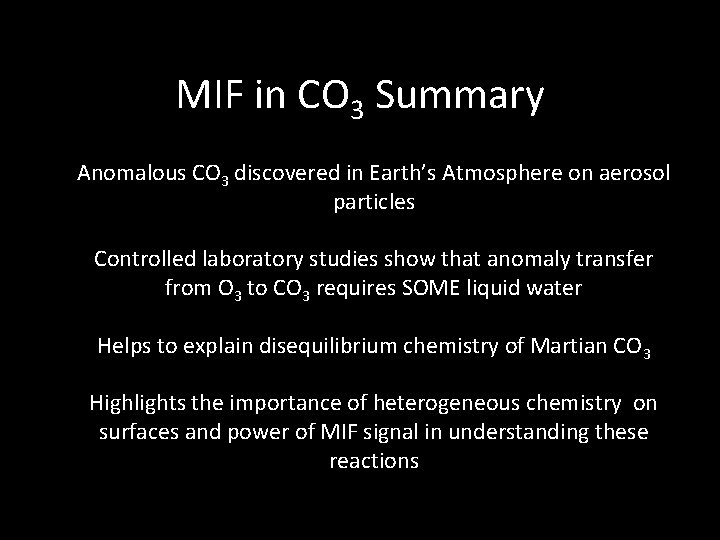
MIF in CO 3 Summary Anomalous CO 3 discovered in Earth’s Atmosphere on aerosol particles Controlled laboratory studies show that anomaly transfer from O 3 to CO 3 requires SOME liquid water Helps to explain disequilibrium chemistry of Martian CO 3 Highlights the importance of heterogeneous chemistry on surfaces and power of MIF signal in understanding these reactions
The Solar System Revisited
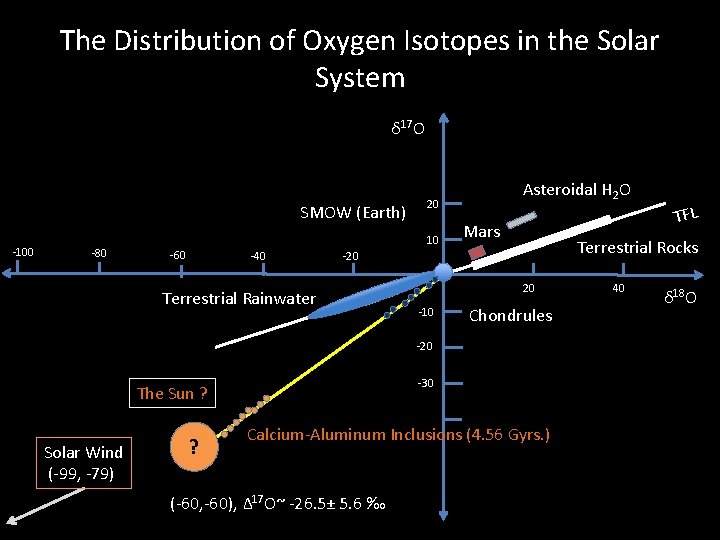
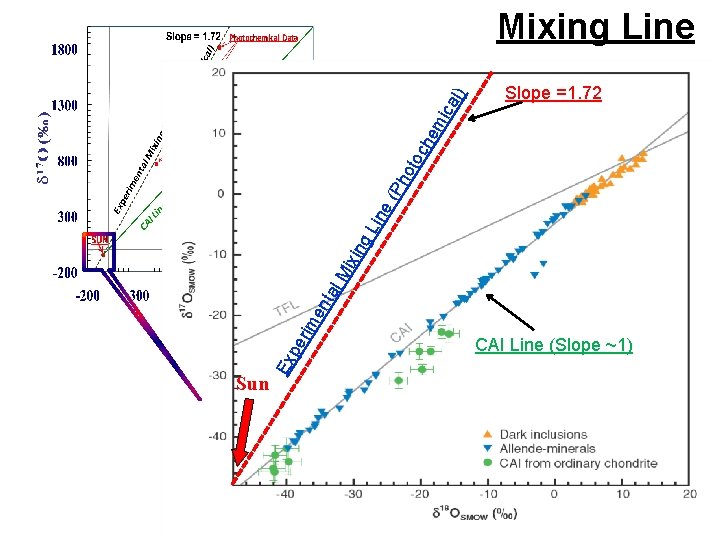
The Distribution of Oxygen Isotopes in the Solar System δ 17 O SMOW (Earth) -100 -80 20 10 -60 -40 Asteroidal H 2 O Mars Terrestrial Rocks -20 Terrestrial Rainwater 20 -10 Chondrules -20 -30 The Sun ? Solar Wind (-99, -79) ? Calcium-Aluminum Inclusions (4. 56 Gyrs. ) (-60, -60), Δ 17 O~ -26. 5± 5. 6 ‰ TFL 40 δ 18 O
![Selfshielded zone Photo-chemical origin: Self-shielding of CO 16 O] 17, 18 O]/[ [ hν](http://slidetodoc.com/presentation_image/0c9073cc3d251b806ca42fc556a358bf/image-29.jpg "Selfshielded zone Photo-chemical origin: Self-shielding of CO 16 O] 17, 18 O]/[ [ hν")
Selfshielded zone Photo-chemical origin: Self-shielding of CO 16 O] 17, 18 O]/[ [ hν CO (C 16 O + C 18 O + C 17 O) 91 – 111 nm 12 C 17 O 12 C 18 O 12 C 16 O Immediate consequence of self-shielding: δ 17 O/δ 18 O = 1 fractionation line
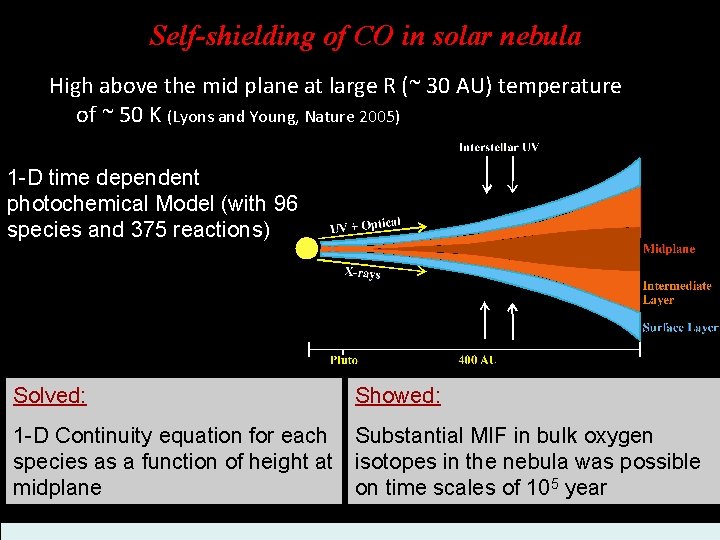
Self-shielding of CO in solar nebula High above the mid plane at large R (~ 30 AU) temperature of ~ 50 K (Lyons and Young, Nature 2005) 1 -D time dependent photochemical Model (with 96 species and 375 reactions) Solved: Showed: 1 -D Continuity equation for each Substantial MIF in bulk oxygen species as a function of height at isotopes in the nebula was possible midplane on time scales of 105 year
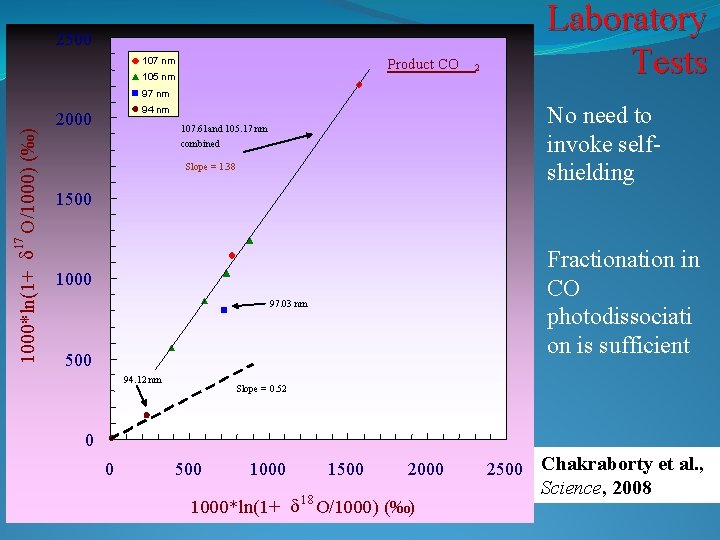
Laboratory Tests 2500 107 nm Product CO 105 nm 2 97 nm 107. 61 and 105. 17 nm combined Slope = 1. 38 1500 17 1000*ln(1+ d O/1000) (‰) No need to invoke selfshielding 94 nm 2000 Fractionation in CO photodissociati on is sufficient 1000 97. 03 nm 500 94. 12 nm Slope = 0. 52 0 0 500 1000 1500 2000 1000*ln(1+ d 18 O/1000) (‰) 2500 Chakraborty et al. , Science, 2008
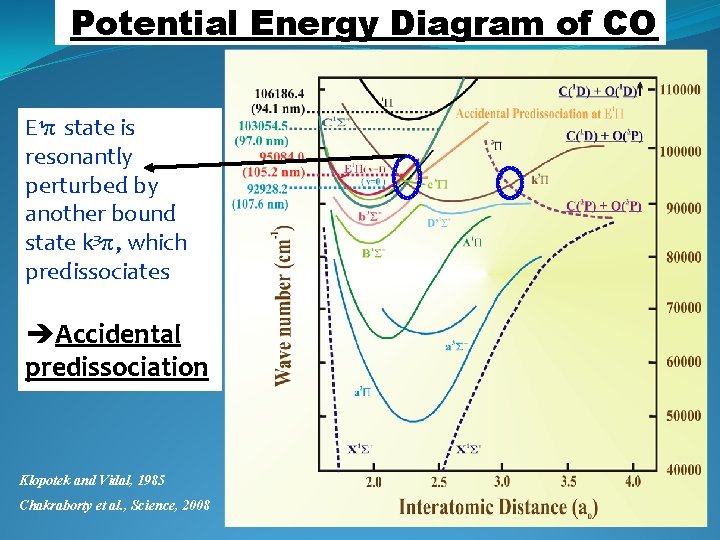
Potential Energy Diagram of CO E 1π state is resonantly perturbed by another bound state k 3π, which predissociates Accidental predissociation Klopotek and Vidal, 1985 Chakraborty et al. , Science, 2008
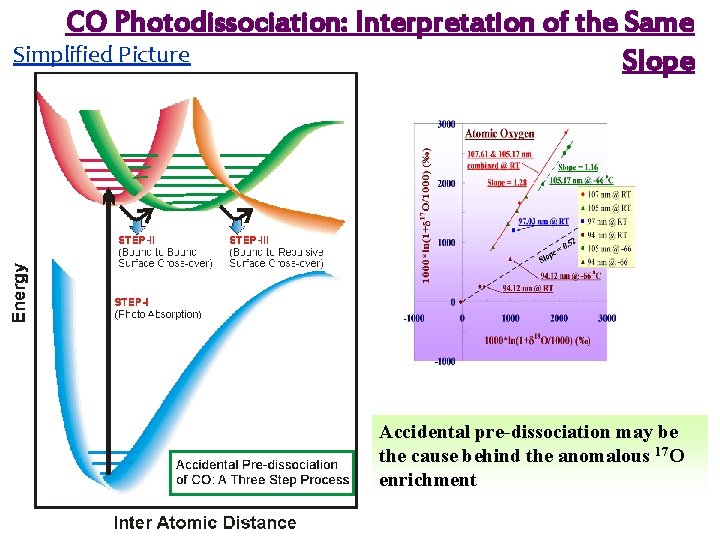
CO Photodissociation: Interpretation of the Same Simplified Picture Slope Accidental pre-dissociation may be the cause behind the anomalous 17 O enrichment
Slope =1. 72 Ex pe rim en tal Mi xi ng Lin e( Ph o toc he mi ca l) Mixing Line Sun CAI Line (Slope ~1)
Calculations associated with an isotope effect in photoabsorption from first principles of Quantum chemistry B. B. Muskatel, F. Remacle , R. D. Levine (Fritz Haber Institute, The Hebrew University Jerusalem, Israel M. Thiemens UCSD Proceedings of the National Academy of Sciences, 2011
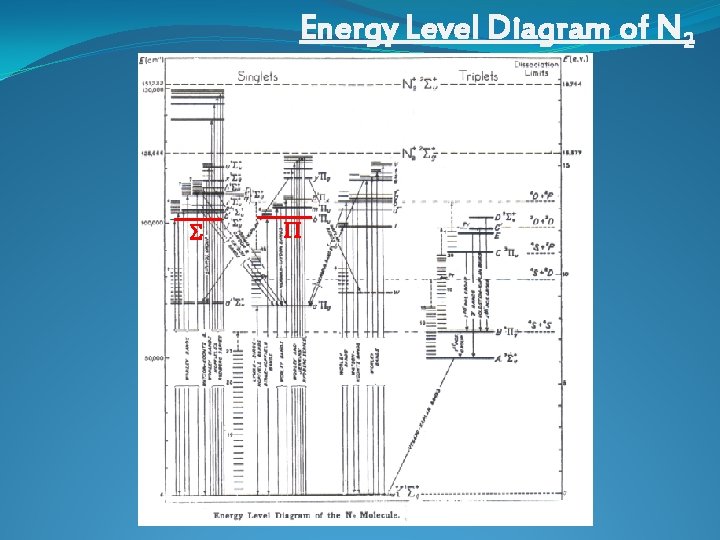
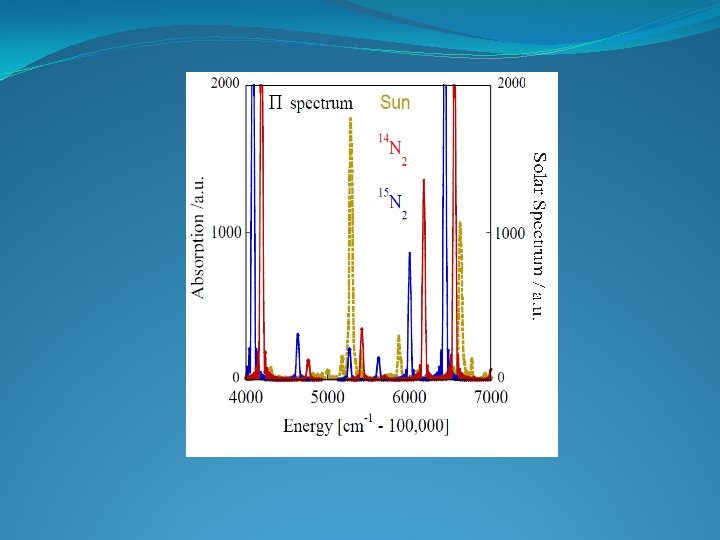
The Calculation Use N 2: isoelectronic with CO and all potential energy surfaces known in high detail Include all surfaces: Rydberg and valence states White light pulse for time evolutionary Schroedinger equation and therefore isotopes Both adiabatic and diabatic approach; significant at curve crossings and perturbational quantification Calculate effective coupling energy and isotope effect from that
Energy Level Diagram of N 2 S P
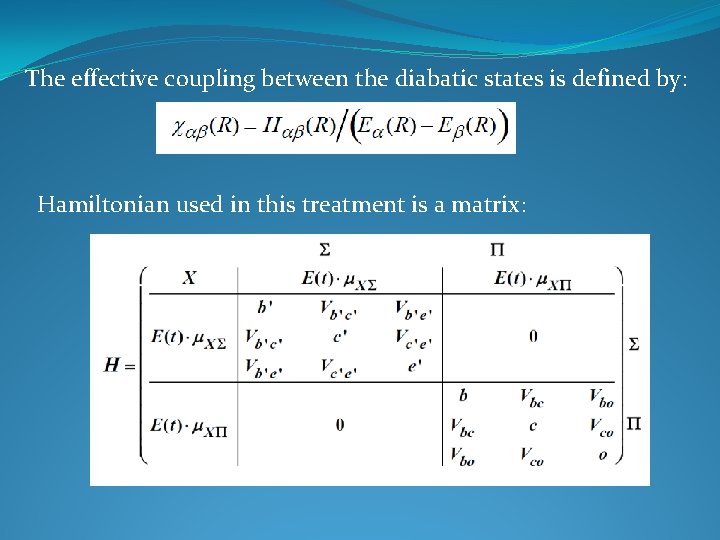
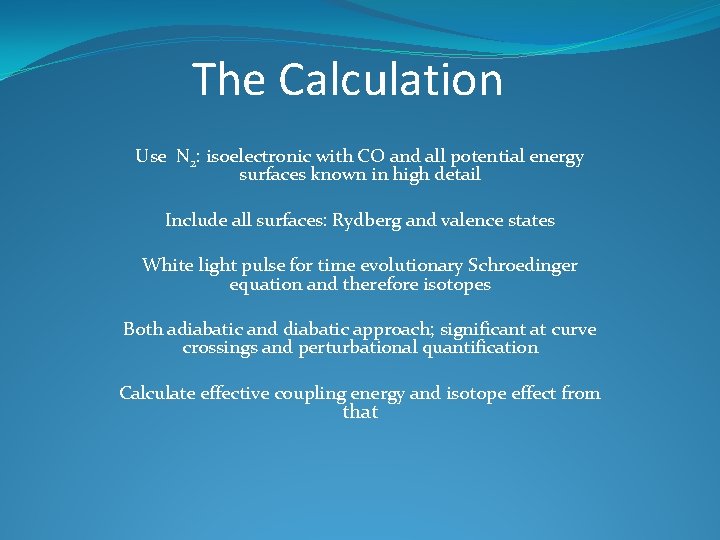
The effective coupling between the diabatic states is defined by: Hamiltonian used in this treatment is a matrix:
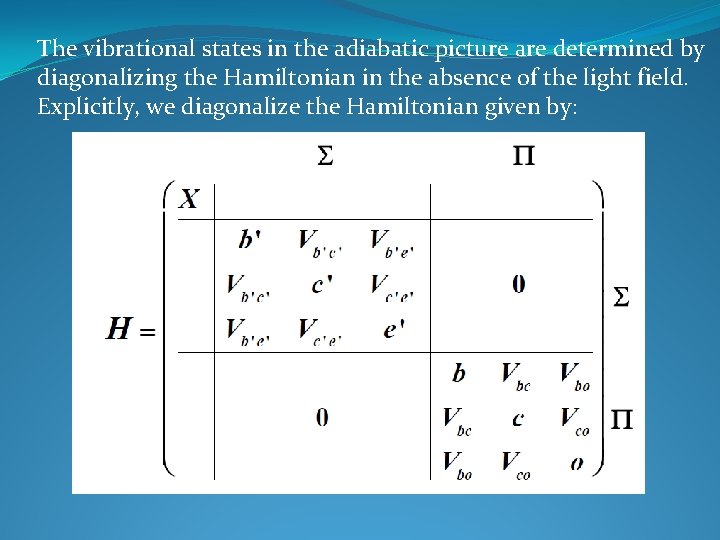
The vibrational states in the adiabatic picture are determined by diagonalizing the Hamiltonian in the absence of the light field. Explicitly, we diagonalize the Hamiltonian given by:
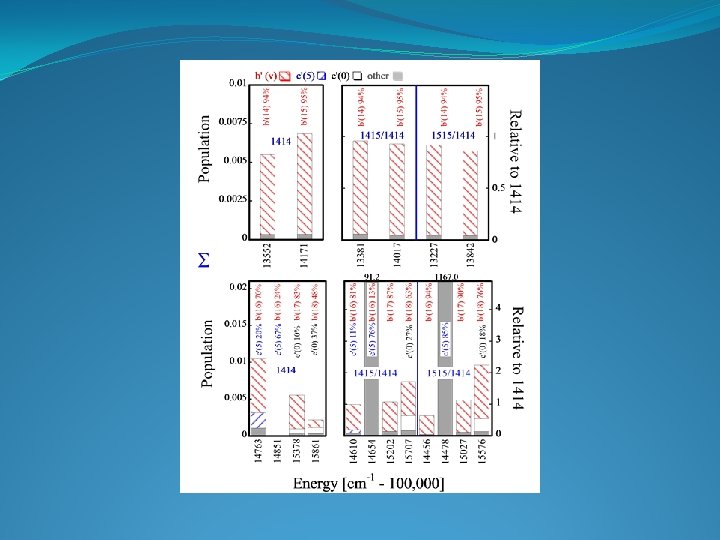
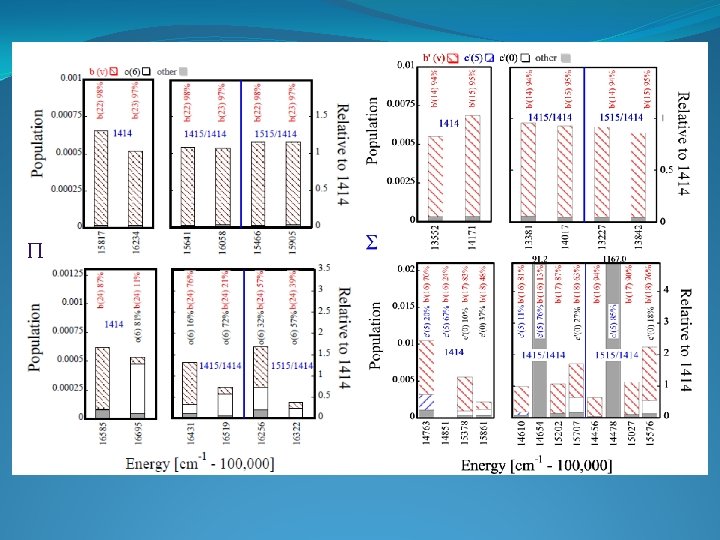
This is only for isotopic population from the application of white light BUT in nature it is a solar spectrum
Recent Work on Oxygen in the Solar System How? G. Dominguez, A Heterogeneous Chemical Origin for the 16 O-rich and 16 O-poor Reservoirs of the Early Solar System, The Astrophysical Journal Letters, 2010
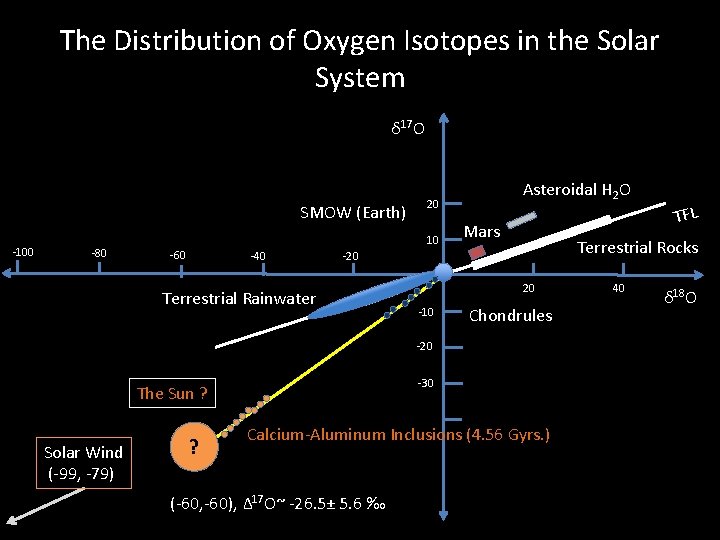
The Distribution of Oxygen Isotopes in the Solar System δ 17 O SMOW (Earth) -100 -80 20 10 -60 -40 Asteroidal H 2 O Mars Terrestrial Rocks -20 Terrestrial Rainwater 20 -10 Chondrules -20 -30 The Sun ? Solar Wind (-99, -79) ? Calcium-Aluminum Inclusions (4. 56 Gyrs. ) (-60, -60), Δ 17 O~ -26. 5± 5. 6 ‰ TFL 40 δ 18 O
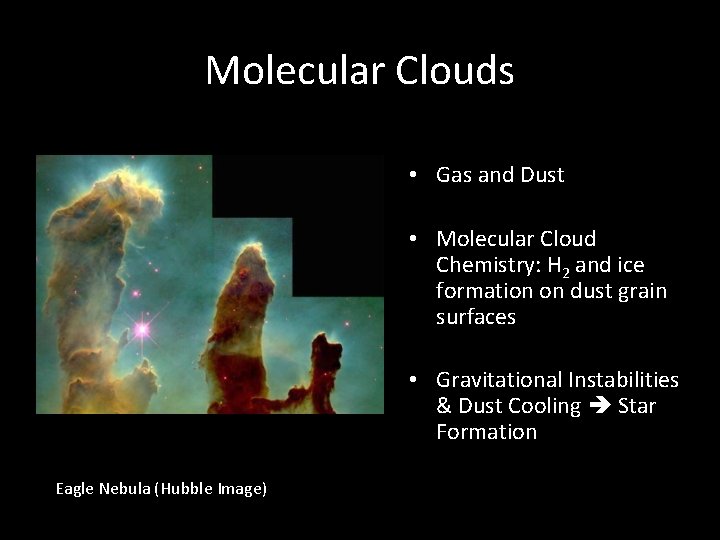
Molecular Clouds • Gas and Dust • Molecular Cloud Chemistry: H 2 and ice formation on dust grain surfaces • Gravitational Instabilities & Dust Cooling Star Formation Eagle Nebula (Hubble Image)
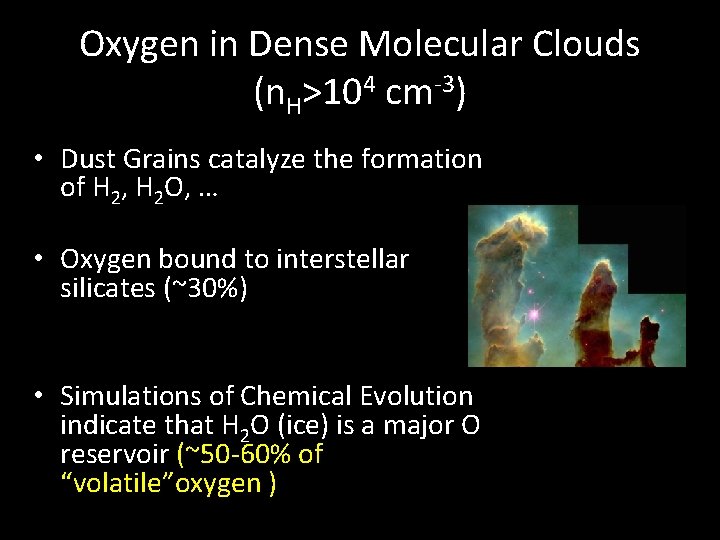
Oxygen in Dense Molecular Clouds (n. H>104 cm-3) • Dust Grains catalyze the formation of H 2, H 2 O, … • Oxygen bound to interstellar silicates (~30%) • Simulations of Chemical Evolution indicate that H 2 O (ice) is a major O reservoir (~50 -60% of “volatile”oxygen ) How?
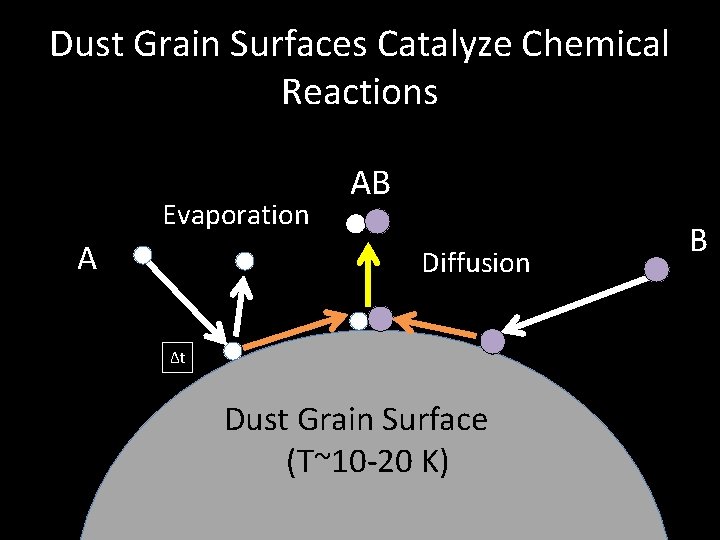
Dust Grain Surfaces Catalyze Chemical Reactions Evaporation A AB Diffusion Δt Dust Grain Surface (T~10 -20 K) B
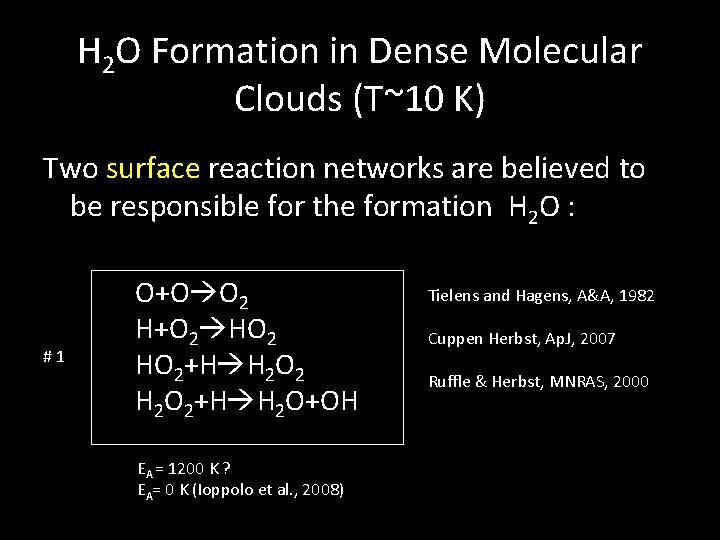
H 2 O Formation in Dense Molecular Clouds (T~10 K) Two surface reaction networks are believed to be responsible for the formation H 2 O : #1 O+O O 2 H+O 2 HO 2+H H 2 O+OH EA = 1200 K ? EA= 0 K (Ioppolo et al. , 2008) Tielens and Hagens, A&A, 1982 Cuppen Herbst, Ap. J, 2007 Ruffle & Herbst, MNRAS, 2000
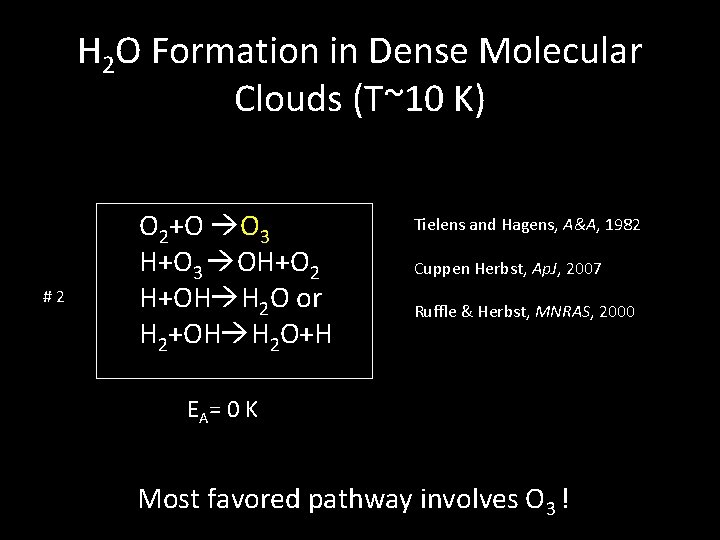
H 2 O Formation in Dense Molecular Clouds (T~10 K) #2 O 2+O O 3 H+O 3 OH+O 2 H+OH H 2 O or H 2+OH H 2 O+H Tielens and Hagens, A&A, 1982 Cuppen Herbst, Ap. J, 2007 Ruffle & Herbst, MNRAS, 2000 EA = 0 K Most favored pathway involves O 3 !
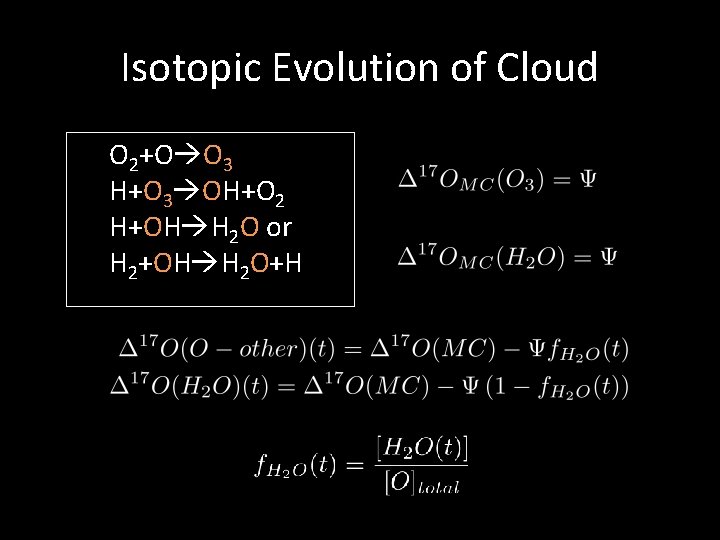
Isotopic Evolution of Cloud O 2+O O 3 H+O 3 OH+O 2 H+OH H 2 O or H 2+OH H 2 O+H
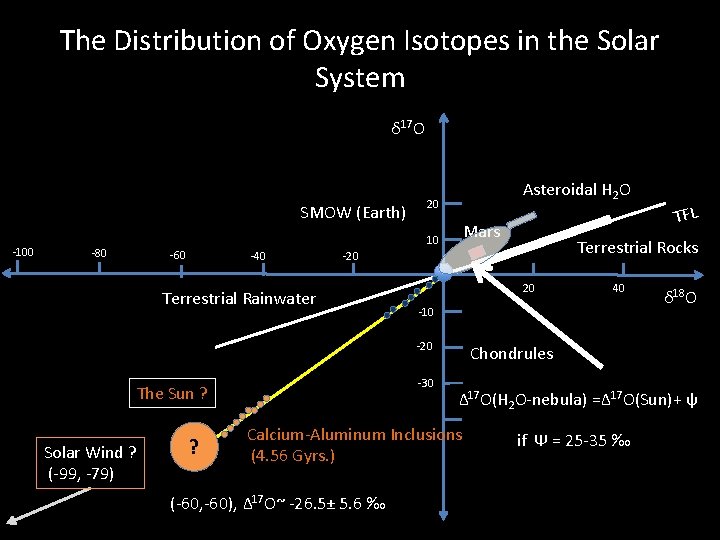
The Distribution of Oxygen Isotopes in the Solar System δ 17 O SMOW (Earth) -100 -80 Asteroidal H 2 O 20 Mars 10 -60 -40 20 -30 The Sun ? ? δ 18 O Chondrules Δ 17 O(H 2 O-nebula) =Δ 17 O(Sun)+ ψ Calcium-Aluminum Inclusions (4. 56 Gyrs. ) (-60, -60), Δ 17 O~ -26. 5± 5. 6 ‰ 40 -10 -20 Solar Wind ? (-99, -79) Terrestrial Rocks -20 Terrestrial Rainwater TFL if Ψ = 25 -35 ‰
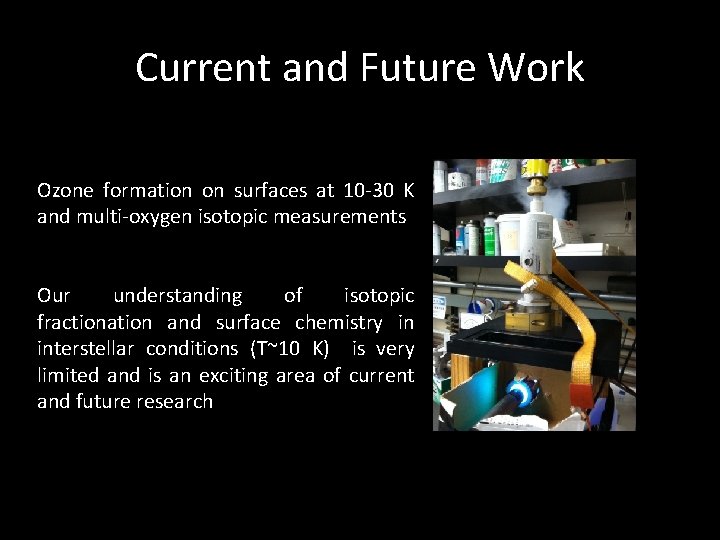
Current and Future Work Ozone formation on surfaces at 10 -30 K and multi-oxygen isotopic measurements Our understanding of isotopic fractionation and surface chemistry in interstellar conditions (T~10 K) is very limited and is an exciting area of current and future research
Geology
Concluding Remarks Physical Chemistry Geochemical Observations Physical Chemistry Isotopic fractionation associated with kinetic processes such as Ozone formation are greatly affected by details of the Transition State Short meta-stable Transition States can lead to non-equilibrium population of Quantum states MIF
Application of Transition State Theory to Understand Isotopic Fractionation in a Complex Geochemical System: Isotopic Fractionation in a Thermal Gradient G. Dominguez, G. Wilkins, and M. Thiemens On the Soret Effect and Isotopic Fractionation in High Temperature Silicate Melts Nature, 2011
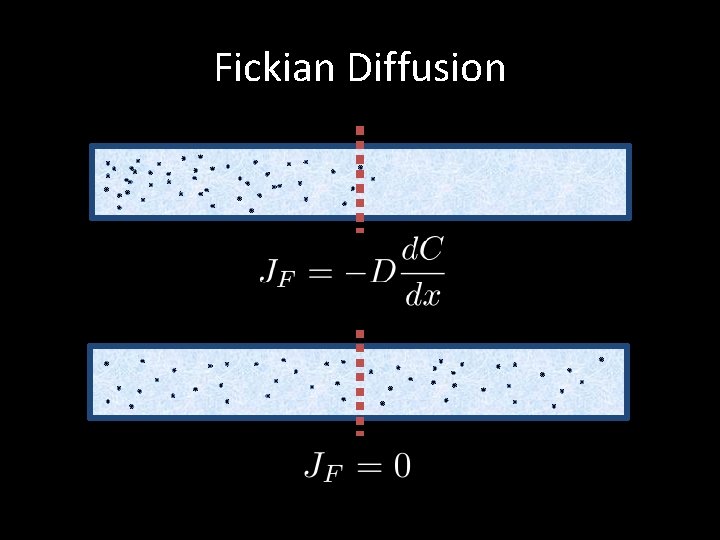
Fickian Diffusion
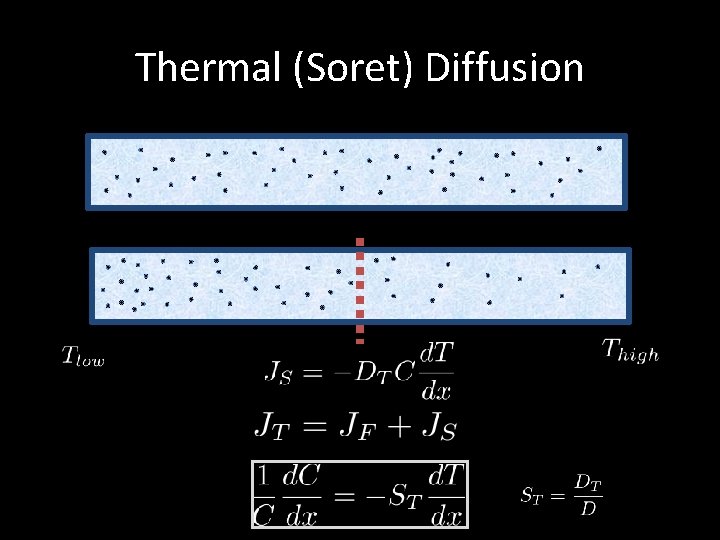
Thermal (Soret) Diffusion
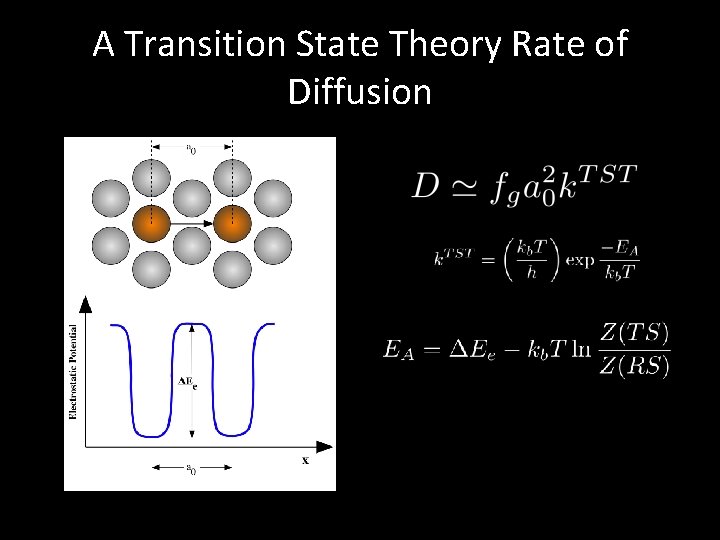
A Transition State Theory Rate of Diffusion
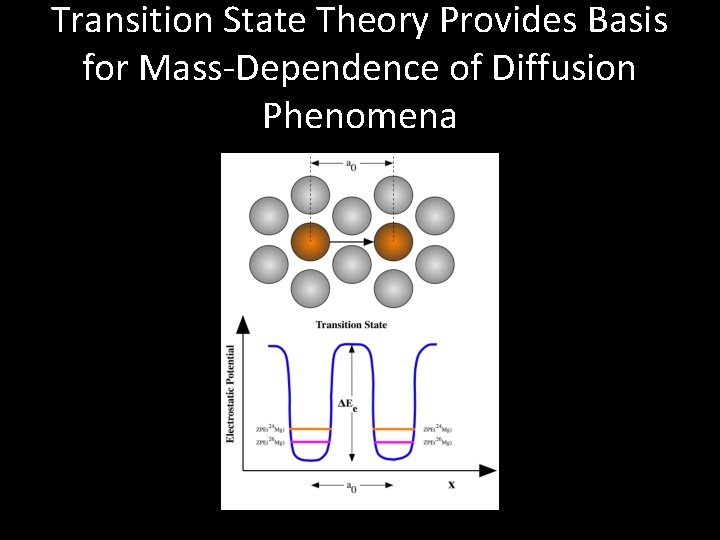
Transition State Theory Provides Basis for Mass-Dependence of Diffusion Phenomena
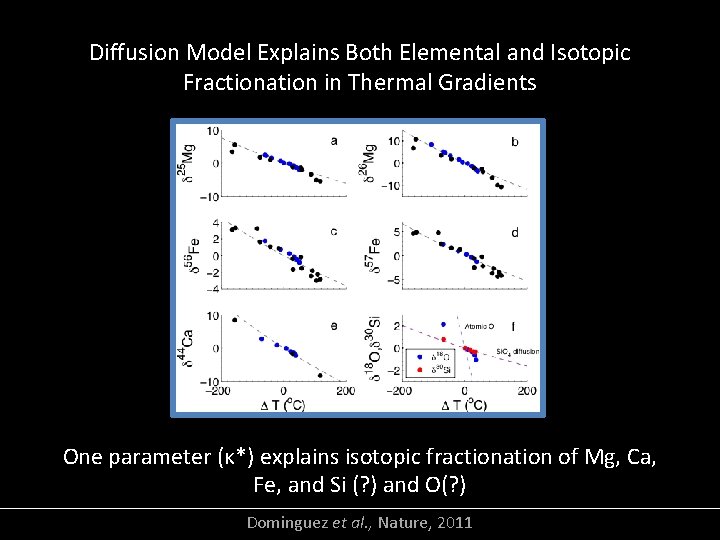
Diffusion Model Explains Both Elemental and Isotopic Fractionation in Thermal Gradients One parameter (κ*) explains isotopic fractionation of Mg, Ca, Fe, and Si (? ) and O(? ) Dominguez et al. , Nature, 2011
- Slides: 61