
Intercontinental Critical Care Centre of Excellence Steering Committee



- Slides: 23
Intercontinental Critical Care Centre of Excellence Steering Committee Meeting Jan. 30 to Feb. 1 / 2002 Palm Springs
The view from down under Dr. Yahya Shehabi FFIC. ANZCA Director Intensive Care Services Prince of Wales Campus UNSW Medical school Randwick - Sydney yshehabi@ozemail. com. au shehabiy@sesahs. nsw. gov. au
Undergraduate medical education and training • Responsibility of the Universities – Undergraduate teaching and certification. – Discipline of Critical Care • Anaesthesia • Emergency medicine • Intensive care – Curriculum prepared by clinicians • Clinical exposure and rotations
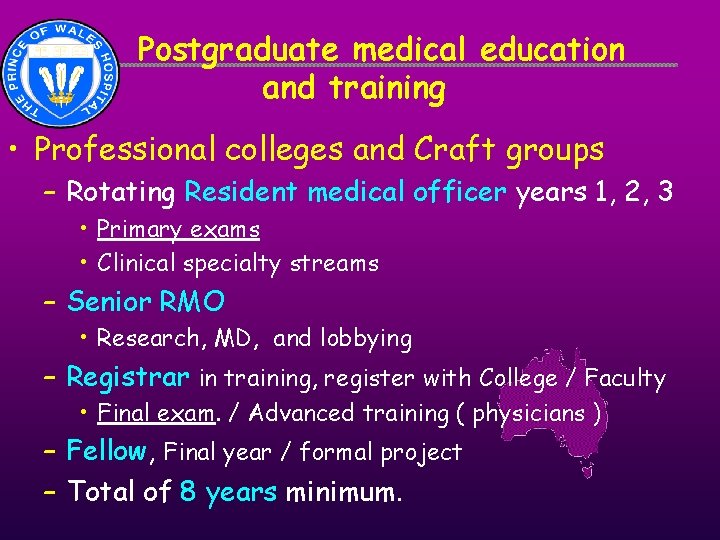
Postgraduate medical education and training • Professional colleges and Craft groups – Rotating Resident medical officer years 1, 2, 3 • Primary exams • Clinical specialty streams – Senior RMO • Research, MD, and lobbying – Registrar in training, register with College / Faculty • Final exam. / Advanced training ( physicians ) – Fellow, Final year / formal project – Total of 8 years minimum.
Postgraduate Medical education and training • Professional colleges and Craft groups – Supervised hospital based training and education. – Dedicated Supervisor of training. – Courses towards primary & final exams. – Clinical refresher and review courses – Structured exams, written and clinical
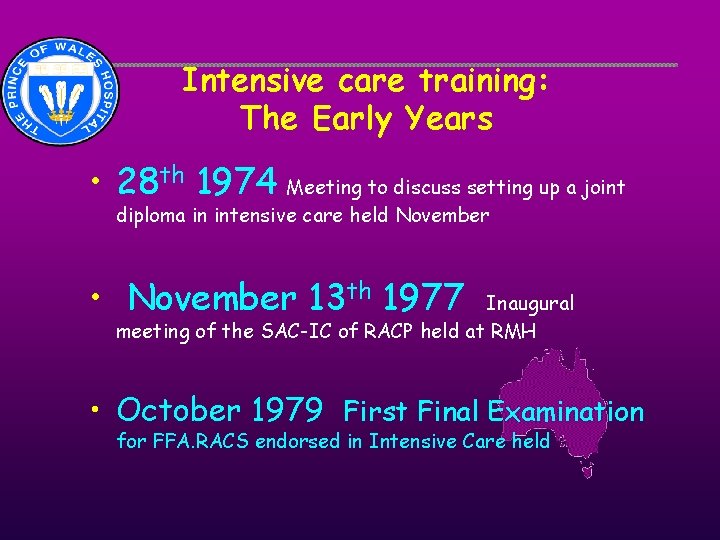
Intensive care training: The Early Years • 28 th 1974 Meeting to discuss setting up a joint diploma in intensive care held November • November 13 th 1977 Inaugural meeting of the SAC-IC of RACP held at RMH • October 1979 First Final Examination for FFA. RACS endorsed in Intensive Care held
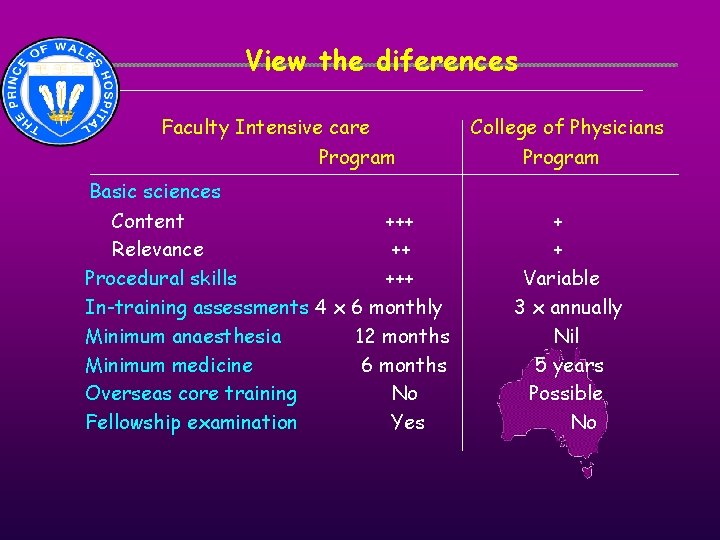
View the diferences Faculty Intensive care Program Basic sciences Content +++ Relevance ++ Procedural skills +++ In-training assessments 4 x 6 monthly Minimum anaesthesia 12 months Minimum medicine 6 months Overseas core training No Fellowship examination Yes College of Physicians Program + + Variable 3 x annually Nil 5 years Possible No
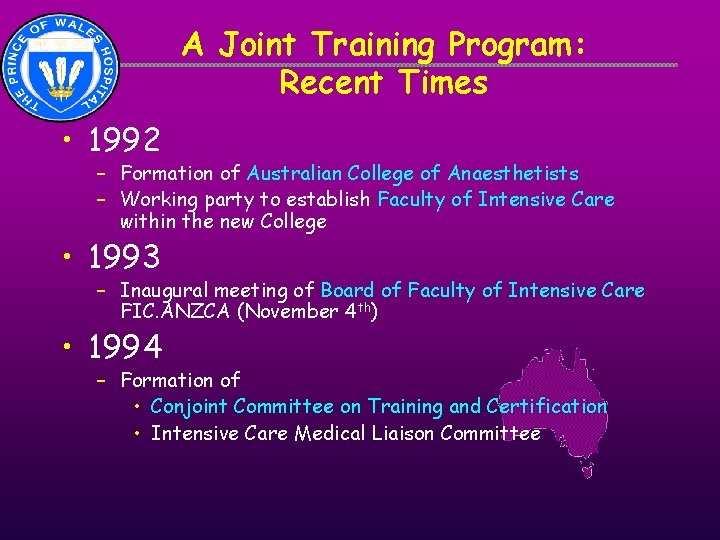
A Joint Training Program: Recent Times • 1992 – Formation of Australian College of Anaesthetists – Working party to establish Faculty of Intensive Care within the new College • 1993 – Inaugural meeting of Board of Faculty of Intensive Care FIC. ANZCA (November 4 th) • 1994 – Formation of • Conjoint Committee on Training and Certification • Intensive Care Medical Liaison Committee
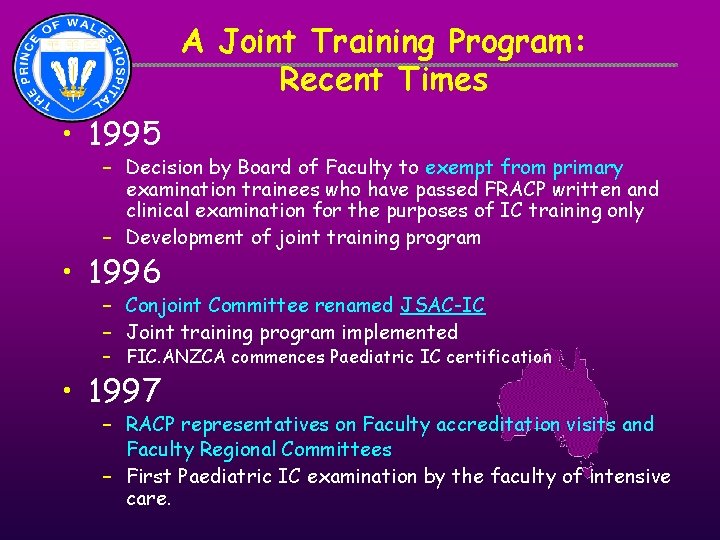
A Joint Training Program: Recent Times • 1995 – Decision by Board of Faculty to exempt from primary examination trainees who have passed FRACP written and clinical examination for the purposes of IC training only – Development of joint training program • 1996 – Conjoint Committee renamed JSAC-IC – Joint training program implemented – FIC. ANZCA commences Paediatric IC certification • 1997 – RACP representatives on Faculty accreditation visits and Faculty Regional Committees – First Paediatric IC examination by the faculty of intensive care.
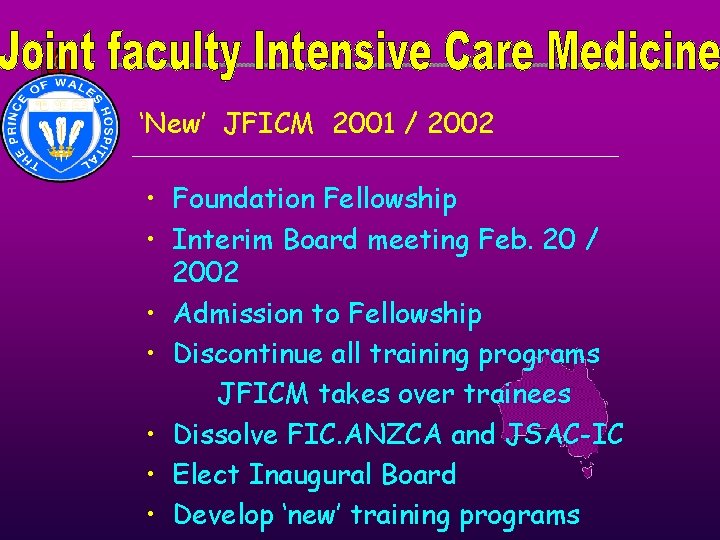
‘New’ JFICM 2001 / 2002 • Foundation Fellowship • Interim Board meeting Feb. 20 / 2002 • Admission to Fellowship • Discontinue all training programs JFICM takes over trainees • Dissolve FIC. ANZCA and JSAC-IC • Elect Inaugural Board • Develop ‘new’ training programs
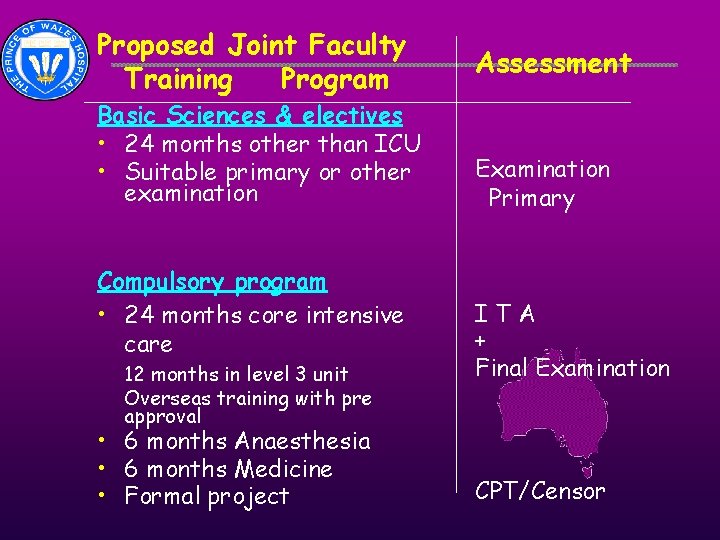
Proposed Joint Faculty Training Program Basic Sciences & electives • 24 months other than ICU • Suitable primary or other examination Compulsory program • 24 months core intensive care 12 months in level 3 unit Overseas training with pre approval • 6 months Anaesthesia • 6 months Medicine • Formal project Assessment Examination Primary ITA + Final Examination CPT/Censor
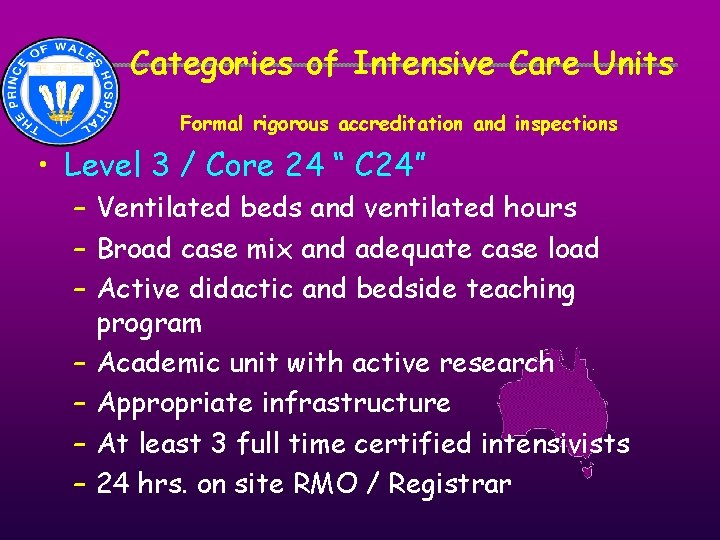
Categories of Intensive Care Units • Formal rigorous accreditation and inspections • Level 3 / Core 24 “ C 24” – Ventilated beds and ventilated hours – Broad case mix and adequate case load – Active didactic and bedside teaching program – Academic unit with active research – Appropriate infrastructure – At least 3 full time certified intensivists – 24 hrs. on site RMO / Registrar
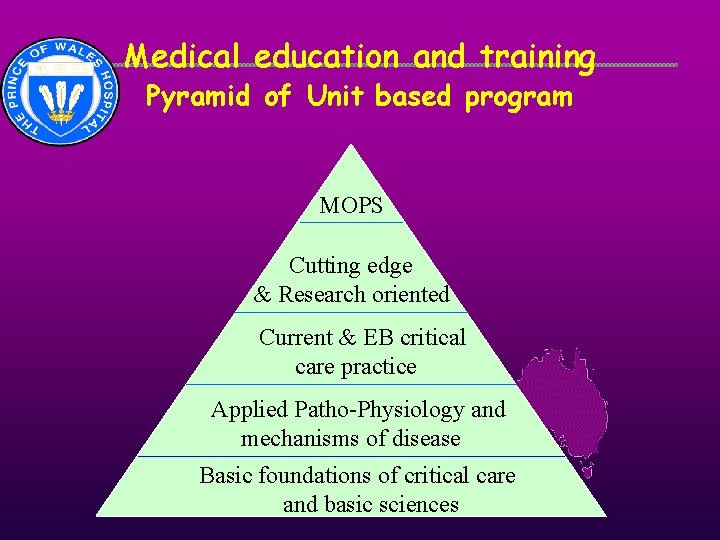
Medical education and training Pyramid of Unit based program MOPS Cutting edge & Research oriented Current & EB critical care practice Applied Patho-Physiology and mechanisms of disease Basic foundations of critical care and basic sciences
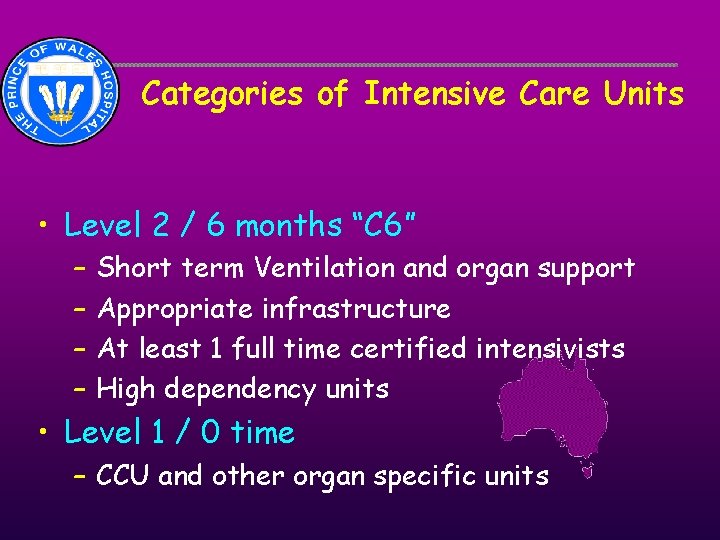
Categories of Intensive Care Units • Level 2 / 6 months “C 6” – – Short term Ventilation and organ support Appropriate infrastructure At least 1 full time certified intensivists High dependency units • Level 1 / 0 time – CCU and other organ specific units
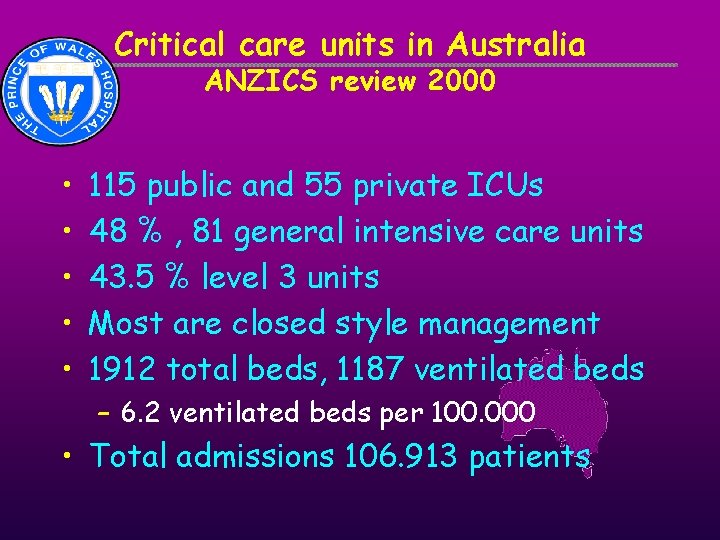
Critical care units in Australia ANZICS review 2000 • • • 115 public and 55 private ICUs 48 % , 81 general intensive care units 43. 5 % level 3 units Most are closed style management 1912 total beds, 1187 ventilated beds – 6. 2 ventilated beds per 100. 000 • Total admissions 106. 913 patients
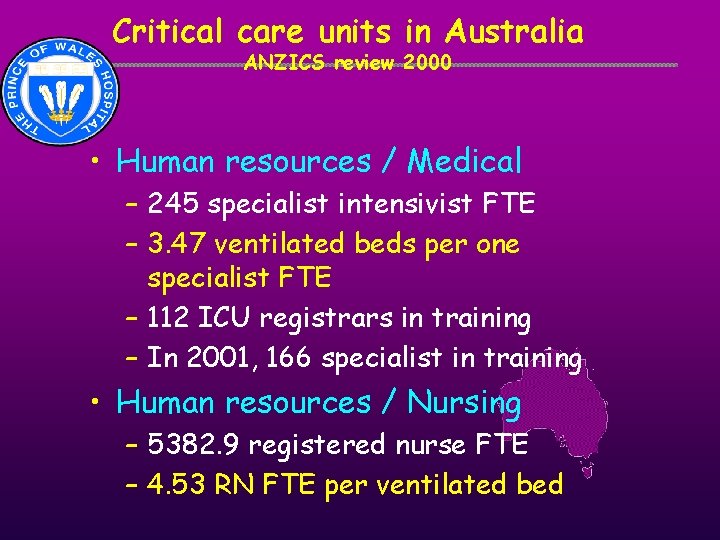
Critical care units in Australia ANZICS review 2000 • Human resources / Medical – 245 specialist intensivist FTE – 3. 47 ventilated beds per one specialist FTE – 112 ICU registrars in training – In 2001, 166 specialist in training • Human resources / Nursing – 5382. 9 registered nurse FTE – 4. 53 RN FTE per ventilated bed
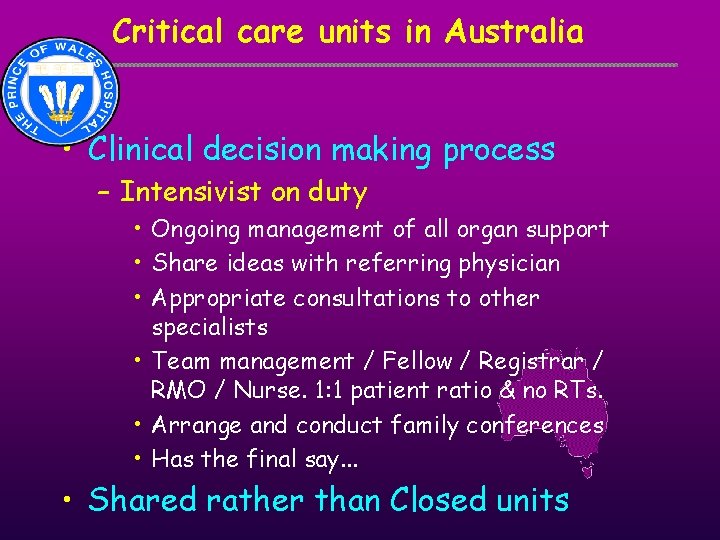
Critical care units in Australia • Clinical decision making process – Intensivist on duty • Ongoing management of all organ support • Share ideas with referring physician • Appropriate consultations to other specialists • Team management / Fellow / Registrar / RMO / Nurse. 1: 1 patient ratio & no RTs. • Arrange and conduct family conferences • Has the final say. . . • Shared rather than Closed units
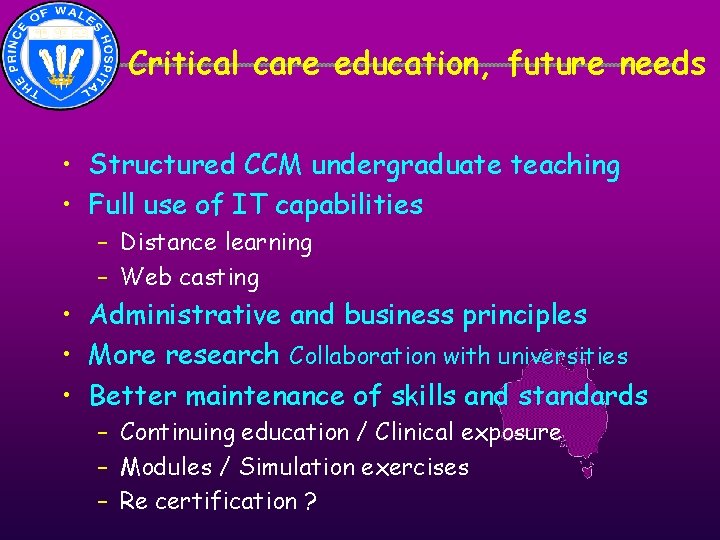
Critical care education, future needs • Structured CCM undergraduate teaching • Full use of IT capabilities – Distance learning – Web casting • Administrative and business principles • More research Collaboration with universities • Better maintenance of skills and standards – Continuing education / Clinical exposure – Modules / Simulation exercises – Re certification ?
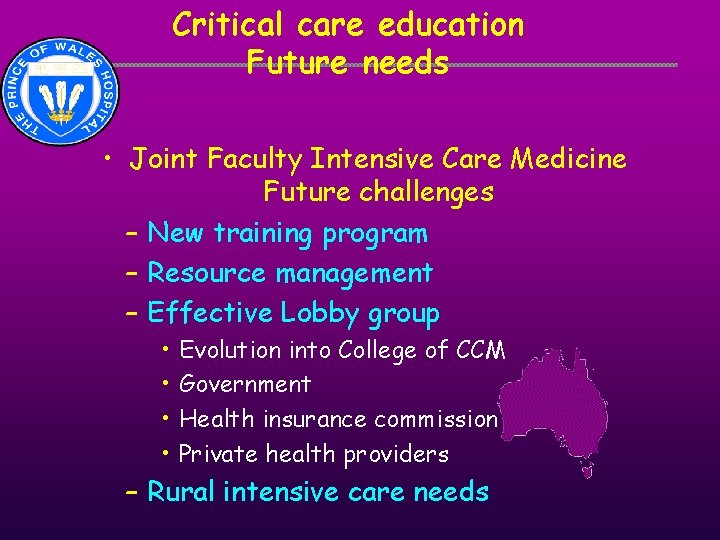
Critical care education Future needs • Joint Faculty Intensive Care Medicine Future challenges – New training program – Resource management – Effective Lobby group • • Evolution into College of CCM Government Health insurance commission Private health providers – Rural intensive care needs