
Interconnectedness and Indigenous Ways of Knowing Nature Science
- Slides: 15
Interconnectedness and Indigenous Ways of Knowing Nature Science 9: Ecology Chapter 4. 1 BC Science 9: Connections
Skeletons in the closet � http: //apihtawikosisan. com/2012/04/canadas-closets-packed-with-skeletons/
500 Years of History in 2 minutes � CBC’s 8 th fire: http: //www. cbc. ca/firsthand/blog/8 th-fire-wabs-walk-throughhistory
Examples of Indigenous Knowledge as sources of Information in Scientific Study � The Iroquois told Europeans that squirrels tapped maple trees and no one believed them until they caught it on video. � Oral history from various First Nations tribes in the Pacific Northwest contained stories about a massive earthquake/tsunami hitting the coast, but no one listened to them until scientists discovered physical evidence of quakes from the Cascadia fault line. � Inuit communities in Nunavut KNEW where both the wrecks of the HMS Erebus and HMS Terror were literally the entire time but Europeans/white people didn’t even bother consulting them about either ship until very recently.
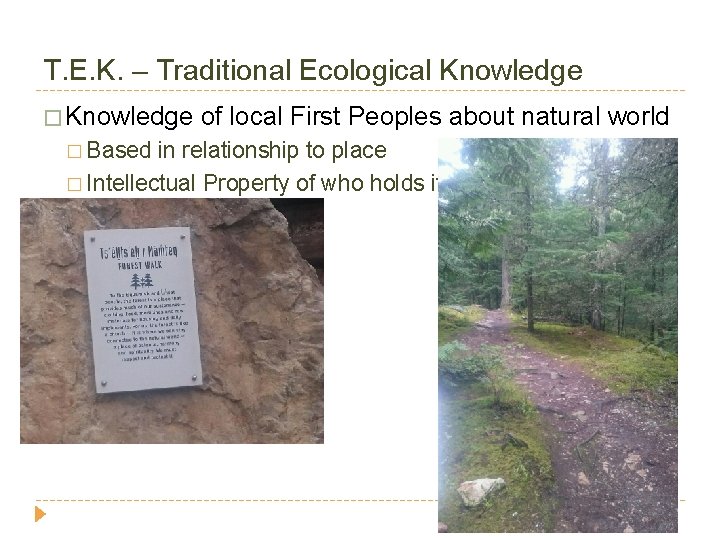
T. E. K. – Traditional Ecological Knowledge � Knowledge of local First Peoples about natural world � Based in relationship to place � Intellectual Property of who holds it
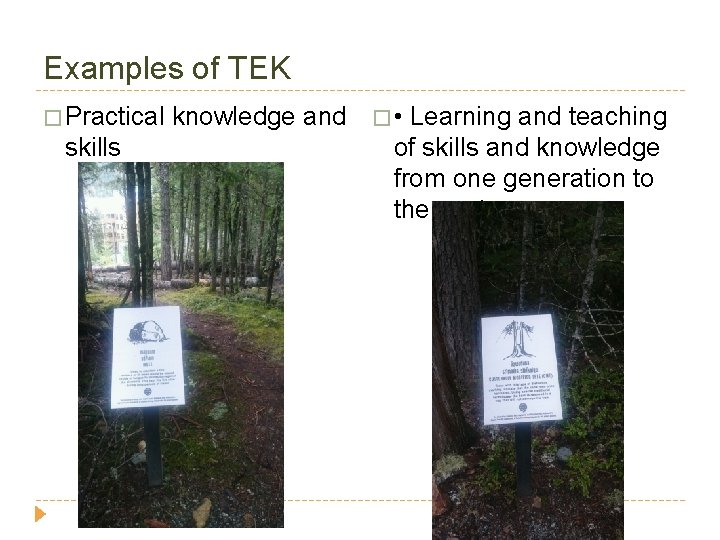
Examples of TEK � Practical knowledge and � • Learning and teaching skills of skills and knowledge from one generation to the next
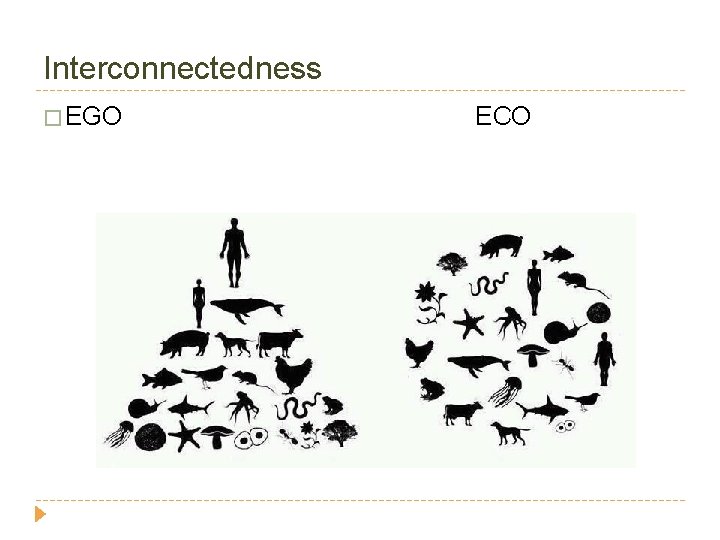
Interconnectedness � EGO ECO
Interconnectedness � Both avalanche lily and balsamroot, as well as other food resources, depended upon the harvesting, processing, and preparation of a number of other resources. These included the woods used for making the digging sticks; the birch bark, red-cedar root, and cherry bark for the baskets needed to transport the roots; the maple bark used to string the bulbs or roots for weaving storage bags; and the fuel and vegetation used for cooking and flavoring them (Nancy Turner)
Reflection: � What examples of interconnectedness can you identify in the previous passage? � How does this approach to the extraction and use of natural resources support the idea of sustainability? How does this idea differ from Western societies views on resource use and extraction?
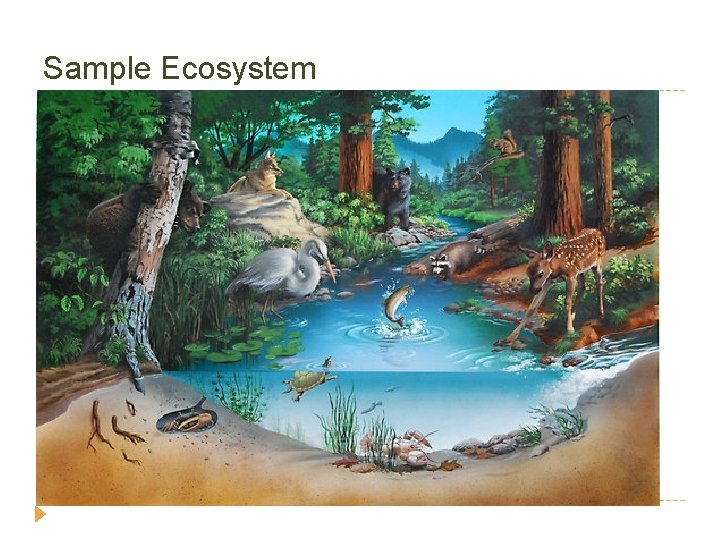
Sample Ecosystem
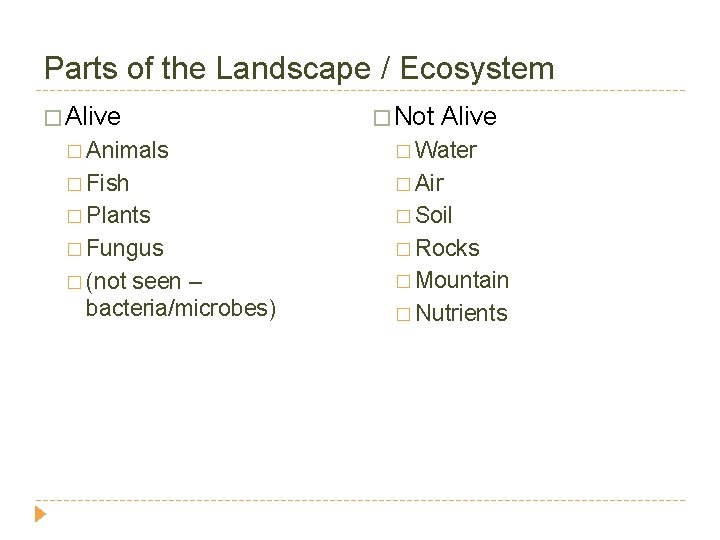
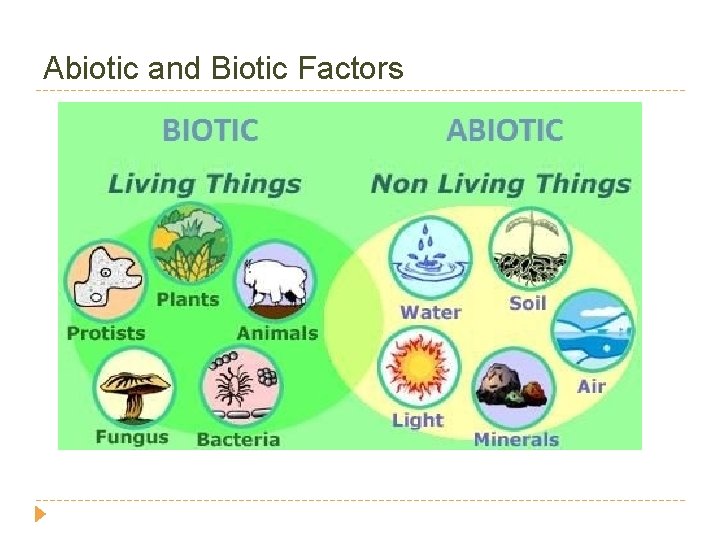
Parts of the Landscape / Ecosystem � Alive � Not Alive � Animals � Water � Fish � Air � Plants � Soil � Fungus � Rocks � (not seen – � Mountain bacteria/microbes) � Nutrients
Abiotic and Biotic Factors
Reflection � How do the biotic components in the illustration interact with the abiotic components? � How are First People’s and Western science ideas of interconnectedness different and similar?
Final Activity � On a piece of loose leaf paper: � In your own words describe what interconnectedness means and how it relates to Indigenous worldview and nature � Give an example of interconnectedness within an ecosystem that you are familiar with. Include biotic and abiotic factors � Hand this in as your “Ticket out the Door”