
Intercept X Early Access Program July 2017 Karl

- Slides: 15
Intercept X Early Access Program July 2017 Karl Ackerman Principal Product Manager – Endpoint Security Group July 2017
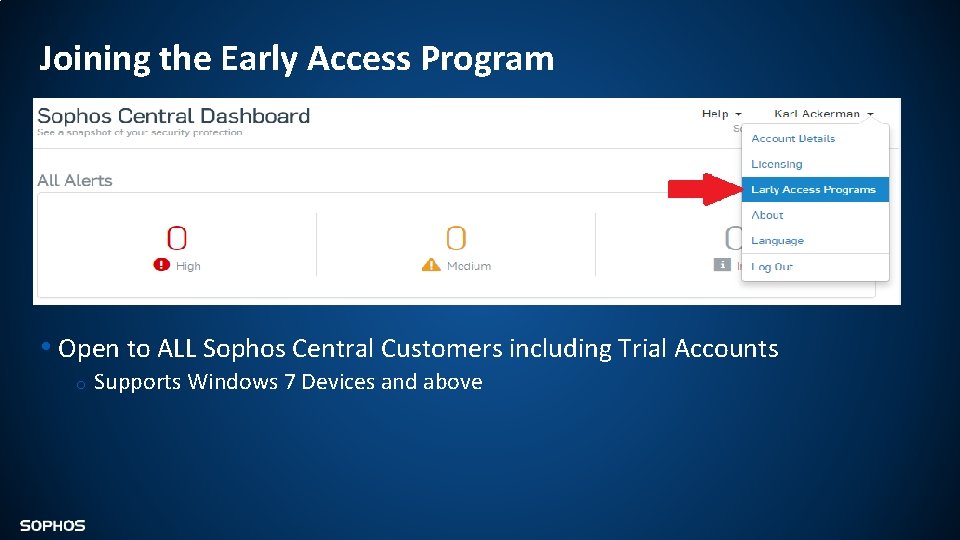
Joining the Early Access Program • Open to ALL Sophos Central Customers including Trial Accounts o Supports Windows 7 Devices and above
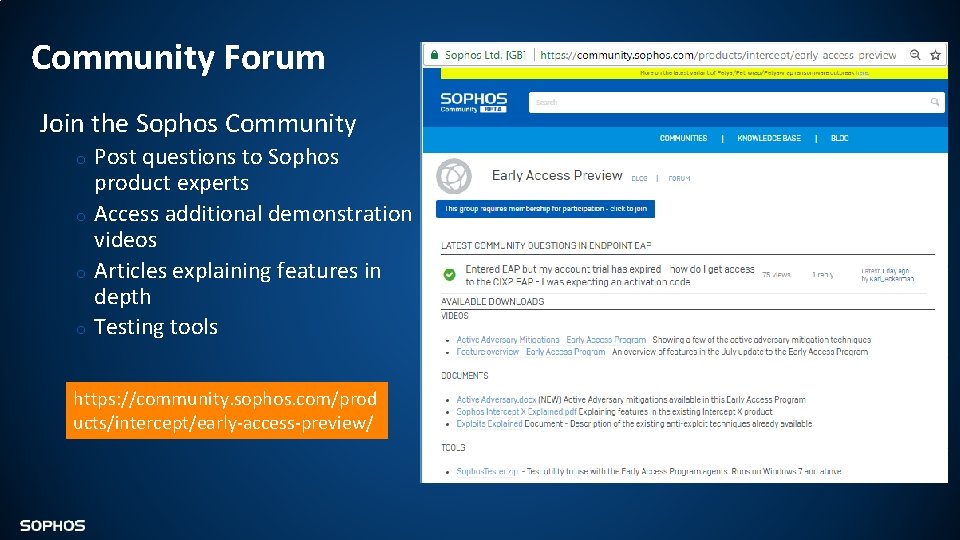
Community Forum Join the Sophos Community Post questions to Sophos product experts o Access additional demonstration videos o Articles explaining features in depth o Testing tools o https: //community. sophos. com/prod ucts/intercept/early-access-preview/
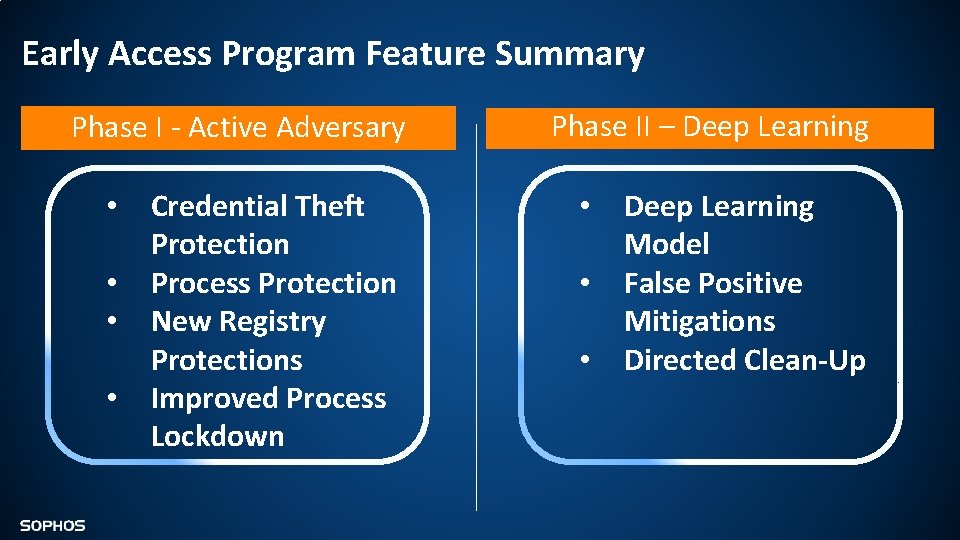
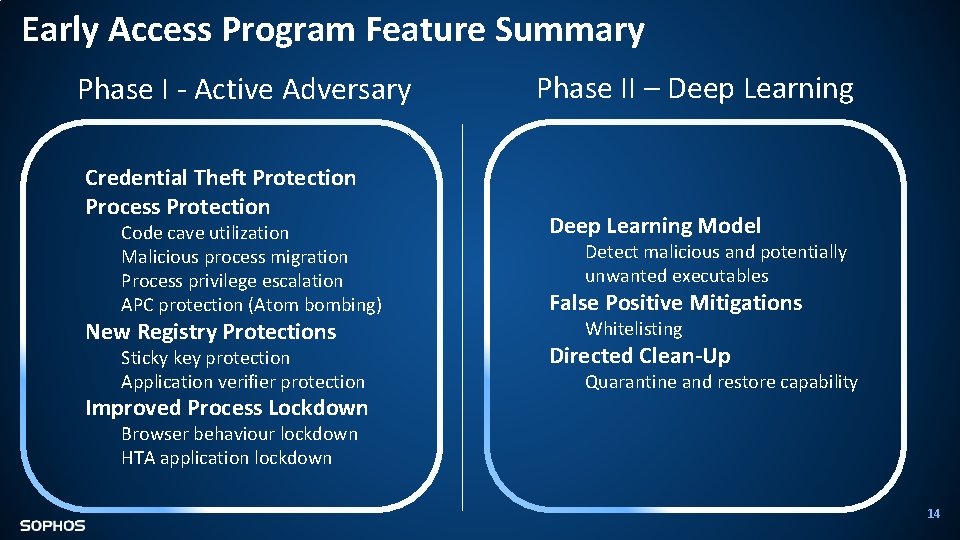
Early Access Program Feature Summary Phase I - Active Adversary • • Credential Theft Protection Process Protection New Registry Protections Improved Process Lockdown Phase II – Deep Learning • • • Deep Learning Model False Positive Mitigations Directed Clean-Up
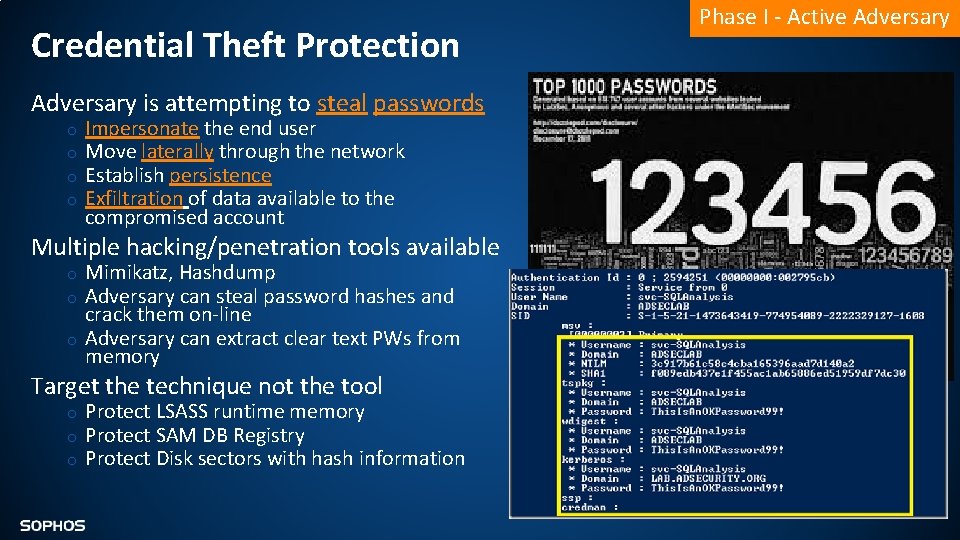
Credential Theft Protection Adversary is attempting to steal passwords o o Impersonate the end user Move laterally through the network Establish persistence Exfiltration of data available to the compromised account Multiple hacking/penetration tools available o o o Mimikatz, Hashdump Adversary can steal password hashes and crack them on-line Adversary can extract clear text PWs from memory Target the technique not the tool o o o Protect LSASS runtime memory Protect SAM DB Registry Protect Disk sectors with hash information Phase I - Active Adversary
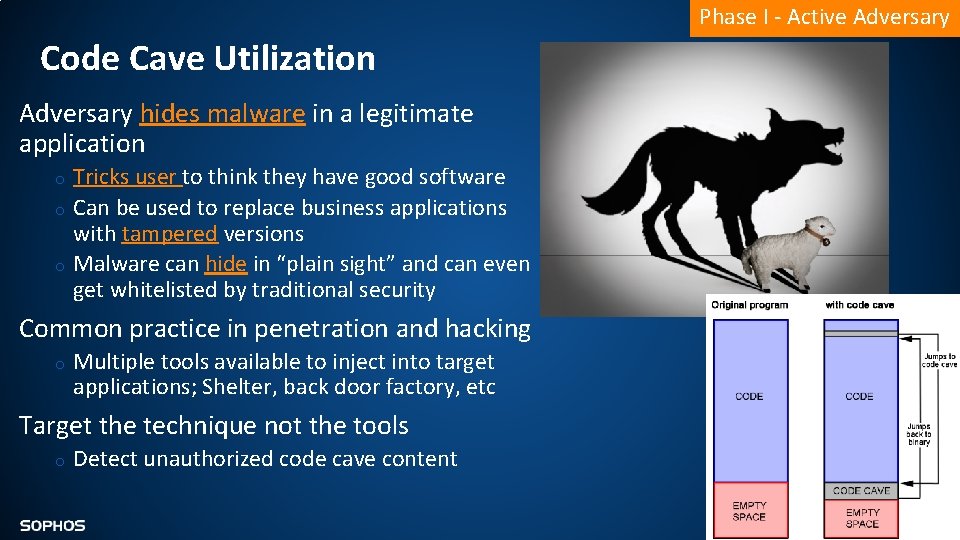
Phase I - Active Adversary Code Cave Utilization Adversary hides malware in a legitimate application Tricks user to think they have good software o Can be used to replace business applications with tampered versions o Malware can hide in “plain sight” and can even get whitelisted by traditional security o Common practice in penetration and hacking o Multiple tools available to inject into target applications; Shelter, back door factory, etc Target the technique not the tools o Detect unauthorized code cave content
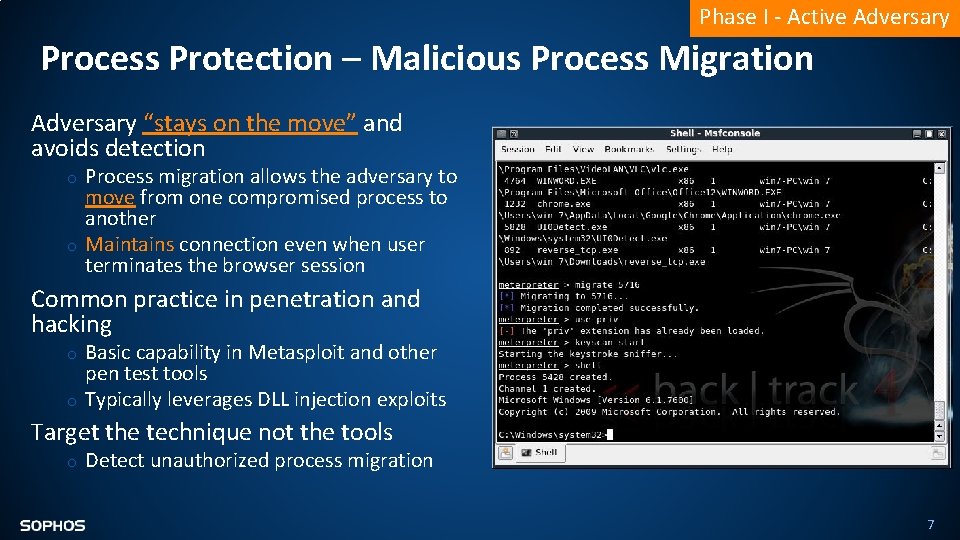
Phase I - Active Adversary Process Protection – Malicious Process Migration Adversary “stays on the move” and avoids detection o o Process migration allows the adversary to move from one compromised process to another Maintains connection even when user terminates the browser session Common practice in penetration and hacking o o Basic capability in Metasploit and other pen test tools Typically leverages DLL injection exploits Target the technique not the tools o Detect unauthorized process migration 7
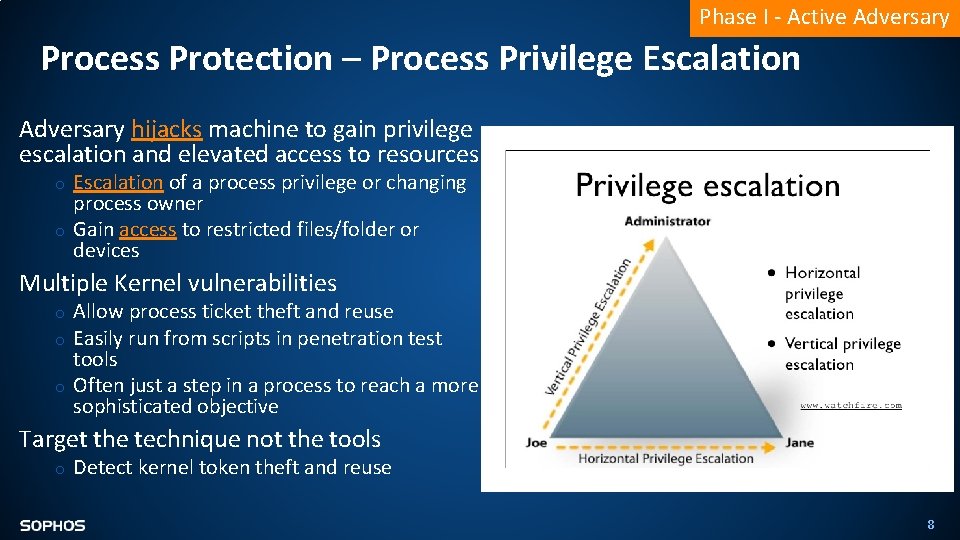
Phase I - Active Adversary Process Protection – Process Privilege Escalation Adversary hijacks machine to gain privilege escalation and elevated access to resources o o Escalation of a process privilege or changing process owner Gain access to restricted files/folder or devices Multiple Kernel vulnerabilities o o o Allow process ticket theft and reuse Easily run from scripts in penetration test tools Often just a step in a process to reach a more sophisticated objective Target the technique not the tools o Detect kernel token theft and reuse 8
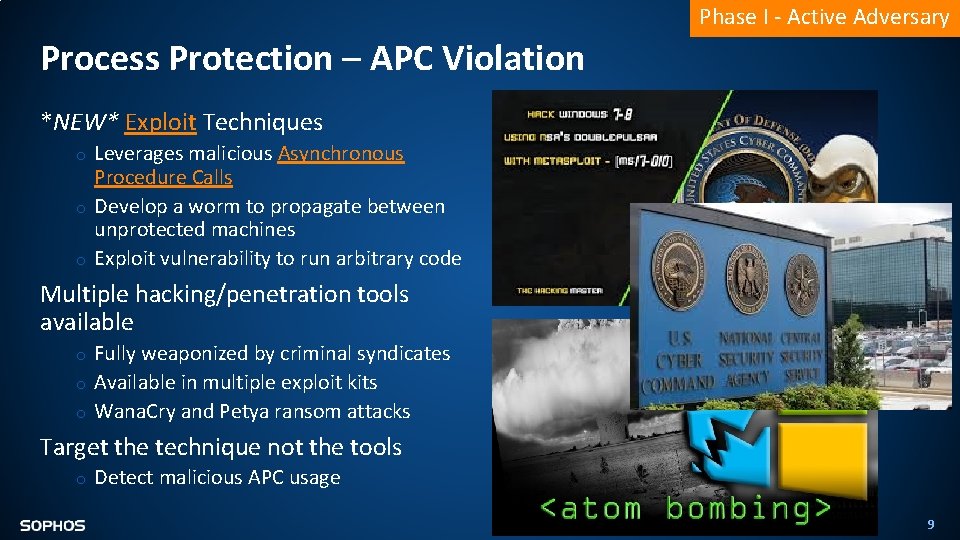
Phase I - Active Adversary Process Protection – APC Violation *NEW* Exploit Techniques o o o Leverages malicious Asynchronous Procedure Calls Develop a worm to propagate between unprotected machines Exploit vulnerability to run arbitrary code Multiple hacking/penetration tools available o o o Fully weaponized by criminal syndicates Available in multiple exploit kits Wana. Cry and Petya ransom attacks Target the technique not the tools o Detect malicious APC usage 9
Phase I - Active Adversary Process Protection – Registry Protection Modification of Registry to run arbitrary code o o Uses legitimate registry options to launch code Application Verifier registry option Sticky key attack (Old school) Often used to establish persistence Well documented and easy to use o o Simple registry modifications are easily deployed on compromised machines Tools to make it even easier are online Target the technique not the tools o Prevent arbitrary code launch via common registry modification techniques 10
Phase I - Active Adversary Process Protection – Process Lockdown Adversary uses legitimate capabilities for malicious intent o o NO MALWARE needed in the attack “Live off the land” attacks leverage existing system features Commonly used on locked down systems o o Extremely common (i. e. , Enable Macros, etc) Trick user to allow risky behavior Target the known malicious behaviors o o o Extending an existing feature in intercept X Prevent malicious launch of powershell from browser Enforce browser lockdown feature to HTML applications run through the browser 11
Phase II – Deep Learning Invincea – Machine Learning Experts • • Deep Learning Detection Engine • • Created by the data scientists at Invincea with DARPA driven technology Patented Deep Learning neural networks trained on 50+ million samples (and counting) • which can also automatically learn to extract the features that provide optimal detection Stops unknown malware without signatures Some of the highest performance scores ever seen in third party testing with lowest FP’s in class • Detects and stops threats within 20 milliseconds
Early Access Program Feature Summary Phase I - Active Adversary Credential Theft Protection Process Protection Phase II – Deep Learning Code cave utilization Malicious process migration Process privilege escalation APC protection (Atom bombing) Deep Learning Model Sticky key protection Application verifier protection Directed Clean-Up New Registry Protections Improved Process Lockdown Detect malicious and potentially unwanted executables False Positive Mitigations Whitelisting Quarantine and restore capability Browser behaviour lockdown HTA application lockdown 14
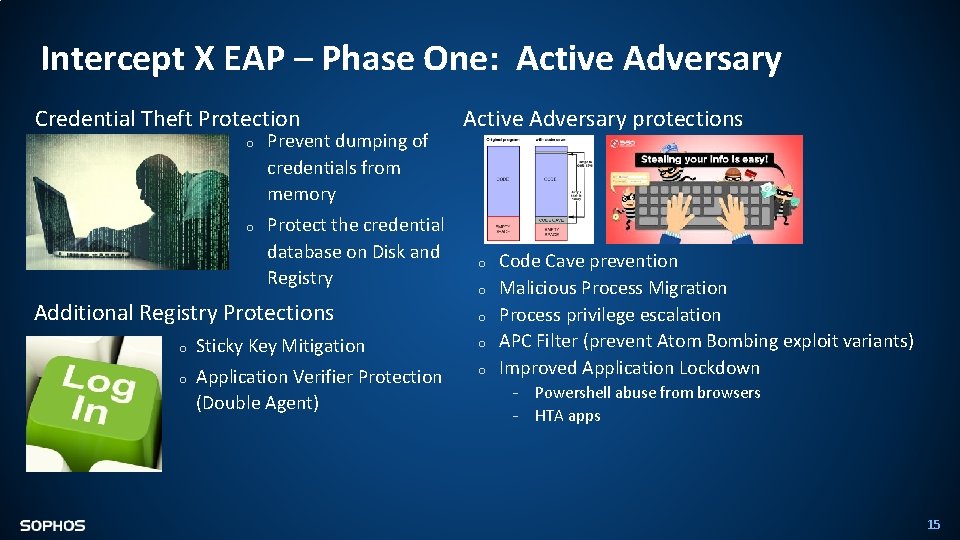
Intercept X EAP – Phase One: Active Adversary Credential Theft Protection o Prevent dumping of credentials from memory o Protect the credential database on Disk and Registry Additional Registry Protections Active Adversary protections o o Sticky Key Mitigation o o Application Verifier Protection (Double Agent) o Code Cave prevention Malicious Process Migration Process privilege escalation APC Filter (prevent Atom Bombing exploit variants) Improved Application Lockdown - Powershell abuse from browsers - HTA apps 15