
Intercellular Junctions AP Biology Ms Oldendorf Chapter 6
Intercellular Junctions AP Biology Ms. Oldendorf Chapter 6 - Cells
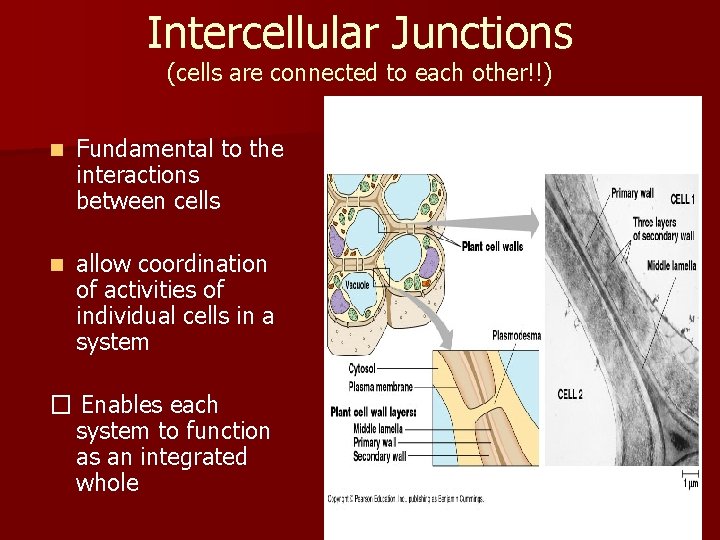
Intercellular Junctions (cells are connected to each other!!) n Fundamental to the interactions between cells n allow coordination of activities of individual cells in a system � Enables each system to function as an integrated whole
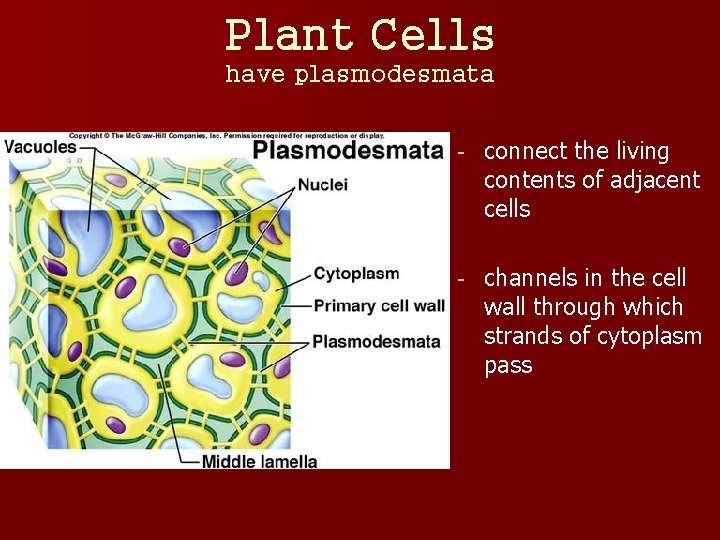
Plant Cells have plasmodesmata - connect the living contents of adjacent cells - channels in the cell wall through which strands of cytoplasm pass
Plasmodesmata… n Enable… - the transport of proteins, ions, and water - communication - transfer of chemical signals
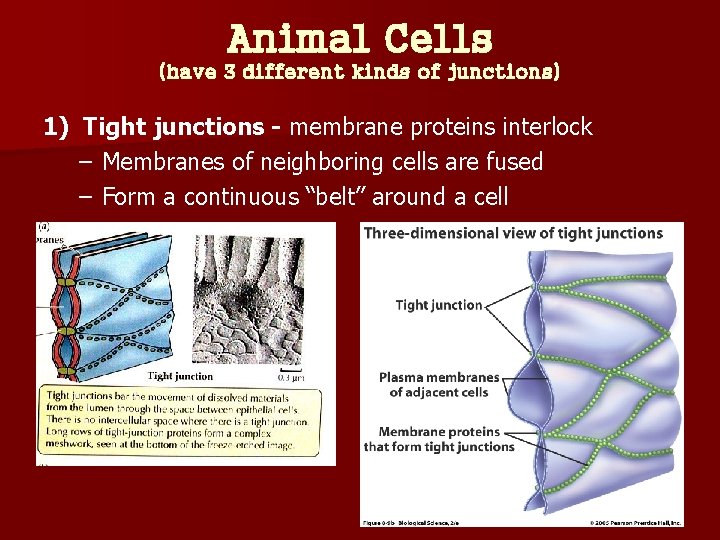
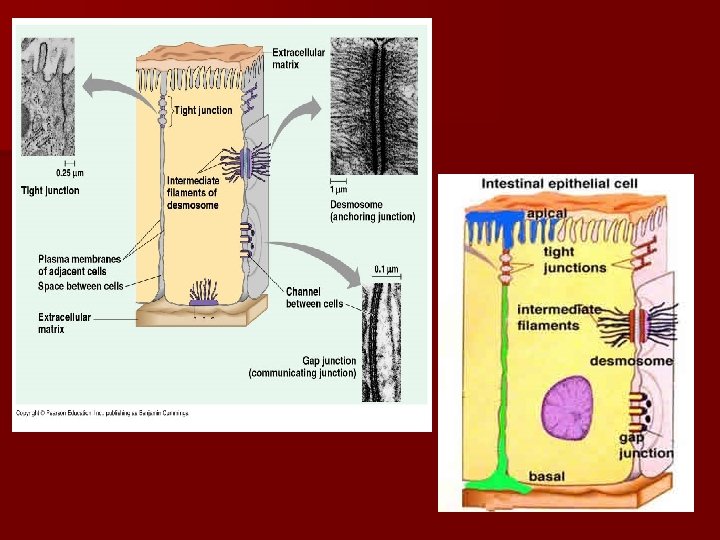
Animal Cells (have 3 different kinds of junctions) 1) Tight junctions - membrane proteins interlock – Membranes of neighboring cells are fused – Form a continuous “belt” around a cell

Tight Junctions n Prevents… -leakage of extracellular fluid across a layer of epithelial cells -passage of molecules and ions through the space between cells. Example: junction between epidermis of the skin
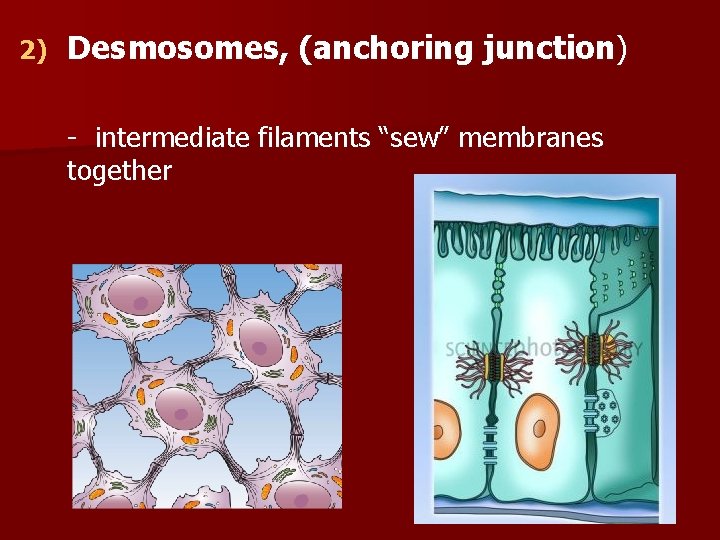
2) Desmosomes, (anchoring junction) - intermediate filaments “sew” membranes together
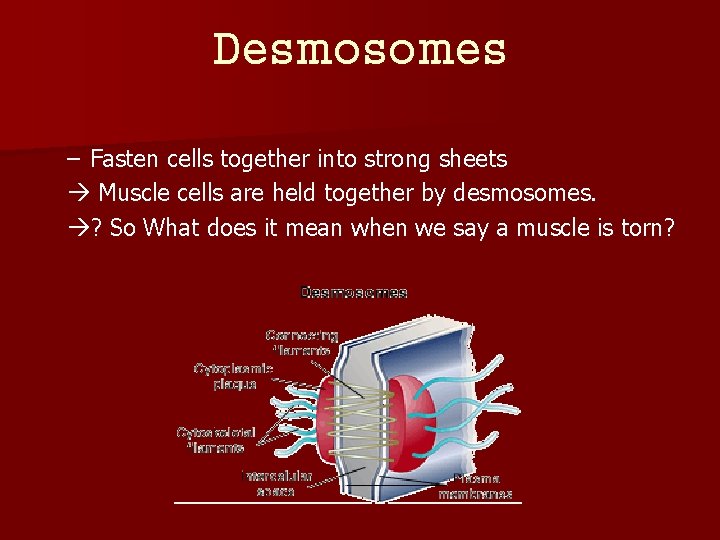
Desmosomes – Fasten cells together into strong sheets Muscle cells are held together by desmosomes. ? So What does it mean when we say a muscle is torn?
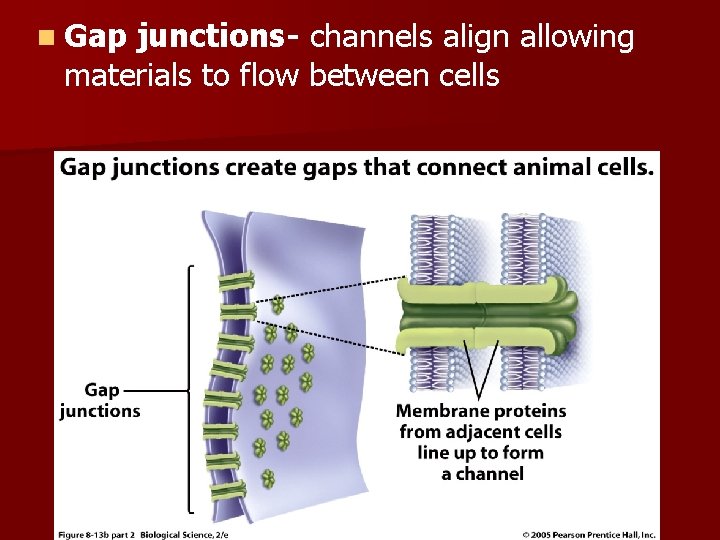
n Gap junctions- channels align allowing materials to flow between cells
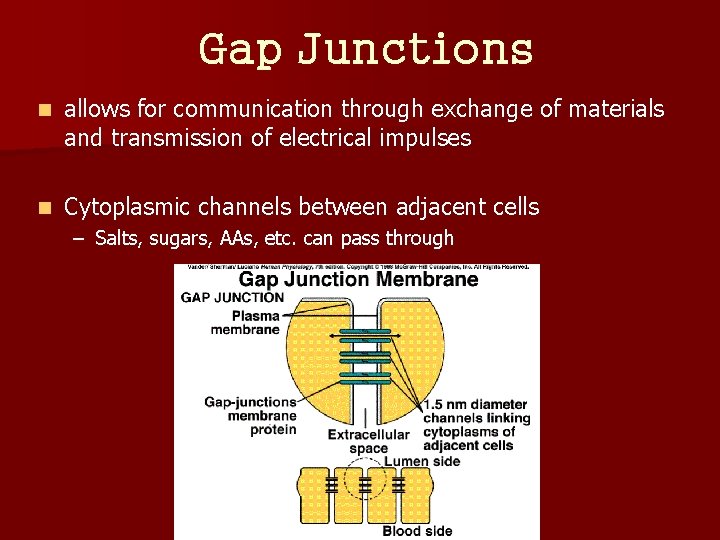
Gap Junctions n allows for communication through exchange of materials and transmission of electrical impulses n Cytoplasmic channels between adjacent cells – Salts, sugars, AAs, etc. can pass through
- Slides: 11