
Interaktionsdesign E 2007 Lektion 4 Interfaces Tangible computing
Interaktionsdesign E 2007 Lektion 4 Interfaces - Tangible computing
Lektion 4 læringsmål • få overblik over forskellige interaktionsmodaliteter i digitale artefakter – Særlig fokus på • Tangible computing • Mobile computing / synkinestetic computing • Skabe forudsætninger for valg af modalitet / interaktionsform for eget interaktionsdesignprojekt • Give baggrund for at vælge workshop - physical computing - senere
Indhold lektion 4 • Interfaces / Modaliteter: lyd, kinestik, tangible interfaces … (=physical interaction – Dourish) • Synkinestetisk interaktion • Teori og baggrund • Tangible Computing • Embodiment • Eksempler • Projektinspiration • Lydinterfaces – hvis vi når det • Intro til physical computing workshop • Status på Rapid Design øvelse
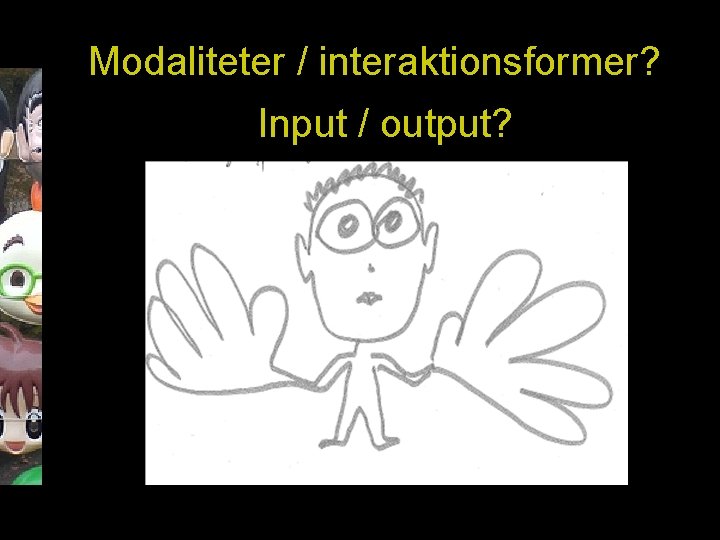
Modaliteter / interaktionsformer? Input / output?
Hvilke interaktionsformer anvender I / har I prøvet? • Sanser – Output – Input • Dele af kroppen – Output – Input
Interface types 1980 s interfaces Command WIMP (Windows, Icons, Menus and Pointer) / GUI 1990 s interfaces Advanced graphical (multimedia, virtual reality, information visualization) Web Speech (voice) Pen, gesture, and touch Appliance 2000 s interfaces Mobile Multimodal Shareable Tangible Augmented and mixed reality Wearable (http: //www. cutecircuit. com/ ) Robotic
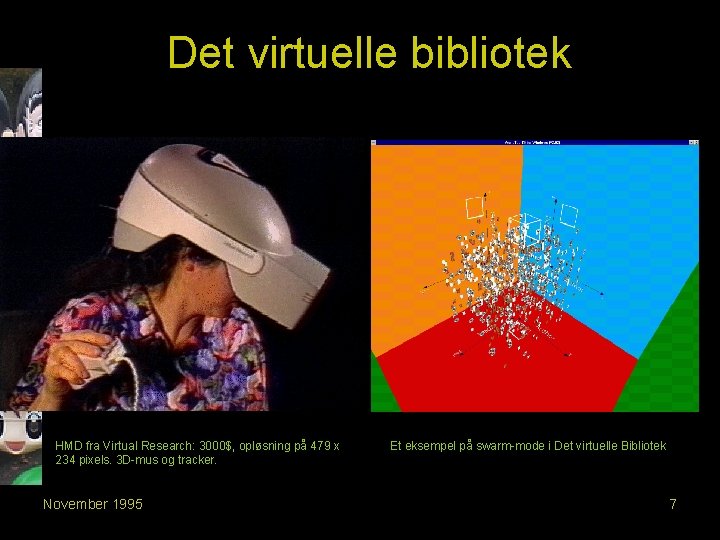
Det virtuelle bibliotek HMD fra Virtual Research: 3000$, opløsning på 479 x 234 pixels. 3 D-mus og tracker. November 1995 Et eksempel på swarm-mode i Det virtuelle Bibliotek 7
![Synkinestetic interaction [embodiment] O. F. Kirkeby & L. Malmborg: Imaginization as an approach to](http://slidetodoc.com/presentation_image_h2/c87094600410f776bb0afdc2f920e531/image-8.jpg "Synkinestetic interaction [embodiment] O. F. Kirkeby & L. Malmborg: Imaginization as an approach to")
Synkinestetic interaction [embodiment] O. F. Kirkeby & L. Malmborg: Imaginization as an approach to interactive multimedia. First International Conference on Cognitive Technology, 24 -27 August 1995, Hong Kong. Published in: Barbara Gorayska (ed. ): Cognitive Technology, Human Factors in Information Technology Series, North Holland/Elsevier, 1996. IMM and related technologies categorized by incorporation and situatedness. Agent I is the user and Agent II is the IMM.
Theory and Foundations • Paul Dourish: Where the Action is • Kap 2: Getting in Touch • Embodied Interaction is interaction with computer systems that occupy our world, a world of physical and social reality, and that exploit this fact in how they interact with us • Embodiment denotes a form of participative status • A history of HCI and interaction paradigms – – – electronic symbolic textual graphical … • A history of conceptual & theoretical models – incorporating new human skills and abilities – incorporating new ways of understanding their use
Two Recent Trends • “Tangible computing” – physical interaction – augmented environments – computation as part of the physical world – …”the way we experience the everyday world” (phenomenological approach) • “Social computing” – using social understandings of interaction – enhancing interaction with computation
Tangible Computing • Origins in Ubiquitous Computing – Mark Weiser: …”the computer for the 21 st century” (1991) • http: //www. media. mit. edu/resenv/classes/MAS 961/readings/weiser_reprint. pdf – invisible computing (paradox), “the disappearing computer program” – computation moves into the environment – interface moves into the environment – new set of design concerns • • • managing attention incorporating context combining devices new physical forms and affordances new interactive styles – computation by the inch (electronic tags / computational “postit”), foot (stylus-based interaction, digital paper) and yard (wallsized devices, Liveboard) -> Augmented paper, LBS, CAS – examples of tangible designs?
Tangible Computing • A ‘historical’ view … • Wellner’s Digital Desk (1993) • Jeremijenko’s Live Wire (1994) • Bishop’s Marble Answering Machine (1995)
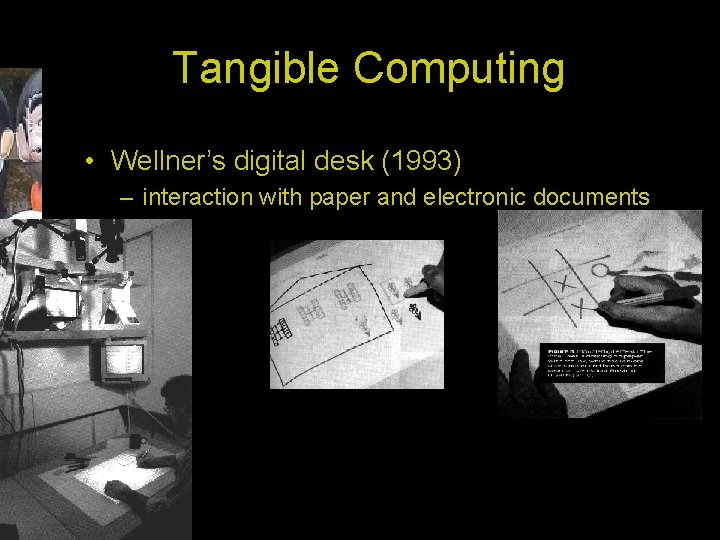
Tangible Computing • Wellner’s digital desk (1993) – interaction with paper and electronic documents
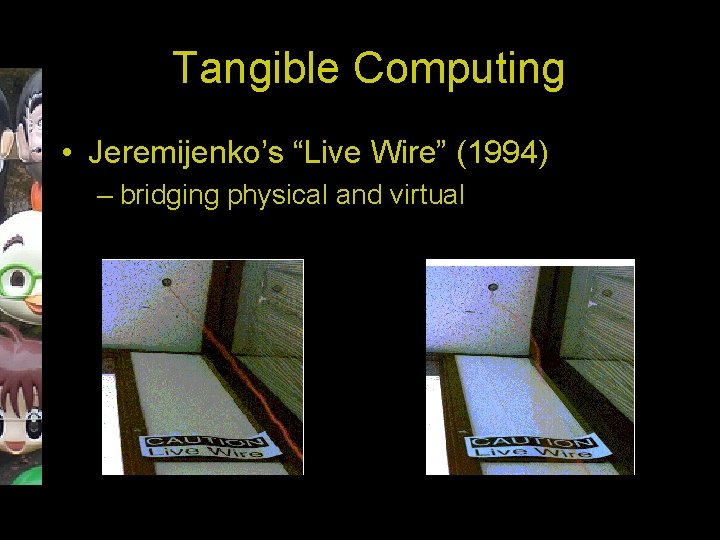
Tangible Computing • Jeremijenko’s “Live Wire” (1994) – bridging physical and virtual
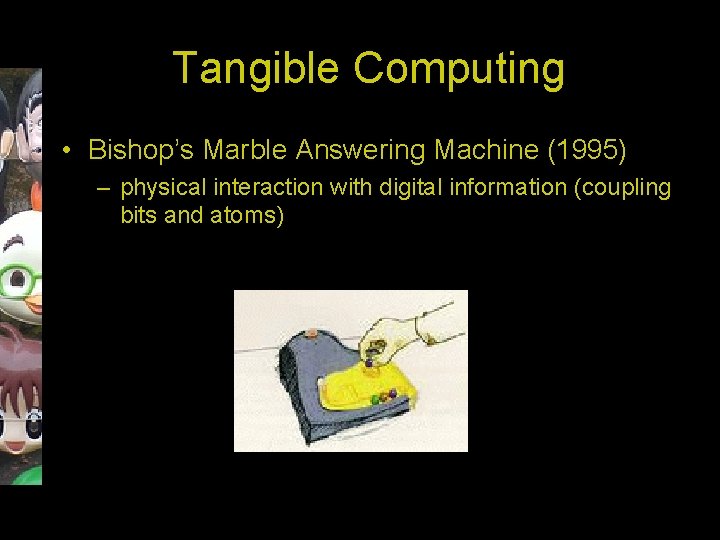
Tangible Computing • Bishop’s Marble Answering Machine (1995) – physical interaction with digital information (coupling bits and atoms)
MIT tangible bits program • Ullmer & Ishii: Tangible Bits (1997) • Tangible bits -> tangible media • Examples / projects
Tangible Computing • Metadesk (Ullmer & Ishii 1997, TB, MIT) • Illuminating Light (Underkoffler & Ishii 1998, TB, MIT) • Urp (Underkoffler & Ishii 1999, TB, MIT)
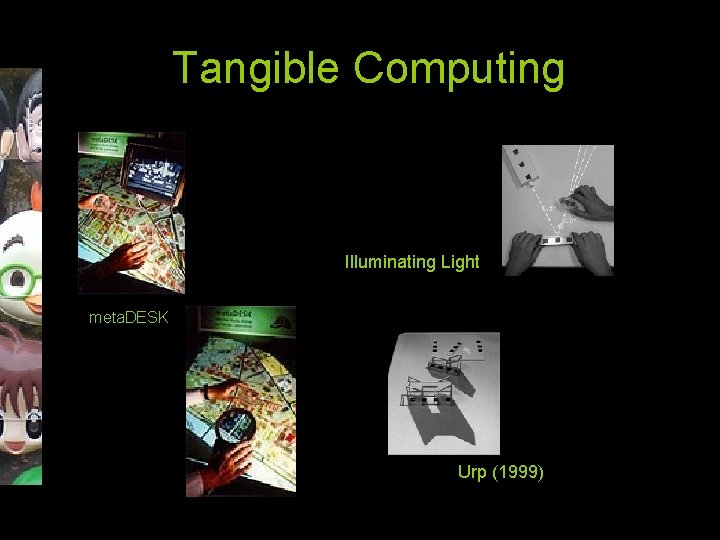
Tangible Computing Illuminating Light meta. DESK Urp (1999)
Own examples of tangible computing • • Atelier: tangible archive Psst! Tangible sound toys Paper. Works: augmenting pen and paper Mobility and learning environments: ubiquitous tangible language • Students’ work • Your examples?
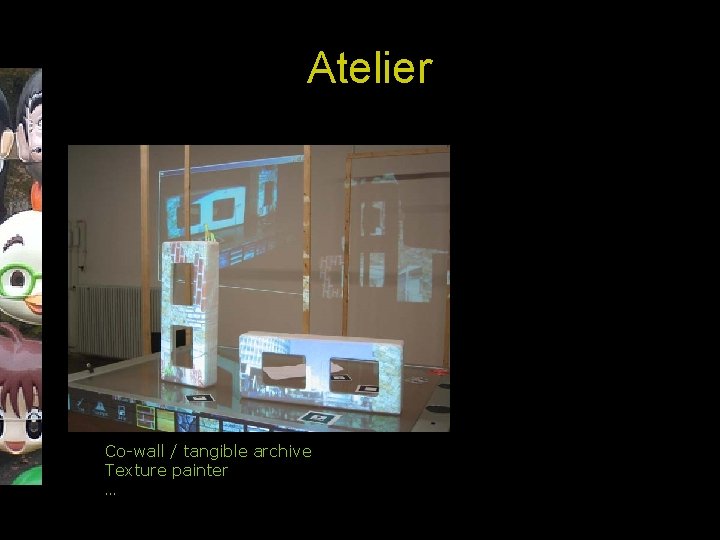
Atelier The aim of the ATELIER project (Architecture and Technology for Inspirational Learning Environments) is to contribute to inspirational learning environments, which are grounded in an understanding of creative practices within design, architecture and art. Co-wall / tangible archive Texture painter …
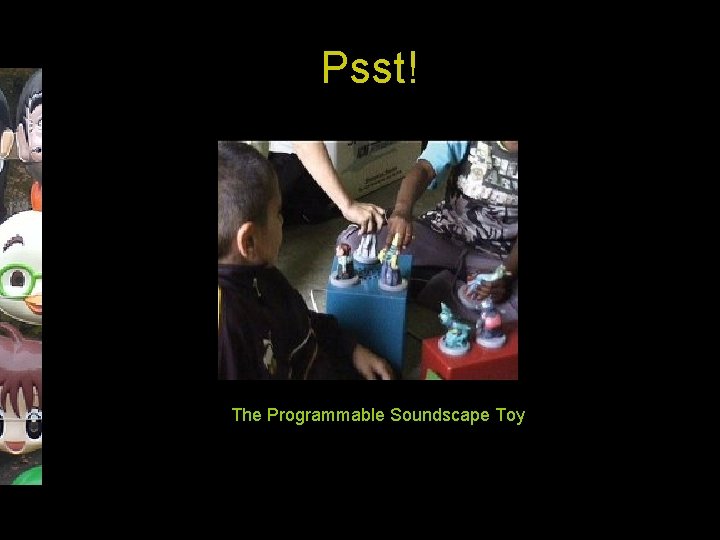
Psst! The Programmable Soundscape Toy
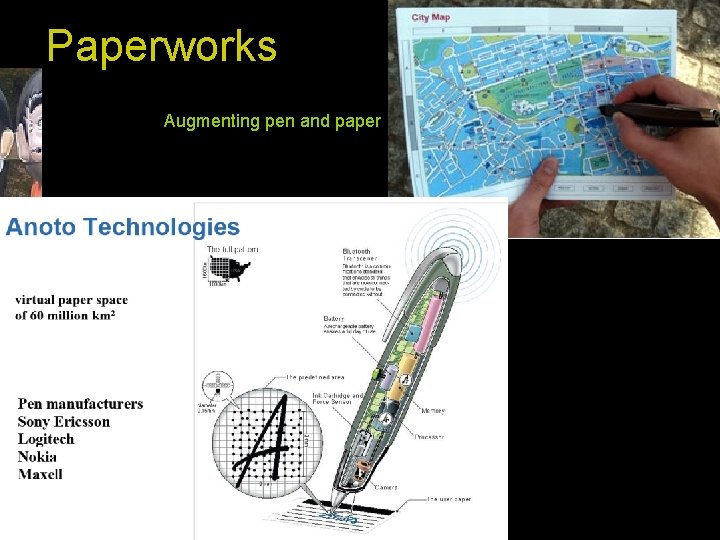
Paperworks Augmenting pen and paper
Situated probing CHI 2006, Montreal Lone Malmborg Bodil Jönsson Arne Svensk Mobility and Learning Environment -engaging people in design of their everyday environment
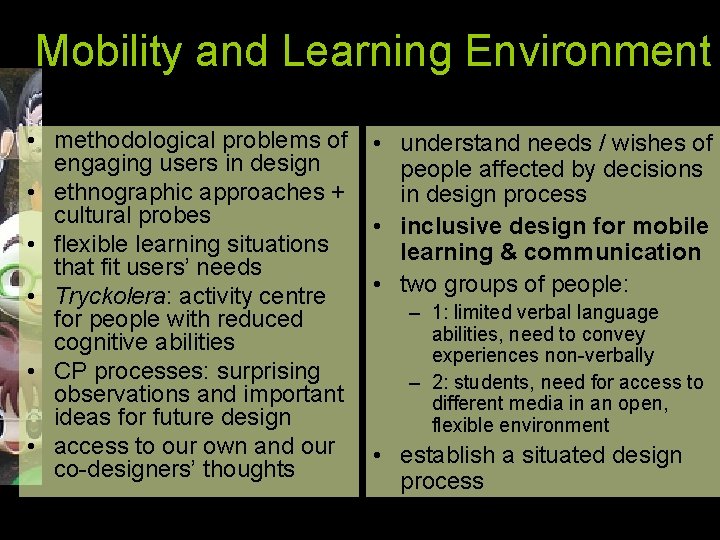
Mobility and Learning Environment • methodological problems of engaging users in design • ethnographic approaches + cultural probes • flexible learning situations that fit users’ needs • Tryckolera: activity centre for people with reduced cognitive abilities • CP processes: surprising observations and important ideas for future design • access to our own and our co-designers’ thoughts • understand needs / wishes of people affected by decisions in design process • inclusive design for mobile learning & communication • two groups of people: – 1: limited verbal language abilities, need to convey experiences non-verbally – 2: students, need for access to different media in an open, flexible environment • establish a situated design process
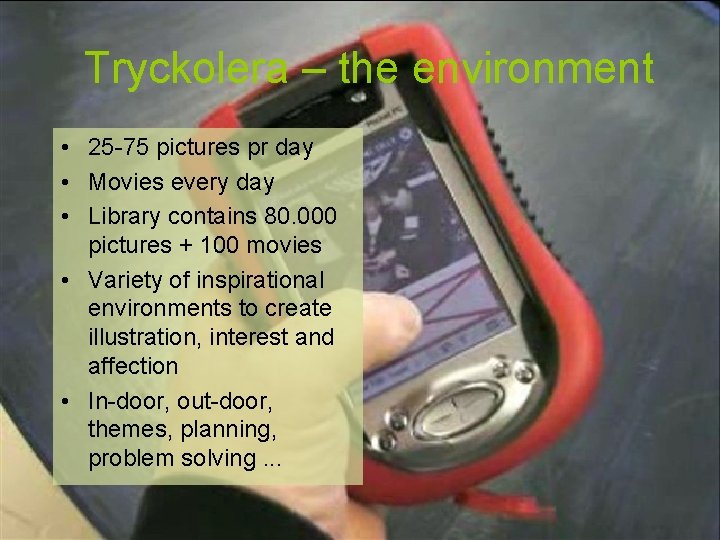
Tryckolera – the environment • 25 -75 pictures pr day • Movies every day • Library contains 80. 000 pictures + 100 movies • Variety of inspirational environments to create illustration, interest and affection • In-door, out-door, themes, planning, problem solving. . .
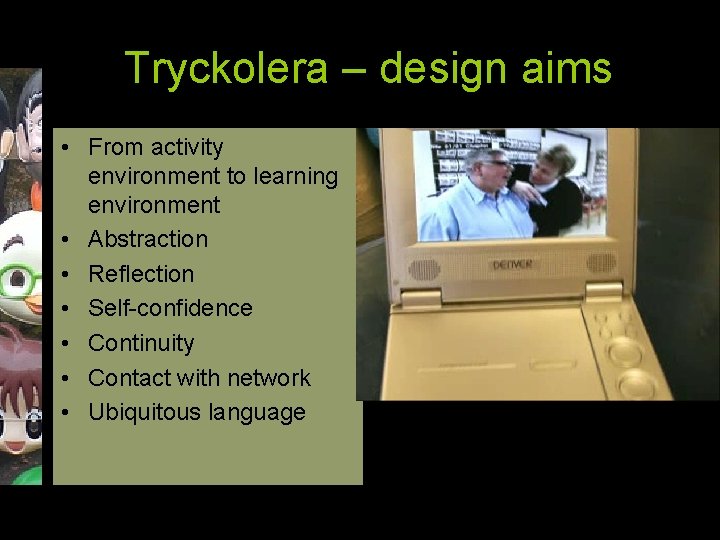
Tryckolera – design aims • From activity environment to learning environment • Abstraction • Reflection • Self-confidence • Continuity • Contact with network • Ubiquitous language
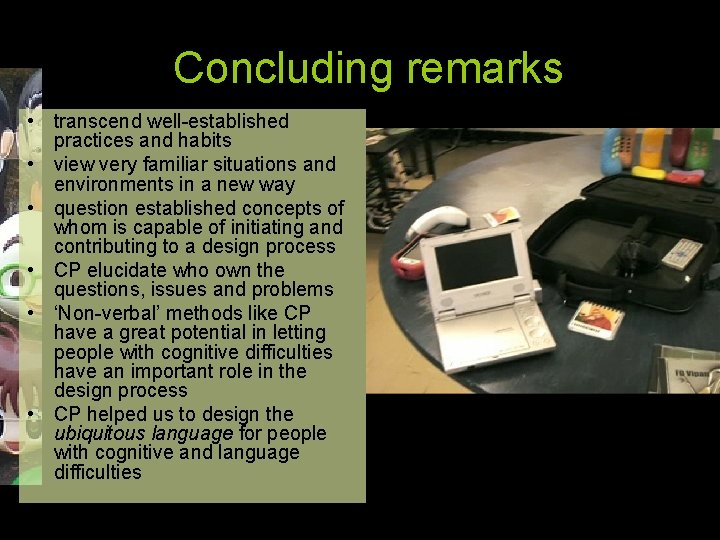
Concluding remarks • transcend well-established practices and habits • view very familiar situations and environments in a new way • question established concepts of whom is capable of initiating and contributing to a design process • CP elucidate who own the questions, issues and problems • ‘Non-verbal’ methods like CP have a great potential in letting people with cognitive difficulties have an important role in the design process • CP helped us to design the ubiquitous language for people with cognitive and language difficulties
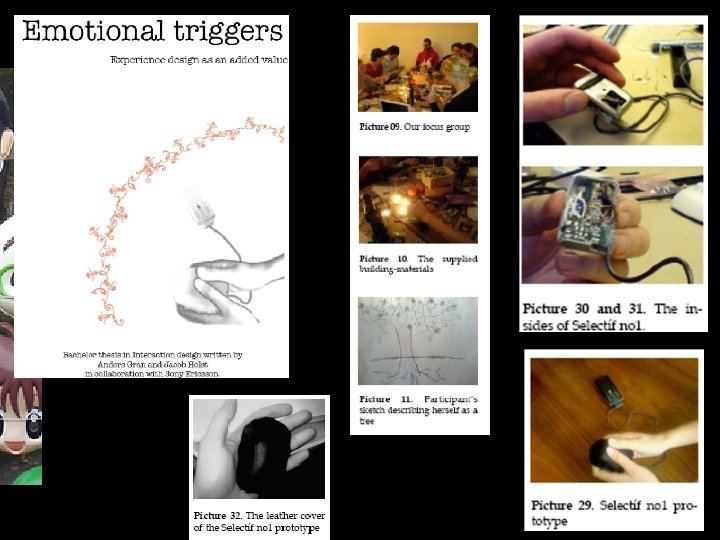
Students’ work • Kremlan (Livia Sunesson, 2001) • Tabletop Wireless Tracking System (Nichlas Nilsson, 2002) • Emotional Triggers (Jacob Holst & Anders Gran, 2006) • FISH - a robot to help emotional development in autistic children (Tove Blomgren & Anders Tenggren, 2003)
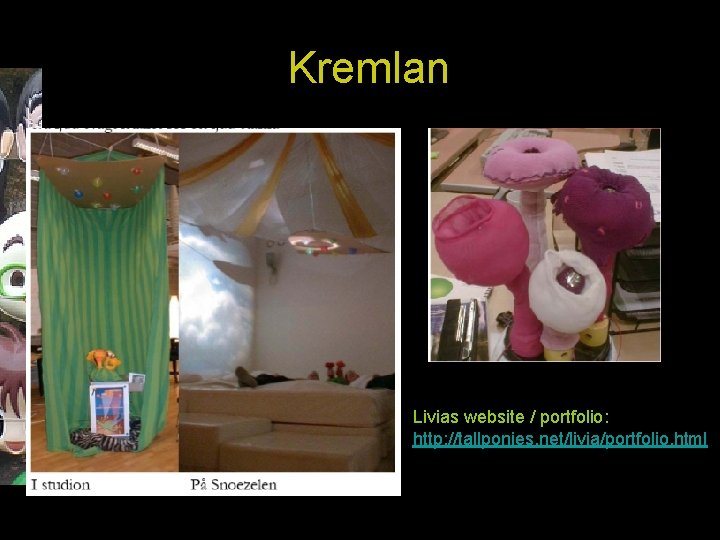
Kremlan Livias website / portfolio: http: //tallponies. net/livia/portfolio. html
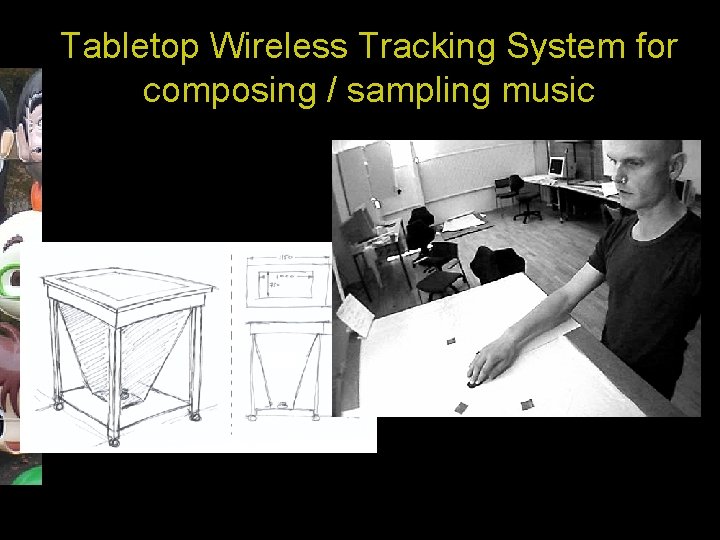
Tabletop Wireless Tracking System for composing / sampling music
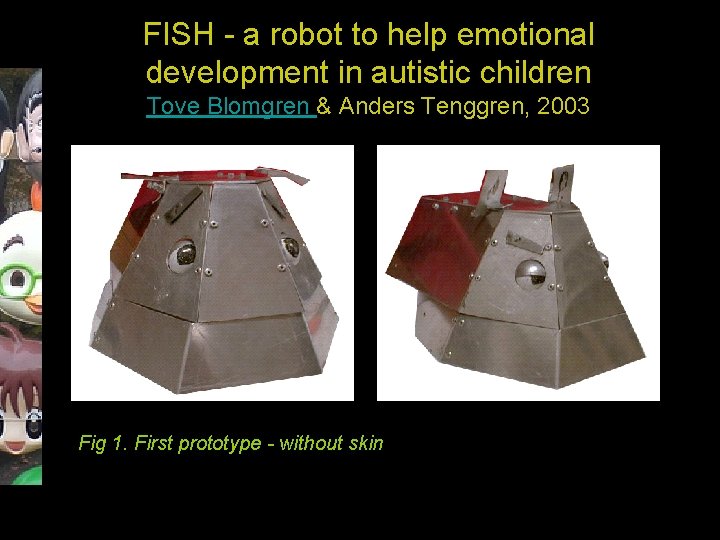
FISH - a robot to help emotional development in autistic children Tove Blomgren & Anders Tenggren, 2003 Fig 1. First prototype - without skin
Jeres eksempler …
Features of Tangible Computing • Physical mappings – physical objects rather than abstract entities – specificity and specialisation (focused and task-specific) • Exploiting physical affordances – suggesting and guiding action • Distributed interaction – interaction across a range of objects – interaction spread throughout a space – moving beyond enforced sequentiality
Embodiment • Embodiment in physical computing • Embodiment in social computing • Embodiment is… – the nexus of presence and practice – a feature of engaged participation with the world – a pre-ontological apprehension of the world (‘see and understand’ rather than ‘understand see’)
Dourish conclusions • Embodiment is a foundation for new HCI models – tangible and social computing – a common focus on participation and meaning • Turning to phenomenology – a conceptual understanding of embodiment – … det vender vi tilbage til 12. november
Lyd & stemme-interfaces • Hvorfor anvende lyd? – Ambient medie: vi kan gøre andet imens (ex navigationssystem, head-set til telefon) – Deskriptiv snarere end henvisende (kompletterer andre interfaces) – Kræver begrænsede fysiske ressourcer (små devices, billig teknologi) – Rosenfeld, R. , Olsen, D. , and Rudnicky, A. 2001. Universal speech interfaces. interactions 8, 6 (Oct. 2001), 34 -44
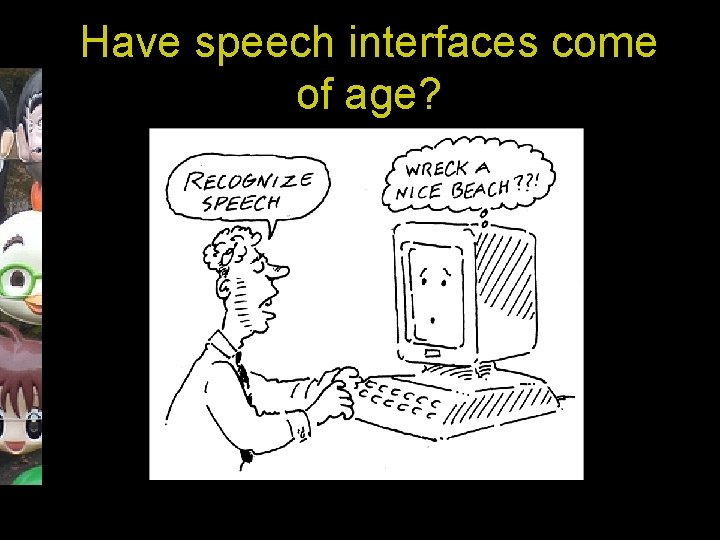
Have speech interfaces come of age?
I hvilken slags digitale devices? • I simple snarere end intelligente systemer (ej AI) • Eksempler: – Konfigurering og brug af elektroniske devices i hjemmet (TV, DVD, husholdningsredskaber, ure …) – Konfigurering og brug af kontormaskiner – Offentlig information (nyheder, vejr, køreplaner…) – Privat information (kontooplysninger, kalender, private databaser …) – Håndtering af asynkron information (telefonsvarer, mail, fax) – Brug af forskellige applikationer (navigationssystemer, formularudfyldelse, webnavigation)
Teknologiske udfordringer • Kvaliteten af stemmegenkendelse • Tilgængeligt sprog • Udvikling af stemmebaserede systemer
Strategier for stemmestyrede systemer • Naturligt sprog • Dialogtræer • Command-control (begrænset syntax for input)
Problemer med stemmeinterfaces? • Upræcise • Skaber ikke overblik (ej abstraktion, gruppering) • Svært at finde rundt i menuer – lost in menu?
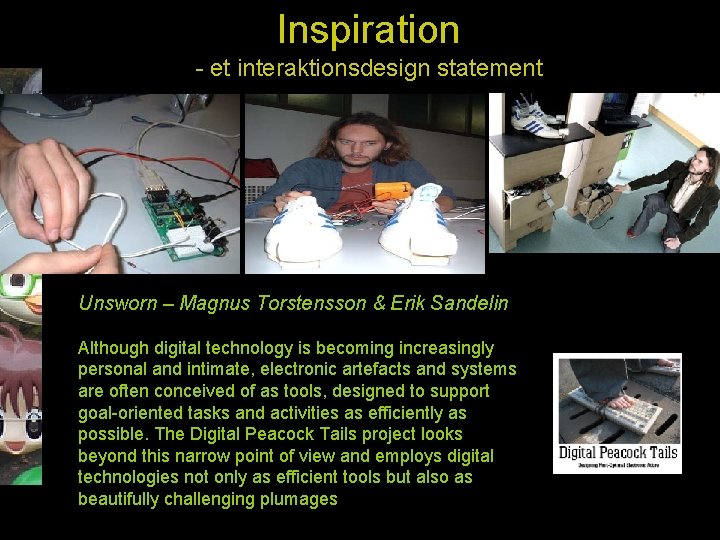
Inspiration - et interaktionsdesign statement Unsworn – Magnus Torstensson & Erik Sandelin Although digital technology is becoming increasingly personal and intimate, electronic artefacts and systems are often conceived of as tools, designed to support goal-oriented tasks and activities as efficiently as possible. The Digital Peacock Tails project looks beyond this narrow point of view and employs digital technologies not only as efficient tools but also as beautifully challenging plumages
Physical computing workshop • Lære at tænke i og anvende nye modaliteter i interaktionsdesign • Grundliggende kendskab til physical computing / digital elektronik • Projektinspiration
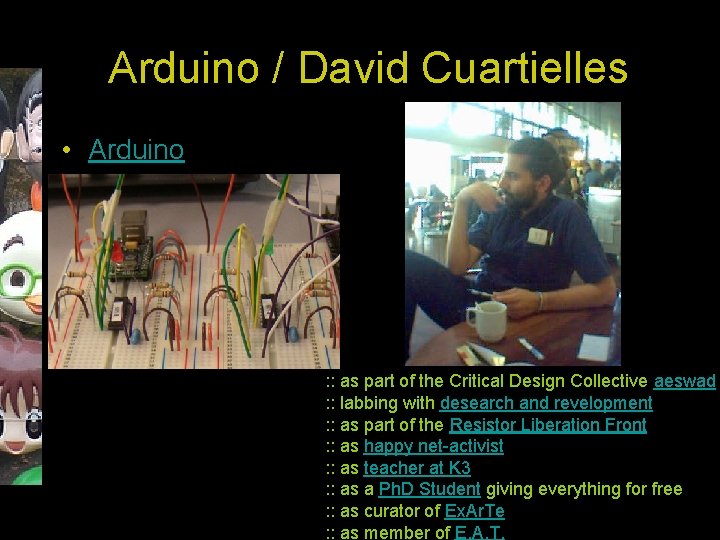
Arduino / David Cuartielles • Arduino : : as part of the Critical Design Collective aeswad : : labbing with desearch and revelopment : : as part of the Resistor Liberation Front : : as happy net-activist : : as teacher at K 3 : : as a Ph. D Student giving everything for free : : as curator of Ex. Ar. Te : : as member of E. A. T.
Rapid design øvelse modaliteter og interaktionsform for jeres design 1. Tænk over den / de modaliteter og interaktionsformer I har overvejet for jeres design Begrund Reflekter over implikationer af valg 2. 3. – – • Tænk på forskellige anvendelsessituationer Tænk på forskellige mennesker som skal anvende jeres design Spørgsmål til øvelsen
Slut
- Slides: 47