
Interactive Volume Visualization of General Polyhedral Grids Philipp
![GPU based Ray Casting • TSFSL traversal for ray casting Sequence [cde] bl c](https://slidetodoc.com/presentation_image/ad522bc7d3686390df85d516f7d61001/image-18.jpg "GPU based Ray Casting • TSFSL traversal for ray casting Sequence [cde] bl c")
![GPU based Ray Casting • TSFSL traversal for ray casting Sequence [cde] bl c](https://slidetodoc.com/presentation_image/ad522bc7d3686390df85d516f7d61001/image-19.jpg "GPU based Ray Casting • TSFSL traversal for ray casting Sequence [cde] bl c")
- Slides: 23
Interactive Volume Visualization of General Polyhedral Grids Philipp Muigg 1, 3, Markus Hadwiger 2, Helmut Doleisch 3, M. Eduard Gröller 1 1, Vienna University of Technology, Austria 2, King Abdullah University of Science and Technology, Saudi Arabia 3, Sim. Vis Gmb. H, Vienna, Austria
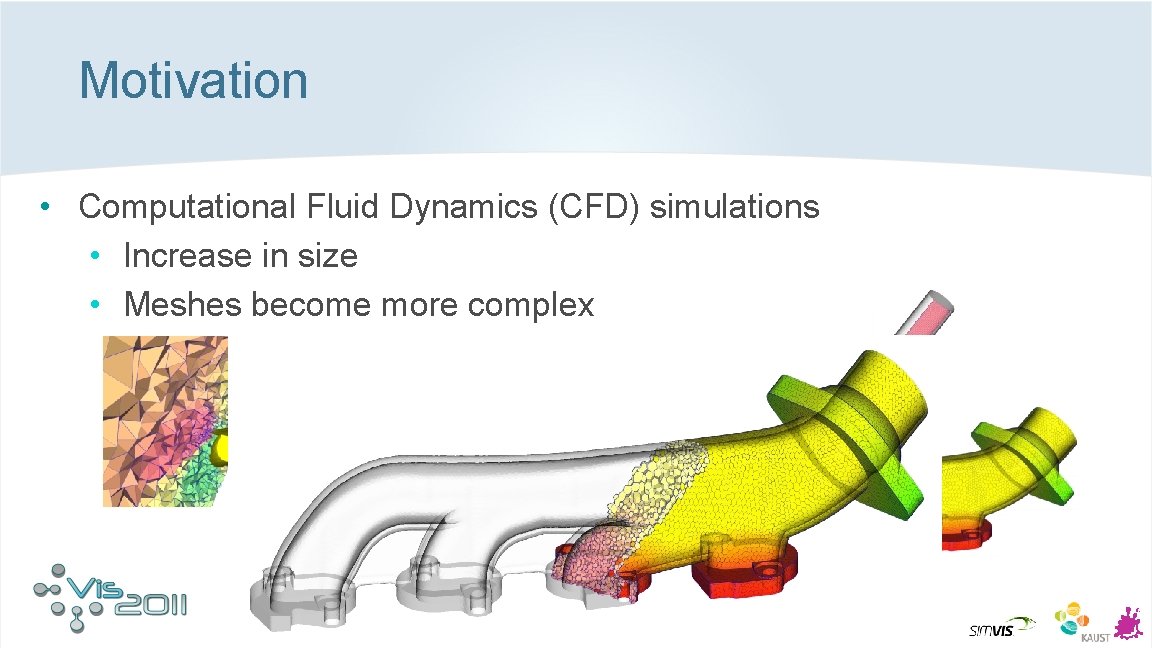
Motivation • Computational Fluid Dynamics (CFD) simulations • Increase in size • Meshes become more complex
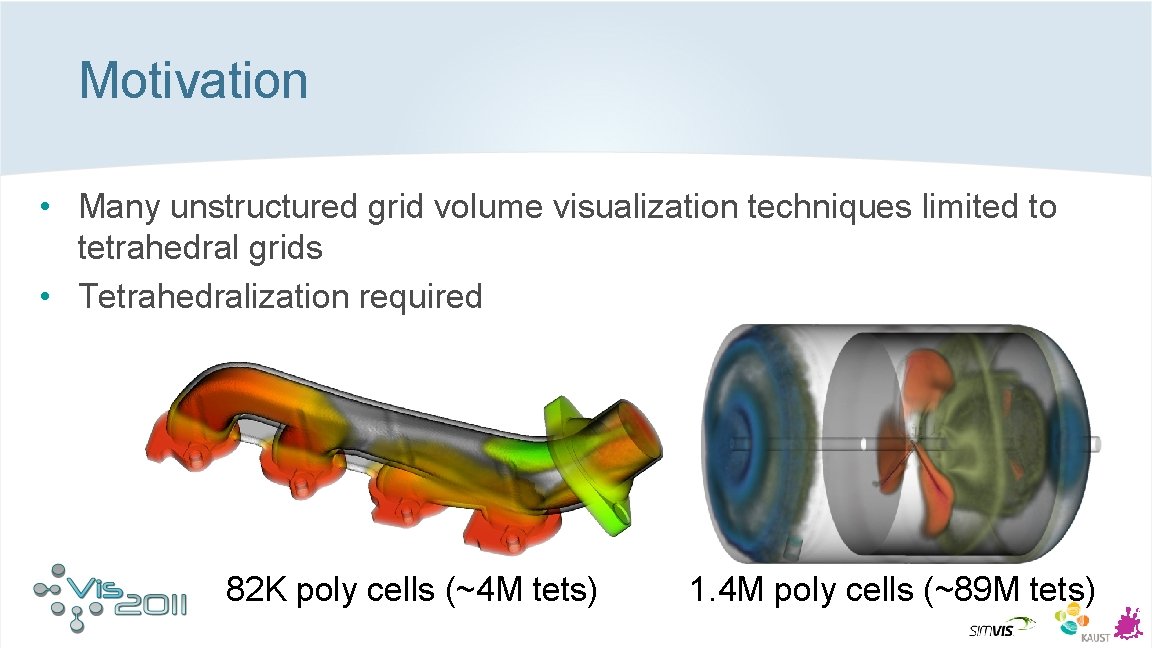
Motivation • Many unstructured grid volume visualization techniques limited to tetrahedral grids • Tetrahedralization required 82 K poly cells (~4 M tets) 1. 4 M poly cells (~89 M tets)
Motivation • Direct volume rendering for grids composed of general polyhedral cells • Data structure to represent polyhedral grids • Low memory footprint • Support traversal operations required by ray casting
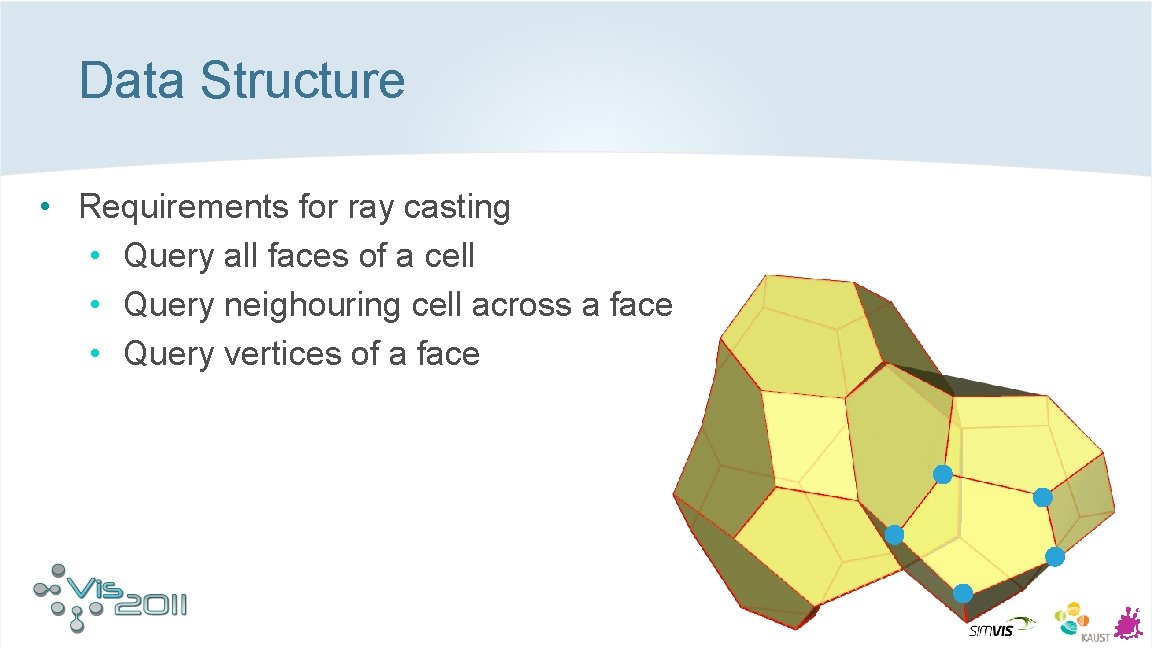
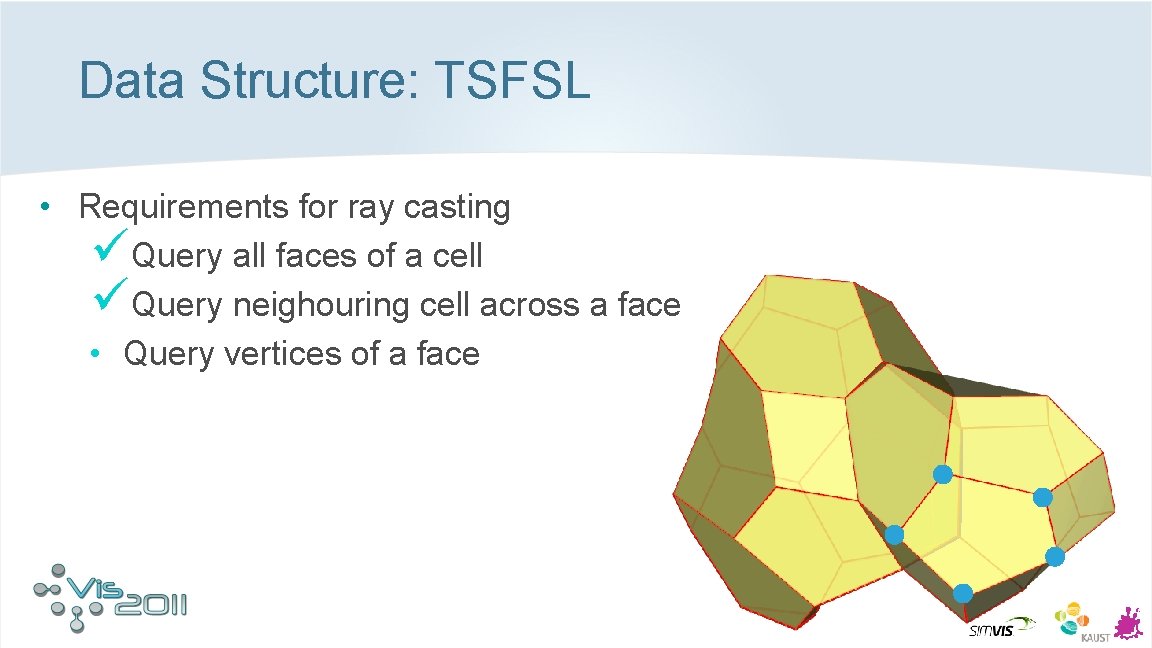
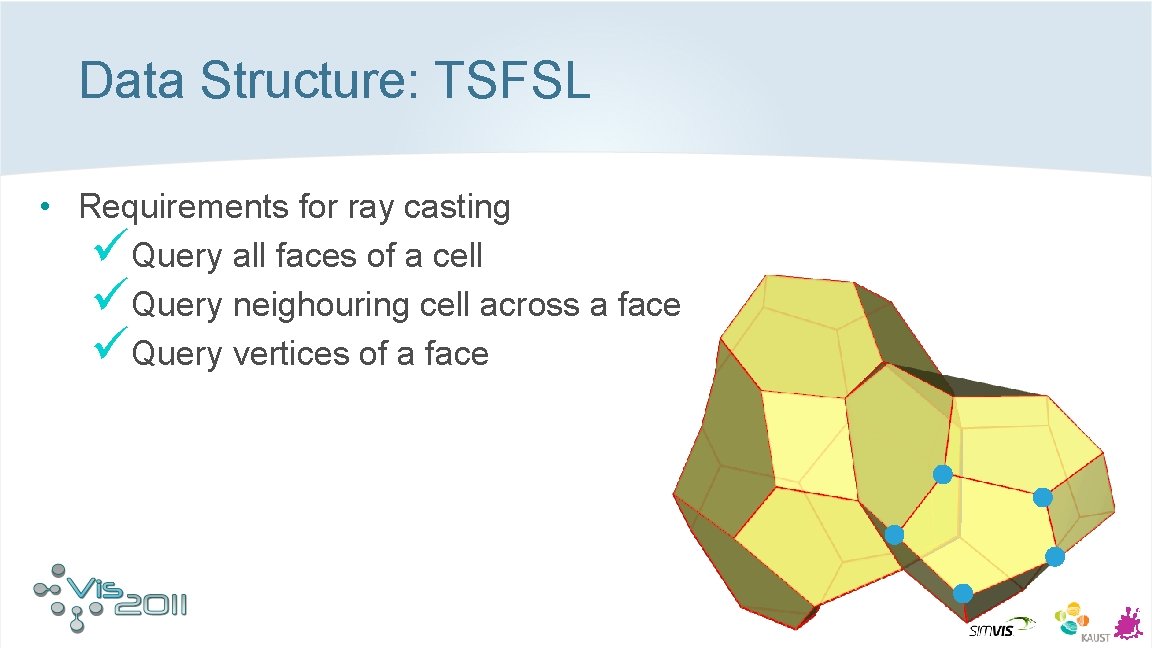
Data Structure • Requirements for ray casting • Query all faces of a cell • Query neighouring cell across a face • Query vertices of a face
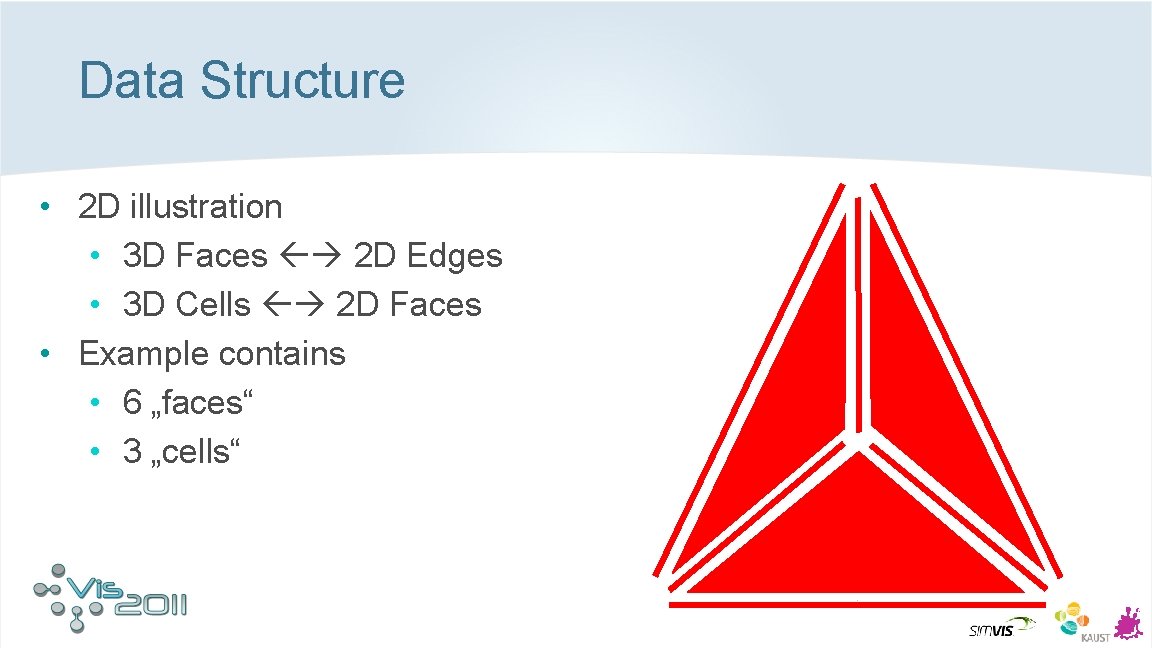
Data Structure • 2 D illustration • 3 D Faces 2 D Edges • 3 D Cells 2 D Faces • Example contains • 6 „faces“ • 3 „cells“
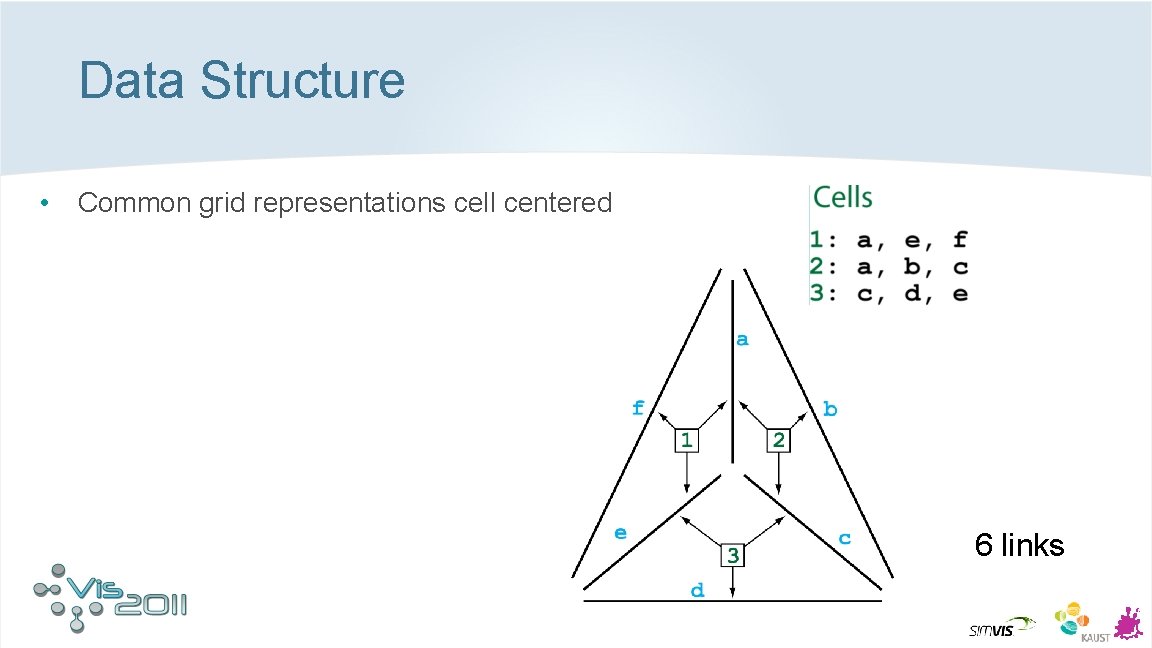
Data Structure • Common grid representations cell centered 6 links
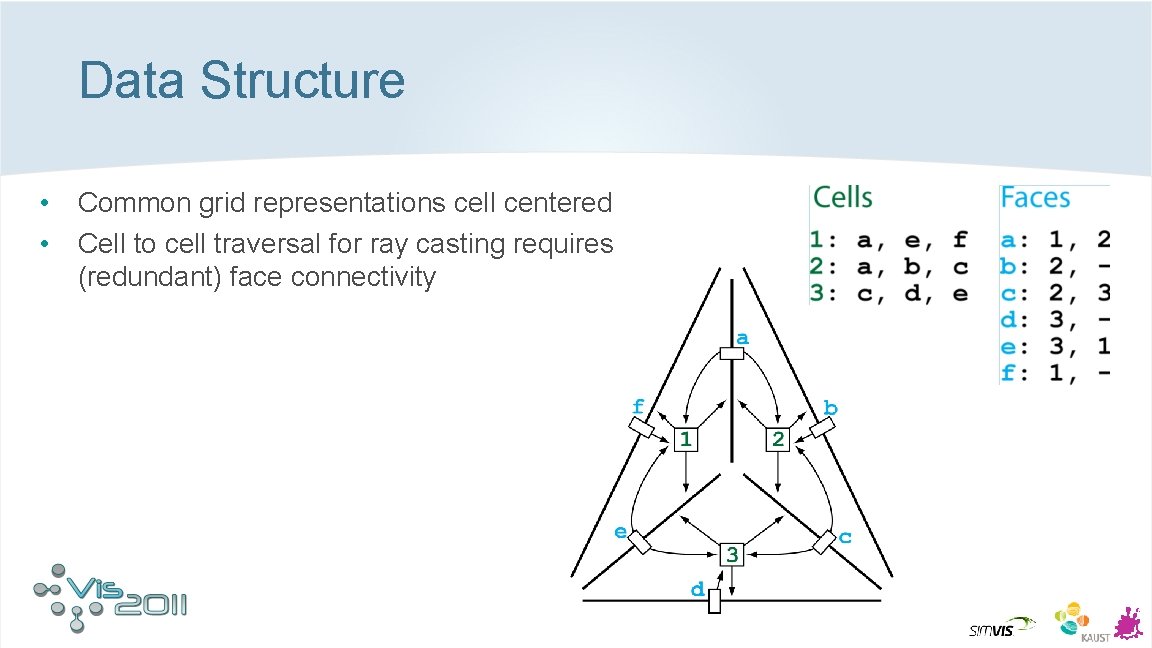
Data Structure • • Common grid representations cell centered Cell to cell traversal for ray casting requires (redundant) face connectivity
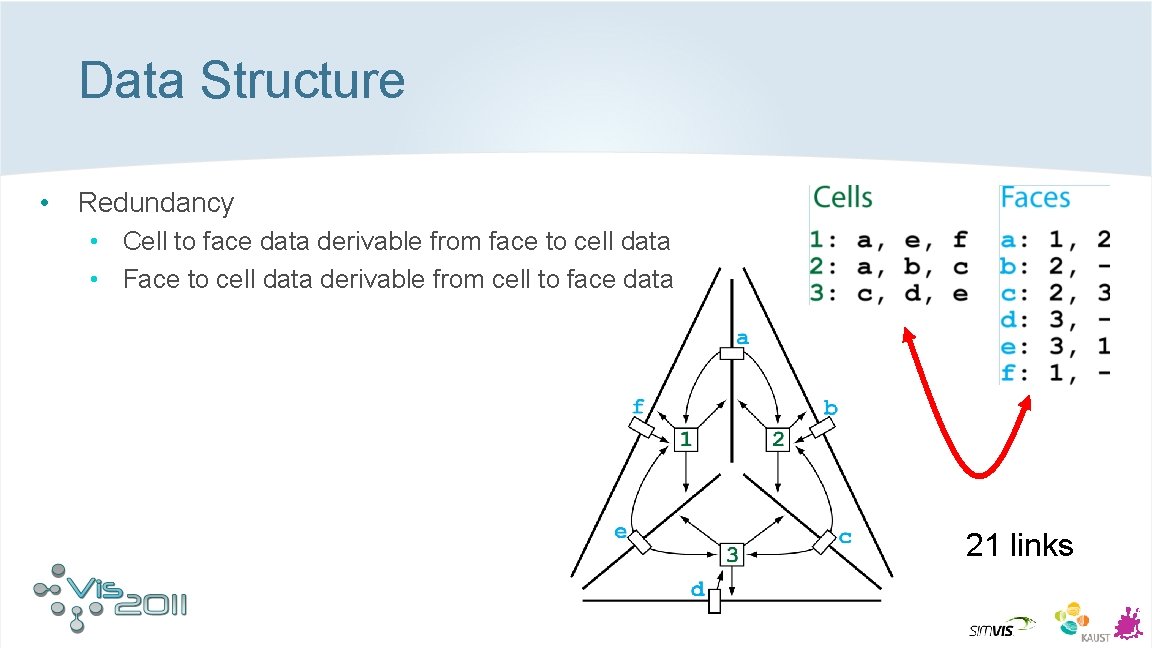
Data Structure • Redundancy • Cell to face data derivable from face to cell data • Face to cell data derivable from cell to face data 21 links
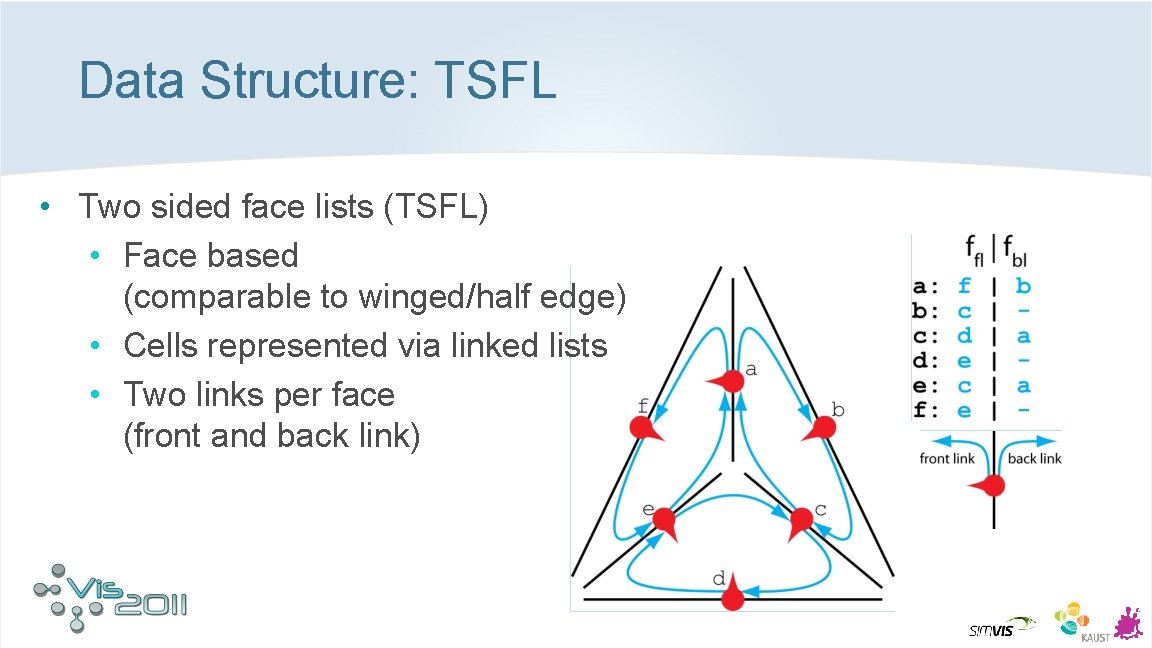
Data Structure: TSFL • Two sided face lists (TSFL) • Face based (comparable to winged/half edge) • Cells represented via linked lists • Two links per face (front and back link)
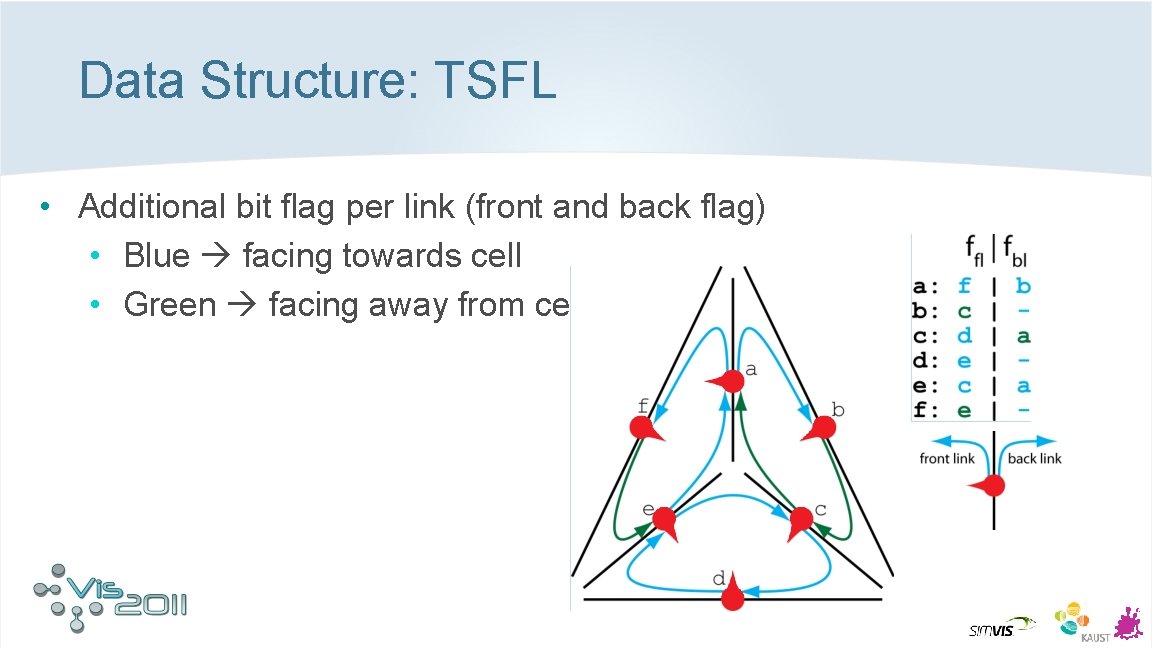
Data Structure: TSFL • Additional bit flag per link (front and back flag) • Blue facing towards cell • Green facing away from cell
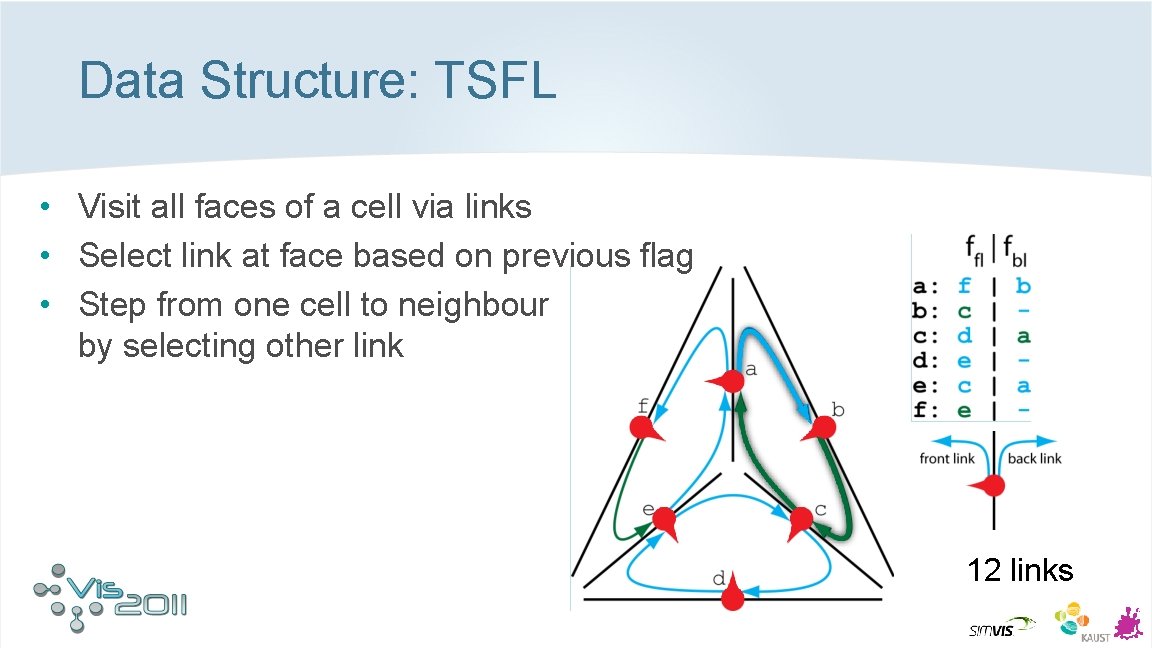
Data Structure: TSFL • Visit all faces of a cell via links • Select link at face based on previous flag • Step from one cell to neighbour by selecting other link 12 links
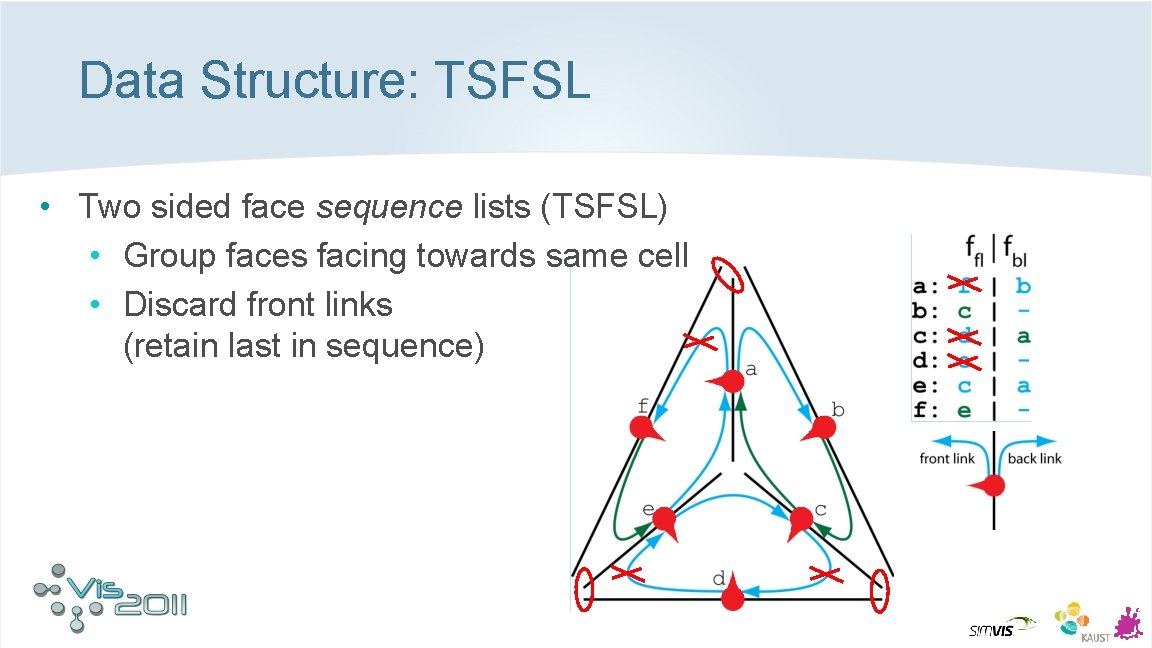
Data Structure: TSFSL • Two sided face sequence lists (TSFSL) • Group faces facing towards same cell • Discard front links (retain last in sequence)
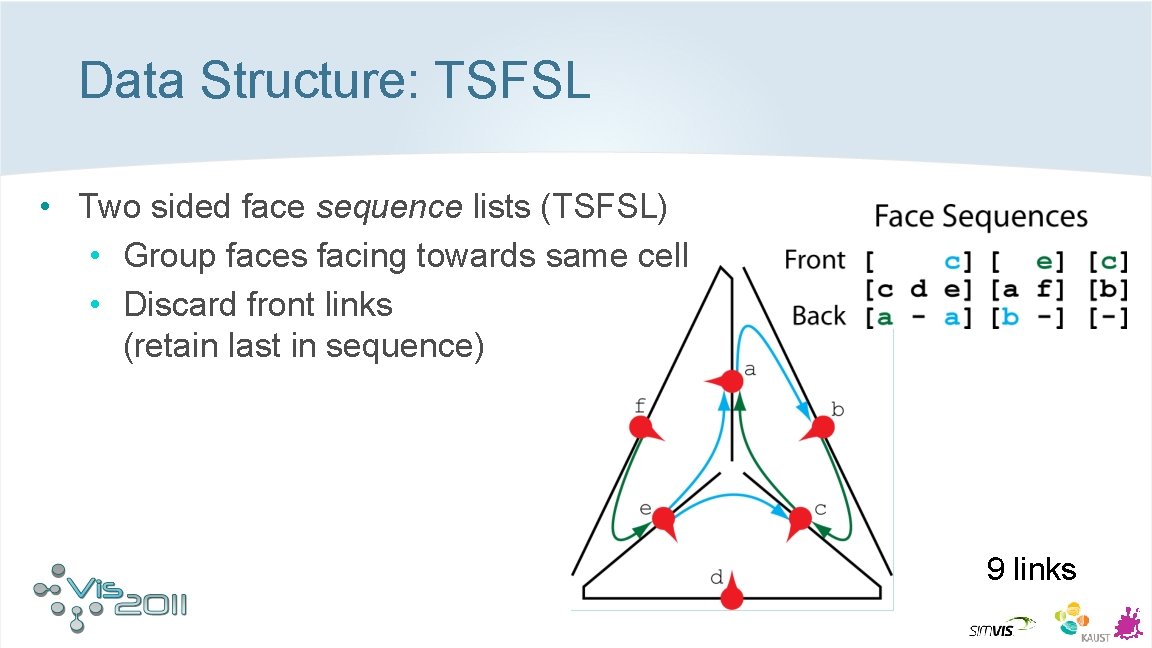
Data Structure: TSFSL • Two sided face sequence lists (TSFSL) • Group faces facing towards same cell • Discard front links (retain last in sequence) 9 links
Data Structure: TSFSL • Requirements for ray casting üQuery all faces of a cell üQuery neighouring cell across a face • Query vertices of a face
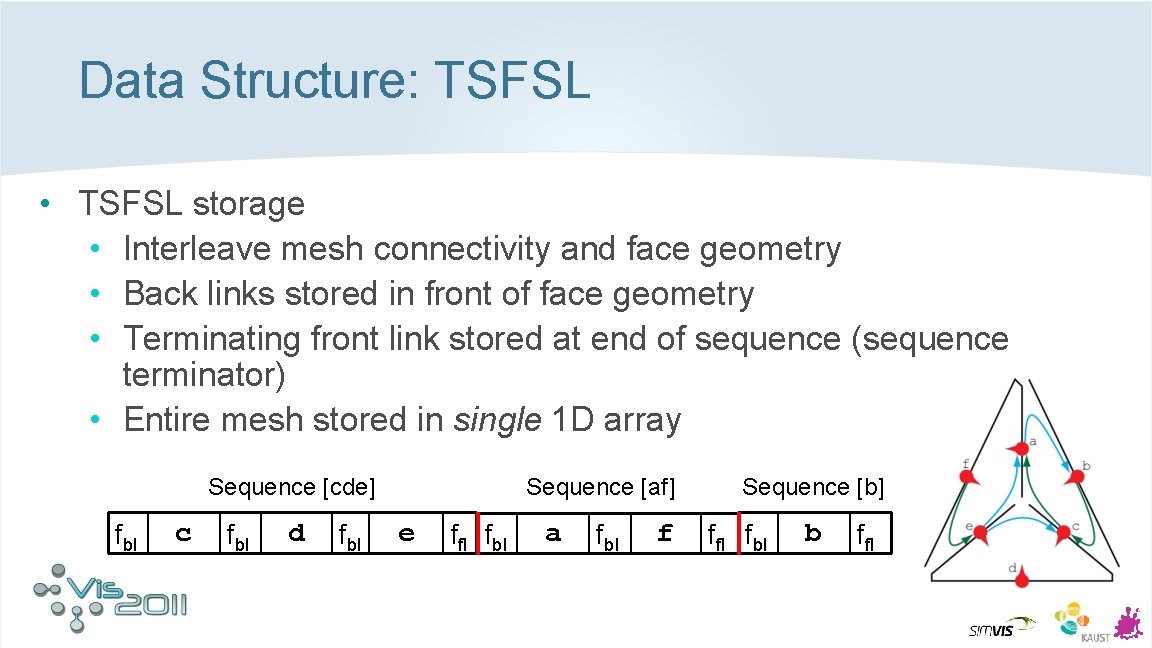
Data Structure: TSFSL • TSFSL storage • Interleave mesh connectivity and face geometry • Back links stored in front of face geometry • Terminating front link stored at end of sequence (sequence terminator) • Entire mesh stored in single 1 D array Sequence [cde] fbl c fbl d fbl Sequence [af] e ffl fbl a fbl f Sequence [b] ffl fbl b ffl
Data Structure: TSFSL • Requirements for ray casting üQuery all faces of a cell üQuery neighouring cell across a face üQuery vertices of a face
GPU based Ray Casting • TSFSL traversal for ray casting Sequence [cde] bl c bl d bl Sequence [af] bl a bl f fl Sequence [b] bl b fl e fl
GPU based Ray Casting • TSFSL traversal for ray casting Sequence [cde] bl c bl d bl Sequence [af] bl a bl f fl Sequence [b] bl b fl e fl
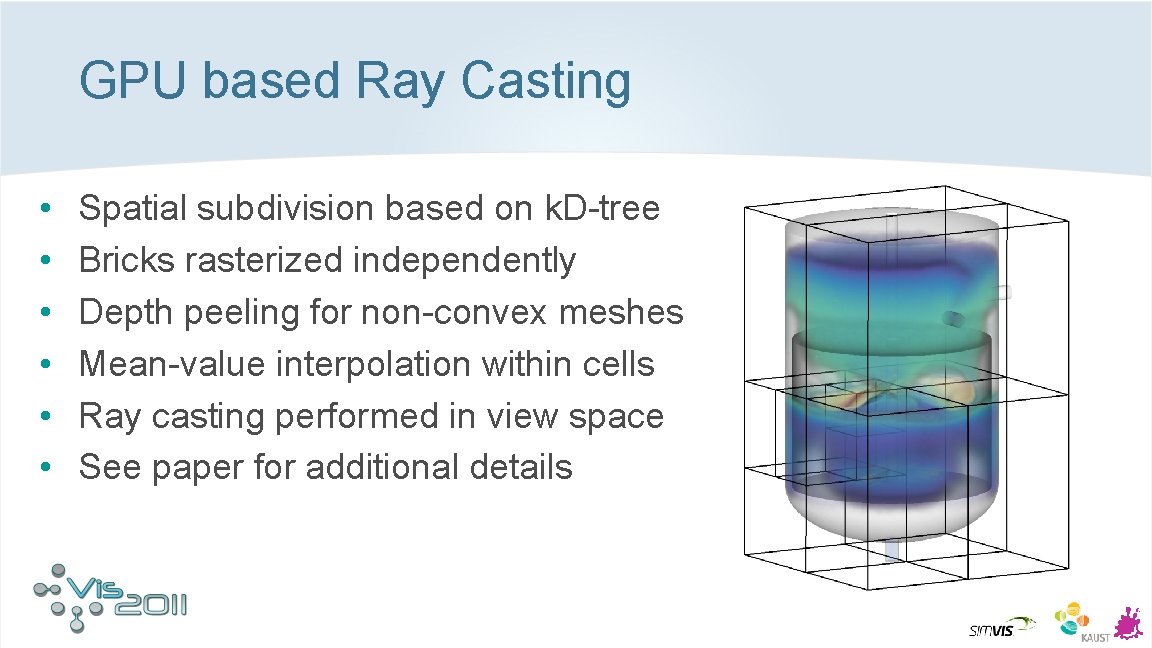
GPU based Ray Casting • • • Spatial subdivision based on k. D-tree Bricks rasterized independently Depth peeling for non-convex meshes Mean-value interpolation within cells Ray casting performed in view space See paper for additional details
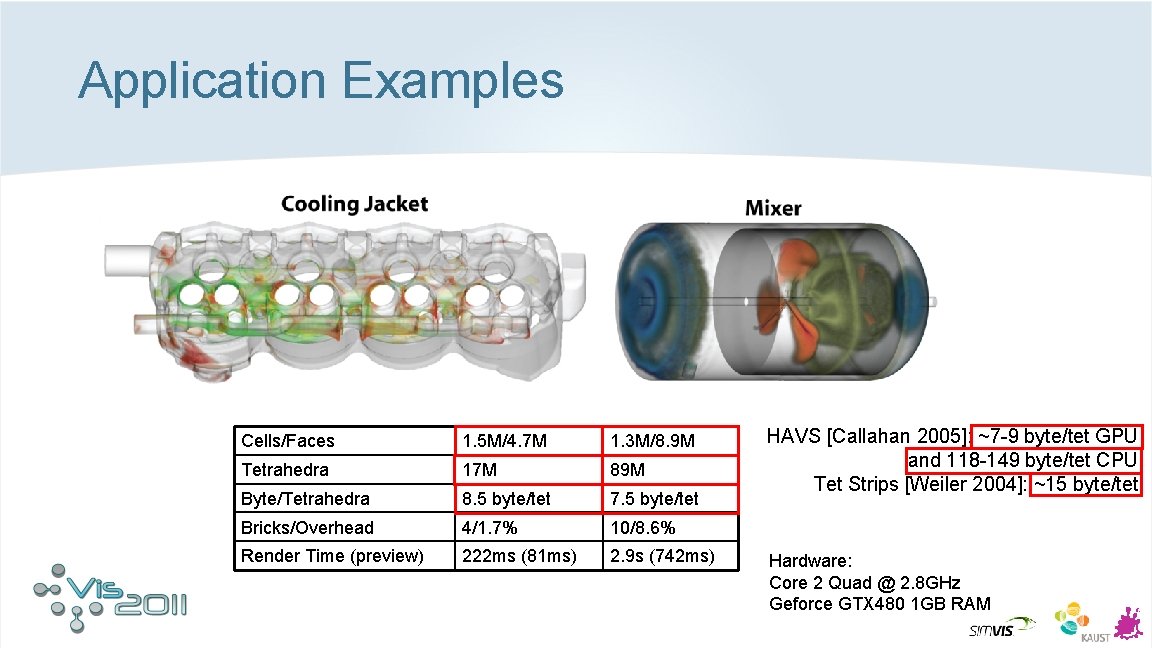
Application Examples Cells/Faces 1. 5 M/4. 7 M 1. 3 M/8. 9 M Tetrahedra 17 M 89 M Byte/Tetrahedra 8. 5 byte/tet 7. 5 byte/tet Bricks/Overhead 4/1. 7% 10/8. 6% Render Time (preview) 222 ms (81 ms) 2. 9 s (742 ms) HAVS [Callahan 2005]: ~7 -9 byte/tet GPU and 118 -149 byte/tet CPU Tet Strips [Weiler 2004]: ~15 byte/tet Hardware: Core 2 Quad @ 2. 8 GHz Geforce GTX 480 1 GB RAM
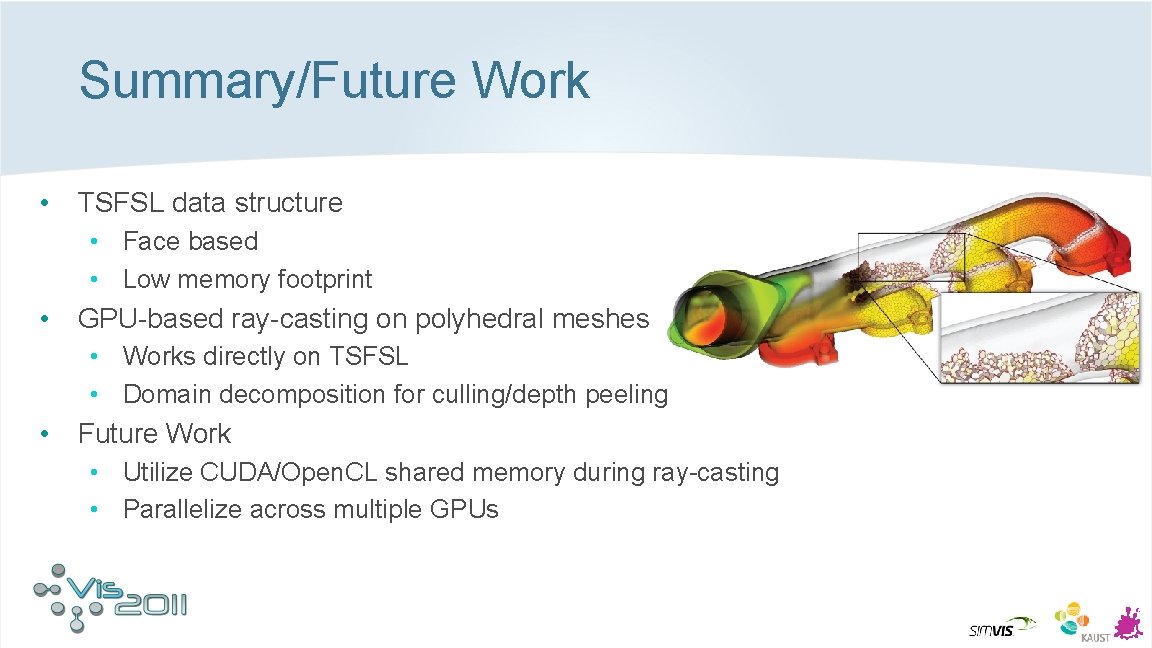
Summary/Future Work • TSFSL data structure • Face based • Low memory footprint • GPU-based ray-casting on polyhedral meshes • Works directly on TSFSL • Domain decomposition for culling/depth peeling • Future Work • Utilize CUDA/Open. CL shared memory during ray-casting • Parallelize across multiple GPUs
Questions? Acknowledgements: Polyhedral datasets courtesy of CD-Adapco Cooling jacket and Diesel Particulate Filter datasets courtesy of AVL List Gmb. H, Graz, Austria Parts of this project have been funded by the Austrian Research Funding Agency (FFG) in the scope of the project Aut. ARG (No. 819352) and the Scale. VS (WWTF) project Thank you for your attention!