
Interactive Reading Chunking Annotation Summary 1 Reading Strategies

- Slides: 13
Interactive Reading Chunking, Annotation, & Summary 1
Reading Strategies � Chunking � Summarization � Annotation They all work together, and, in the end, you will understand, on a deeper level, exactly what you have read. 2
Chunking �The process of breaking the text up in smaller more manageable pieces �Allows for greater summarization �Allows for logical recall points �Allows us understand smaller portions of text at one time 3
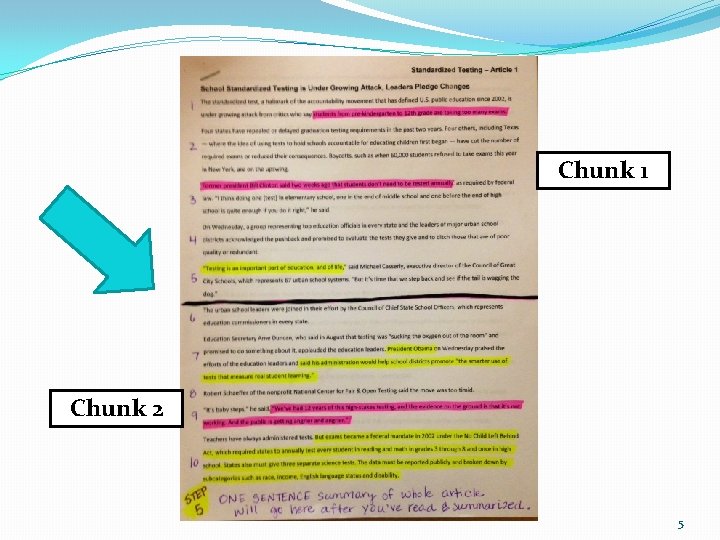
The Chunking Process �Read through the article, first knowing that you will be reading it a 2 nd or even a 3 rd time �Basic Chunking Strategies: 1. Number your paragraphs 2. Break the text into several equal pieces by drawing horizontal lines across the page after each “chunk. ” 4
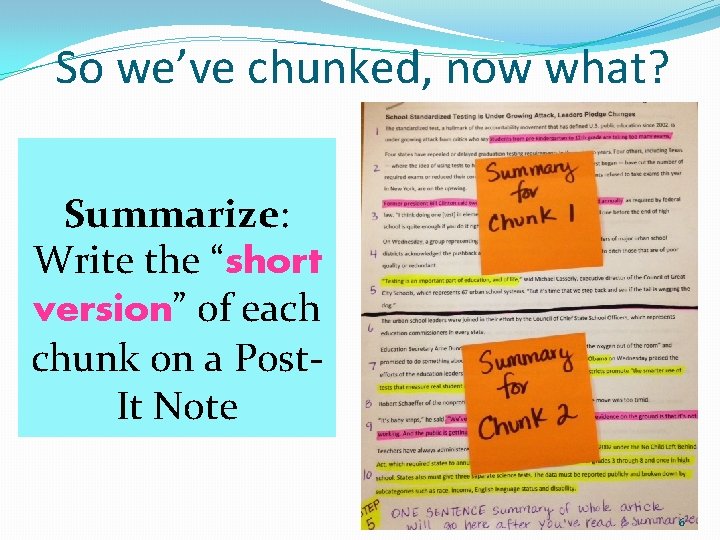
Chunk 1 Chunk 2 5
So we’ve chunked, now what? Summarize: Write the “short version” of each chunk on a Post. It Note 6
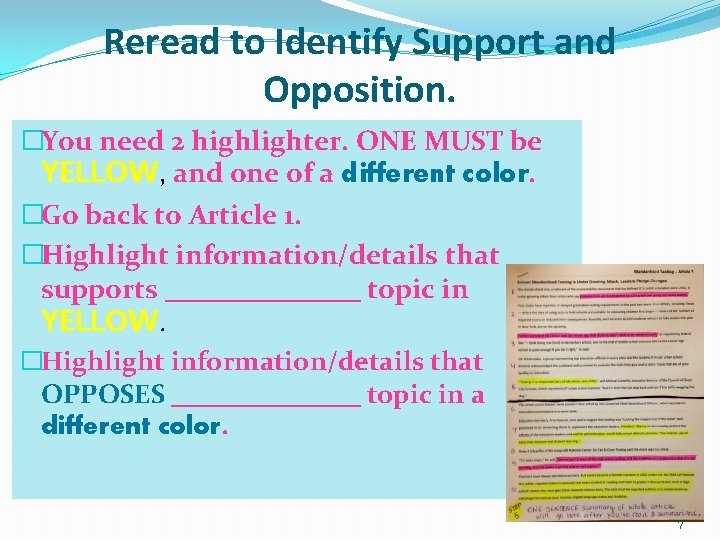
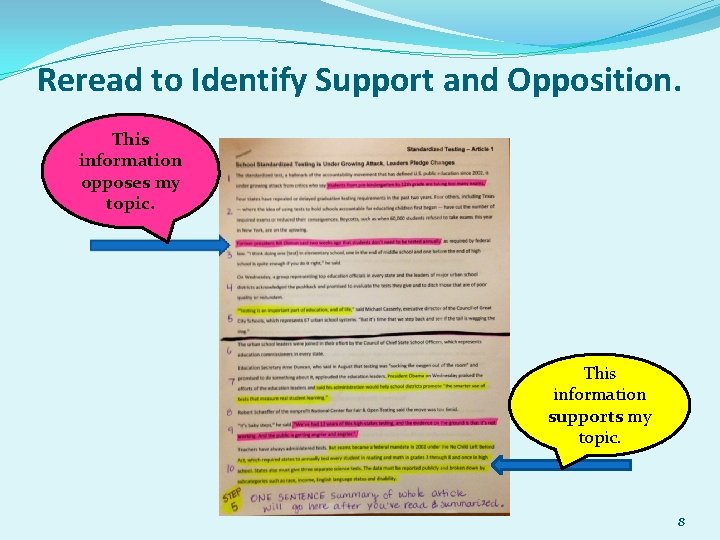
Reread to Identify Support and Opposition. �You need 2 highlighter. ONE MUST be YELLOW, and one of a different color. �Go back to Article 1. �Highlight information/details that supports _______ topic in YELLOW. �Highlight information/details that OPPOSES _______ topic in a different color. 7
Reread to Identify Support and Opposition. This information opposes my topic. This information supports my topic. 8
After Summarizing and Highlighting ~ �You are ready to choose YOUR SIDE of the argument; are you FOR or AGAINST your topic? �THINK carefully about all the information you’ve read before your make your choice. �Look back at each article. �Which color do you see more of? Yellow or other? �Ask: “Which side do I think I can argue better? ” (This may not necessarily be the side you personally believe in. ) Now, Pick a side. 9
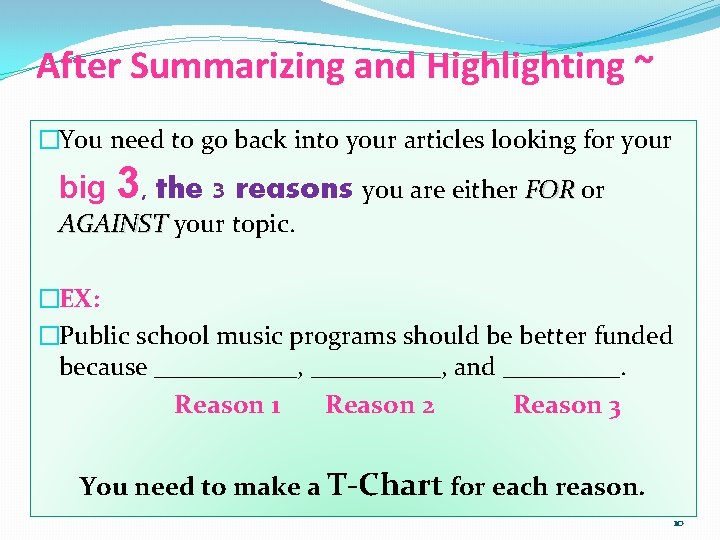
After Summarizing and Highlighting ~ �You need to go back into your articles looking for your big 3, the 3 reasons you are either FOR or AGAINST your topic. �EX: �Public school music programs should be better funded because ______, and _____. Reason 1 Reason 2 Reason 3 You need to make a T-Chart for each reason. 10
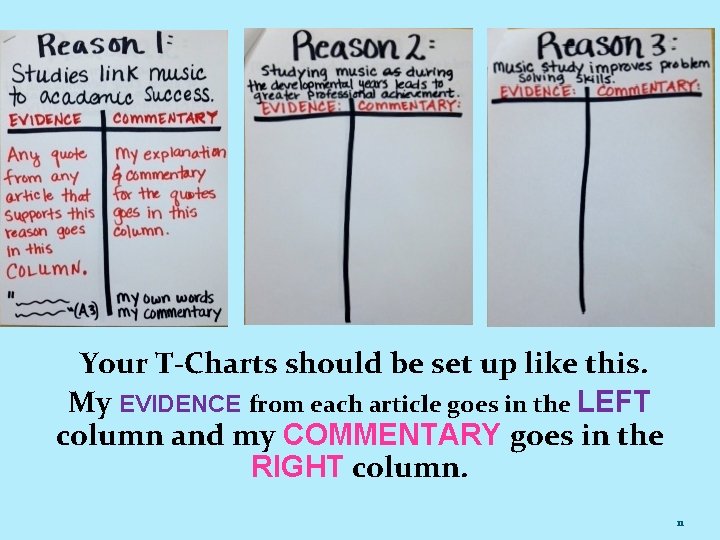
Your T-Charts should be set up like this. My EVIDENCE from each article goes in the LEFT column and my COMMENTARY goes in the RIGHT column. 11
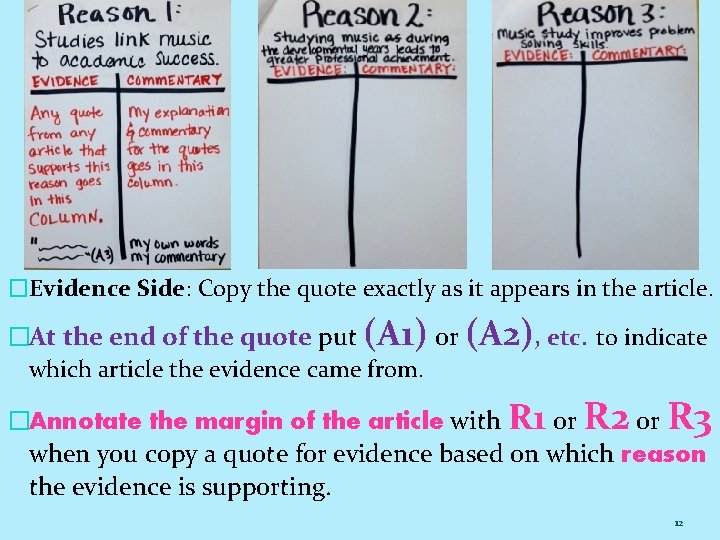
�Evidence Side: Copy the quote exactly as it appears in the article. �At the end of the quote put (A 1) or (A 2), etc. to indicate which article the evidence came from. �Annotate the margin of the article with R 1 or R 2 or R 3 when you copy a quote for evidence based on which reason the evidence is supporting. 12
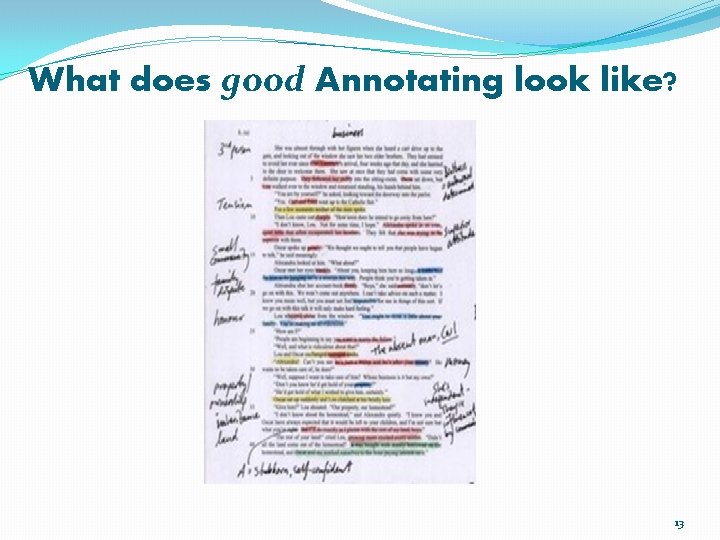
What does good Annotating look like? 13