
Interactive methods and techniques in teaching history General
- Slides: 20
Interactive methods and techniques in teaching history General Secondary School “Angel Karaliychev”
Globalization in the world requires globalization in the field of education as well. Today education means life-long learning rather than learning truths for a certain period of time. Education must be focused on building practical skills and giving knowledge about life and in life itself. The school must become a community of learners.
During the processes of education ability for searching and gaining knowledge and skills are being built and developed. The student understands why they study- to know how to live in this world; to build the world around themselves; and to build harmonious relations with the other people around them. Nowadays more and more interactive methods and techniques are used in education. They involve actively students in the teaching- learning process.
Asking questions In order to activate students’ attention during the lesson the teacher asks the so called “raising discussions questions” at the beginning of the class and requires answers from the pupils at the end of the class.
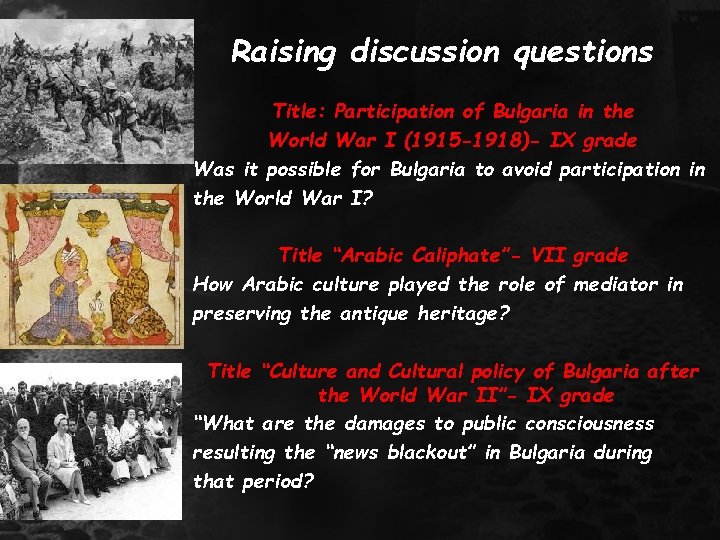
Raising discussion questions Title: Participation of Bulgaria in the World War I (1915 -1918)- IX grade Was it possible for Bulgaria to avoid participation in the World War I? Title “Arabic Caliphate”- VII grade How Arabic culture played the role of mediator in preserving the antique heritage? Title “Culture and Cultural policy of Bulgaria after the World War II”- IX grade “What are the damages to public consciousness resulting the “news blackout” in Bulgaria during that period?
Introductory questions Title “Formation of national consciousness”- IX grade What factors preserved Bulgarians during XV-XVII centuries? Title “The Odrysian kingdom. Thracians and Romans on Balkans” 5 grade Describe the believes of the Thracians and their interaction with the Hellenes in the Black sea towns.
Group/ team work (Elliot Aronson’s method) There are three stages: 1. Groups of 4 -6 students are created. The lesson is divided into parts and each group has part of the information which they learn. A speaker presents the thing they learnt in front of all.
2. A new division of the groups is performed. Representatives of the previous groups takes part in each of the new groups. Each participant shares what they learn in their first group with their new team. 3. The original groups gather together again and the information received from the other groups is shared.
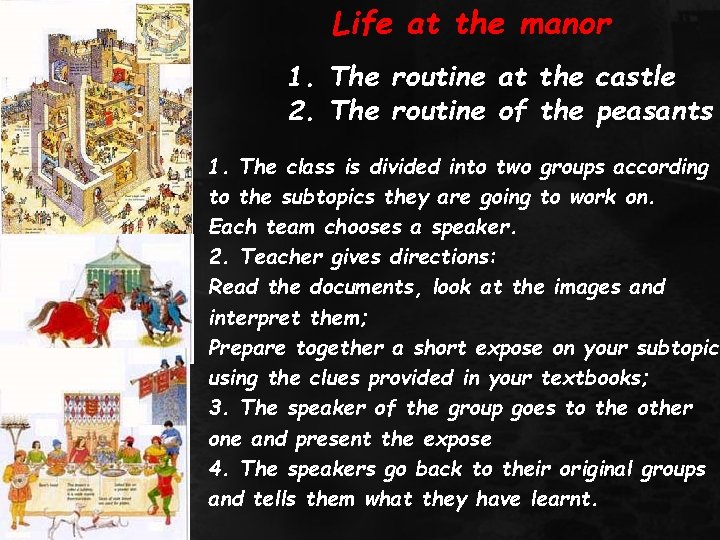
Life at the manor 1. The routine at the castle 2. The routine of the peasants 1. The class is divided into two groups according to the subtopics they are going to work on. Each team chooses a speaker. 2. Teacher gives directions: Read the documents, look at the images and interpret them; Prepare together a short expose on your subtopic using the clues provided in your textbooks; 3. The speaker of the group goes to the other one and present the expose 4. The speakers go back to their original groups and tells them what they have learnt.
Simulation Historical simulation is a recreation of real situations from the past. The aim is to re- create the conditions, causes and consequences that really existed in the past but re-enacted today in order to achieve certain educational objectives.
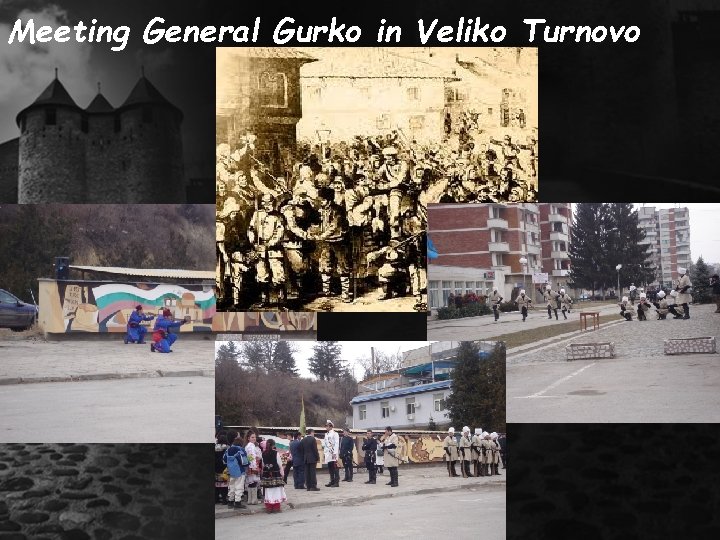
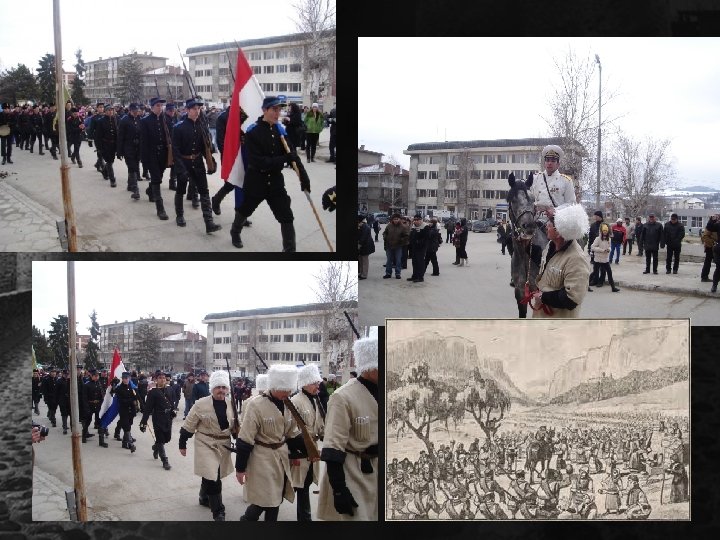
Meeting General Gurko in Veliko Turnovo
Role- play (Method of Moreno) Students are given description of a given role and they are supposed to use their knowledge about a given country, person or a historical period in order to play it realistically. They must show creativity in finding new materials related to theme, in order to re-create the motivation, the way of thinking and reaction of the character or the social group in other historical time.
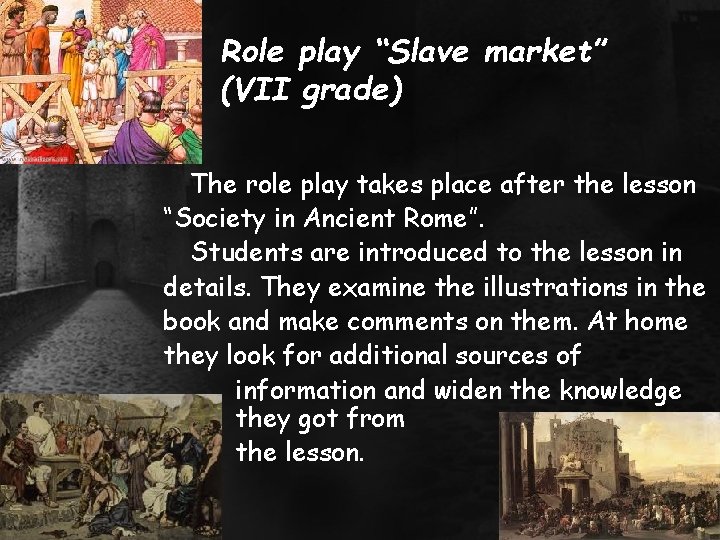
Role play “Slave market” (VII grade) The role play takes place after the lesson “Society in Ancient Rome”. Students are introduced to the lesson in details. They examine the illustrations in the book and make comments on them. At home they look for additional sources of information and widen the knowledge they got from the lesson.
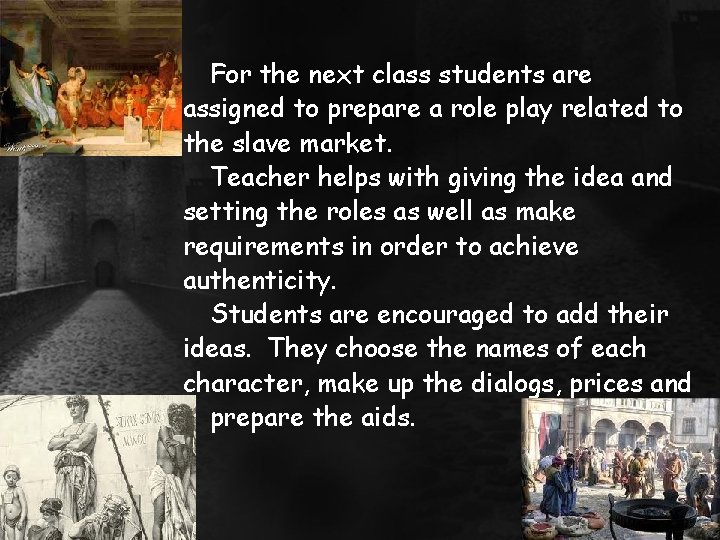
For the next class students are assigned to prepare a role play related to the slave market. Teacher helps with giving the idea and setting the roles as well as make requirements in order to achieve authenticity. Students are encouraged to add their ideas. They choose the names of each character, make up the dialogs, prices and prepare the aids.
Half of the students perform the role play the rest are spectators who watch for the authenticity of information. There are 2 slave markets: 1. Men- Syrian cook, Thracian smith, Greek mathematician; 2. Women- dancer and a cook Students perform different situations selling and buying slaves.
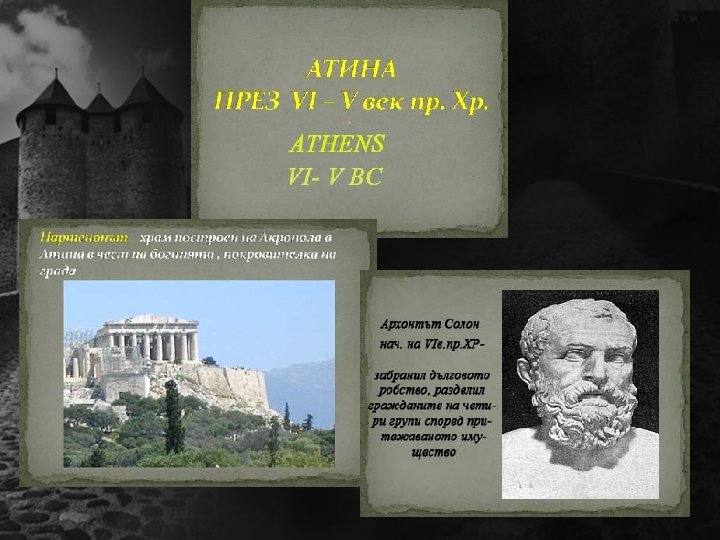
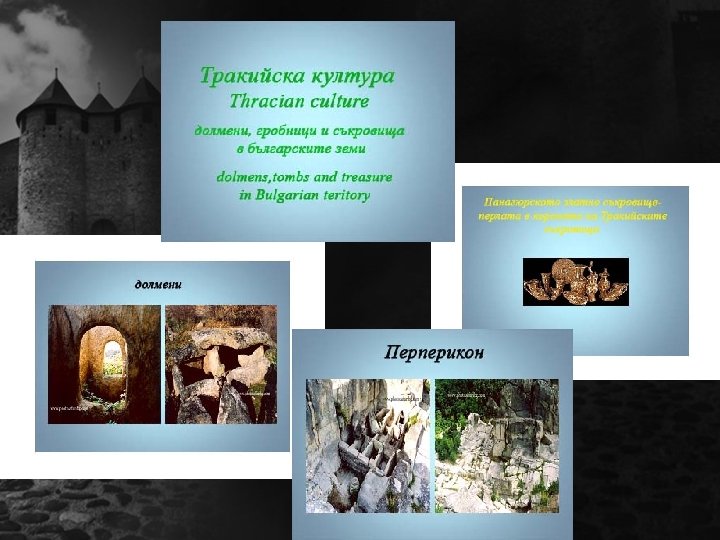
Presentation is effective at different stages of the lesson. Visualization of the studied events allows quick and detailed perception of the presented material and gives opportunity for emotional and colourful teaching. A lot of students make presentations on given subjects showing their skills and abilities for sifting the presented material.
This project has been funded with support from the European Commission. This publication reflects the views only of the author, and the Commission cannot be held responsible for any use which may be made of the information contained therein.