
INTERACTIVE LISTENING A CANDO PARADIGM Anthony Green Bari
INTERACTIVE LISTENING: A CAN-DO PARADIGM Anthony Green Bari University Veterinary School Italy Mimmo Bracciodieta Liceo Scientifico Leonardo da Vinci Cassano – Bari – Italy
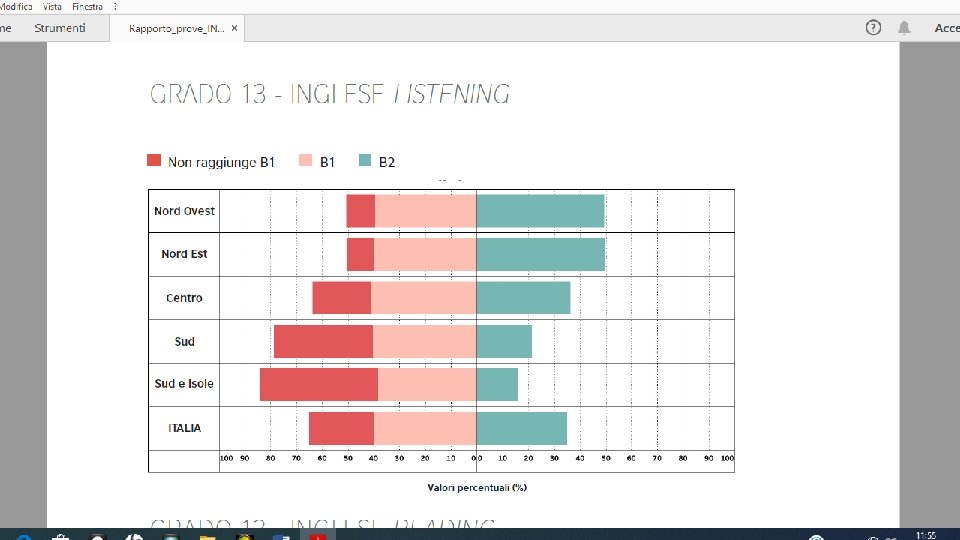
We’re frustrated! Our Ss give up – they’re not taught how to listen
from LINDSAY MILLER, Developing Listening Skills and Authentic Material , 2003 • It is indeed interesting that listening has not received wider attention in the past, given that it is the language skill most often used in everyday life. More than 40 % of our daily communication time is spent on listening, 35 % on speaking, 16 % on reading, and only 9 % on writing (Burley-Allen, 1995)
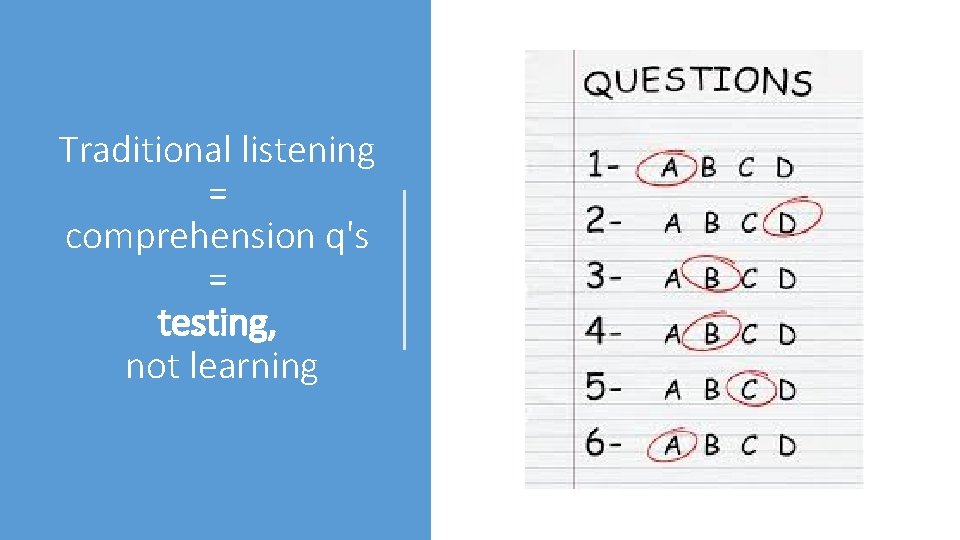
Traditional listening = comprehension q's = testing, not learning
Not enough timetable hours → how to help Ss improve listening skills ?
from MICHAEL ROST, Listening Tasks and Language Acquisition , 2002 • While there is a wealth of L 2 listening material available from media and Internet sources, particularly for learners of English, hardly any of it can be used “as is”, in an unedited, or unprepared form.
from JOHN FIELD, Listening in the Language Classroom , 2008 • …Even with larger classes, learners can be encouraged to share their interpretations of a listening passage with those next to them… two minds are usually better than one (four ears are better than two)… to foster a degree of competition, with listeners vying with each other to see who manages to come up with the correct answer.
from RICHARD CAULDWELL, Phonology for Listening, 2013 • In order to encourage our students to get to grips with the sound substance we have to be prepared to focus on extracts that are short as speech units, or a group of speech units – extracts that are between two and ten seconds long. It is at this level that the moment-by-moment choices which speakers make are observable, it is at this level that words are squeezed into the new shapes.
Some Ss forge ahead, many left behind
Not enough bottom-up strategies ( Field, 2008 ) → weaker listeners lose self-efficacy
Transforming sound into meaning in an i+1 listening text (Krashen 1983)
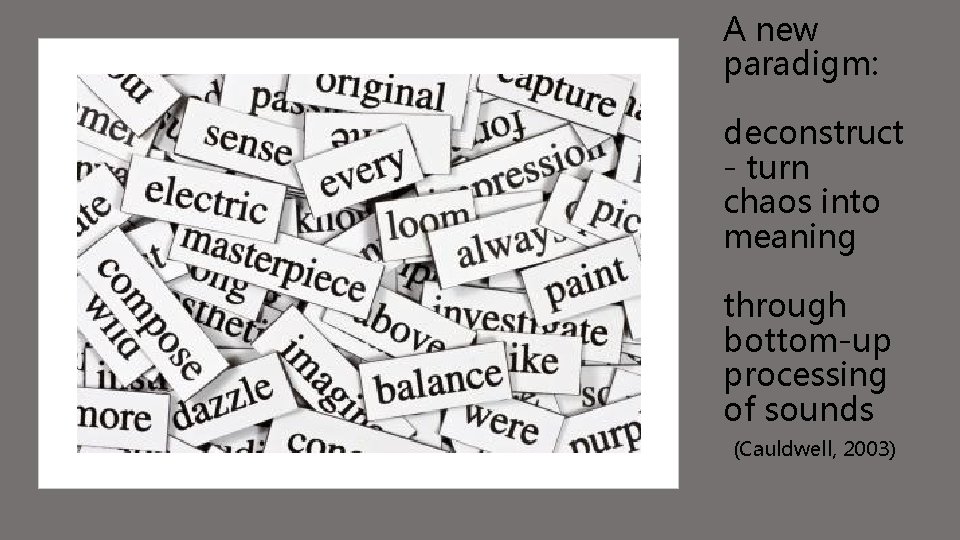
A new paradigm: deconstruct - turn chaos into meaning through bottom-up processing of sounds (Cauldwell, 2003)
Testing listening vs Listening as process The 80 -20 hypothesis Listening as output • Concentrates on below threshold >80%+ • Ignores what is i+1 <20% Listening as process • below threshold <20% • Concentrates on i+1, where learning takes place >80% • Imagine how much faster they can learn!
Ss decode authentic English at i+1 get immediate feedback & keep challenging device (as in a game)
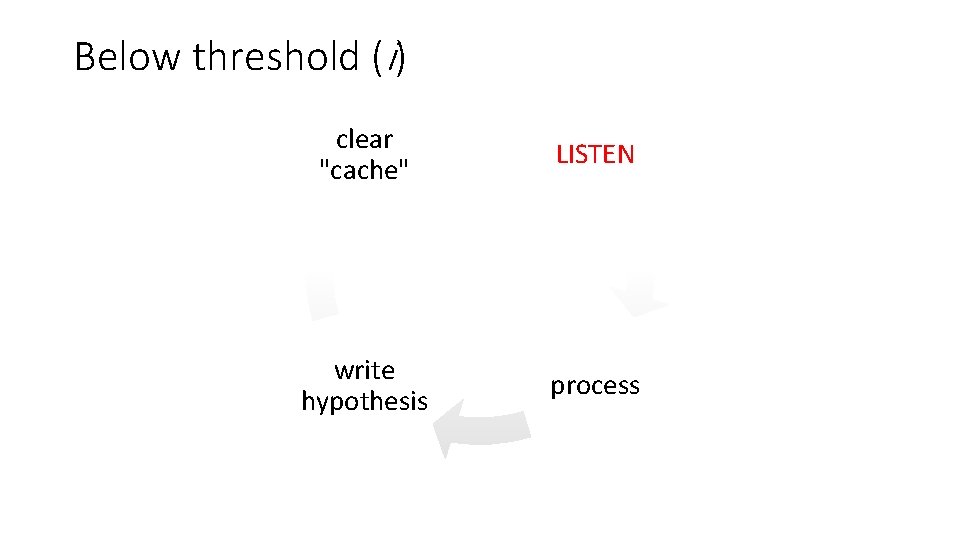
Below threshold (i) clear "cache" LISTEN write hypothesis process
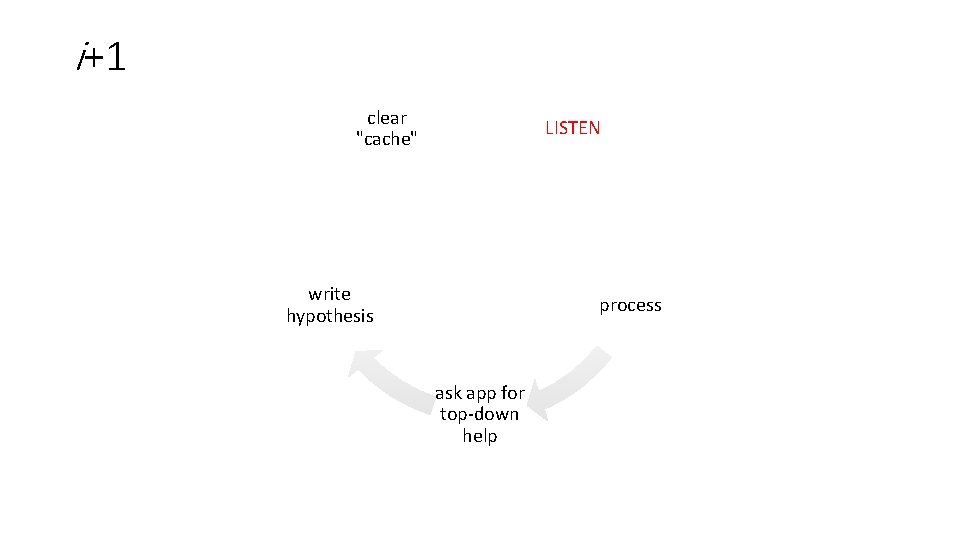
i+1 clear "cache" LISTEN write hypothesis process ask app for top-down help
Senses eyehand brain EAR
Complications: (near-) homophones, rhythm, intonation, accent, speed, etc
The new paradigm: using a special interactive player to: break up speech into component parts test out hypotheses
- Slides: 20