
Interactive Health Communication Applications What are they What

- Slides: 16
Interactive Health Communication Applications What are they? What can they do for patients? Elizabeth Murray DH Career Scientist in Primary Care University College London
IHCA for patients with chronic disease • Needs of patients with chronic disease • NHS Policies • IHCA
Your Task • Turn to your neighbour and introduce yourselves • Imagine you, or a close family member has just been diagnosed with a chronic disease like diabetes or heart disease • Think about how you would feel, and what you would like to know.
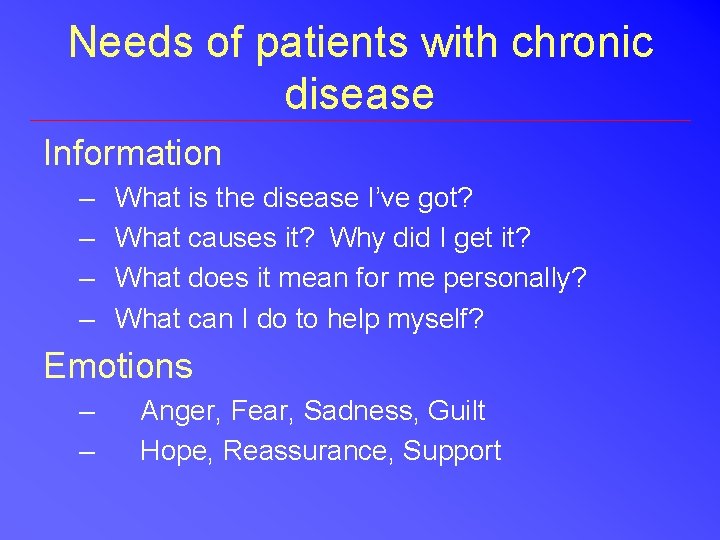
Needs of patients with chronic disease Information – – What is the disease I’ve got? What causes it? Why did I get it? What does it mean for me personally? What can I do to help myself? Emotions – – Anger, Fear, Sadness, Guilt Hope, Reassurance, Support
NHS Policy
NHS Policy: Self-care: “One of the key pillars of the NHS Plan” “Encourages partnership in decisionmaking, supports them in managing their [condition], and helps them to adopt and maintain a healthy lifestyle”.
NHS Policy: Information for Health • £ 1 billion • Information for professionals and patients • Improving quality and range of information available to patients – About their condition – On lifestyle and health
Interactive Health Communication Applications: Definition: Computer packages combining health information for patients with peer support, decision support or behaviour change support.
Potential benefits of IHCA • Relay information • Enable informed decision-making • Promote self-care • Promote healthy behaviours • Promote peer information and support • Manage demand for health services.
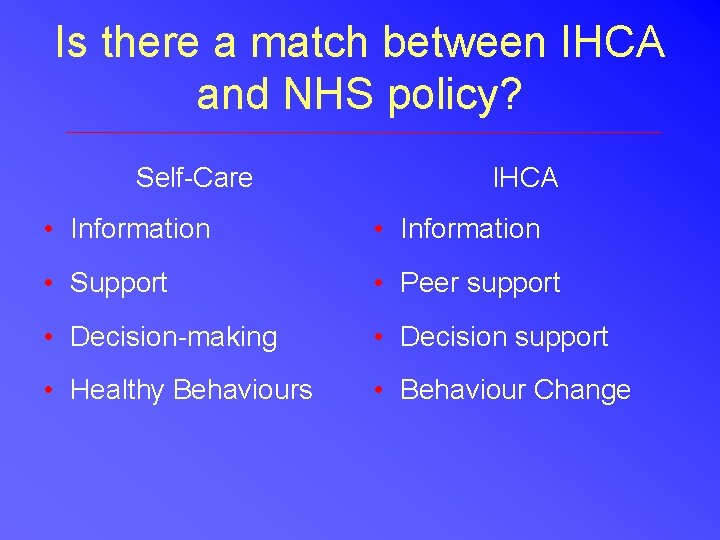
Is there a match between IHCA and NHS policy? Self-Care IHCA • Information • Support • Peer support • Decision-making • Decision support • Healthy Behaviours • Behaviour Change
Interactive Health Communication Applications for Patients with Chronic Disease: A Cochrane Systematic Review Elizabeth Murray, Jo Burns, Sharon See Tai, Rosalind Lai, Irwin Nazareth University College London Funded by: Department of Health, No. CTEN.
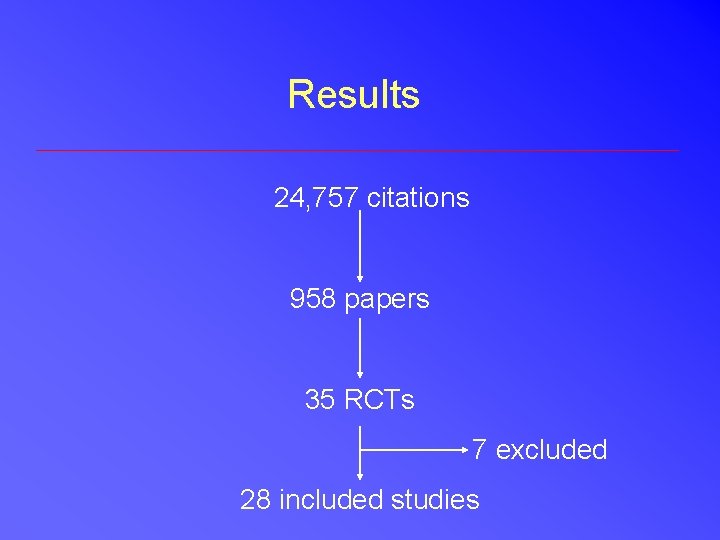
Results 24, 757 citations 958 papers 35 RCTs 7 excluded 28 included studies
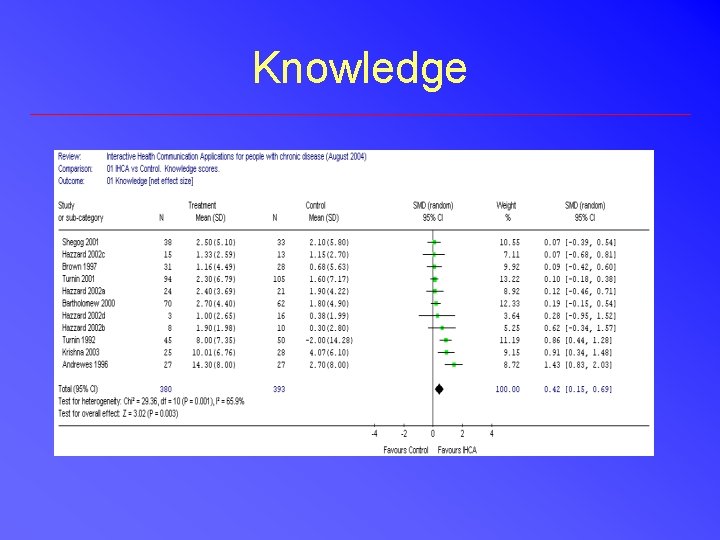
Knowledge
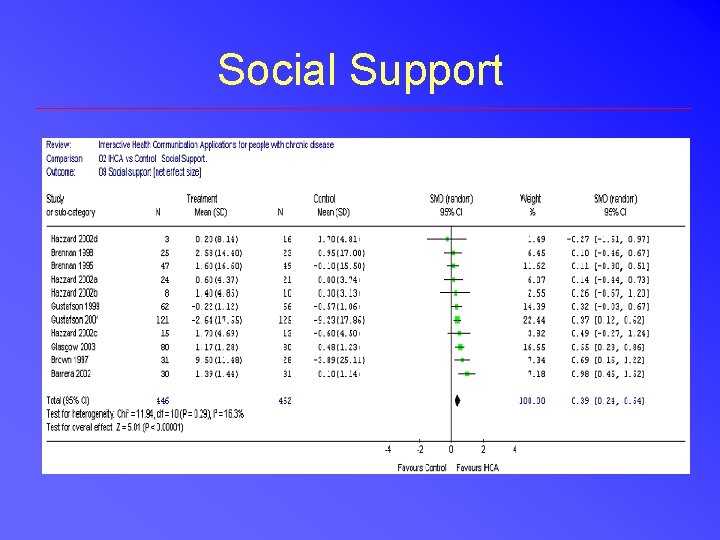
Social Support
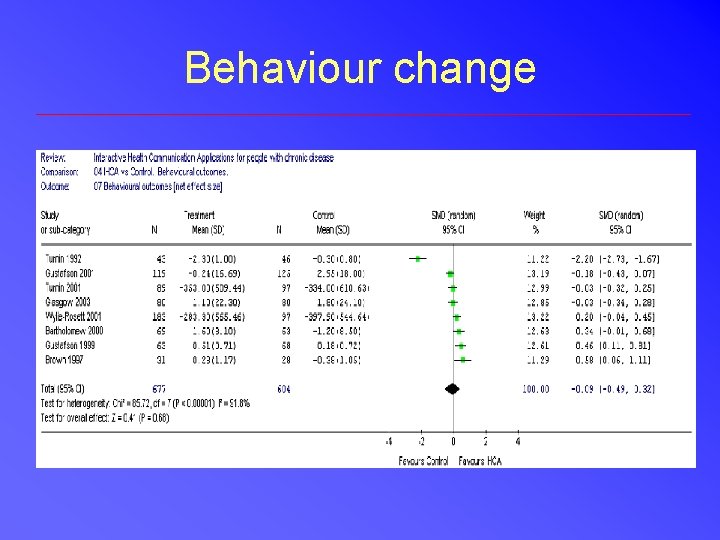
Behaviour change
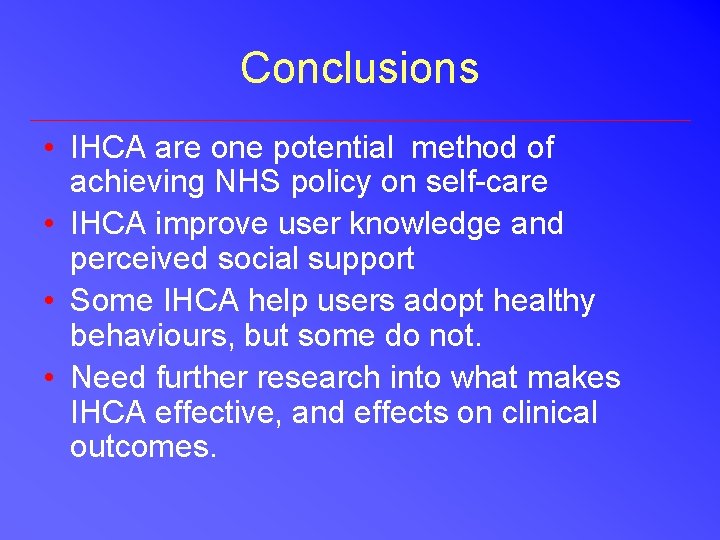
Conclusions • IHCA are one potential method of achieving NHS policy on self-care • IHCA improve user knowledge and perceived social support • Some IHCA help users adopt healthy behaviours, but some do not. • Need further research into what makes IHCA effective, and effects on clinical outcomes.