
Interactive Electronic Technical Manual IETM Standards and Classes
- Slides: 27
Interactive Electronic Technical Manual (IETM) Standards and Classes By Don Reynolds Man. Tech Advanced Systems International, Inc. Bonn, Germany January 2000
ETM/IETM Specifications and Standards �MIL-PRF-87268/9 (U. S. Do. D) �Metafile for Interactive Documents (U. S. Navy) �MIL-STD-2361 (U. S. Army) �MIL-PRF-28001 C with IED OS (CALS) �AECMA 1000 D (European Aircraft Mfg. ) �ATA 2100 (Air Transport Association) �STEP Product Documentation (ISO)
FACTS �The availability of COTS products that support an IETM specification/standard is inversely proportional to the complexity of that specification/standard �Most vendors are becoming less interested in Do. D requirements and more interested in making products that work over Web Important!!
IETM Standardization We want neutral data (e. g. , XML or SGML), but what is neutral? ? ? IETM DTDs generally include dynamic constructs that require specialized (i. e. unique) authoring and presentation systems
U. S. Do. D IETM Specifications �MIL-PRF-87268 �General content, style, format, and user interaction requirements for IETMs �Governs the look and feel �MIL-PRF-87269 �Database requirements for IETMs �Separates data into a generic layer and a contentspecific layer
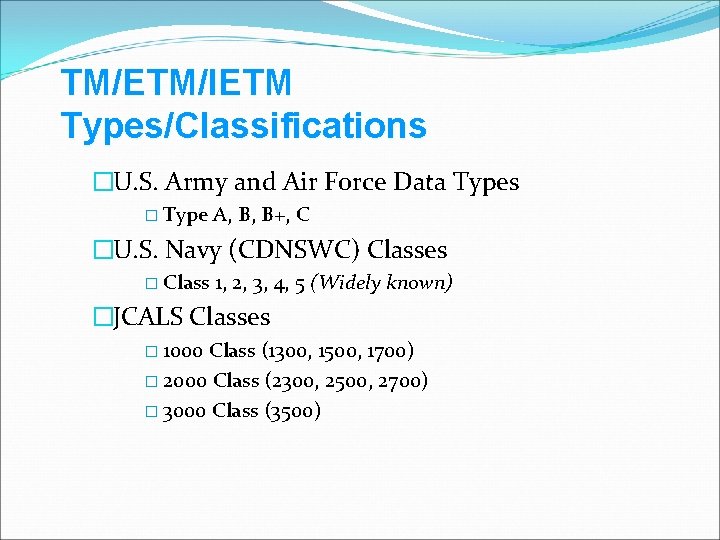
TM/ETM/IETM Types/Classifications �U. S. Army and Air Force Data Types � Type A, B, B+, C �U. S. Navy (CDNSWC) Classes � Class 1, 2, 3, 4, 5 (Widely known) �JCALS Classes � 1000 Class (1300, 1500, 1700) � 2000 Class (2300, 2500, 2700) � 3000 Class (3500)
ETM/IETM Classes �Existing ETMs/IETMs generally span classes �Classes exist to aid understanding, they were not designed for contractual use
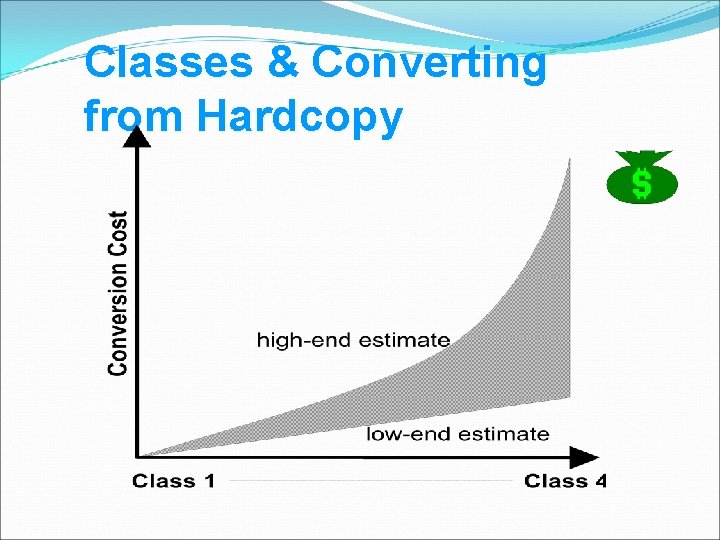
Classes & Converting from Hardcopy
ETM Class 1 �Electronically indexed page images �Display: Full page-oriented electronic viewing �Data: MIL-PRF-28002 (raster image), Postscript, or PDF data �Functionality: Access pages via intelligent index, limited use of hotspots �Note: OK for TM data that rarely changes
ETM Class 2 �Electronic scrolling document (also, page-oriented or frame oriented) �Display: Scrolling text/graphics window �Data: ASCII text, possible HTML, XML, or SGML tagging, bitmap graphics �Functionality: Browse through scrolling information with user selectable hot-spots on text or graphics
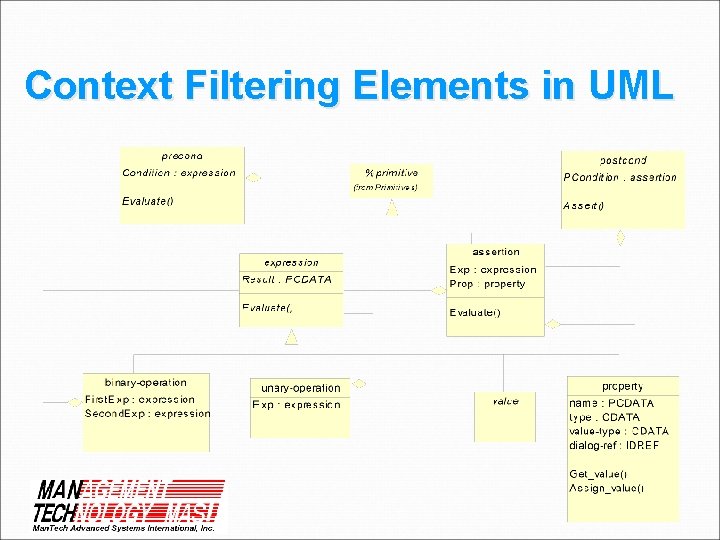
Classes 3, 4, 5 = IETMs �Difference between ETMs and IETMs �An IETM asks questions and responds accordingly to user-provided answers �An IETM employs context-dependent filtering, display is driven by conditions that are controlled by variables and expressions
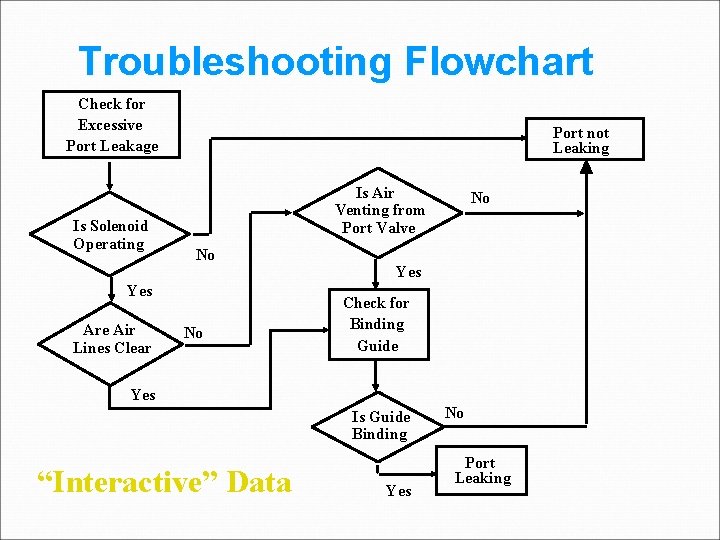
Troubleshooting Flowchart Check for Excessive Port Leakage Is Solenoid Operating Port not Leaking Is Air Venting from Port Valve No Yes Are Air Lines Clear No No Yes Check for Binding Guide Yes Is Guide Binding “Interactive” Data Yes No Port Leaking
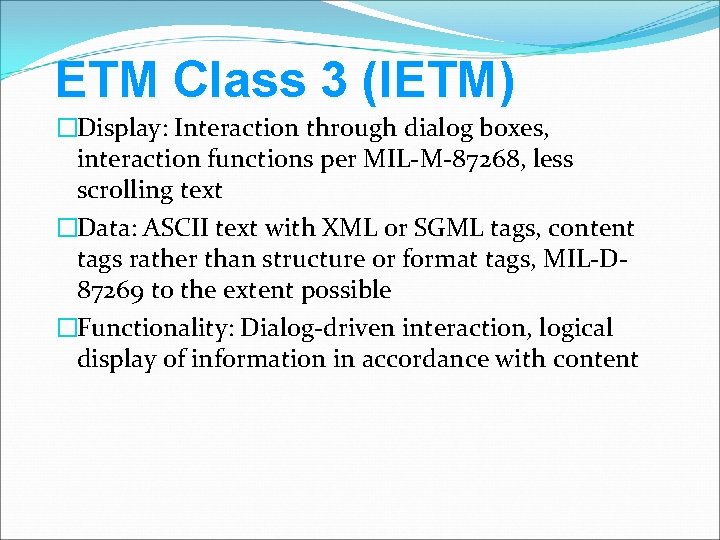
ETM Class 3 (IETM) �Display: Interaction through dialog boxes, interaction functions per MIL-M-87268, less scrolling text �Data: ASCII text with XML or SGML tags, content tags rather than structure or format tags, MIL-D 87269 to the extent possible �Functionality: Dialog-driven interaction, logical display of information in accordance with content
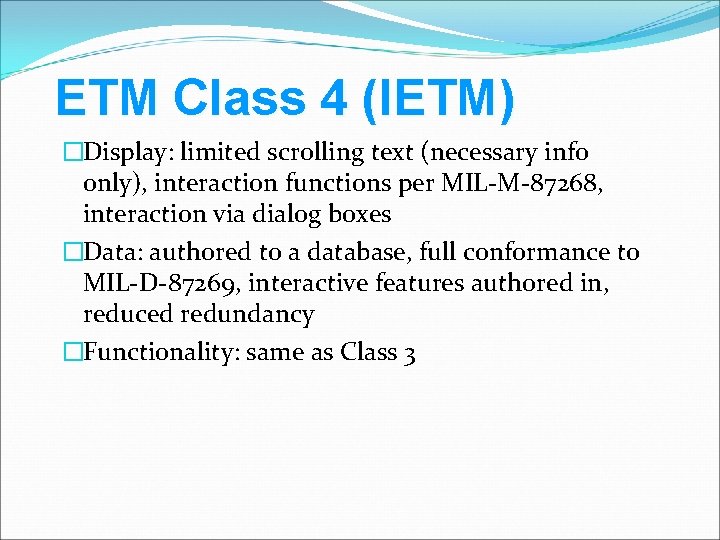
ETM Class 4 (IETM) �Display: limited scrolling text (necessary info only), interaction functions per MIL-M-87268, interaction via dialog boxes �Data: authored to a database, full conformance to MIL-D-87269, interactive features authored in, reduced redundancy �Functionality: same as Class 3
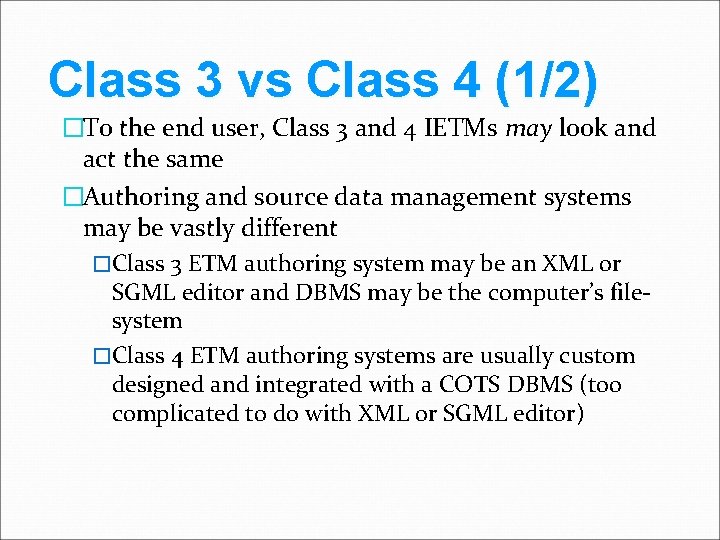
Class 3 vs Class 4 (1/2) �To the end user, Class 3 and 4 IETMs may look and act the same �Authoring and source data management systems may be vastly different �Class 3 ETM authoring system may be an XML or SGML editor and DBMS may be the computer’s filesystem �Class 4 ETM authoring systems are usually custom designed and integrated with a COTS DBMS (too complicated to do with XML or SGML editor)
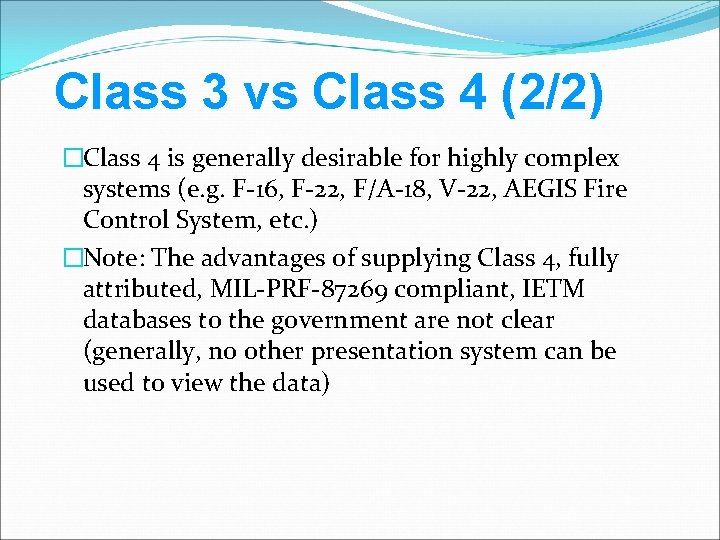
Class 3 vs Class 4 (2/2) �Class 4 is generally desirable for highly complex systems (e. g. F-16, F-22, F/A-18, V-22, AEGIS Fire Control System, etc. ) �Note: The advantages of supplying Class 4, fully attributed, MIL-PRF-87269 compliant, IETM databases to the government are not clear (generally, no other presentation system can be used to view the data)
ETM Class 5 (IETM) �Integrated Database IETM �Not a clearly defined class but is intended to be a superset of Class 4 �Accounts for integration of Class 4 IETMs with other applications �Model-based or rule-based expert system diagnostics �Training, Interactive Courseware
Hardcopy Requirements BEWARE �Producing both IETMs and traditional hardcopy TMs from the same data is generally more difficult as ETM Class increases �May be necessary � Power outages, transportability, readability (large drawings and schematics)
87269 and AECMA 1000 D �Fundamentally different approaches �AECMA 1000 D is built on the Data Module (DM) concept � 87269 is built up from a Generic Layer concept in concert with a Content Specific Layer �Both approaches have certain advantages and disadvantages
Data Organization/Hierarchy � 87269 allows for a recursive system element to denote hierarchy �This can be used with or without a Standard Numbering System �In 1000 D, hierarchy can be delineated through a Standard Numbering System and the Data Module Code �As opposed to the nesting of DMs within the markup
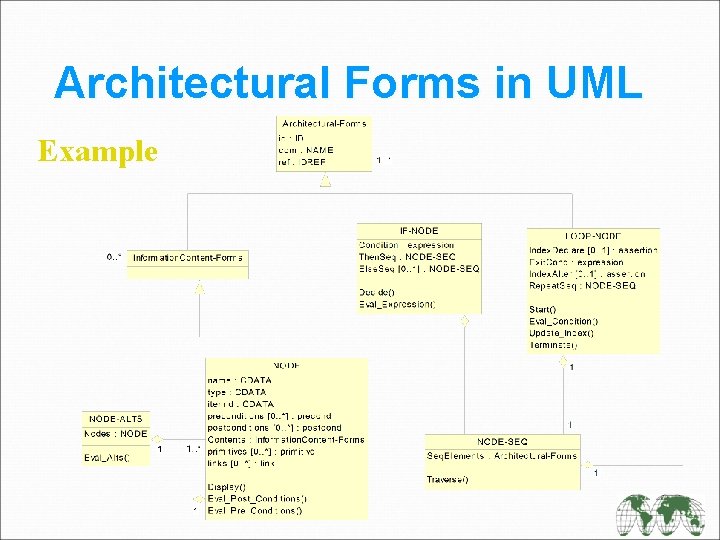
Dynamics � 87269 handles dynamic data with embedded variables, expressions, and variable-driven conditional branching � Pre-conditions, Post-conditions, IF-NODEs, LOOPNODEs, NODE-ALTs � These, however, have a negative impact on COTS product support � 1000 D has some dynamic capabilities with fault isolation information for simple traversement through Yes/No sequences
87269 and the Web �We are currently looking at formulating a Webenabled alternative to 87269 �Direct translation of 87269 DTDs to XML will not result in Web compatibility �The functionality given by variables, expressions, conditional-branching, etc. cannot be handled directly in XML by an XML-capable browser � Creative work-arounds are required
87269 and UML �Developing a UML model of the generic layer and the O-level content specific layer in 87269 �From this UML model we are examining Webcompatible alternatives that include XML, Java, etc.
Why UML? �To make 87269 constructs more specific and comprehensible for developers �UML is the latest OO modeling language, standardized through the OMG, and continues to gain acceptance world-wide � 87269 is Object Oriented in nature due to the use of architectural forms �Easy to move from UML to XML, Java, and C++ for implementation
Architectural Forms in UML Example
Context Filtering Elements in UML
Final Comments �There is much room for improvement in the standardization of U. S. Do. D IETMs �The primary U. S. Do. D IETM database specification 87269 is being examined to achieve improvements in interoperability at the source data level and improvements in Web compatibility �The Joint IETM Architecture is designed to improve interoperability at the user level