
Interactive Assessment Polling Technology for Classrooms HandsOn By
Interactive Assessment & Polling Technology for Classrooms “Hands-On!” By Robert C. Kutschbach Hondros College & Carleton Realty
Getting to Know the Polling Device Equipment • PC or Mac ▫ System Requirements �Turning. Point 2008 4. 2. 4 �Microsoft Windows XP, Vista, or 7 32 -bit or 64 -bit OS �Office 2003, 2007 or 2010 �Intel or AMD 600 MHz class processor (1 GHz or higher recommended) � 256 MB RAM � 60 MB hard disk space (an additional 32 MB is required if you do not have Microsoft. NET Framework 2. 0 installed) � 1024 x 768 resolution at 32 -bit color or higher �Standard USB 1. 1/2. 0 port (for USB-based hardware devices) �Ethernet or 802. 11 compatible wireless network card (for Response. Ware and Presenter. Ware use)

Getting to Know the Polling Device Equipment • Response. Cards (1 per student or group) • USB / RF (Radio Frequency) Receiver ▫ Range � 200 feet �Can be increased with multiple RF Receivers ▫ Capacity �Up to 1, 000 Response. Cards per 1 RF Receiver �Can be increased with multiple RF Receivers
How it Works • Standard Power. Point Presentation with selected interactive questions inserted • When the presentation calls for a response, the student responds by selecting an answer. • The instructor then “Closes Polling” and the results are shown. • The instructor may then adjust the presentation based on the class response.
Primary Uses • Getting to Know the Class/Audience • Assessing Basic Knowledge of Subject • Assessing Ongoing Retention/Understanding • Group Discussion/Feedback • Quizzes • Tests/Exams • Games • Evaluations

Getting to Know the Class/Audience
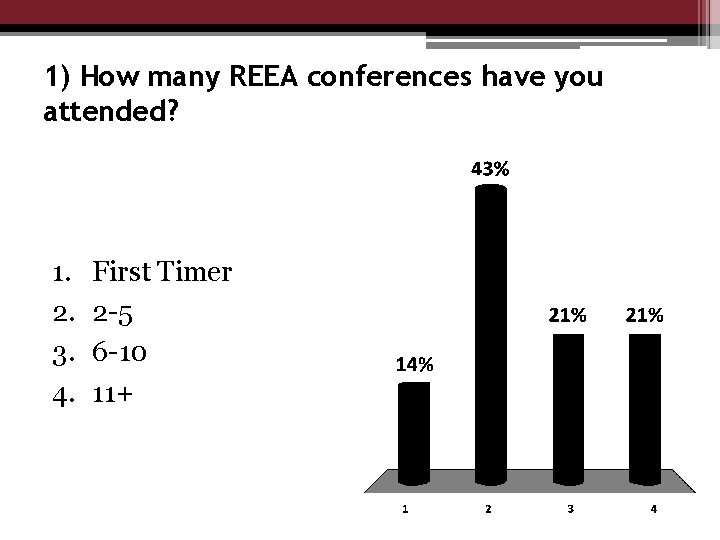
1) How many REEA conferences have you attended? 1. 2. 3. 4. First Timer 2 -5 6 -10 11+
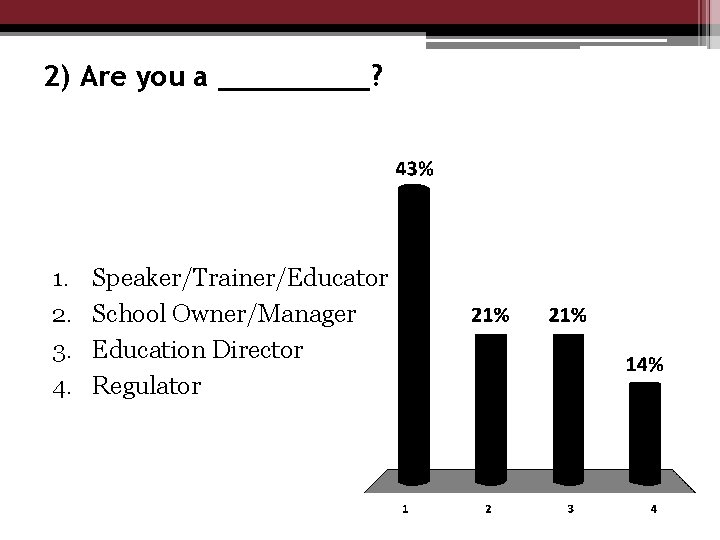
2) Are you a _____? 1. 2. 3. 4. Speaker/Trainer/Educator School Owner/Manager Education Director Regulator
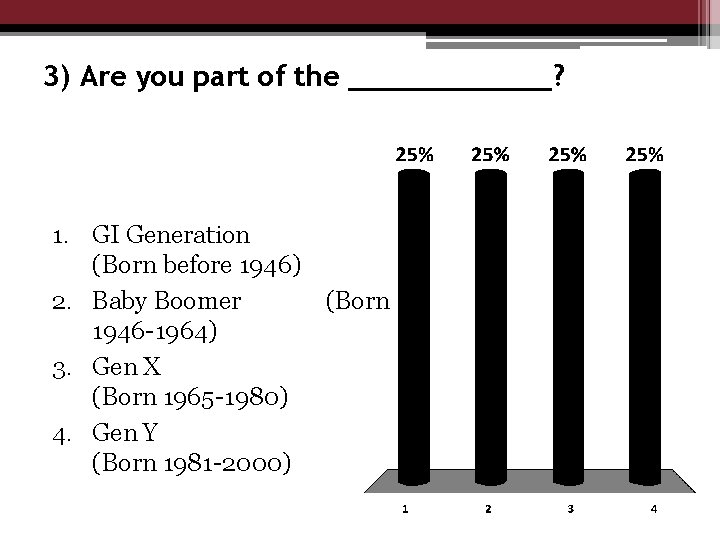
3) Are you part of the ______? 1. GI Generation (Born before 1946) 2. Baby Boomer (Born 1946 -1964) 3. Gen X (Born 1965 -1980) 4. Gen Y (Born 1981 -2000)
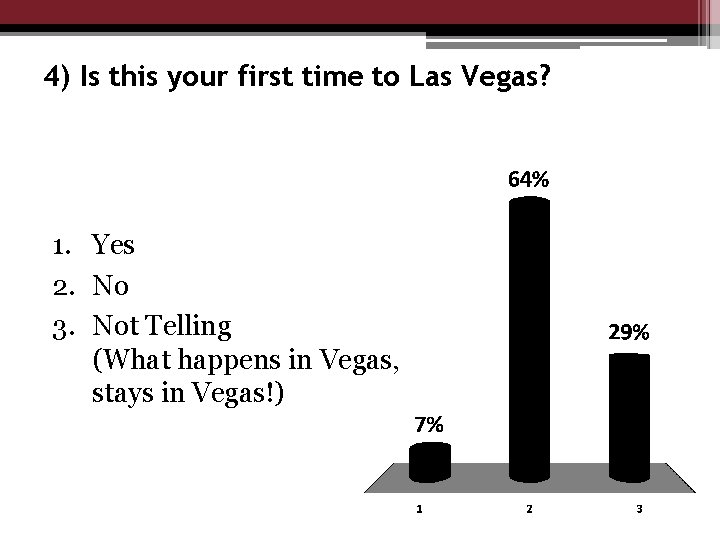
4) Is this your first time to Las Vegas? 1. Yes 2. No 3. Not Telling (What happens in Vegas, stays in Vegas!)

Review of GAPE Generally Accepted Principles of Education
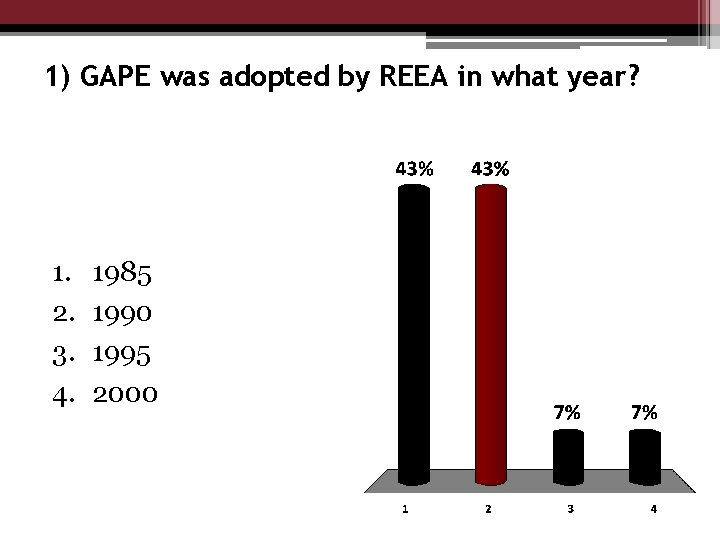
1) GAPE was adopted by REEA in what year? 1. 2. 3. 4. 1985 1990 1995 2000
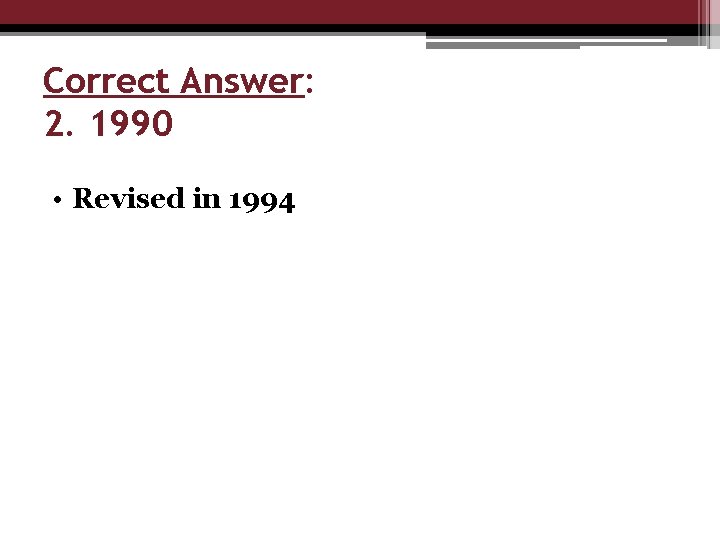
Correct Answer: 2. 1990 • Revised in 1994
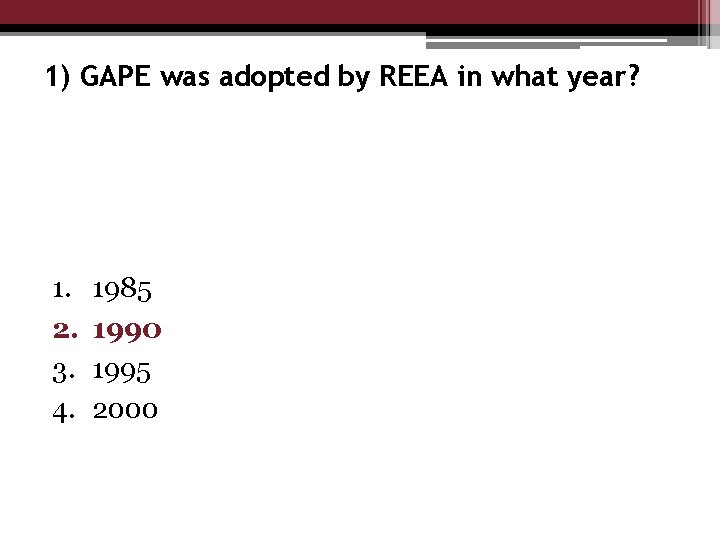
1) GAPE was adopted by REEA in what year? 1. 2. 3. 4. 1985 1990 1995 2000
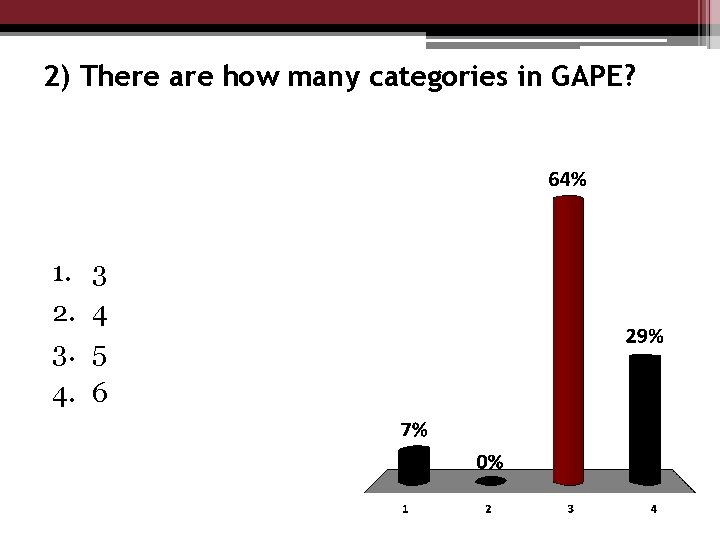
2) There are how many categories in GAPE? 1. 2. 3. 4. 3 4 5 6
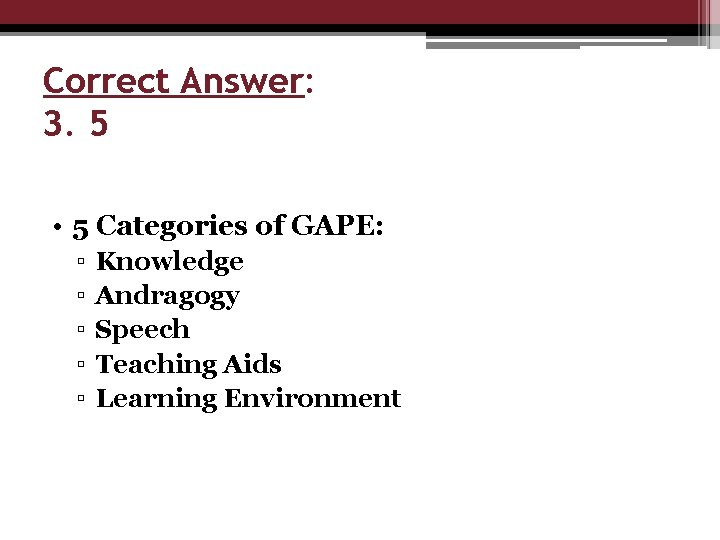
Correct Answer: 3. 5 • 5 Categories of GAPE: ▫ ▫ ▫ Knowledge Andragogy Speech Teaching Aids Learning Environment
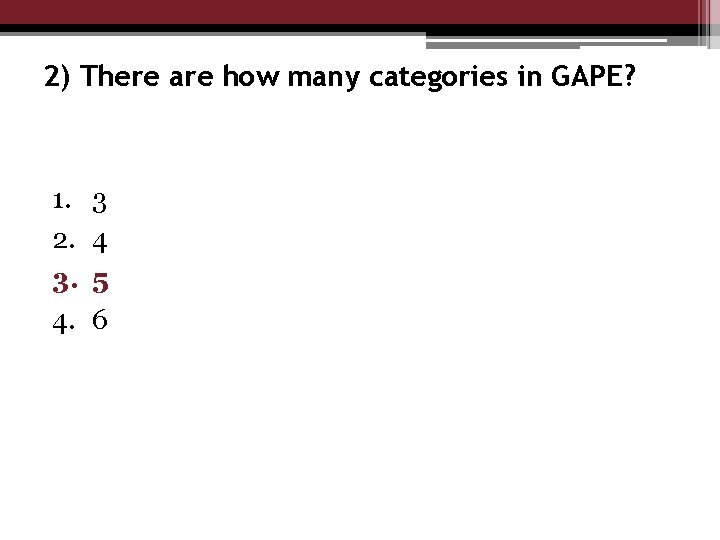
2) There are how many categories in GAPE? 1. 2. 3. 4. 3 4 5 6
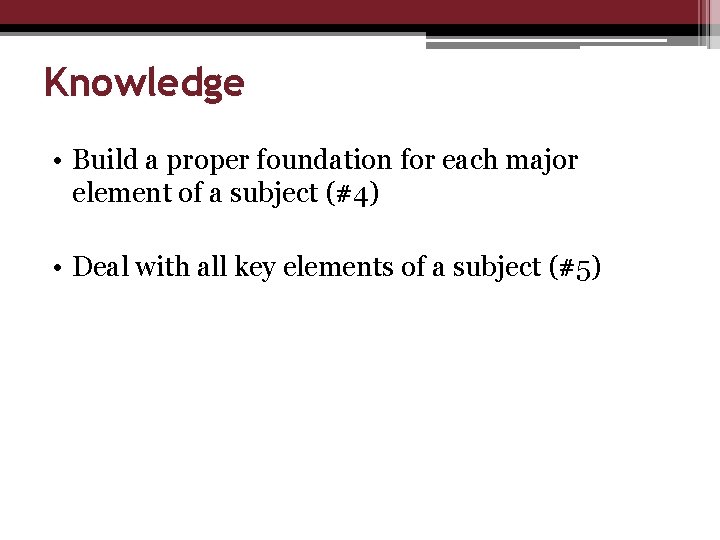
Knowledge • Build a proper foundation for each major element of a subject (#4) • Deal with all key elements of a subject (#5)
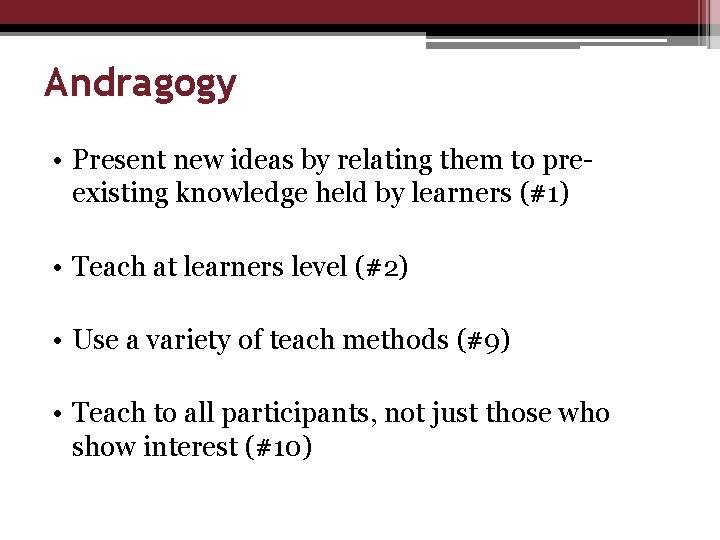
Andragogy • Present new ideas by relating them to preexisting knowledge held by learners (#1) • Teach at learners level (#2) • Use a variety of teach methods (#9) • Teach to all participants, not just those who show interest (#10)
Speech • Keep the presentation on pace thus finishing the material in the allotted time (#3)
Teaching Aids • Deviate from prepared material only to meet specific needs (#6) • Use modern presentation equipment (#8)
Learning Environment • Be positive toward subject matter (#1) • Refrain from ridiculing either the learner or others (#2)
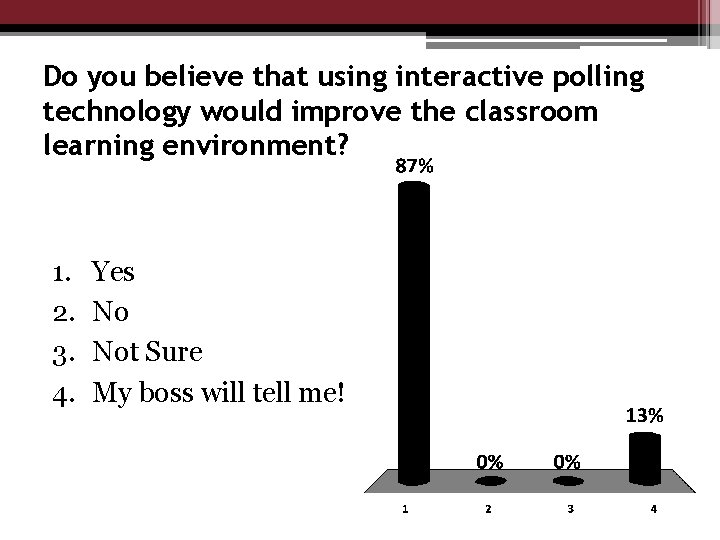
Do you believe that using interactive polling technology would improve the classroom learning environment? 1. 2. 3. 4. Yes No Not Sure My boss will tell me!

Group Discussion/Feedback
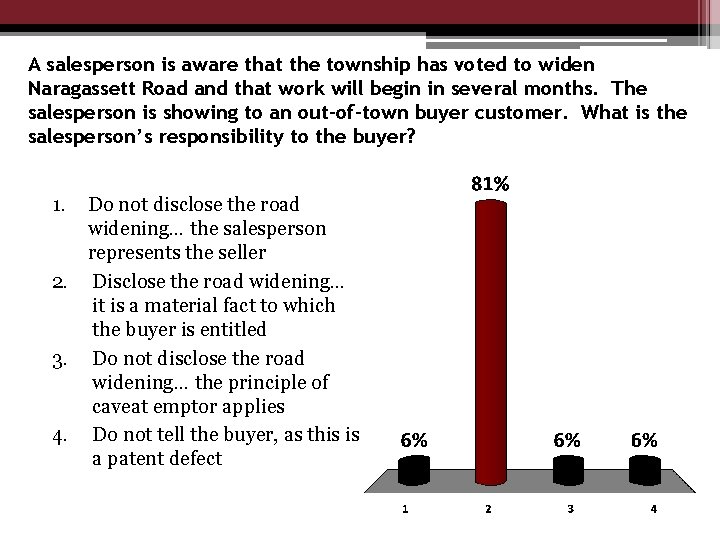
A salesperson is aware that the township has voted to widen Naragassett Road and that work will begin in several months. The salesperson is showing to an out-of-town buyer customer. What is the salesperson’s responsibility to the buyer? 1. Do not disclose the road widening… the salesperson represents the seller 2. Disclose the road widening… it is a material fact to which the buyer is entitled 3. Do not disclose the road widening… the principle of caveat emptor applies 4. Do not tell the buyer, as this is a patent defect
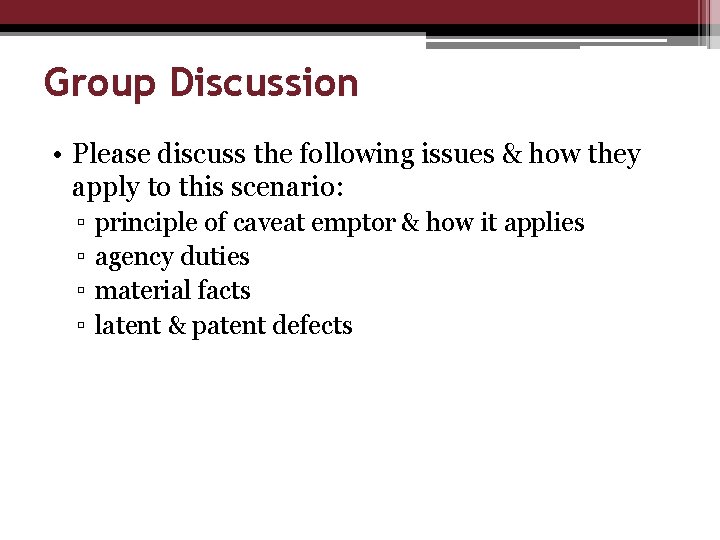
Group Discussion • Please discuss the following issues & how they apply to this scenario: ▫ ▫ principle of caveat emptor & how it applies agency duties material facts latent & patent defects
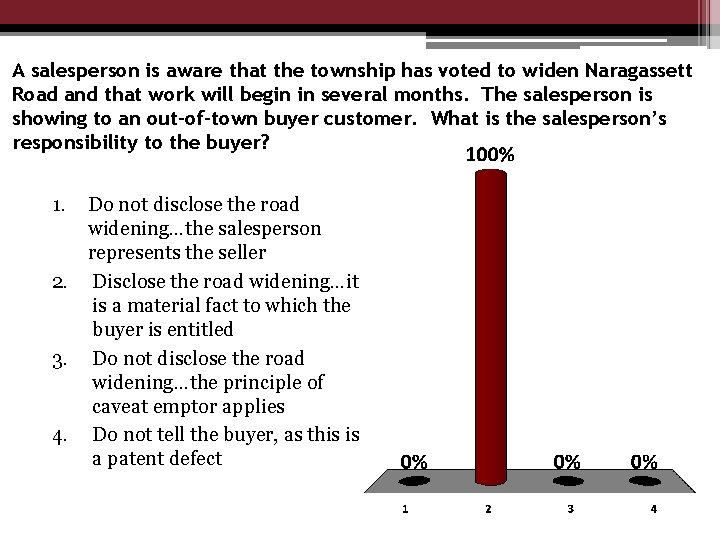
A salesperson is aware that the township has voted to widen Naragassett Road and that work will begin in several months. The salesperson is showing to an out-of-town buyer customer. What is the salesperson’s responsibility to the buyer? 1. Do not disclose the road widening…the salesperson represents the seller 2. Disclose the road widening…it is a material fact to which the buyer is entitled 3. Do not disclose the road widening…the principle of caveat emptor applies 4. Do not tell the buyer, as this is a patent defect

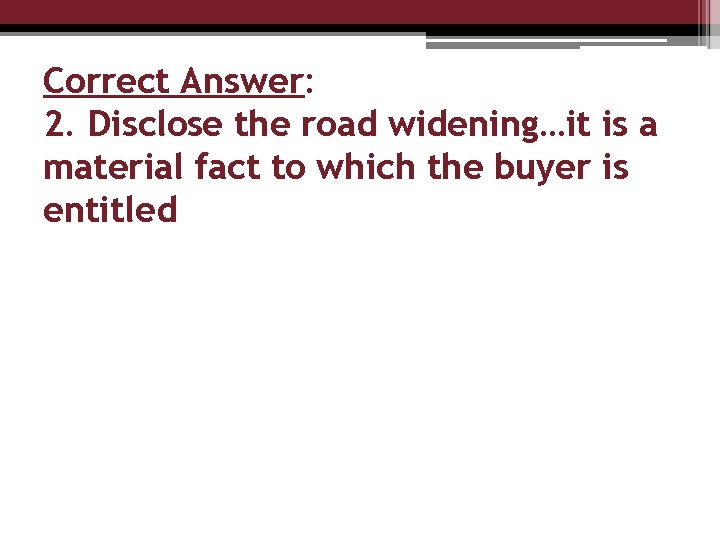
Correct Answer: 2. Disclose the road widening…it is a material fact to which the buyer is entitled
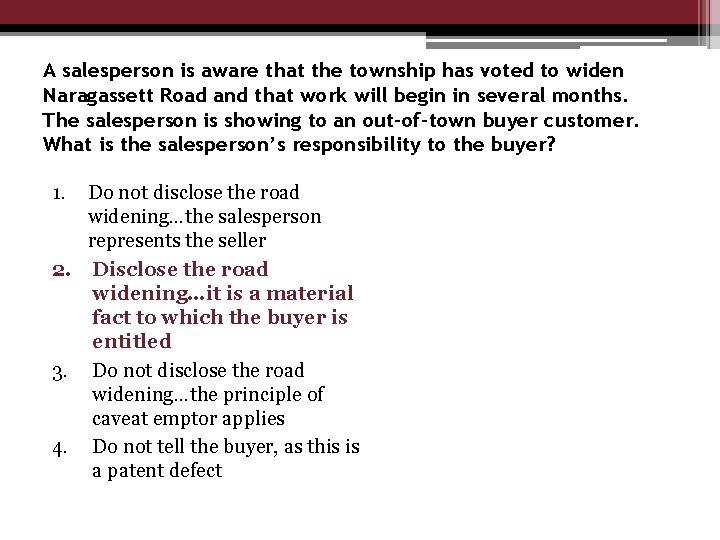
A salesperson is aware that the township has voted to widen Naragassett Road and that work will begin in several months. The salesperson is showing to an out-of-town buyer customer. What is the salesperson’s responsibility to the buyer? 1. Do not disclose the road widening…the salesperson represents the seller 2. Disclose the road widening…it is a material fact to which the buyer is entitled 3. Do not disclose the road widening…the principle of caveat emptor applies 4. Do not tell the buyer, as this is a patent defect
Assessing Basic Knowledge of Subject

Lead Paint Review & Update
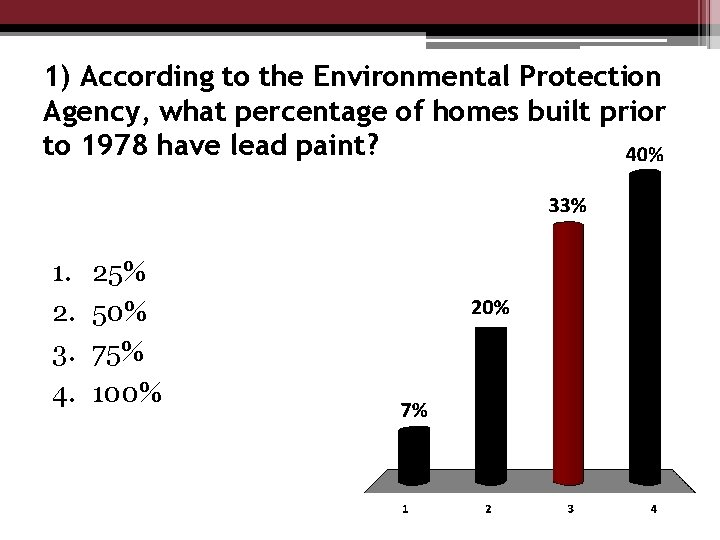
1) According to the Environmental Protection Agency, what percentage of homes built prior to 1978 have lead paint? 1. 2. 3. 4. 25% 50% 75% 100%
Correct Answer: 3. 75%
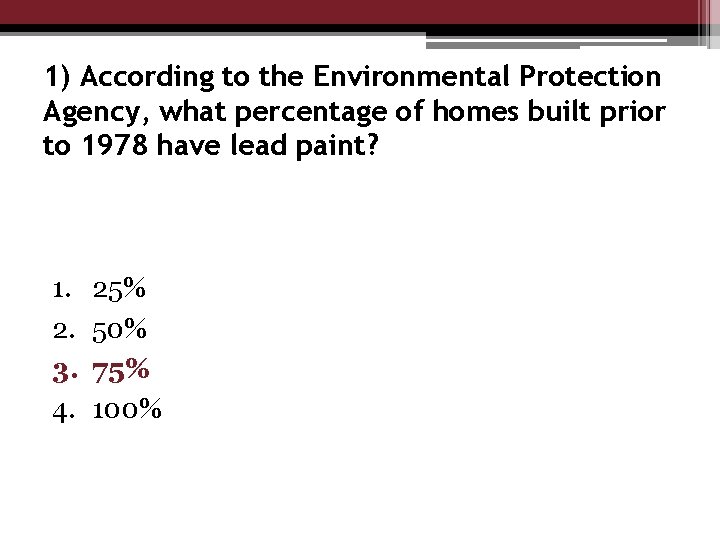
1) According to the Environmental Protection Agency, what percentage of homes built prior to 1978 have lead paint? 1. 2. 3. 4. 25% 50% 75% 100%
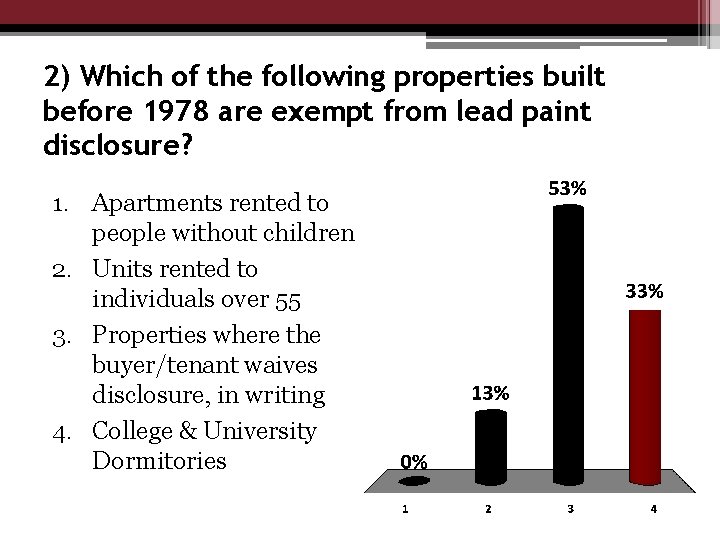
2) Which of the following properties built before 1978 are exempt from lead paint disclosure? 1. Apartments rented to people without children 2. Units rented to individuals over 55 3. Properties where the buyer/tenant waives disclosure, in writing 4. College & University Dormitories
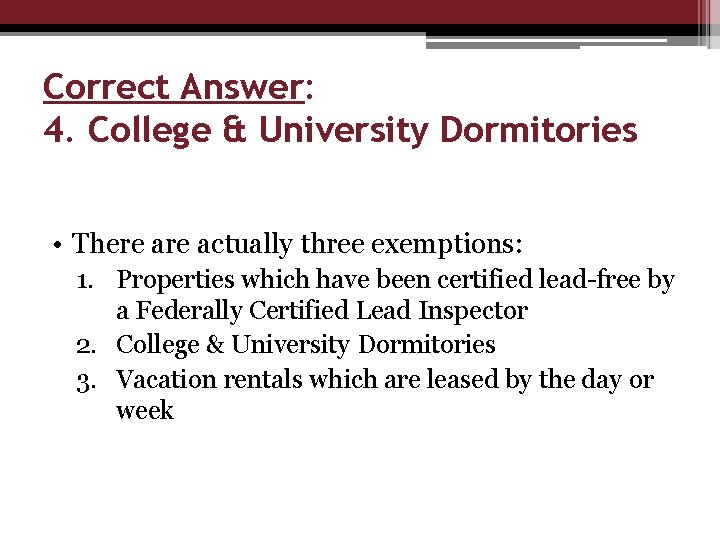
Correct Answer: 4. College & University Dormitories • There actually three exemptions: 1. Properties which have been certified lead-free by a Federally Certified Lead Inspector 2. College & University Dormitories 3. Vacation rentals which are leased by the day or week
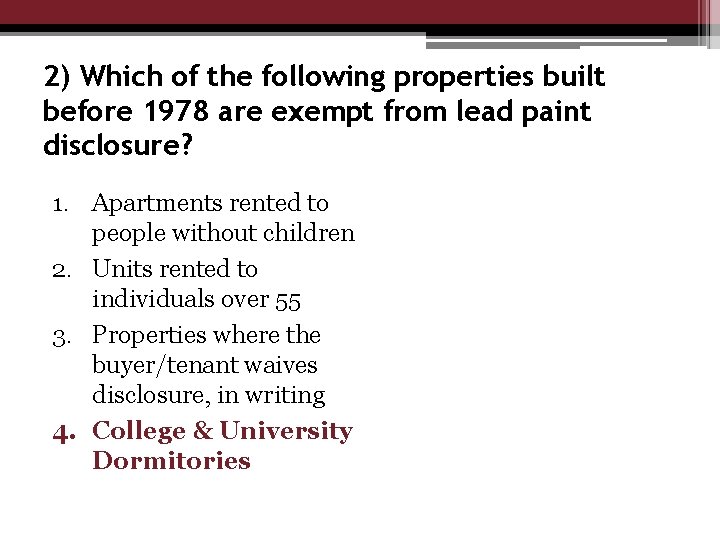
2) Which of the following properties built before 1978 are exempt from lead paint disclosure? 1. Apartments rented to people without children 2. Units rented to individuals over 55 3. Properties where the buyer/tenant waives disclosure, in writing 4. College & University Dormitories
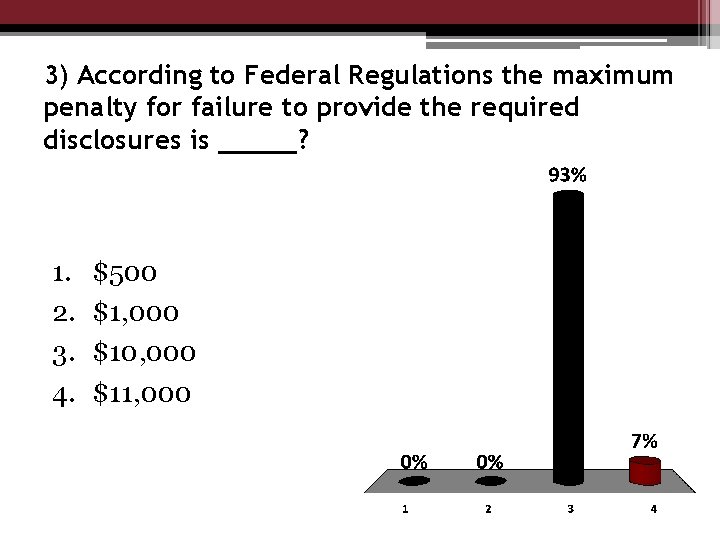
3) According to Federal Regulations the maximum penalty for failure to provide the required disclosures is _____? 1. 2. 3. 4. $500 $1, 000 $10, 000 $11, 000
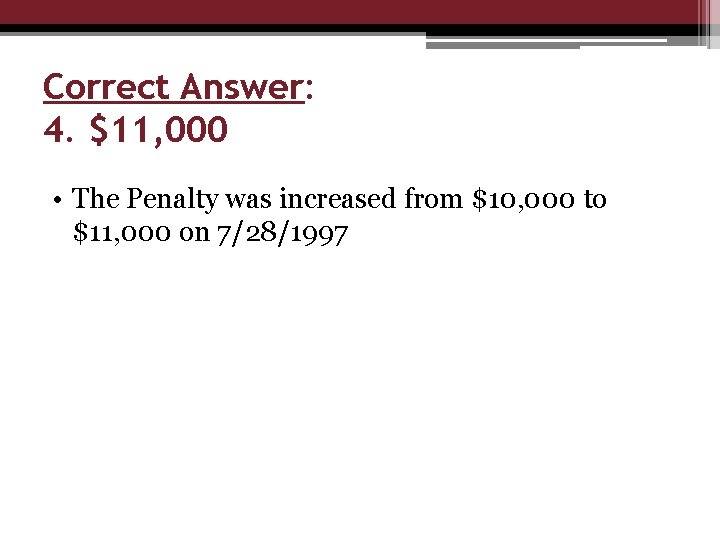
Correct Answer: 4. $11, 000 • The Penalty was increased from $10, 000 to $11, 000 on 7/28/1997
3) According to Federal Regulations the maximum penalty for failure to provide the required disclosures is _____? 1. 2. 3. 4. $500 $1, 000 $10, 000 $11, 000

New Lead-Based Paint Regulations
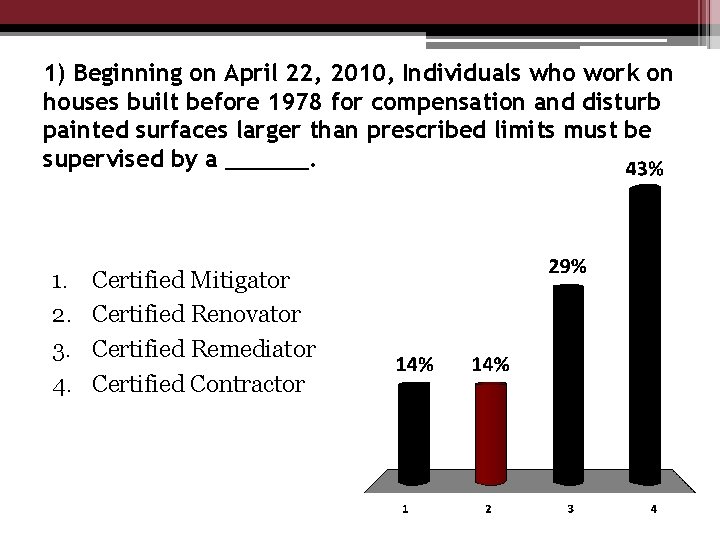
1) Beginning on April 22, 2010, Individuals who work on houses built before 1978 for compensation and disturb painted surfaces larger than prescribed limits must be supervised by a ______. 1. 2. 3. 4. Certified Mitigator Certified Renovator Certified Remediator Certified Contractor
Correct Answer: 2. Certified Renovator

1) Beginning on April 22, 2010, Individuals who work on houses built before 1978 for compensation and disturb painted surfaces larger than prescribed limits must be supervised by a ______. 1. 2. 3. 4. Certified Mitigator Certified Renovator Certified Remediator Certified Contractor
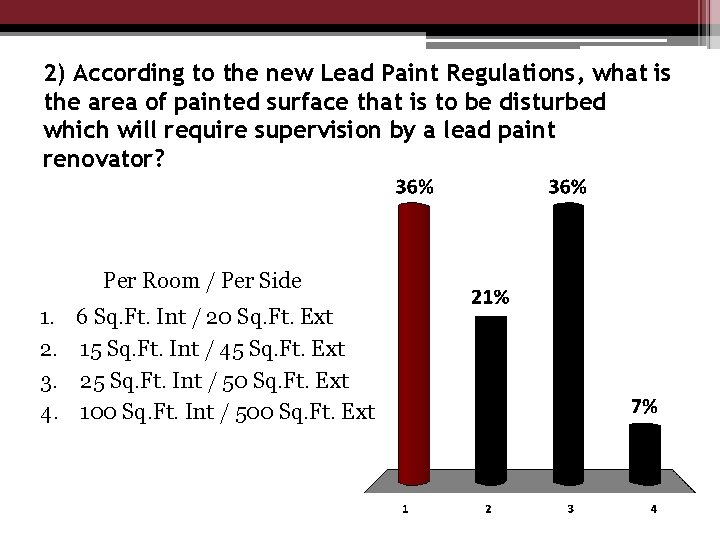
2) According to the new Lead Paint Regulations, what is the area of painted surface that is to be disturbed which will require supervision by a lead paint renovator? Per Room / Per Side 1. 2. 3. 4. 6 Sq. Ft. Int / 20 Sq. Ft. Ext 15 Sq. Ft. Int / 45 Sq. Ft. Ext 25 Sq. Ft. Int / 50 Sq. Ft. Ext 100 Sq. Ft. Int / 500 Sq. Ft. Ext
Correct Answer: 1. 6 Sq. Ft. Int / 20 Sq. Ft. Ext
2) According to the new Lead Paint Regulations, what is the area of painted surface that is to be disturbed which will require supervision by a lead paint renovator? 1. 2. 3. 4. 6 Sq. Ft. Int / 20 Sq. Ft. Ext 15 Sq. Ft. Int / 45 Sq. Ft. Ext 25 Sq. Ft. Int / 50 Sq. Ft. Ext 100 Sq. Ft. Int / 500 Sq. Ft. Ext
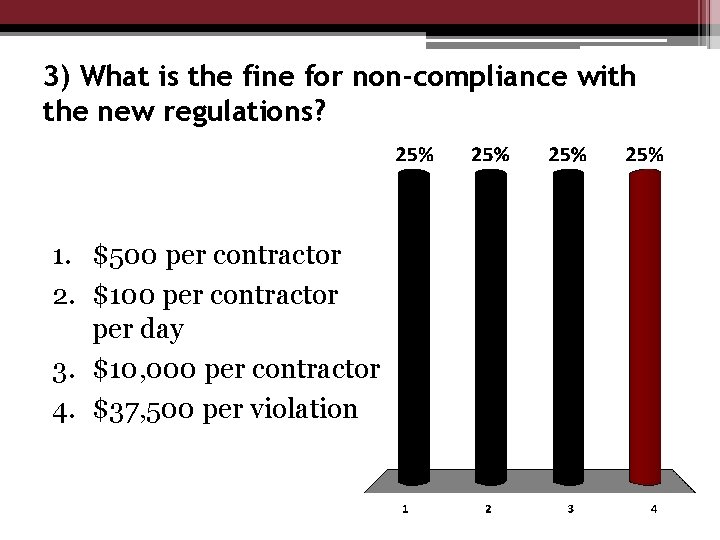
3) What is the fine for non-compliance with the new regulations? 1. $500 per contractor 2. $100 per contractor per day 3. $10, 000 per contractor 4. $37, 500 per violation
Correct Answer: 4. $37, 500 per violation plus 37, 500 and/or imprisonment if the firm knowingly or willingly violates the regulation
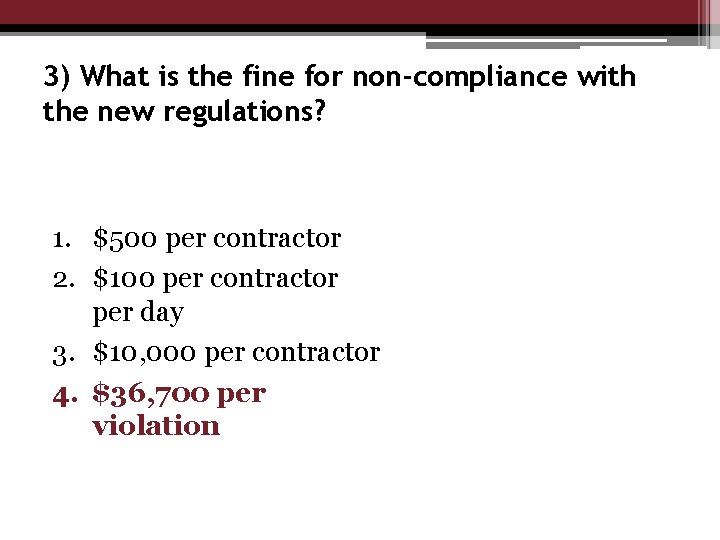
3) What is the fine for non-compliance with the new regulations? 1. $500 per contractor 2. $100 per contractor per day 3. $10, 000 per contractor 4. $36, 700 per violation
Quizzes & Tests/Exams The following questions and responses come from my recent review course and show a level of confusion regarding the subject.
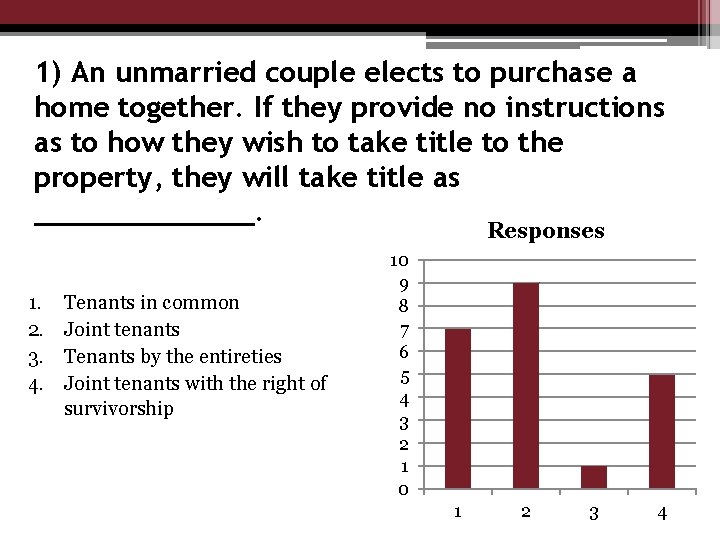
1) An unmarried couple elects to purchase a home together. If they provide no instructions as to how they wish to take title to the property, they will take title as _______. Responses 1. 2. 3. 4. Tenants in common Joint tenants Tenants by the entireties Joint tenants with the right of survivorship 10 9 8 7 6 5 4 3 2 1 0 1 2 3 4
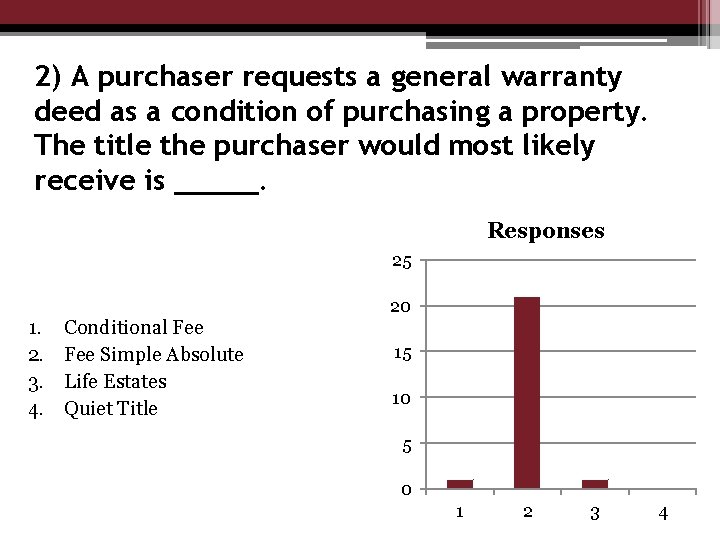
2) A purchaser requests a general warranty deed as a condition of purchasing a property. The title the purchaser would most likely receive is _____. Responses 25 1. 2. 3. 4. Conditional Fee Simple Absolute Life Estates Quiet Title 20 15 10 5 0 1 2 3 4
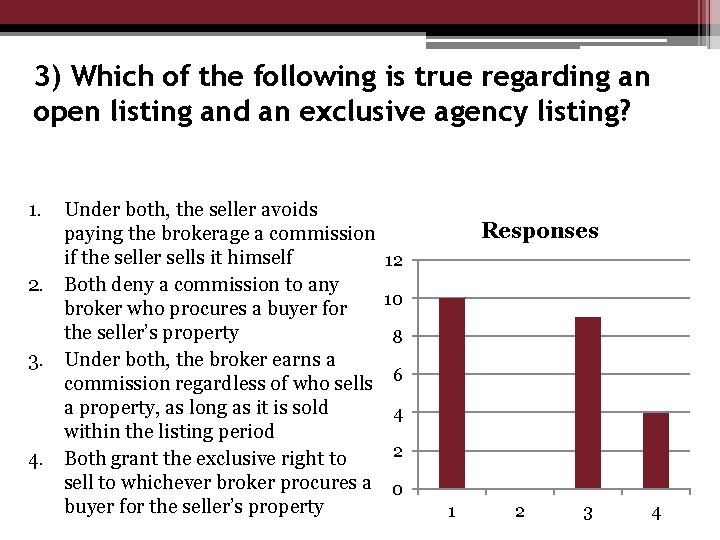
3) Which of the following is true regarding an open listing and an exclusive agency listing? 1. Under both, the seller avoids paying the brokerage a commission if the seller sells it himself 2. Both deny a commission to any broker who procures a buyer for the seller’s property 3. Under both, the broker earns a commission regardless of who sells a property, as long as it is sold within the listing period 4. Both grant the exclusive right to sell to whichever broker procures a buyer for the seller’s property Responses 12 10 8 6 4 2 0 1 2 3 4
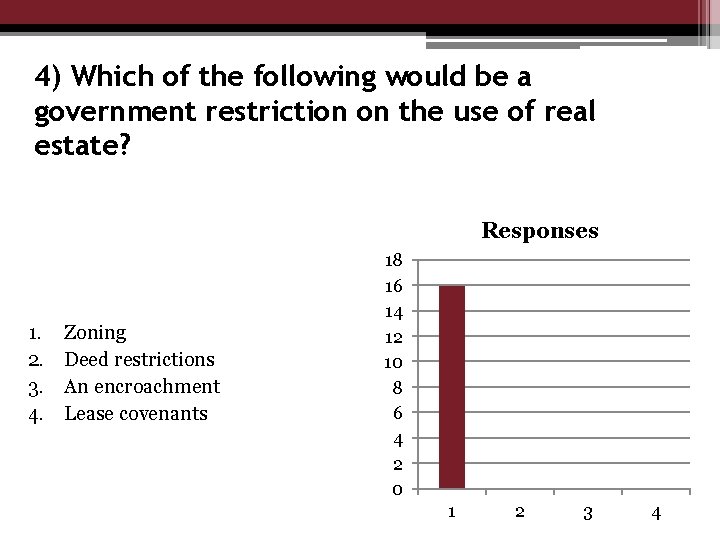
4) Which of the following would be a government restriction on the use of real estate? Responses 1. 2. 3. 4. Zoning Deed restrictions An encroachment Lease covenants 18 16 14 12 10 8 6 4 2 0 1 2 3 4
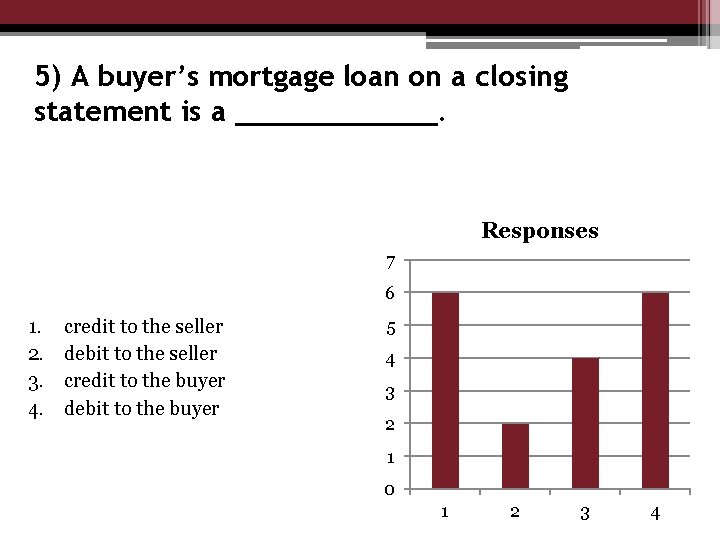
5) A buyer’s mortgage loan on a closing statement is a ______. Responses 7 6 1. 2. 3. 4. credit to the seller debit to the seller credit to the buyer debit to the buyer 5 4 3 2 1 0 1 2 3 4
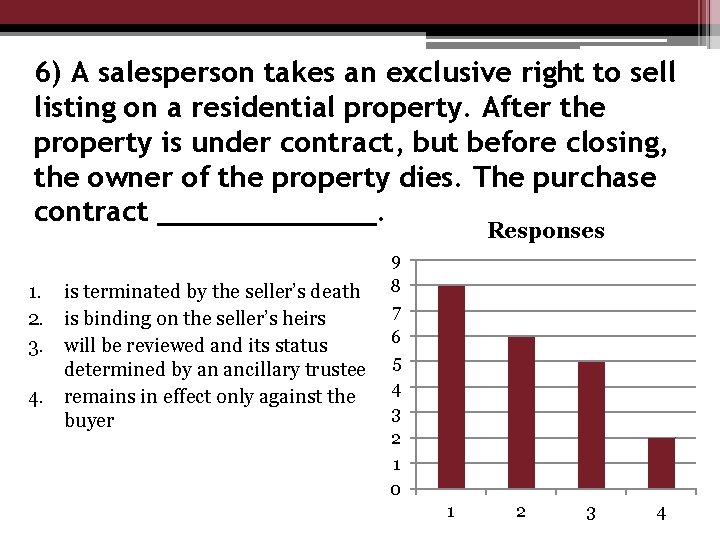
6) A salesperson takes an exclusive right to sell listing on a residential property. After the property is under contract, but before closing, the owner of the property dies. The purchase contract _______. Responses 1. is terminated by the seller’s death 2. is binding on the seller’s heirs 3. will be reviewed and its status determined by an ancillary trustee 4. remains in effect only against the buyer 9 8 7 6 5 4 3 2 1 0 1 2 3 4
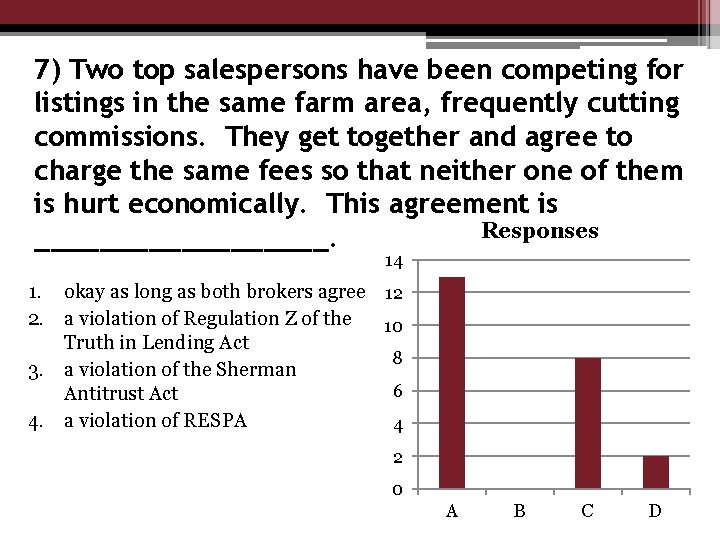
7) Two top salespersons have been competing for listings in the same farm area, frequently cutting commissions. They get together and agree to charge the same fees so that neither one of them is hurt economically. This agreement is Responses _________. 14 1. okay as long as both brokers agree 12 2. a violation of Regulation Z of the 10 Truth in Lending Act 8 3. a violation of the Sherman 6 Antitrust Act 4. a violation of RESPA 4 2 0 A B C D

Games
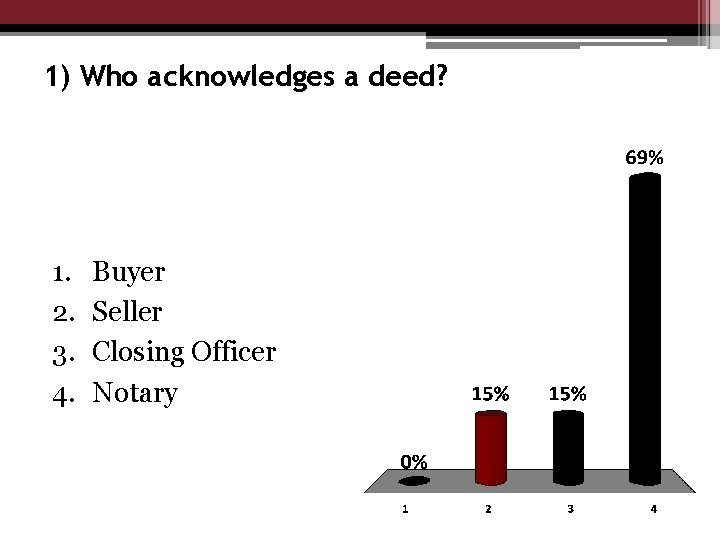
1) Who acknowledges a deed? 1. 2. 3. 4. Buyer Seller Closing Officer Notary
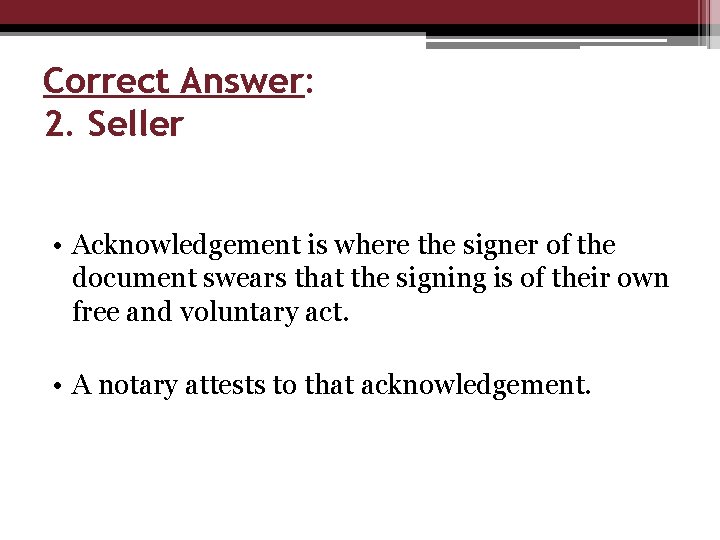
Correct Answer: 2. Seller • Acknowledgement is where the signer of the document swears that the signing is of their own free and voluntary act. • A notary attests to that acknowledgement.
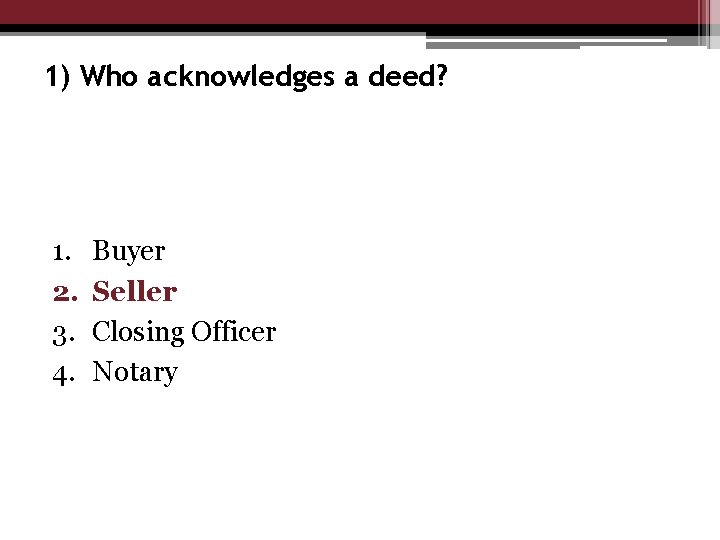
1) Who acknowledges a deed? 1. 2. 3. 4. Buyer Seller Closing Officer Notary
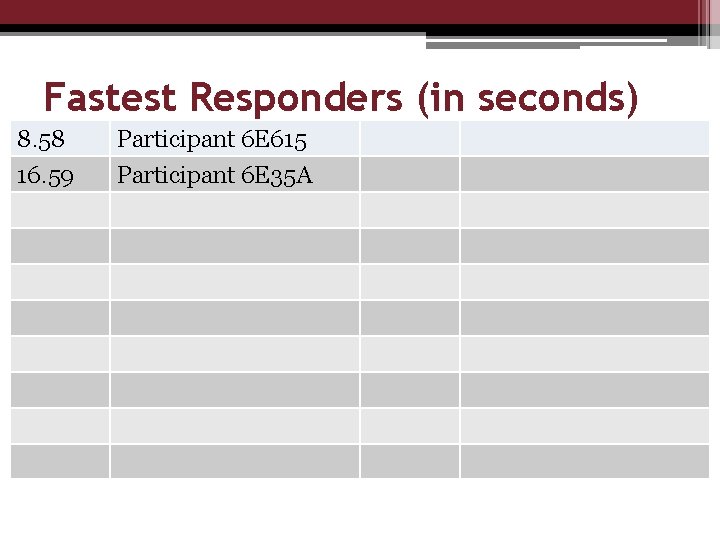
Fastest Responders (in seconds) 8. 58 16. 59 Participant 6 E 615 Participant 6 E 35 A
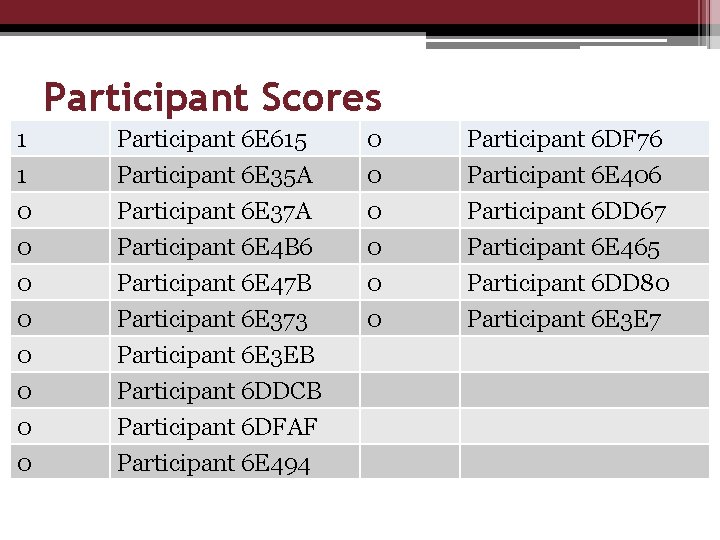
Participant Scores 1 1 0 0 Participant 6 E 615 Participant 6 E 35 A Participant 6 E 37 A Participant 6 E 4 B 6 0 0 Participant 6 DF 76 Participant 6 E 406 Participant 6 DD 67 Participant 6 E 465 0 0 0 Participant 6 E 47 B Participant 6 E 373 Participant 6 E 3 EB Participant 6 DDCB Participant 6 DFAF Participant 6 E 494 0 0 Participant 6 DD 80 Participant 6 E 3 E 7
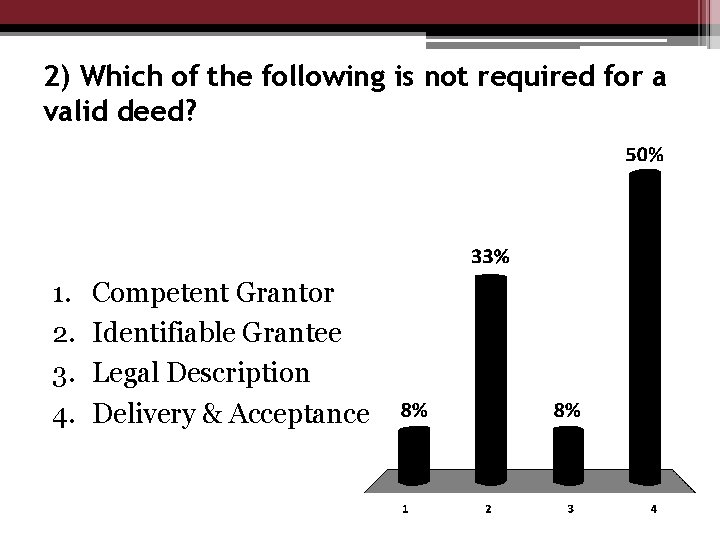
2) Which of the following is not required for a valid deed? 1. 2. 3. 4. Competent Grantor Identifiable Grantee Legal Description Delivery & Acceptance
Correct Answer: 4. Delivery & Acceptance • There are 6 requirements for valid deed: ▫ ▫ ▫ competent grantor identifiable grantee words of conveyance valuable consideration legal description acknowledgement • For title to pass from one party to another, delivery & acceptance is required
2) Which of the following is not required for a valid deed? 1. 2. 3. 4. Competent Grantor Identifiable Grantee Legal Description Delivery & Acceptance
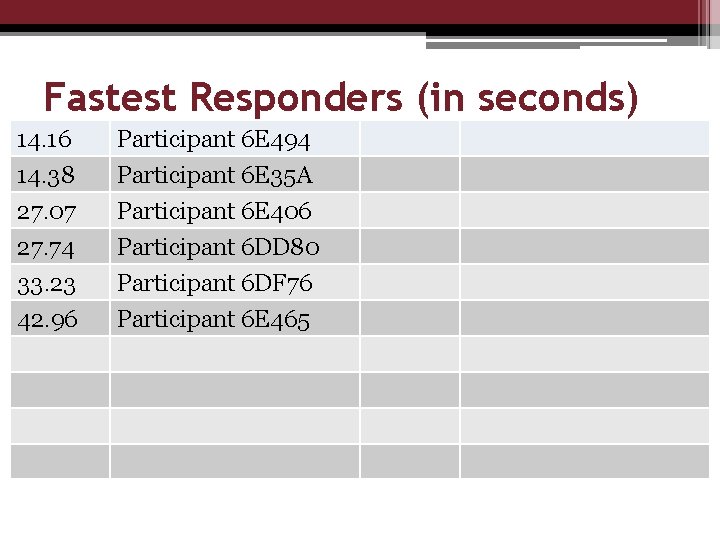
Fastest Responders (in seconds) 14. 16 14. 38 27. 07 27. 74 Participant 6 E 494 Participant 6 E 35 A Participant 6 E 406 Participant 6 DD 80 33. 23 42. 96 Participant 6 DF 76 Participant 6 E 465
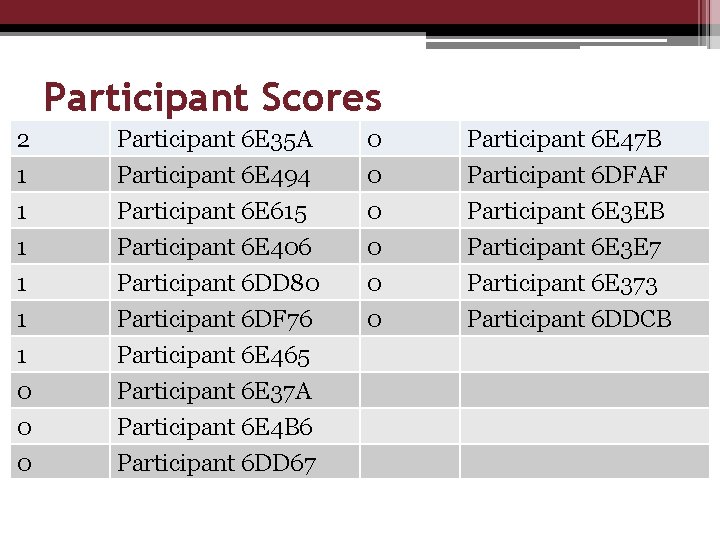
Participant Scores 2 1 1 1 Participant 6 E 35 A Participant 6 E 494 Participant 6 E 615 Participant 6 E 406 0 0 Participant 6 E 47 B Participant 6 DFAF Participant 6 E 3 EB Participant 6 E 3 E 7 1 1 1 0 0 0 Participant 6 DD 80 Participant 6 DF 76 Participant 6 E 465 Participant 6 E 37 A Participant 6 E 4 B 6 Participant 6 DD 67 0 0 Participant 6 E 373 Participant 6 DDCB
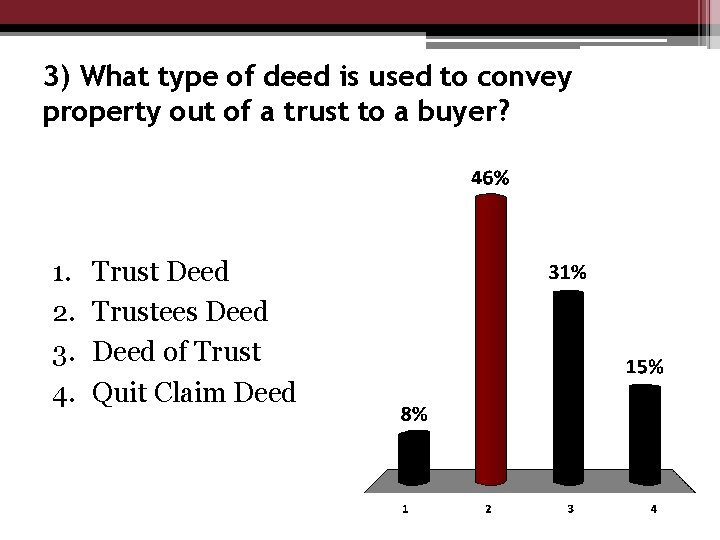
3) What type of deed is used to convey property out of a trust to a buyer? 1. 2. 3. 4. Trust Deed Trustees Deed of Trust Quit Claim Deed
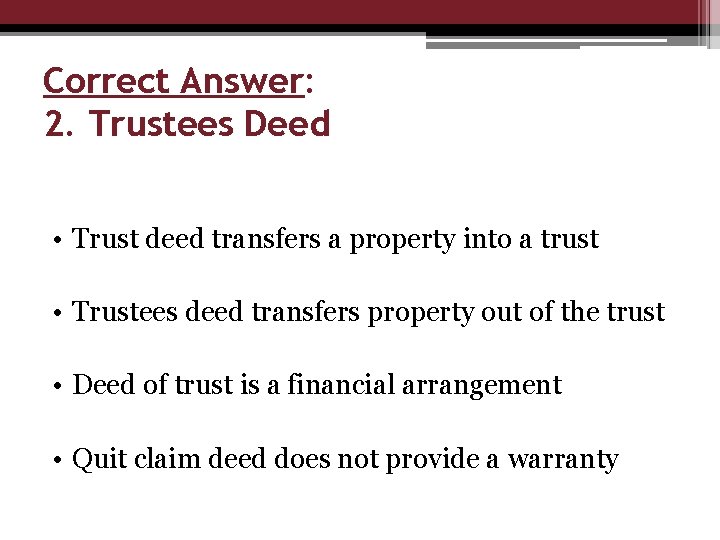
Correct Answer: 2. Trustees Deed • Trust deed transfers a property into a trust • Trustees deed transfers property out of the trust • Deed of trust is a financial arrangement • Quit claim deed does not provide a warranty
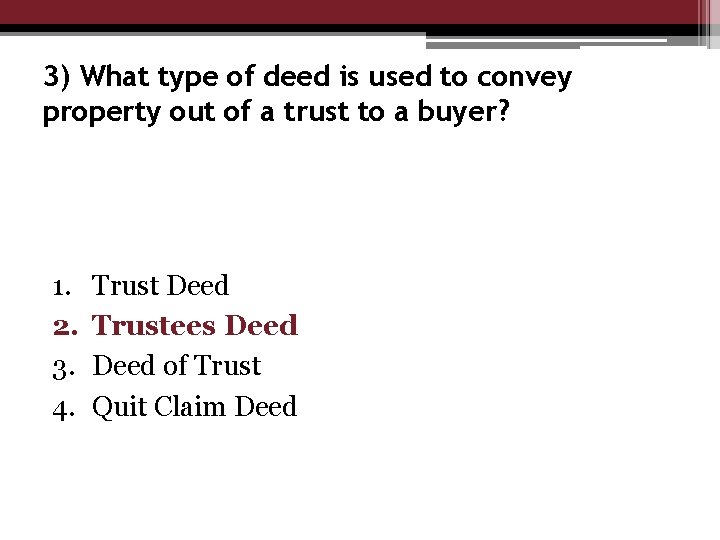
3) What type of deed is used to convey property out of a trust to a buyer? 1. 2. 3. 4. Trust Deed Trustees Deed of Trust Quit Claim Deed
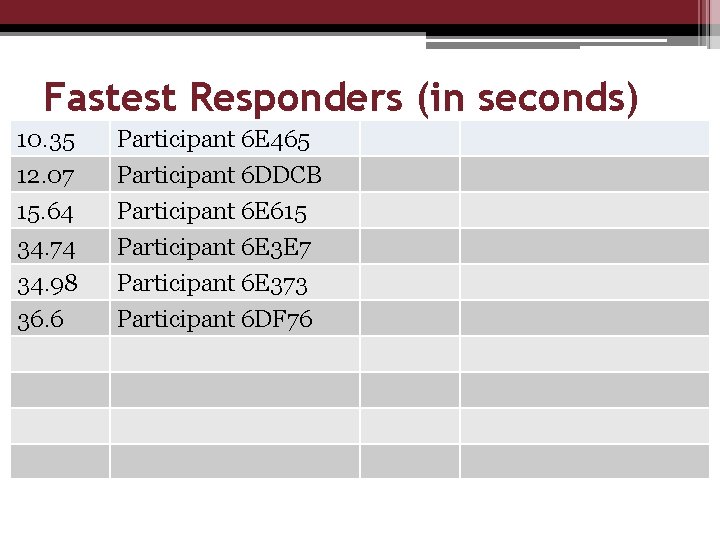
Fastest Responders (in seconds) 10. 35 12. 07 15. 64 34. 74 Participant 6 E 465 Participant 6 DDCB Participant 6 E 615 Participant 6 E 3 E 7 34. 98 36. 6 Participant 6 E 373 Participant 6 DF 76
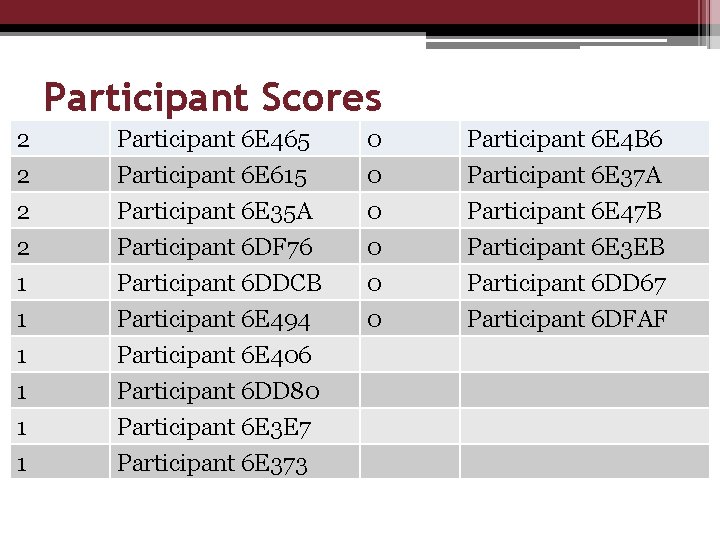
Participant Scores 2 2 Participant 6 E 465 Participant 6 E 615 Participant 6 E 35 A Participant 6 DF 76 0 0 Participant 6 E 4 B 6 Participant 6 E 37 A Participant 6 E 47 B Participant 6 E 3 EB 1 1 1 Participant 6 DDCB Participant 6 E 494 Participant 6 E 406 Participant 6 DD 80 Participant 6 E 3 E 7 Participant 6 E 373 0 0 Participant 6 DD 67 Participant 6 DFAF
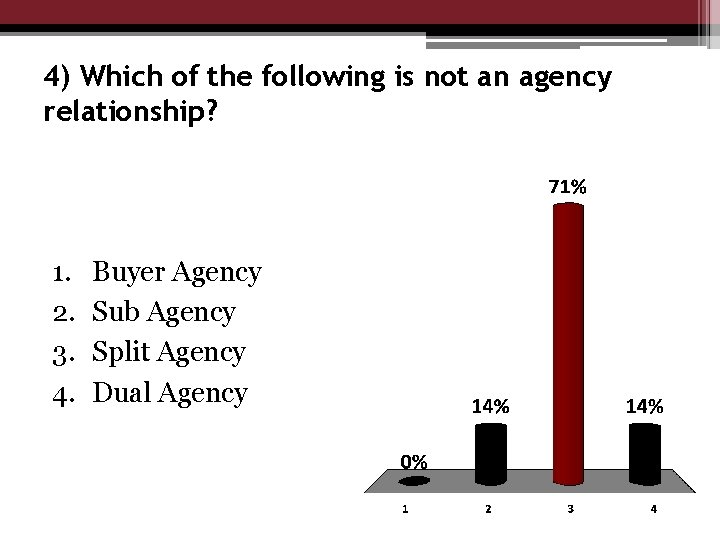
4) Which of the following is not an agency relationship? 1. 2. 3. 4. Buyer Agency Sub Agency Split Agency Dual Agency
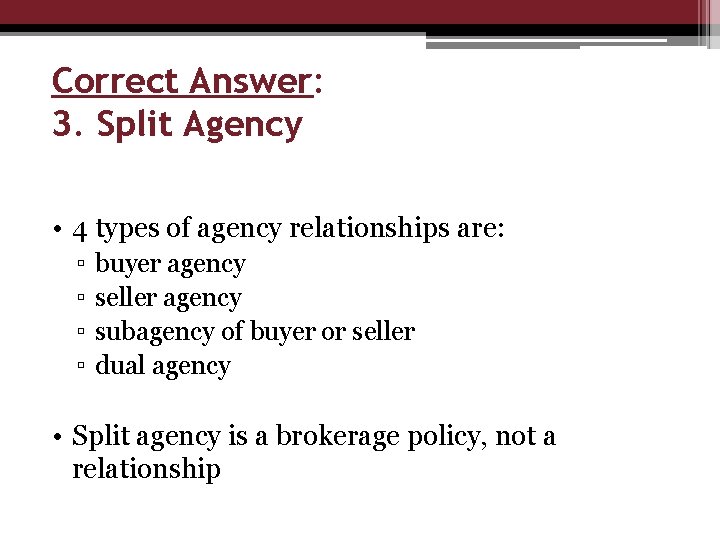
Correct Answer: 3. Split Agency • 4 types of agency relationships are: ▫ ▫ buyer agency seller agency subagency of buyer or seller dual agency • Split agency is a brokerage policy, not a relationship
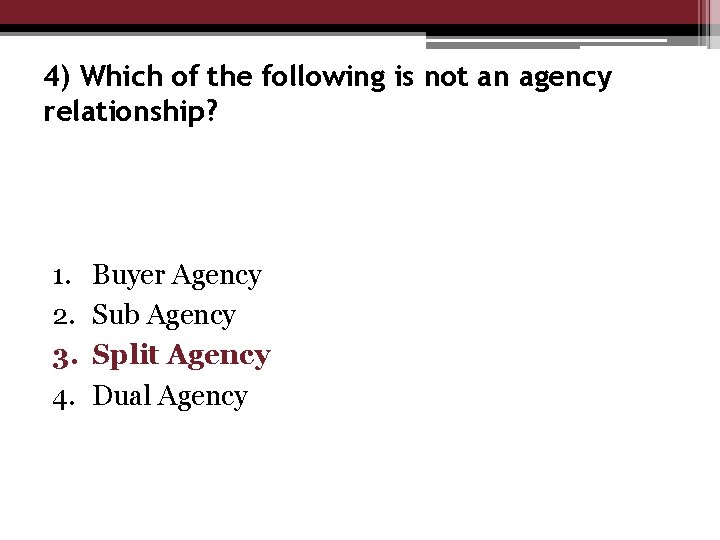
4) Which of the following is not an agency relationship? 1. 2. 3. 4. Buyer Agency Sub Agency Split Agency Dual Agency
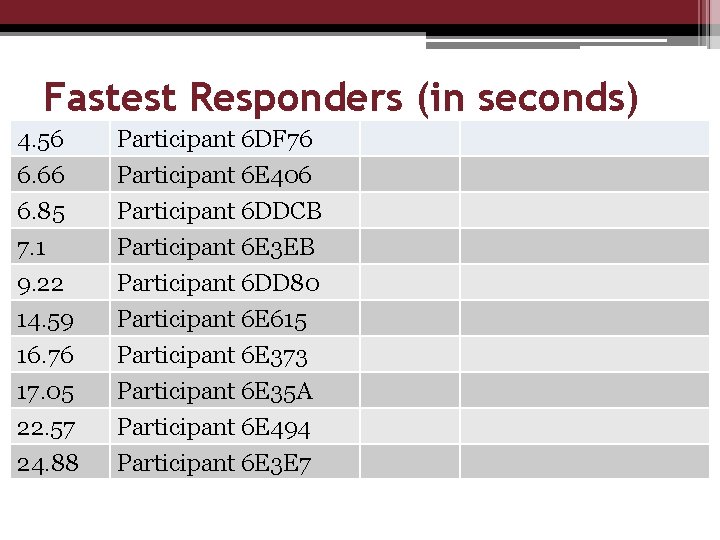
Fastest Responders (in seconds) 4. 56 6. 66 6. 85 7. 1 Participant 6 DF 76 Participant 6 E 406 Participant 6 DDCB Participant 6 E 3 EB 9. 22 14. 59 16. 76 17. 05 22. 57 24. 88 Participant 6 DD 80 Participant 6 E 615 Participant 6 E 373 Participant 6 E 35 A Participant 6 E 494 Participant 6 E 3 E 7
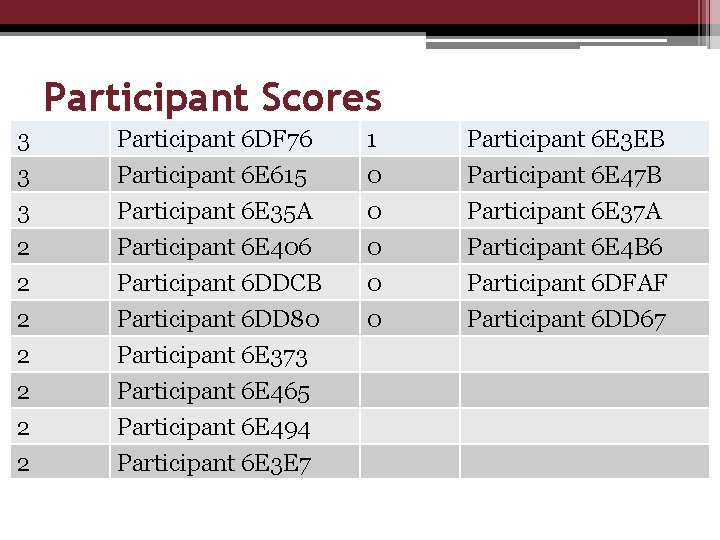
Participant Scores 3 3 3 2 Participant 6 DF 76 Participant 6 E 615 Participant 6 E 35 A Participant 6 E 406 1 0 0 0 Participant 6 E 3 EB Participant 6 E 47 B Participant 6 E 37 A Participant 6 E 4 B 6 2 2 2 Participant 6 DDCB Participant 6 DD 80 Participant 6 E 373 Participant 6 E 465 Participant 6 E 494 Participant 6 E 3 E 7 0 0 Participant 6 DFAF Participant 6 DD 67
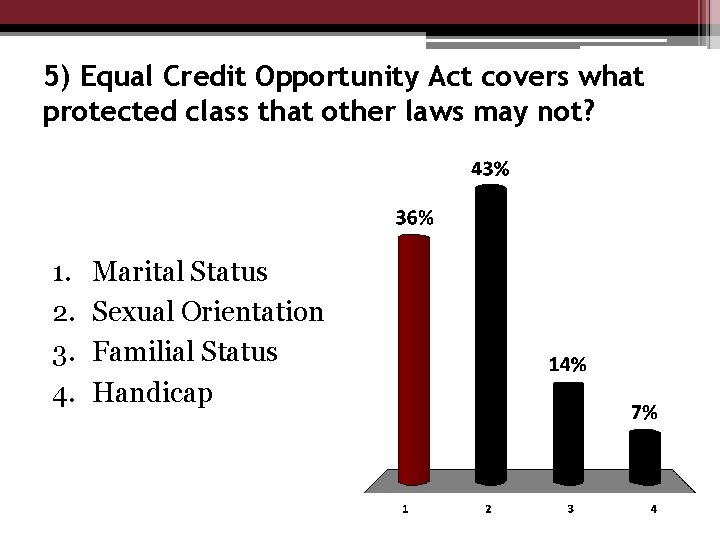
5) Equal Credit Opportunity Act covers what protected class that other laws may not? 1. 2. 3. 4. Marital Status Sexual Orientation Familial Status Handicap
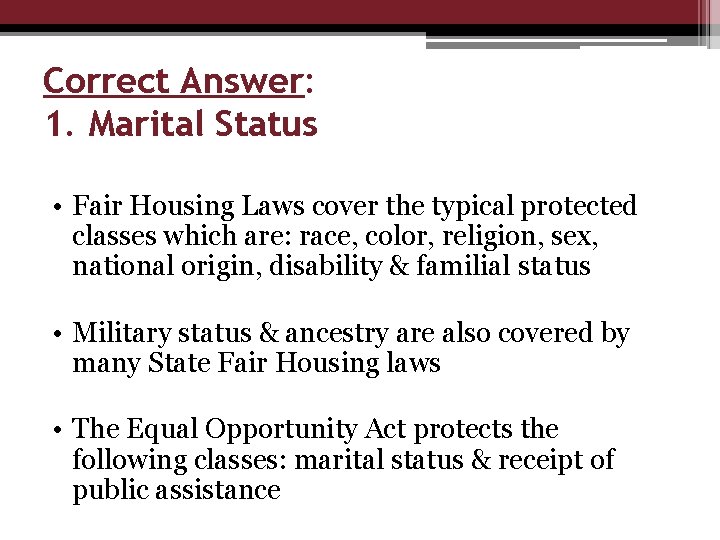
Correct Answer: 1. Marital Status • Fair Housing Laws cover the typical protected classes which are: race, color, religion, sex, national origin, disability & familial status • Military status & ancestry are also covered by many State Fair Housing laws • The Equal Opportunity Act protects the following classes: marital status & receipt of public assistance
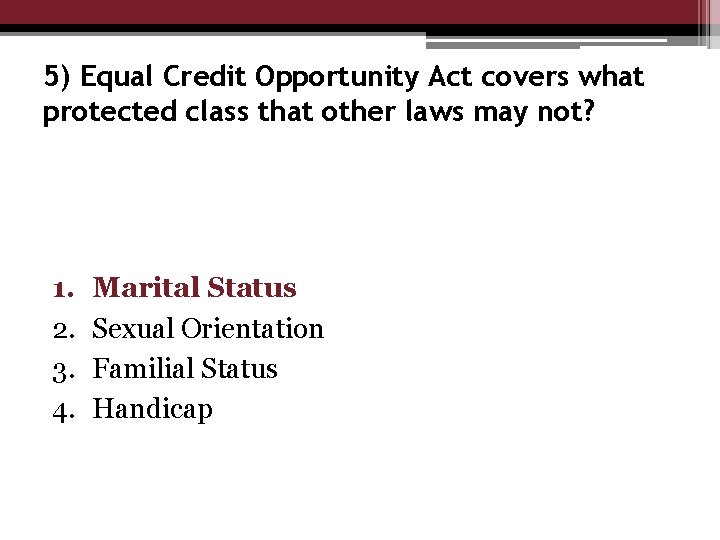
5) Equal Credit Opportunity Act covers what protected class that other laws may not? 1. 2. 3. 4. Marital Status Sexual Orientation Familial Status Handicap
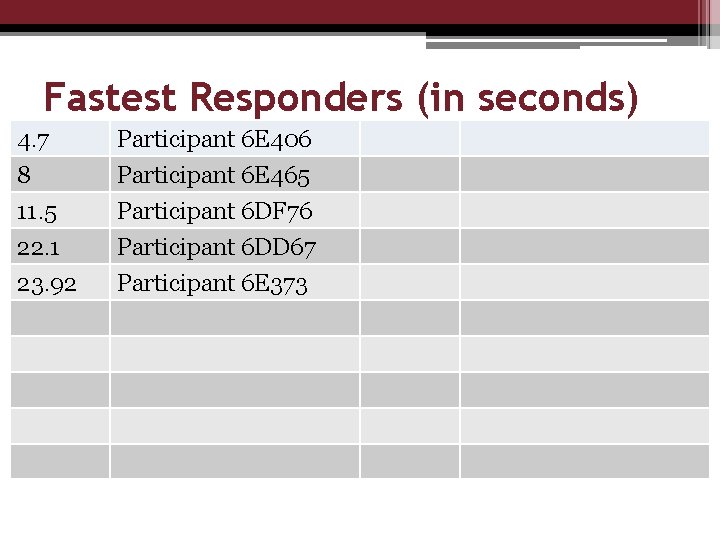
Fastest Responders (in seconds) 4. 7 8 11. 5 22. 1 Participant 6 E 406 Participant 6 E 465 Participant 6 DF 76 Participant 6 DD 67 23. 92 Participant 6 E 373
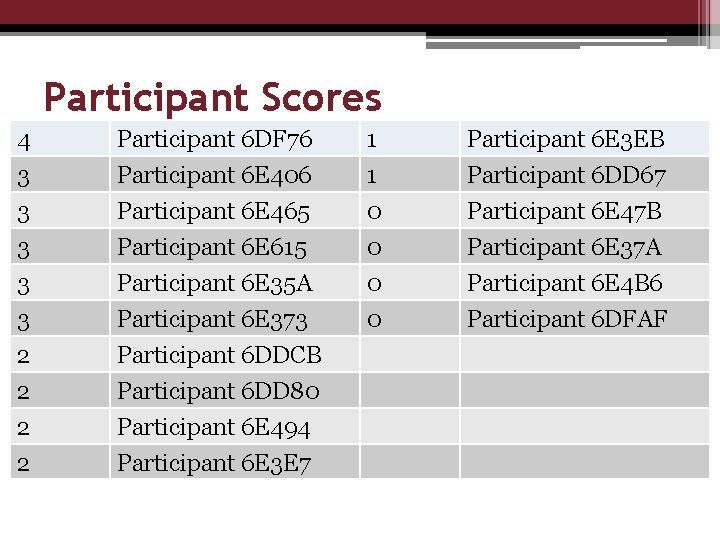
Participant Scores 4 3 3 3 Participant 6 DF 76 Participant 6 E 406 Participant 6 E 465 Participant 6 E 615 1 1 0 0 Participant 6 E 3 EB Participant 6 DD 67 Participant 6 E 47 B Participant 6 E 37 A 3 3 2 2 Participant 6 E 35 A Participant 6 E 373 Participant 6 DDCB Participant 6 DD 80 Participant 6 E 494 Participant 6 E 3 E 7 0 0 Participant 6 E 4 B 6 Participant 6 DFAF
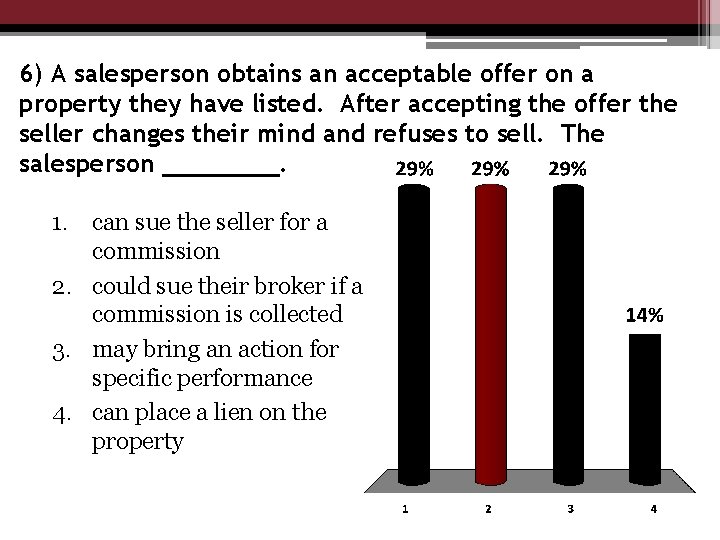
6) A salesperson obtains an acceptable offer on a property they have listed. After accepting the offer the seller changes their mind and refuses to sell. The salesperson ____. 1. can sue the seller for a commission 2. could sue their broker if a commission is collected 3. may bring an action for specific performance 4. can place a lien on the property
Correct Answer: 2. could sue their broker if a commission is collected • Only a broker can sue a seller for breach of contract • Only a buyer or seller can sue for specific performance • Most states do not allow brokers to place liens against residential properties • Agents can sue a broker if a commission is collected and he or she fails to pay the agent
6) A salesperson obtains an acceptable offer on a property they have listed. After accepting the offer the seller changes their mind and refuses to sell. The salesperson ____. 1. can sue the seller for a commission 2. could sue their broker if a commission is collected 3. may bring an action for specific performance 4. can place a lien on the property
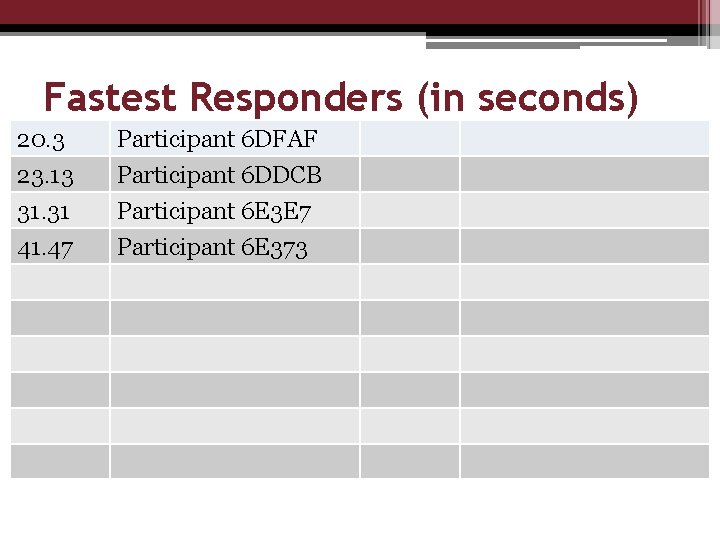
Fastest Responders (in seconds) 20. 3 23. 13 31. 31 41. 47 Participant 6 DFAF Participant 6 DDCB Participant 6 E 3 E 7 Participant 6 E 373
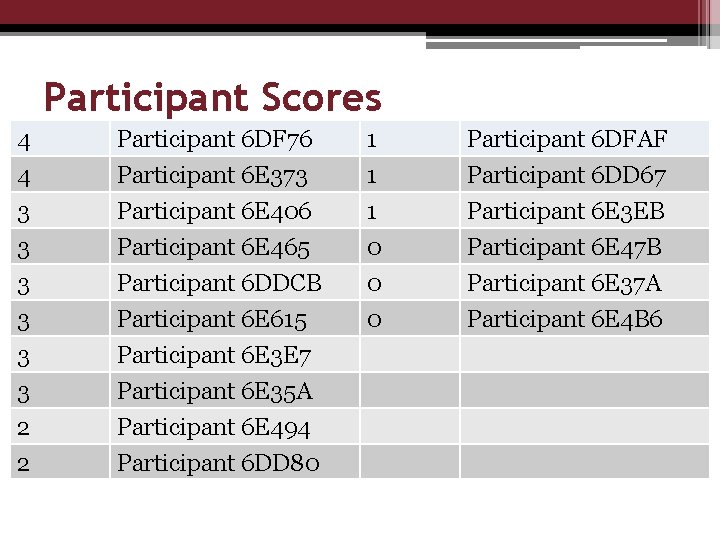
Participant Scores 4 4 3 3 Participant 6 DF 76 Participant 6 E 373 Participant 6 E 406 Participant 6 E 465 1 1 1 0 Participant 6 DFAF Participant 6 DD 67 Participant 6 E 3 EB Participant 6 E 47 B 3 3 2 2 Participant 6 DDCB Participant 6 E 615 Participant 6 E 3 E 7 Participant 6 E 35 A Participant 6 E 494 Participant 6 DD 80 0 0 Participant 6 E 37 A Participant 6 E 4 B 6
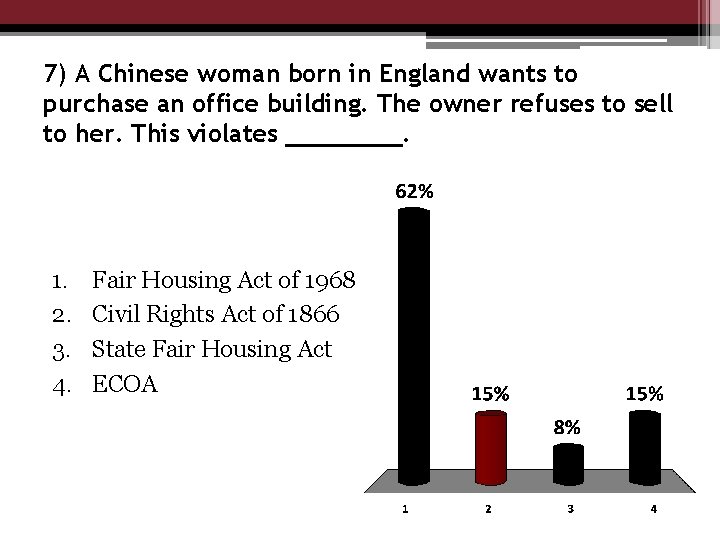
7) A Chinese woman born in England wants to purchase an office building. The owner refuses to sell to her. This violates ____. 1. 2. 3. 4. Fair Housing Act of 1968 Civil Rights Act of 1866 State Fair Housing Act ECOA
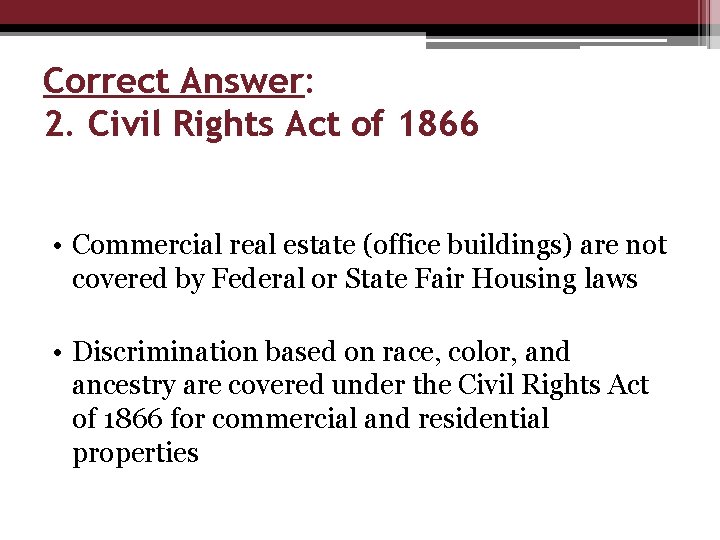
Correct Answer: 2. Civil Rights Act of 1866 • Commercial real estate (office buildings) are not covered by Federal or State Fair Housing laws • Discrimination based on race, color, and ancestry are covered under the Civil Rights Act of 1866 for commercial and residential properties
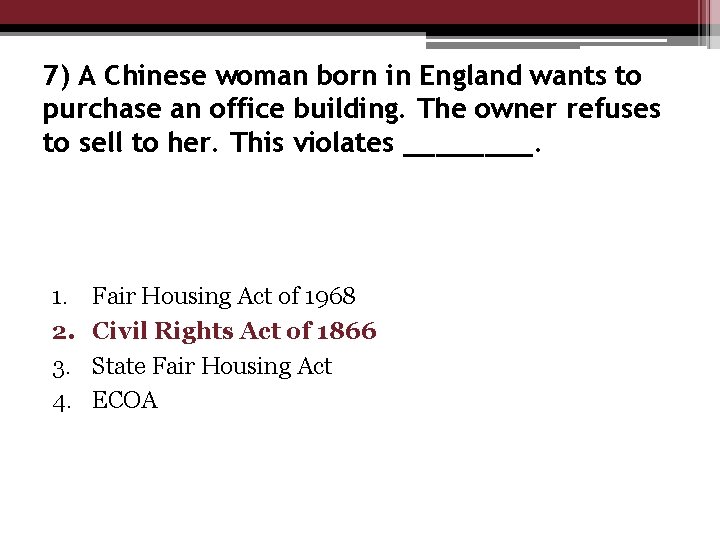
7) A Chinese woman born in England wants to purchase an office building. The owner refuses to sell to her. This violates ____. 1. 2. 3. 4. Fair Housing Act of 1968 Civil Rights Act of 1866 State Fair Housing Act ECOA
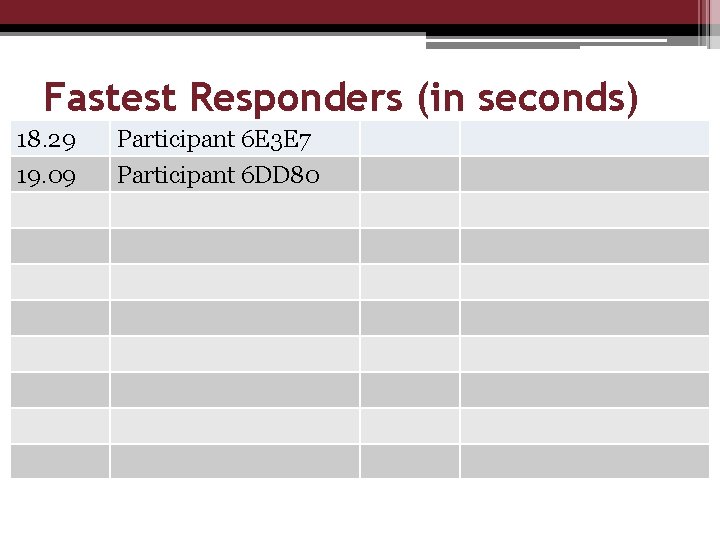
Fastest Responders (in seconds) 18. 29 19. 09 Participant 6 E 3 E 7 Participant 6 DD 80
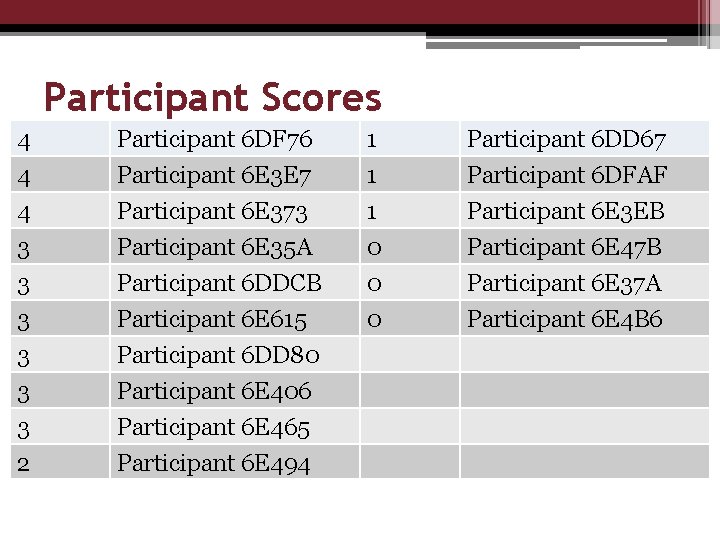
Participant Scores 4 4 4 3 Participant 6 DF 76 Participant 6 E 3 E 7 Participant 6 E 373 Participant 6 E 35 A 1 1 1 0 Participant 6 DD 67 Participant 6 DFAF Participant 6 E 3 EB Participant 6 E 47 B 3 3 3 2 Participant 6 DDCB Participant 6 E 615 Participant 6 DD 80 Participant 6 E 406 Participant 6 E 465 Participant 6 E 494 0 0 Participant 6 E 37 A Participant 6 E 4 B 6
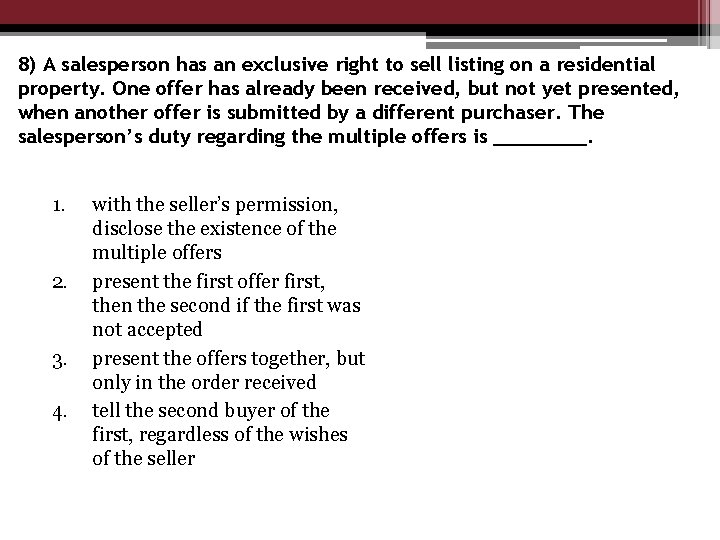
8) A salesperson has an exclusive right to sell listing on a residential property. One offer has already been received, but not yet presented, when another offer is submitted by a different purchaser. The salesperson’s duty regarding the multiple offers is ____. 1. 2. 3. 4. with the seller’s permission, disclose the existence of the multiple offers present the first offer first, then the second if the first was not accepted present the offers together, but only in the order received tell the second buyer of the first, regardless of the wishes of the seller
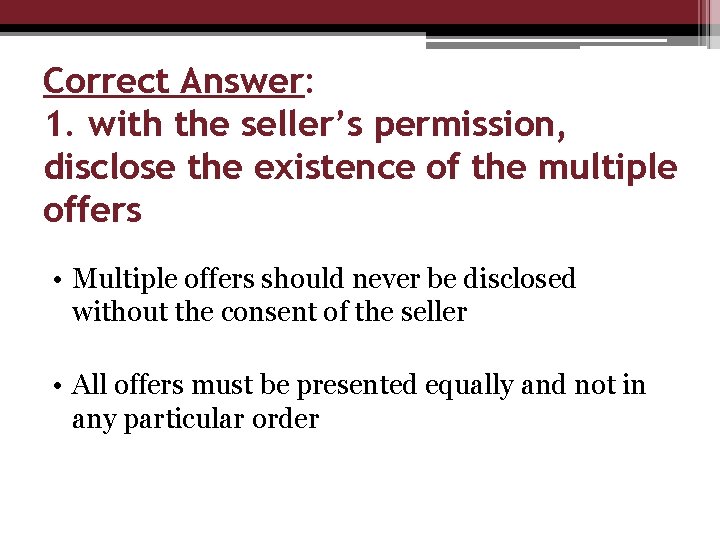
Correct Answer: 1. with the seller’s permission, disclose the existence of the multiple offers • Multiple offers should never be disclosed without the consent of the seller • All offers must be presented equally and not in any particular order
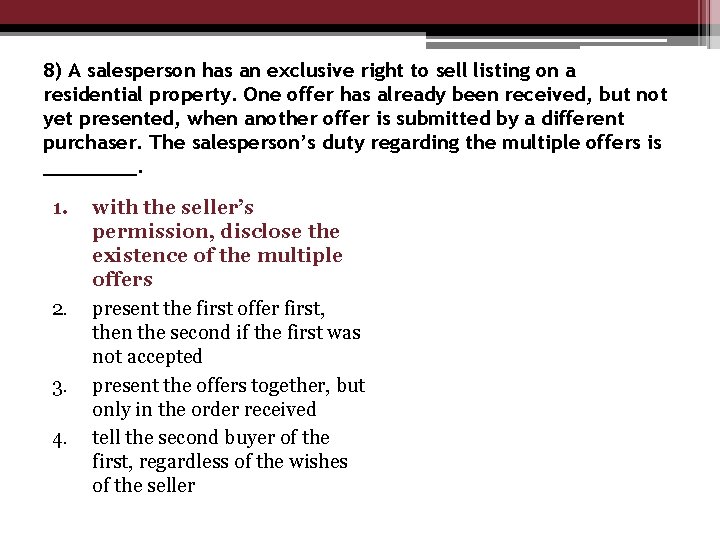
8) A salesperson has an exclusive right to sell listing on a residential property. One offer has already been received, but not yet presented, when another offer is submitted by a different purchaser. The salesperson’s duty regarding the multiple offers is ____. 1. 2. 3. 4. with the seller’s permission, disclose the existence of the multiple offers present the first offer first, then the second if the first was not accepted present the offers together, but only in the order received tell the second buyer of the first, regardless of the wishes of the seller
Fastest Responders (in seconds)
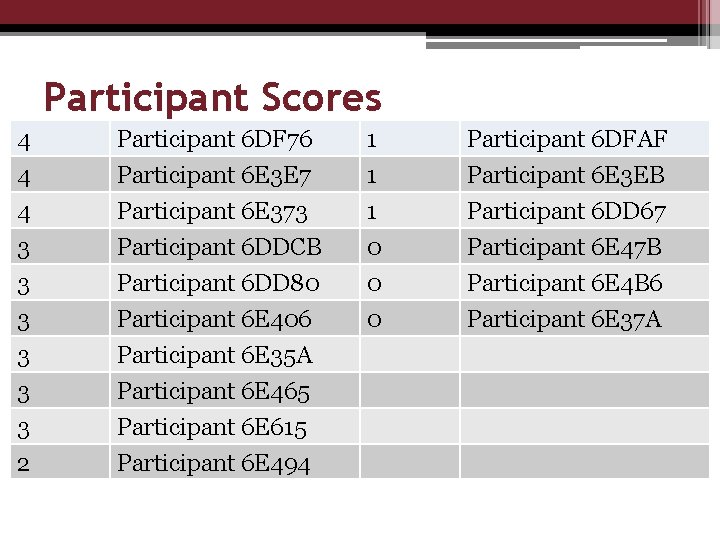
Participant Scores 4 4 4 3 Participant 6 DF 76 Participant 6 E 3 E 7 Participant 6 E 373 Participant 6 DDCB 1 1 1 0 Participant 6 DFAF Participant 6 E 3 EB Participant 6 DD 67 Participant 6 E 47 B 3 3 3 2 Participant 6 DD 80 Participant 6 E 406 Participant 6 E 35 A Participant 6 E 465 Participant 6 E 615 Participant 6 E 494 0 0 Participant 6 E 4 B 6 Participant 6 E 37 A

Evaluations
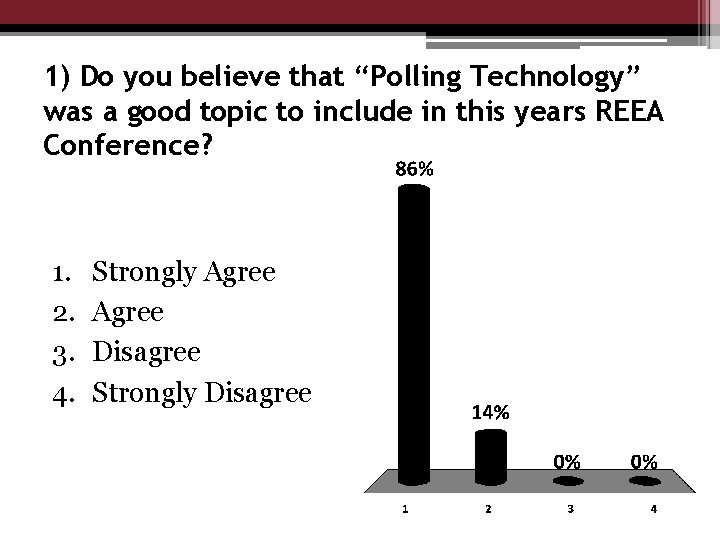
1) Do you believe that “Polling Technology” was a good topic to include in this years REEA Conference? 1. 2. 3. 4. Strongly Agree Disagree Strongly Disagree
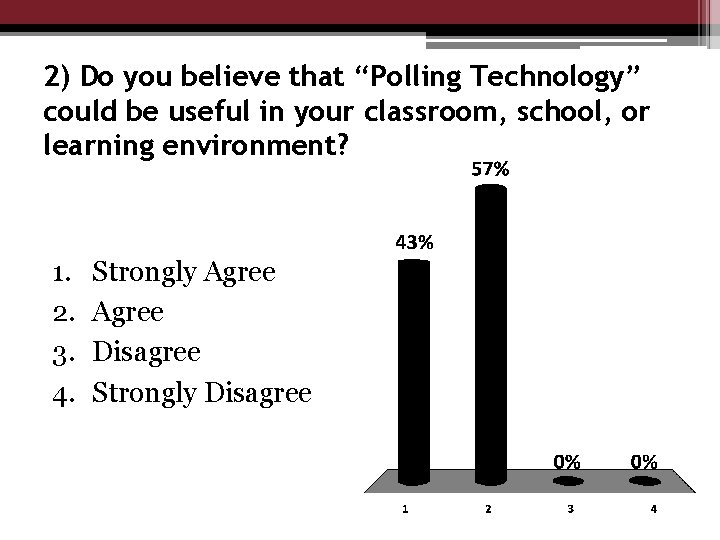
2) Do you believe that “Polling Technology” could be useful in your classroom, school, or learning environment? 1. 2. 3. 4. Strongly Agree Disagree Strongly Disagree
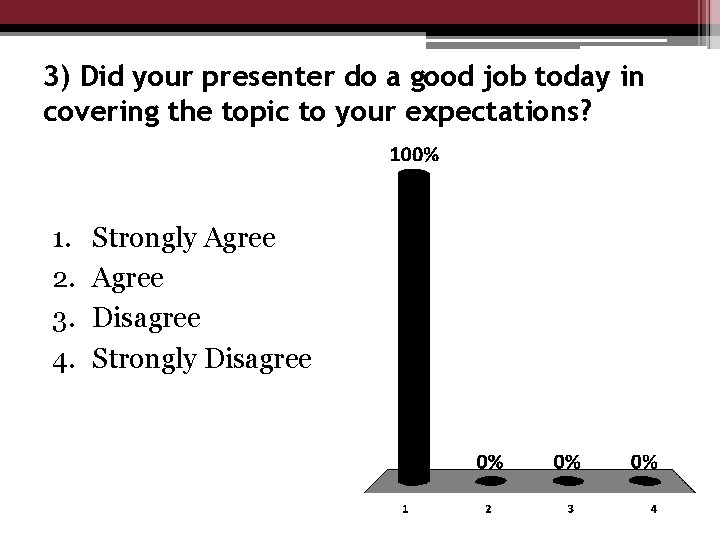
3) Did your presenter do a good job today in covering the topic to your expectations? 1. 2. 3. 4. Strongly Agree Disagree Strongly Disagree

Discussion
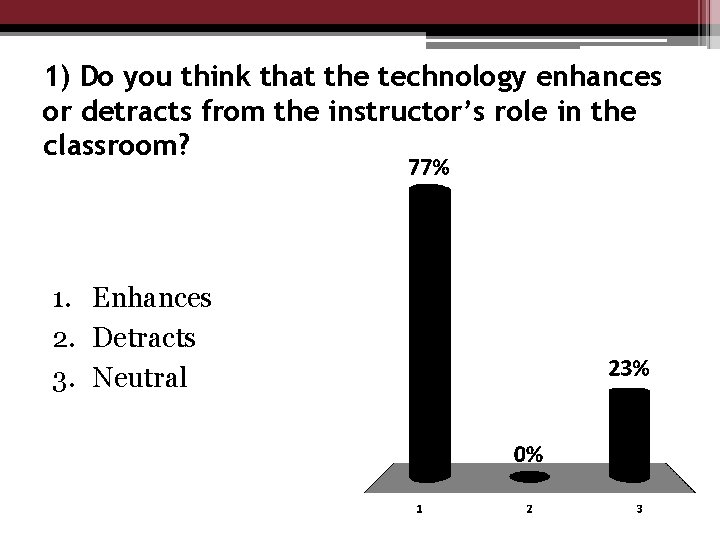
1) Do you think that the technology enhances or detracts from the instructor’s role in the classroom? 1. Enhances 2. Detracts 3. Neutral

Summary

Contacts Robert C. Kutschbach carletonrealty@sbcglobal. net Hondros College www. hondros. edu
- Slides: 108