
INTERACTIONS OF WAVES Interference Refraction Diffraction Doppler Effect
- Slides: 21
INTERACTIONS OF WAVES Interference Refraction Diffraction Doppler Effect Polarization
INTERFERENCE when 2 or more waves meet while traveling in the same medium (overlapping waves) the NET displacement (amplitude) is the sum of the amplitude of the waves Constructive or destructive interference Creates standing waves & beats
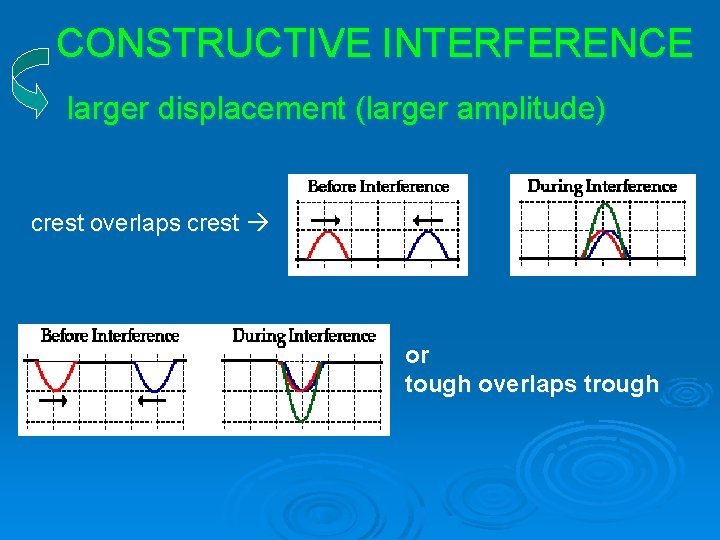
CONSTRUCTIVE INTERFERENCE larger displacement (larger amplitude) crest overlaps crest or tough overlaps trough
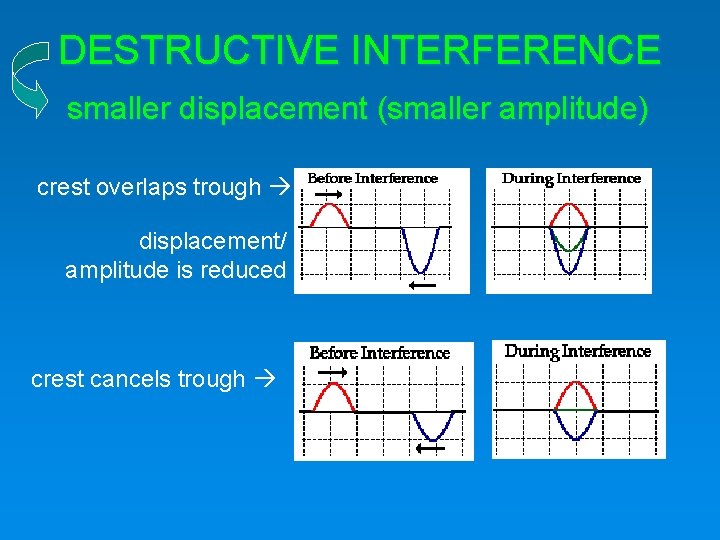
DESTRUCTIVE INTERFERENCE smaller displacement (smaller amplitude) crest overlaps trough displacement/ amplitude is reduced crest cancels trough
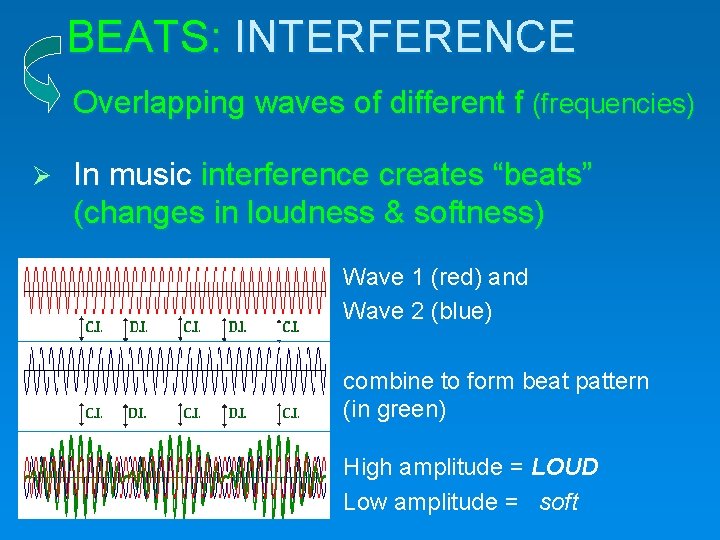
BEATS: INTERFERENCE Overlapping waves of different f (frequencies) In music interference creates “beats” (changes in loudness & softness) Wave 1 (red) and Wave 2 (blue) combine to form beat pattern (in green) High amplitude = LOUD Low amplitude = soft
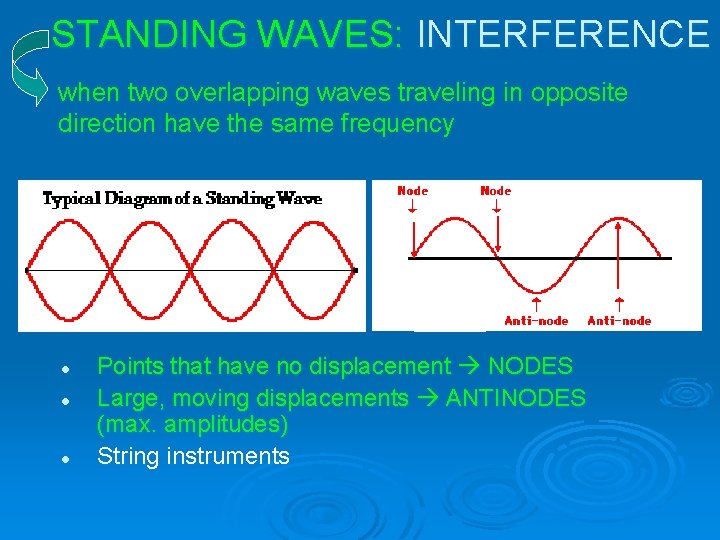
STANDING WAVES: INTERFERENCE when two overlapping waves traveling in opposite direction have the same frequency l l l Points that have no displacement NODES Large, moving displacements ANTINODES (max. amplitudes) String instruments
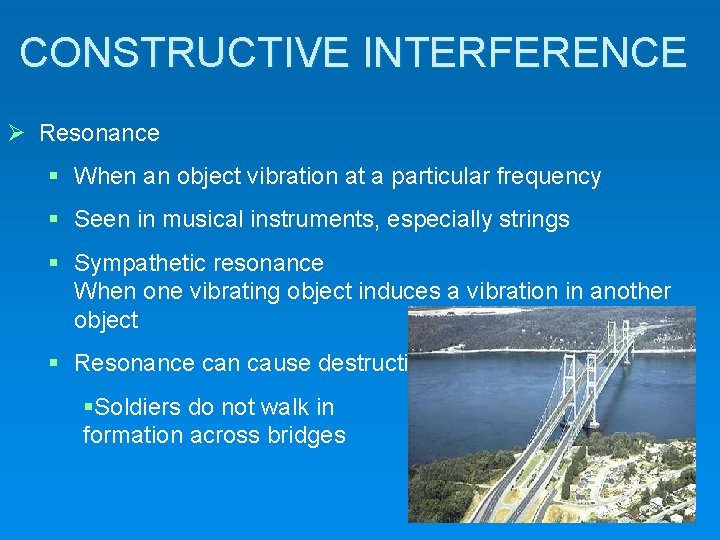
CONSTRUCTIVE INTERFERENCE Resonance § When an object vibration at a particular frequency § Seen in musical instruments, especially strings § Sympathetic resonance When one vibrating object induces a vibration in another object § Resonance can cause destructive waves: §Soldiers do not walk in formation across bridges
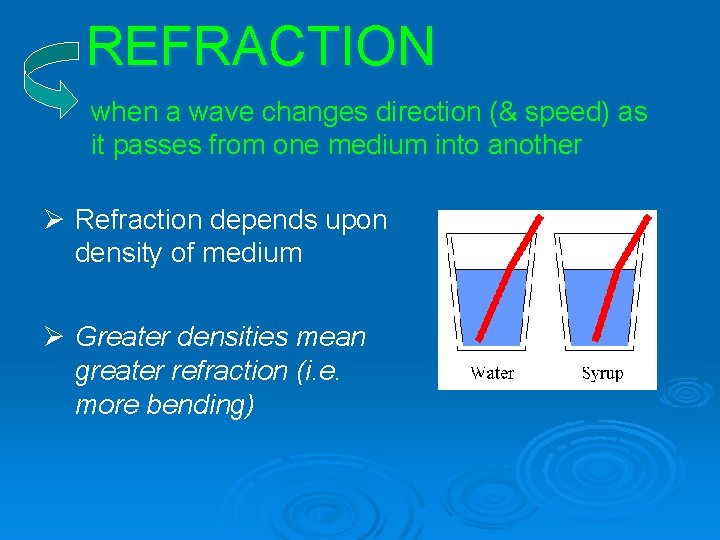
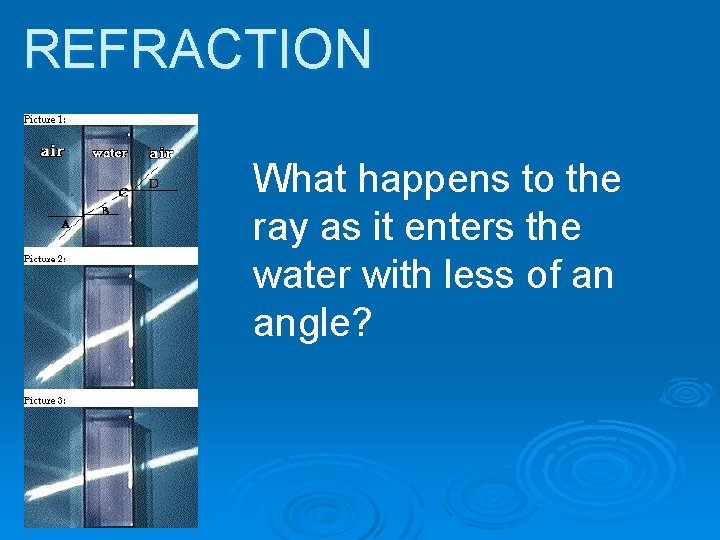
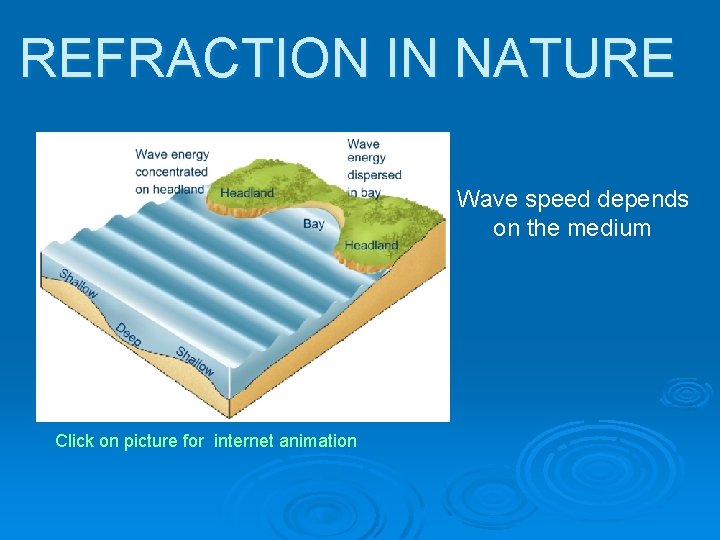
REFRACTION when a wave changes direction (& speed) as it passes from one medium into another Refraction depends upon density of medium Greater densities mean greater refraction (i. e. more bending)
REFRACTION What happens to the ray as it enters the water with less of an angle?
REFRACTION IN NATURE Wave speed depends on the medium Click on picture for internet animation
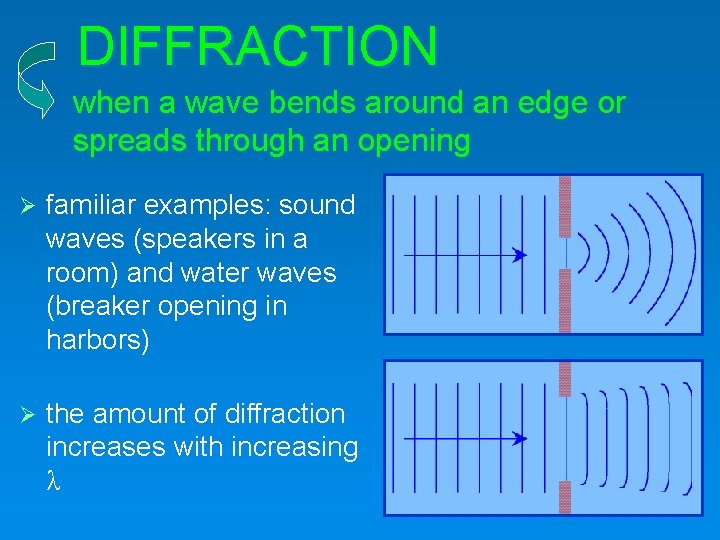
DIFFRACTION when a wave bends around an edge or spreads through an opening familiar examples: sound waves (speakers in a room) and water waves (breaker opening in harbors) the amount of diffraction increases with increasing λ
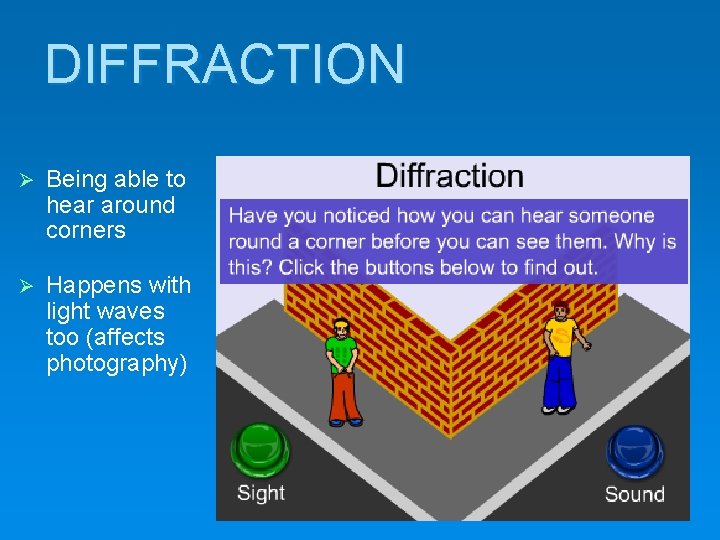
DIFFRACTION Being able to hear around corners Happens with light waves too (affects photography)
How is DIFFRACTION different from REFRACTION? Diffraction = wave bends around an edge Refraction = wave bends because it changes from 1 medium to another (and, therefore, changes speed). http: //www. acoustics. salford. ac. uk/feschools/wav es/diffract. htm
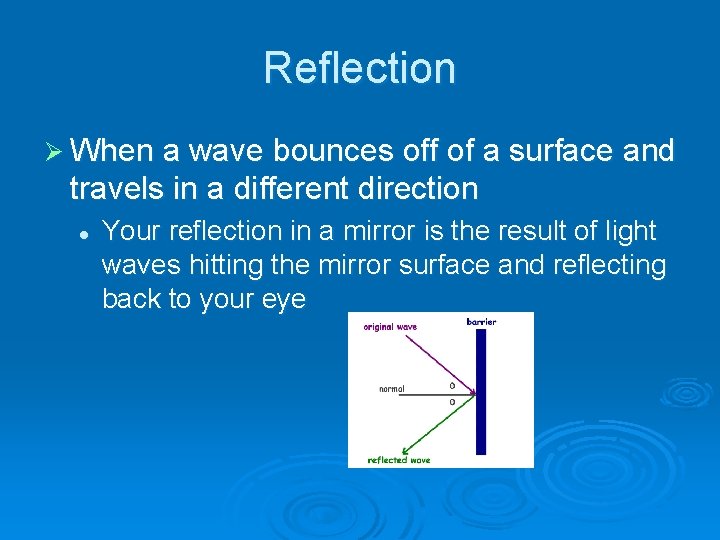
Reflection When a wave bounces off of a surface and travels in a different direction l Your reflection in a mirror is the result of light waves hitting the mirror surface and reflecting back to your eye
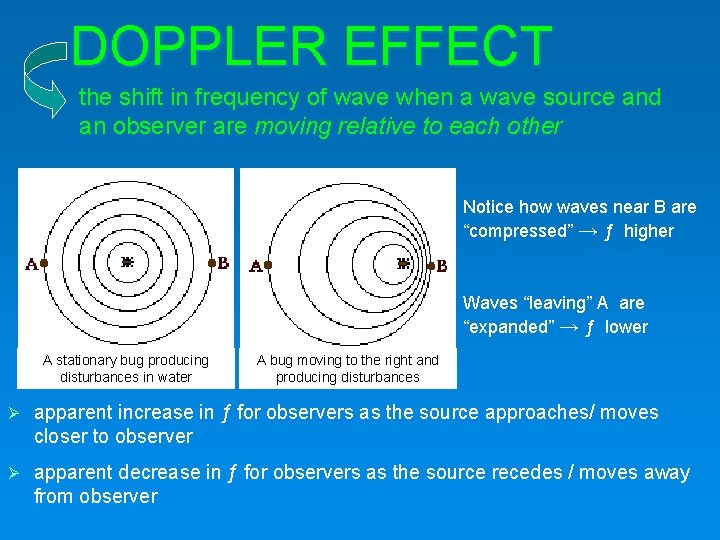
DOPPLER EFFECT the shift in frequency of wave when a wave source and an observer are moving relative to each other Notice how waves near B are “compressed” → ƒ higher A • • B Waves “leaving” A are “expanded” → ƒ lower A stationary bug producing disturbances in water A bug moving to the right and producing disturbances apparent increase in ƒ for observers as the source approaches/ moves closer to observer apparent decrease in ƒ for observers as the source recedes / moves away from observer
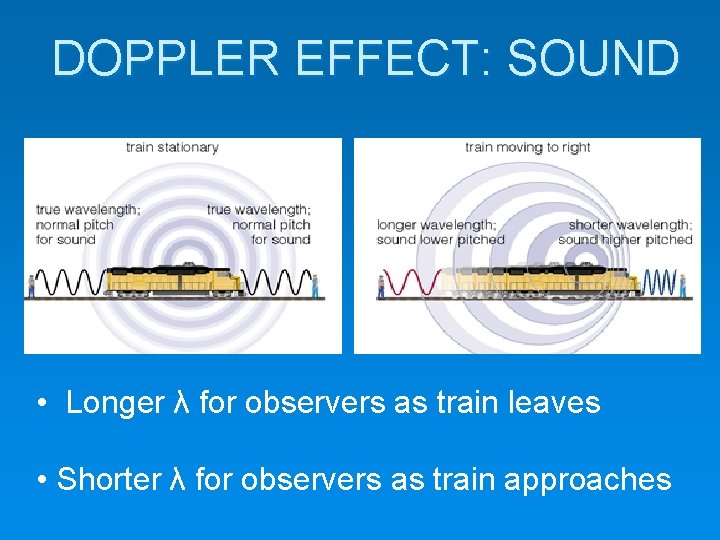
DOPPLER EFFECT: SOUND • Longer λ for observers as train leaves • Shorter λ for observers as train approaches
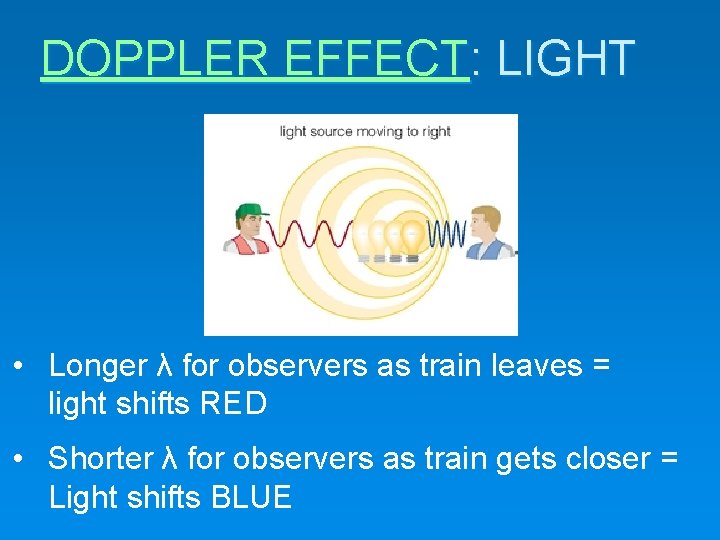
DOPPLER EFFECT: LIGHT • Longer λ for observers as train leaves = light shifts RED • Shorter λ for observers as train gets closer = Light shifts BLUE
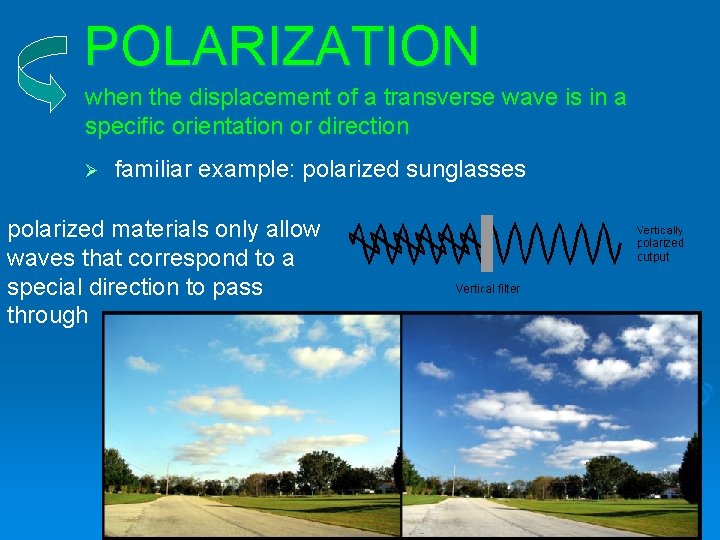
POLARIZATION when the displacement of a transverse wave is in a specific orientation or direction familiar example: polarized sunglasses polarized materials only allow waves that correspond to a special direction to pass through
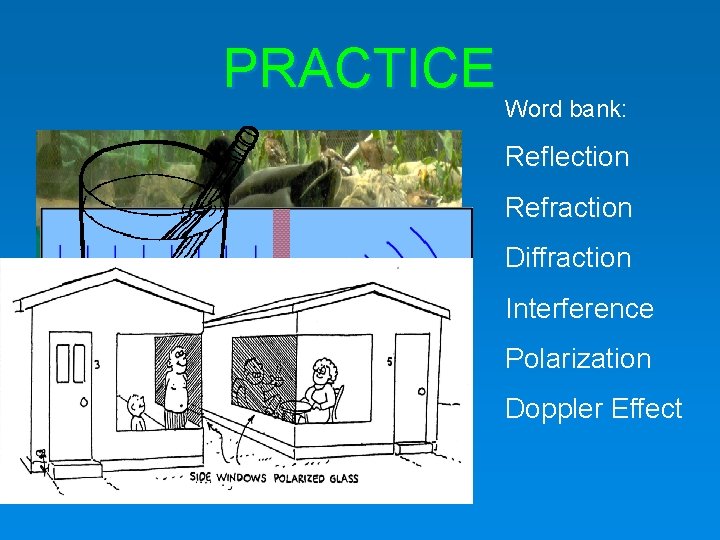
PRACTICE Word bank: Reflection Refraction Diffraction Interference Polarization Doppler Effect
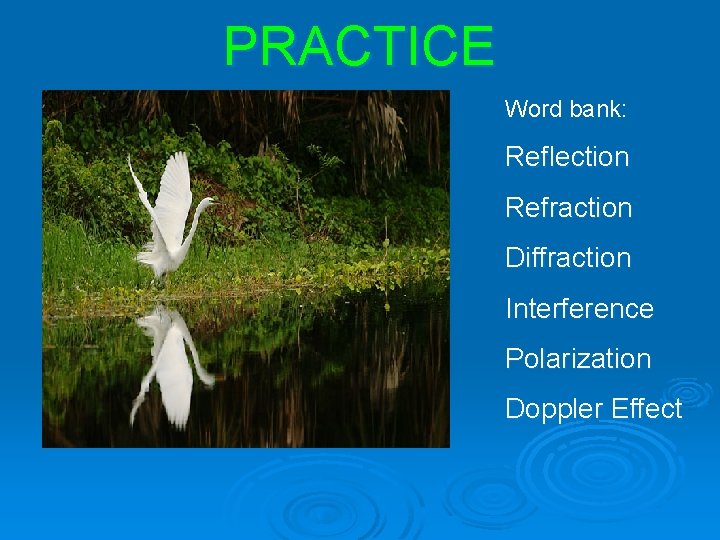
PRACTICE Word bank: Reflection Refraction Diffraction Interference Polarization Doppler Effect
INTERFERENCE RESOURCES http: //www. kettering. edu/~drussell/Demos/superposition/ superposition. html for applets. http: //www. phy. ntnu. edu. tw/ntnujava/viewtopic. php? t=35 for applet. l l To change frequencies, etc. , enter new value, and RETURN. To pause, left click. For Harmonics & Beats applets link to The Soundry Sound Lab (left sidebar) http: //library. thinkquest. org/19537/