
Interactions of Life Chapter 12 Biomes 1 Section
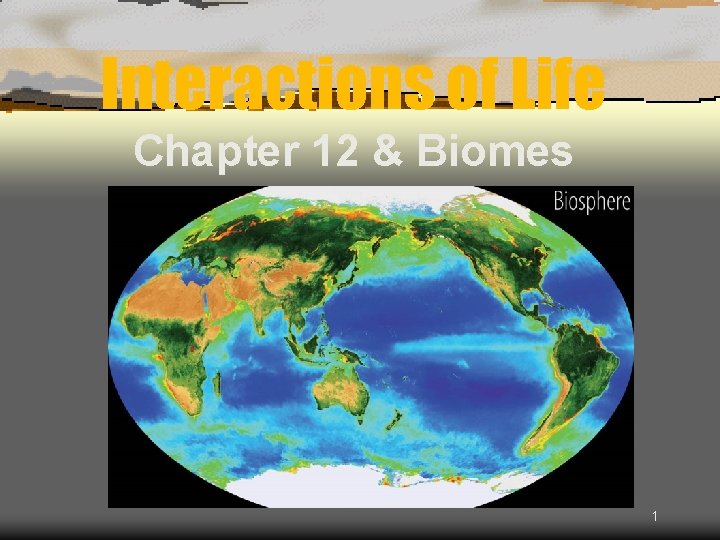
Interactions of Life Chapter 12 & Biomes 1
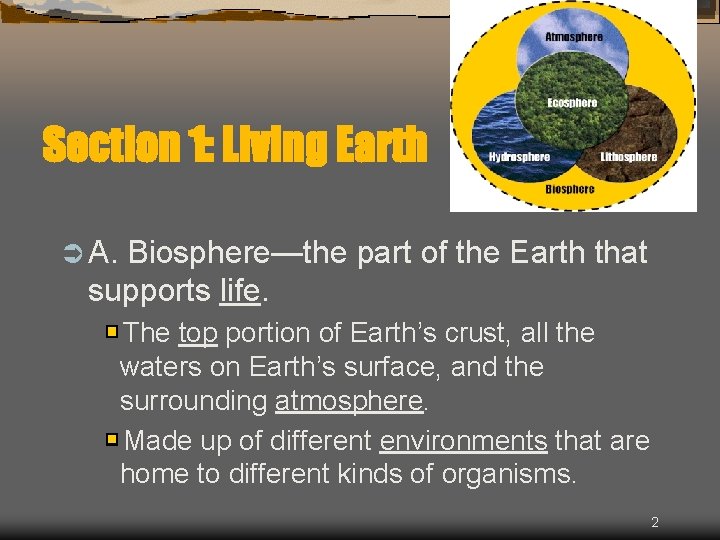
Section 1: Living Earth Ü A. Biosphere—the part of the Earth that supports life. The top portion of Earth’s crust, all the waters on Earth’s surface, and the surrounding atmosphere. Made up of different environments that are home to different kinds of organisms. 2
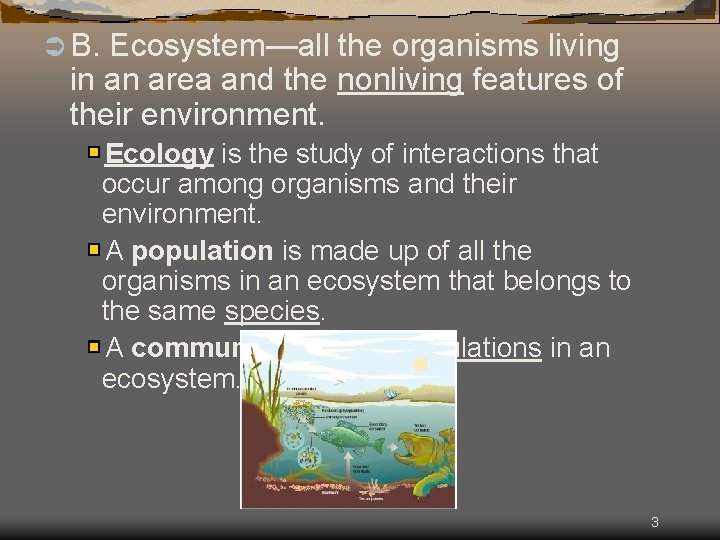
Ü B. Ecosystem—all the organisms living in an area and the nonliving features of their environment. Ecology is the study of interactions that occur among organisms and their environment. A population is made up of all the organisms in an ecosystem that belongs to the same species. A community is all the populations in an ecosystem. 3
Turn and Talk ÜDiscuss the organisms and non-living features of our ecosystem in Southaven. 4
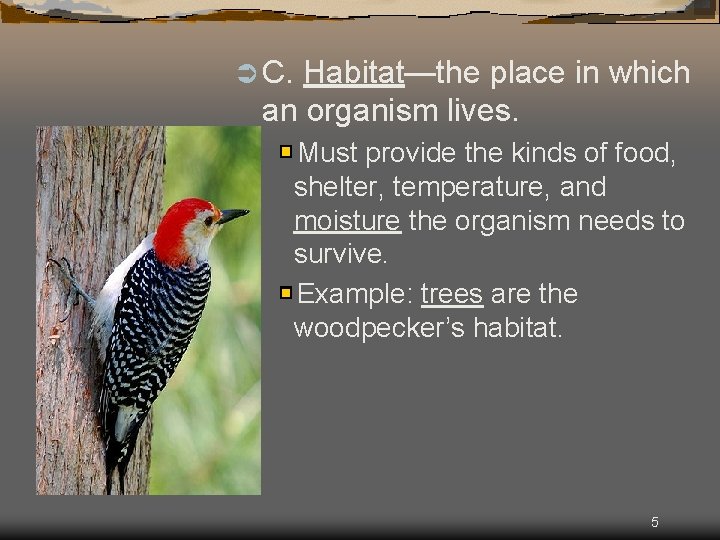
Ü C. Habitat—the place in which an organism lives. Must provide the kinds of food, shelter, temperature, and moisture the organism needs to survive. Example: trees are the woodpecker’s habitat. 5
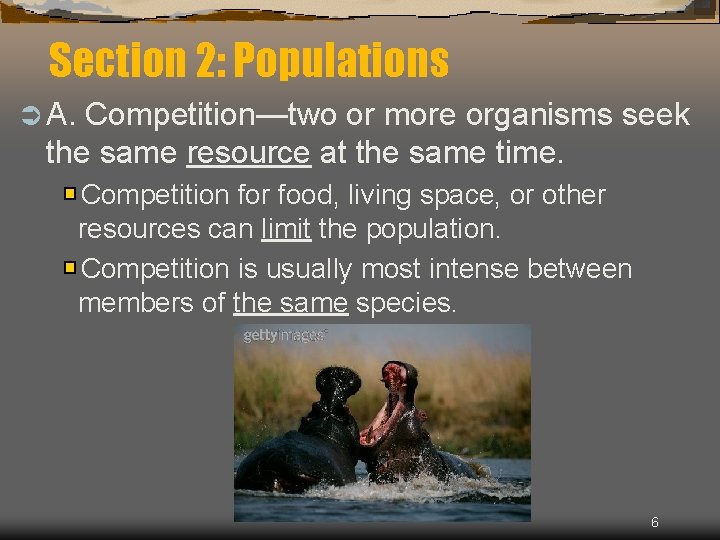
Section 2: Populations Ü A. Competition—two or more organisms seek the same resource at the same time. Competition for food, living space, or other resources can limit the population. Competition is usually most intense between members of the same species. 6
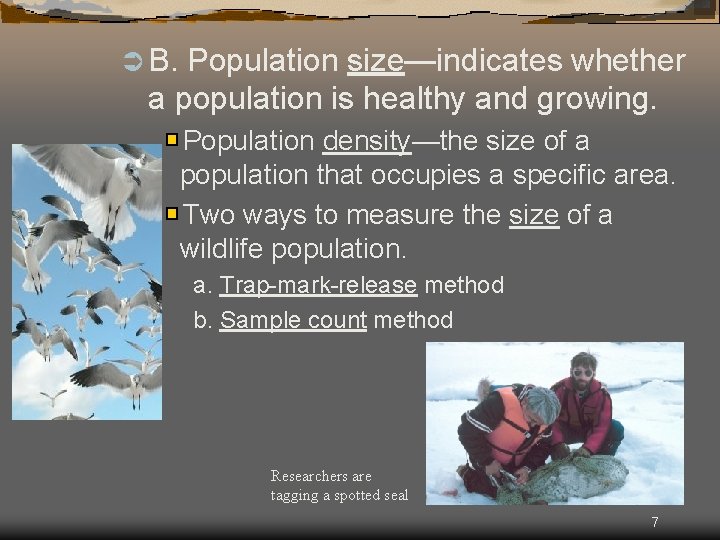
Ü B. Population size—indicates whether a population is healthy and growing. Population density—the size of a population that occupies a specific area. Two ways to measure the size of a wildlife population. a. Trap-mark-release method b. Sample count method Researchers are tagging a spotted seal 7
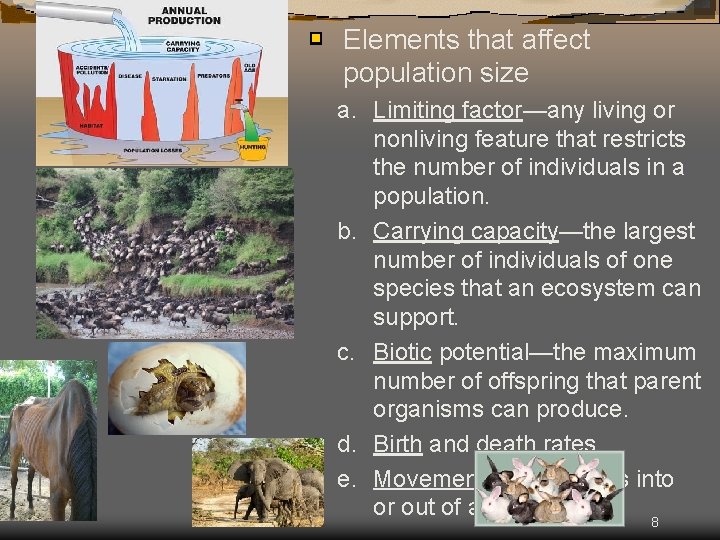
Elements that affect population size a. Limiting factor—any living or nonliving feature that restricts the number of individuals in a population. b. Carrying capacity—the largest number of individuals of one species that an ecosystem can support. c. Biotic potential—the maximum number of offspring that parent organisms can produce. d. Birth and death rates e. Movement of organisms into or out of an area. 8
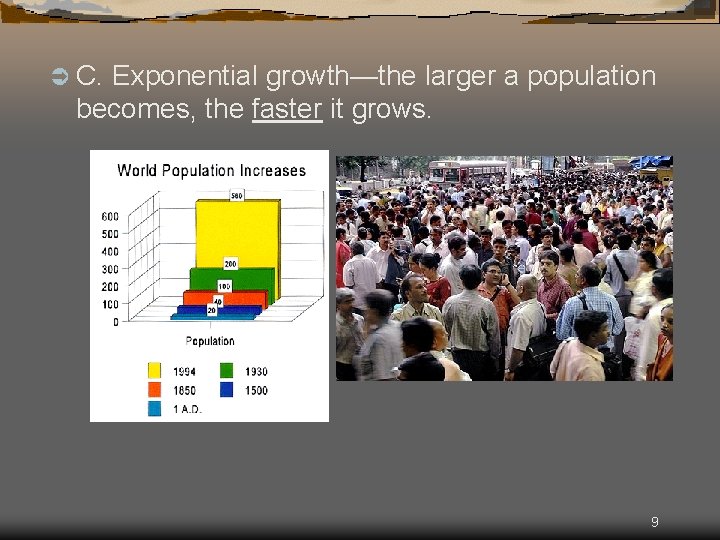
Ü C. Exponential growth—the larger a population becomes, the faster it grows. 9
Quick Write ÜIf a population were decreasing, what kinds of questions would an ecologist ask to determine the problem? 10
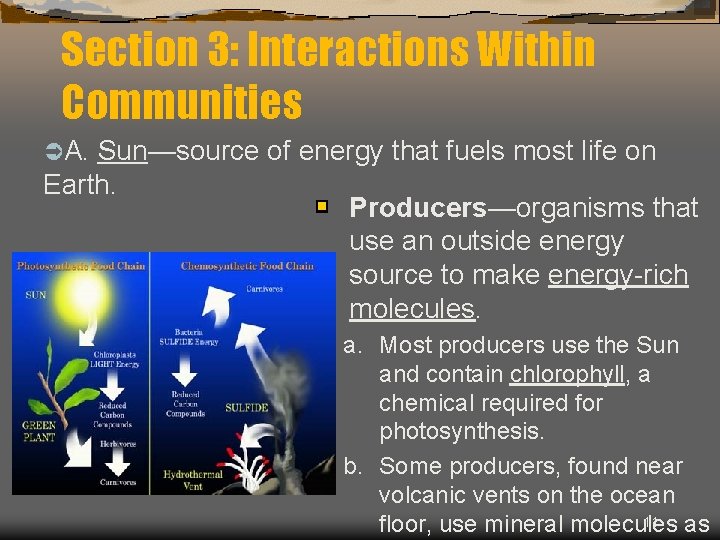
Section 3: Interactions Within Communities ÜA. Sun—source of energy that fuels most life on Earth. Producers—organisms that use an outside energy source to make energy-rich molecules. a. Most producers use the Sun and contain chlorophyll, a chemical required for photosynthesis. b. Some producers, found near volcanic vents on the ocean 11 floor, use mineral molecules as
Turn and Talk ÜDiscuss with your partner what photosynthesis is and why it’s so important for life on Earth. 12
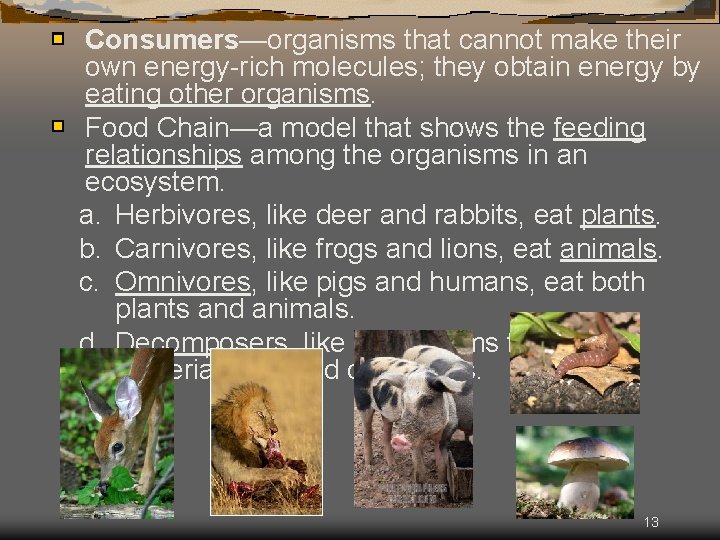
Consumers—organisms that cannot make their own energy-rich molecules; they obtain energy by eating other organisms. Food Chain—a model that shows the feeding relationships among the organisms in an ecosystem. a. Herbivores, like deer and rabbits, eat plants. b. Carnivores, like frogs and lions, eat animals. c. Omnivores, like pigs and humans, eat both plants and animals. d. Decomposers, like earthworms fungi and bacteria, eat dead organisms. 13
Quick Write ÜBased on your knowledge from the previous chapter, why are decomposers like fungi and bacteria so important to our ecosystem? 14
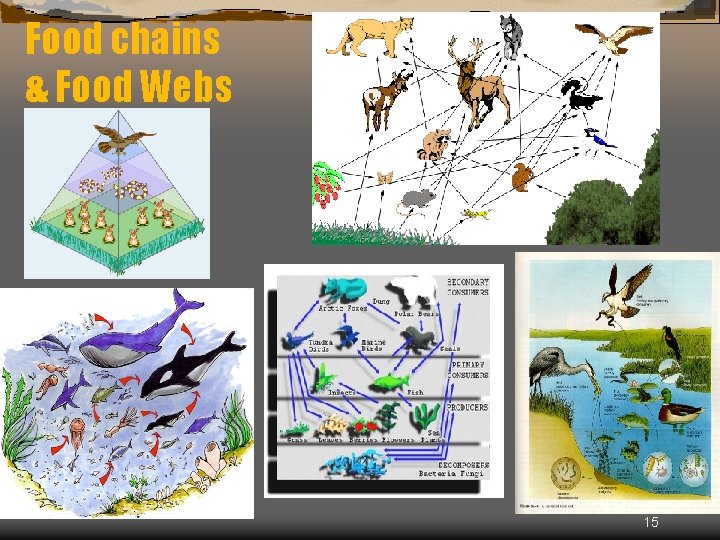
Food chains & Food Webs 15
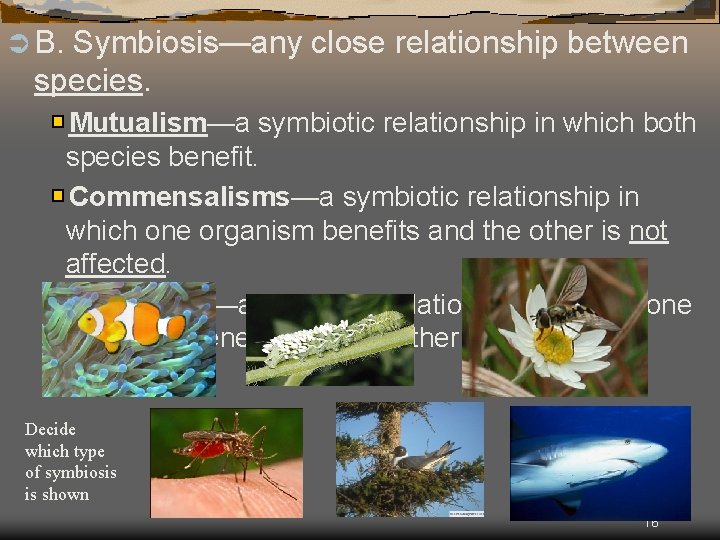
Ü B. Symbiosis—any close relationship between species. Mutualism—a symbiotic relationship in which both species benefit. Commensalisms—a symbiotic relationship in which one organism benefits and the other is not affected. Parasitism—a symbiotic relationship in which one organism benefits and the other is harmed. Decide which type of symbiosis is shown 16
Turn and Talk ÜTurn to your partner to describe one example of mutualism, commensalism, and parasitism. 17
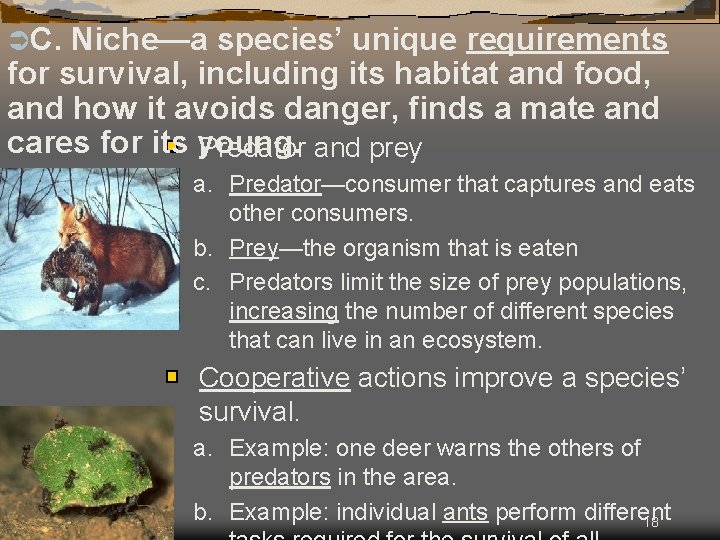
ÜC. Niche—a species’ unique requirements for survival, including its habitat and food, and how it avoids danger, finds a mate and cares for its young. Predator and prey a. Predator—consumer that captures and eats other consumers. b. Prey—the organism that is eaten c. Predators limit the size of prey populations, increasing the number of different species that can live in an ecosystem. Cooperative actions improve a species’ survival. a. Example: one deer warns the others of predators in the area. b. Example: individual ants perform different 18
Turn and Talk ÜTurn and talk to your partner to describe at least one predator/prey relationship in our ecosystem. 19
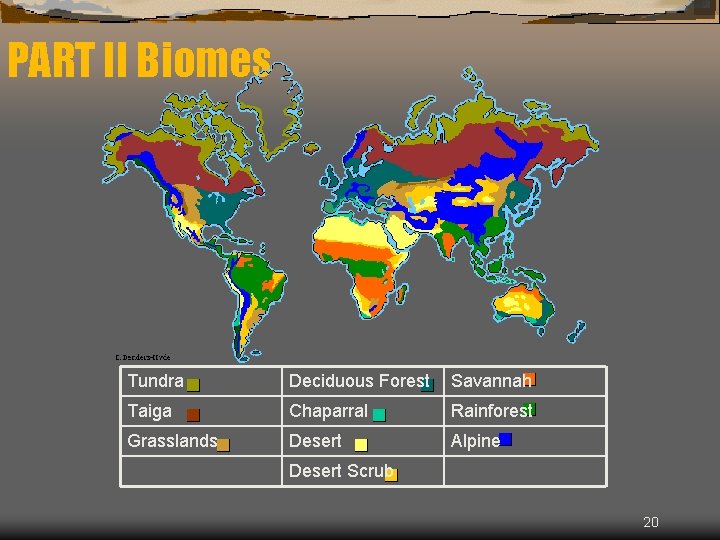
PART II Biomes Tundra Deciduous Forest Savannah Taiga Chaparral Rainforest Grasslands Desert Alpine Desert Scrub 20
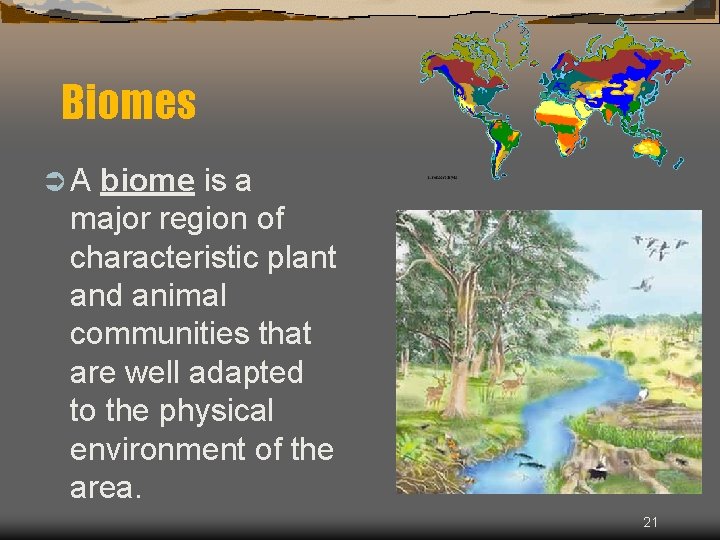
Biomes ÜA biome is a major region of characteristic plant and animal communities that are well adapted to the physical environment of the area. 21
Turn and Talk Ü Discuss with your partner about the animal and plant communities well adapted to their environment in Southaven. 22
Biomes Covered: Ü Terrestrial Biomes Tundra Taiga Deciduous Forest Grasslands Chaparral Desert Savanna Tropical Rainforest Ü Aquatic Biomes Freshwater Biomes Marine Biomes 23
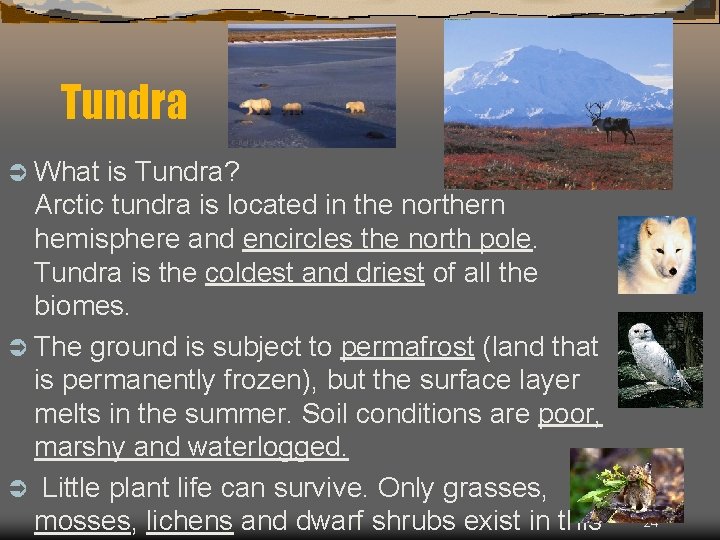
Tundra Ü What is Tundra? Arctic tundra is located in the northern hemisphere and encircles the north pole. Tundra is the coldest and driest of all the biomes. Ü The ground is subject to permafrost (land that is permanently frozen), but the surface layer melts in the summer. Soil conditions are poor, marshy and waterlogged. Ü Little plant life can survive. Only grasses, mosses, lichens and dwarf shrubs exist in this 24
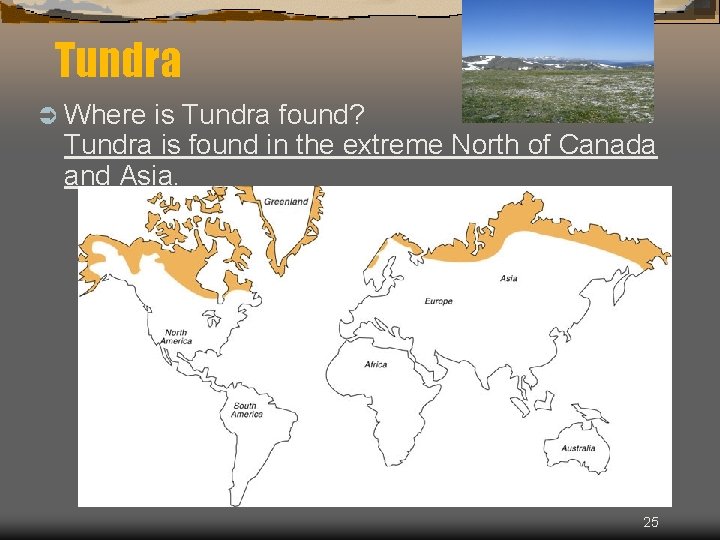
Tundra Ü Where is Tundra found? Tundra is found in the extreme North of Canada and Asia. 25
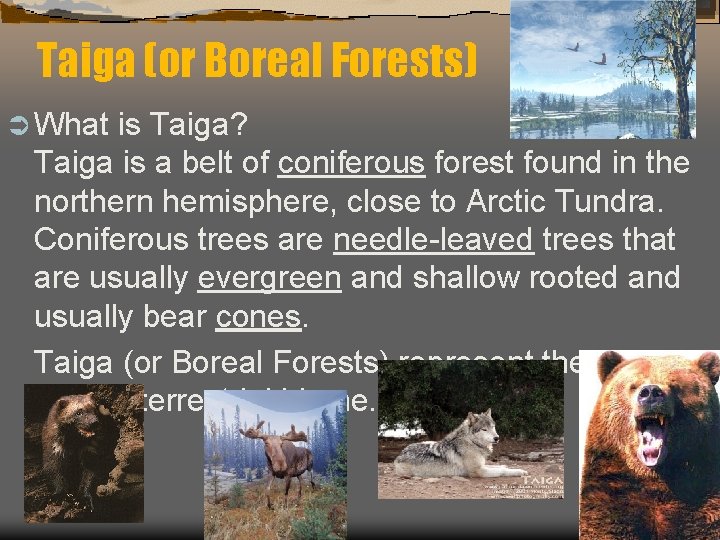
Taiga (or Boreal Forests) Ü What is Taiga? Taiga is a belt of coniferous forest found in the northern hemisphere, close to Arctic Tundra. Coniferous trees are needle-leaved trees that are usually evergreen and shallow rooted and usually bear cones. Taiga (or Boreal Forests) represent the largest terrestrial biome. 26
Quick Write ÜName at least 3 animals you would find in the taiga. 27
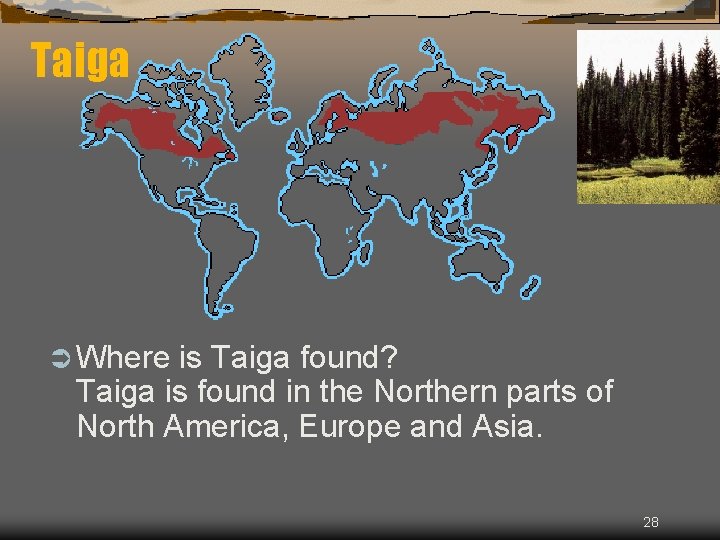
Taiga Ü Where is Taiga found? Taiga is found in the Northern parts of North America, Europe and Asia. 28
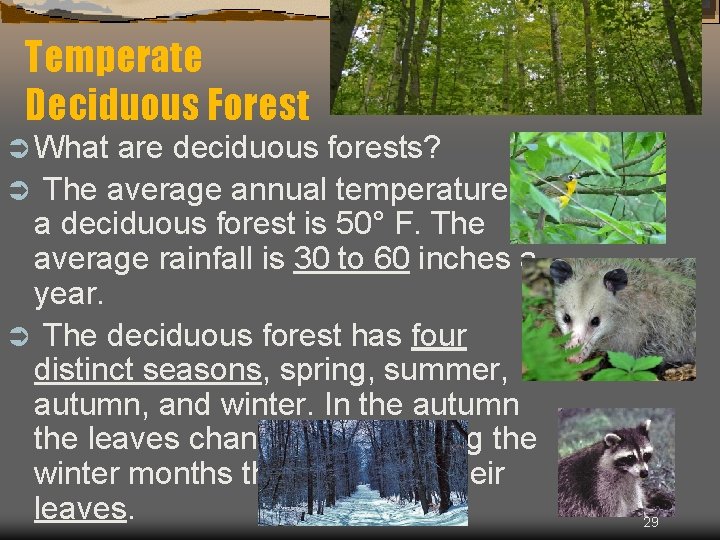
Temperate Deciduous Forest Ü What are deciduous forests? Ü The average annual temperature in a deciduous forest is 50° F. The average rainfall is 30 to 60 inches a year. Ü The deciduous forest has four distinct seasons, spring, summer, autumn, and winter. In the autumn the leaves change color. During the winter months the trees lose their leaves. 29
Quick write! Ü In the deciduous forest, trees will lose their leaves during the cold, winter months. Using knowledge from the previous chapter, what two behavioral adaptations do animals use during winter as well? 30
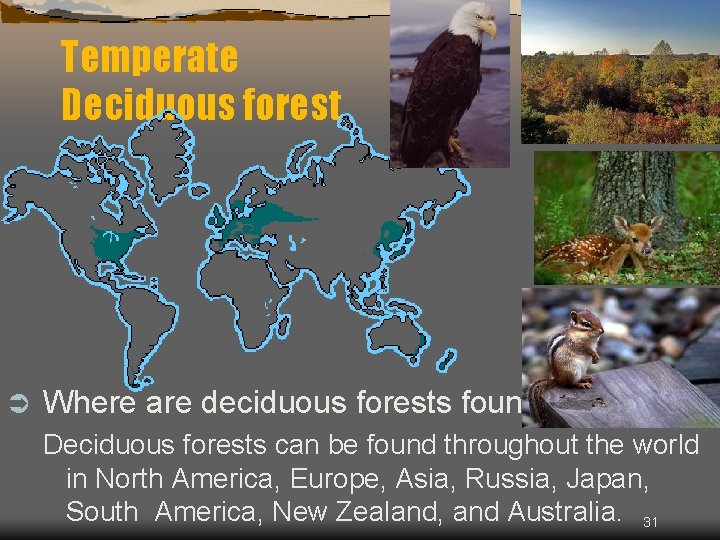
Temperate Deciduous forest Ü Where are deciduous forests found? Deciduous forests can be found throughout the world in North America, Europe, Asia, Russia, Japan, South America, New Zealand, and Australia. 31
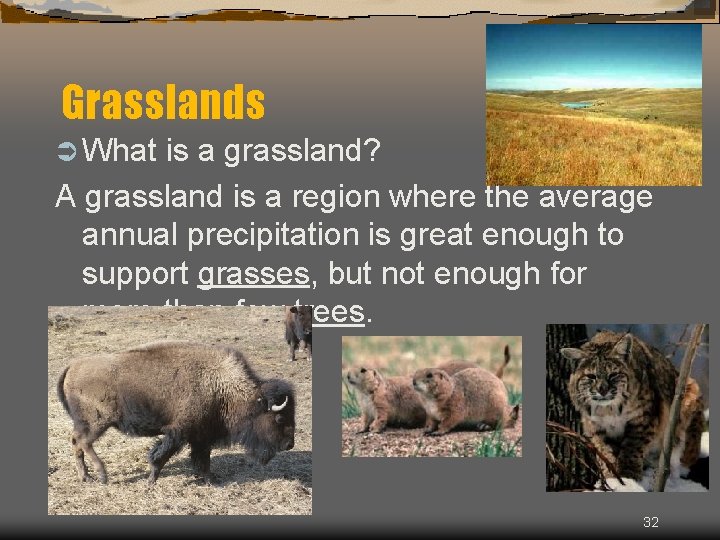
Grasslands Ü What is a grassland? A grassland is a region where the average annual precipitation is great enough to support grasses, but not enough for more than few trees. 32
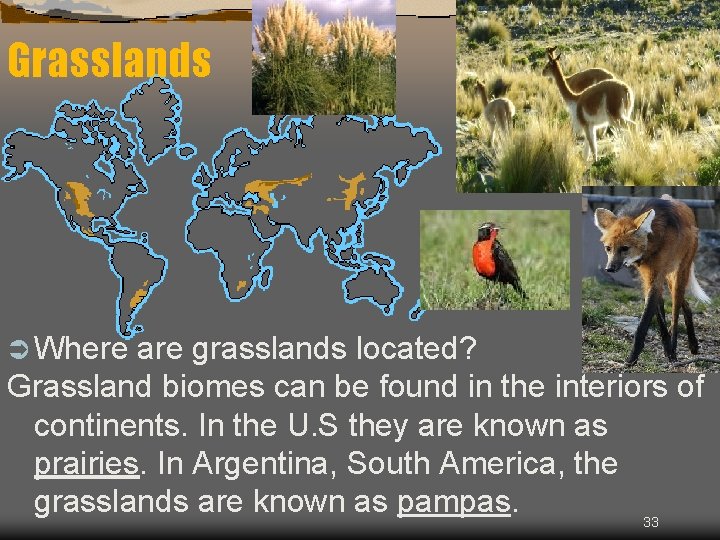
Grasslands Ü Where are grasslands located? Grassland biomes can be found in the interiors of continents. In the U. S they are known as prairies. In Argentina, South America, the grasslands are known as pampas. 33
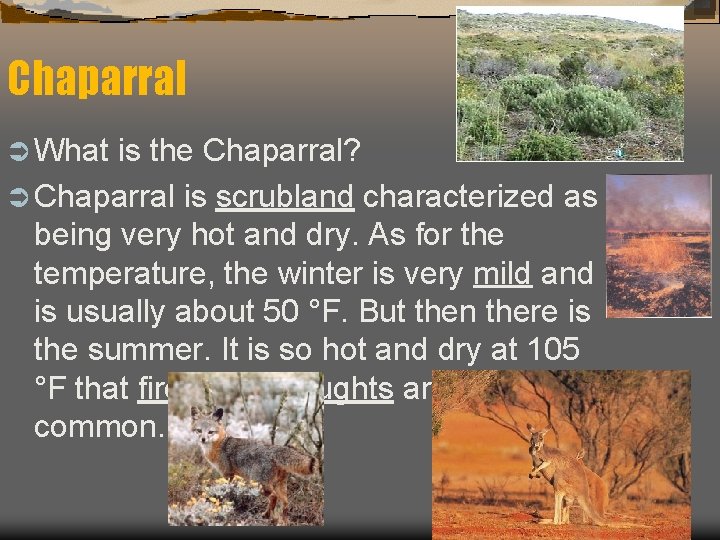
Chaparral Ü What is the Chaparral? Ü Chaparral is scrubland characterized as being very hot and dry. As for the temperature, the winter is very mild and is usually about 50 °F. But then there is the summer. It is so hot and dry at 105 °F that fires and droughts are very common. 34
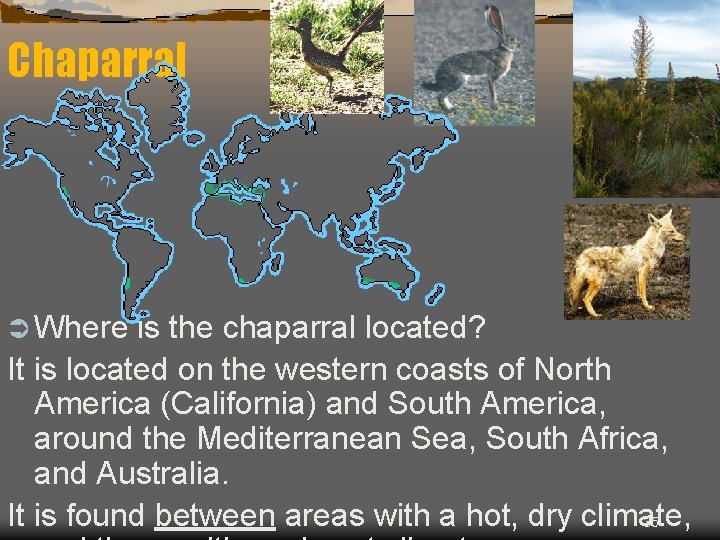
Chaparral Ü Where is the chaparral located? It is located on the western coasts of North America (California) and South America, around the Mediterranean Sea, South Africa, and Australia. It is found between areas with a hot, dry climate, 35
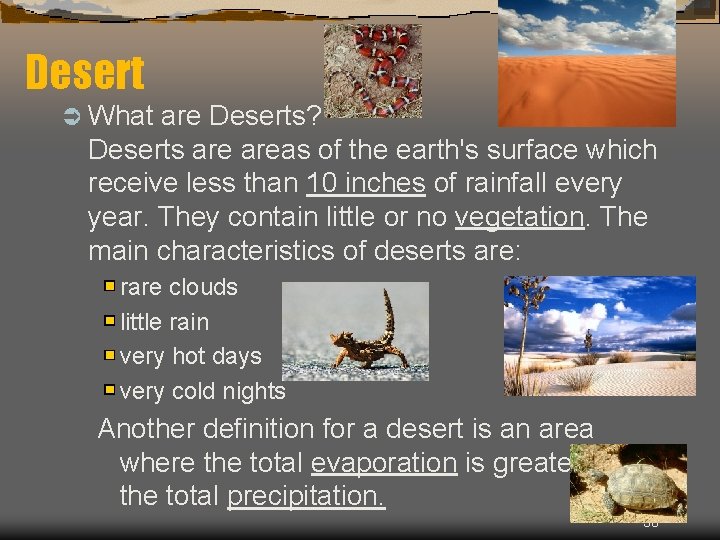
Desert Ü What are Deserts? Deserts areas of the earth's surface which receive less than 10 inches of rainfall every year. They contain little or no vegetation. The main characteristics of deserts are: rare clouds little rain very hot days very cold nights Another definition for a desert is an area where the total evaporation is greater than the total precipitation. 36
Turn and Talk ÜTurn to your partner to discuss why deserts get very cold at night yet very hot during the day. 37
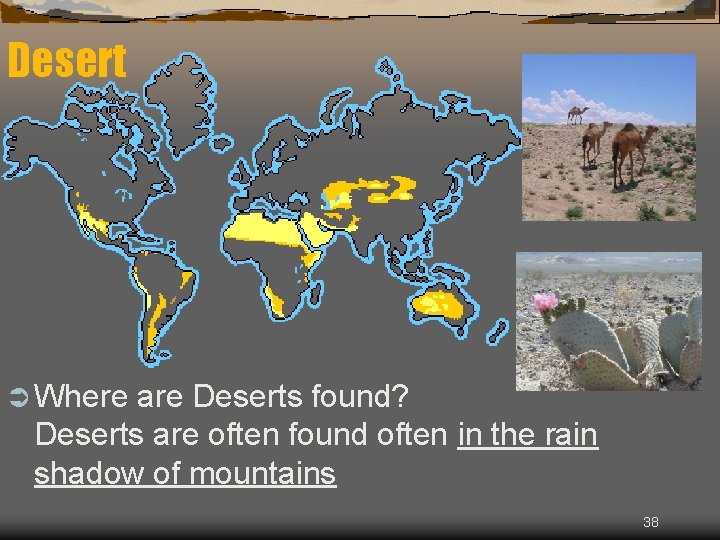
Desert Ü Where are Deserts found? Deserts are often found often in the rain shadow of mountains 38
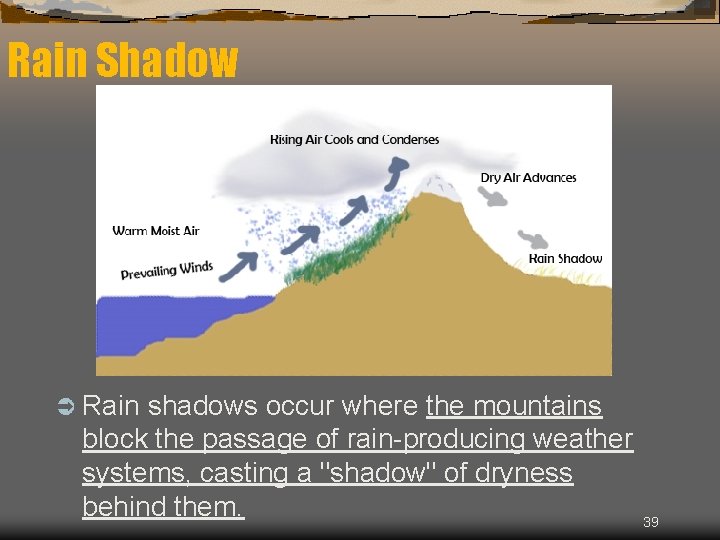
Rain Shadow Ü Rain shadows occur where the mountains block the passage of rain-producing weather systems, casting a "shadow" of dryness behind them. 39
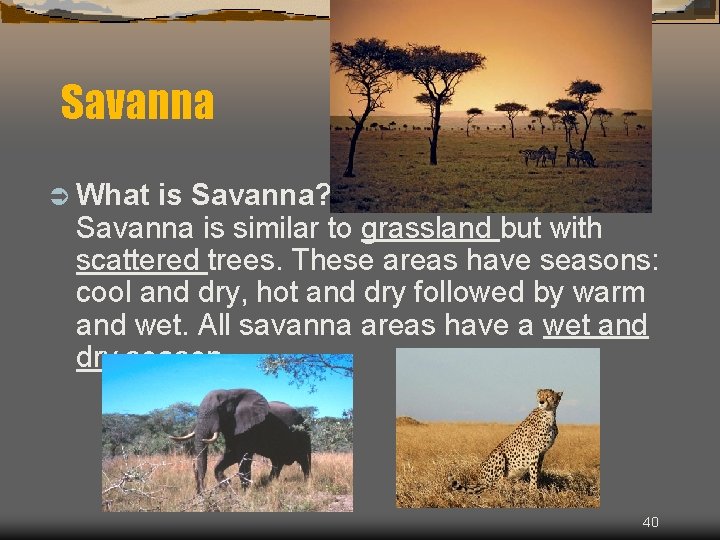
Savanna Ü What is Savanna? Savanna is similar to grassland but with scattered trees. These areas have seasons: cool and dry, hot and dry followed by warm and wet. All savanna areas have a wet and dry season. 40
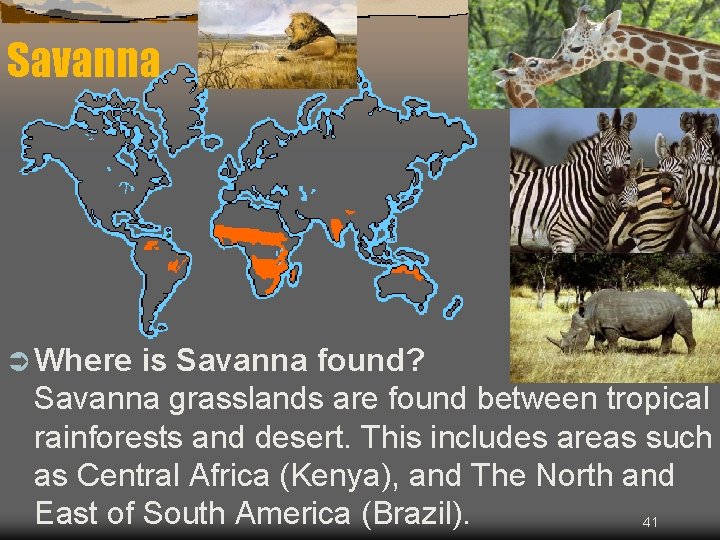
Savanna Ü Where is Savanna found? Savanna grasslands are found between tropical rainforests and desert. This includes areas such as Central Africa (Kenya), and The North and East of South America (Brazil). 41
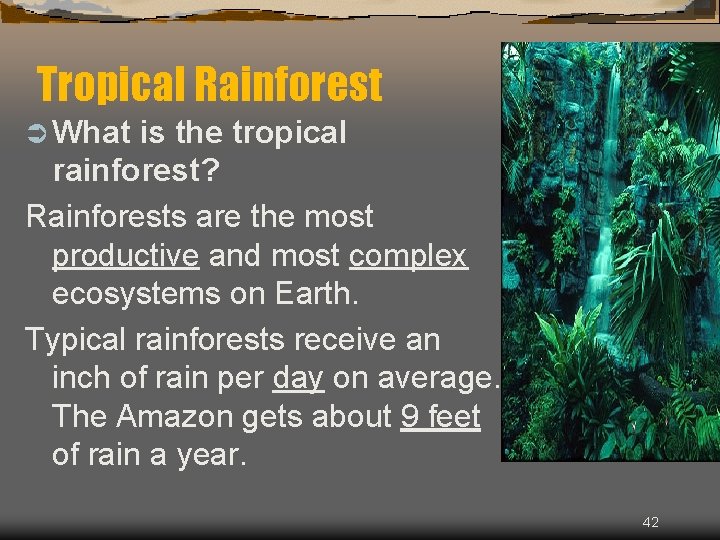
Tropical Rainforest Ü What is the tropical rainforest? Rainforests are the most productive and most complex ecosystems on Earth. Typical rainforests receive an inch of rain per day on average. The Amazon gets about 9 feet of rain a year. 42
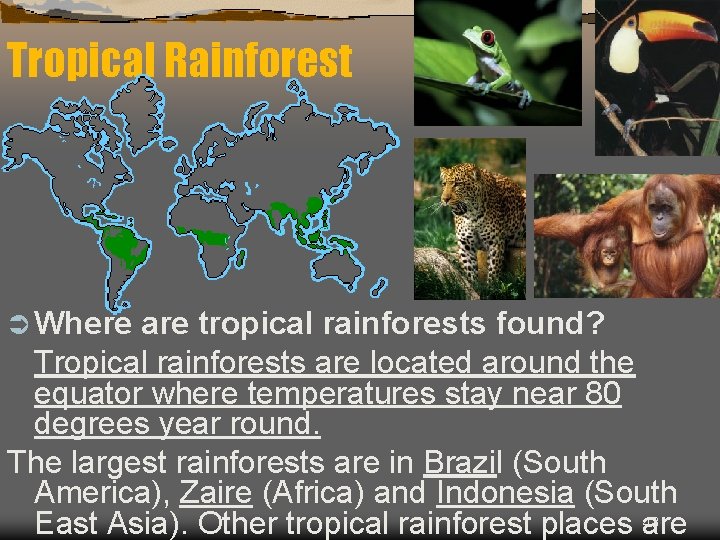
Tropical Rainforest Ü Where are tropical rainforests found? Tropical rainforests are located around the equator where temperatures stay near 80 degrees year round. The largest rainforests are in Brazil (South America), Zaire (Africa) and Indonesia (South 43 East Asia). Other tropical rainforest places are
Quick Write ÜList examples of animals and plants that you would see in the tropical rainforest. 44
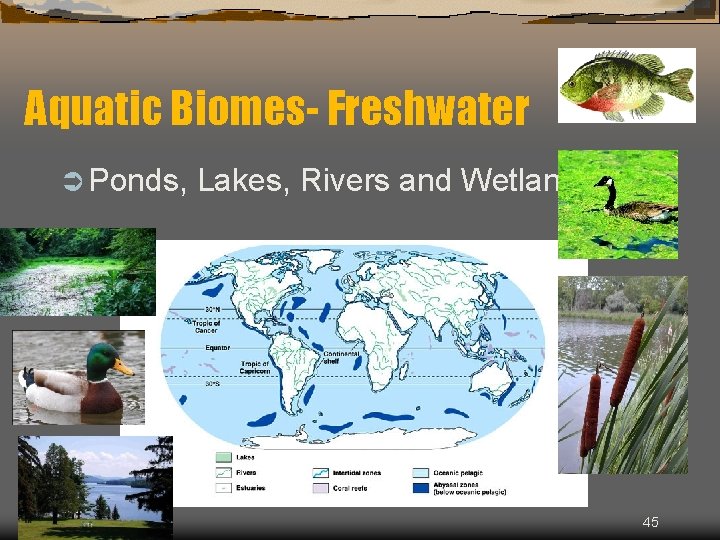
Aquatic Biomes- Freshwater Ü Ponds, Lakes, Rivers and Wetlands 45
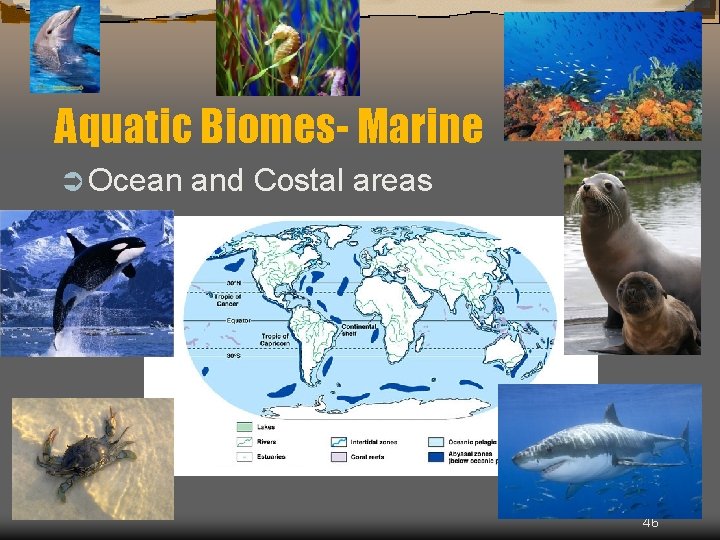
Aquatic Biomes- Marine Ü Ocean and Costal areas 46
- Slides: 46