
Interactions Between Vitamin D and Androgen Receptor Signaling

Interactions Between Vitamin D and Androgen Receptor Signaling in Prostate Cancer Cells Nancy L. Weigel, Ph. D. Baylor College of Medicine
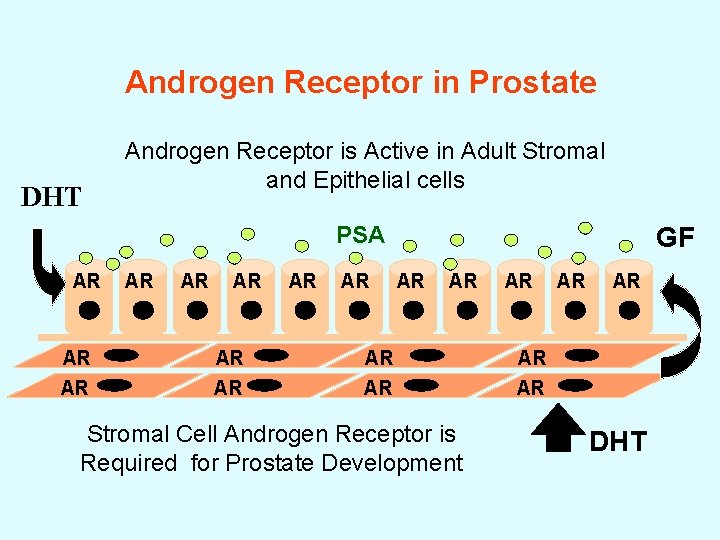
Androgen Receptor in Prostate DHT Androgen Receptor is Active in Adult Stromal and Epithelial cells PSA AR AR AR GF AR AR Stromal Cell Androgen Receptor is Required for Prostate Development AR AR AR DHT
Prostate Cancer • Primary tumors are androgen dependent and express PSA • Tumors treated with androgen ablation • Tumors become ablation resistant—express PSA • Tumors still androgen receptor dependent?
LNCa. P and C 4 -2 Human Prostate Cancer Cells LNCa. P • • Isolated from lymph node metastasis Androgen dependent in vivo Express AR (mutant) Express wt p 53 C 4 -2 • Derived from LNCa. P cells • Androgen independent in vitro and in vivo
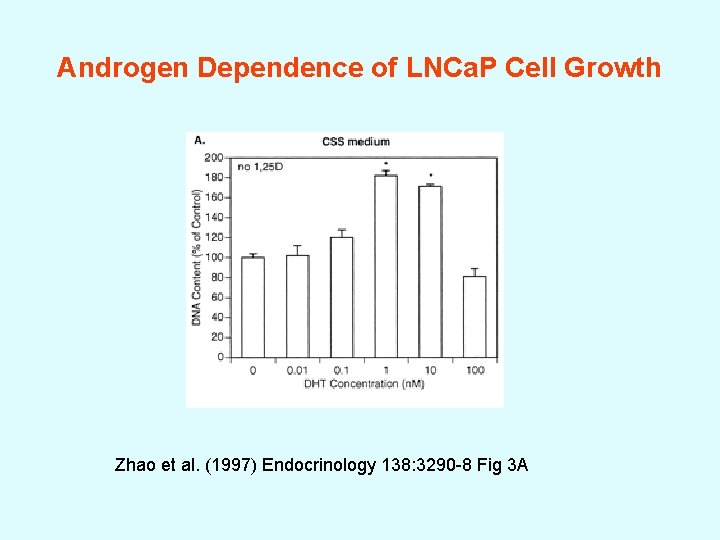
Androgen Dependence of LNCa. P Cell Growth Zhao et al. (1997) Endocrinology 138: 3290 -8 Fig 3 A
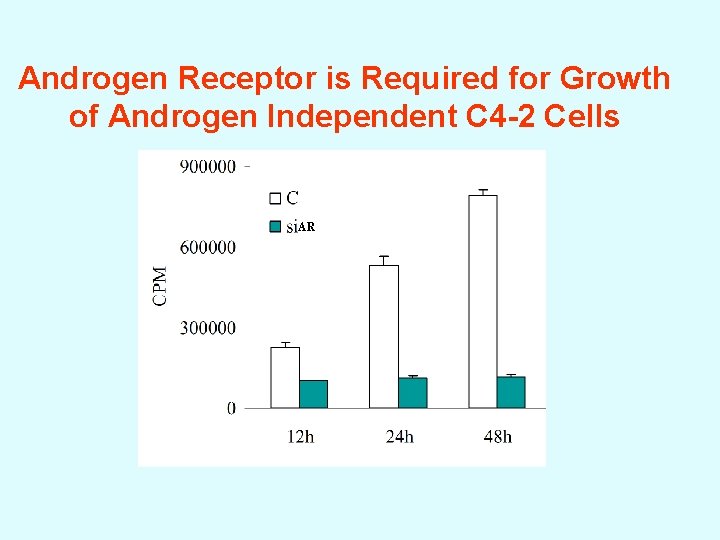
Androgen Receptor is Required for Growth of Androgen Independent C 4 -2 Cells AR
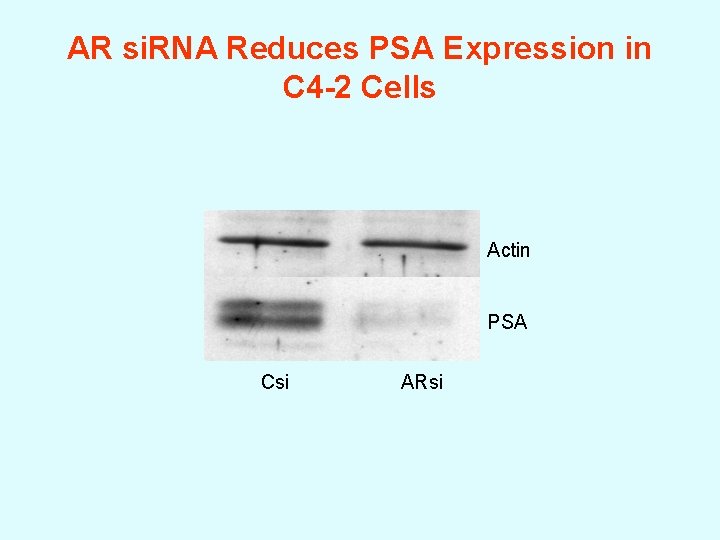
AR si. RNA Reduces PSA Expression in C 4 -2 Cells Actin PSA Csi ARsi
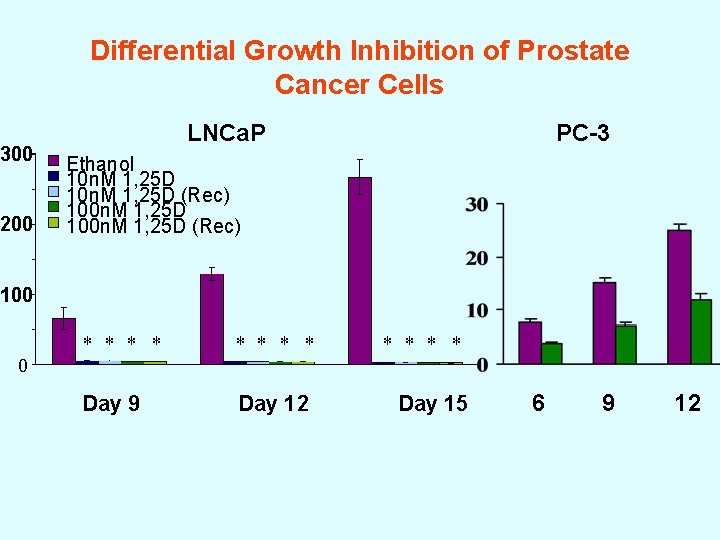
Differential Growth Inhibition of Prostate Cancer Cells 300 200 LNCa. P PC-3 Ethanol 10 n. M 1, 25 D (Rec) 100 n. M 1, 25 D (Rec) 100 * * * * Day 9 Day 12 * * 0 Day 15 6 9 12
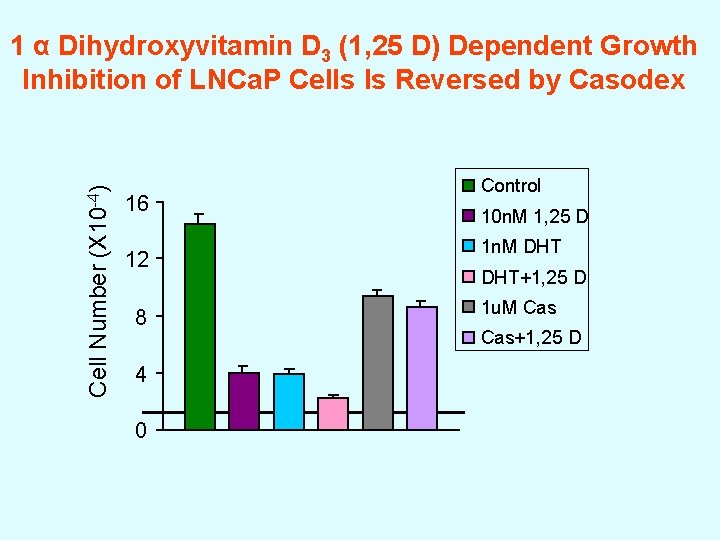
Cell Number (X 10 -4) 1 α Dihydroxyvitamin D 3 (1, 25 D) Dependent Growth Inhibition of LNCa. P Cells Is Reversed by Casodex 16 12 8 4 0 Control 10 n. M 1, 25 D 1 n. M DHT+1, 25 D 1 u. M Cas+1, 25 D
Is Androgen Activity Essential for 1, 25 D Growth Inhibition of Prostate Cancer Cells? • Is this phenomenon unique to LNCa. P lineage cells? • Would 1, 25 D effectively inhibit cancers that have failed androgen ablation therapy?
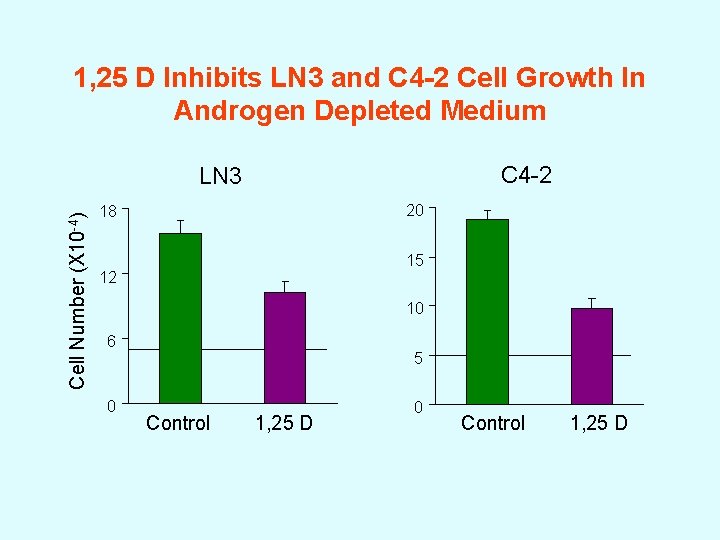
1, 25 D Inhibits LN 3 and C 4 -2 Cell Growth In Androgen Depleted Medium C 4 -2 Cell Number (X 10 -4) LN 3 20 18 15 12 10 6 0 5 Control 1, 25 D 0 Control 1, 25 D
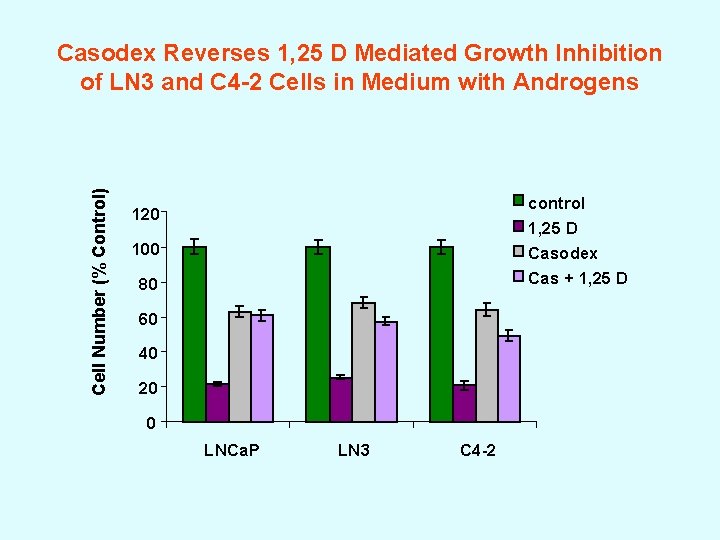
Cell Number (% Control) Casodex Reverses 1, 25 D Mediated Growth Inhibition of LN 3 and C 4 -2 Cells in Medium with Androgens control 1, 25 D Casodex Cas + 1, 25 D 120 100 80 60 40 20 0 LNCa. P LN 3 C 4 -2
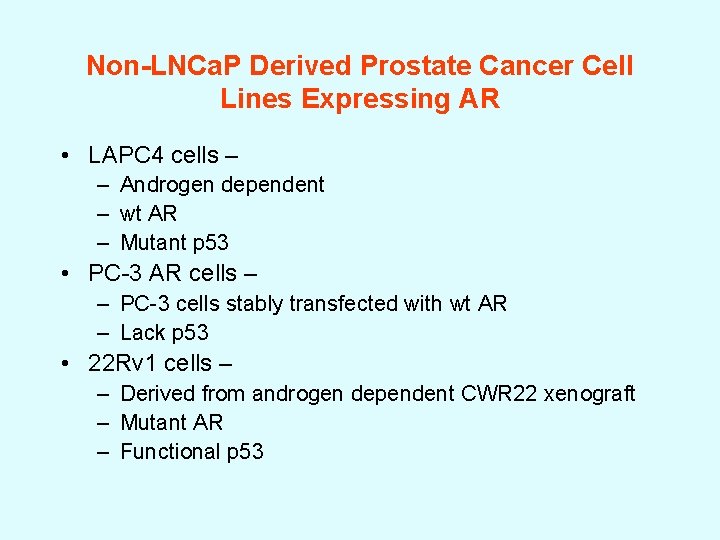
Non-LNCa. P Derived Prostate Cancer Cell Lines Expressing AR • LAPC 4 cells – – Androgen dependent – wt AR – Mutant p 53 • PC-3 AR cells – – PC-3 cells stably transfected with wt AR – Lack p 53 • 22 Rv 1 cells – – Derived from androgen dependent CWR 22 xenograft – Mutant AR – Functional p 53
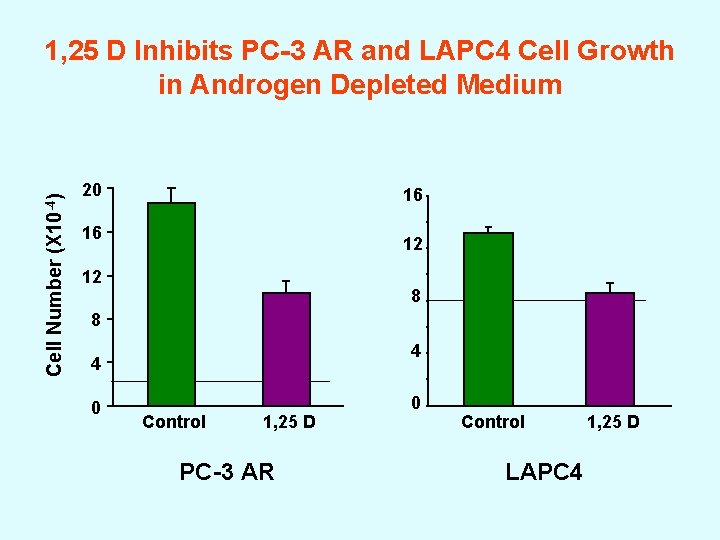
Cell Number (X 10 -4) 1, 25 D Inhibits PC-3 AR and LAPC 4 Cell Growth in Androgen Depleted Medium 20 16 16 12 12 8 8 4 4 0 Control 1, 25 D PC-3 AR 0 Control LAPC 4 1, 25 D
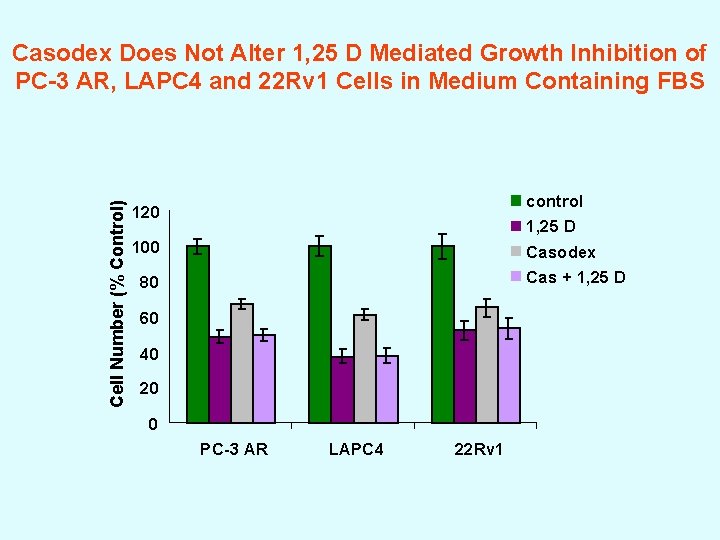
Cell Number (% Control) Casodex Does Not Alter 1, 25 D Mediated Growth Inhibition of PC-3 AR, LAPC 4 and 22 Rv 1 Cells in Medium Containing FBS control 1, 25 D Casodex Cas + 1, 25 D 120 100 80 60 40 20 0 PC-3 AR LAPC 4 22 Rv 1
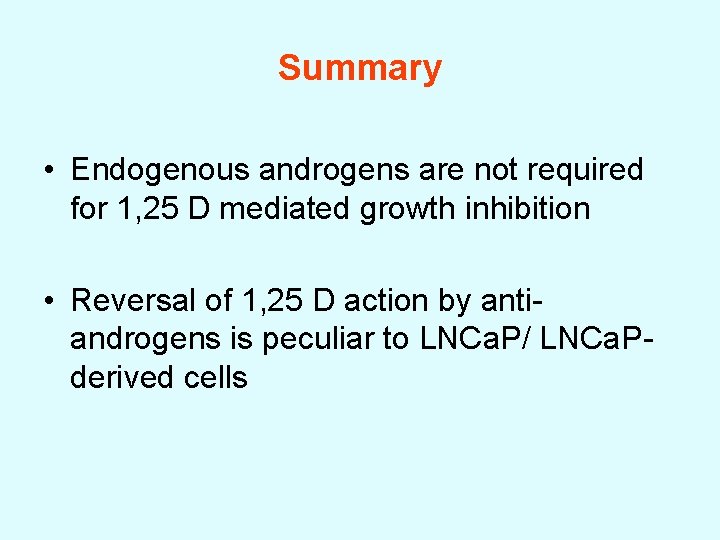
Summary • Endogenous androgens are not required for 1, 25 D mediated growth inhibition • Reversal of 1, 25 D action by antiandrogens is peculiar to LNCa. P/ LNCa. Pderived cells
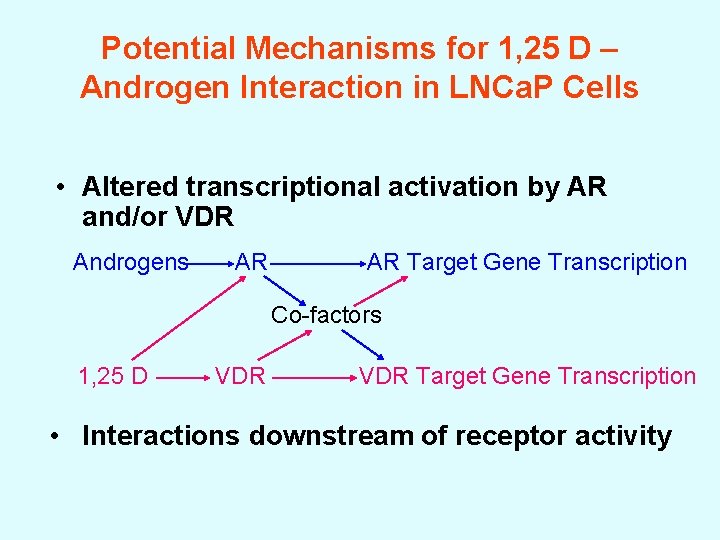
Potential Mechanisms for 1, 25 D – Androgen Interaction in LNCa. P Cells • Altered transcriptional activation by AR and/or VDR Androgens AR AR Target Gene Transcription Co-factors 1, 25 D VDR Target Gene Transcription • Interactions downstream of receptor activity
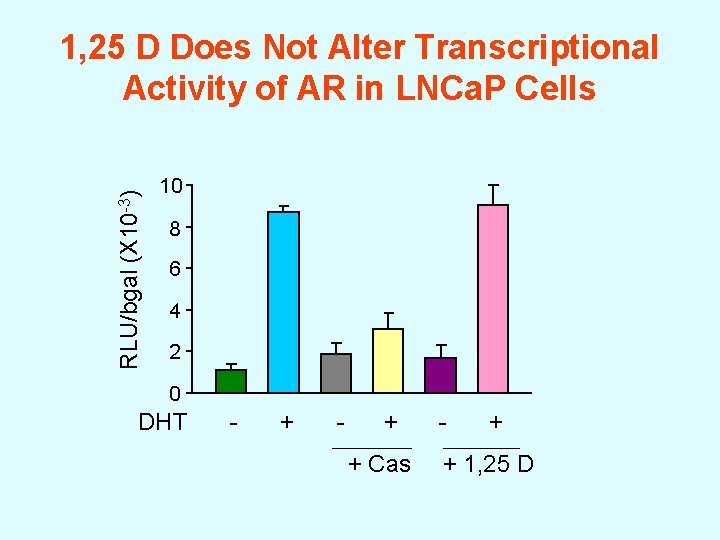
RLU/bgal (X 10 -3) 1, 25 D Does Not Alter Transcriptional Activity of AR in LNCa. P Cells 10 8 6 4 2 0 DHT - + + Cas - + + 1, 25 D
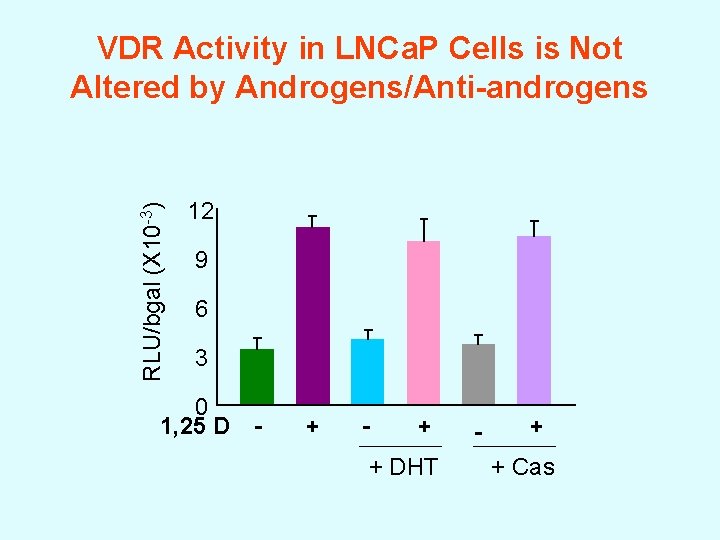
RLU/bgal (X 10 -3) VDR Activity in LNCa. P Cells is Not Altered by Androgens/Anti-androgens 12 9 6 3 0 1, 25 D - + + DHT - + + Cas
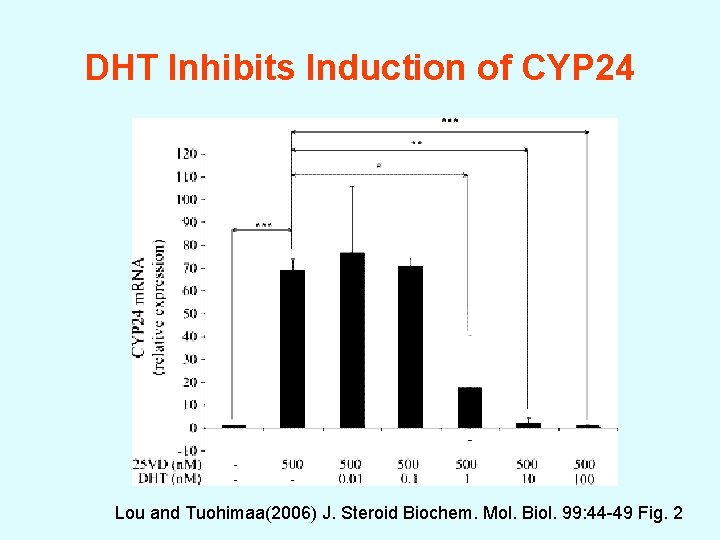
DHT Inhibits Induction of CYP 24 Lou and Tuohimaa(2006) J. Steroid Biochem. Mol. Biol. 99: 44 -49 Fig. 2
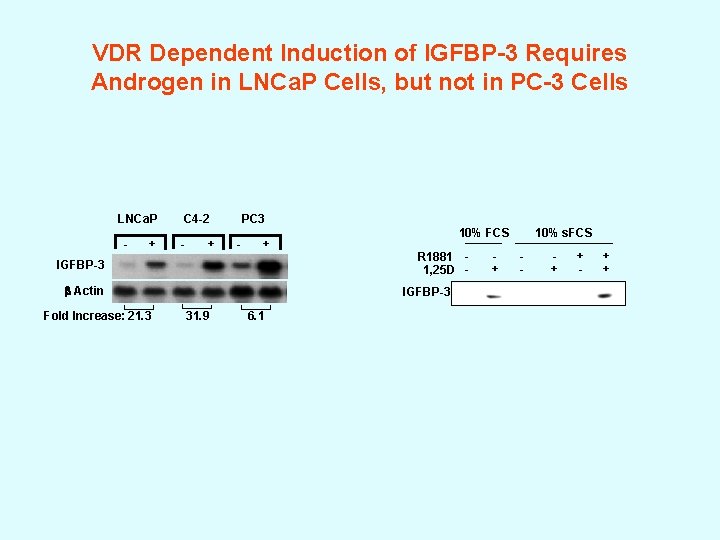
VDR Dependent Induction of IGFBP-3 Requires Androgen in LNCa. P Cells, but not in PC-3 Cells LNCa. P - + C 4 -2 - + PC 3 - + IGFBP-3 b Actin Fold Increase: 21. 3 10% FCS R 1881 1, 25 D IGFBP-3 31. 9 6. 1 + 10% s. FCS - + +
Effect of Casodex Co-treatment on Downstream Actions of 1, 25 D • Cell cycle arrest – partially blocked • Protects against induction of apoptosis • Protects against bcl-2 down-regulation following 1, 25 D treatment
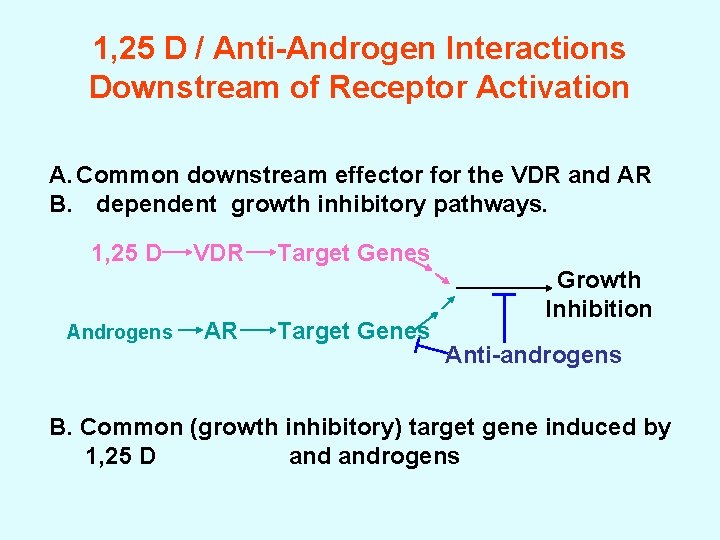
1, 25 D / Anti-Androgen Interactions Downstream of Receptor Activation A. Common downstream effector for the VDR and AR B. dependent growth inhibitory pathways. 1, 25 D Androgens VDR AR Target Genes Growth Inhibition Anti-androgens B. Common (growth inhibitory) target gene induced by 1, 25 D androgens
AS 3 (APRIN)– A Gene Involved in Androgen Induced Growth Inhibition of LNCa. P Cells • Novel gene (Geck et al, Tufts) induced by androgens in LNCa. P cells • Induced only at doses that cause growth inhibition • Essential for androgen induced growth inhibition of MCF-7/AR cells • Hypothesis – AS 3 may be a common target for androgen and 1, 25 D induced growth regulation of LNCa. P cells
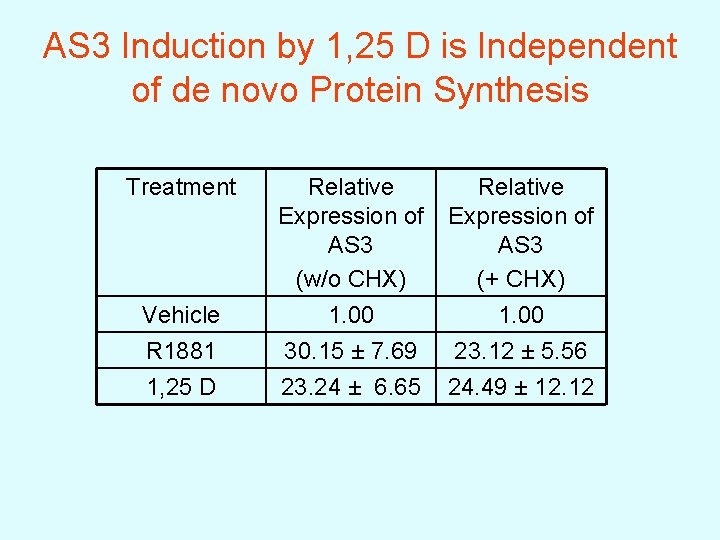
AS 3 Induction by 1, 25 D is Independent of de novo Protein Synthesis Treatment Relative Expression of AS 3 (w/o CHX) Relative Expression of AS 3 (+ CHX) Vehicle R 1881 1, 25 D 1. 00 30. 15 ± 7. 69 23. 24 ± 6. 65 1. 00 23. 12 ± 5. 56 24. 49 ± 12. 12
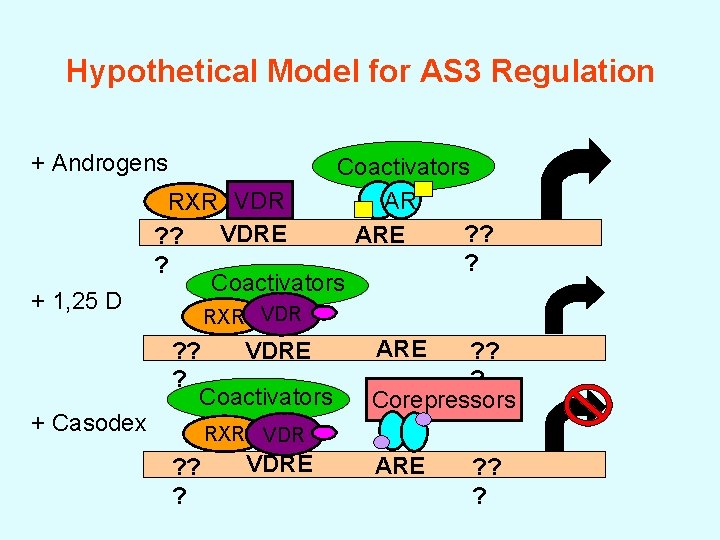
Hypothetical Model for AS 3 Regulation + Androgens + 1, 25 D + Casodex Coactivators AR RXR VDRE ? ? ARE ? ? Coactivators RXR VDR ? ? VDRE ? Coactivators ARE ? ? ? Corepressors RXR VDR ? ? ? VDRE ARE ? ? ?
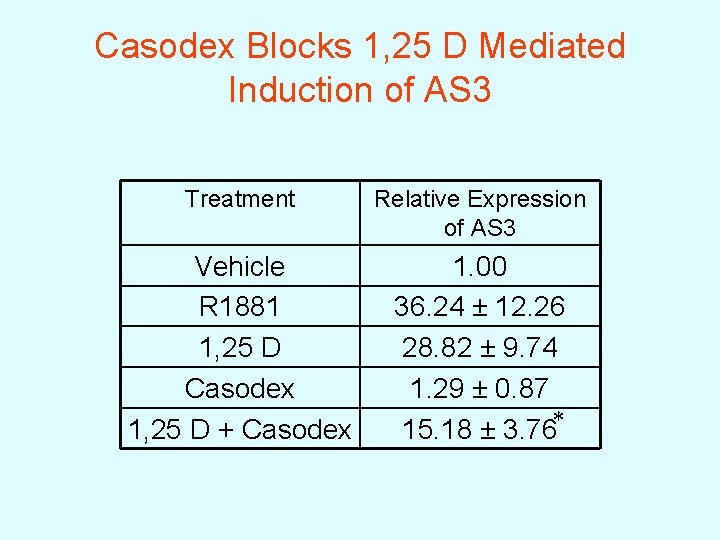
Casodex Blocks 1, 25 D Mediated Induction of AS 3 Treatment Relative Expression of AS 3 Vehicle R 1881 1, 25 D Casodex 1, 25 D + Casodex 1. 00 36. 24 ± 12. 26 28. 82 ± 9. 74 1. 29 ± 0. 87 15. 18 ± 3. 76*
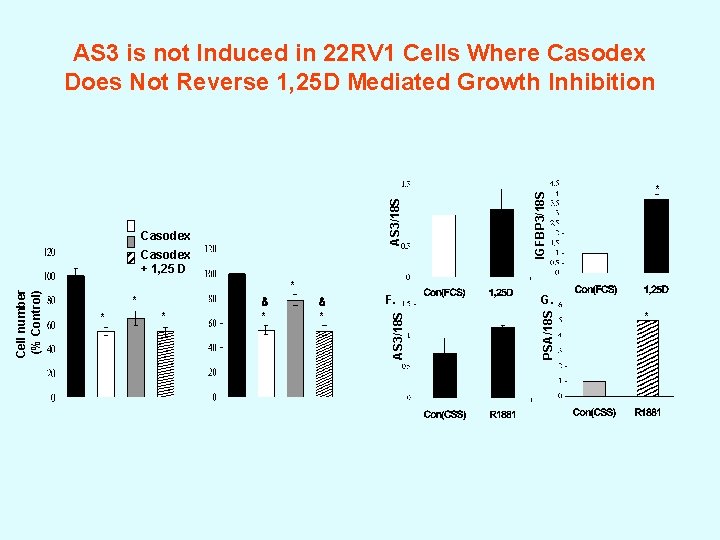
Casodex * * * * * F. G. PSA/18 S * AS 3/18 S Cell number (% Control) Casodex + 1, 25 D * IGFBP 3/18 S AS 3 is not Induced in 22 RV 1 Cells Where Casodex Does Not Reverse 1, 25 D Mediated Growth Inhibition *
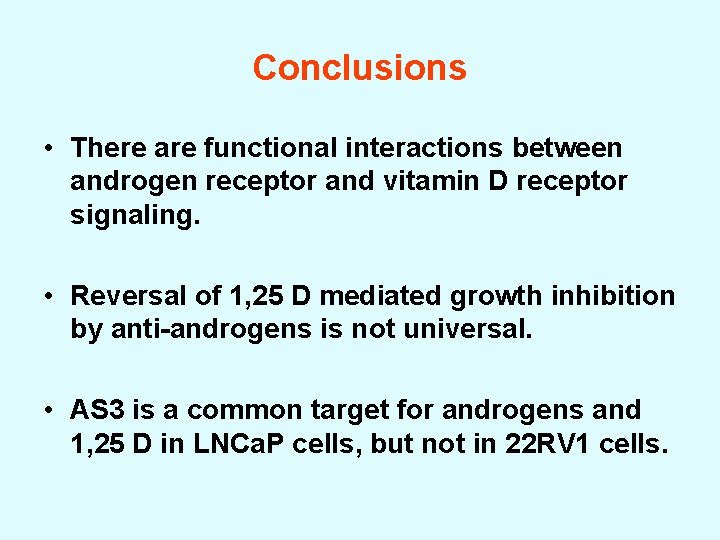
Conclusions • There are functional interactions between androgen receptor and vitamin D receptor signaling. • Reversal of 1, 25 D mediated growth inhibition by anti-androgens is not universal. • AS 3 is a common target for androgens and 1, 25 D in LNCa. P cells, but not in 22 RV 1 cells.

Acknowledgments • • Shalini Murthy La. Monica Stewart Irina Agoulnik Tara Polek
- Slides: 30