
Interaction Pyramids Information about food chains in an
Interaction Pyramids
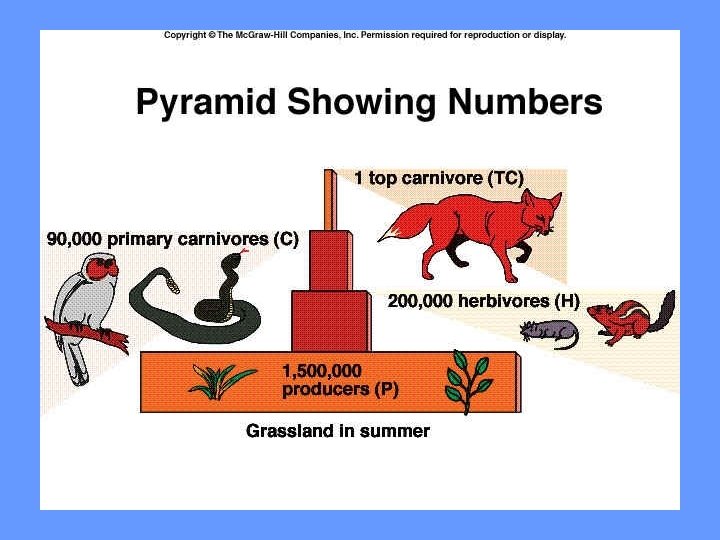
• Information about food chains in an ecosystem can be represented by drawing three different pyramids. • Each level in a pyramid represents a different feeding level or trophic level. Trophic level – a feeding level in a food chain

Fourth trophic level Third trophic level Second trophic level First trophic level
Pyramid of Energy • In a food chain, the producers have the most energy available to them because they get the energy directly from the sun. Therefore the base of the pyramid will always be the largest. • As you move up each trophic level less energy becomes available to the trophic level above it. • This is because 90% of the energy received by the organisms in a trophic level is used up for movement and heat
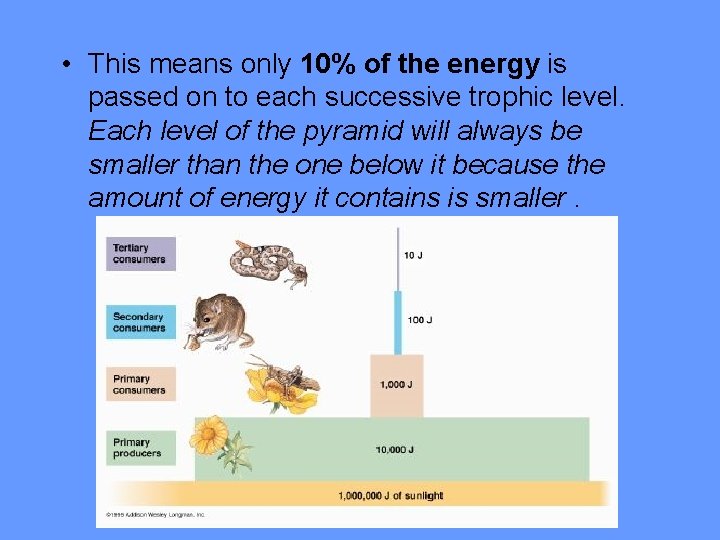
• This means only 10% of the energy is passed on to each successive trophic level. Each level of the pyramid will always be smaller than the one below it because the amount of energy it contains is smaller.
Questions: 1. Where did the producers get their energy from? The Sun 2. Why is there less and less energy available to each trophic level? The energy is used up for movement and heat 3. How much energy is passed on to each trophic level? 10%
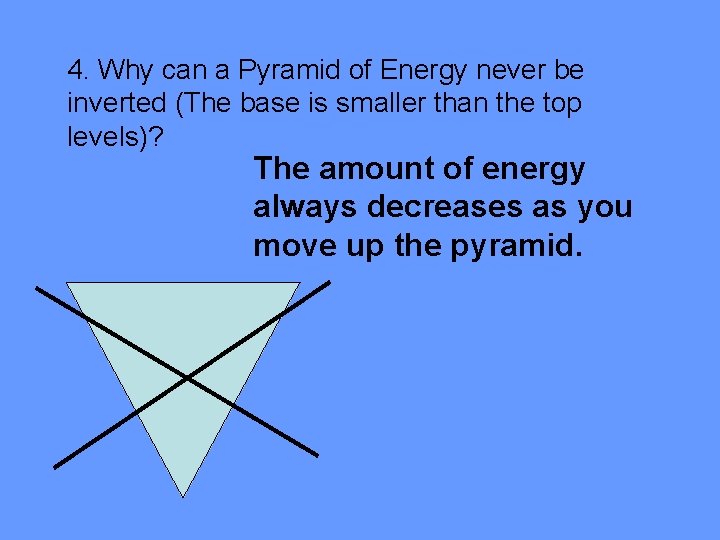
4. Why can a Pyramid of Energy never be inverted (The base is smaller than the top levels)? The amount of energy always decreases as you move up the pyramid.
Pyramid of Numbers • Each level in a pyramid of numbers shows the number of organisms in that trophic level. • The size of each step in a pyramid is directly related to the number of organisms in that trophic level. • This pyramid can be inverted if an organism at a lower level is large enough to support many organisms in a higher level, e. g. trees
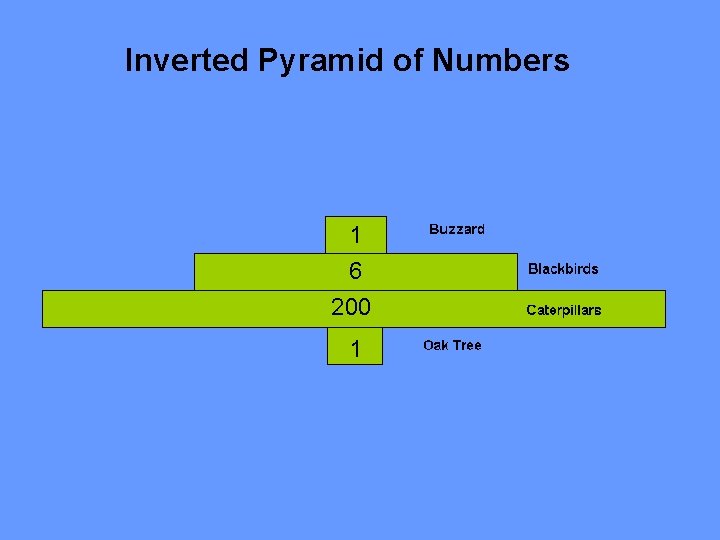
Inverted Pyramid of Numbers 1 6 200 1
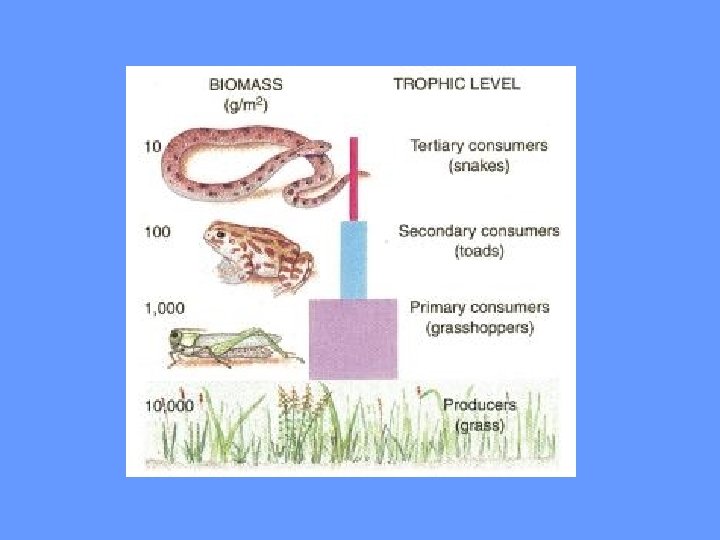
Pyramid of Biomass • A pyramid of biomass shows how much mass all the organisms have in each trophic level. • It is usually calculated using the dry mass of organisms. • This pyramid can also be inverted.
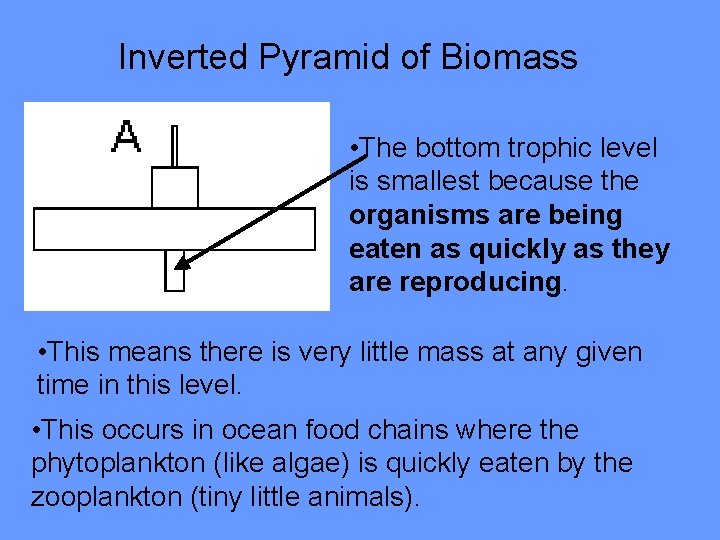
Inverted Pyramid of Biomass • The bottom trophic level is smallest because the organisms are being eaten as quickly as they are reproducing. • This means there is very little mass at any given time in this level. • This occurs in ocean food chains where the phytoplankton (like algae) is quickly eaten by the zooplankton (tiny little animals).

The End
- Slides: 14