
Interaction of Magnetic Fields Motor Action Look at
- Slides: 12
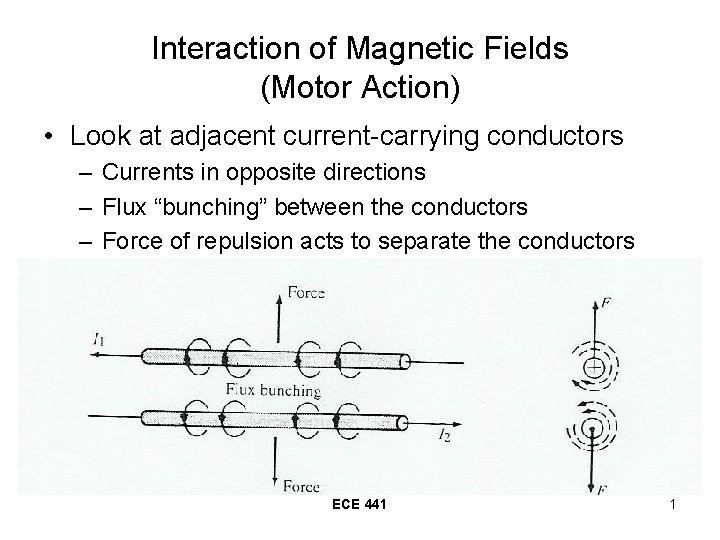
Interaction of Magnetic Fields (Motor Action) • Look at adjacent current-carrying conductors – Currents in opposite directions – Flux “bunching” between the conductors – Force of repulsion acts to separate the conductors ECE 441 1
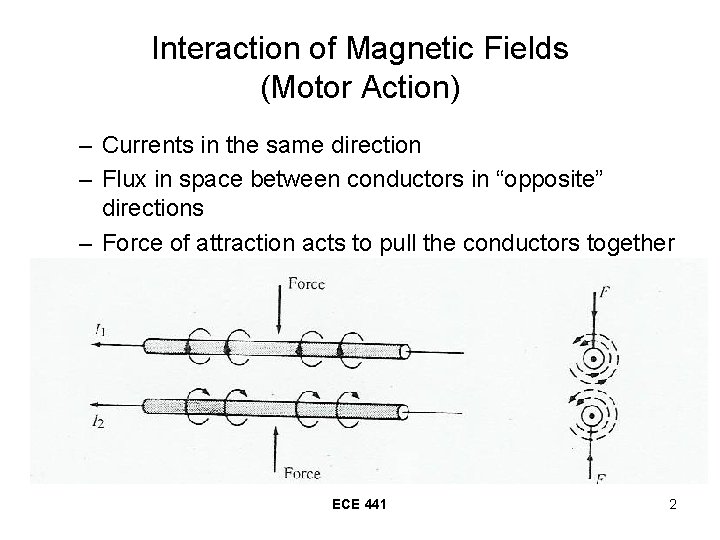
Interaction of Magnetic Fields (Motor Action) – Currents in the same direction – Flux in space between conductors in “opposite” directions – Force of attraction acts to pull the conductors together ECE 441 2
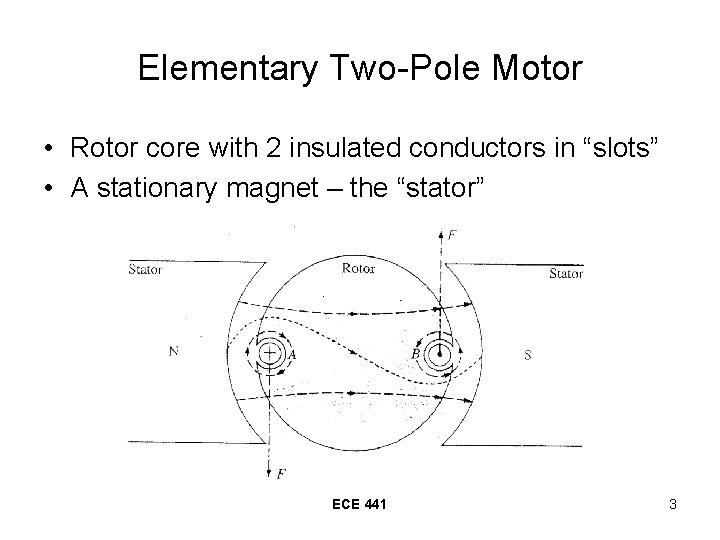
Elementary Two-Pole Motor • Rotor core with 2 insulated conductors in “slots” • A stationary magnet – the “stator” ECE 441 3
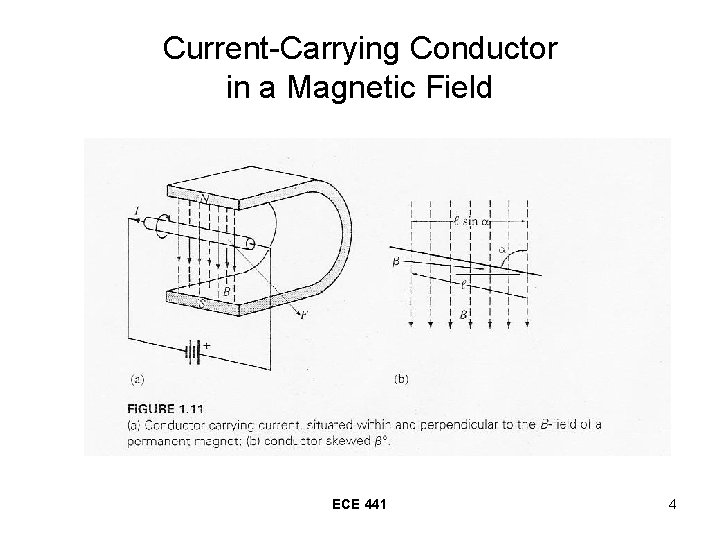
Current-Carrying Conductor in a Magnetic Field ECE 441 4
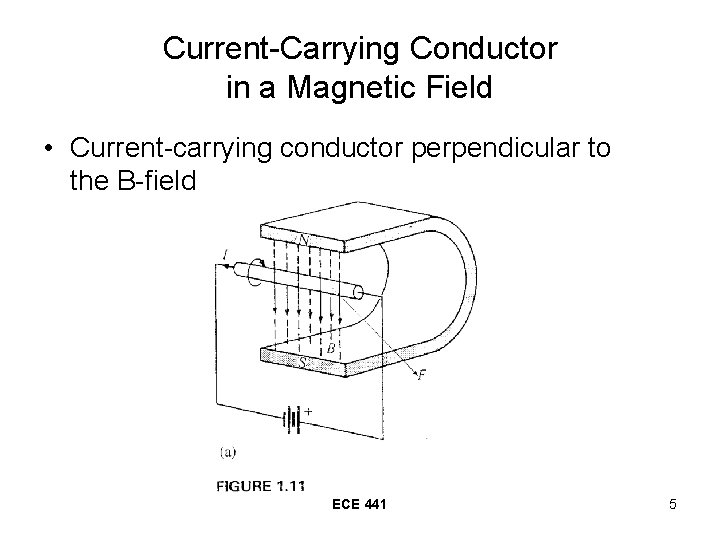
Current-Carrying Conductor in a Magnetic Field • Current-carrying conductor perpendicular to the B-field ECE 441 5
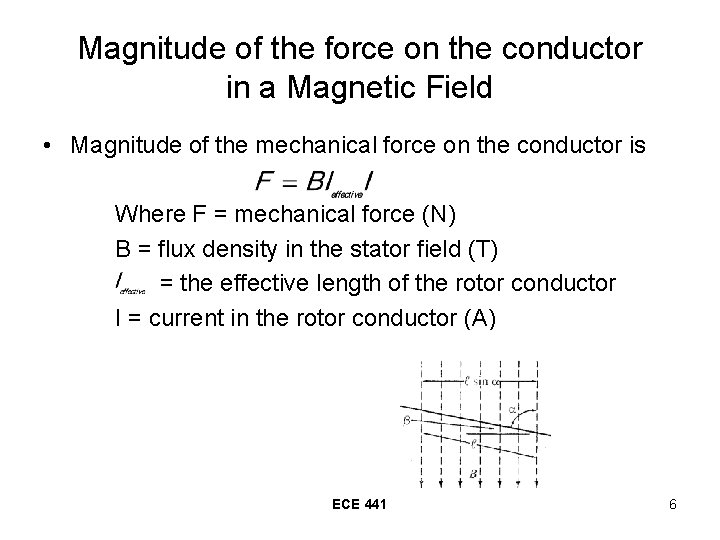
Magnitude of the force on the conductor in a Magnetic Field • Magnitude of the mechanical force on the conductor is Where F = mechanical force (N) B = flux density in the stator field (T) = the effective length of the rotor conductor I = current in the rotor conductor (A) ECE 441 6
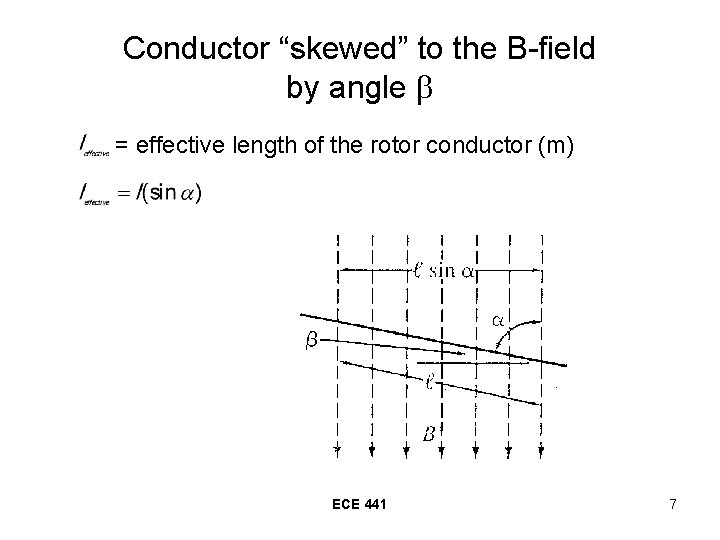
Conductor “skewed” to the B-field by angle = effective length of the rotor conductor (m) ECE 441 7
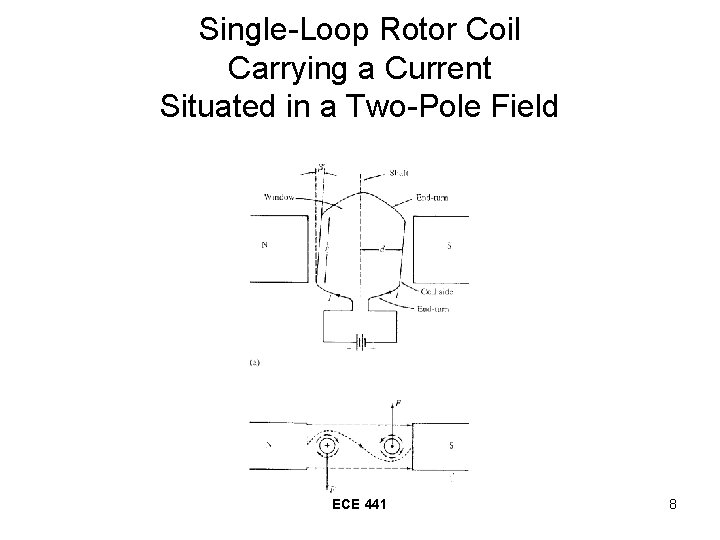
Single-Loop Rotor Coil Carrying a Current Situated in a Two-Pole Field ECE 441 8
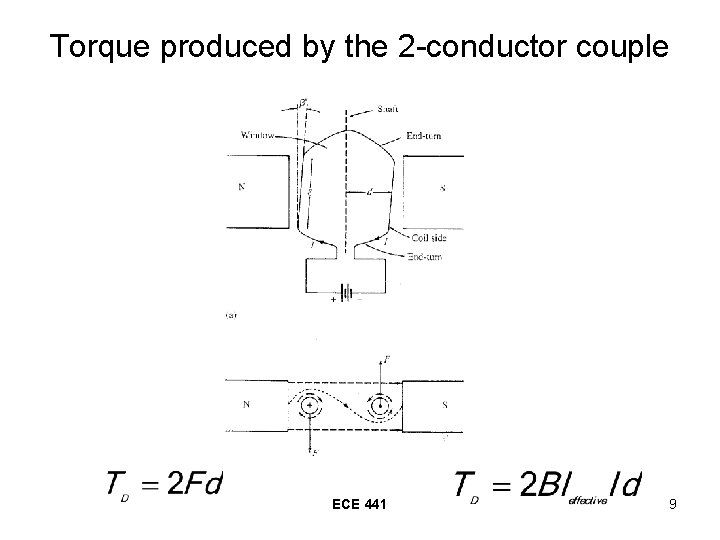
Torque produced by the 2 -conductor couple ECE 441 9
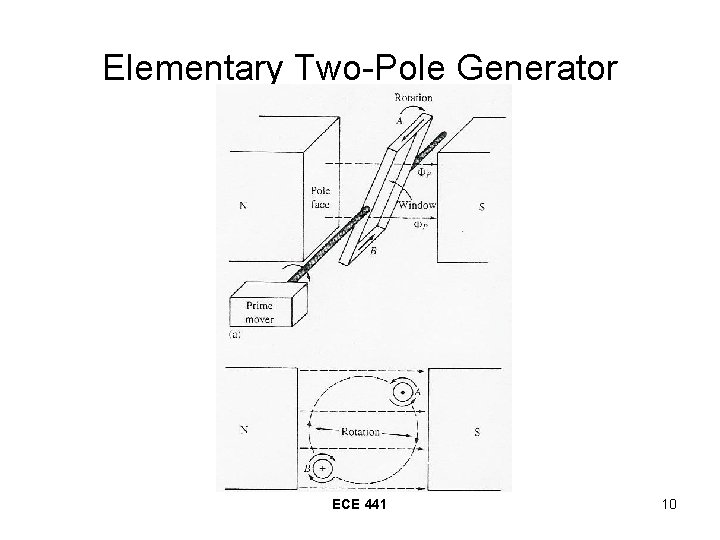
Elementary Two-Pole Generator ECE 441 10
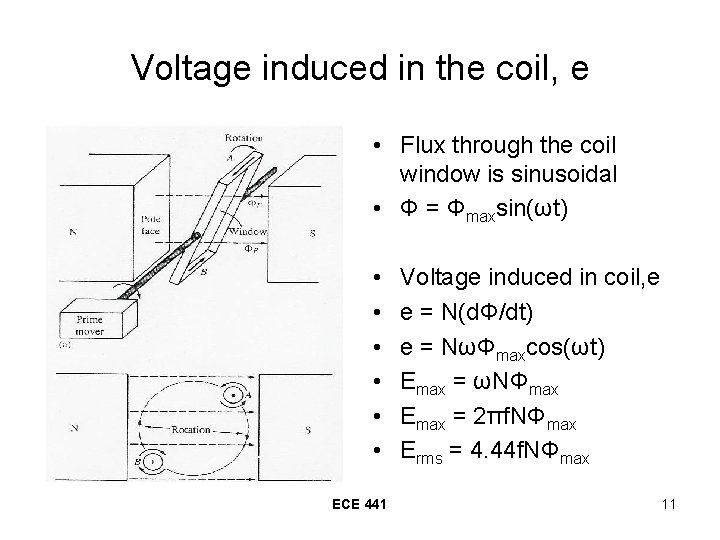
Voltage induced in the coil, e • Flux through the coil window is sinusoidal • Φ = Φmaxsin(ωt) • • • ECE 441 Voltage induced in coil, e e = N(dΦ/dt) e = NωΦmaxcos(ωt) Emax = ωNΦmax Emax = 2πf. NΦmax Erms = 4. 44 f. NΦmax 11
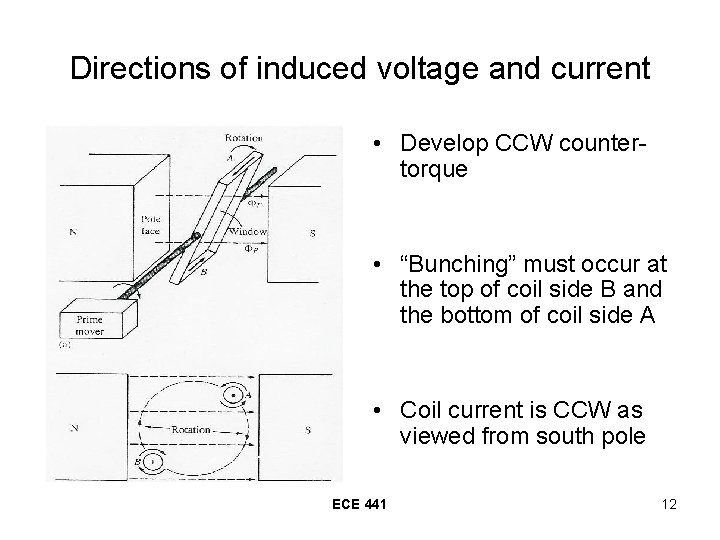
Directions of induced voltage and current • Develop CCW countertorque • “Bunching” must occur at the top of coil side B and the bottom of coil side A • Coil current is CCW as viewed from south pole ECE 441 12