
Interacting with People who are Different than Us
- Slides: 25
Interacting with People who are Different than Us: Why it’s so hard, and what to do about it The Center for Global Studies
What is discrimination? What are some examples of discrimination?
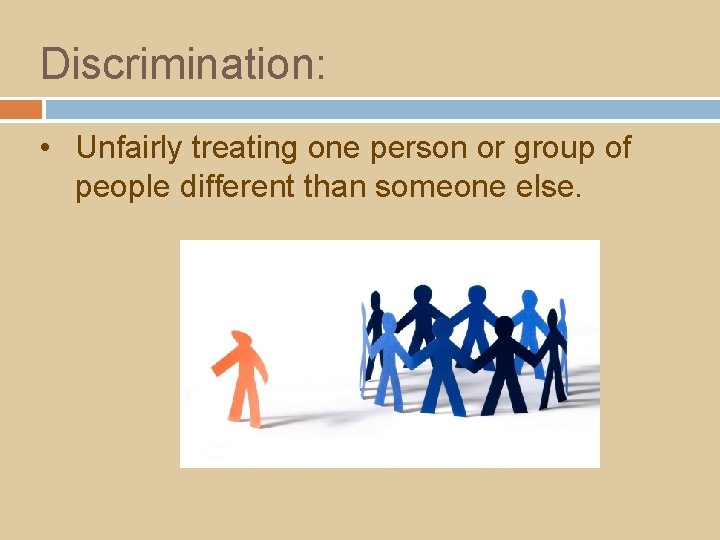
Discrimination: • Unfairly treating one person or group of people different than someone else.
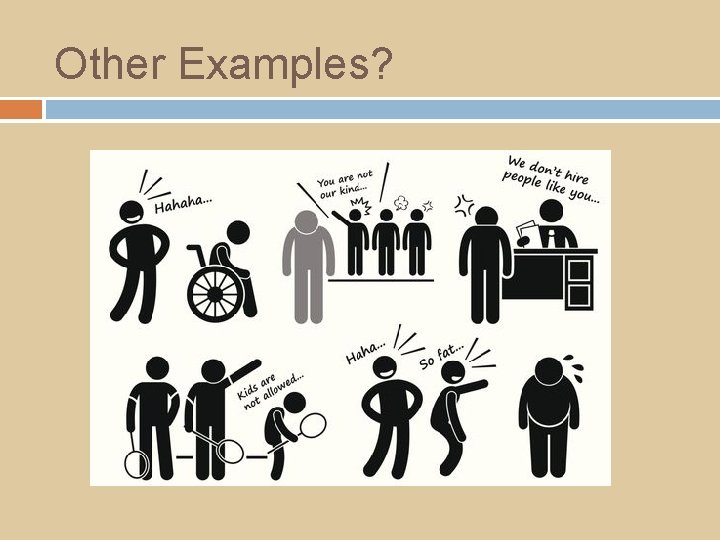
Other Examples?
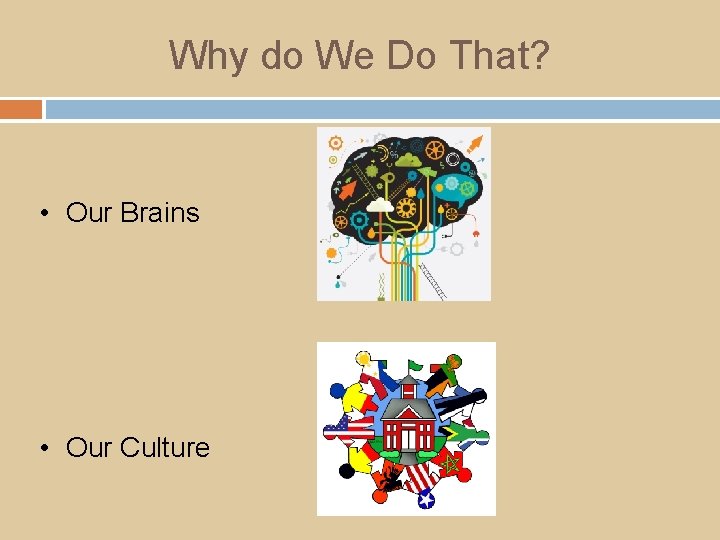
Why do We Do That? • Our Brains • Our Culture
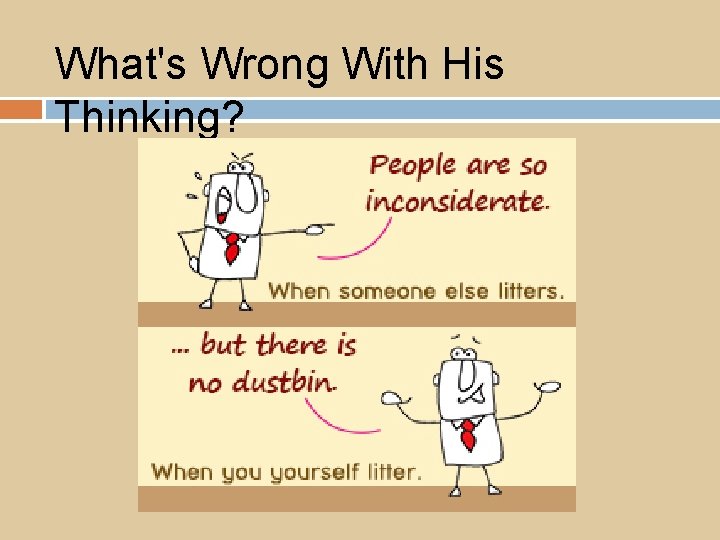
What's Wrong With His Thinking?
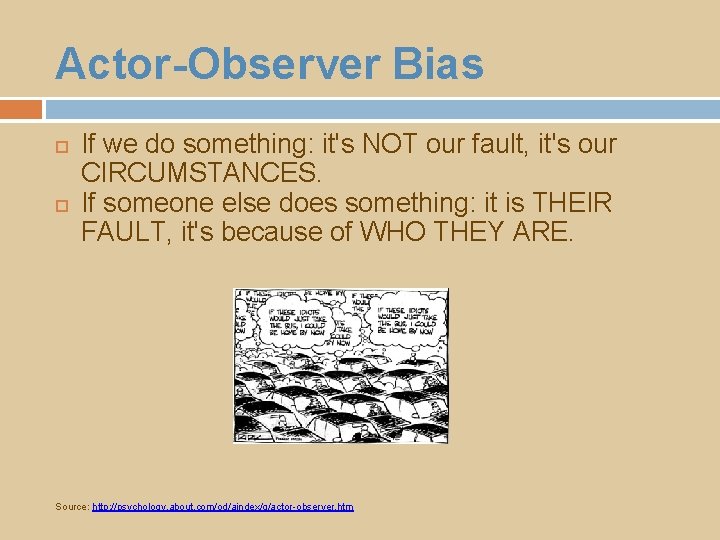
Actor-Observer Bias If we do something: it's NOT our fault, it's our CIRCUMSTANCES. If someone else does something: it is THEIR FAULT, it's because of WHO THEY ARE. Source: http: //psychology. about. com/od/aindex/g/actor-observer. htm
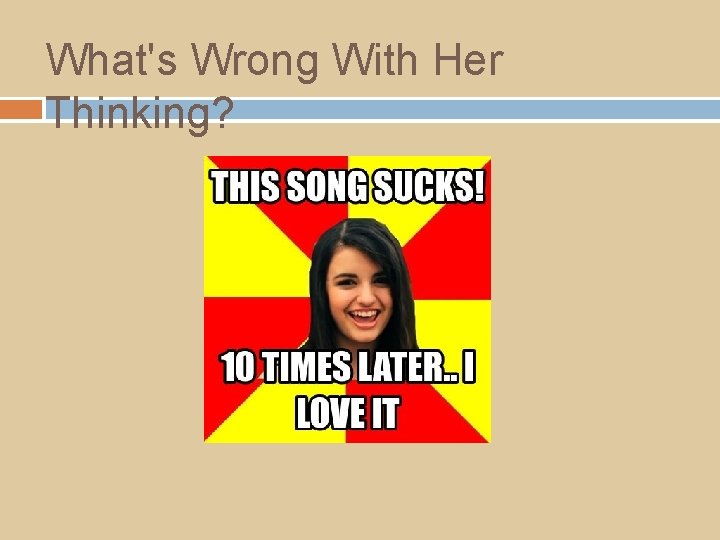
What's Wrong With Her Thinking?
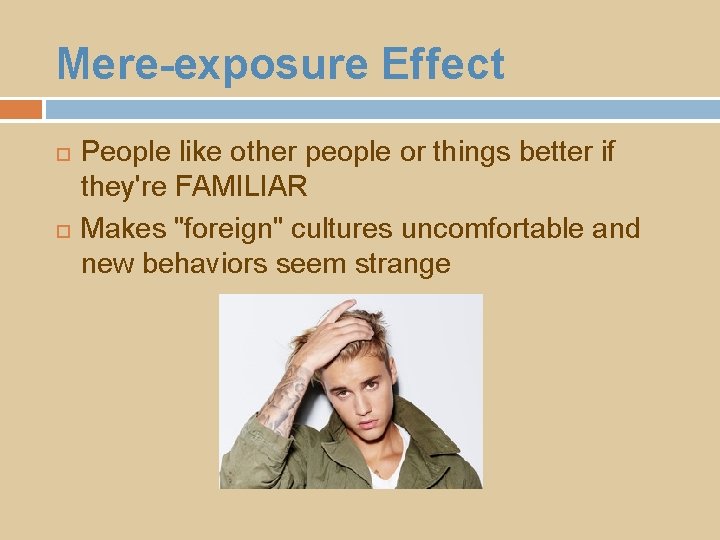
Mere-exposure Effect People like other people or things better if they're FAMILIAR Makes "foreign" cultures uncomfortable and new behaviors seem strange
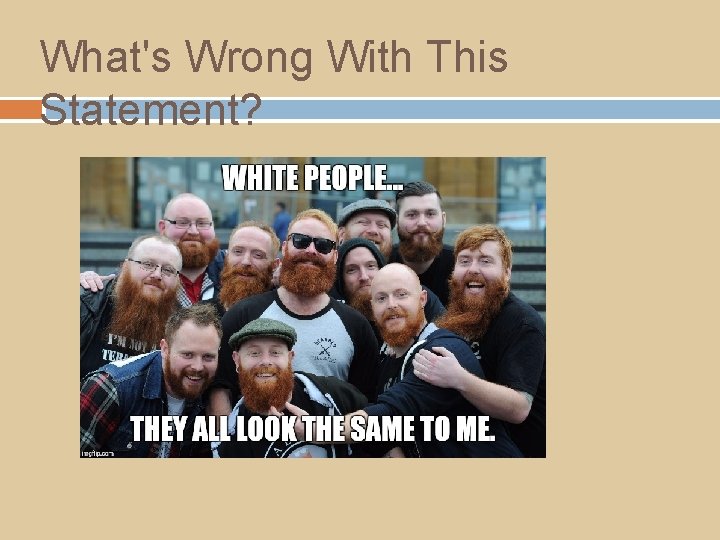
What's Wrong With This Statement?
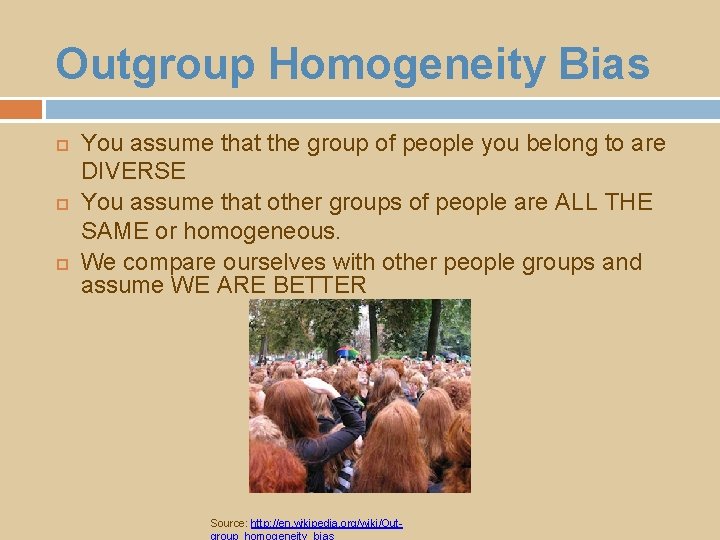
Outgroup Homogeneity Bias You assume that the group of people you belong to are DIVERSE You assume that other groups of people are ALL THE SAME or homogeneous. We compare ourselves with other people groups and assume WE ARE BETTER Source: http: //en. wikipedia. org/wiki/Outgroup_homogeneity_bias
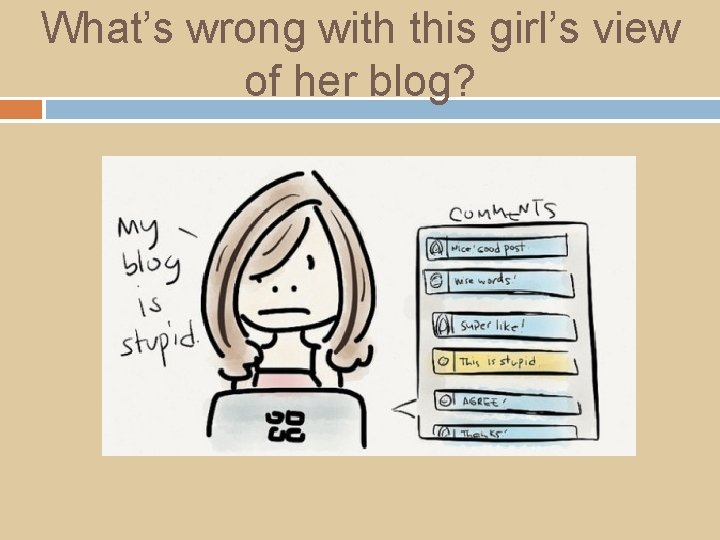
What’s wrong with this girl’s view of her blog?
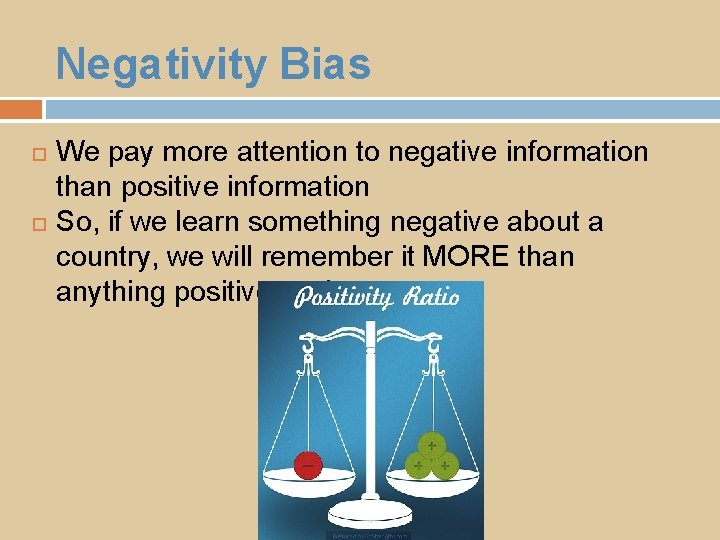
Negativity Bias We pay more attention to negative information than positive information So, if we learn something negative about a country, we will remember it MORE than anything positive we learn.
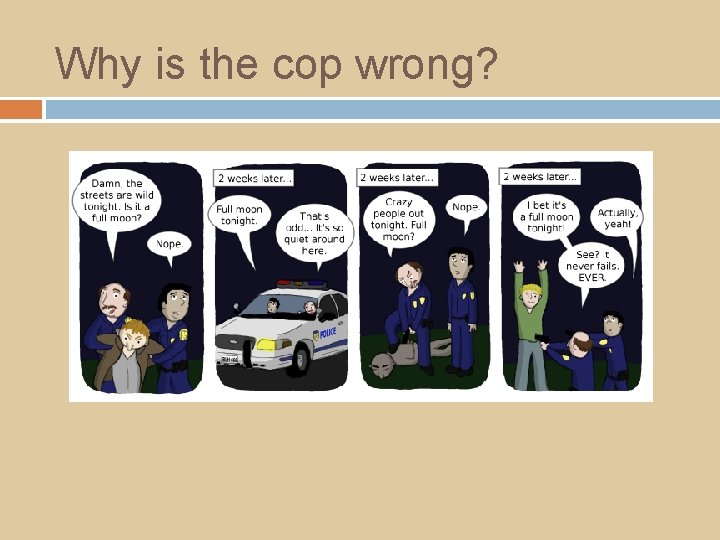
Why is the cop wrong?
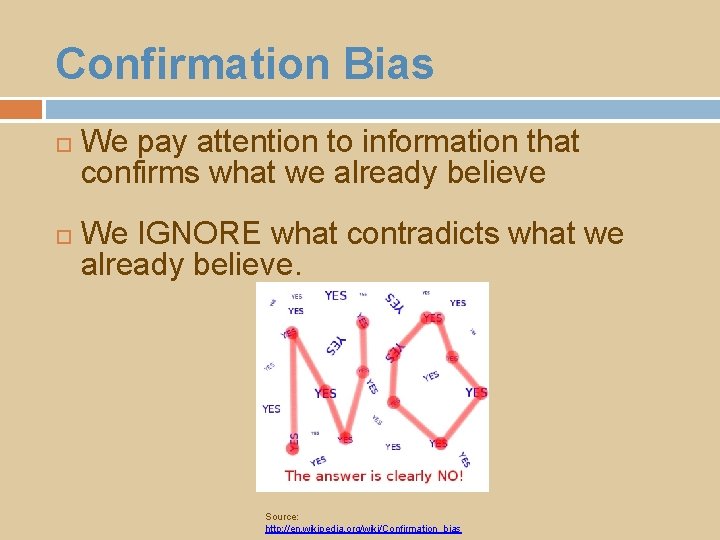
Confirmation Bias We pay attention to information that confirms what we already believe We IGNORE what contradicts what we already believe. Source: http: //en. wikipedia. org/wiki/Confirmation_bias
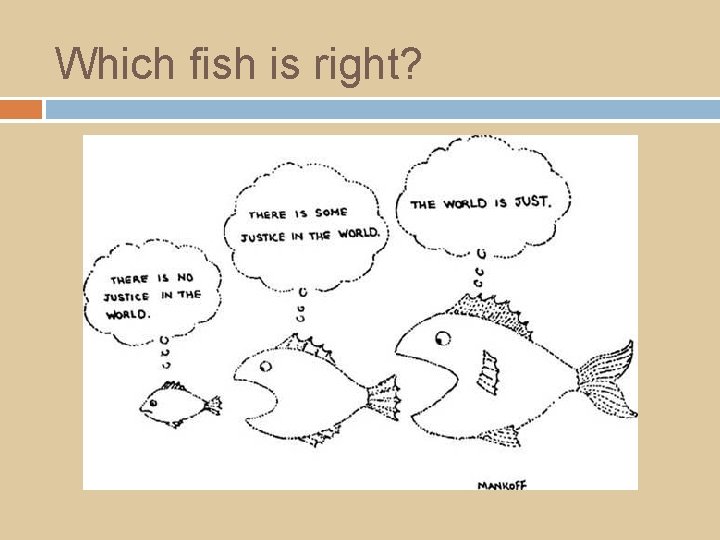
Which fish is right?
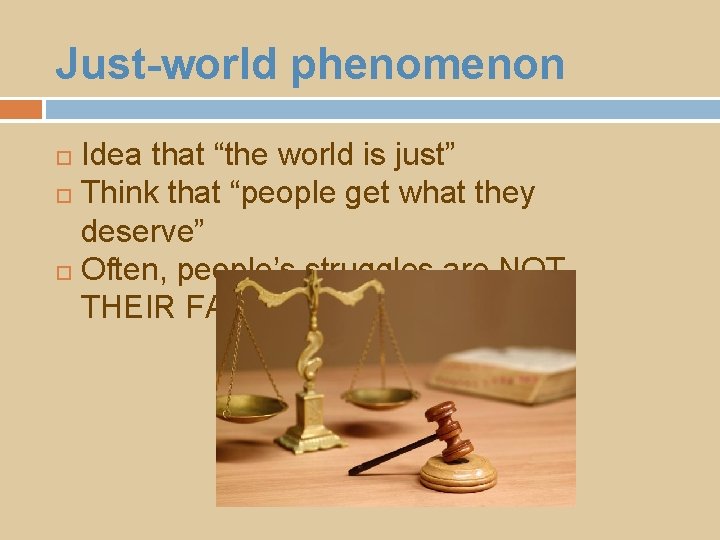
Just-world phenomenon Idea that “the world is just” Think that “people get what they deserve” Often, people’s struggles are NOT THEIR FAULT
Our brains make it hard to not discriminate, and our culture doesn’t help either
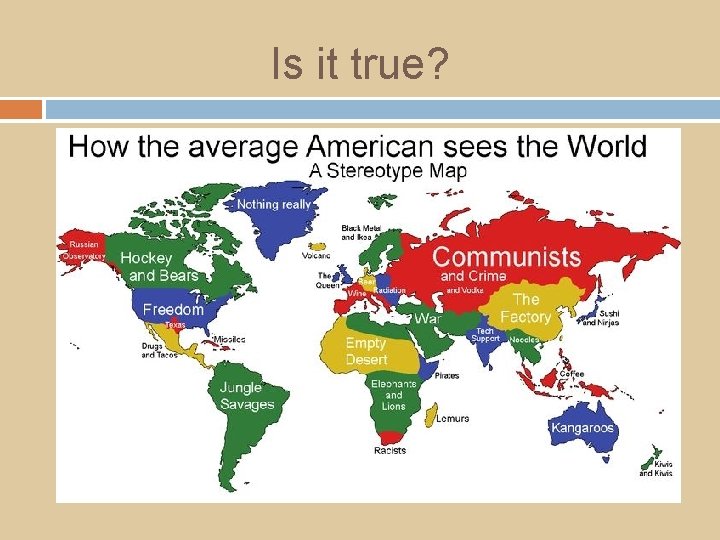
Is it true?
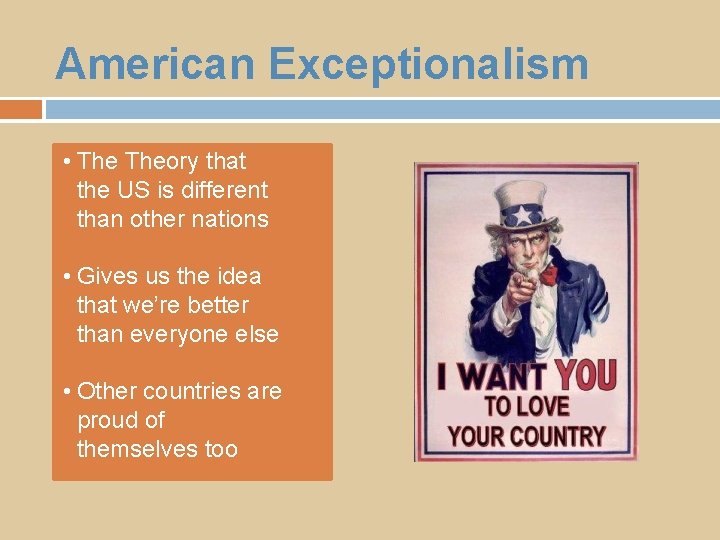
American Exceptionalism • Theory that the US is different than other nations • Gives us the idea that we’re better than everyone else • Other countries are proud of themselves too
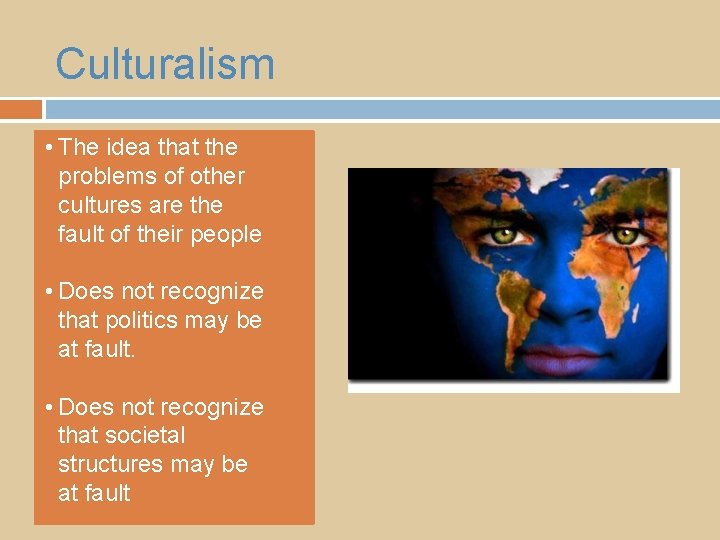
Culturalism • The idea that the problems of other cultures are the fault of their people • Does not recognize that politics may be at fault. • Does not recognize that societal structures may be at fault
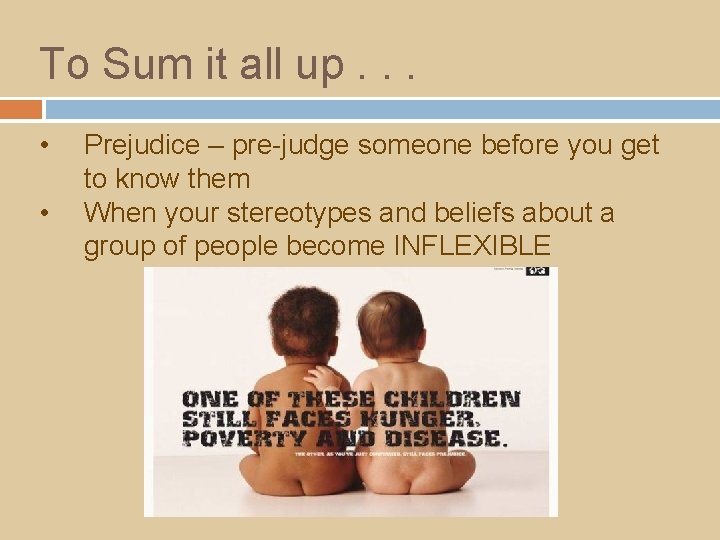
To Sum it all up. . . • • Prejudice – pre-judge someone before you get to know them When your stereotypes and beliefs about a group of people become INFLEXIBLE
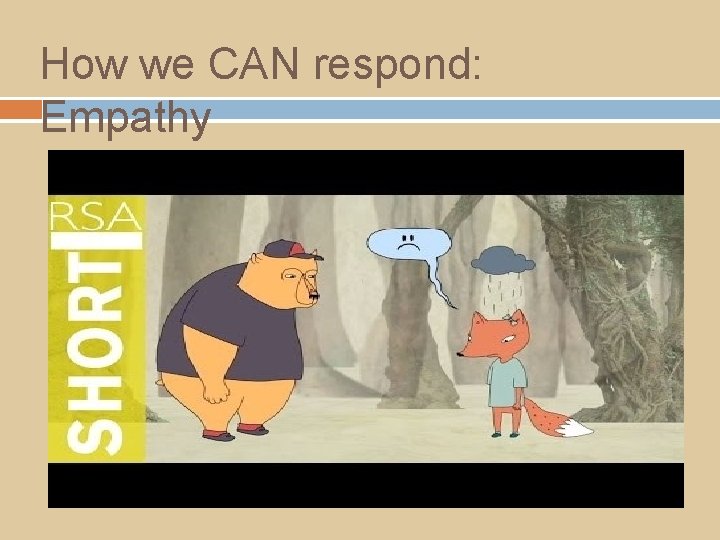
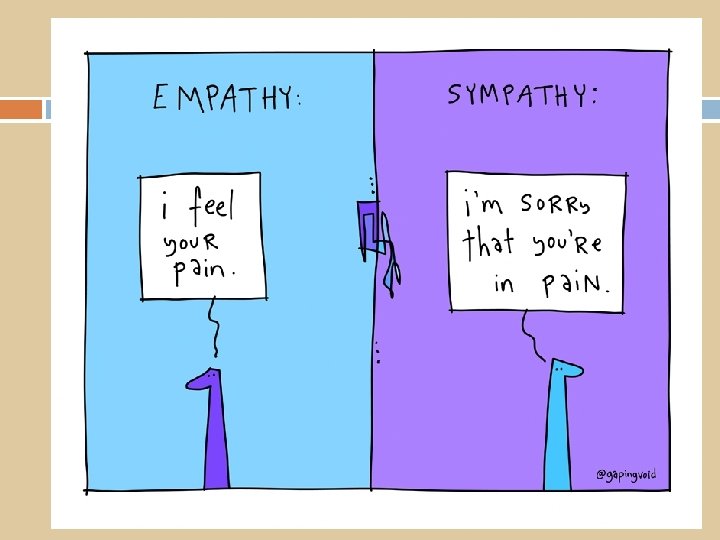
How we CAN respond: Empathy
YOUR TASK: • Read “Diary of a Teenage Refugee” • Write a letter to Amiri • How can you show empathy?