
Inter Tropical Convergence Zone ITCZ Breakdown and Reformation
Inter. Tropical Convergence Zone (ITCZ) Breakdown and Reformation in the Moist Atmosphere Chia-Chi Wang 王嘉琪 Research Center for Environmental Changes, Academia Sinica 中央研究院 環境變遷研究中心
Outline • Introduction of the ITCZ on the synoptic timescale (mainly ITCZ breakdown in the eastern Pacific) • Model (Quasi-equilibrium Tropical Circulation Model, QTCM 1) and experiment designs • Results and Discussion • Concluding remarks
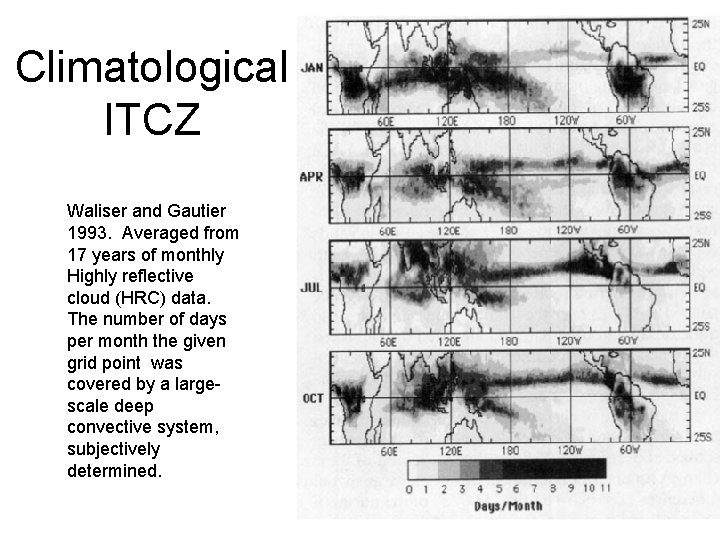
Climatological ITCZ Waliser and Gautier 1993. Averaged from 17 years of monthly Highly reflective cloud (HRC) data. The number of days per month the given grid point was covered by a largescale deep convective system, subjectively determined.
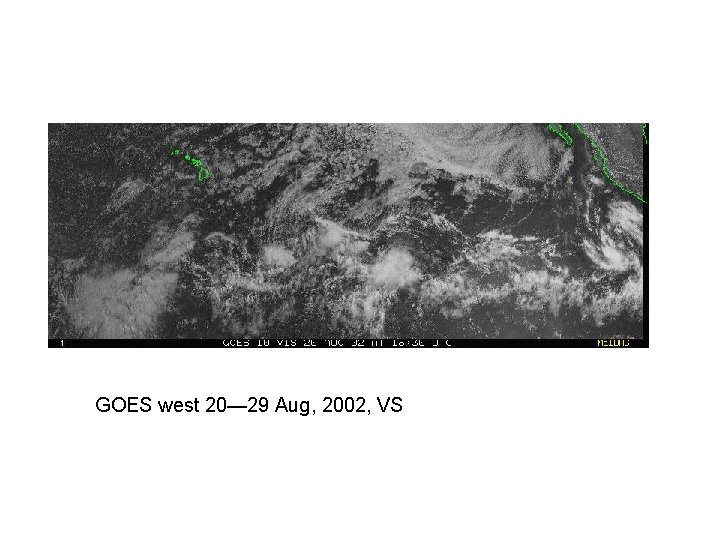
GOES west 20— 29 Aug, 2002, VS
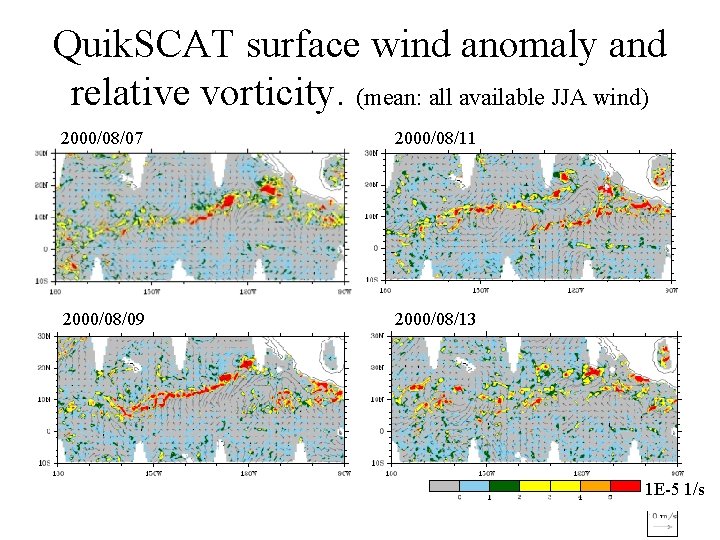
Quik. SCAT surface wind anomaly and relative vorticity. (mean: all available JJA wind) 2000/08/07 2000/08/11 2000/08/09 2000/08/13 1 E-5 1/s
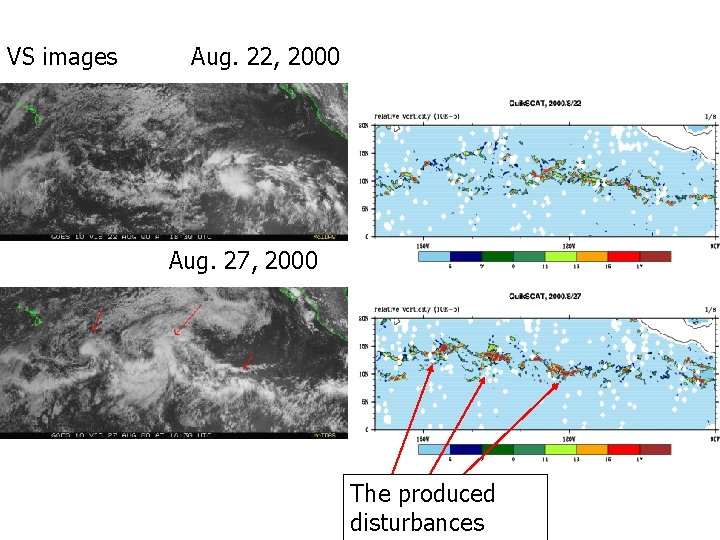
VS images Aug. 22, 2000 Aug. 27, 2000 The produced disturbances
Previous studies: modeling • Hack et al. 1989, Schubert et al. 1991: used 2 -D (lat— height) model to simulate the ITCZ. Heating produced PV gradient reversal is not unique about the formation of African waves (easterly waves). The ITCZ can induce its own breakdown (through barotropic instability). • Guinn and Schubert 1993: (a f-plane one layer model) Hurricane spiral bands may be produced from ITCZ breakdown. • Nieto Ferreira and Schubert 1997: Simulate barotropic aspects of ITCZ breakdown in lower troposphere in shallow water model. • Wang and Magnusdottir 2005: simulate ITCZ breakdown in dry primitive equation model with different background flows.
Previous studies: data analysis • Agee 1972: formation of tropical storm Anna from ITCZ wave disturbances. • Wang and Magnusdottir 2006: survey 3 independent datasets (Quik. SCAT, NCEP analysis, and GOES cloud images) over 1999— 2003 to count the occurrence of ITCZ breakdown (subjectively). ITCZ breakdown does happen frequently during summer and fall over the eastern Pacific. • Magnusdottir and Wang 2008: spectral analysis on ERA-40 23 -year 850 h. Pa relative vorticity. Conclude that the ITCZ over the eastern north Pacific has strong wave-like signal on the synoptic timescale.
Importance • An efficient way to pool vorticity in the tropics which represents the early stages of tropical cyclogenesis • Understand the basic dynamics of the ITCZ on the synoptic timescale.
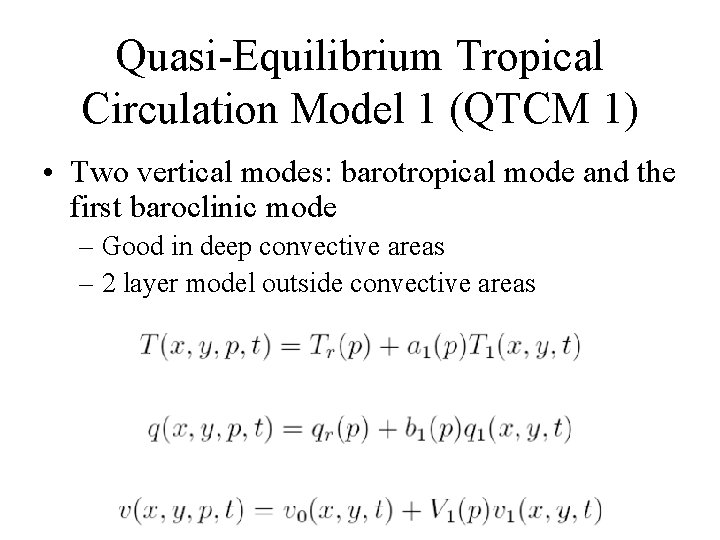
Quasi-Equilibrium Tropical Circulation Model 1 (QTCM 1) • Two vertical modes: barotropical mode and the first baroclinic mode – Good in deep convective areas – 2 layer model outside convective areas
QTCM 1—cont. • A form of Betts-Miller convective scheme • Simple radiation scheme • Bulk formulae in planetary boundary layer
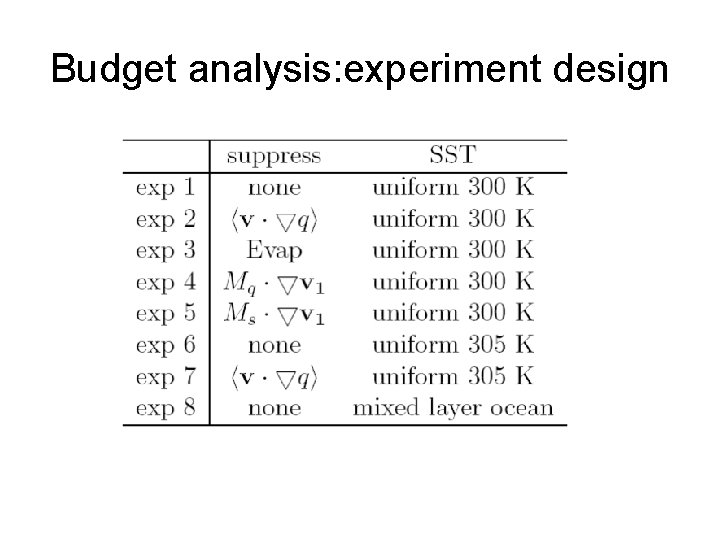
Experiment design • QTCM settings: – domain: 360 x 157, 78. 5 S-78. 5 N (1 x 1 degree) – Aqua-planet – Prescribed uniform SST 300 K • • Dry case (no moisture, radiation, sfc fluxes) Moist-on case All-physics-on case Budget analysis
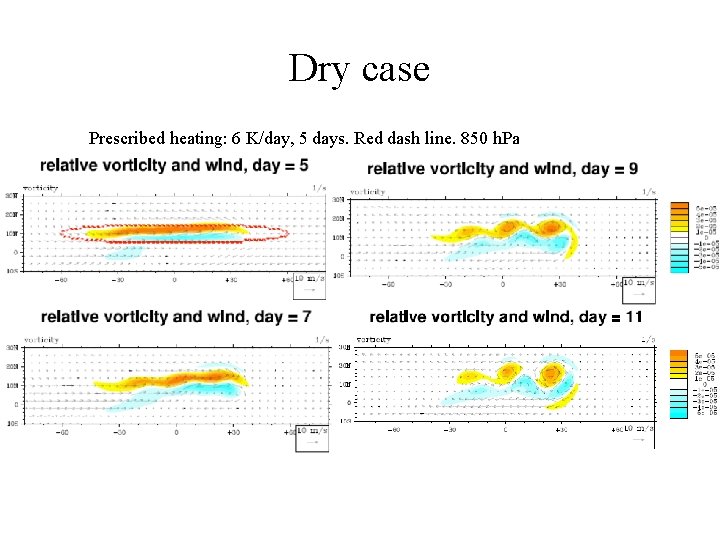
Dry case Prescribed heating: 6 K/day, 5 days. Red dash line. 850 h. Pa
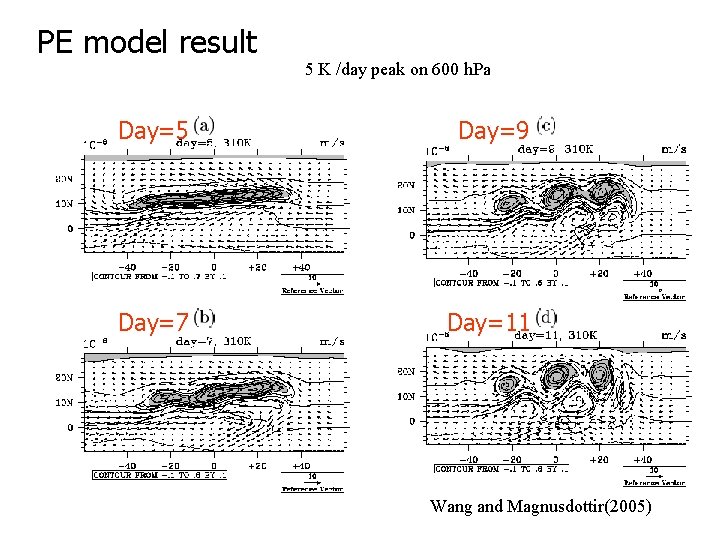
PE model result 5 K /day peak on 600 h. Pa Day=5 Day=9 Day=7 Day=11 Wang and Magnusdottir(2005)
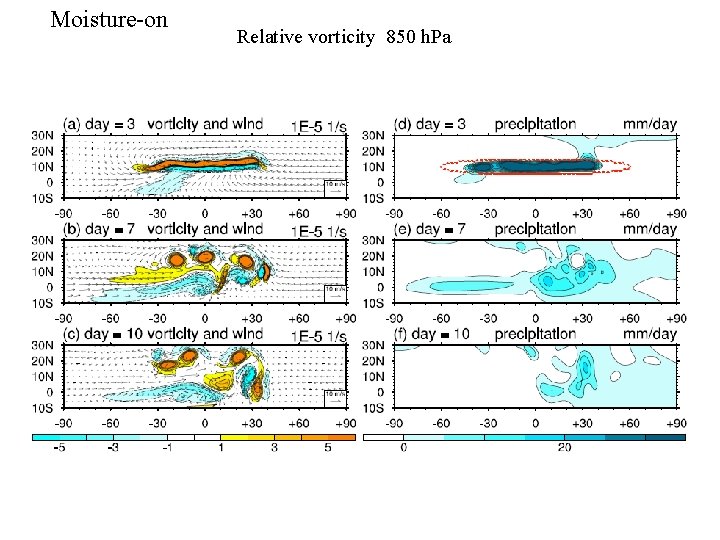
Moisture-on Relative vorticity 850 h. Pa
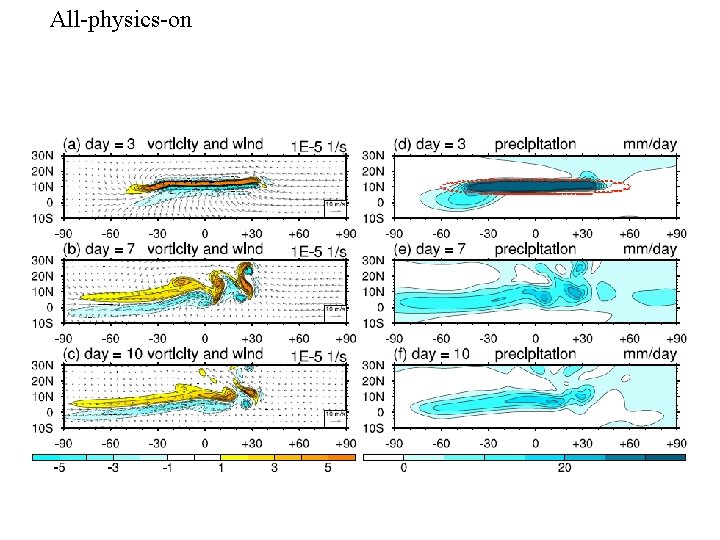
All-physics-on
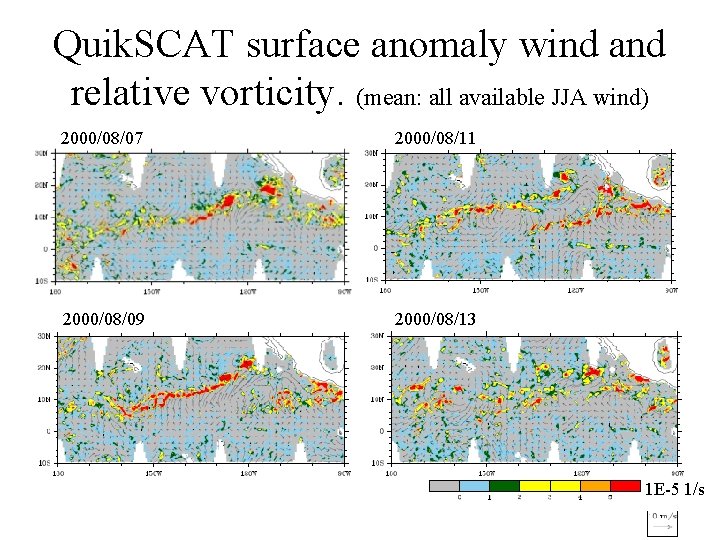
Quik. SCAT surface anomaly wind and relative vorticity. (mean: all available JJA wind) 2000/08/07 2000/08/11 2000/08/09 2000/08/13 1 E-5 1/s
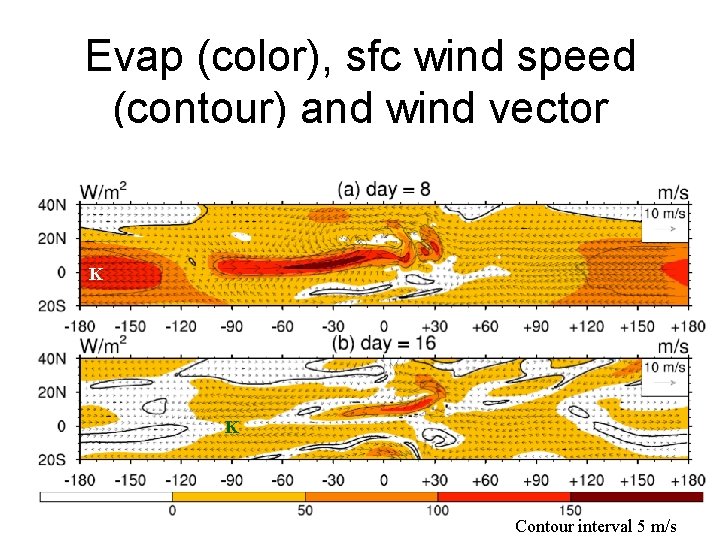
Evap (color), sfc wind speed (contour) and wind vector K K Contour interval 5 m/s
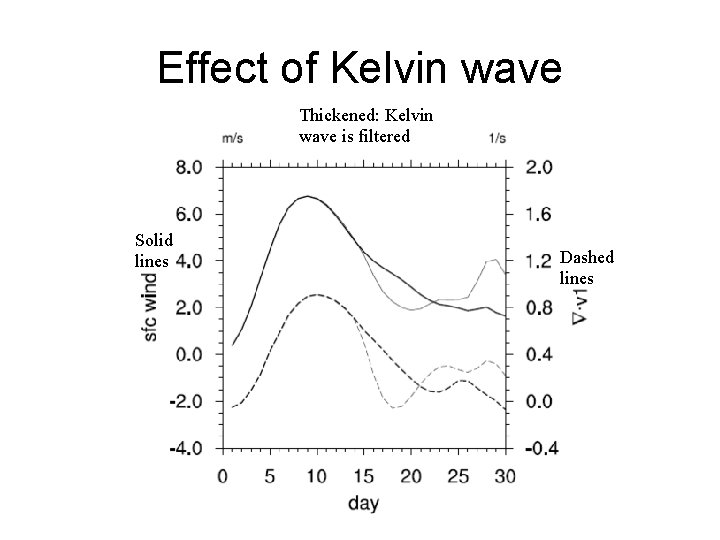
• A disturbance can induce surface convergent flow on its southwest. • Surface wind induces surface evaporation (energy source). èwind-evaporation feedback • The tail can be seen as a new ITCZ. • The intensity is weak. – Model resolution (in vertical modes and horizontal resolution. Strong numerical damping) • Lifetime is controlled by large-scale wave propagation.
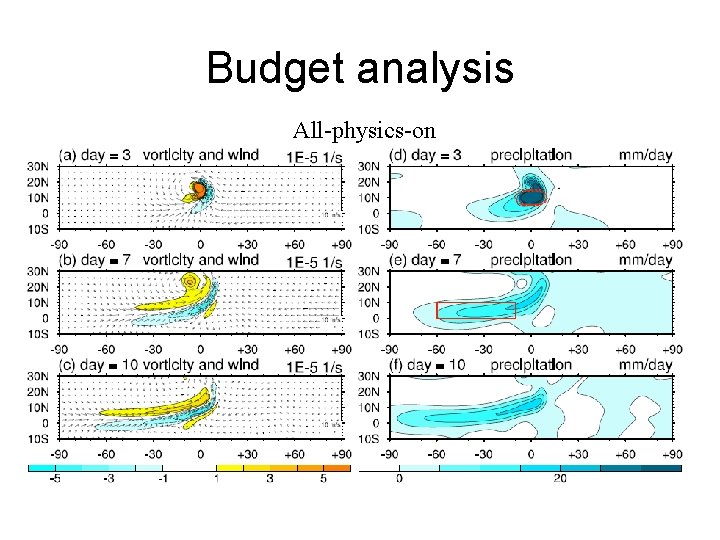
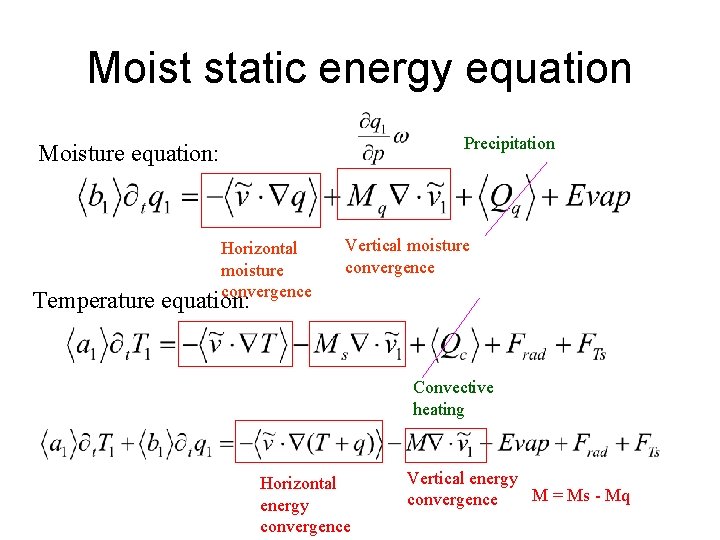
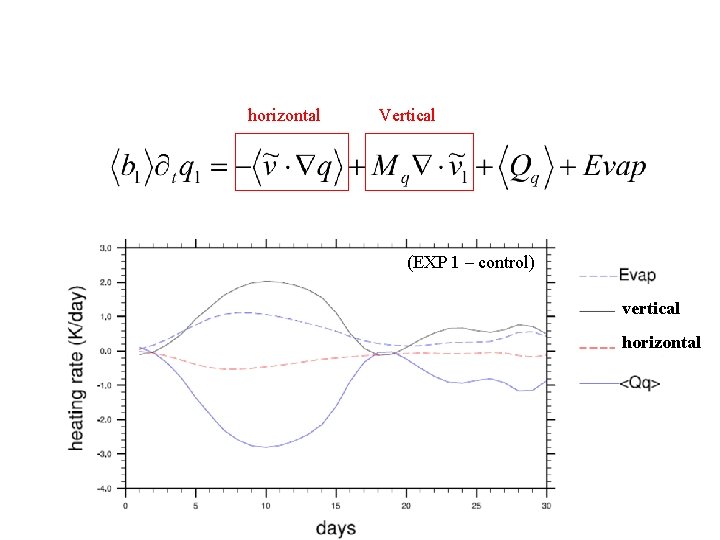
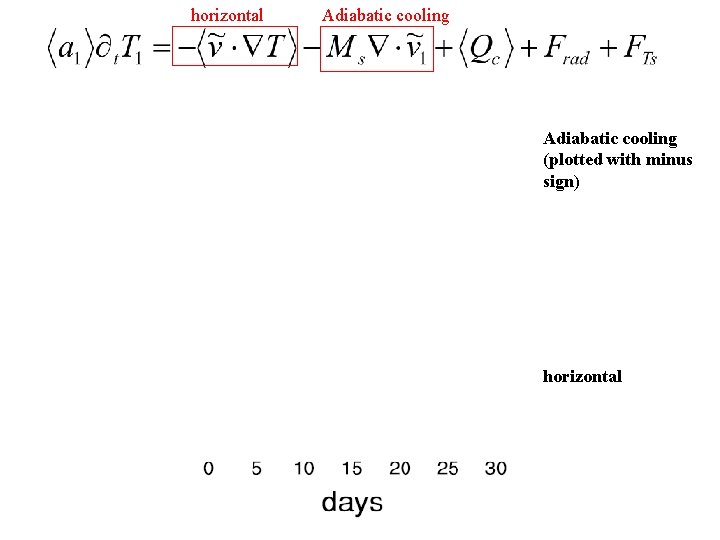
Budget analysis All-physics-on
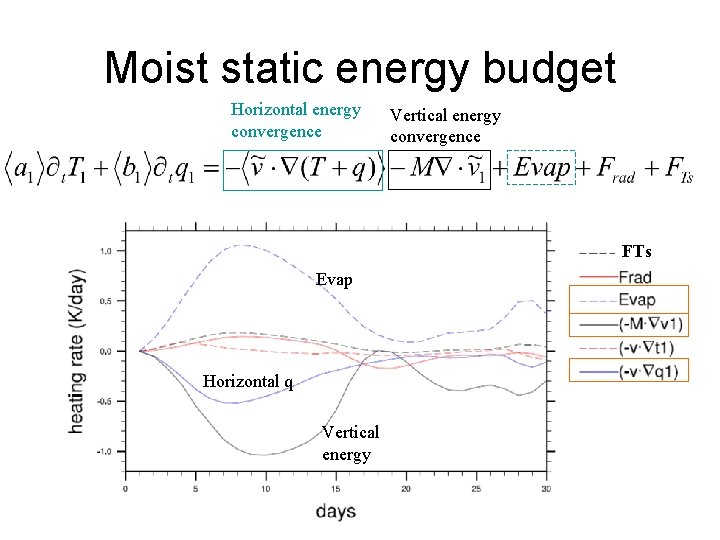
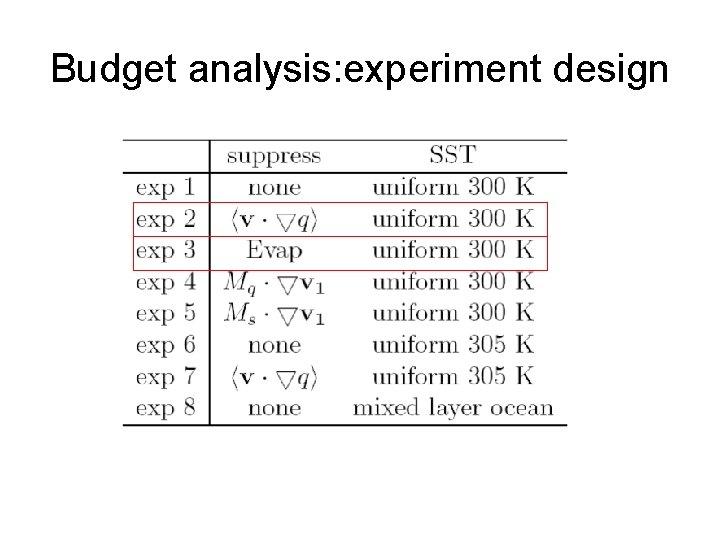
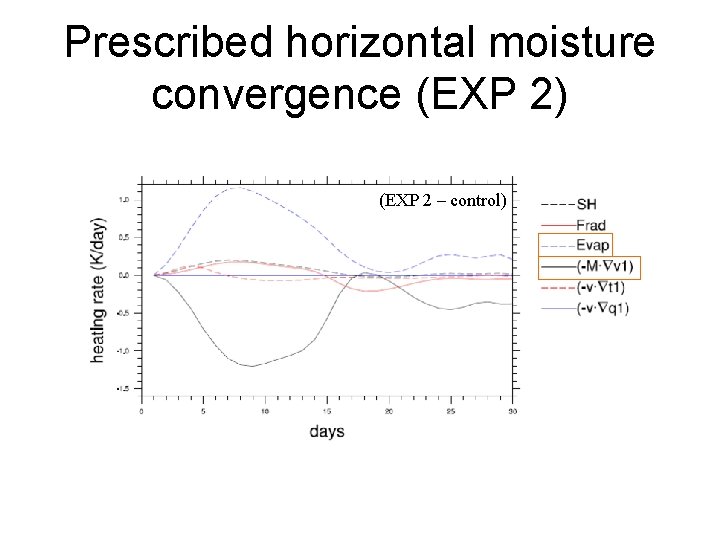
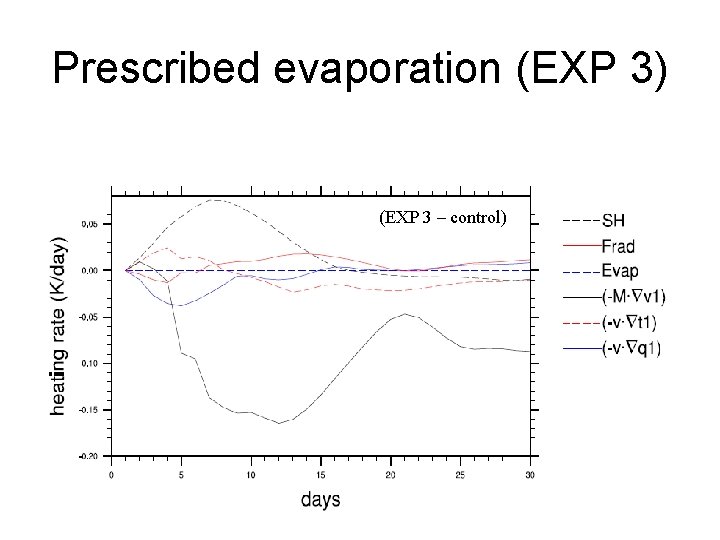
Moist static energy equation Precipitation Moisture equation: Horizontal moisture convergence Vertical moisture convergence Temperature equation: Convective heating Horizontal energy convergence Vertical energy M = Ms - Mq convergence
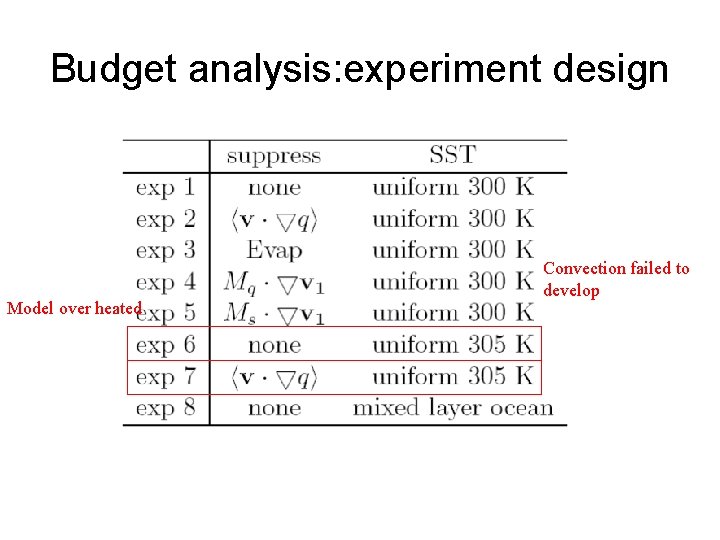
Budget analysis: experiment design
horizontal Vertical (EXP 1 – control) vertical horizontal
horizontal Adiabatic cooling (plotted with minus sign) horizontal
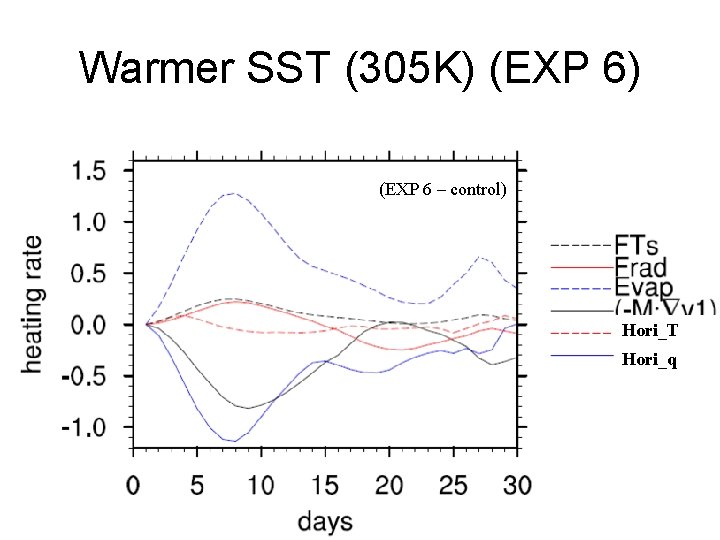
Moist static energy budget Horizontal energy convergence Vertical energy convergence FTs Evap Horizontal q Vertical energy
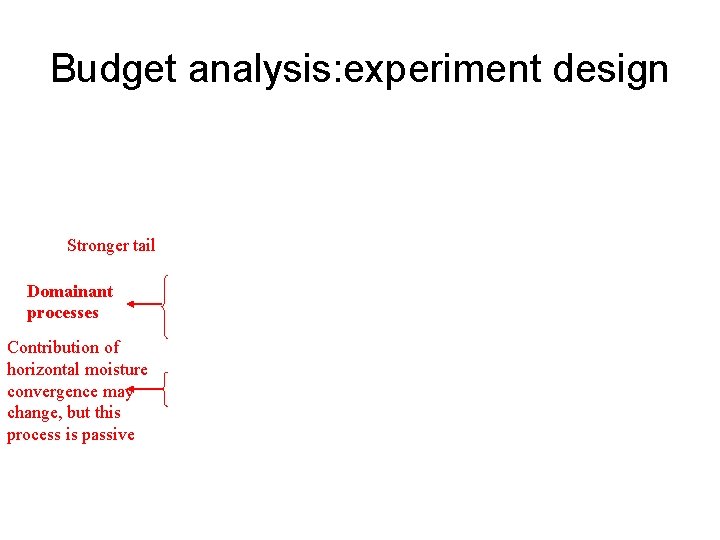
Budget analysis: experiment design
Prescribed horizontal moisture convergence (EXP 2) (EXP 2 – control)
Prescribed evaporation (EXP 3) (EXP 3 – control)
Budget analysis: experiment design Model over heated Convection failed to develop
Warmer SST (305 K) (EXP 6 – control) Hori_T Hori_q
Budget analysis: experiment design Stronger tail Domainant processes Contribution of horizontal moisture convergence may change, but this process is passive
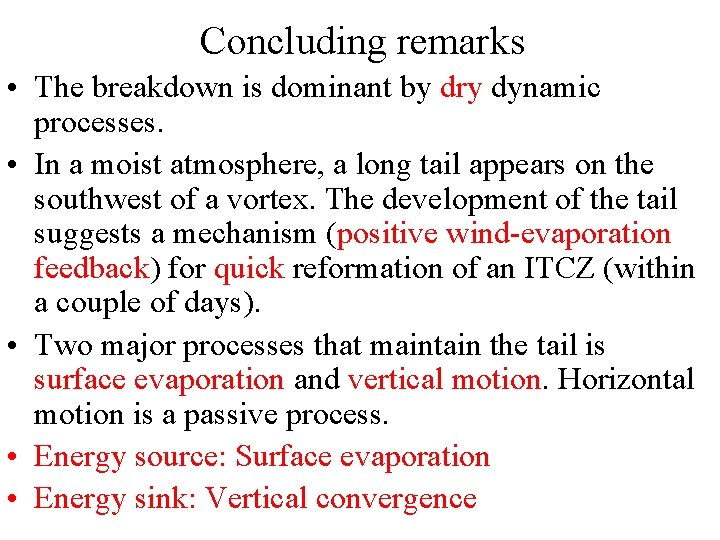
Concluding remarks • The breakdown is dominant by dry dynamic processes. • In a moist atmosphere, a long tail appears on the southwest of a vortex. The development of the tail suggests a mechanism (positive wind-evaporation feedback) for quick reformation of an ITCZ (within a couple of days). • Two major processes that maintain the tail is surface evaporation and vertical motion. Horizontal motion is a passive process. • Energy source: Surface evaporation • Energy sink: Vertical convergence
Concluding remarks—cont. • The role of the tropical disturbance: – disturbs the ITCZ and breaks it – Induce a tail (a new convergence zone) on its southwest side • The passage of large-scale waves can suppress the convection of the tail by modifying surface wind pattern.
Effect of Kelvin wave Thickened: Kelvin wave is filtered Solid lines Dashed lines
Future work • The role of the ocean? – Coupled with mixed layer ocean: Life time of the tail is shortened for a few days – TMI SST (30 -day high pass filtering): warmer SST before breakdown, cooler SST during/after breakdown. – Coupled with simple ocean dynamics (ex. parameterized Ekman pumping) – Different meridional SST gradients – Coupled with daily SST (i. e. , larger SST variation)
- Slides: 35