
Intensive First Year American Sign Language ASL 134
- Slides: 74
Intensive First Year American Sign Language (ASL 134) class Summer Quarter 20156 Instructor: Kristi Winter, MA University of Washington Dept. of Linguistics ASL Program
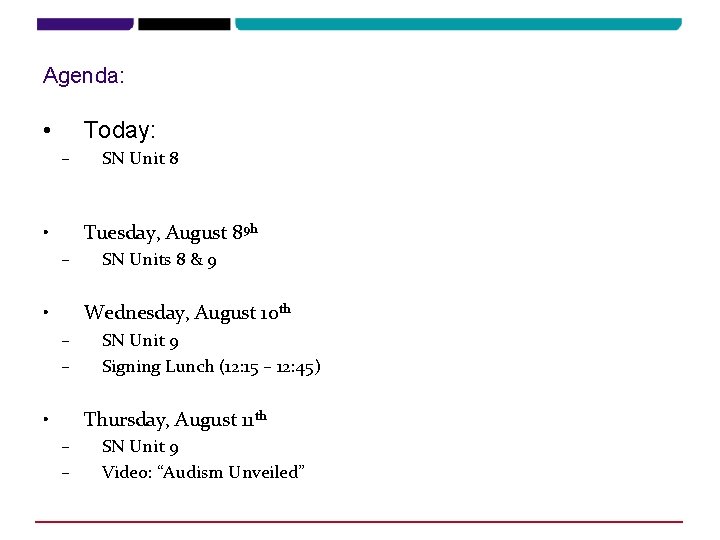
Agenda: • Today: – • SN Unit 8 Tuesday, August 89 h – • SN Units 8 & 9 Wednesday, August 10 th – – • SN Unit 9 Signing Lunch (12: 15 – 12: 45) Thursday, August 11 th – – SN Unit 9 Video: “Audism Unveiled”
Unit 8 Making Requests and Asking for Advice
Lesson 8: 6 Numbers: Giving Phone Numbers Homework Follow-Up
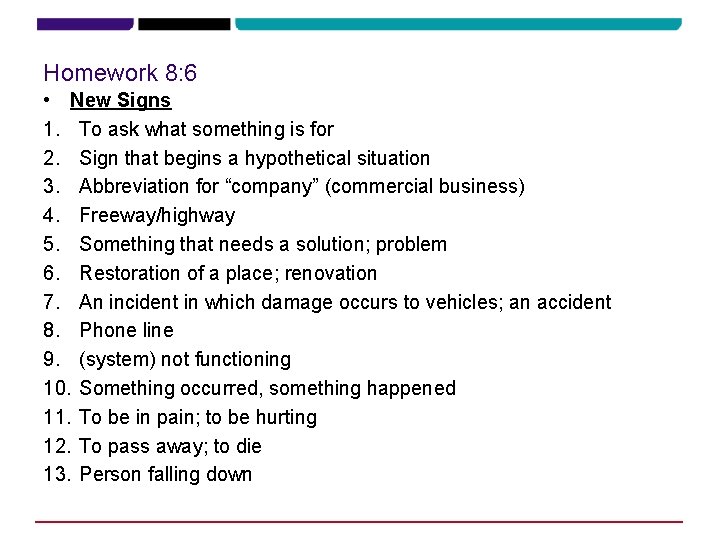
Homework 8: 6 • New Signs 1. To ask what something is for 2. Sign that begins a hypothetical situation 3. Abbreviation for “company” (commercial business) 4. Freeway/highway 5. Something that needs a solution; problem 6. Restoration of a place; renovation 7. An incident in which damage occurs to vehicles; an accident 8. Phone line 9. (system) not functioning 10. Something occurred, something happened 11. To be in pain; to be hurting 12. To pass away; to die 13. Person falling down
Homework 8: 6 • 1. 2. 3. New Signs To have difficulty breathing Ambulance To move or act with haste; to hurry
510 -642 -7339 415 -559 -8176
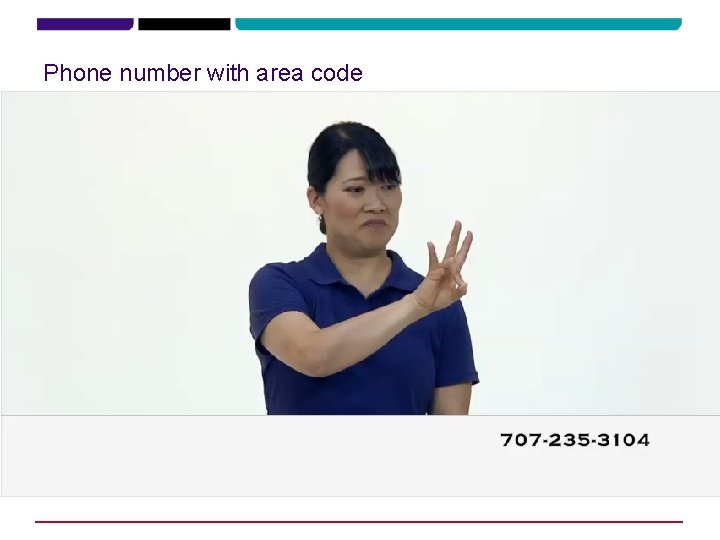
Phone number with area code
Lesson 8: 7 “Asking for Advice” 1 Homework Follow-Up
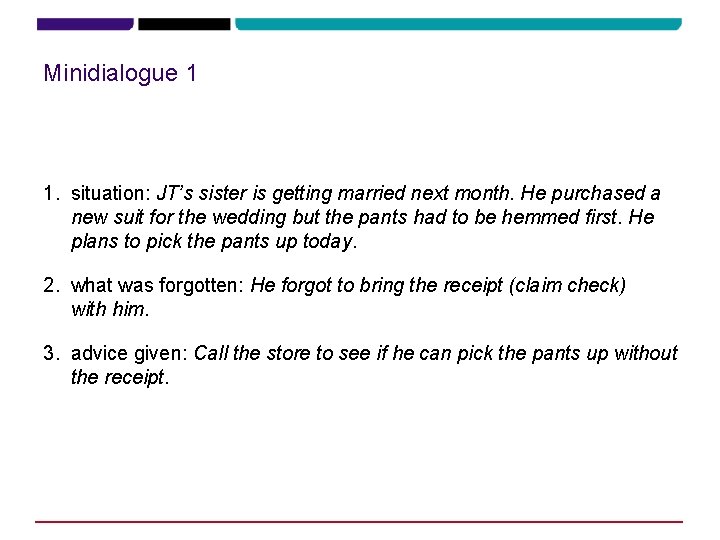
Minidialogue 1 1. situation: JT’s sister is getting married next month. He purchased a new suit for the wedding but the pants had to be hemmed first. He plans to pick the pants up today. 2. what was forgotten: He forgot to bring the receipt (claim check) with him. 3. advice given:
Minidialogue 1 1. situation: JT’s sister is getting married next month. He purchased a new suit for the wedding but the pants had to be hemmed first. He plans to pick the pants up today. 2. what was forgotten: He forgot to bring the receipt (claim check) with him. 3. advice given:
Minidialogue 1 1. situation: JT’s sister is getting married next month. He purchased a new suit for the wedding but the pants had to be hemmed first. He plans to pick the pants up today. 2. what was forgotten: He forgot to bring the receipt (claim check) with him. 3. advice given:
Minidialogue 1 1. situation: JT’s sister is getting married next month. He purchased a new suit for the wedding but the pants had to be hemmed first. He plans to pick the pants up today. 2. what was forgotten: He forgot to bring the receipt (claim check) with him. 3. advice given: Call the store to see if he can pick the pants up without the receipt.
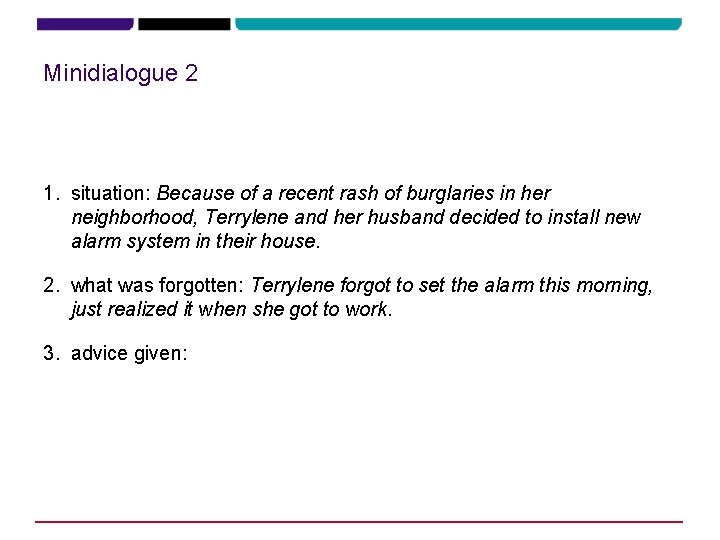
Minidialogue 2 1. situation: Because of a recent rash of burglaries in her neighborhood, Terrylene and her husband decided to install new alarm system in their house. 2. what was forgotten: Terrylene forgot to set the alarm this morning, just realized it when she got to work. 3. advice given:
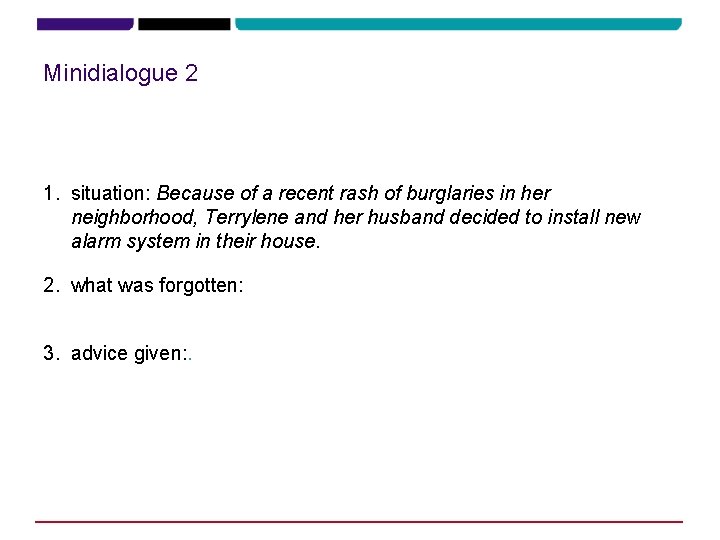
Minidialogue 2 1. situation: Because of a recent rash of burglaries in her neighborhood, Terrylene and her husband decided to install new alarm system in their house. 2. what was forgotten: Terrylene forgot to set the alarm this morning, just realized it when she got to work. 3. advice given: .
Minidialogue 2 1. situation: Because of a recent rash of burglaries in her neighborhood, Terrylene and her husband decided to install new alarm system in their house. 2. what was forgotten: Terrylene forgot to set the alarm this morning, just realized it when she got to work. 3. advice given:
Minidialogue 2 1. situation: Because of a recent rash of burglaries in her neighborhood, Terrylene and her husband decided to install new alarm system in their house. 2. what was forgotten: Terrylene forgot to set the alarm this morning, just realized it when she got to work. 3. advice given: To keep her fingers crossed that no one will break into her house and steal anything, or to call the alarm company and ask them to set it for her.
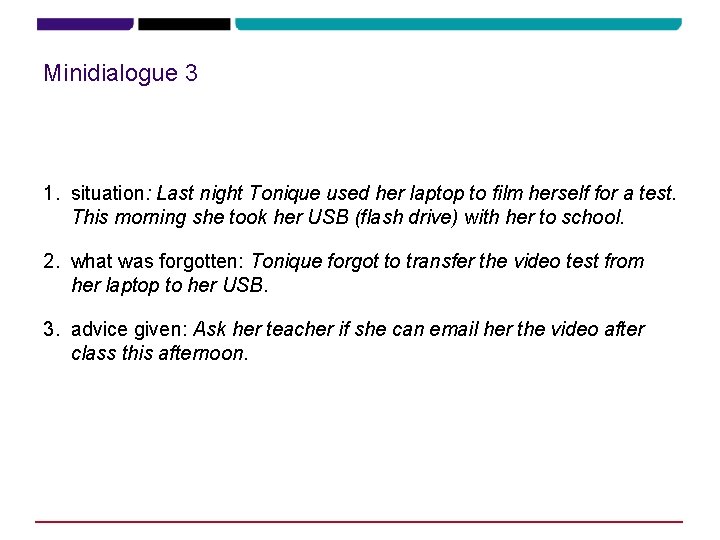
Minidialogue 3 1. situation: Last night Tonique used her laptop to film herself for a test. This morning she took her USB (flash drive) with her to school. 2. what was forgotten: Tonique forgot to transfer the video test from her laptop to her USB. 3. advice given:
Minidialogue 3 1. situation: Last night Tonique used her laptop to film herself for a test. This morning she took her USB (flash drive) with her to school. 2. what was forgotten: Tonique forgot to transfer the video test from her laptop to her USB. 3. advice given:
Minidialogue 3 1. situation: Last night Tonique used her laptop to film herself for a test. This morning she took her USB (flash drive) with her to school. 2. what was forgotten: Tonique forgot to transfer the video test from her laptop to her USB. 3. advice given:
Minidialogue 3 1. situation: Last night Tonique used her laptop to film herself for a test. This morning she took her USB (flash drive) with her to school. 2. what was forgotten: Tonique forgot to transfer the video test from her laptop to her USB. 3. advice given: Ask her teacher if she can email her the video after class this afternoon.
Lesson 8: 8 Asking for a Sign Homework Follow-Up
• Describe the concept then ask for the sign. Be sure to use the same strategy used by the signer on video.
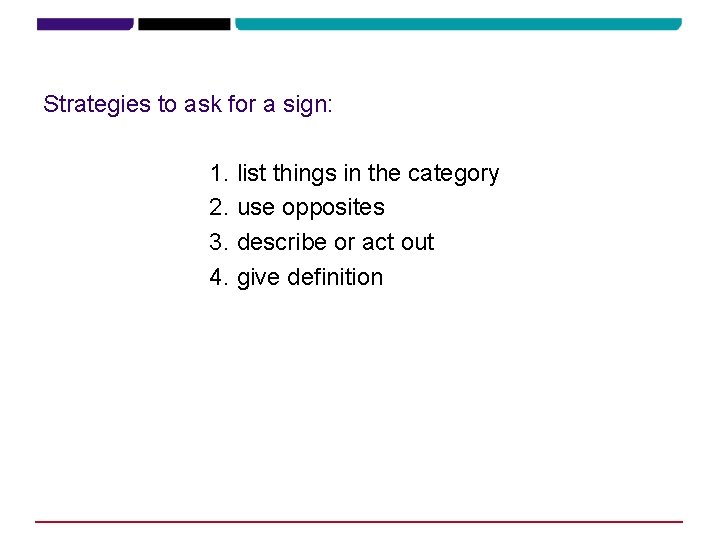
Strategies to ask for a sign: 1. list things in the category 2. use opposites 3. describe or act out 4. give definition
Strategies to ask for a sign: 1. list things in the category 2. use opposites 3. describe or act out 4. give definition • Activity: Using the different strategies, get your partner to guess the sign for the item or concept listed on your worksheet.
Lesson 8: 9 Agreement Verbs 2
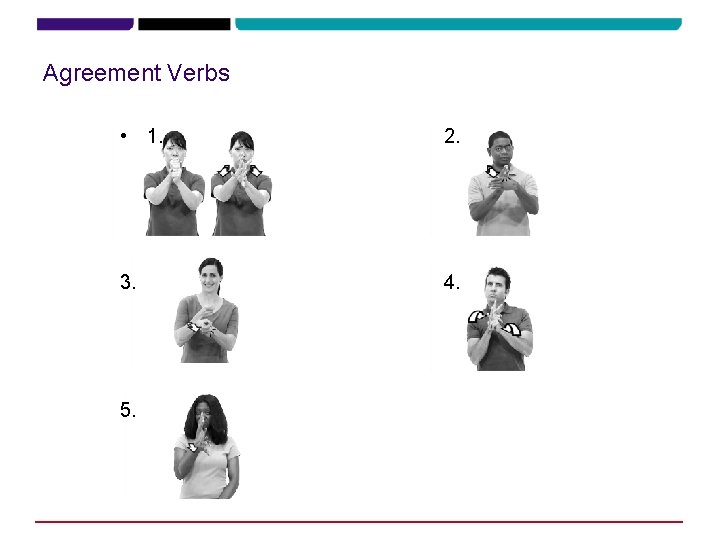
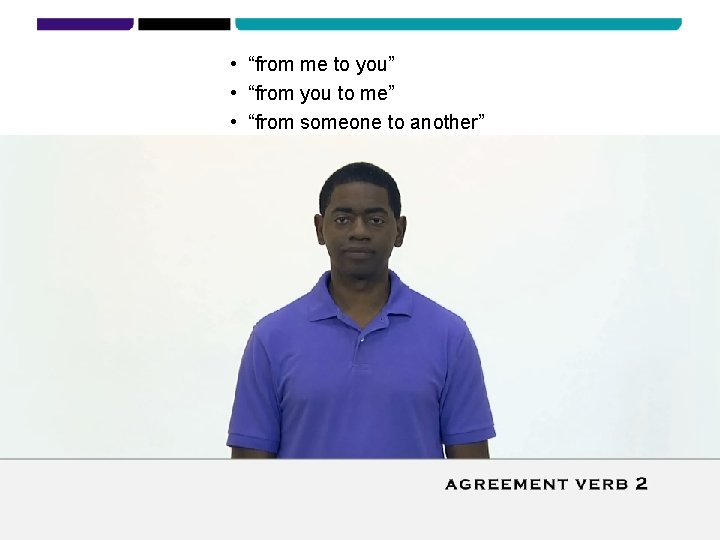
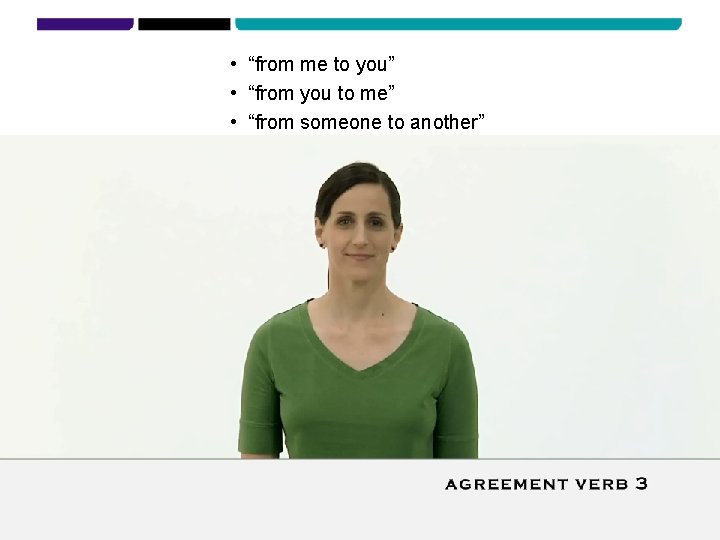
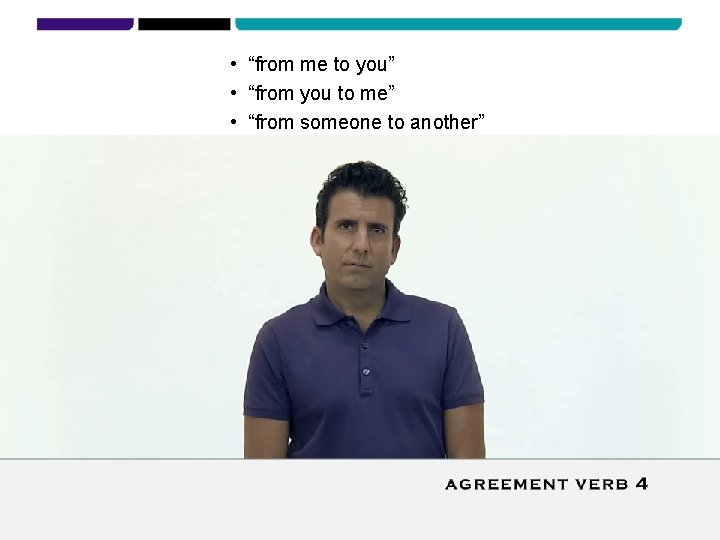
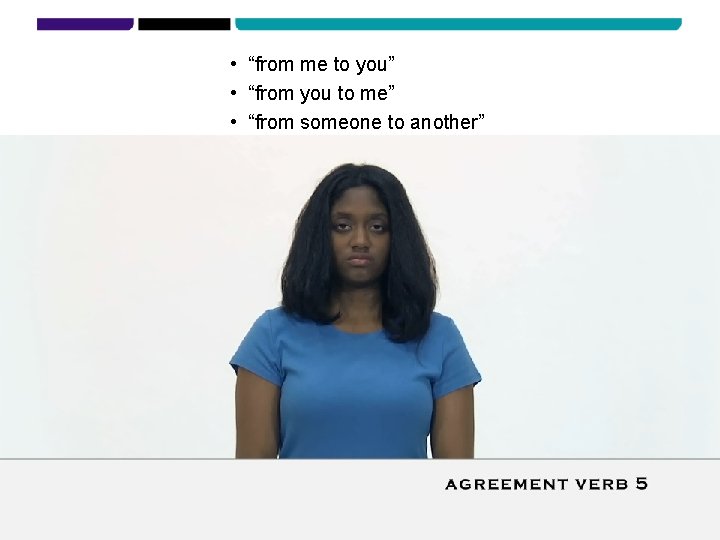
Agreement Verbs • 1. 2. 3. 4. 5.
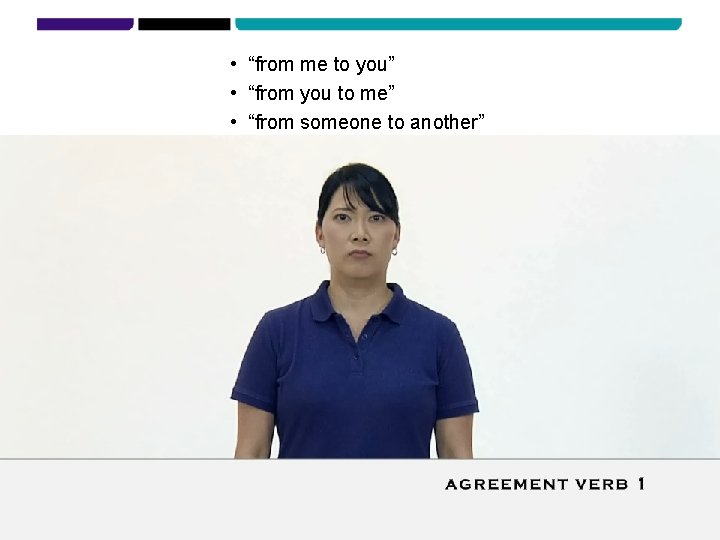
• “from me to you” • “from you to me” • “from someone to another”
• “from me to you” • “from you to me” • “from someone to another”
• “from me to you” • “from you to me” • “from someone to another”
• “from me to you” • “from you to me” • “from someone to another”
• “from me to you” • “from you to me” • “from someone to another”
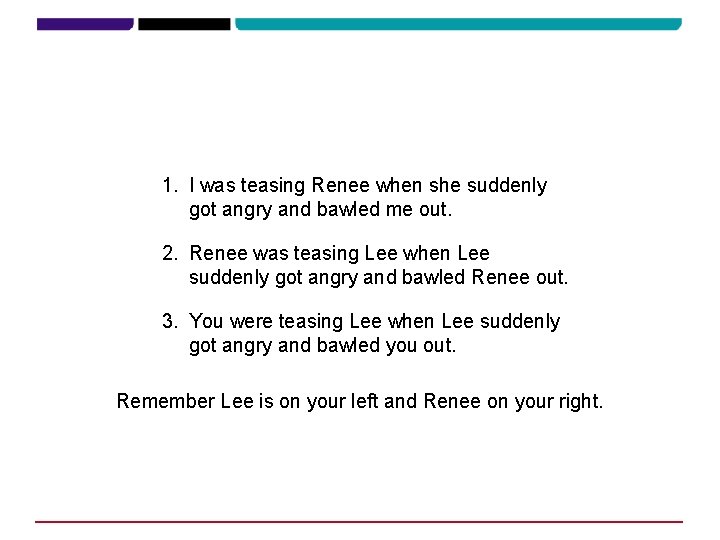
1. I was teasing Renee when she suddenly got angry and bawled me out. 2. Renee was teasing Lee when Lee suddenly got angry and bawled Renee out. 3. You were teasing Lee when Lee suddenly got angry and bawled you out. Remember Lee is on your left and Renee on your right.
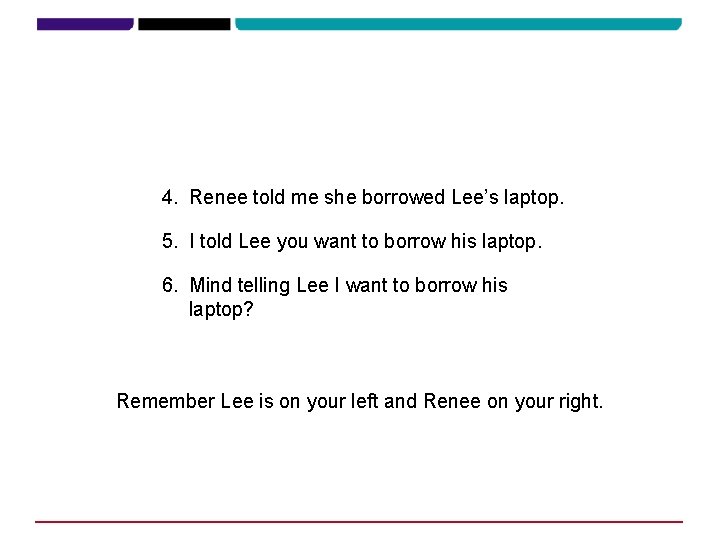
4. Renee told me she borrowed Lee’s laptop. 5. I told Lee you want to borrow his laptop. 6. Mind telling Lee I want to borrow his laptop? Remember Lee is on your left and Renee on your right.
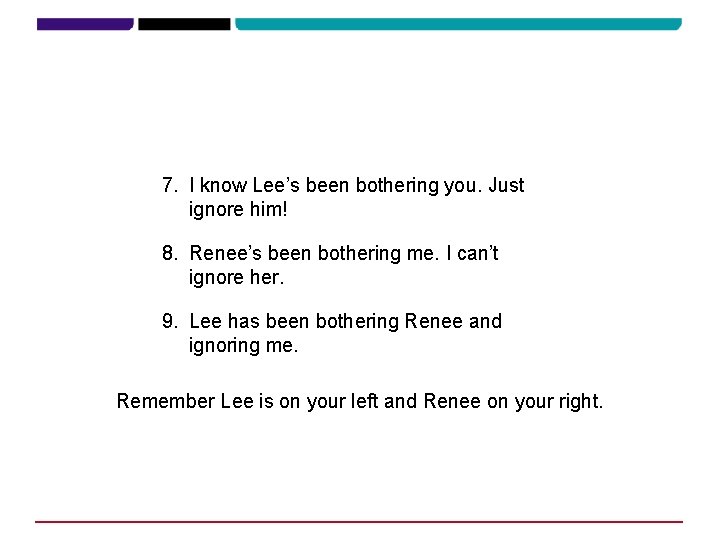
7. I know Lee’s been bothering you. Just ignore him! 8. Renee’s been bothering me. I can’t ignore her. 9. Lee has been bothering Renee and ignoring me. Remember Lee is on your left and Renee on your right.
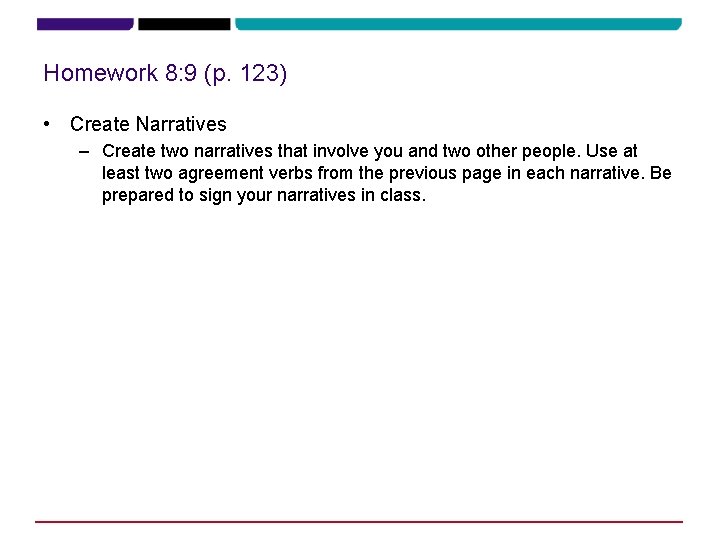
Homework 8: 9 (p. 123) • Create Narratives – Create two narratives that involve you and two other people. Use at least two agreement verbs from the previous page in each narrative. Be prepared to sign your narratives in class.
Lesson 8: 10 Asking for Advice 2
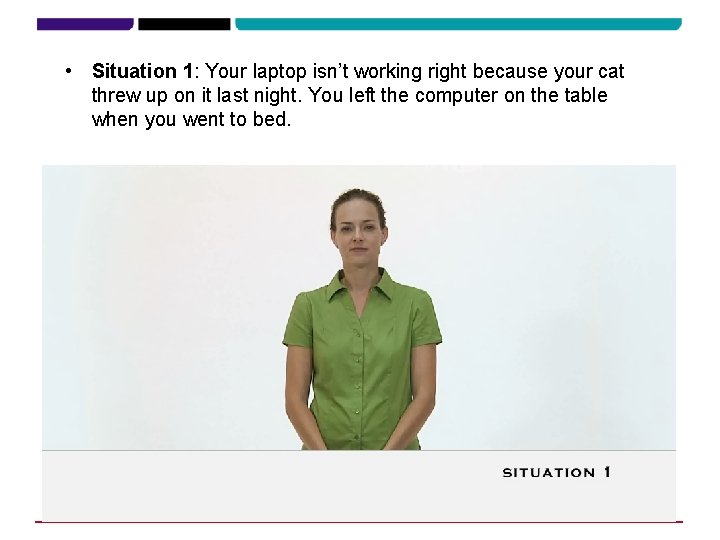
• Situation 1: Your laptop isn’t working right because your cat threw up on it last night. You left the computer on the table when you went to bed.
Situation 1: Your laptop isn’t working right because your cat threw up on it last night. You left the computer on the table when you went to bed. Explain problem, ask for advice • tell when • explain the situation • tell what unexpectedly happened (a spill) • ask for advice
From Situation 1 • cat jumps on a table where laptop is • cat throws up • vomit splatters on the laptop Describing a Spill 1. tell what person or animal was doing 2. name liquid, describe movement of liquid (element classifier) 3. tell where, describe how it lands (element classifier) Determine when to use the conjunction.
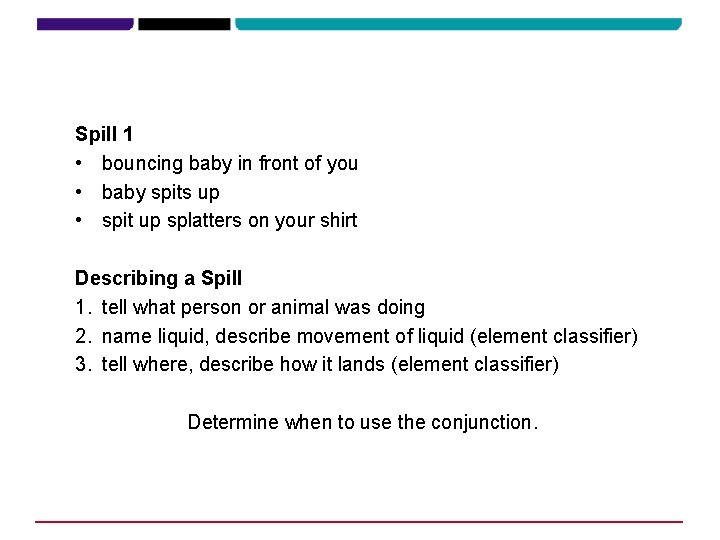
Spill 1 • bouncing baby in front of you • baby spits up • spit up splatters on your shirt Describing a Spill 1. tell what person or animal was doing 2. name liquid, describe movement of liquid (element classifier) 3. tell where, describe how it lands (element classifier) Determine when to use the conjunction.
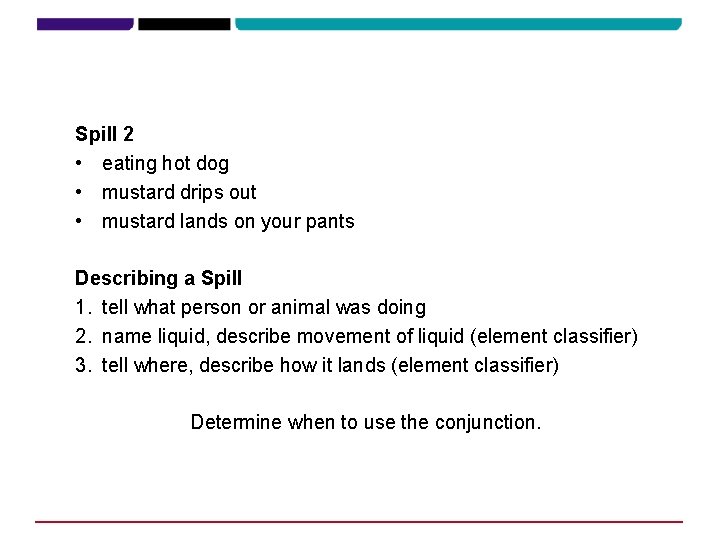
Spill 2 • eating hot dog • mustard drips out • mustard lands on your pants Describing a Spill 1. tell what person or animal was doing 2. name liquid, describe movement of liquid (element classifier) 3. tell where, describe how it lands (element classifier) Determine when to use the conjunction.
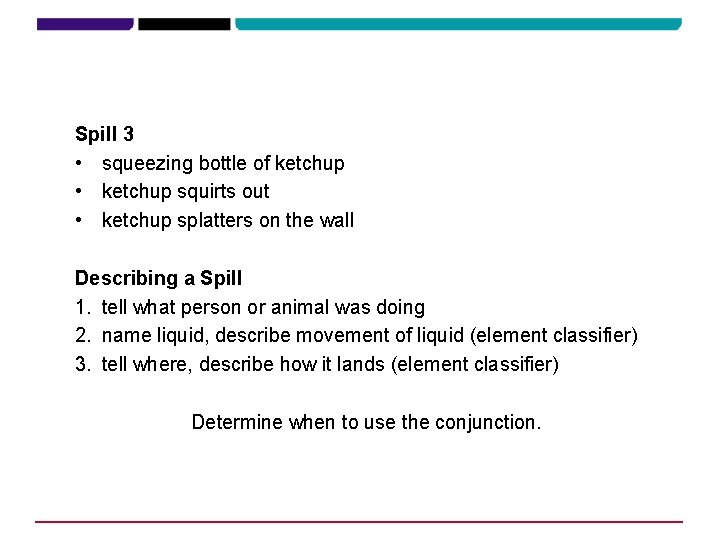
Spill 3 • squeezing bottle of ketchup • ketchup squirts out • ketchup splatters on the wall Describing a Spill 1. tell what person or animal was doing 2. name liquid, describe movement of liquid (element classifier) 3. tell where, describe how it lands (element classifier) Determine when to use the conjunction.
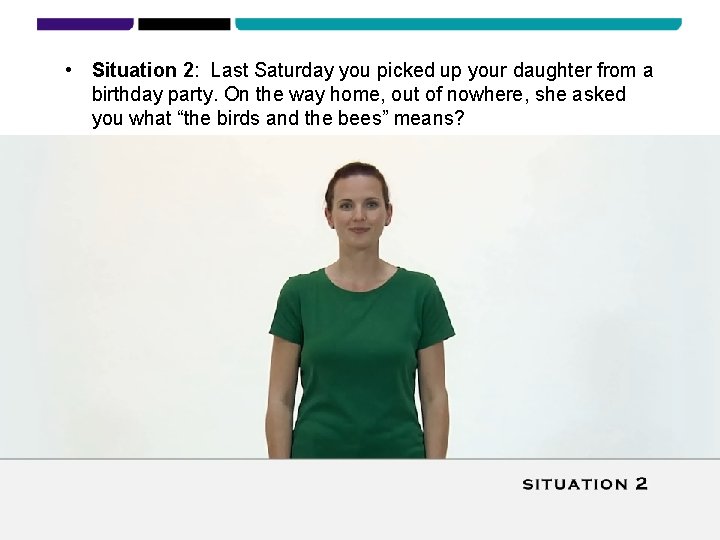
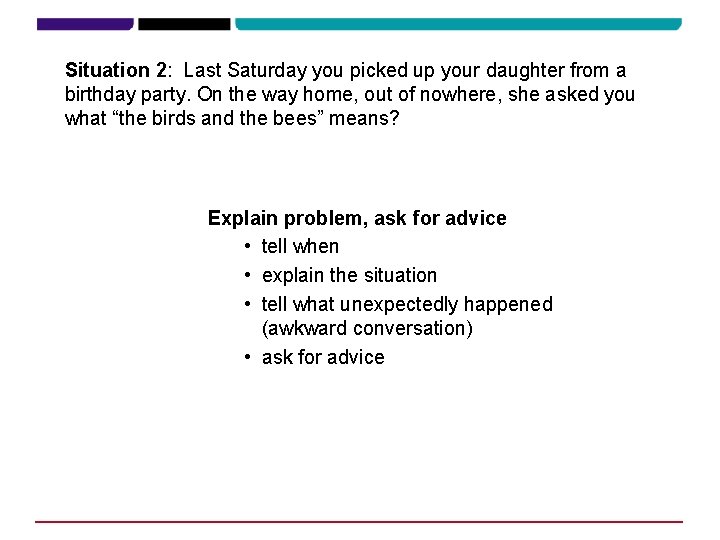
• Situation 2: Last Saturday you picked up your daughter from a birthday party. On the way home, out of nowhere, she asked you what “the birds and the bees” means?
Situation 2: Last Saturday you picked up your daughter from a birthday party. On the way home, out of nowhere, she asked you what “the birds and the bees” means? Explain problem, ask for advice • tell when • explain the situation • tell what unexpectedly happened (awkward conversation) • ask for advice
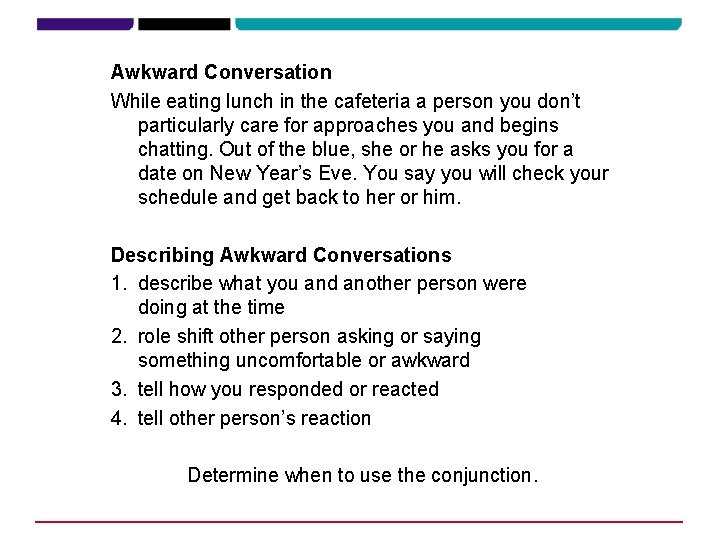
Awkward Conversation While eating lunch in the cafeteria a person you don’t particularly care for approaches you and begins chatting. Out of the blue, she or he asks you for a date on New Year’s Eve. You say you will check your schedule and get back to her or him. Describing Awkward Conversations 1. describe what you and another person were doing at the time 2. role shift other person asking or saying something uncomfortable or awkward 3. tell how you responded or reacted 4. tell other person’s reaction Determine when to use the conjunction.
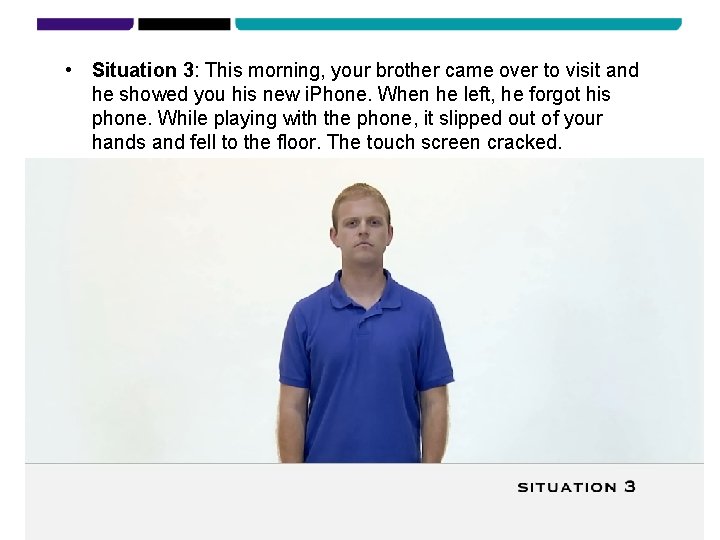
• Situation 3: This morning, your brother came over to visit and he showed you his new i. Phone. When he left, he forgot his phone. While playing with the phone, it slipped out of your hands and fell to the floor. The touch screen cracked.
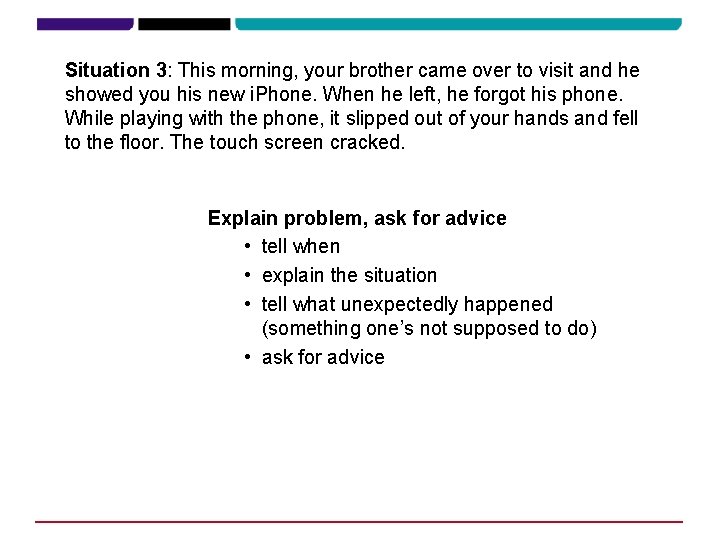
Situation 3: This morning, your brother came over to visit and he showed you his new i. Phone. When he left, he forgot his phone. While playing with the phone, it slipped out of your hands and fell to the floor. The touch screen cracked. Explain problem, ask for advice • tell when • explain the situation • tell what unexpectedly happened (something one’s not supposed to do) • ask for advice
Not Supposed to Do At Thanksgiving while family members sit around the table eating and chatting, you notice your nephew sneaking food to the dog under the table. Describing What One’s Not Supposed to Do 1. describe what went on before the incident 2. role shift to describe a person doing something she or he was not supposed to do Determine when to use the conjunction.
Explain Problem, Ask for Advice • Do Exercise 2 A (p. 476) and 2 B (p. 480)
Lesson 8: 11 Negations 2
Review Negation Signs
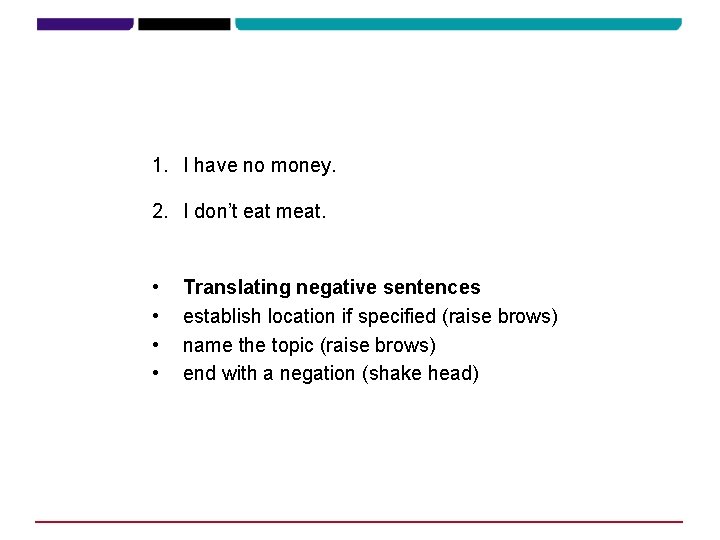
1. I have no money. 2. I don’t eat meat. • • Translating negative sentences establish location if specified (raise brows) name the topic (raise brows) end with a negation (shake head)
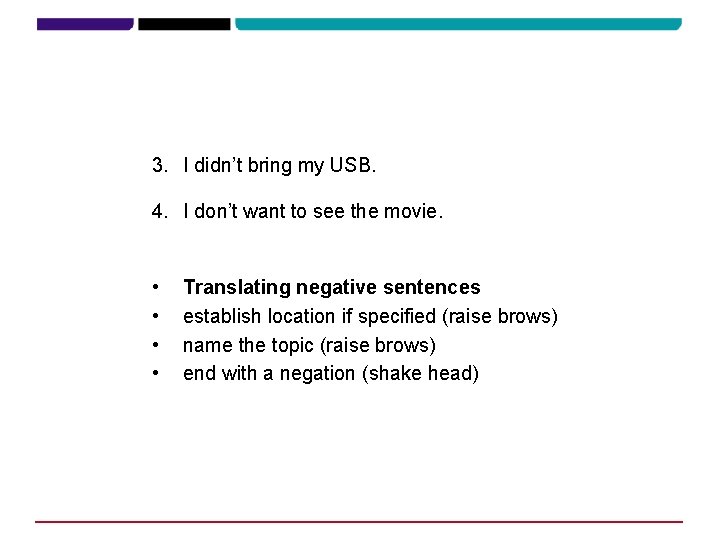
3. I didn’t bring my USB. 4. I don’t want to see the movie. • • Translating negative sentences establish location if specified (raise brows) name the topic (raise brows) end with a negation (shake head)
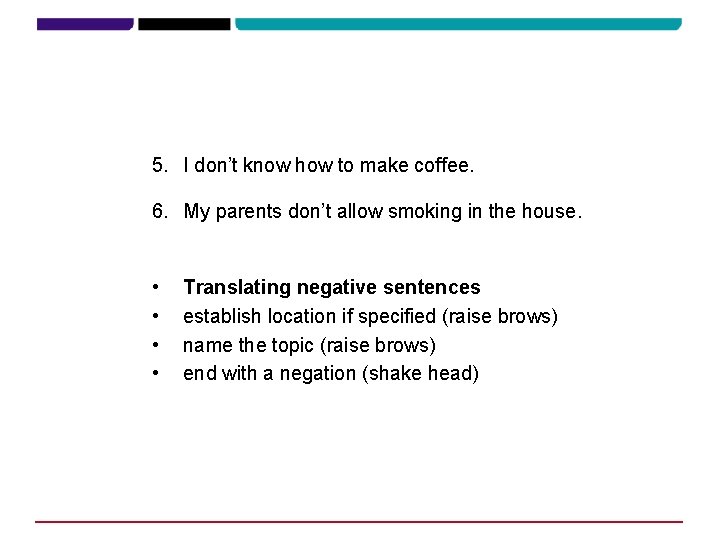
5. I don’t know how to make coffee. 6. My parents don’t allow smoking in the house. • • Translating negative sentences establish location if specified (raise brows) name the topic (raise brows) end with a negation (shake head)
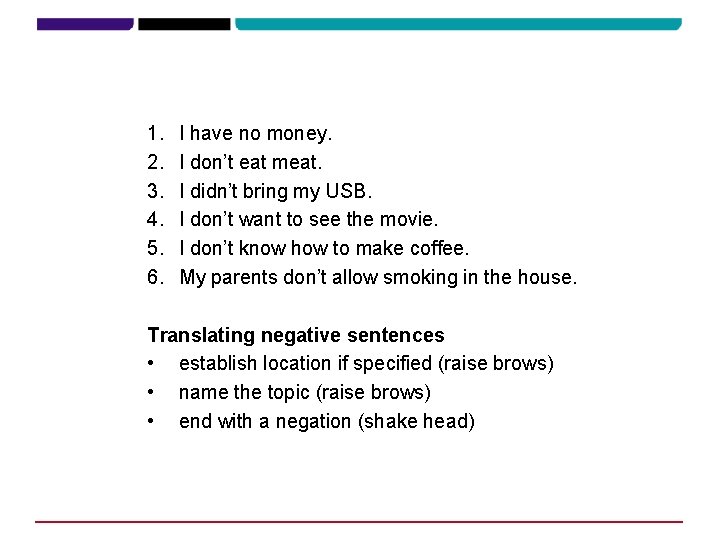
1. 2. 3. 4. 5. 6. I have no money. I don’t eat meat. I didn’t bring my USB. I don’t want to see the movie. I don’t know how to make coffee. My parents don’t allow smoking in the house. Translating negative sentences • establish location if specified (raise brows) • name the topic (raise brows) • end with a negation (shake head)
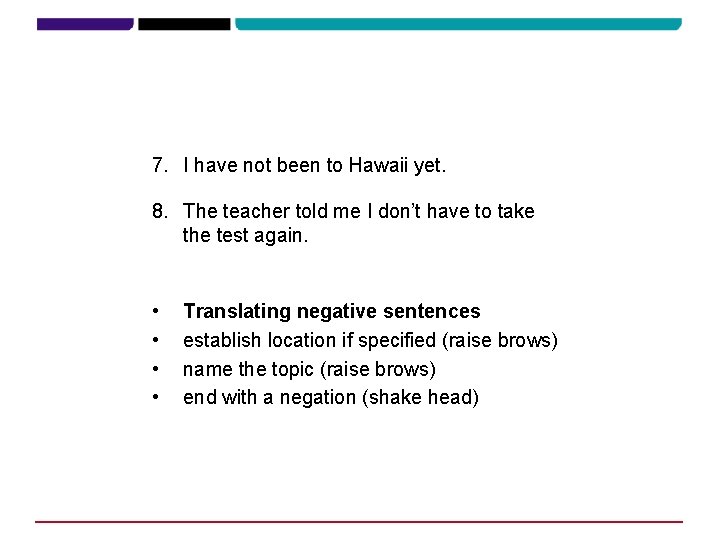
7. I have not been to Hawaii yet. 8. The teacher told me I don’t have to take the test again. • • Translating negative sentences establish location if specified (raise brows) name the topic (raise brows) end with a negation (shake head)
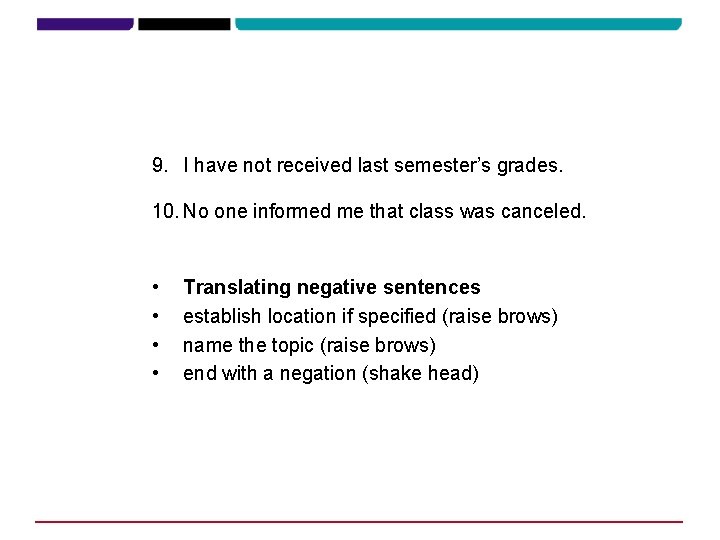
9. I have not received last semester’s grades. 10. No one informed me that class was canceled. • • Translating negative sentences establish location if specified (raise brows) name the topic (raise brows) end with a negation (shake head)
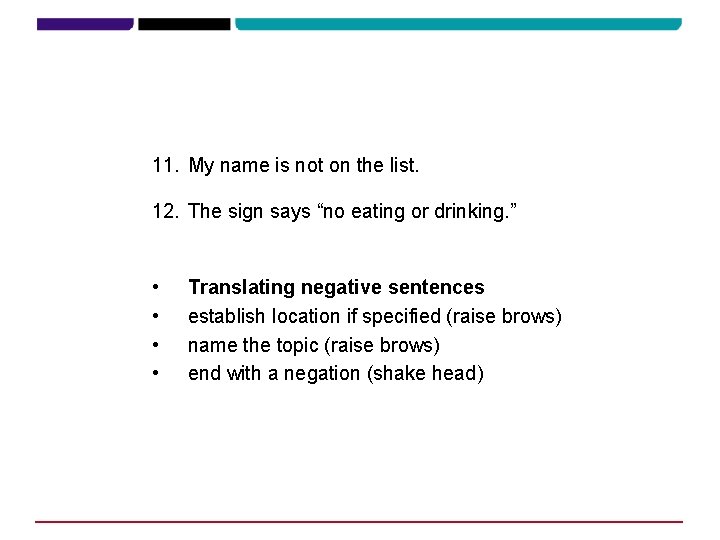
11. My name is not on the list. 12. The sign says “no eating or drinking. ” • • Translating negative sentences establish location if specified (raise brows) name the topic (raise brows) end with a negation (shake head)
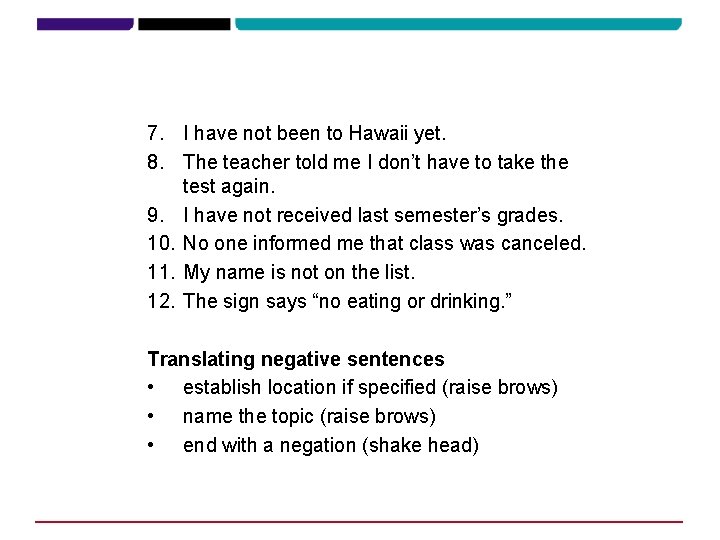
7. I have not been to Hawaii yet. 8. The teacher told me I don’t have to take the test again. 9. I have not received last semester’s grades. 10. No one informed me that class was canceled. 11. My name is not on the list. 12. The sign says “no eating or drinking. ” Translating negative sentences • establish location if specified (raise brows) • name the topic (raise brows) • end with a negation (shake head)
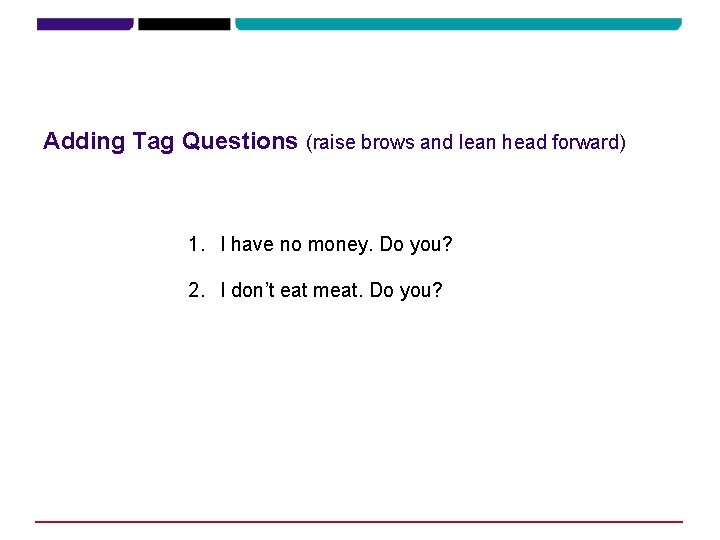
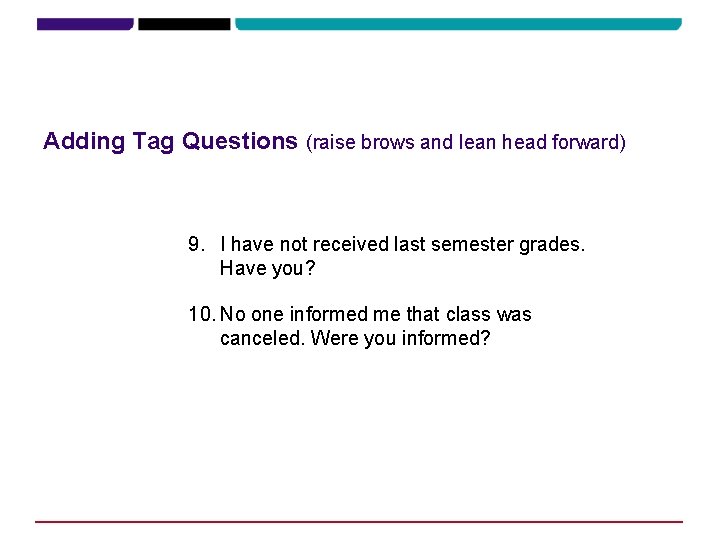
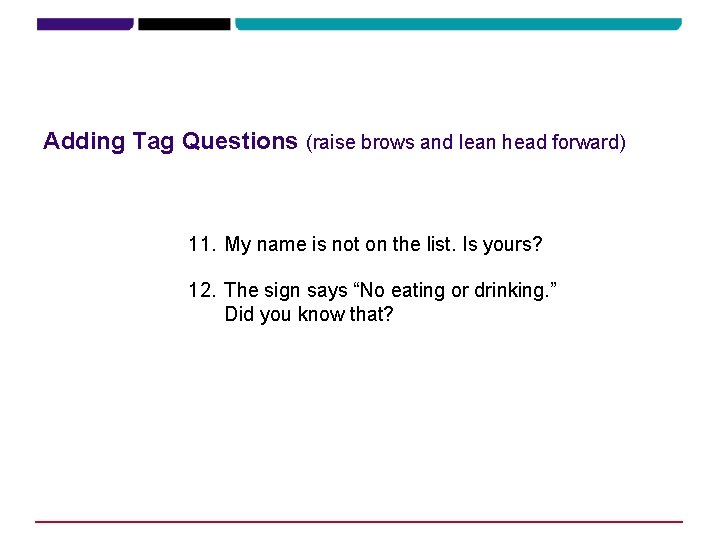
Adding Tag Questions (raise brows and lean head forward) 1. I have no money. Do you? 2. I don’t eat meat. Do you?
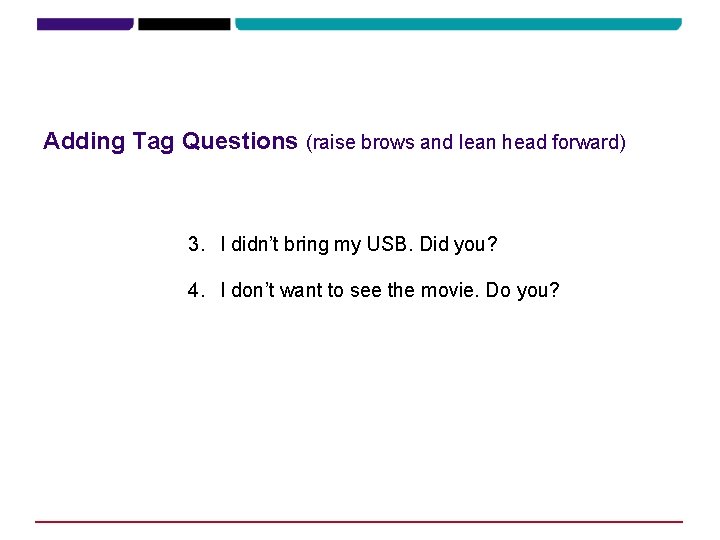
Adding Tag Questions (raise brows and lean head forward) 3. I didn’t bring my USB. Did you? 4. I don’t want to see the movie. Do you?
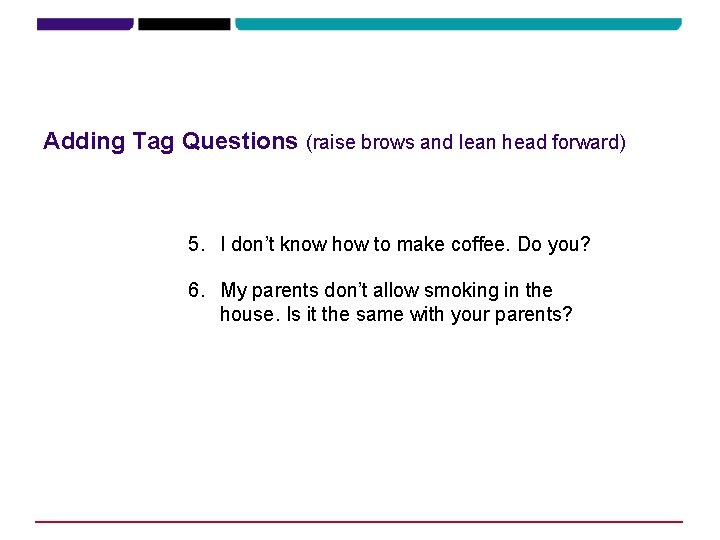
Adding Tag Questions (raise brows and lean head forward) 5. I don’t know how to make coffee. Do you? 6. My parents don’t allow smoking in the house. Is it the same with your parents?
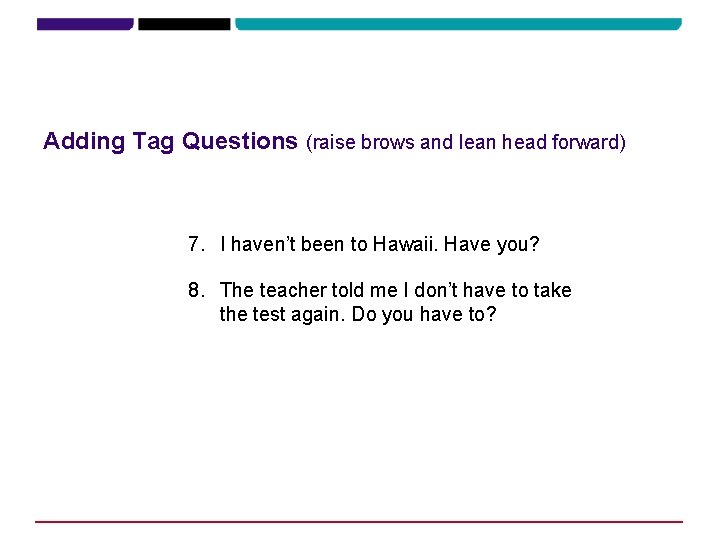
Adding Tag Questions (raise brows and lean head forward) 7. I haven’t been to Hawaii. Have you? 8. The teacher told me I don’t have to take the test again. Do you have to?
Adding Tag Questions (raise brows and lean head forward) 9. I have not received last semester grades. Have you? 10. No one informed me that class was canceled. Were you informed?
Adding Tag Questions (raise brows and lean head forward) 11. My name is not on the list. Is yours? 12. The sign says “No eating or drinking. ” Did you know that?
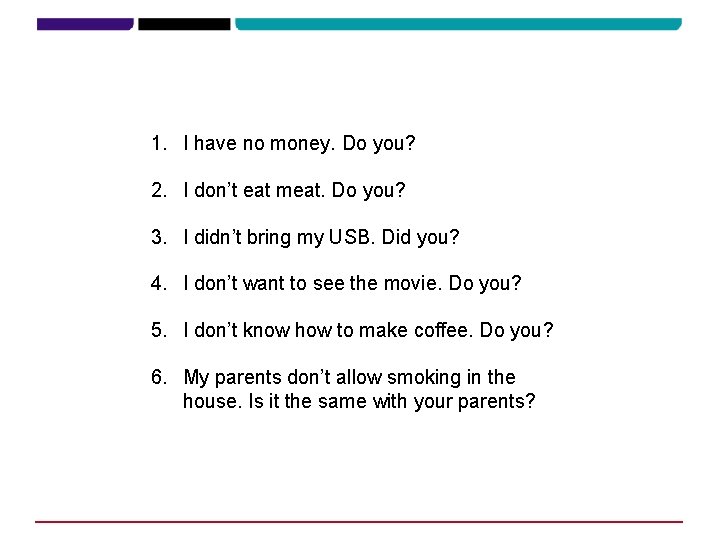
1. I have no money. Do you? 2. I don’t eat meat. Do you? 3. I didn’t bring my USB. Did you? 4. I don’t want to see the movie. Do you? 5. I don’t know how to make coffee. Do you? 6. My parents don’t allow smoking in the house. Is it the same with your parents?
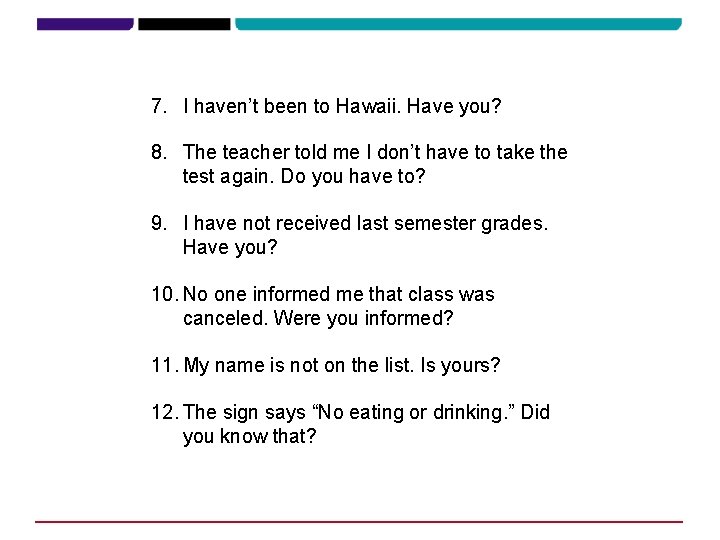
7. I haven’t been to Hawaii. Have you? 8. The teacher told me I don’t have to take the test again. Do you have to? 9. I have not received last semester grades. Have you? 10. No one informed me that class was canceled. Were you informed? 11. My name is not on the list. Is yours? 12. The sign says “No eating or drinking. ” Did you know that?
Lesson 8: 12 The Candy Bar
Lesson 8: 13 Culture: Minimizing Interruptions
Minimizing Interruptions • How do you minimize the interruption to the teacher’s presentation if you arrive late or must leave class? • 1. 2. 3. Considerations the cultural value of keeping each other informed the right time to interrupt how to briefly apologize and excuse oneself, and get permission
Homework • Do Homework 8: 10 – 8: 13, bring in a hard copy of homework 8: 10 and 8: 12
Sources: • Smith, C. , Lentz, E. & Mikos, K. (2014)Signing Naturally Student Workbook Units 7 -12. Dawn. Sign. Press. San Diego, CA • Smith, C. , Lentz, E. , Mikos, K. (2008) Signing Naturally Units 1 -6. Dawn Sign Press. San Diego, CA. • Zinza, Jason E. (2006) Master ASL! Sign Media, Inc. Burtonsville, MD. • Eastman, G. (1989) From Mime to Sign. T. J. Publishers, Inc. Silver Spring, MD. • Pictures from Microsoft Clip Arts