
Intelligent Identification Software Module IISM for the US

- Slides: 38
Intelligent Identification Software Module (IISM) for the US Navy’s Combat Centers Robert Richards Ph. D. , Richard Stottler, Ben Ball, and Coskun Tasoluk Stottler Henke Associates, Inc. , 951 Mariner’s Island Blvd, Suite 360 San Mateo, CA 94404 {Richards, Stottler, Bball, Tasoluk}@stottlerhenke. com www. stottlerhenke. com IEEE Aerospace 2006
Background: Weapon System High Level Overview Video
Motivation: Current Identification Problems • Wide variation in ID abilities • Knowing whose-who even after ID information received • Track Split/Merge • Maintaining Competing Hypotheses for a track • Classified Automatic Track ID Problems • Remembering Track History (both short and long-term) • Analyzing behavior/correlations • Correlating new tracks with previous tracks • Knowing/Executing Optimal ID Procedures • Quickly Assessing Threat
Related Projects • TAO ITS and ITS authoring tool • GRTS TAO ITS • Navy Tactics Representation and Execution System (TRES) • Visual Intelligent Behavior Authoring • Advanced Early Warning Real-Time Advisory System (AEW/RTAS)
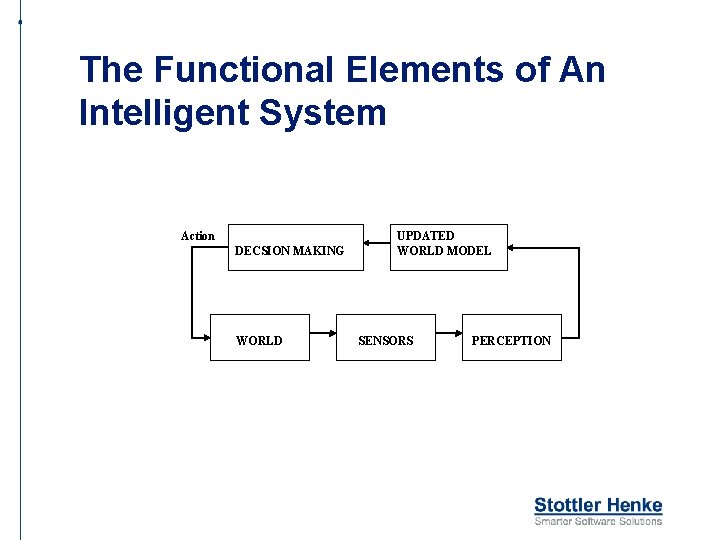
The Functional Elements of An Intelligent System Action DECSION MAKING WORLD UPDATED WORLD MODEL SENSORS PERCEPTION
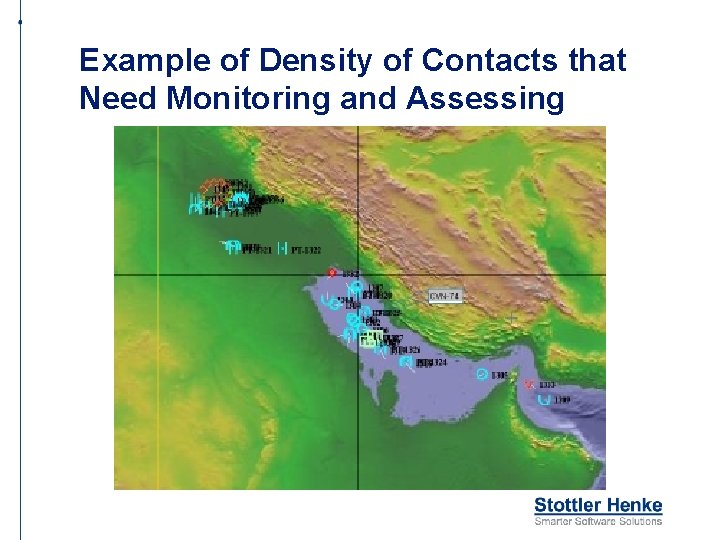
Example of Density of Contacts that Need Monitoring and Assessing
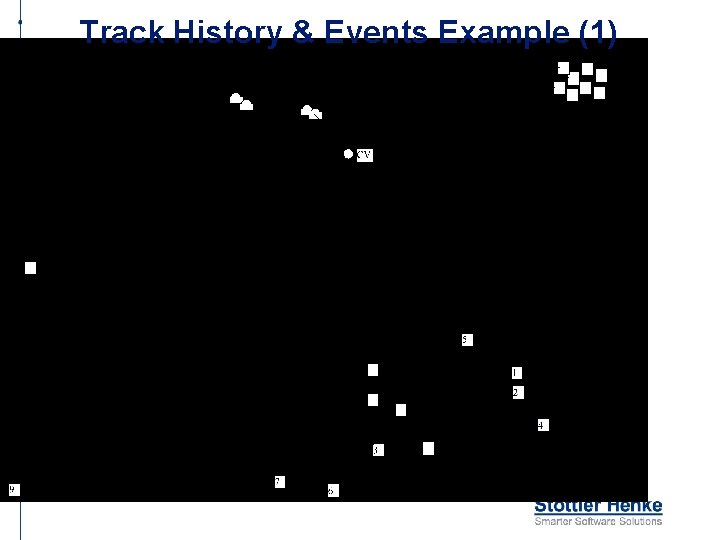
Track History & Events Example (1)
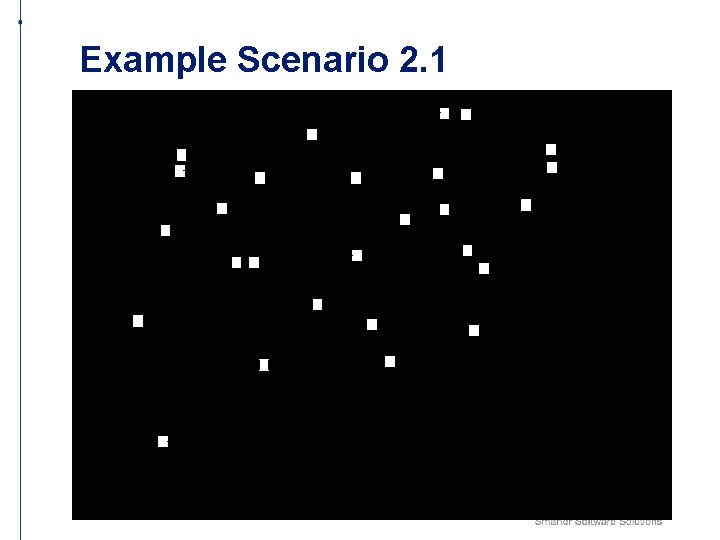
Example Scenario 2. 1
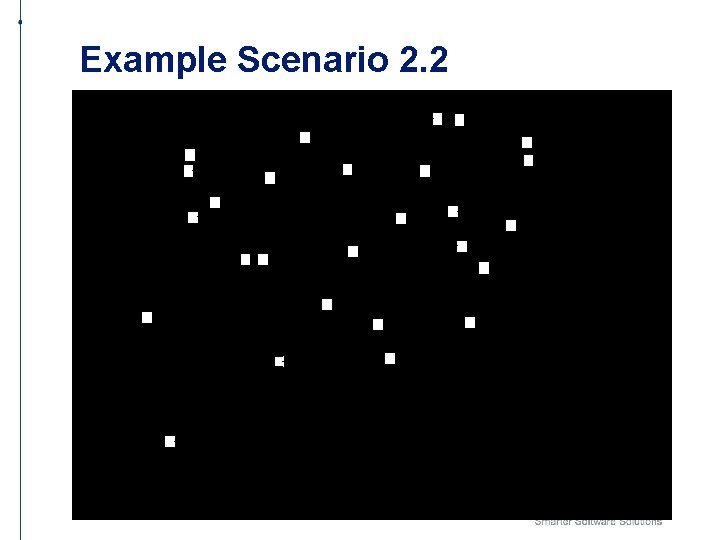
Example Scenario 2. 2
Example Scenario 2. 3
Example Scenario 2. 4
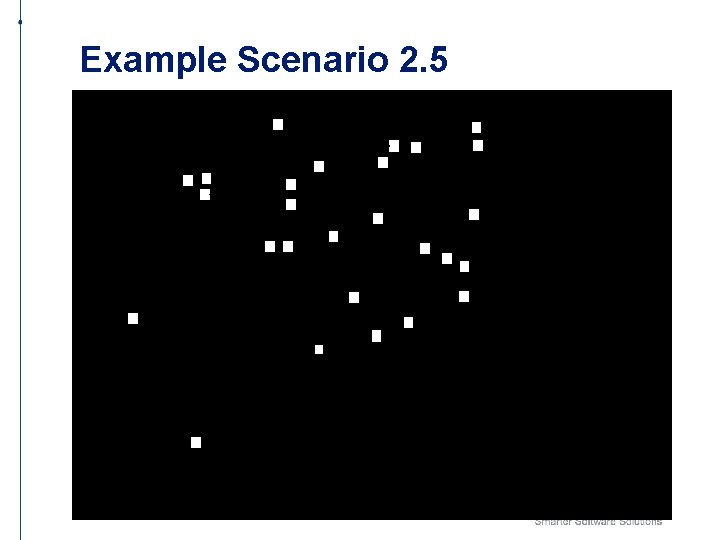
Example Scenario 2. 5
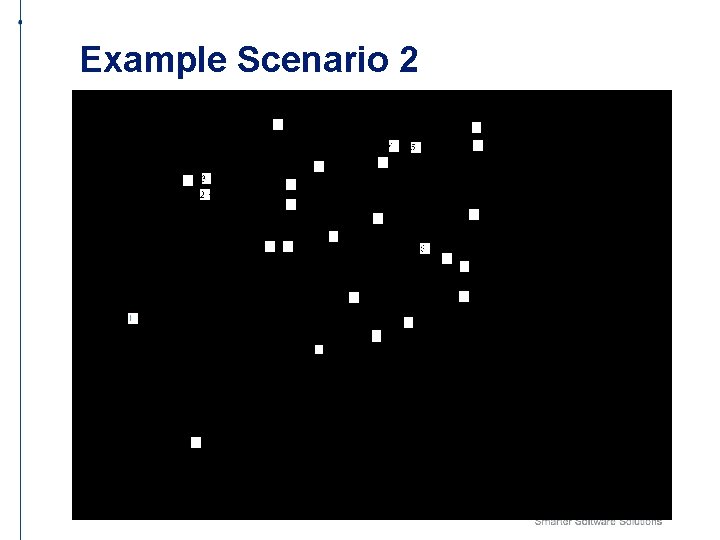
Example Scenario 2
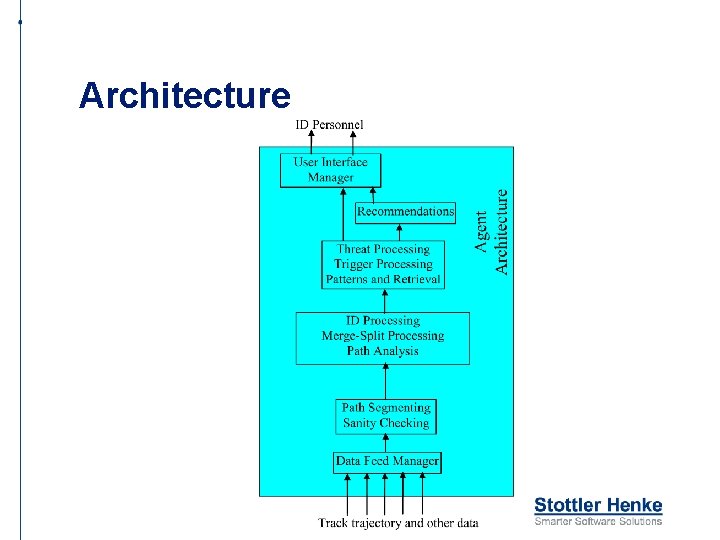
Architecture
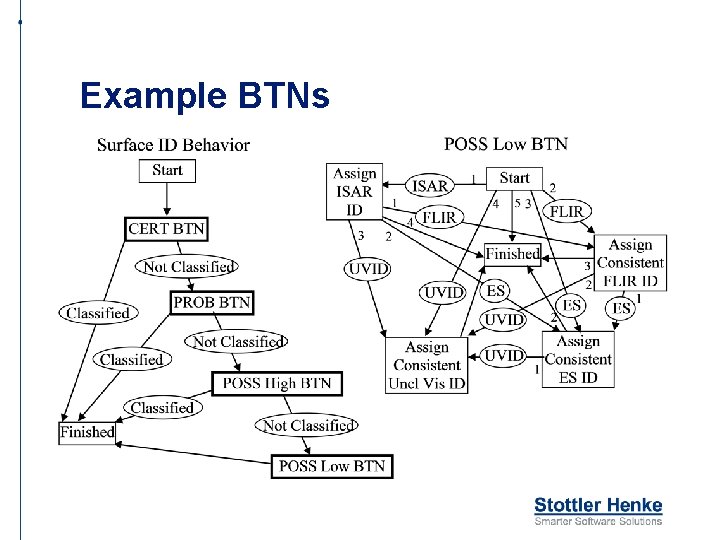
Example BTNs
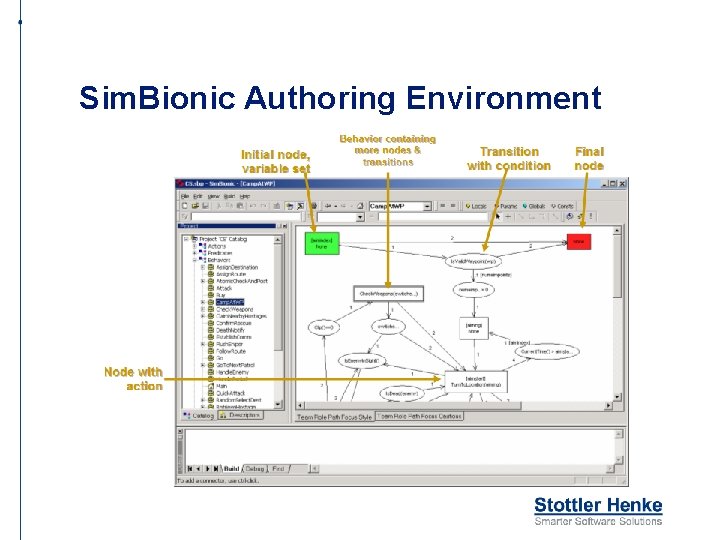
Sim. Bionic Authoring Environment
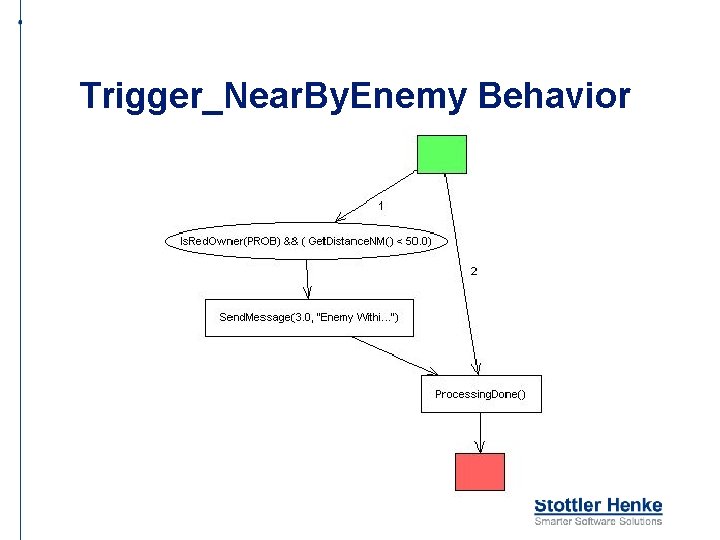
Trigger_Near. By. Enemy Behavior
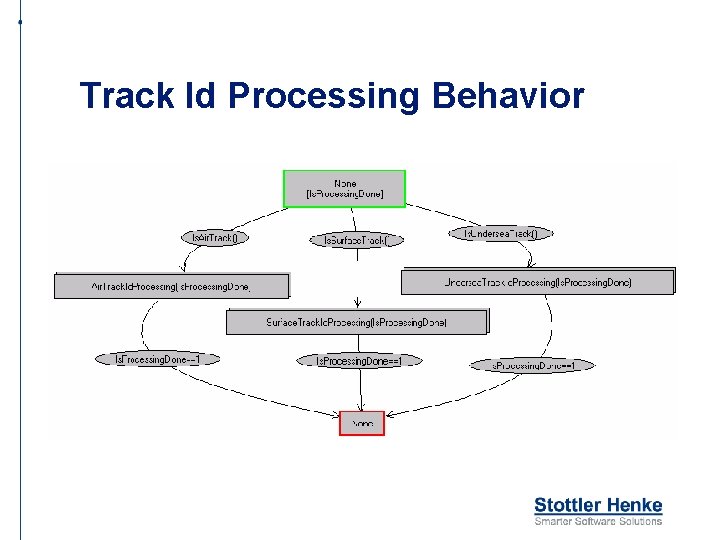
Track Id Processing Behavior
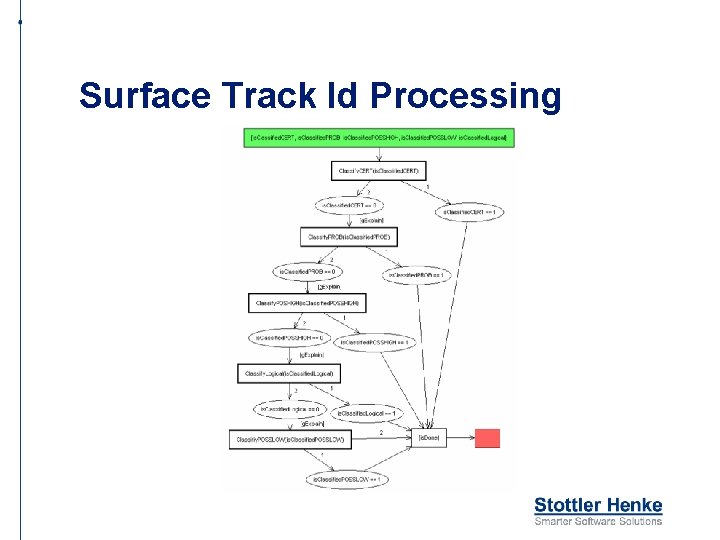
Surface Track Id Processing
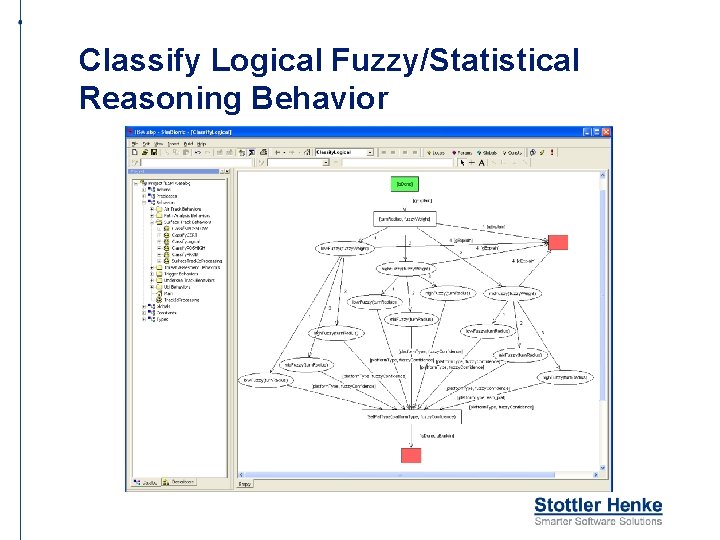
Classify Logical Fuzzy/Statistical Reasoning Behavior
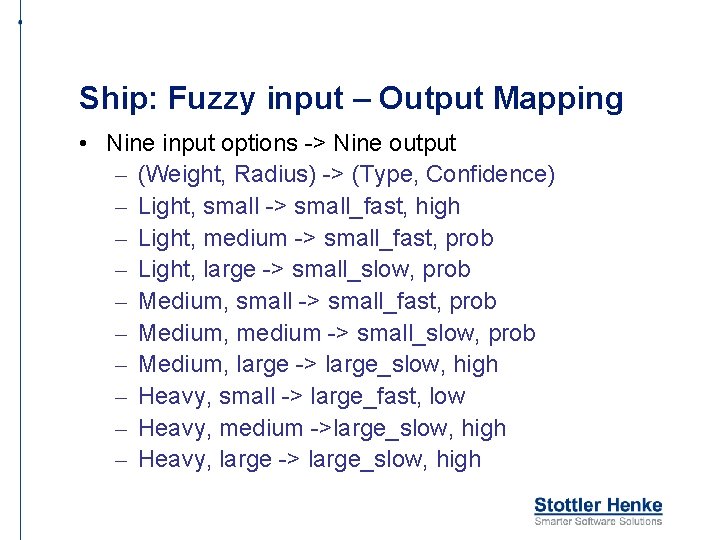
Ship: Reasoning Behavior Detail • • We combine two fuzzy values representing weight and turn radius into two more fuzzy values representing type of platform and certainty. Input values – Fuzzy weight of platform (light, medium, heavy) – Fuzzy turn radius of platform (small, medium, large) Output values – Fuzzy type of platform (small_fast, small_slow, large_fast, large_slow) – Fuzzy certainty of classification (low, probably, high) Calculation – Combining the three fuzzy weights and three fuzzy turn radii results in nine options. These nine options are then mapped into one of nine output options. – When we have small or fast data, we are more certain of our calculation – When we have conflicting input values we are less certain
Ship: Fuzzy input – Output Mapping • Nine input options -> Nine output – (Weight, Radius) -> (Type, Confidence) – Light, small -> small_fast, high – Light, medium -> small_fast, prob – Light, large -> small_slow, prob – Medium, small -> small_fast, prob – Medium, medium -> small_slow, prob – Medium, large -> large_slow, high – Heavy, small -> large_fast, low – Heavy, medium ->large_slow, high – Heavy, large -> large_slow, high
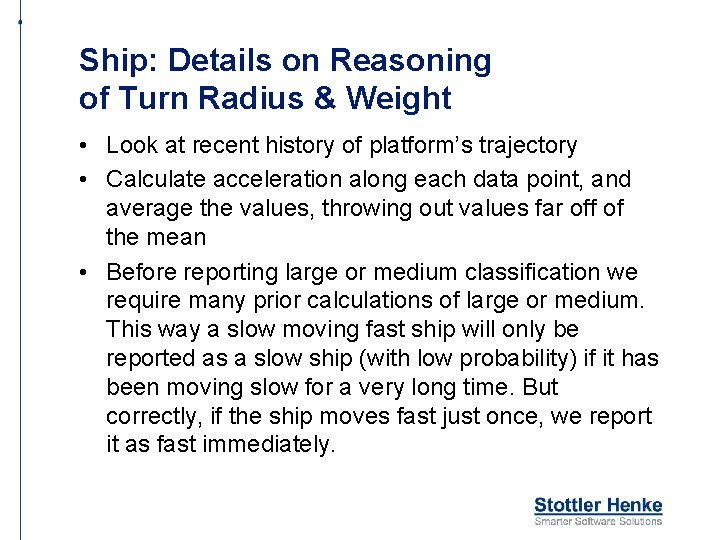
Ship: Details on Reasoning of Turn Radius & Weight • Look at recent history of platform’s trajectory • Calculate acceleration along each data point, and average the values, throwing out values far off of the mean • Before reporting large or medium classification we require many prior calculations of large or medium. This way a slow moving fast ship will only be reported as a slow ship (with low probability) if it has been moving slow for a very long time. But correctly, if the ship moves fast just once, we report it as fast immediately.
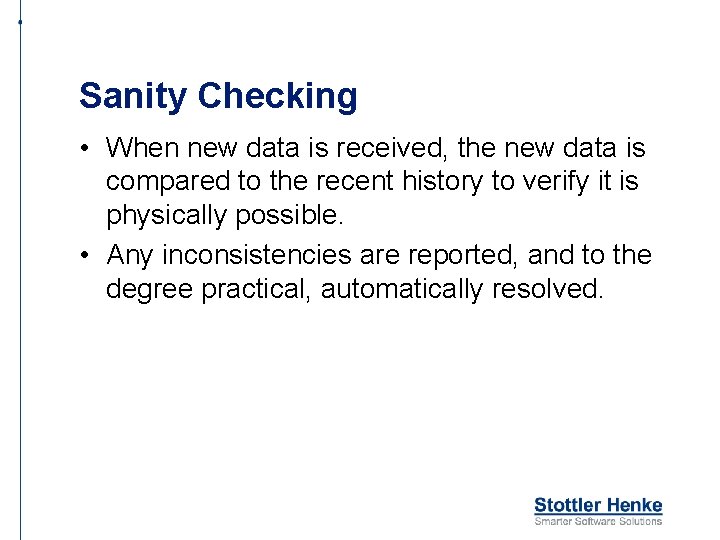
Sanity Checking • When new data is received, the new data is compared to the recent history to verify it is physically possible. • Any inconsistencies are reported, and to the degree practical, automatically resolved.
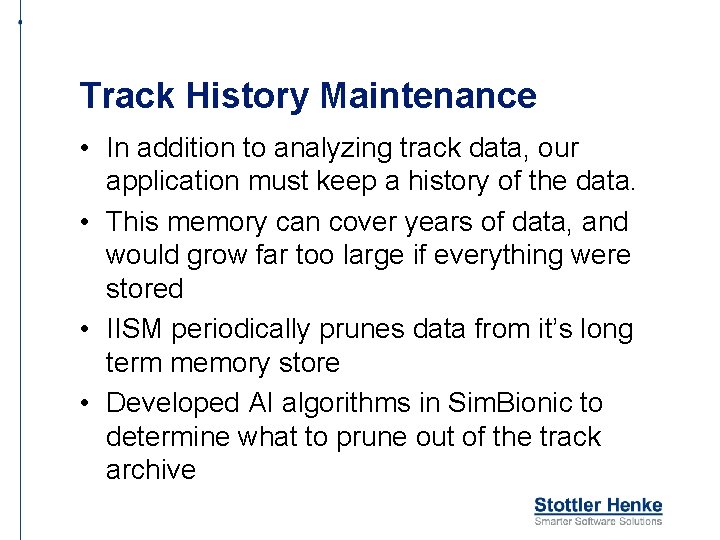
Track History Maintenance • In addition to analyzing track data, our application must keep a history of the data. • This memory can cover years of data, and would grow far too large if everything were stored • IISM periodically prunes data from it’s long term memory store • Developed AI algorithms in Sim. Bionic to determine what to prune out of the track archive
Archive Pruning • Our archive pruner is run periodically, but infrequently (on the order of every month) • The pruner examines each track history and decides how to prune it. • This decision is based on our Track. Importance. Determiner behavior written with Sim. Bionic.
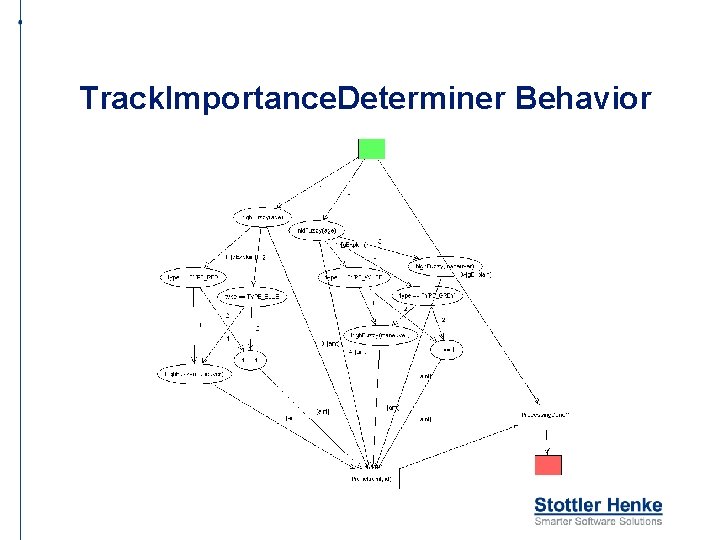
Track. Importance. Determiner Behavior
Track. Importance. Determiner Behavior • The behavior analyzes details about the track to determine how much to prune the track history from the archive • The three fuzzy metrics used to determine how much to prune the track are: – Track age • Young, old, or middle – Track owner • Friendly (blue), hostile (red), Neutral military (gray), Commercial (white) – Track movement (how often does it maneuver) • Large amount, small amount, middle amount
IISM Capabilities • Intelligent Tactical Memory: · Track attributes (position, velocity, ID information, History) · Correlate previous tracks with new track information. · Complete track history (track merge or ID swap) · Past Relevant Tracks/Patterns used to recommend/warn · Definable ID, Threat Assessment, & Notification Criteria · Intelligent Track History Analysis (position/velocity/proximity/interactions) to estimate associations & hostile intentions · Multiple Competing Hypotheses for ID (type/owner country) · Hierarchy of possible ID values (type, color/country)
Status Today • IISM developed through Phase I, II and under a subcontract to 21 st Century Systems as an add-on to the ABS (Advanced Battle Stations). • New Navy LCS related Phase I using IISM technology
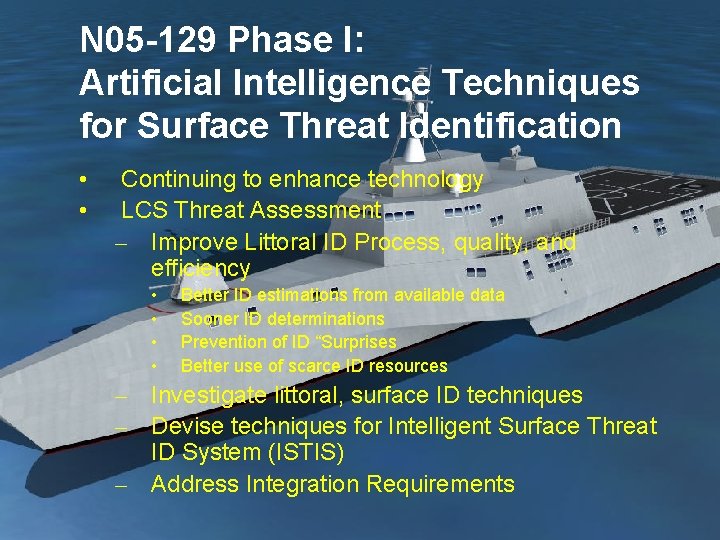
N 05 -129 Phase I: Artificial Intelligence Techniques for Surface Threat Identification • • Continuing to enhance technology LCS Threat Assessment – Improve Littoral ID Process, quality, and efficiency • • Better ID estimations from available data Sooner ID determinations Prevention of ID “Surprises Better use of scarce ID resources – Investigate littoral, surface ID techniques – Devise techniques for Intelligent Surface Threat ID System (ISTIS) – Address Integration Requirements
Conclusion • IISM is an AI module that alleviates the burdens placed on battle commanders by – tracking ambiguous signals – storing and handling past target data – assessing threat levels & notifying users of alert conditions – filtering out insane data – keeping track of multiple track hypotheses based on the fusion of evidence from multiple sources – robustly recovering from crashes and errors • Capable today and continuing to be enhanced • Interested in potential users or partners
Extra Slide
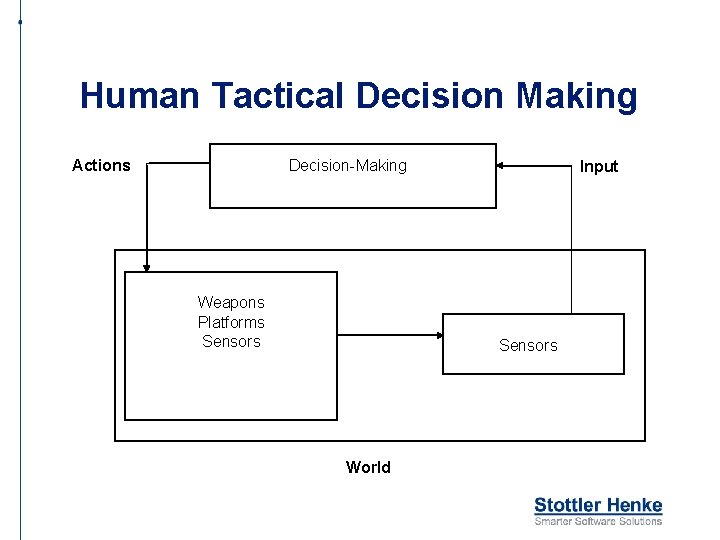
Human Tactical Decision Making Actions Decision-Making Weapons Platforms Sensors Input Sensors World
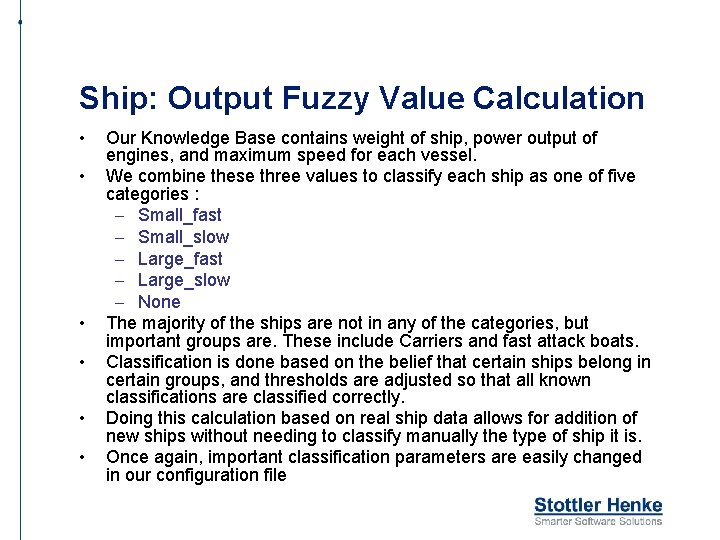
Ship: Output Fuzzy Value Calculation • • • Our Knowledge Base contains weight of ship, power output of engines, and maximum speed for each vessel. We combine these three values to classify each ship as one of five categories : – Small_fast – Small_slow – Large_fast – Large_slow – None The majority of the ships are not in any of the categories, but important groups are. These include Carriers and fast attack boats. Classification is done based on the belief that certain ships belong in certain groups, and thresholds are adjusted so that all known classifications are classified correctly. Doing this calculation based on real ship data allows for addition of new ships without needing to classify manually the type of ship it is. Once again, important classification parameters are easily changed in our configuration file
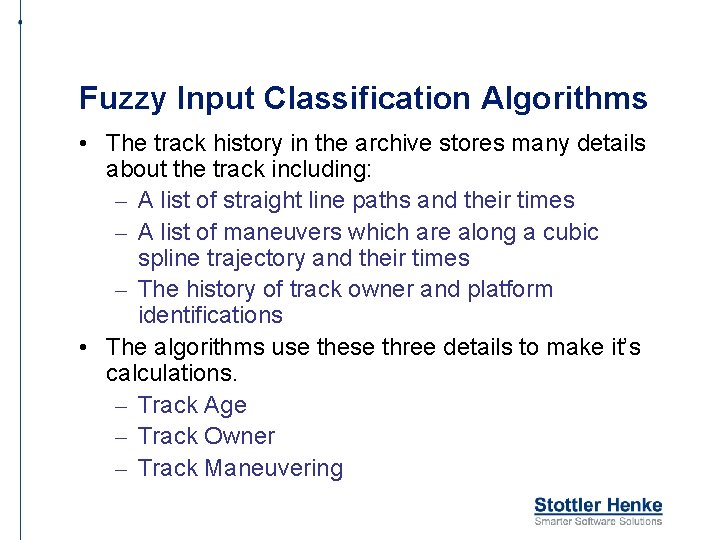
Fuzzy Input Classification Algorithms • The track history in the archive stores many details about the track including: – A list of straight line paths and their times – A list of maneuvers which are along a cubic spline trajectory and their times – The history of track owner and platform identifications • The algorithms use these three details to make it’s calculations. – Track Age – Track Owner – Track Maneuvering
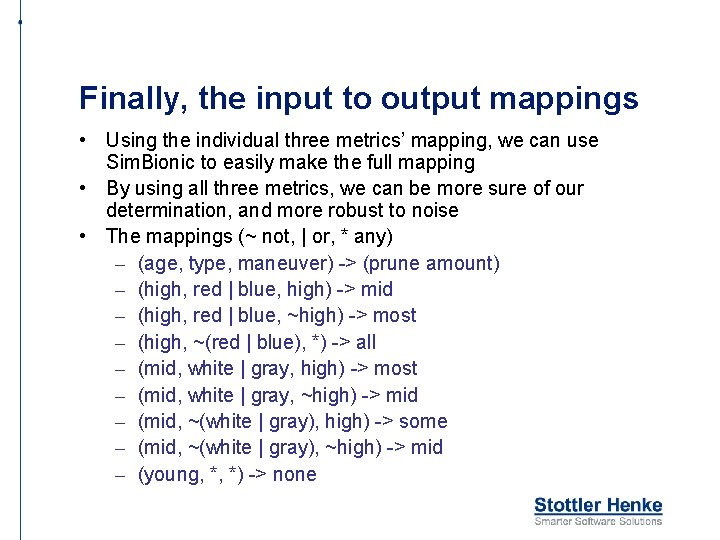
Finally, the input to output mappings • Using the individual three metrics’ mapping, we can use Sim. Bionic to easily make the full mapping • By using all three metrics, we can be more sure of our determination, and more robust to noise • The mappings (~ not, | or, * any) – (age, type, maneuver) -> (prune amount) – (high, red | blue, high) -> mid – (high, red | blue, ~high) -> most – (high, ~(red | blue), *) -> all – (mid, white | gray, high) -> most – (mid, white | gray, ~high) -> mid – (mid, ~(white | gray), high) -> some – (mid, ~(white | gray), ~high) -> mid – (young, *, *) -> none
Summary • AI techniques are used in various places because it provides many important features for our application, including: – Robustness to noise ( IISM must not fail since it will be relied upon during battle ) – Human like reasoning ( IISM emulates human reasoning, per knowledge elicitation of experts) – Easily modifiable( IISM uses graphical Sim. Bionic & a KB consisting of human editable and intuitive parameters for changing the classification regions used by the AI algorithms of IISM )