
Intelligent Detector Design Norman Graf SLAC for the
- Slides: 32
Intelligent Detector. Design Norman Graf (SLAC) (for the ALCPG Simulation & Reconstruction WG) Muon Collider Workshop November 12, 2009 Maryland Physics Department Colloquium
Lepton Collider Detector Environment • Detectors designed to exploit the physics discovery potential of lepton collisions at the Terascale. • Perform precision measurements of complex final states with well-defined initial state: – – Tunable energy Known quantum numbers (plus e─ e+ polarization) Very small interaction region Momentum constraints (modulo beam & bremsstrahlung) 2
Detector Requirements • • Desire to fully reconstruct hadronic final states Need ability to tag heavy (light) quarks Excellent missing energy/mass sensitivity a plus Require: – Exceptional momentum resolution • Large volume gaseous (TPC) or low-mass Si ( -strip) tracker – Excellent vertexing capabilities • Multi-layer pixel Vertex Detector ( ~Giga. Pixel ) – Capable calorimetry • Highly segmented (longitudinal & transverse) imaging calorimeter • Dual readout (e. g. crystals) – Hermeticity 3
LCD Simulation Mission Statement • Provide full simulation capabilities for Lepton Collider physics program: – Physics simulations – Detector designs – Reconstruction and analysis • Need flexibility for: – New detector geometries/technologies – Different reconstruction algorithms • Limited resources demand efficient solutions, focused effort. 4
Overview: Goals • Facilitate contribution from physicists in different locations with various amounts of time available. • Use standard data formats, when possible. • Provide a general-purpose framework for physics software development. • Develop a suite of reconstruction and analysis algorithms and sample codes. • Simulate benchmark physics processes on different full detector designs. 5
Fast Detector Response Simulation • Covariantly smear tracks with matrices derived from geometry, materials and point resolution using Billoir’s formulation. – Analytically from geometry description. • Smear neutrals according to expected calorimeter resolution (EM for , HAD for neutral hadrons) – Derived from full Geant 4 simulations • Create reconstructed particles from tracks and clusters ( , e, from MC, +/-, K 0 L for others) • Can also dial in arbitrary effective jet energy resolution. – Derived from full simulation, reconstruction & analysis. 6
lelaps • Fast detector response package. • Handles decays in flight, multiple scattering and energy loss in trackers. • Parameterizes particle showers in calorimeters. • Produces detector data at the hit level. – Feeds directly into full reconstruction. • Uses runtime geometry (compact. xml godl). 7
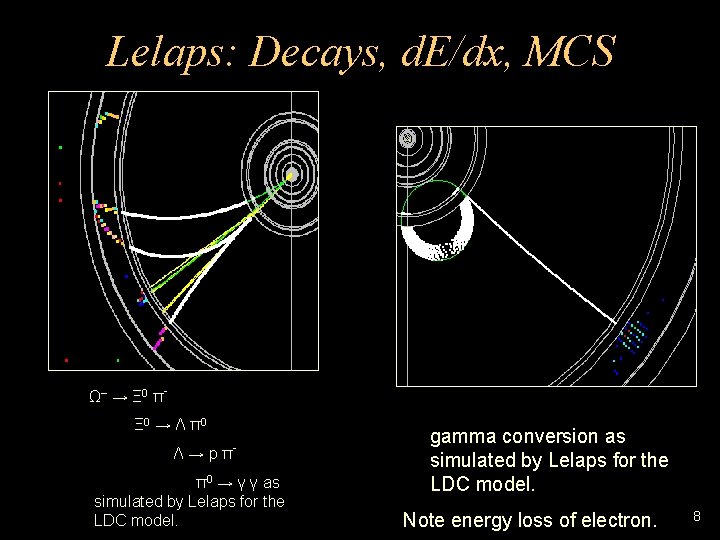
Lelaps: Decays, d. E/dx, MCS Ω- → Ξ 0 π Ξ 0 → Λ π0 Λ→pπ - π0 → γ γ as simulated by Lelaps for the LDC model. gamma conversion as simulated by Lelaps for the LDC model. Note energy loss of electron. 8
Detector Design (GEANT 4) • Need to be able to flexibly, but believably simulate the detector response for various designs. • GEANT is the de facto standard for HEP physics simulations. • Use runtime configurable detector geometries • Write out “generic” hits to digitize later. 9
Full Detector Response Simulation • Use Geant 4 toolkit to describe interaction of particles with matter. • Thin layer of LC-specific C++ provides access to: – Event Generator input ( binary stdhep format ) – Detector Geometry description ( XML ) – Detector Hits ( LCIO ) • Geometries fully described at run-time! – In principle, as fully detailed as desired. 10
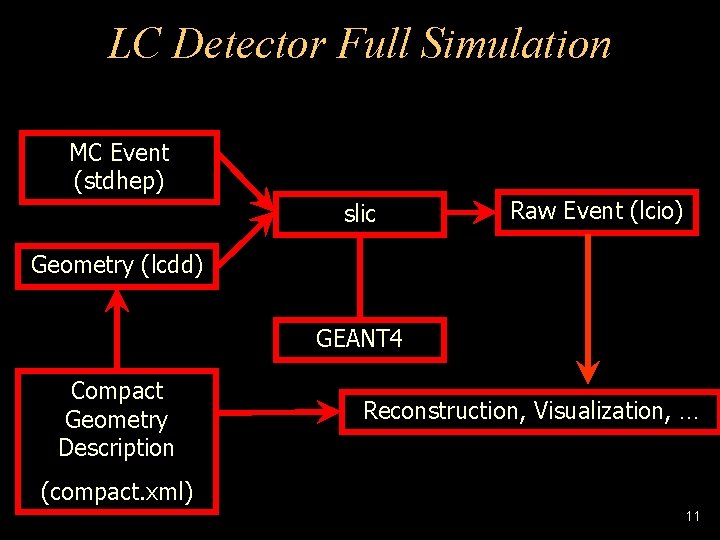
LC Detector Full Simulation MC Event (stdhep) slic Raw Event (lcio) Geometry (lcdd) GEANT 4 Compact Geometry Description Reconstruction, Visualization, … (compact. xml) 11
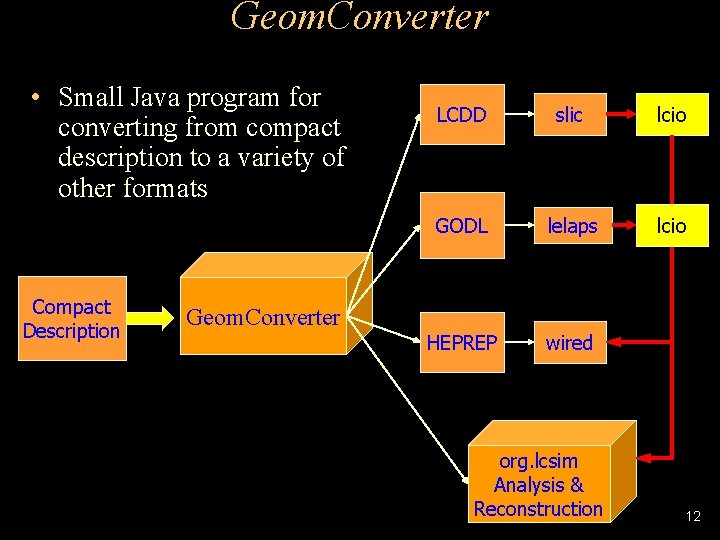
Geom. Converter • Small Java program for converting from compact description to a variety of other formats Compact Description LCDD slic lcio GODL lelaps lcio HEPREP wired Geom. Converter org. lcsim Analysis & Reconstruction 12
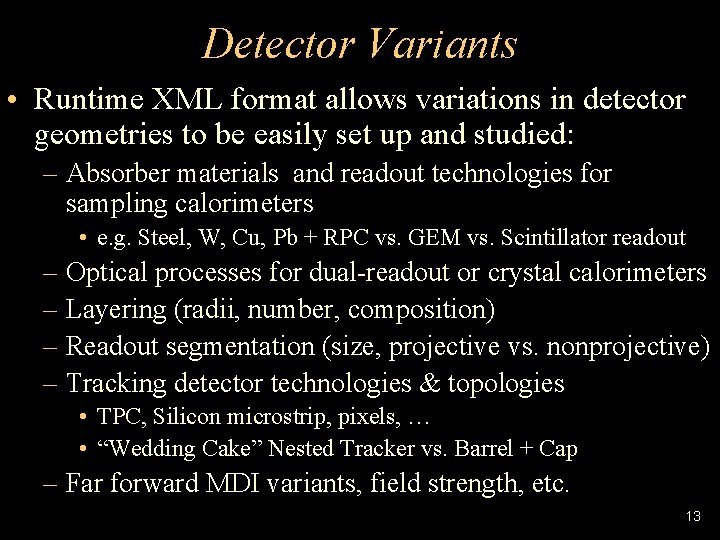
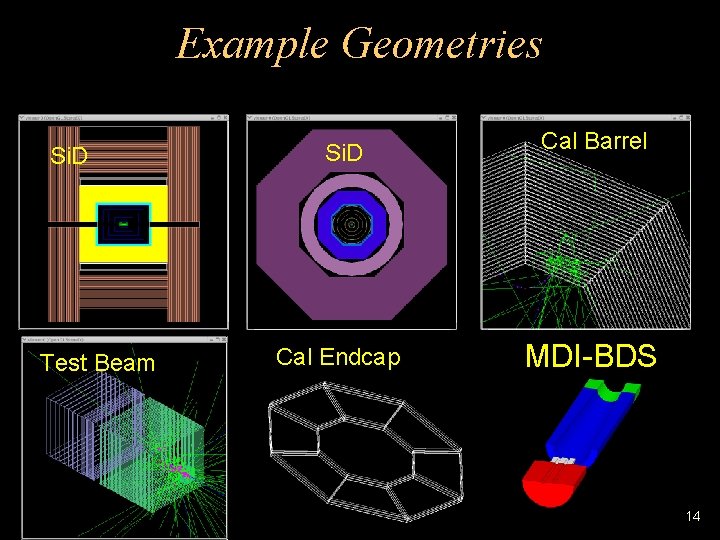
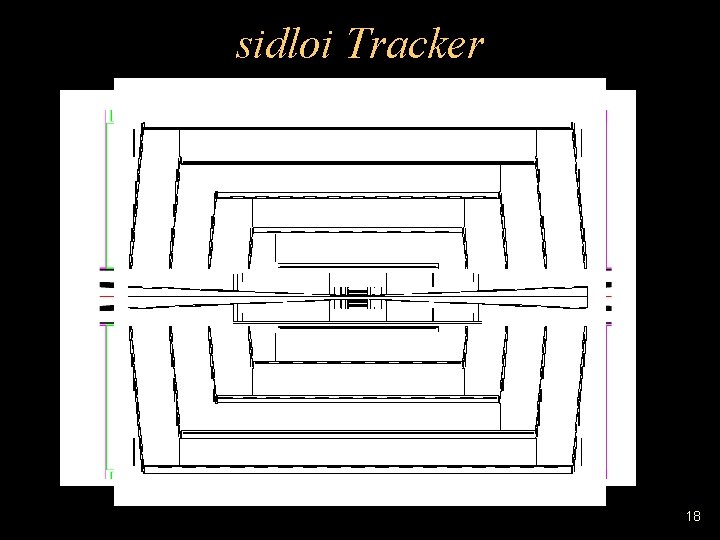
Detector Variants • Runtime XML format allows variations in detector geometries to be easily set up and studied: – Absorber materials and readout technologies for sampling calorimeters • e. g. Steel, W, Cu, Pb + RPC vs. GEM vs. Scintillator readout – Optical processes for dual-readout or crystal calorimeters – Layering (radii, number, composition) – Readout segmentation (size, projective vs. nonprojective) – Tracking detector technologies & topologies • TPC, Silicon microstrip, pixels, … • “Wedding Cake” Nested Tracker vs. Barrel + Cap – Far forward MDI variants, field strength, etc. 13
Example Geometries Si. D Test Beam Si. D Cal Barrel Cal Endcap MDI-BDS 14
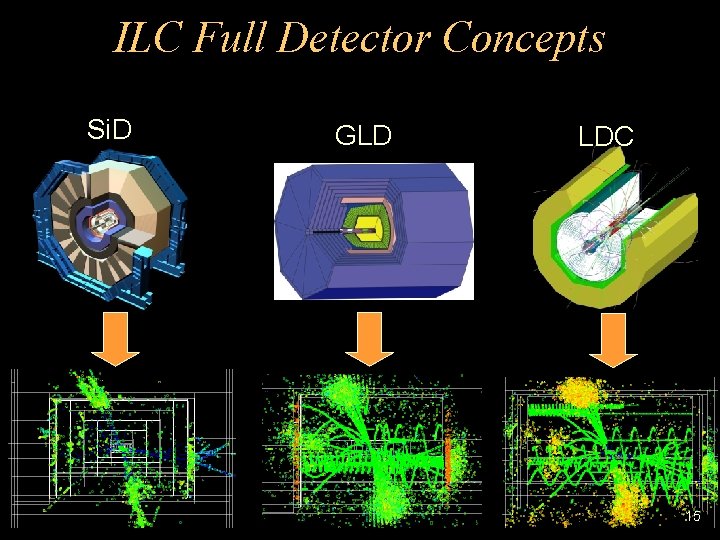
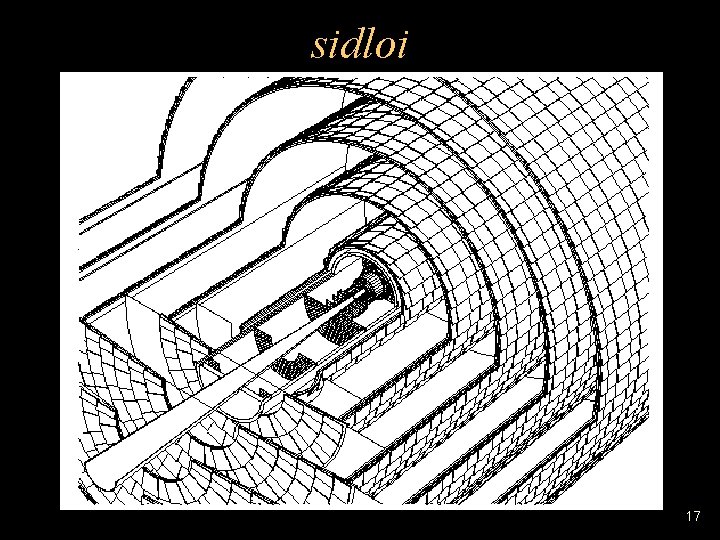
ILC Full Detector Concepts Si. D GLD LDC 15
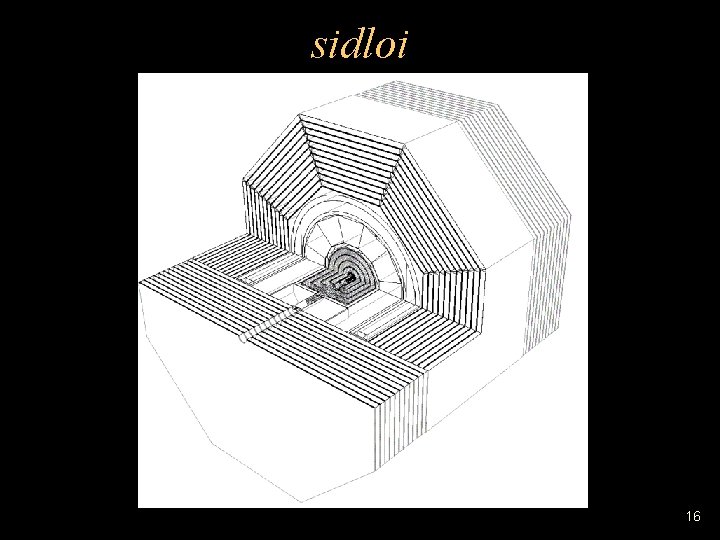
sidloi 16
sidloi 17
sidloi Tracker 18
slic: The Executable • Build static executables on Linux, Windows, Mac. • Commandline or G 4 macro control. • Only dependence is local detector description file. – Trivial Grid usage (no database call-backs, etc. ) – Grid ready, Condor and lsf scripts available. • • • Event input via stdhep, particle gun, … Detector input via GDML, lcdd Response output via LCIO using generic hits. Fast (~30 s vs >1 hr for ILCRoot) No license requirement 19
fluka license issue • Subject: Important clarification about the use of the fluka -vmc interface – Please, take note that the use of FLUKA through the Virtual Monte Carlo interface, developed in the Alice experiment at CERN, is not generally allowed under the FLUKA license. – Apart special authorizations given to members of the Alice, Panda, CBM, and ILC study group Collaborations (and limited to uses for those Collaborations only), no other use of FLUKA with this interface is allowed, unless an authorization is asked for and granted. – Whoever has downloaded the fluka-vmc interface and is not part of the authorized groups, or anyway plans to use FLUKA through that interface for other purposes, is kindly invited to stop immediately those activities and revert to the use of the standalone code. The Fluka development team 20
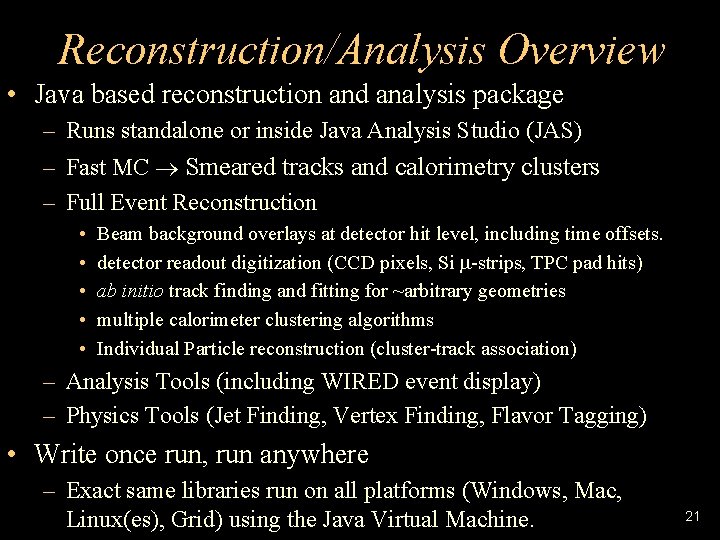
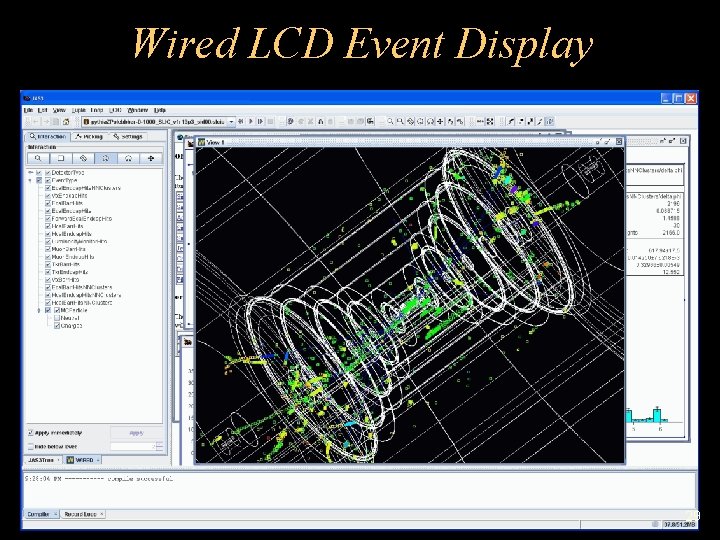
Reconstruction/Analysis Overview • Java based reconstruction and analysis package – Runs standalone or inside Java Analysis Studio (JAS) – Fast MC Smeared tracks and calorimetry clusters – Full Event Reconstruction • • • Beam background overlays at detector hit level, including time offsets. detector readout digitization (CCD pixels, Si -strips, TPC pad hits) ab initio track finding and fitting for ~arbitrary geometries multiple calorimeter clustering algorithms Individual Particle reconstruction (cluster-track association) – Analysis Tools (including WIRED event display) – Physics Tools (Jet Finding, Vertex Finding, Flavor Tagging) • Write once run, run anywhere – Exact same libraries run on all platforms (Windows, Mac, Linux(es), Grid) using the Java Virtual Machine. 21
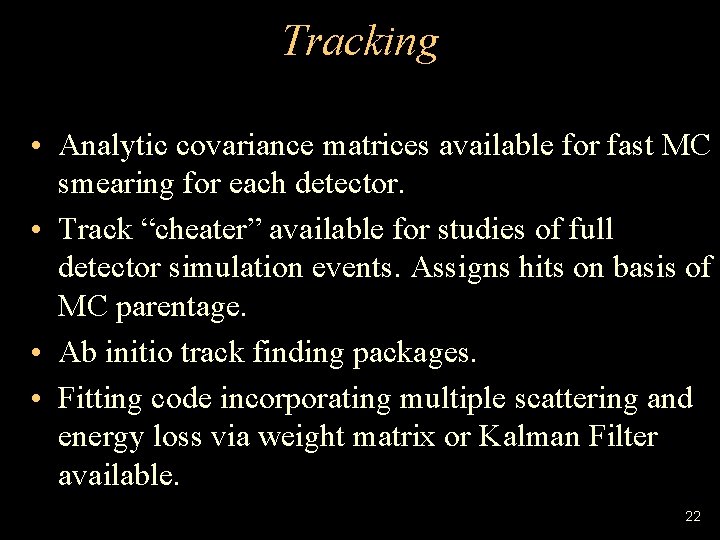
Tracking • Analytic covariance matrices available for fast MC smearing for each detector. • Track “cheater” available for studies of full detector simulation events. Assigns hits on basis of MC parentage. • Ab initio track finding packages. • Fitting code incorporating multiple scattering and energy loss via weight matrix or Kalman Filter available. 22
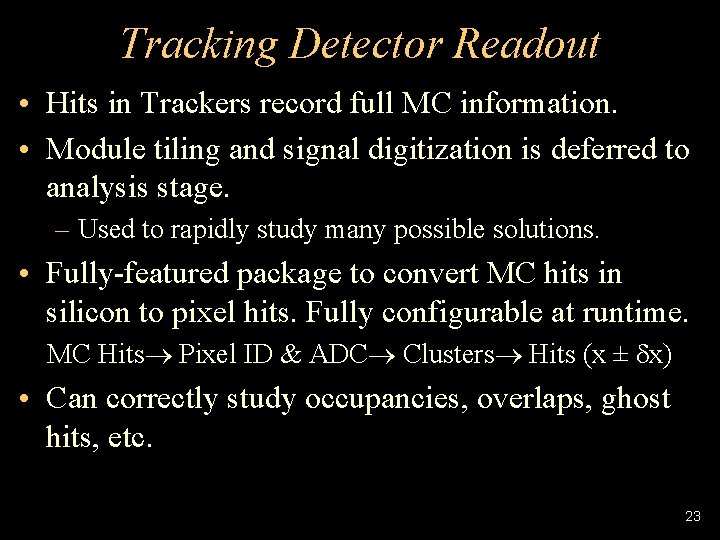
Tracking Detector Readout • Hits in Trackers record full MC information. • Module tiling and signal digitization is deferred to analysis stage. – Used to rapidly study many possible solutions. • Fully-featured package to convert MC hits in silicon to pixel hits. Fully configurable at runtime. MC Hits Pixel ID & ADC Clusters Hits (x ± x) • Can correctly study occupancies, overlaps, ghost hits, etc. 23
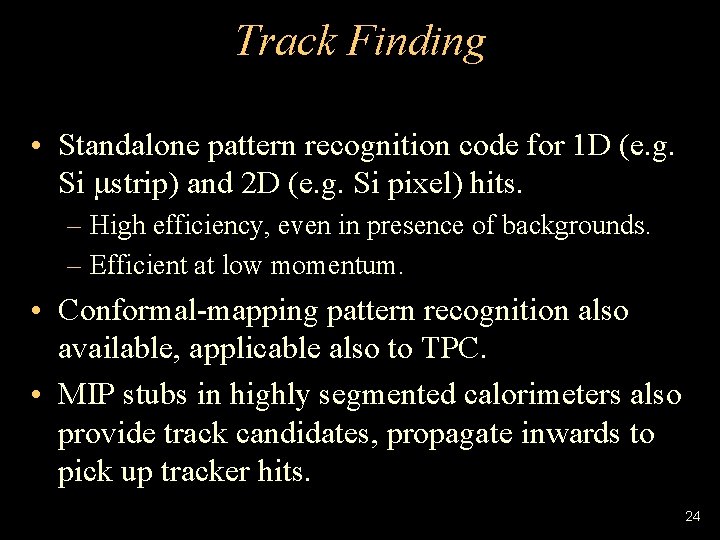
Track Finding • Standalone pattern recognition code for 1 D (e. g. Si strip) and 2 D (e. g. Si pixel) hits. – High efficiency, even in presence of backgrounds. – Efficient at low momentum. • Conformal-mapping pattern recognition also available, applicable also to TPC. • MIP stubs in highly segmented calorimeters also provide track candidates, propagate inwards to pick up tracker hits. 24
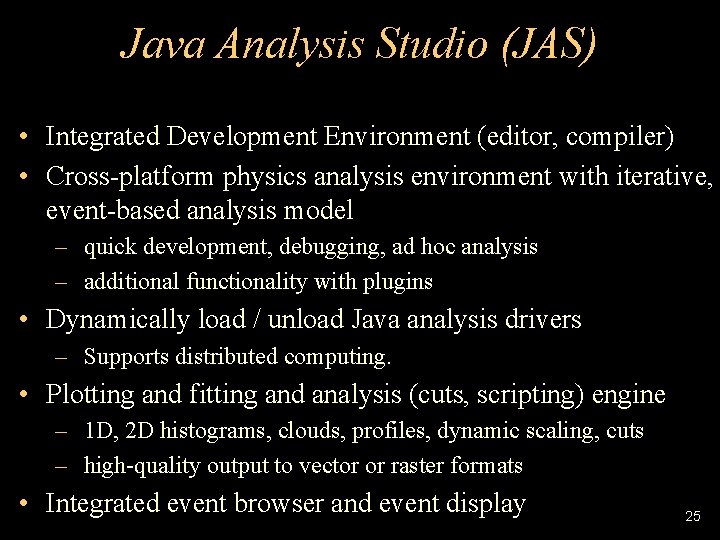
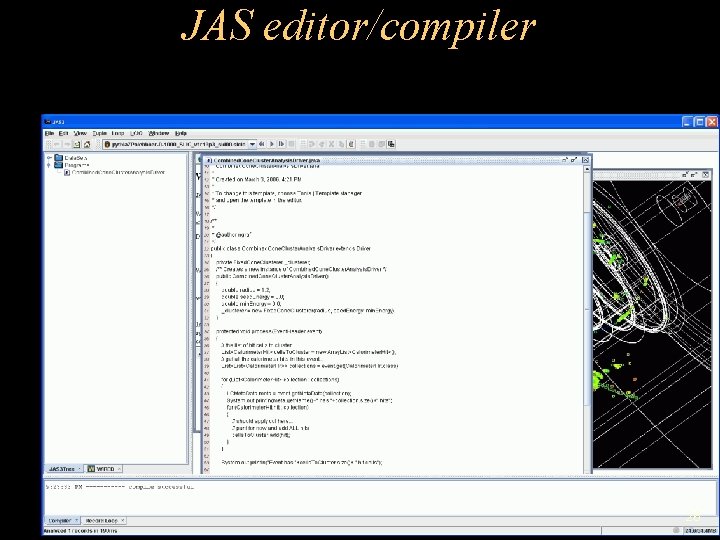
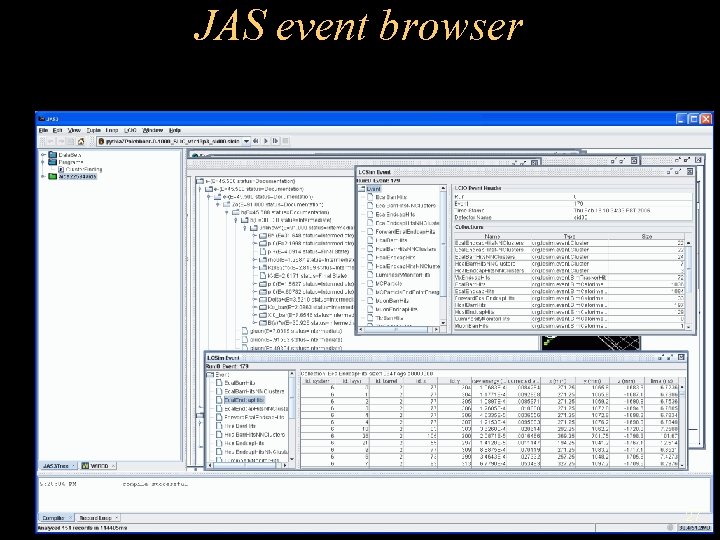
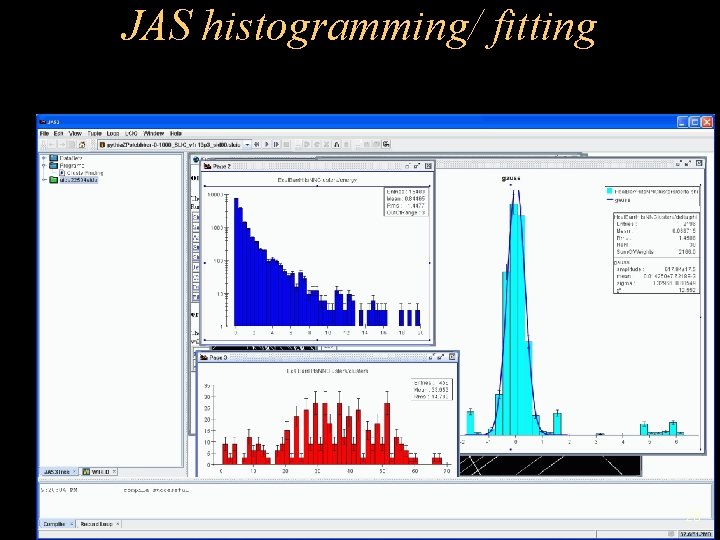
Java Analysis Studio (JAS) • Integrated Development Environment (editor, compiler) • Cross-platform physics analysis environment with iterative, event-based analysis model – quick development, debugging, ad hoc analysis – additional functionality with plugins • Dynamically load / unload Java analysis drivers – Supports distributed computing. • Plotting and fitting and analysis (cuts, scripting) engine – 1 D, 2 D histograms, clouds, profiles, dynamic scaling, cuts – high-quality output to vector or raster formats • Integrated event browser and event display 25
JAS editor/compiler 26
JAS event browser 27
JAS histogramming/ fitting 28
Wired LCD Event Display 29
Validated • This suite of software tools provides: – Physics event generation & bindings to most legacy generators through the stdhep format. – Full detector response simulation using precompiled binaries & runtime geometry definition (no coding!). – Full detector digitization (x-talk, noise, diffusion, etc. ) – Hit-level overlay of arbitrary background events. – Access to other LCIO-compliant software frameworks. – Full ab-initio event reconstruction and analysis suites. – Tested on hundreds of millions of events. • “From zero to analysis in 15 minutes. ” 30
Simulation Summary • ALCPG sim/reco supports an ambitious international detector simulation effort. Goal is flexibility and interoperability. • Provides a complete and flexible detector simulation package capable of simulating arbitrarily complex detectors with runtime detector description. • Reconstruction & analysis framework was used to characterize the Silicon Detector and was essential to that concept’s successful validation in the LOI process. • Currently being used for CLIC studies. • Being used to design Linear Collider Detectors, but has also been applied to other application domains. 31
Additional Information • Wiki http: //confluence. slac. stanford. edu/display/ilc/Home • lcsim. org - http: //www. lcsim. org • ILC Forum - http: //forum. linearcollider. org • LCIO - http: //lcio. desy. de • SLIC - http: //www. lcsim. org/software/slic • LCDD - http: //www. lcsim. org/software/lcdd • JAS 3 - http: //jas. freehep. org/jas 3 • AIDA - http: //aida. freehep. org • WIRED - http: //wired. freehep. org 32