
Intelligence Quotient Vs Emotional Intelligence Presented by Prof
Intelligence Quotient Vs Emotional Intelligence Presented by Prof. Dr. Ko Ko Rector, UDM, Mdy


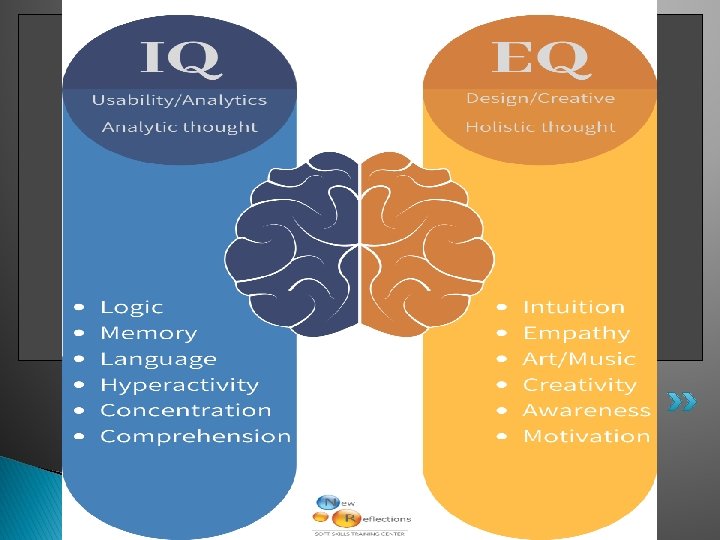
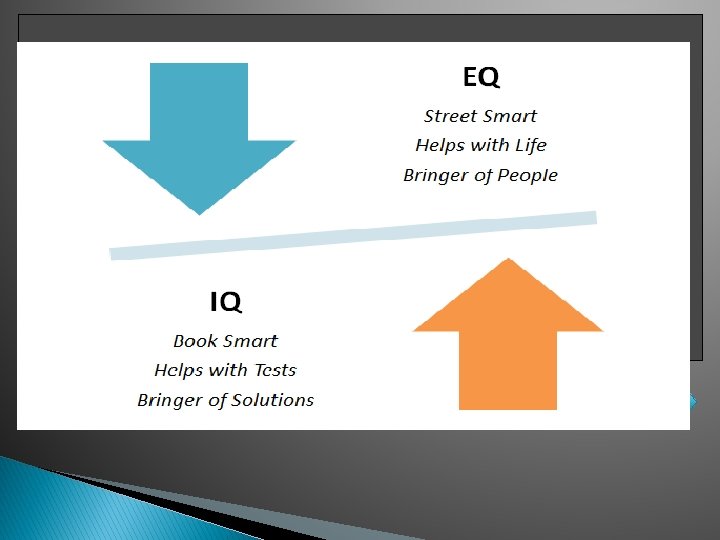
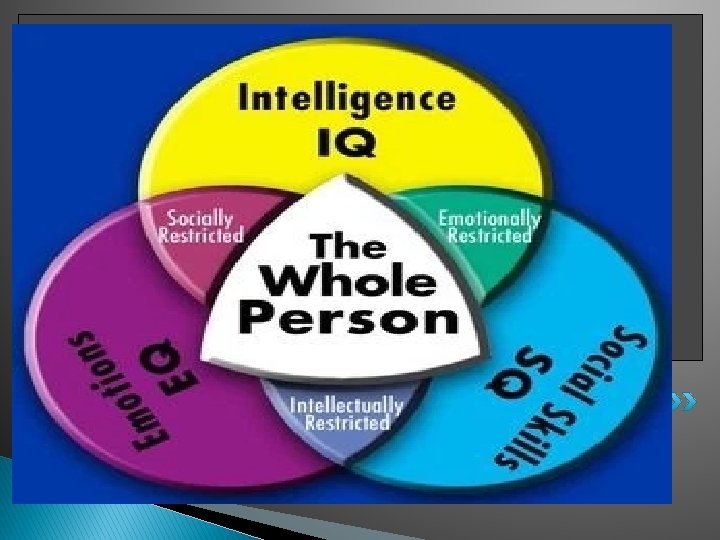
� Def: of Intelligence Quotient (IQ): - The ability to learn and solve problems effectively An intelligence quotient (IQ) is a total score derived from a set of standardized tests or subtests designed to assess human intelligence
IQ scores are used for assessment of intellectual disability and evaluating job applicants. In research contexts, studied as predictors of job performance and income.
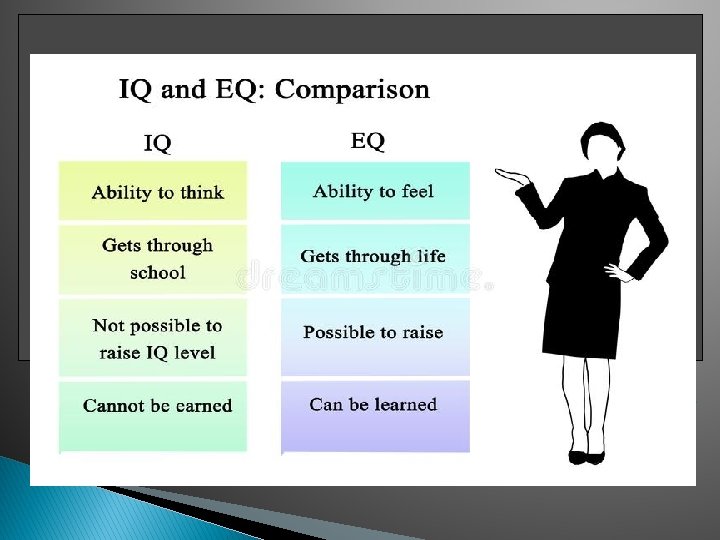
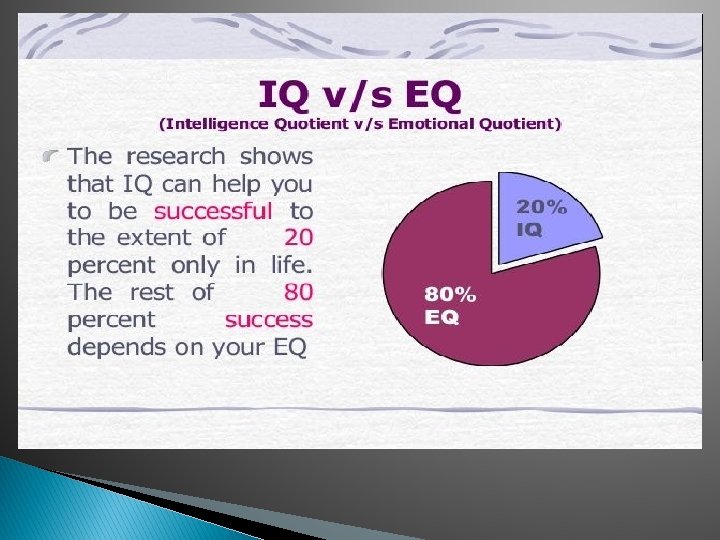
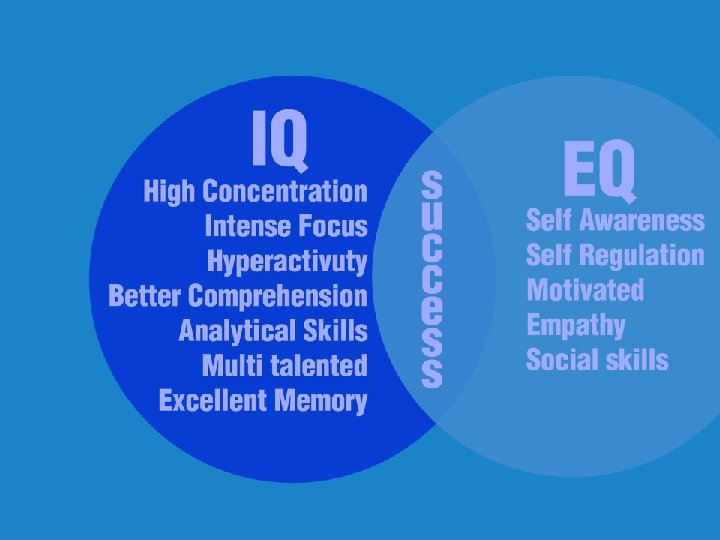
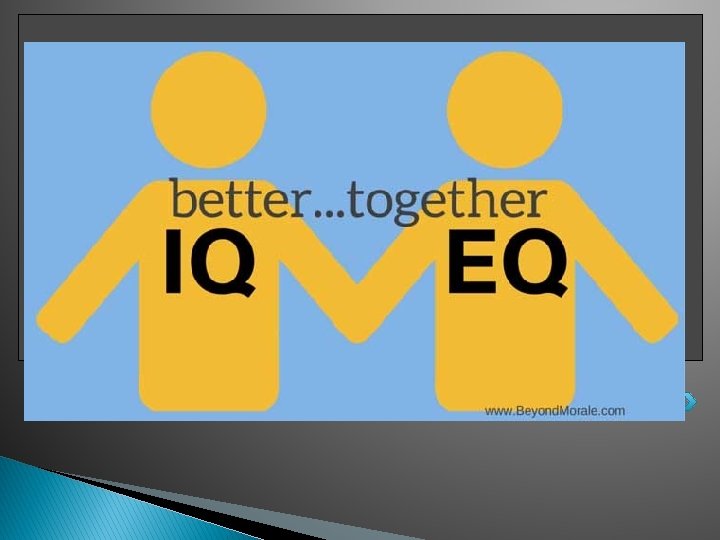
� Emotional Intelligence (EQ) Emotional intelligence is distinct from IQ. “EQ is the level of your ability to understand other people, what motivates them and how to work cooperatively with them, ” ( Howard Gardner) EQ is far more important and valuable than IQ.
� Def: of Emotional Intelligence (EI): - The ability to process painful emotions in healthy and effective ways (From Wikipedia, the free encyclopedia) EI = EQ = EIQ is the capability of individuals to recognize their own emotions and those of others, discern between different feelings and label them appropriately, use emotional information to guide thinking and behavior and manage and/or adjust emotions to adapt to environments or achieve one’s goal.
� The term “emotional intelligence” first appeared in a 1964 by Michael Beldoch and in the 1966 by B. Leuner, and EI book written by the science journalist in 1995 by Danial Goleman
� In 1983, Howard Gardner introduced the idea that traditional types of intelligences such as IQ, and the idea of multiple intelligences which included both interpersonal intelligence (the capacity to understand the intentions, motivations and desires of other people) and
intrapersonal intelligence ( the capacity to understand oneself, to appreciate one’s feelings, fears and motivations).
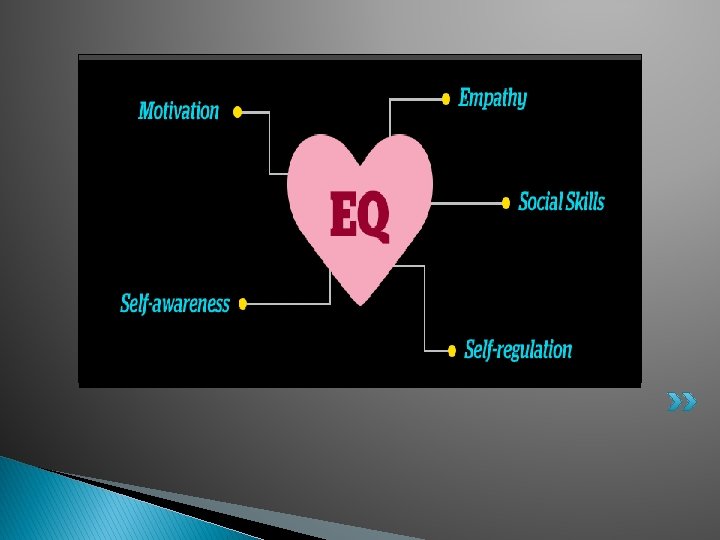
� Goleman outlined a five-part model of what constitutes EQ. Each involves a different ability in managing and understanding emotion. Self-awareness: This is the ability to recognize and identify personal emotions, moods and drives. It also includes the effect on others.
� Self-regulation: An important part of EQ is the ability to control or deflect impulses or moods that may disrupt emotions. Also included in self-regulation is the propensity to think before acting and removing extreme emotions from judgment.
� Motivation: This component involves setting clear goals and pushing toward achieving them. Having a positive attitude and forward drive is also included. � Empathy: This category describes how people recognize the feelings of others and what they do with those feelings. Individuals with high empathy will offer corresponding responses to those they care about and love.
� Social skills: The final part of EQ involves the interpersonal skills people use on a daily basis. This includes collaboration, cooperation, conflict management, influence on others and handling change.
� Def: of Emotional Intelligence (EI-2): has been defined by Peter Salovey and John Mayer as “the ability to monitor one’s own and other people’s emotions, to discriminate between different emotions and label them appropriately, and to use emotional information to guide thinking and behavior”.
� Above EI definition was refined into four proposed abilities: perceiving, using, understanding, and managing emotions. � EI reflects abilities to join intelligence, empathy and emotions to enhance thought and understanding of interpersonal dynamics.
� Empathy is typically associated with EI, because it relates to an individual connecting their personal experiences with those of others � There are currently several models of EI to measure levels of empathy
� Goleman’s original model (mixed model)= Ability EI + Trait EI � Goleman defined EI as the array of skills and characteristics that drive leadership performance (array=arrangement)
� The trait model was developed by Konstantinos V. Petrides in 2001. � It encompasses behavioral dispositions and self perceived abilities and is measured through self report
� The ability model developed by Peter Salovey and John Mayer in 2004, focuses on the individual’s ability to process emotional information and use it to navigate the social environment � High EI have greater mental health, job performance and leadership skills

- Slides: 30