
INTELLECTUAL AND DEVELOPMENTAL DISABILITIES Neurodevelopmental Disorders Removal of
INTELLECTUAL AND DEVELOPMENTAL DISABILITIES
Neurodevelopmental Disorders • Removal of the category “Disorders Usually First Diagnosed in Infancy, Childhood or Adolescence”. • This category contained 10 subcategories of disorders, including mental retardation, learning disorders, motor skills disorder, communication disorders, pervasive developmental disorders, attention-deficit and disruptive behavior disorders, feeding and eating disorders of infancy or early childhood, tic disorders, elimination disorders, and other disorders of infancy childhood or adolescence (e. g. , separation anxiety disorder, selective mutism, reactive attachment disorder of infancy or early childhood, stereotypic movement disorder, and disorder of infancy, childhood, or adolescence not otherwise specified [NOS]).
• DSM-5 has relocated separation anxiety disorder and selective mutism within the chapter on Anxiety Disorders and • Disruptive behavior disorders was moved to the chapter on Disruptive, Impulse-Control, and Conduct Disorders. • Feeding and eating disorders of infancy or early childhood can now be found in the chapter on Feeding and Eating Disorders.
• Andrews, Pine, Hobbs, Anderson, and Sunderland’s (2009) meta-analysis. • Intellectual disability, autism spectrum disorders, motor disorders, communication disorders, learning disorders, and ADHD. • They often share comorbidity (intellectual disability and ASD; ADHD and specific learning disorders). • The disorders represent a range of neurodevelopmental impairments and functioning from global (global developmental delay) to more specific deficits (executive functioning deficits).
INTELLECTUAL DISABILITY • Intellectual disability (previously mental retardation) is not actually a medical condition or psychiatric diagnosis and is not really a psychiatric disorder, although it is listed in psychiatric diagnostic manuals • Intellectual disability is most often used as an administrative label to designate individuals who have subnormal intellectual functioning (usually an IQ below 70) with associated deficits in other areas of adaptive functioning.
• Use of intelligence tests • According to DSM V, Intellectual Disability is subnormal intellectual functioning accompanied by dysfunction or impairment in two adaptive areas, while the ICD-10 (WHO, 1993) refers to MR as arrested or incomplete development of the mind resulting in impairment of skills. • The American Association on Mental Retardation (AAMR, now American Association on Intellectual and Developmental Disabilities (AAIDD) from January 2007) lobbied hard for inclusion of multiple criteria in the determination of intellectual disability.
Classification of ID • There are currently three primary systems of classification of ID in North America: the DSM-5 (APA, 2013), the AAIDD (2009 a), and the educational system (IDEA, 2004; see Federal Register, 2006). • These three systems agree on three important factors to be considered in the identification of ID, including IQ cutoff scores, deficits in adaptive functioning, and age of onset (prior to 18 years of age).
DSM V • According to the DSM-5, three criteria are necessary for a diagnosis of an intellectual disability, 1. Significantly subaverage intellectual functioning (below an IQ of approximately 70, approximately two standard deviations below the mean, including a margin of+/− 5 points for measurement error, e. g. , 65– 75) 2. Concurrent deficits or limitations in adaptive functioning (conceptual, social, practical domains), limiting functioning in one or more life activities (e. g. , communication, independent living) 3. Onset before the age of 18 years. • The reason that the score is suggested as “approximately 70” is to allow for the standard error of measurement. • Intelligence test scores can predict within a 95% accuracy rate. In the case of an IQ score of 70, that would translate to an IQ range of 65 to 75. Four levels of severity of MR based on intellectual functioning and associated expectations: mild, moderate, severe, and profound.
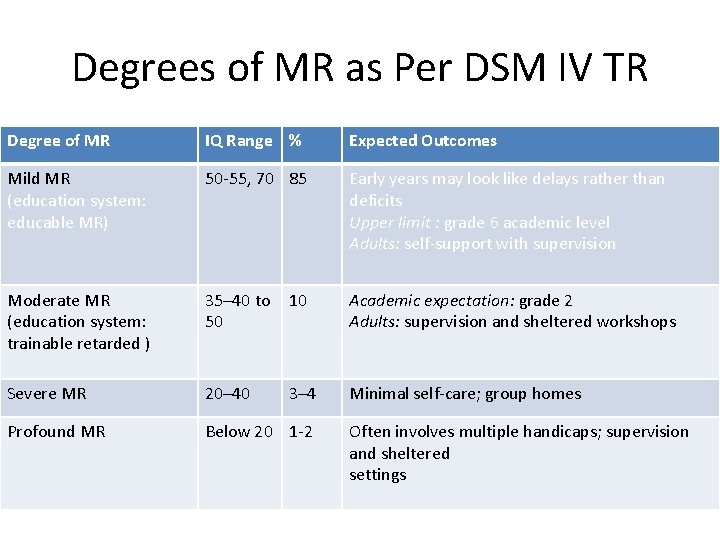
Degrees of MR as Per DSM IV TR Degree of MR IQ Range % Expected Outcomes Mild MR (education system: educable MR) 50 -55, 70 85 Early years may look like delays rather than deficits Upper limit : grade 6 academic level Adults: self-support with supervision Moderate MR (education system: trainable retarded ) 35– 40 to 50 10 Academic expectation: grade 2 Adults: supervision and sheltered workshops Severe MR 20– 40 3– 4 Minimal self-care; group homes Profound MR Below 20 1 -2 Often involves multiple handicaps; supervision and sheltered settings
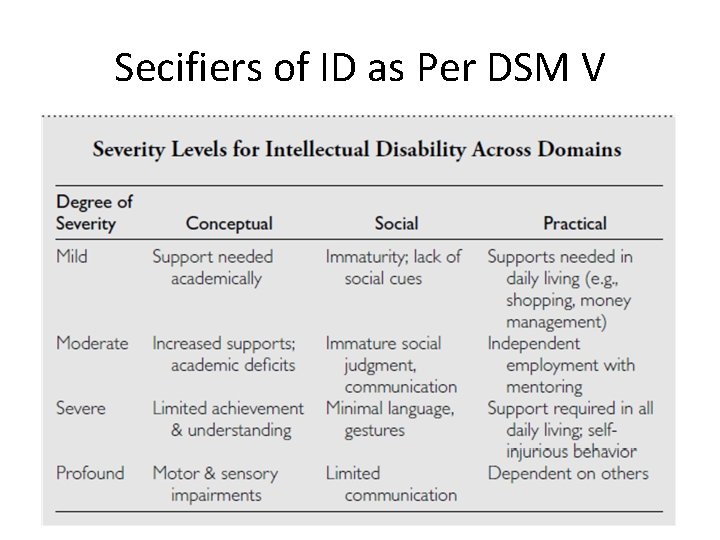
Secifiers of ID as Per DSM V
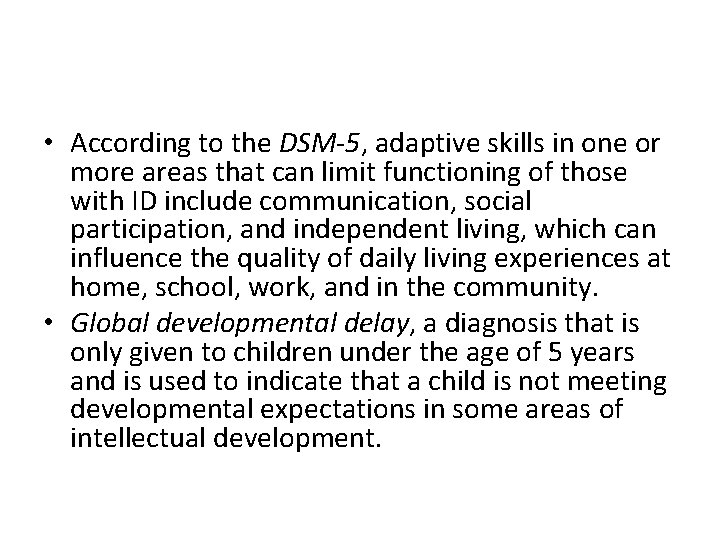
• According to the DSM-5, adaptive skills in one or more areas that can limit functioning of those with ID include communication, social participation, and independent living, which can influence the quality of daily living experiences at home, school, work, and in the community. • Global developmental delay, a diagnosis that is only given to children under the age of 5 years and is used to indicate that a child is not meeting developmental expectations in some areas of intellectual development.
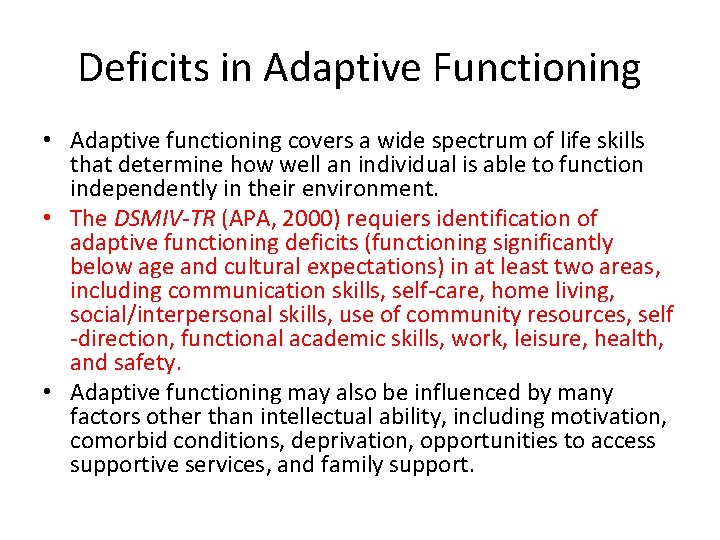
Deficits in Adaptive Functioning • Adaptive functioning covers a wide spectrum of life skills that determine how well an individual is able to function independently in their environment. • The DSMIV-TR (APA, 2000) requiers identification of adaptive functioning deficits (functioning significantly below age and cultural expectations) in at least two areas, including communication skills, self-care, home living, social/interpersonal skills, use of community resources, self -direction, functional academic skills, work, leisure, health, and safety. • Adaptive functioning may also be influenced by many factors other than intellectual ability, including motivation, comorbid conditions, deprivation, opportunities to access supportive services, and family support.
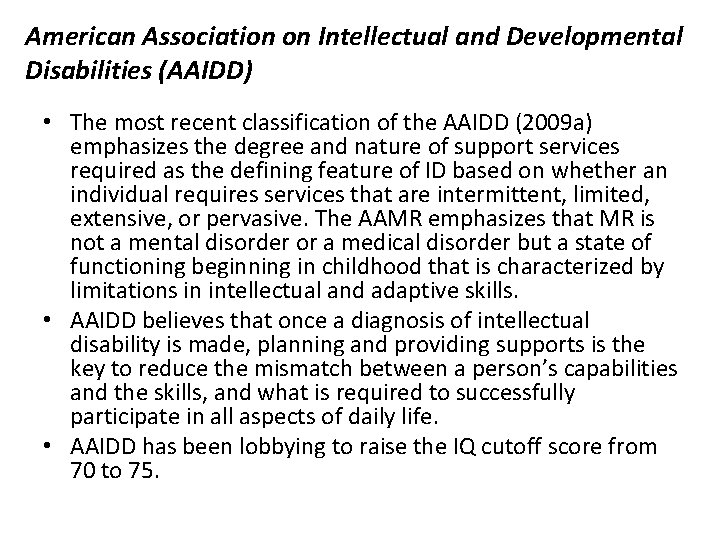
American Association on Intellectual and Developmental Disabilities (AAIDD) • The most recent classification of the AAIDD (2009 a) emphasizes the degree and nature of support services required as the defining feature of ID based on whether an individual requires services that are intermittent, limited, extensive, or pervasive. The AAMR emphasizes that MR is not a mental disorder or a medical disorder but a state of functioning beginning in childhood that is characterized by limitations in intellectual and adaptive skills. • AAIDD believes that once a diagnosis of intellectual disability is made, planning and providing supports is the key to reduce the mismatch between a person’s capabilities and the skills, and what is required to successfully participate in all aspects of daily life. • AAIDD has been lobbying to raise the IQ cutoff score from 70 to 75.
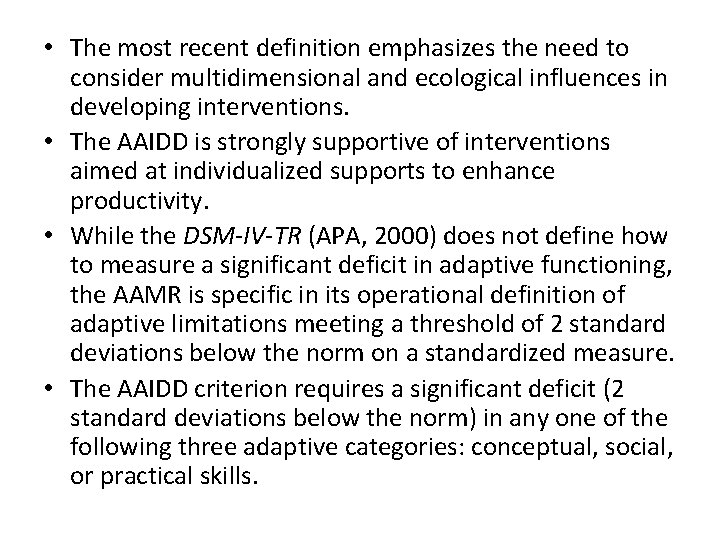
• The most recent definition emphasizes the need to consider multidimensional and ecological influences in developing interventions. • The AAIDD is strongly supportive of interventions aimed at individualized supports to enhance productivity. • While the DSM-IV-TR (APA, 2000) does not define how to measure a significant deficit in adaptive functioning, the AAMR is specific in its operational definition of adaptive limitations meeting a threshold of 2 standard deviations below the norm on a standardized measure. • The AAIDD criterion requires a significant deficit (2 standard deviations below the norm) in any one of the following three adaptive categories: conceptual, social, or practical skills.
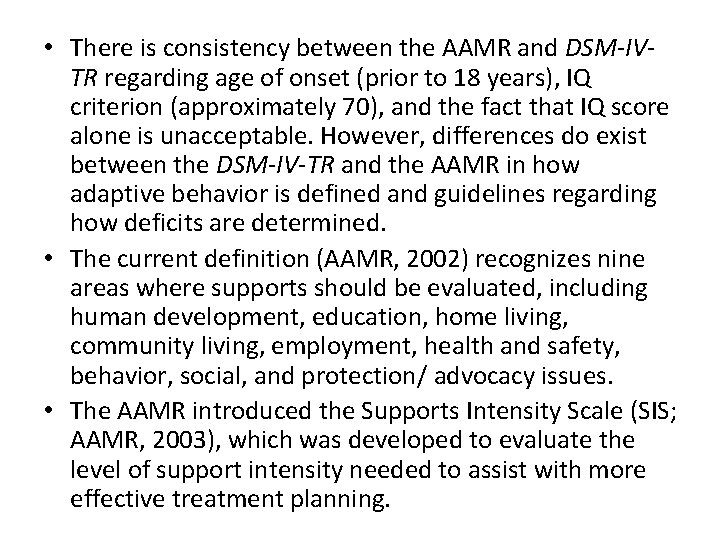
• There is consistency between the AAMR and DSM-IVTR regarding age of onset (prior to 18 years), IQ criterion (approximately 70), and the fact that IQ score alone is unacceptable. However, differences do exist between the DSM-IV-TR and the AAMR in how adaptive behavior is defined and guidelines regarding how deficits are determined. • The current definition (AAMR, 2002) recognizes nine areas where supports should be evaluated, including human development, education, home living, community living, employment, health and safety, behavior, social, and protection/ advocacy issues. • The AAMR introduced the Supports Intensity Scale (SIS; AAMR, 2003), which was developed to evaluate the level of support intensity needed to assist with more effective treatment planning.
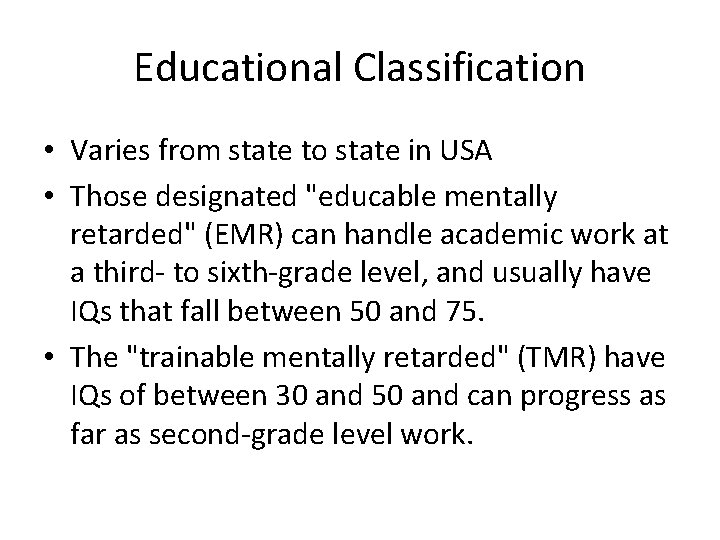
Educational Classification • Varies from state to state in USA • Those designated "educable mentally retarded" (EMR) can handle academic work at a third- to sixth-grade level, and usually have IQs that fall between 50 and 75. • The "trainable mentally retarded" (TMR) have IQs of between 30 and 50 and can progress as far as second-grade level work.
• Under IDEA Act (IDEA; Federal Register, 2004) Intellectual disability is one of 13 possible categories of eligibility for disability services. • Although the educational system also recognizes the need to include social and adaptive features of ID, most state education codes allocate funds for special education to children with disabilities, such as ID, based on IQ score cutoffs to determine eligibility for services.
• Under Part C of IDEA 2004 (Sec. 631), financial assistance is provided to the state for infants and toddlers with disabilities (birth to 2 years). • Within this section is the provision to meet the needs of infants and toddlers with developmental delays or at risk for developmental delays. • Within this context, developmental delay is considered to be a delay of 35% or more in one of five developmental areas (cognitive, motor, speech and language, social/emotional, or adaptive functioning) or 25% or more in two or more of the developmental areas. • IDEA states that children 3 to 9 years of age may receive special education and related services if services are needed because of the developmental delays in one of the five areas noted previously.
Developmental and Associated Features • Wide variations because of severity and associated personality and behavioral characteristics • Developmental delays vary • For some individuals, incapacity is limited to impaired academic performance, while adaptive skills are adequate in all other areas. • Other individuals have concomitant aggressive features and behavior problems that exacerbate their limitations and reduce their ability to adjust and adapt successfully. • Self-injurious behavior, aggression, stereotypical movements, communication problems, and overactivity
• Cognitively, depending on the level of severity, some individuals with mild ID (such as upper level Down syndrome) can be quite capable of adequate functioning at a slower pace with modified goals. • Typically, cognitive limitations are less noticeable in predictable and structured environments and most noticeable in novel situations or when abrupt changes disrupt predicted routines.
• • Developmental vs Difference Controversy Motivation Issues of Language Emotional and Behavioral Problems
Prevalence, Comorbidity, and Course • The overall prevalence of ID is approximately 1 to 3%. • Males are probably more highly represented in this population. • Eighty-five percent of the ID population have Mild Mental Retardation. • By definition, onset is before 18 years of age, and earlier identification is associated with more severe forms of ID. • Rates for those with more severe ID are approximately 6 per 1, 000 (APA, 2013).
• Individuals with ID are at risk for comorbid disorders at a rate 3 to 4 times higher than the general population. • Diagnosis may be more complex, as the common disorder features may be modified by the presence of ID. • ADHD, Mood Disorders, Developmental Disabilities, Stereotypic Movement Disorder, and mental disorders due to a medical condition • Comorbidity may also vary with the etiology of ID, for example, Fragile X often has comorbid ADHD and Social Phobia, while Prader-Willi syndrome is often accompanied by anxiety and ADHD.
Etiology • Genetic defects • Down syndrome, results from a chromosomal abnormality involving chromosome 21 (incorrect number of chromosomes or damaged chromosomes). • Down syndrome children usually have classic features, including short stature, round face, almond-shaped eyes, flat facial features, and low muscle tone. • They can be socially engaging and affectionate, but they can also be stubborn. • Speech problems are common, and health problems ( heart) are also common. • Down syndrome children can vary widely in their IQ potential, with some children scoring into the upper limits of the low average range (upper-level Down syndrome). • The risk for Down syndrome increases with the maternal and paternal age. The risk for women over 45 years of age is 1 in 25 births.
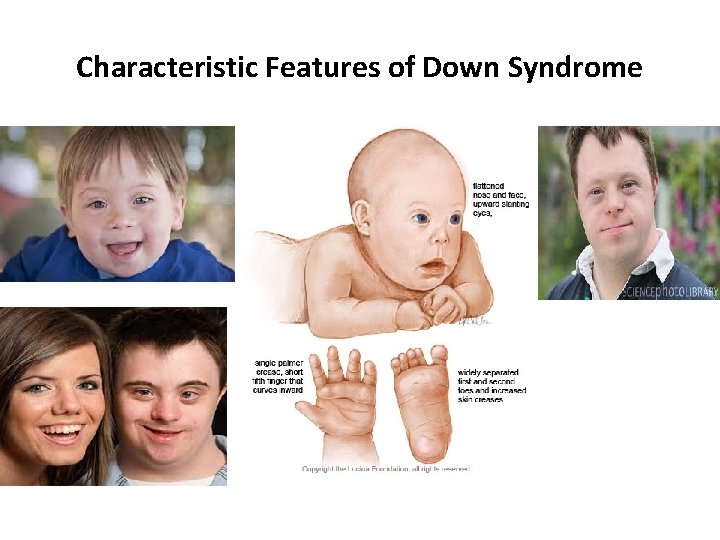
Characteristic Features of Down Syndrome
Prader-Willi Syndrome • Prader-Willi syndrome is often recognized at birth due to low muscle tone and low reflex responses. • It is caused by a deletion or disruption of genes in the proximal arm of paternal chromosome 15 or by maternal disomy in the proximal arm of chromosome 15 (Angelman’s Syndrome). • People with this condition are obese, have reduced muscle tone and mental ability, and have sex glands that produce little or no hormones • Recognizable in school-aged children, not only in physical features (short stature, small hands and feet), but by the accompanying problems of impulsivity, temper tantrums, compulsive eating, and some degree of ID (IQ scores generally in the 60 to 80 range).
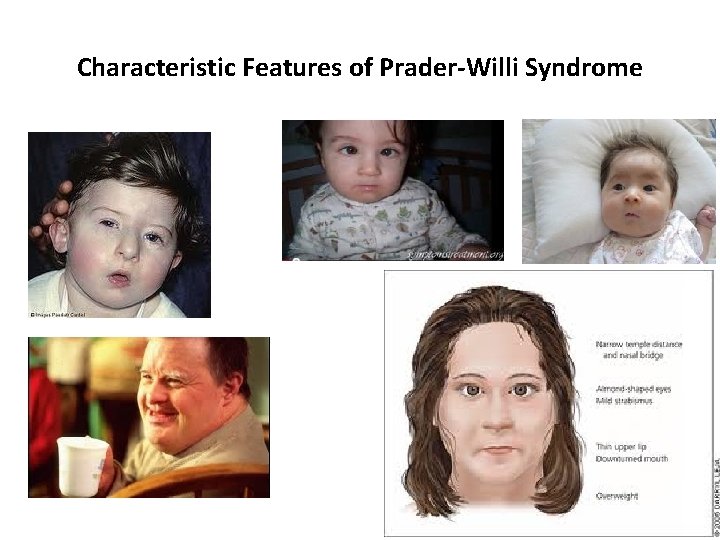
Characteristic Features of Prader-Willi Syndrome
Fragile X Syndrome • Fragile X syndrome is a genetic condition involving changes in part of the X chromosome. It is the most common form of inherited intellectual disability in boys. • Fragile X syndrome is associated with the expansion of the CGG trinucleotide repeat affecting the fragile X mental retardation 1(FMR 1) gene on X chromosome, resulting in a failure to express the fragile X mental retardation protein (FMRP) which is required for normal neural development. • Normally, this DNA segment is repeated from 5 to about 40 times. In people with fragile X syndrome, however, the CGG segment is repeated more than 200 times. • The more repeats, the more likely there is to be a problem.
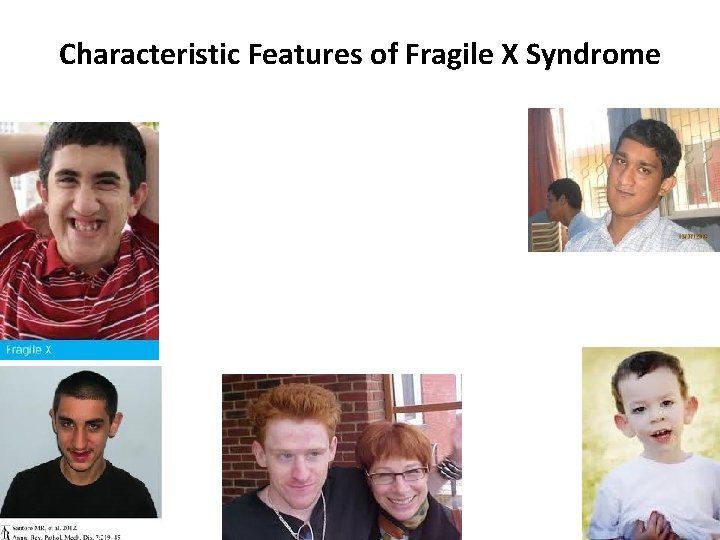
Characteristic Features of Fragile X Syndrome
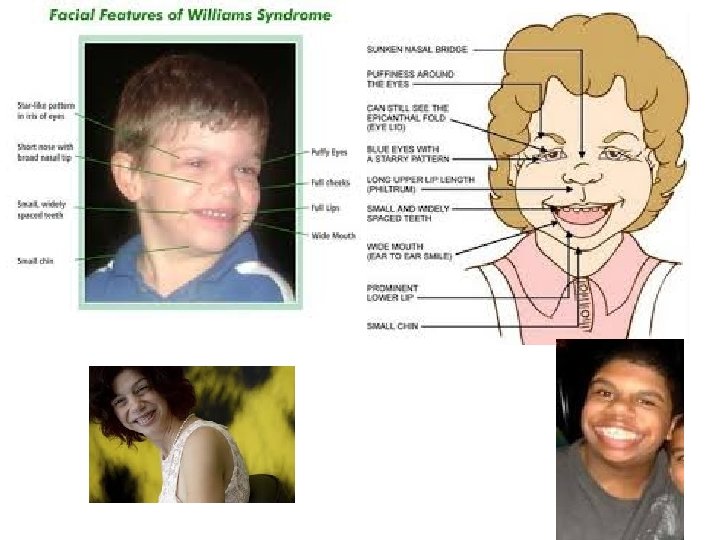
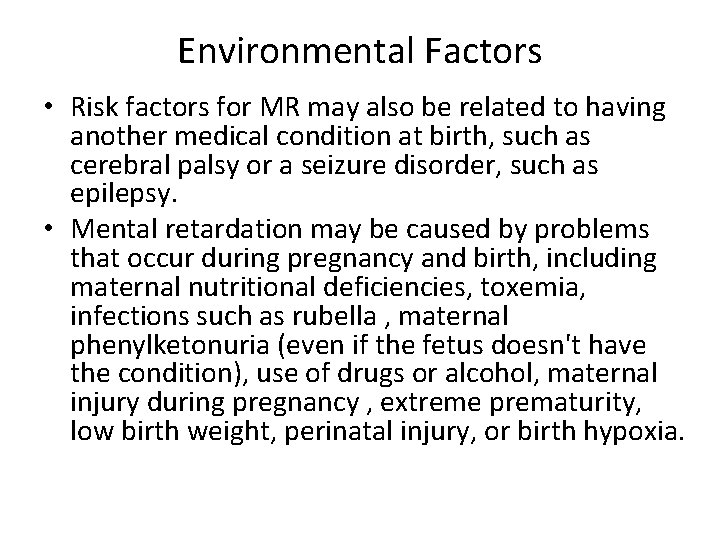
William’s Syndrome • Spontaneous deletion of more than 25 genes on chromosome 7. • Highly verbal relative to their IQ, and are overly sociable. • Mental disability, heart defects, and unusual facial features
Environmental Factors • Risk factors for MR may also be related to having another medical condition at birth, such as cerebral palsy or a seizure disorder, such as epilepsy. • Mental retardation may be caused by problems that occur during pregnancy and birth, including maternal nutritional deficiencies, toxemia, infections such as rubella , maternal phenylketonuria (even if the fetus doesn't have the condition), use of drugs or alcohol, maternal injury during pregnancy , extreme prematurity, low birth weight, perinatal injury, or birth hypoxia.
• Retardation can also be the result of medical conditions and injuries that occur after birth, including metabolic disorders, severe childhood malnutrition, prolonged high fever, near drowning, lead poisoning, severe mental disorders such as autism, and infections such as meningitis that affect the brain. • Clinical features of fetal alcohol syndrome include slow growth, central nervous system dysfunction (MR, hyperactivity, irritability); and unusual facial features (underdeveloped upper lip, flattened nose, widely spaced eyes). • Although facial features become less pronounced with age, cognitive deficits remain.
Assessment • A full developmental and medical history • Achievement of developmental milestones • Individual assessment of intellectual functioning and adaptive functioning • Usage of age- and culture appropriate instrument.
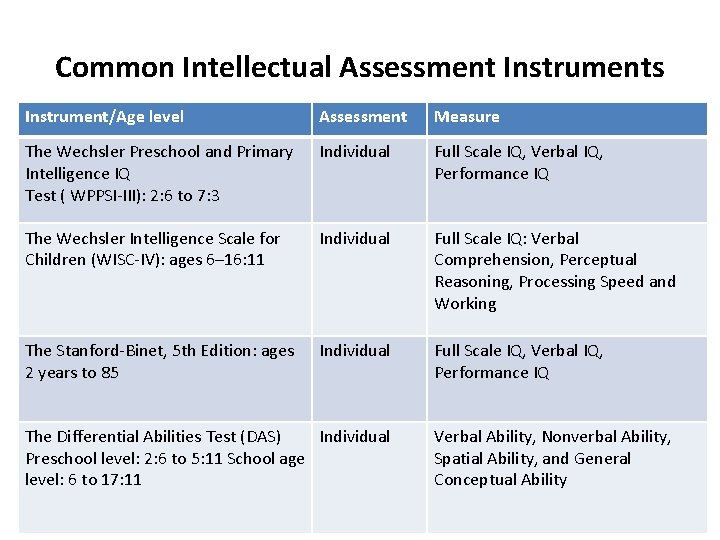
Common Intellectual Assessment Instruments Instrument/Age level Assessment Measure The Wechsler Preschool and Primary Intelligence IQ Test ( WPPSI-III): 2: 6 to 7: 3 Individual Full Scale IQ, Verbal IQ, Performance IQ The Wechsler Intelligence Scale for Children (WISC-IV): ages 6– 16: 11 Individual Full Scale IQ: Verbal Comprehension, Perceptual Reasoning, Processing Speed and Working The Stanford-Binet, 5 th Edition: ages 2 years to 85 Individual Full Scale IQ, Verbal IQ, Performance IQ The Differential Abilities Test (DAS) Individual Preschool level: 2: 6 to 5: 11 School age level: 6 to 17: 11 Verbal Ability, Nonverbal Ability, Spatial Ability, and General Conceptual Ability
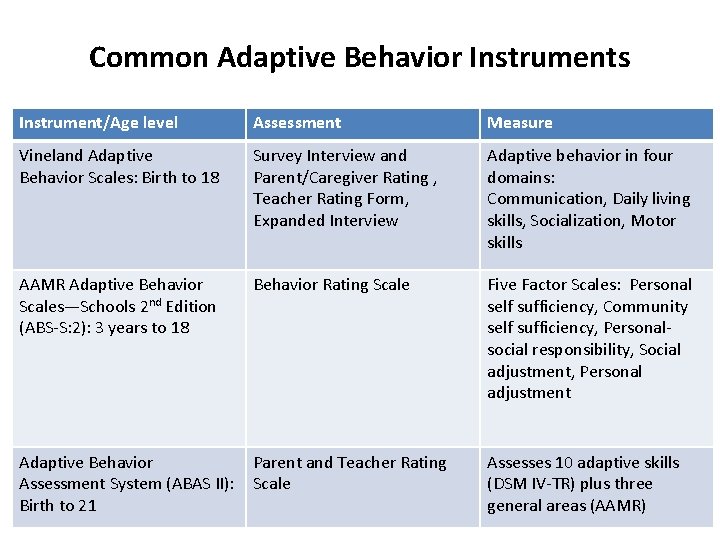
Common Adaptive Behavior Instruments Instrument/Age level Assessment Measure Vineland Adaptive Behavior Scales: Birth to 18 Survey Interview and Parent/Caregiver Rating , Teacher Rating Form, Expanded Interview Adaptive behavior in four domains: Communication, Daily living skills, Socialization, Motor skills AAMR Adaptive Behavior Scales—Schools 2 nd Edition (ABS-S: 2): 3 years to 18 Behavior Rating Scale Five Factor Scales: Personal self sufficiency, Community self sufficiency, Personalsocial responsibility, Social adjustment, Personal adjustment Adaptive Behavior Assessment System (ABAS II): Birth to 21 Parent and Teacher Rating Scale Assesses 10 adaptive skills (DSM IV-TR) plus three general areas (AAMR)
Interventions • Behavioral programs have been very successful in targeting and altering problematic social, emotional, and behavioral concerns • Empirical support for the use of behavioral methods with MR populations is well documented • Behavior chaining, secondary rewards, token economies, contingency programs • Parent Training Programs
Educational Programs • Some studies show minimal effects of special education programming. • Other studies suggest that mainstreaming does not sufficiently address academic concerns.
Prevention • Prevention programs have been instituted at all levels of intervention, from prenatal awareness campaigns (effects of drug abuse and alcohol, genetic counseling) to early intervention programs targeting parenting skills and early stimulation programs, such as Head Start programs. • The impact of early intervention programs within the first 5 years of life has been clearly documented in the prevention of increasing cognitive declines
- Slides: 39