
Integumentary System Skin Integument Cutaneous Membrane 7 Functions
Integumentary System Skin = Integument= Cutaneous Membrane
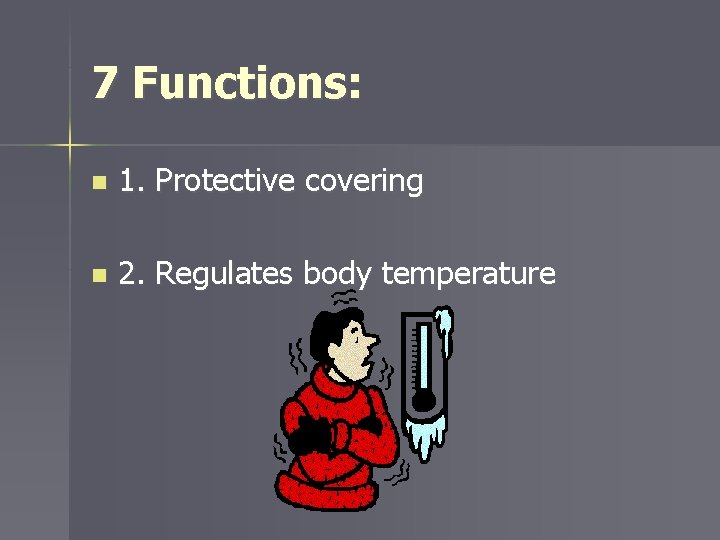
7 Functions: n 1. Protective covering n 2. Regulates body temperature
n 3. Manufactures Vitamin D n 4. Sensory Function n 5. Temporary storage of fat, glucose, water and salts
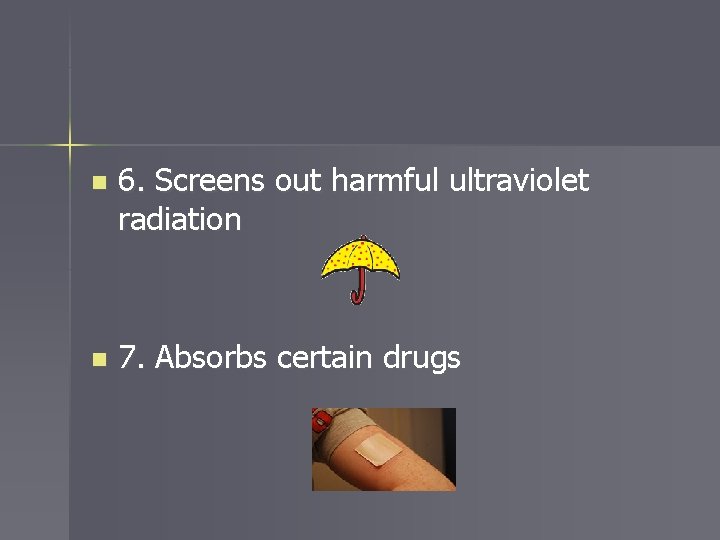
n 6. Screens out harmful ultraviolet radiation n 7. Absorbs certain drugs
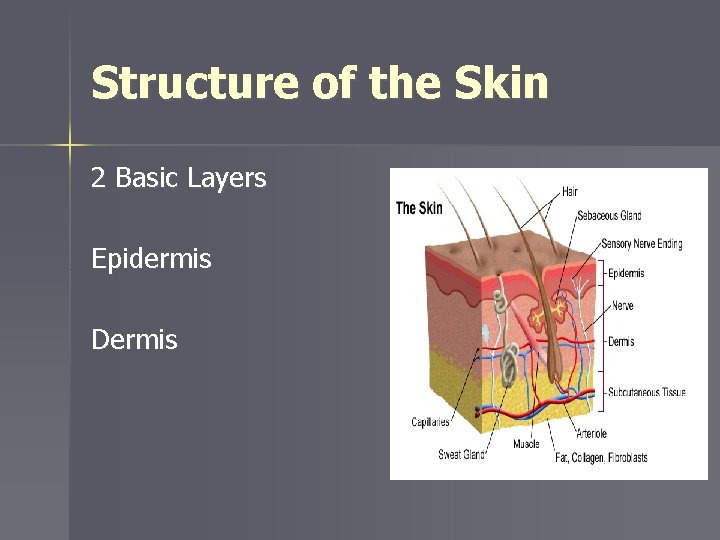
Structure of the Skin 2 Basic Layers Epidermis Dermis
Epidermis n Outermost covering n Epithelial cells n Avascular- no blood vessels
Stratum Corneum- surface layer, consists of dead cells rich in keratin (provides a water proof covering & skin barrier). n Contains 4 cell types: n Keratinocytes- produce keratin (protein), flat, scale like cells, Thickest on palms of hands and soles of feet n Merkel Cells- sensory receptors for touch n Melanocytes- produce melanin n Langerhan Cells- helps protect against microorganisms n
Stratum Germinativum Innermost epidermal layer n Reproductive layer – cells form and push their way up, become keratinized, and replace the top layer n Contains MELANOCYTES – cells that contain pigment -MELANIN n
Melanin Black, brown or has a yellow tint depending on racial origin n The more melanin the darker the skin n Caucasians do not have much melanin in their melanocytes n Freckles = patches of melanin n
Tanning Sunlight stimulates melanocytes to make more melanin n Tanning produced by UV rays n Prolonged exposure may lead to skin cancer, n Called ______? n
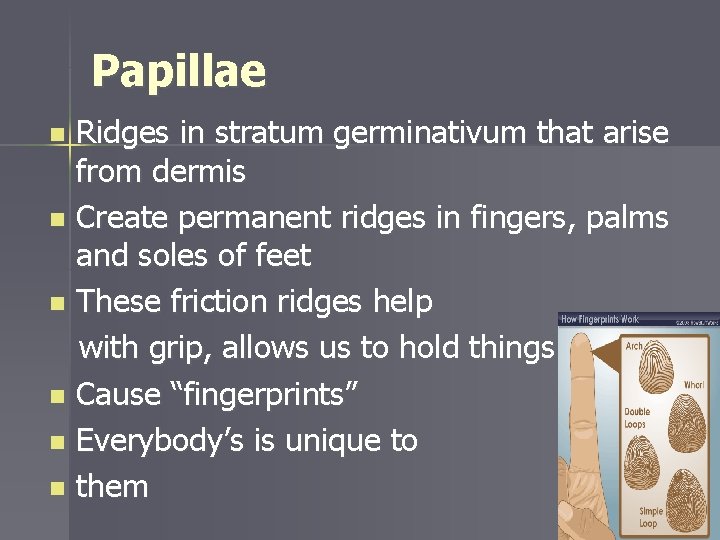
Papillae Ridges in stratum germinativum that arise from dermis n Create permanent ridges in fingers, palms and soles of feet n These friction ridges help with grip, allows us to hold things n Cause “fingerprints” n Everybody’s is unique to n them n
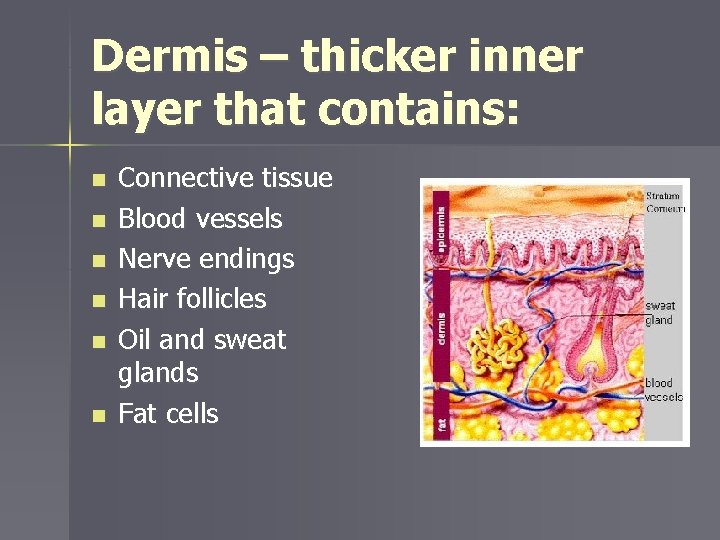
Dermis – thicker inner layer that contains: n n n Connective tissue Blood vessels Nerve endings Hair follicles Oil and sweat glands Fat cells
Nerve Receptors in Dermis n Sensory nerves – heat, cold, touch, pain, and pressure n Touch receptors close to the surface (epidermis) n Pressure receptors are deeper
Subcutaneous Layer (Hypodermal) Lies under the dermis (not really a true part of the integumentary system) n Made up of loose connective tissue n Contains half of the body’s fat n Attaches the integumentary system to the surface muscles n
Appendages of the Skin Hair n Almost everywhere on the body n Length, thickness, type and color varies
Hair cont’d. Outer layer – CORTEX n Inner layer – MEDULLA n Part under the skin – ROOT n Part outside the skin – SHAFT n FOLLICLE – pocket in the epidermis, hair inside n PAPILLA – tuft of tissue in the root, contains capillaries n
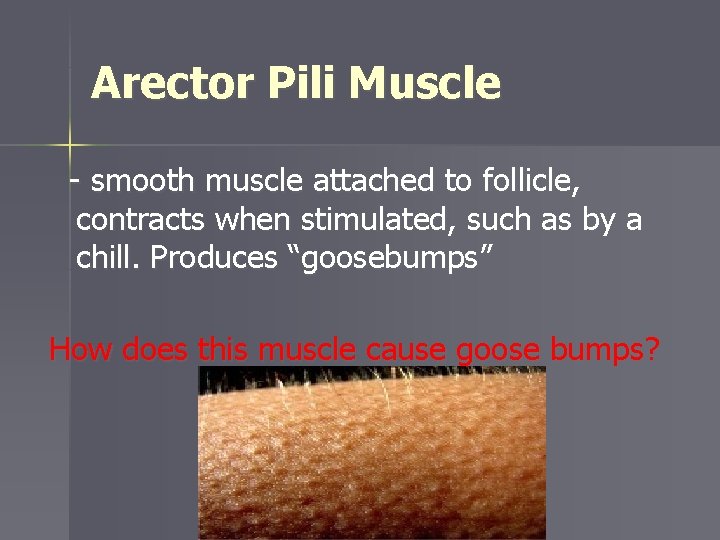
Arector Pili Muscle - smooth muscle attached to follicle, contracts when stimulated, such as by a chill. Produces “goosebumps” How does this muscle cause goose bumps?
Nails Nail is formed in the nail bed or MATRIX n Epidermal cells fuse together and fill with keratin n
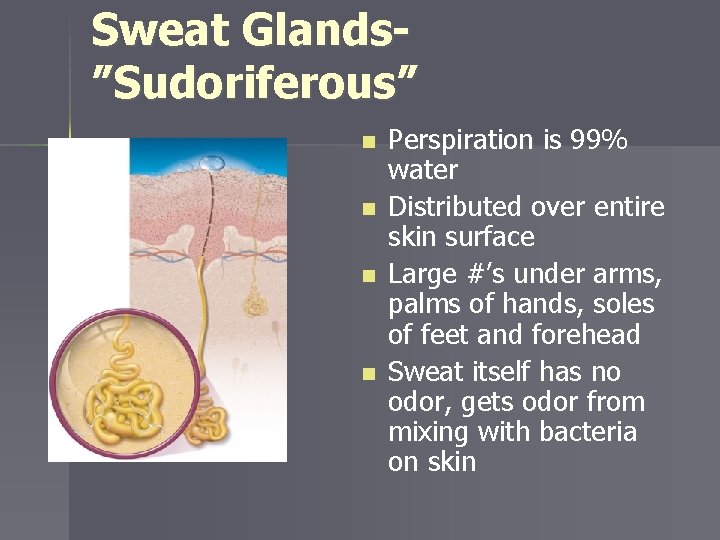
Sweat Glands”Sudoriferous” n n Perspiration is 99% water Distributed over entire skin surface Large #’s under arms, palms of hands, soles of feet and forehead Sweat itself has no odor, gets odor from mixing with bacteria on skin
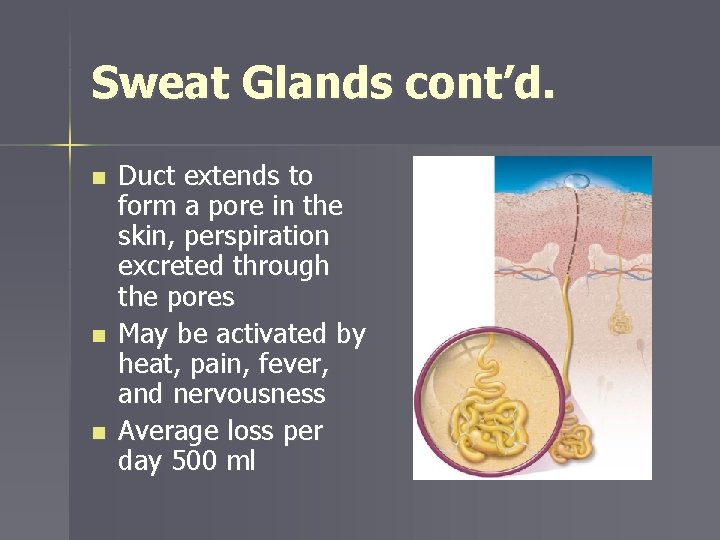
Sweat Glands cont’d. n n n Duct extends to form a pore in the skin, perspiration excreted through the pores May be activated by heat, pain, fever, and nervousness Average loss per day 500 ml
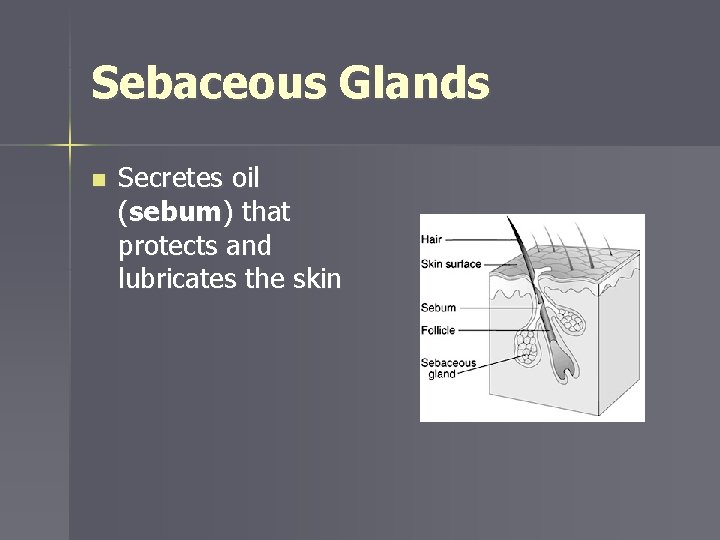
Sebaceous Glands n Secretes oil (sebum) that protects and lubricates the skin
Skin and Microorganisms n n Intact skin is best protection against pathogens, toxins and water loss Skin generally too dry for microbial growth – microbial growth occurs in moist areas Most skin bacteria is associated with hair follicles or sweat glands Underarm perspiration odor caused by bacteria and perspiration
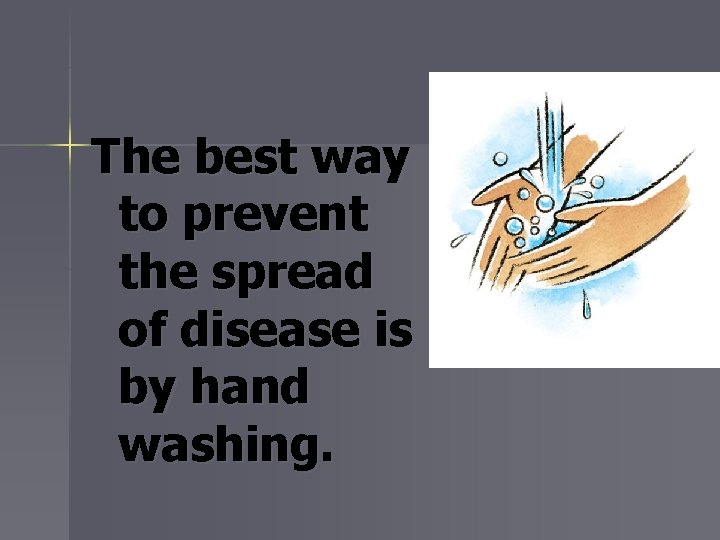
The best way to prevent the spread of disease is by hand washing.
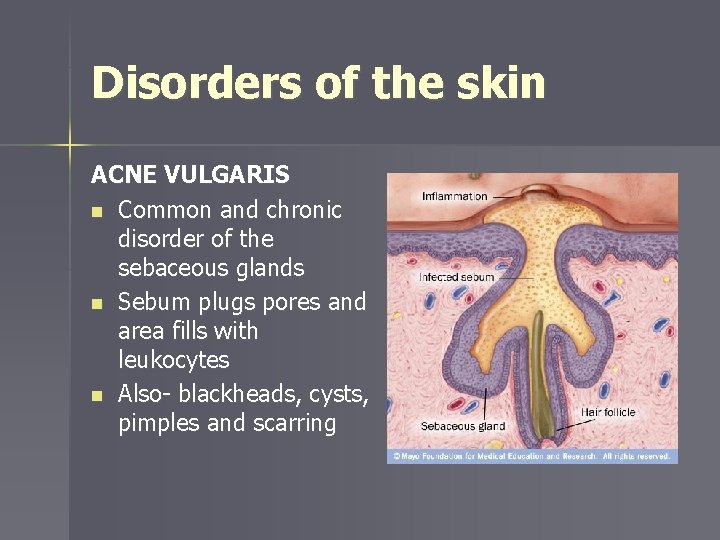
Disorders of the skin ACNE VULGARIS n Common and chronic disorder of the sebaceous glands n Sebum plugs pores and area fills with leukocytes n Also- blackheads, cysts, pimples and scarring
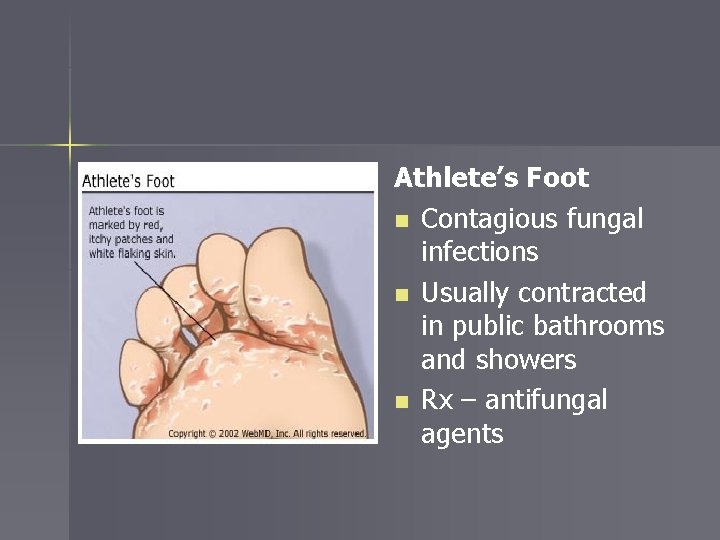
Athlete’s Foot n Contagious fungal infections n Usually contracted in public bathrooms and showers n Rx – antifungal agents
Dermatitis Non-specific inflammation of the skin n Can be a rash – reaction to soap, plants, etc n Can be emotional – stress can cause skin blotches n
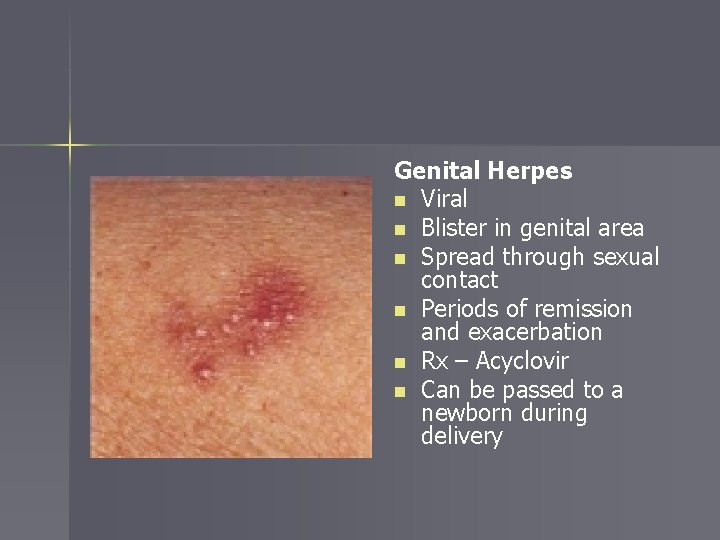
Genital Herpes n Viral n Blister in genital area n Spread through sexual contact n Periods of remission and exacerbation n Rx – Acyclovir n Can be passed to a newborn during delivery
Skin Cancer Associated with exposure to the sun (UV rays) AND TANNING BEDS!!! 8 X RISK/10 VISITS n 3 TYPES: n BASAL CELL CARCINOMA-most common, non malignant n SQUAMOUS CELL CARCINOMA-most common on scalp & lip, spreads to lymph, can be treated if caught early n MALIGNANT MELANOMA- AFFECTS MELANOCYTES, SPREADS RAPIDLY! n NO CURE. n
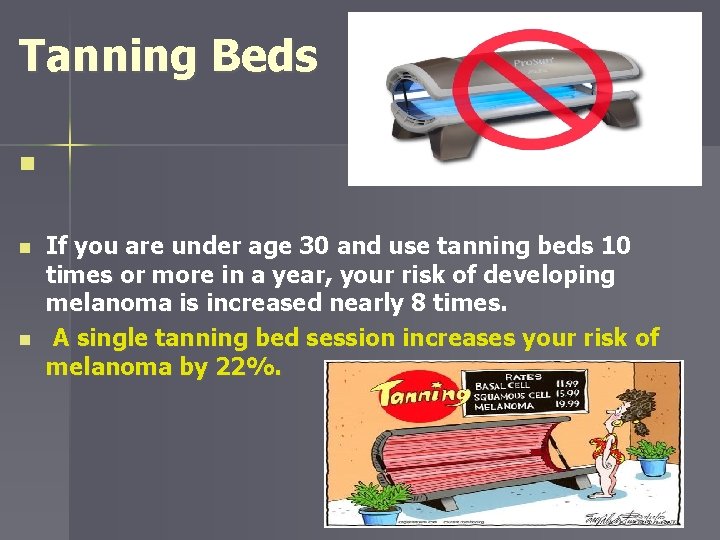
Tanning Beds n n n If you are under age 30 and use tanning beds 10 times or more in a year, your risk of developing melanoma is increased nearly 8 times. A single tanning bed session increases your risk of melanoma by 22%.
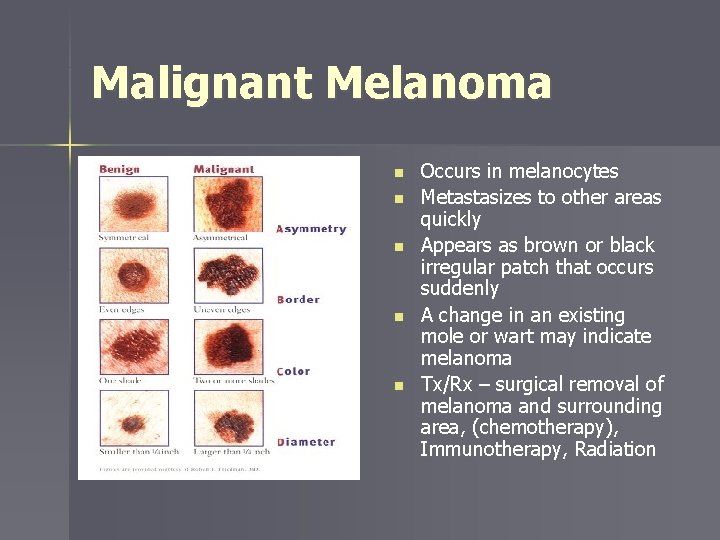
Malignant Melanoma n n n Occurs in melanocytes Metastasizes to other areas quickly Appears as brown or black irregular patch that occurs suddenly A change in an existing mole or wart may indicate melanoma Tx/Rx – surgical removal of melanoma and surrounding area, (chemotherapy), Immunotherapy, Radiation
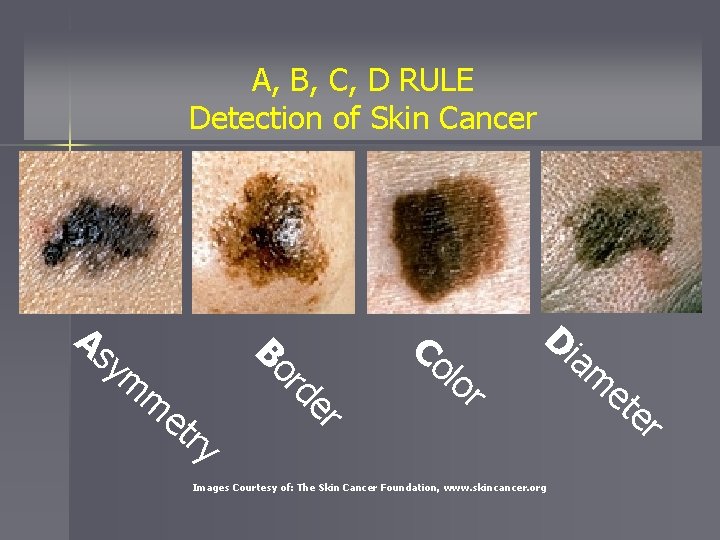
A, B, C, D RULE Detection of Skin Cancer et ry er m rd ym Bo As Co lo D r Images Courtesy of: The Skin Cancer Foundation, www. skincancer. org ia m et er
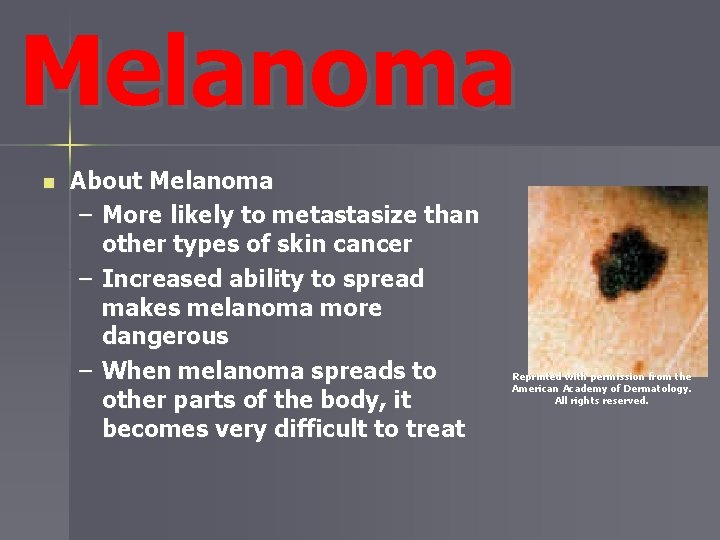
Melanoma n About Melanoma – More likely to metastasize than other types of skin cancer – Increased ability to spread makes melanoma more dangerous – When melanoma spreads to other parts of the body, it becomes very difficult to treat Reprinted with permission from the American Academy of Dermatology. All rights reserved.
n Appearance – Tumors generally brown or black due to increased melanin production – Frequently appear on the trunk and lower legs but can occur anywhere on the body including the soles of the feet and between fingers/toes.
l Treatment • Surgical removal of the primary tumor • Removal of surrounding tissue for staging purposes • Removal and examination of any additional suspicious • • growths Chemotherapy and radiation may be used in advanced cases Biological treatments (Immunotherapy), including interleukin 2 (IL-2) and Ipimulumaub (Ipi or Yervoy) If BRAF positive gene, other drugs to treat Investigational treatments Radiation DOES NOT respond well to Chemo
Terms Albinism – absence of melanin n Alopecia – baldness, loss of hair n
Burns n Caused by radiation, sun, boiling water, chemicals, fire or electricity, etc. PG 81 IN TEXTBOOK Rules of Nines – Measures percent of body burned. Body divided into 11 areas, each is 9% of body surface. n PG. 83 IN TEXTBOOK n Be prepared to calculate burn %’s on test n
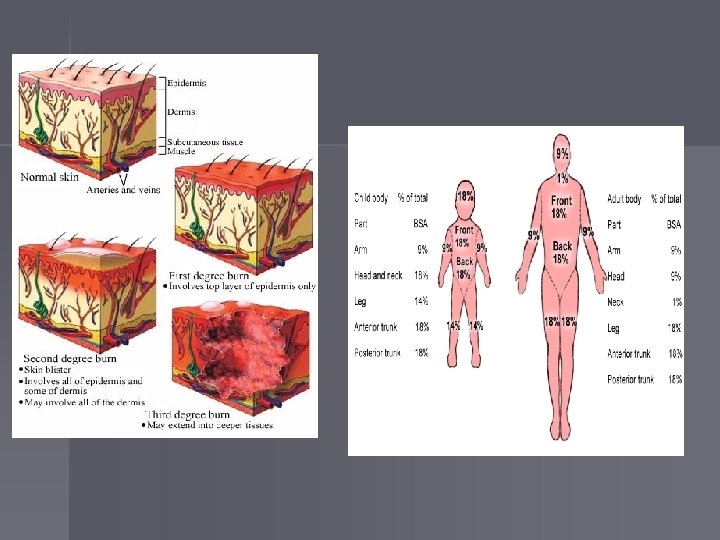
1* First Degree Burns Superficial n Skin red and dry n Involves only epidermis n Rx – cold water n Healing within one week n
2* Second Degree Burns Epidermis and dermis n Pain, swelling, redness and blistering n Skin may be exposed to infection n Rx- pain medication, dry sterile dressing n Healing within 2 weeks n
3* Third Degree Burns Epidermis, and subcutaneous layers n Loss of skin, blackened, charred skin. Or may be white and leathery in appearance. n May be life threatening due to high risk of infection, loss of fluids (altered Homeostatsis) n
- Slides: 40