
Integumentary System Skin Disorders and Diseases Contact Dermatitis
- Slides: 19
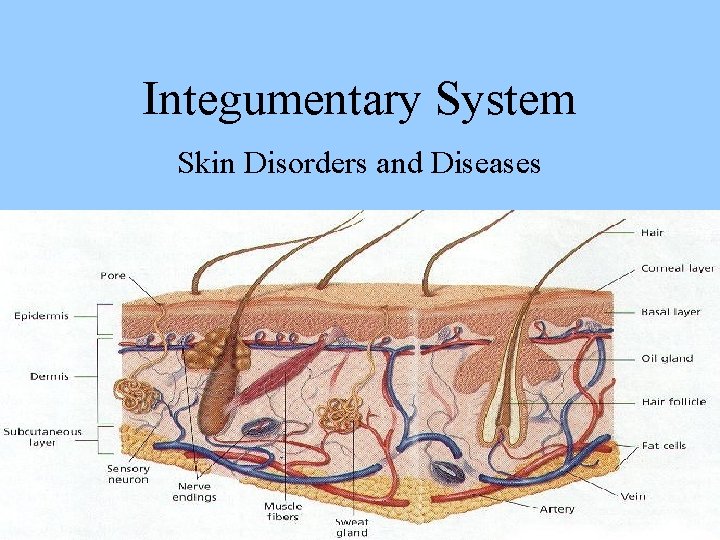
Integumentary System Skin Disorders and Diseases
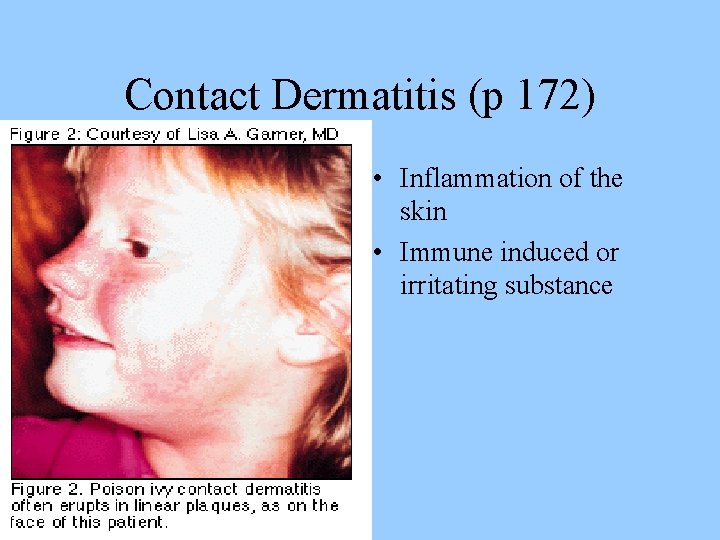
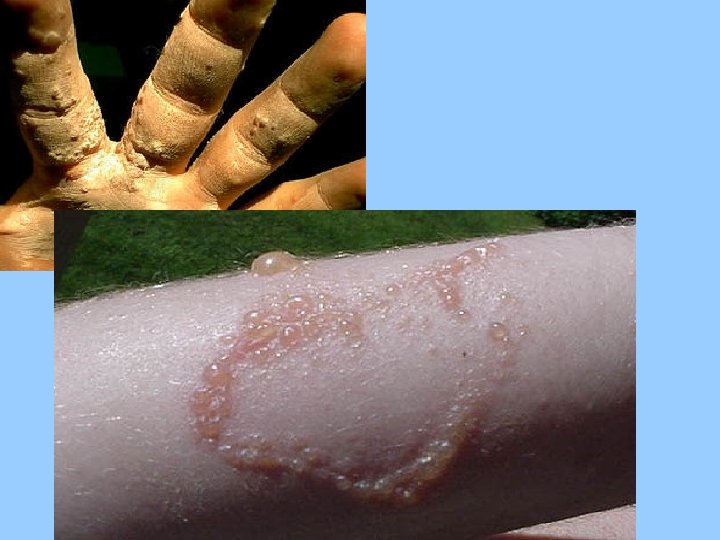
Contact Dermatitis (p 172) • Inflammation of the skin • Immune induced or irritating substance
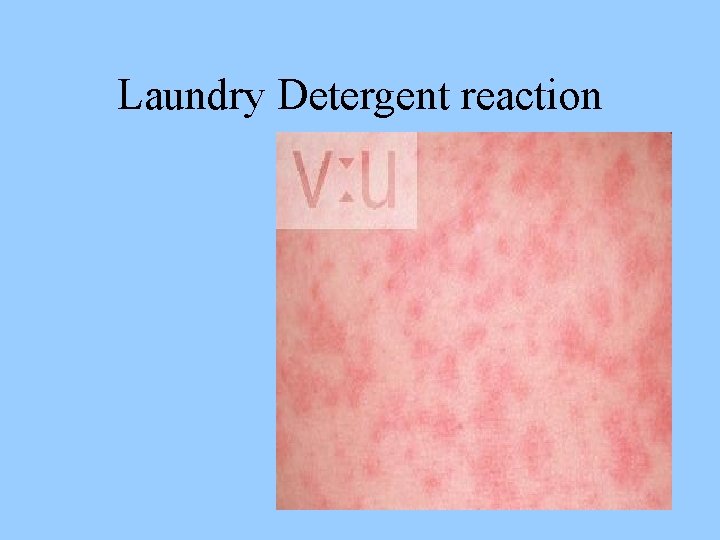
Laundry Detergent reaction
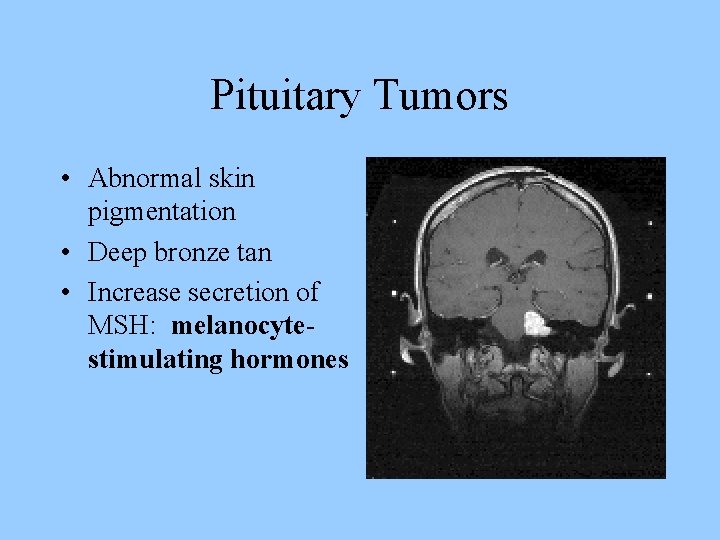
Pituitary Tumors • Abnormal skin pigmentation • Deep bronze tan • Increase secretion of MSH: melanocytestimulating hormones
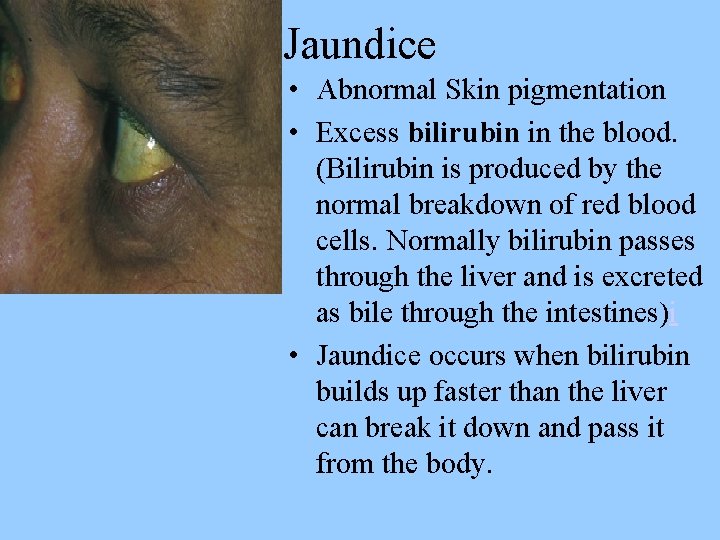
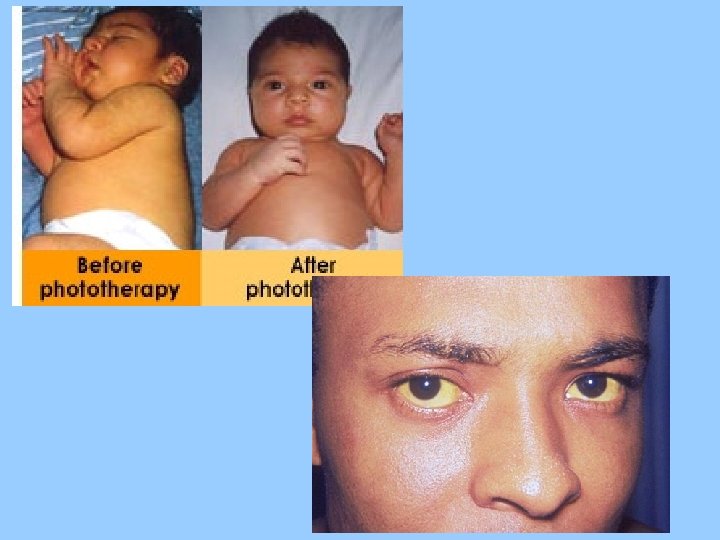
Jaundice • Abnormal Skin pigmentation • Excess bilirubin in the blood. (Bilirubin is produced by the normal breakdown of red blood cells. Normally bilirubin passes through the liver and is excreted as bile through the intestines)i • Jaundice occurs when bilirubin builds up faster than the liver can break it down and pass it from the body.
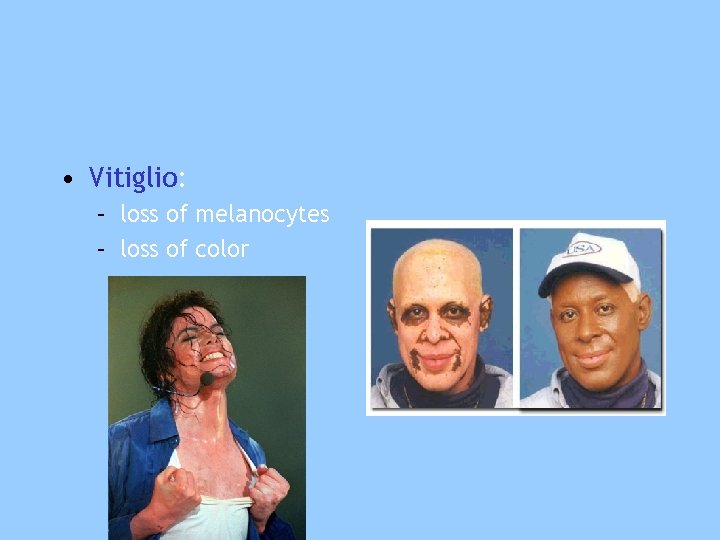
• Vitiglio: – loss of melanocytes – loss of color
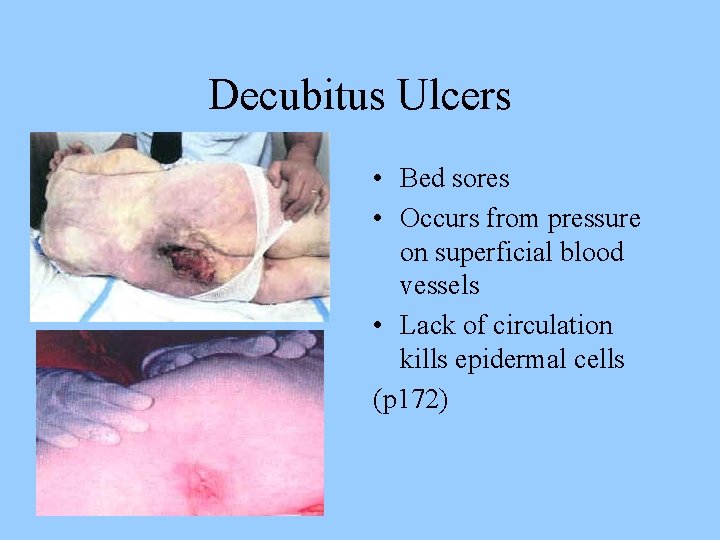
Decubitus Ulcers • Bed sores • Occurs from pressure on superficial blood vessels • Lack of circulation kills epidermal cells (p 172)
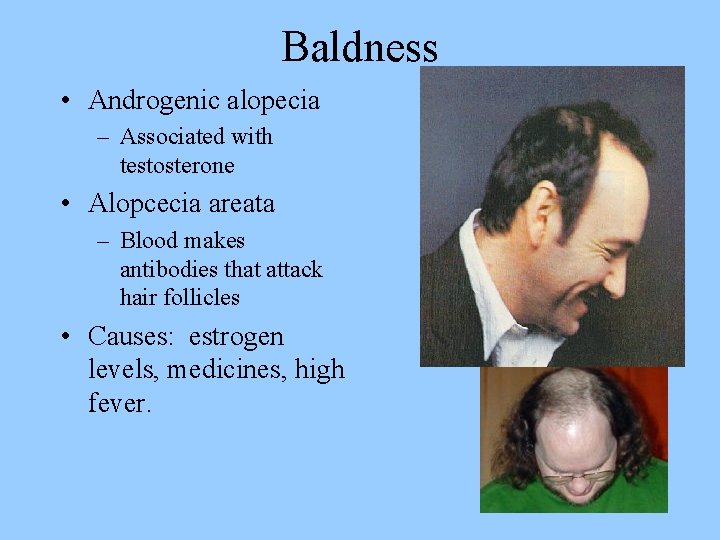
Baldness • Androgenic alopecia – Associated with testosterone • Alopcecia areata – Blood makes antibodies that attack hair follicles • Causes: estrogen levels, medicines, high fever.
Skin Cancers • UV radiations causes mutation in the DNA of a skin cell • 75% of cancers are skin cancers • Most common cancers are caused by prolonged exposure to UV radiation from sunlight
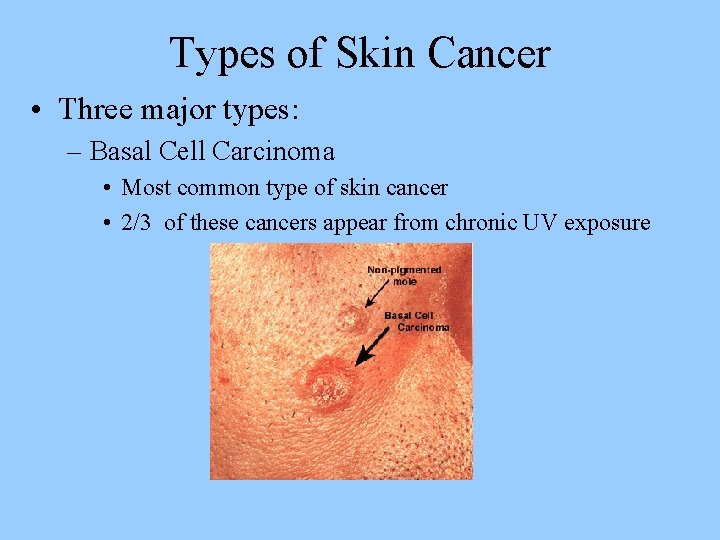
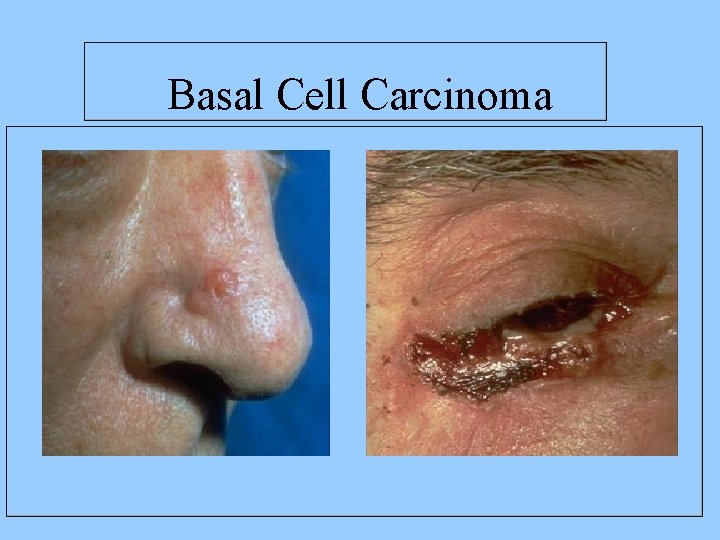
Types of Skin Cancer • Three major types: – Basal Cell Carcinoma • Most common type of skin cancer • 2/3 of these cancers appear from chronic UV exposure
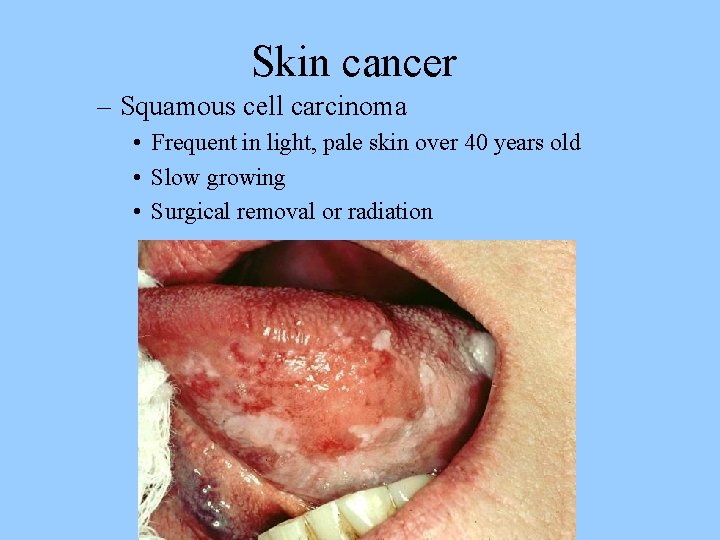
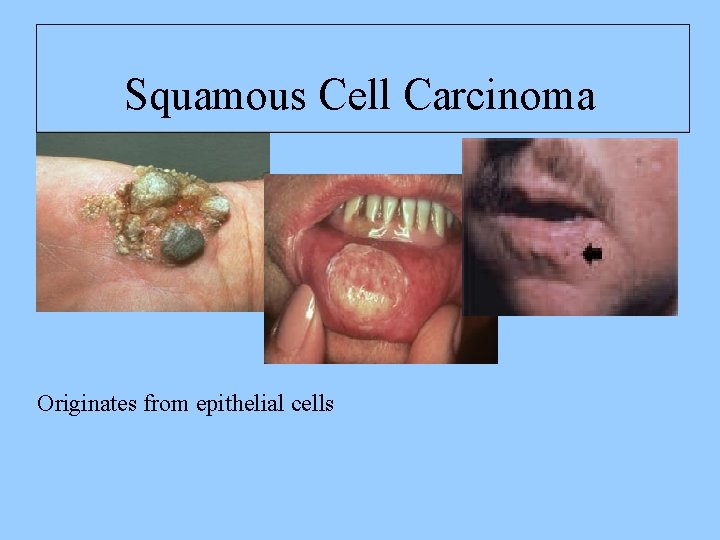
Skin cancer – Squamous cell carcinoma • Frequent in light, pale skin over 40 years old • Slow growing • Surgical removal or radiation
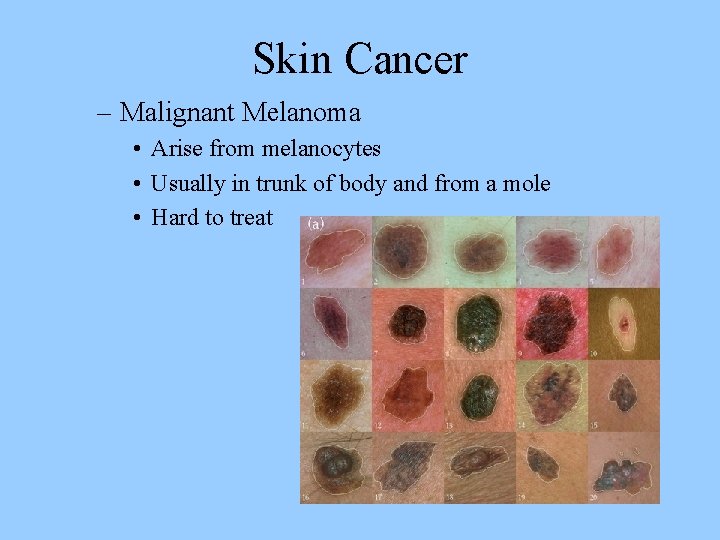
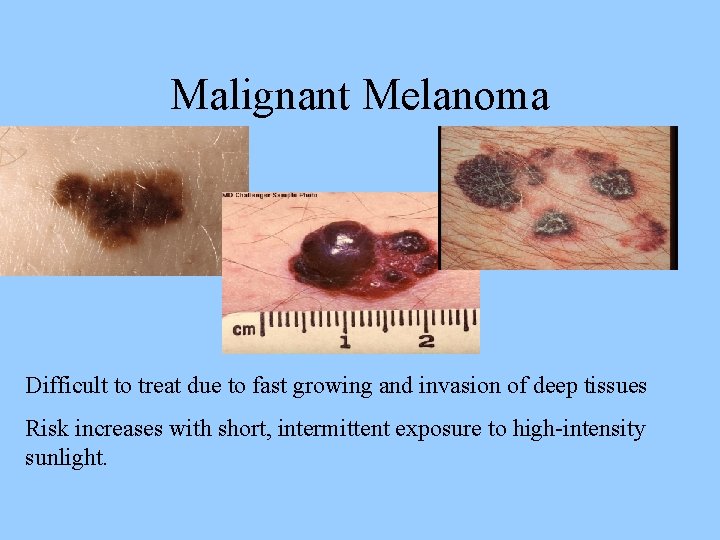
Skin Cancer – Malignant Melanoma • Arise from melanocytes • Usually in trunk of body and from a mole • Hard to treat
Basal Cell Carcinoma
Squamous Cell Carcinoma Originates from epithelial cells
Malignant Melanoma Difficult to treat due to fast growing and invasion of deep tissues Risk increases with short, intermittent exposure to high-intensity sunlight.
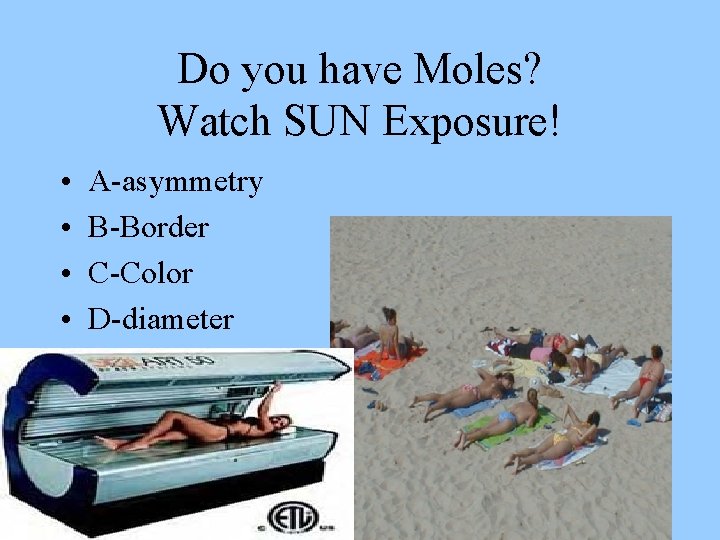
Do you have Moles? Watch SUN Exposure! • • A-asymmetry B-Border C-Color D-diameter
• Cyanosis – Bluish skin tint – Caused by severe reduction in blood flow or oxygenation • Jaundice: – buildup of bile produced by liver – yellow color • Addison’s disease: – and other diseases of pituitary gland – skin darkening • Vitiglio: – loss of melanocytes – loss of color