
INTEGUMENTARY SYSTEM INTEGUMENTARY SYSTEM Made up of skin

- Slides: 18
INTEGUMENTARY SYSTEM
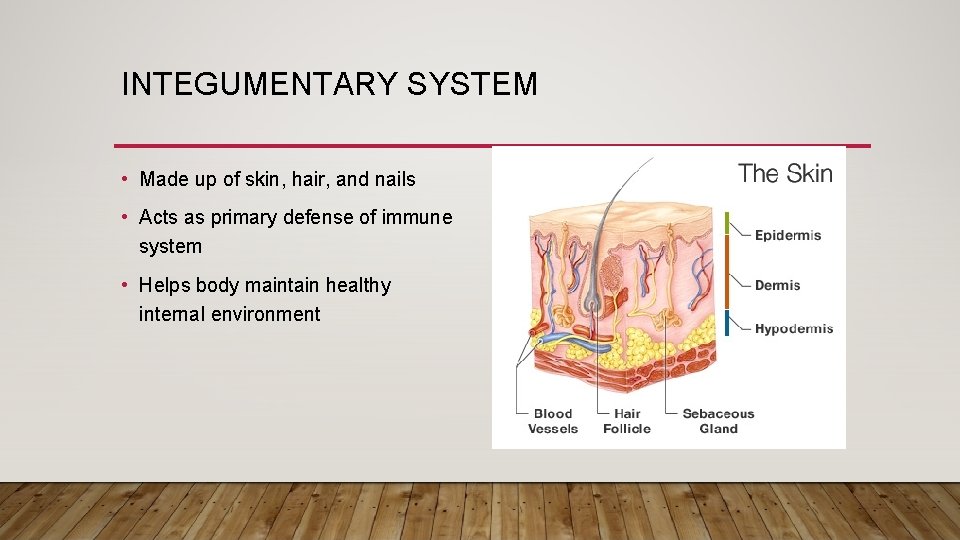
INTEGUMENTARY SYSTEM • Made up of skin, hair, and nails • Acts as primary defense of immune system • Helps body maintain healthy internal environment
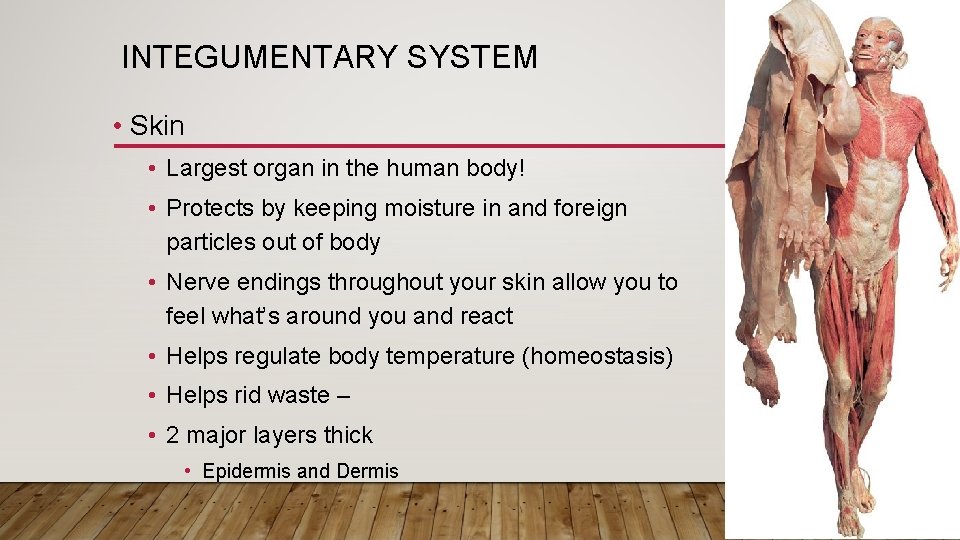
INTEGUMENTARY SYSTEM • Skin • Largest organ in the human body! • Protects by keeping moisture in and foreign particles out of body • Nerve endings throughout your skin allow you to feel what’s around you and react • Helps regulate body temperature (homeostasis) • Helps rid waste – • 2 major layers thick • Epidermis and Dermis
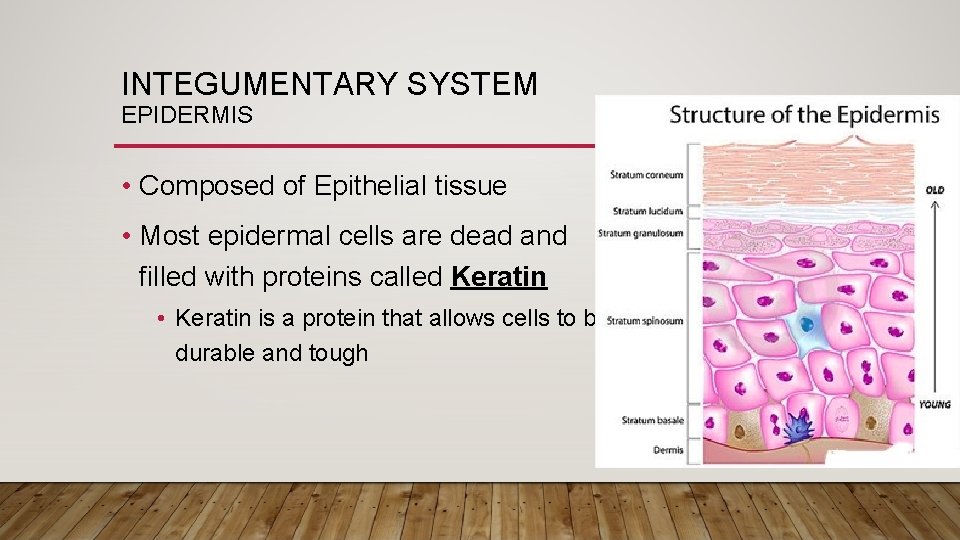
INTEGUMENTARY SYSTEM EPIDERMIS • Composed of Epithelial tissue • Most epidermal cells are dead and filled with proteins called Keratin • Keratin is a protein that allows cells to be durable and tough
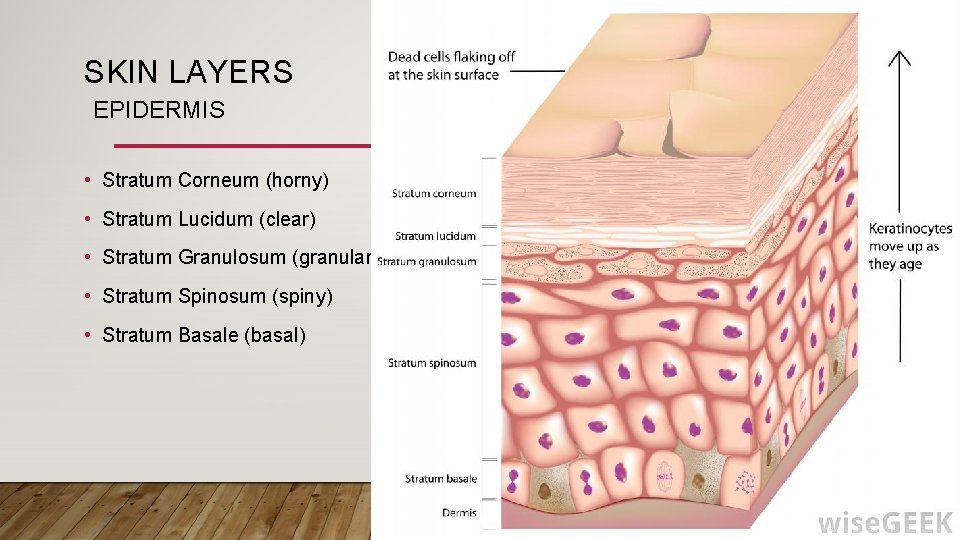
SKIN LAYERS EPIDERMIS • Stratum Corneum (horny) • Stratum Lucidum (clear) • Stratum Granulosum (granular) • Stratum Spinosum (spiny) • Stratum Basale (basal)
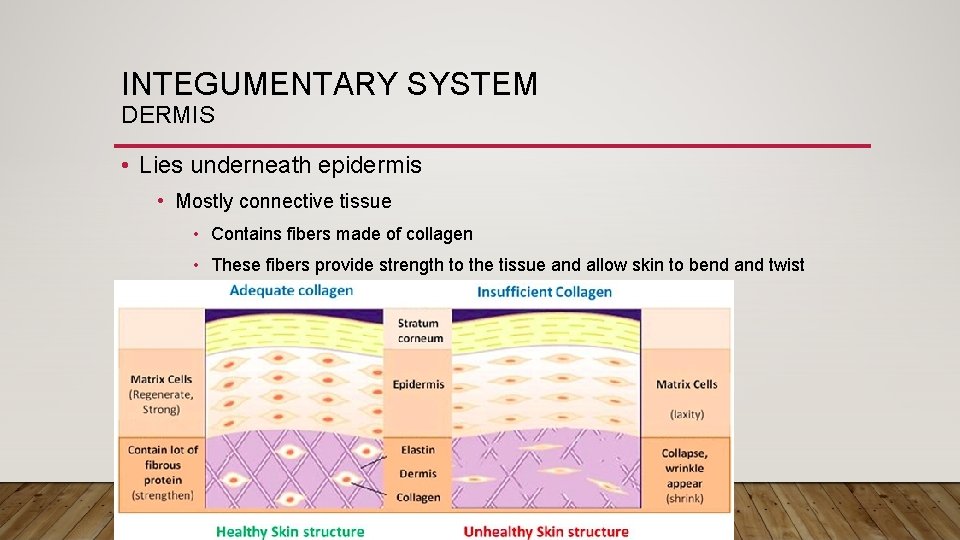
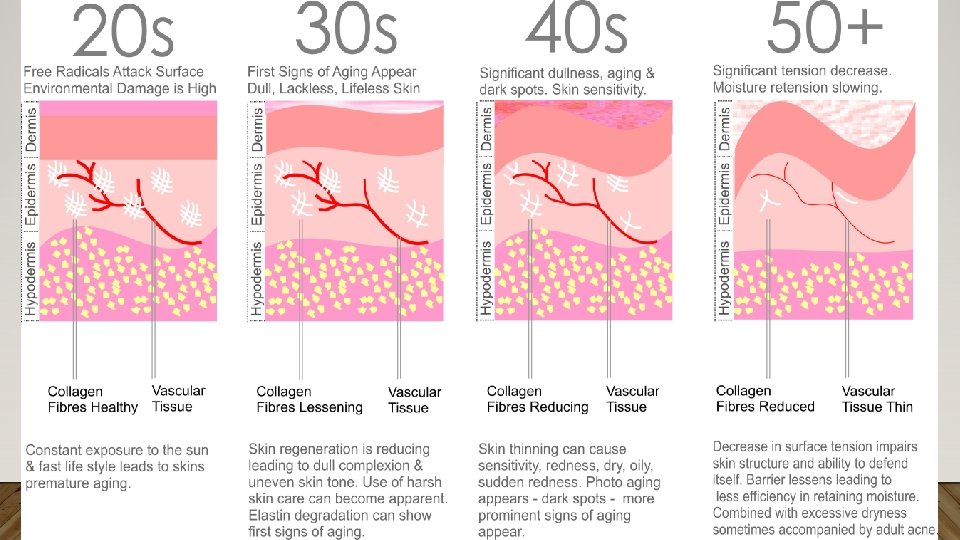
INTEGUMENTARY SYSTEM DERMIS • Lies underneath epidermis • Mostly connective tissue • Contains fibers made of collagen • These fibers provide strength to the tissue and allow skin to bend and twist without tearing
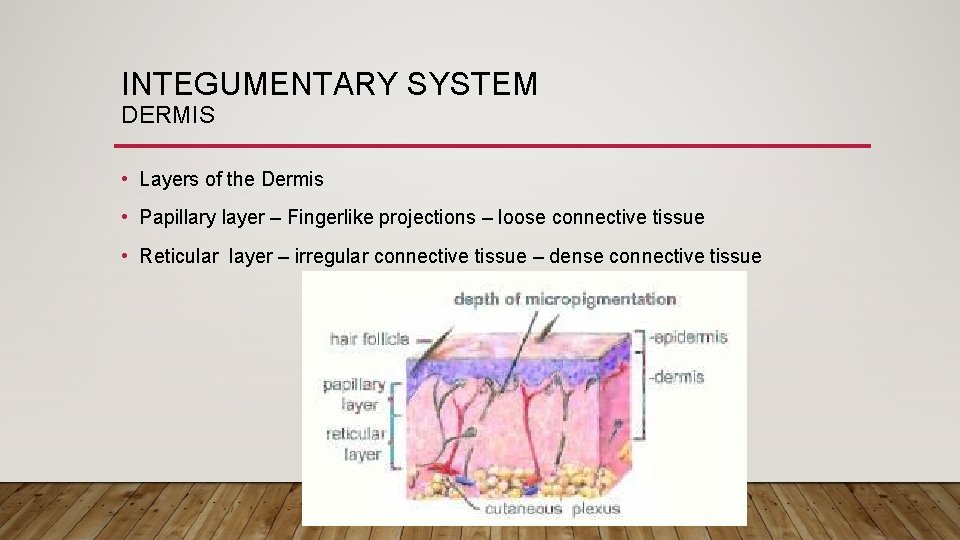
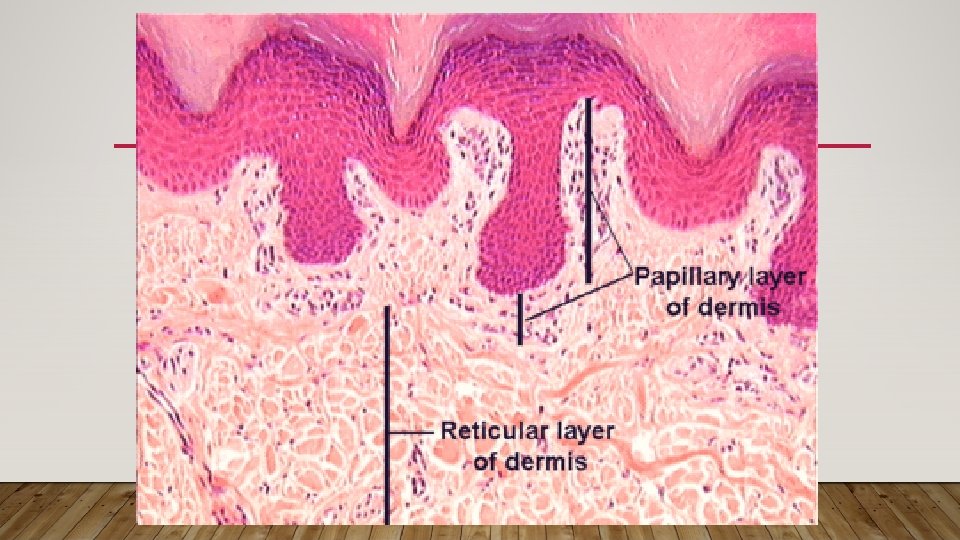
INTEGUMENTARY SYSTEM DERMIS • Layers of the Dermis • Papillary layer – Fingerlike projections – loose connective tissue • Reticular layer – irregular connective tissue – dense connective tissue
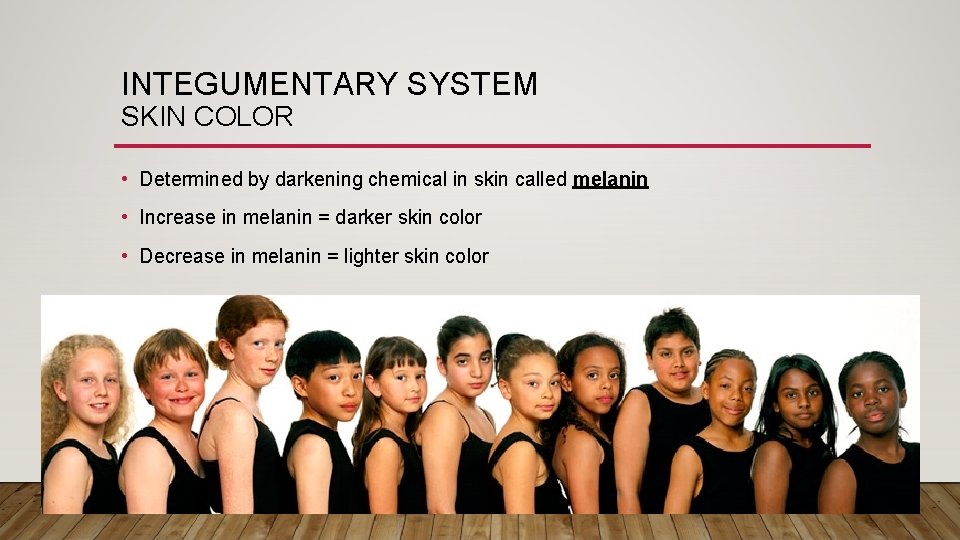
INTEGUMENTARY SYSTEM SKIN COLOR • Determined by darkening chemical in skin called melanin • Increase in melanin = darker skin color • Decrease in melanin = lighter skin color
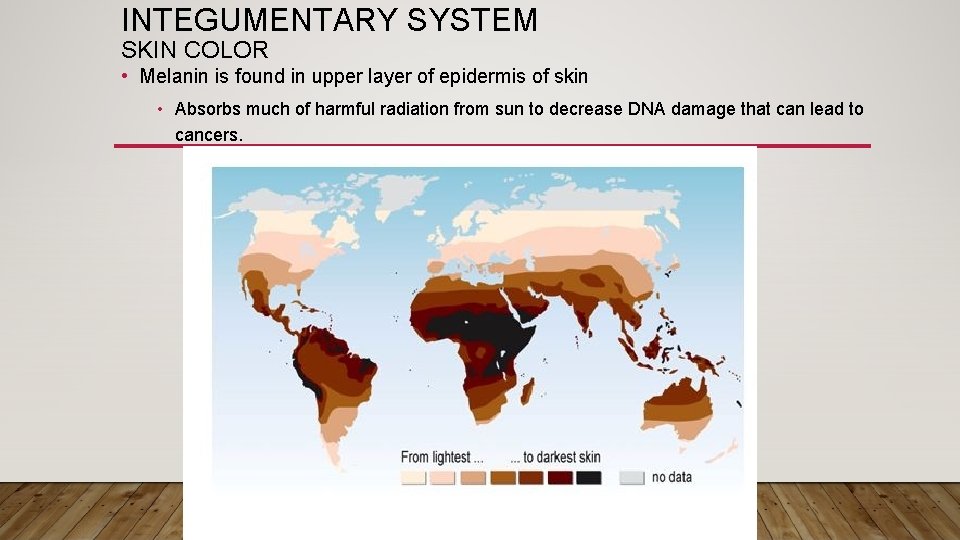
INTEGUMENTARY SYSTEM SKIN COLOR • Melanin is found in upper layer of epidermis of skin • Absorbs much of harmful radiation from sun to decrease DNA damage that can lead to cancers.
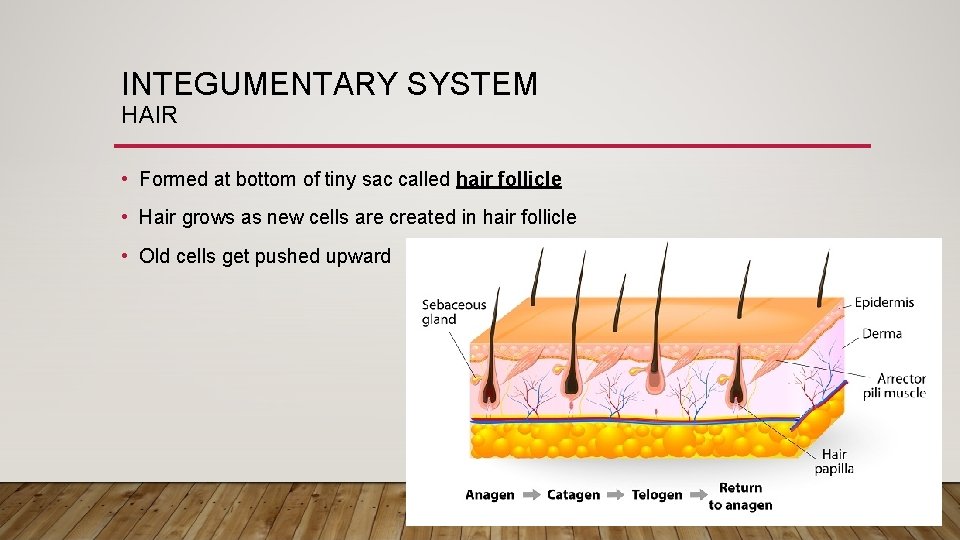
INTEGUMENTARY SYSTEM HAIR • Formed at bottom of tiny sac called hair follicle • Hair grows as new cells are created in hair follicle • Old cells get pushed upward
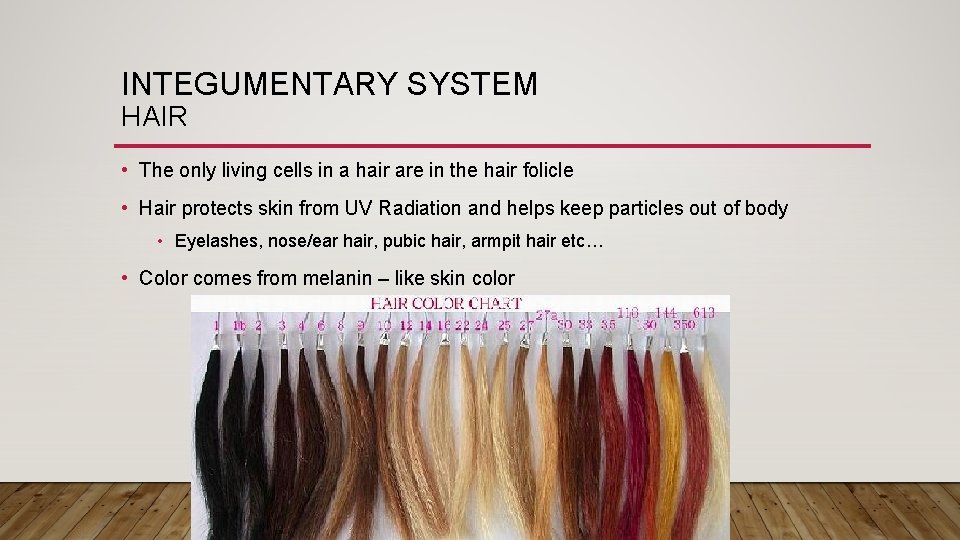
INTEGUMENTARY SYSTEM HAIR • The only living cells in a hair are in the hair folicle • Hair protects skin from UV Radiation and helps keep particles out of body • Eyelashes, nose/ear hair, pubic hair, armpit hair etc… • Color comes from melanin – like skin color
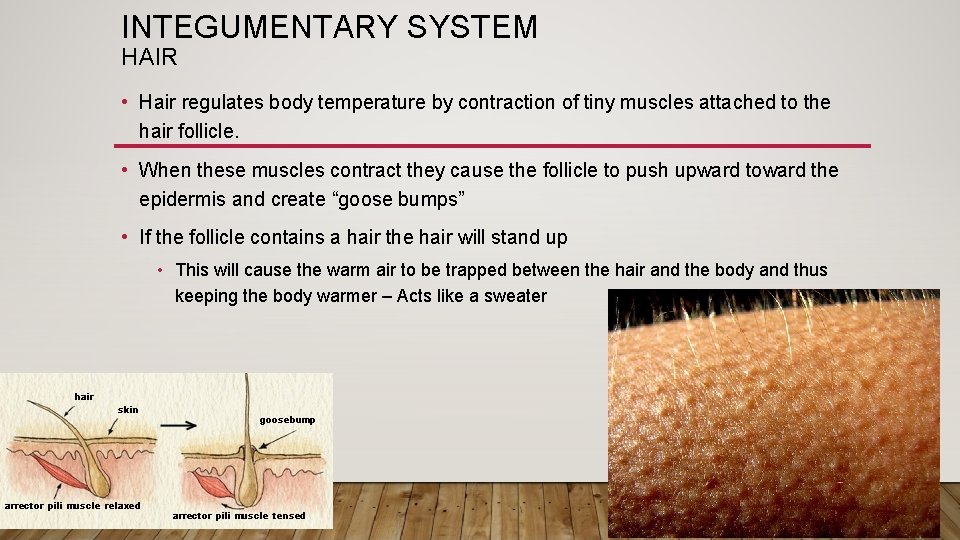
INTEGUMENTARY SYSTEM HAIR • Hair regulates body temperature by contraction of tiny muscles attached to the hair follicle. • When these muscles contract they cause the follicle to push upward toward the epidermis and create “goose bumps” • If the follicle contains a hair the hair will stand up • This will cause the warm air to be trapped between the hair and the body and thus keeping the body warmer – Acts like a sweater
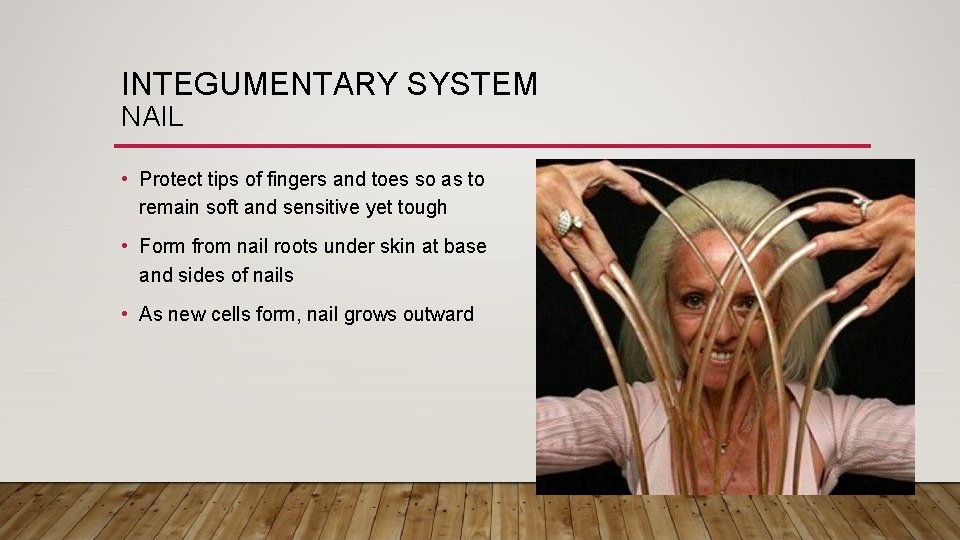
INTEGUMENTARY SYSTEM NAIL • Protect tips of fingers and toes so as to remain soft and sensitive yet tough • Form from nail roots under skin at base and sides of nails • As new cells form, nail grows outward
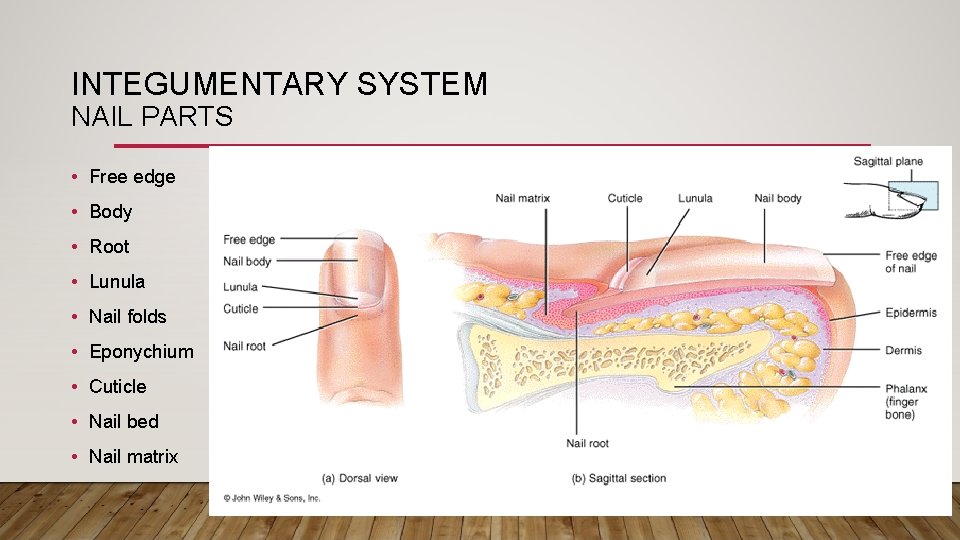
INTEGUMENTARY SYSTEM NAIL PARTS • Free edge • Body • Root • Lunula • Nail folds • Eponychium • Cuticle • Nail bed • Nail matrix
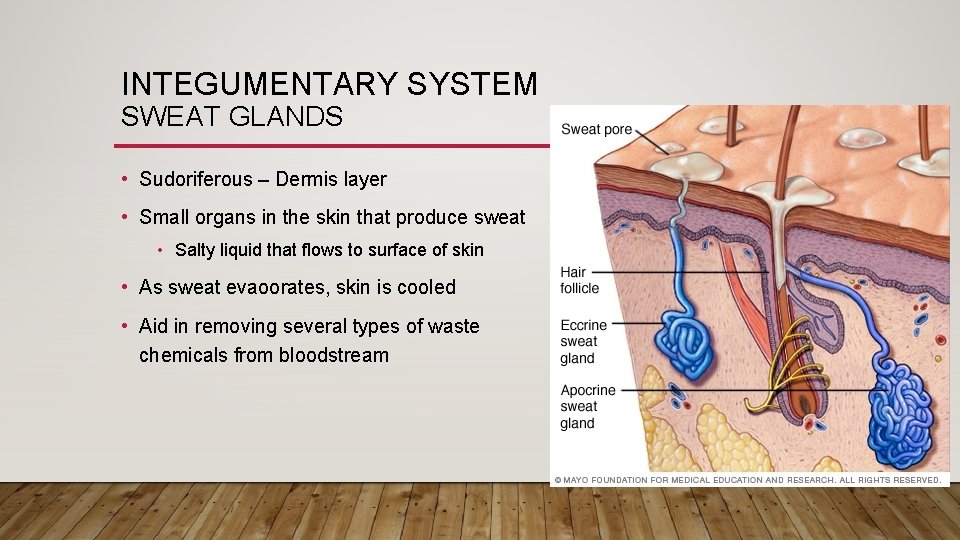
INTEGUMENTARY SYSTEM SWEAT GLANDS • Sudoriferous – Dermis layer • Small organs in the skin that produce sweat • Salty liquid that flows to surface of skin • As sweat evaoorates, skin is cooled • Aid in removing several types of waste chemicals from bloodstream
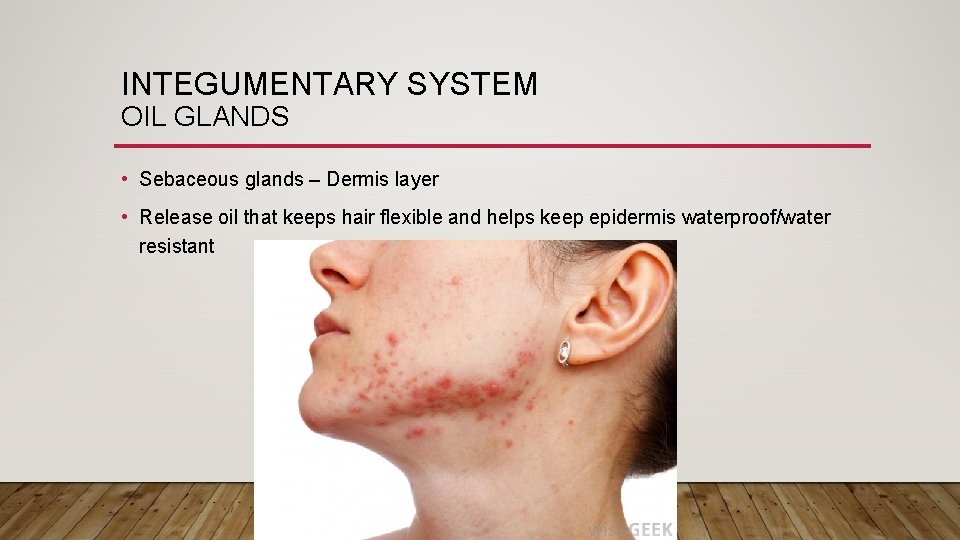
INTEGUMENTARY SYSTEM OIL GLANDS • Sebaceous glands – Dermis layer • Release oil that keeps hair flexible and helps keep epidermis waterproof/water resistant