
Integumentary System integumentare Integgoomentairy Part 1 Membranes Classification

Integumentary System (in-teg”u-men’ta-re) Inºtegºgooºmentºairy Part 1: Membranes
Classification of Body Membranes • List the general function of each membrane type and give its location in the body • Compare the structure (tissue makeup) of the major membrane types
Two Major Categories of Body Membranes • The body has two types of tissue membranes: • Epithelial Tissue Membrane • Connective Tissue Membrane

Epithelial Membranes • Three types: • Cutaneous Membrane • Mucous Membrane • Serous Membrane • All are made up of an epithelial tissue sheet which is always combined with an underlying connective tissue • These membranes are simple organs
Cutaneous Membrane: Structure • Keratinized stratified squamous epithelium is the superficial layer • Underlying layer is mostly dense connective tissue • A dry membrane which is exposed to air

Cutaneous Membrane: Structure Stratified Squamous Epithelium Dense Connective Tissue
Cutaneous Membrane: Function • More on this later
Cutaneous Membrane: Location • This Membrane makes up your skin
Mucous Membrane: Structure • Epithelial Tissue (type varies by site) is the superficial layer • Most mucous membranes are either stratified squamous or simple columnar epithelium • Underlying connective tissue is called lamina propria • Lamina propria- a loose connective tissue • A “wet” membrane that is almost constantly bathed in secretions
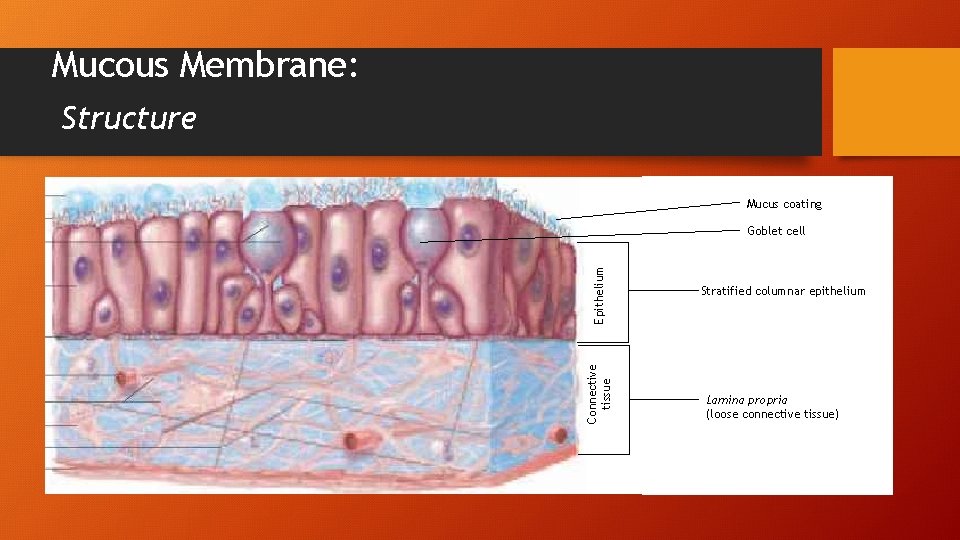
Mucous Membrane: Structure Mucus coating Connective tissue Epithelium Goblet cell Stratified columnar epithelium Lamina propria (loose connective tissue)
Mucous Membrane: Function • Absorption and secretion • Most but not all secrete mucus (hence the name) • Function of mucus- protection and lubrication
Mucous Membrane: Location • Lines all body cavities that are open to the exterior • Ex: The hollow organs of the respritory, digestive urinary and reproductive tracts • Urinary mucosae does not secrete mucous, instead they are coated in urine • Urinary Mucosae- Mucous membrane in the urinary tract
Serous Membrane Structure • Superficial layer is simple squamous epithelium • Underlying layer is a thin layer of areolar connective tissue • Occurs in pairs: • Parietal layer- lines a specific portion of the wall of the ventral cavity • Visceral layer- formed when the parietal layer folds in on itself to cover the outside of the organs in that cavity • Layers are separated by a thin clear fluid called serous fluid • Serous fluid is secreted by both layers and allows organs to easily slide across the cavity walls and one another without creating friction • A “wet” membrane
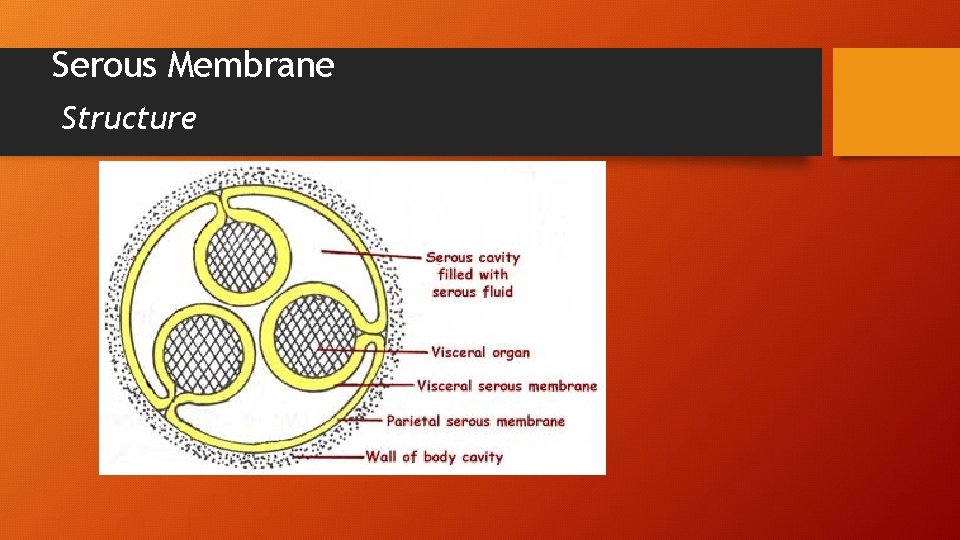
Serous Membrane Structure
Serous Membrane Function • Protects organs • Lines ventral cavities • Production of lubricating fluid to reduce friction of movement
Serous Membrane Location Specific names depending on location • Peritoneum– Lines the abdominal cavity • Pleura- surrounds and protects the lungs • Pericardium- surrounds and protects the heart
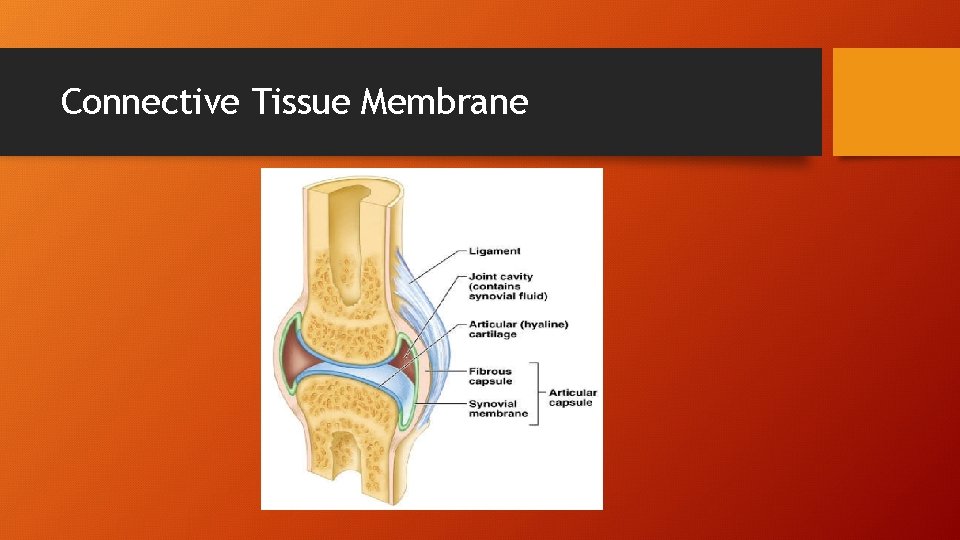
Connective Tissue Membrane Structure • Contains soft areolar tissue and no epithelial tissue Function • Provide a smooth surface and lubricating fluid which helps with motion • Cushions organs moving against one another during muscle activity Location • Line the fibrous capsules surrounding joings • Line bursae • A small sac of connective tissue which cushions bones • Forms tendon sheaths
Connective Tissue Membrane
- Slides: 18